
Imagine this for a moment.
Your flight is scheduled to depart at 7:30 a.m.
It’s now 7:10.
You – and dozens of other passengers – are sprinting through the terminal. Phones in hand. Boarding passes open. Everyone is convinced they’ve timed it perfectly.
Security is no longer the problem.
The gate is.
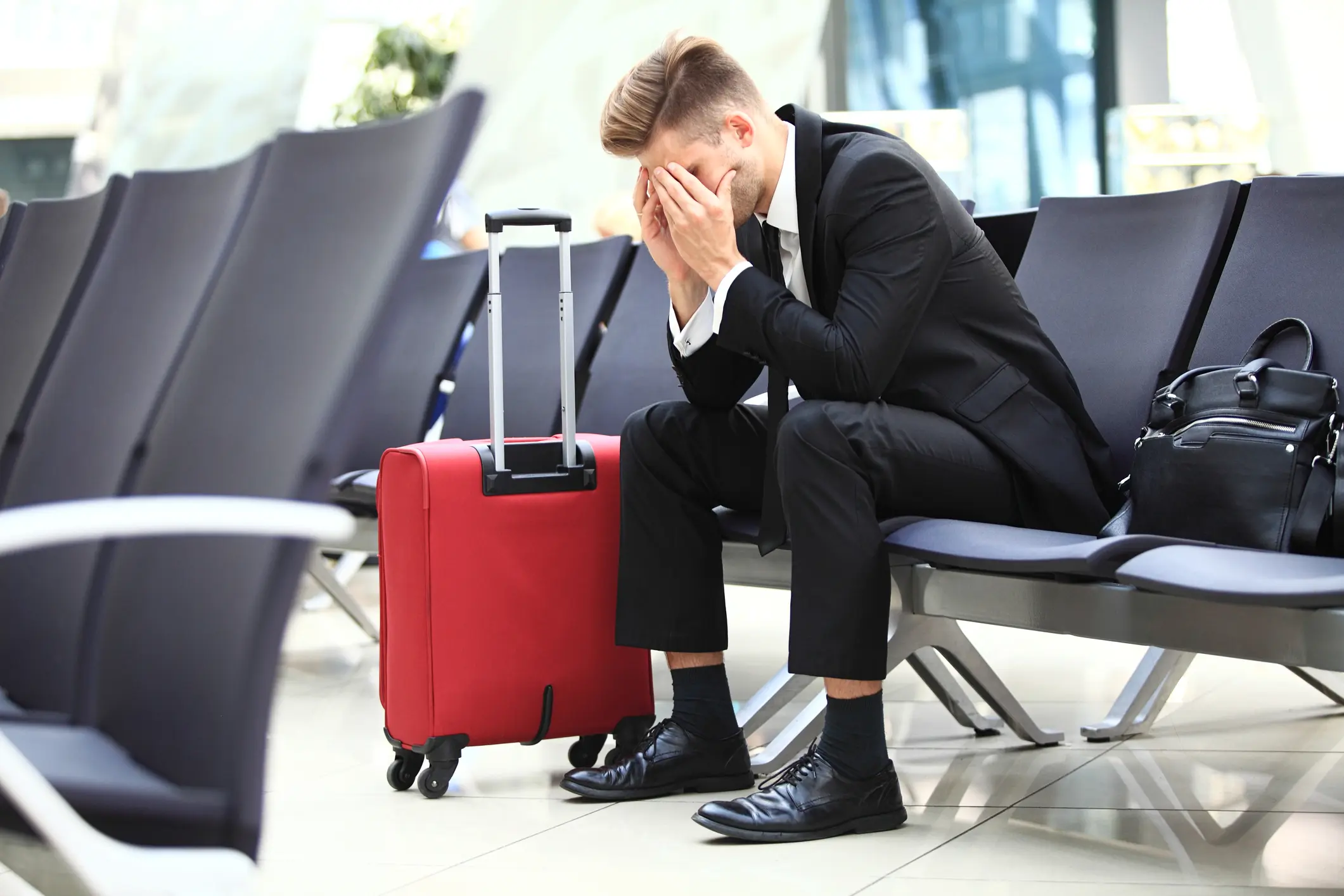
ID 108684443 ©Opolja | Dreamstime.com
The door is closed. The plane is still there. But the system has already moved on without you.
This is the part most viral videos don’t show – and the part most people don’t think through before trying “airport theory”, the viral “15-minute airport arrival” trend.
Because the real question isn’t “Can I make it?”
It’s something else entirely.
What would happen if everyone did this?
Airport theory isn’t new – but its persistence is
Airport theory has already been explained, criticized, warned against, and written off.
And yet, people are still trying it.
Over the past year, the idea has resurfaced again and again across social media and travel articles: arrive at the airport just minutes before departure, breeze through security, and step onto the plane without wasting time sitting at the gate. Despite airline reminders, stories of missed flights, and countless breakdowns of why it’s risky, the trend refuses to disappear.
That persistence is the real story.
If airport theory were simply a bad idea, it would have faded quickly. Travel has a way of punishing bad habits. People usually abandon strategies that consistently cost them money, time, and peace of mind.
But airport theory sits in a strange middle ground – one where sometimes it works, sometimes it doesn’t.
And that ambiguity is exactly why it keeps spreading.
What airport theory is – briefly
For anyone encountering it for the first time, airport theory is a social-media-driven approach to flying that encourages travelers to arrive extremely late – often around 15 minutes before departure – instead of following the usual recommendation of arriving two hours early for domestic flights or three hours early for international ones.
The promise is simple and seductive.
With online check-in, mobile boarding passes, faster security screening, and real-time airport apps, some travelers believe the traditional buffer times are outdated. Why sit at the gate when you can time your arrival perfectly and still make your flight?
Videos showing last-minute arrivals, hurried walks through terminals, and relieved celebrations at the gate have helped the trend spread widely. To many viewers, it looks like efficiency – or even mastery – of a system that usually feels slow and frustrating.
But if the risks are so well known, why does airport theory still appeal to so many people?
BTW: On TikTok and Instagram, it’s often framed as a “15-minute airport arrival hack” or “arrive just before departure travel trick.”
Airport Theory: Risks vs. Rewards
Rewards (Why People Try It):
- Saves time when everything goes perfectly – the whole premise of the trend is cutting airport time down to the minimum.
- Feels efficient and “hacks the system” – that’s the promise of airport theory videos.
- Great for social media content – short high-dramatic dashes and near-misses generate views and engagement.
Risks (Why Experts Warn Against It):
- Boarding commonly begins well before departure, leaving little margin for last-minute arrivals.
- Checked bags have strict cutoffs – carriers often close bag drop well before departure. (yes, I know, many recommend using this trend by those with only cabin luggage)
- Security lines can vary dramatically – wait times are unpredictable and can exceed the minimal window assumed by the theory.
- Airport layouts differ by terminal – distances to gates aren’t consistent and can affect transit time.
- Missed flights can often trigger expensive rebooking and disrupted itineraries.
Why the Trend Still Explodes in 2026
Despite warnings from airlines and airports, the “airport theory” trend has continued to gain traction into early 2026. Searches for phrases like “I missed my flight” are surging alongside viral videos where creators try to board flights with just minutes to spare.
Creators often show spirited dashes through security and triumphant gate arrivals – but many others are missing flights entirely, as the system still closes boarding well before takeoff.
And yes, I had people (older) telling me that this is a normal way to fly: it is a habit and a way people used to board back in the day. Here, it could be said that things changed over the years and the boarding takes longer now.
The part most coverage skips: mixed outcomes
By now, the warnings are familiar.
People have missed flights.
Airlines have reinforced boarding cutoffs.
Travel experts have explained why a 15-minute arrival window leaves no margin for error.
So the more interesting question is not whether airport theory is risky.
It’s why, knowing all this, people still try it.
When you actually look for evidence online, you don’t find a single, clear narrative. You find stories from travelers who say they arrived late and still boarded. You also find stories from people who misjudged the timing and watched their plane depart without them.
Both outcomes exist.
Neither dominates completely.
Airport theory doesn’t fail consistently.
It fails inconsistently.
And that matters.
When a behavior fails every time, people avoid it. But when outcomes appear mixed, people assume success depends on personal judgment, confidence, or timing. In other words, they believe they will get it right.
This isn’t recklessness.
It’s human nature.
Real-World Consequences People Don’t Think Through
Scroll through airport-theory videos, and you’ll see plenty of triumphant arrivals. Scroll a little further, and you’ll find the other side: travelers watching their plane push back from the gate without them.
Missing a flight isn’t just a minor inconvenience. It can mean last-minute ticket purchases, unexpected overnight stays, rearranged plans, and hours spent negotiating with airline desks. And none of that makes it into the viral edit.
Meanwhile, airports still operate on fixed boarding cutoffs. Gates close when they close. Aircraft departure slots don’t wait for late arrivals. The system doesn’t bend for personal timing experiments, even when the plane is still visible outside the window.
Why trends make risk feel manageable
Airport theory doesn’t thrive because people are unaware of the risks. It thrives because trends have a way of shrinking complexity into simple rules.
Airports are among the most complex public systems most people regularly interact with. They involve security protocols, airline operations, staffing levels, weather dependencies, gate logistics, and cascading schedules. No two days – even at the same airport – are identical.
Trends flatten that complexity.
Airport theory reduces a system with dozens of variables into a single, appealing instruction: “15 minutes is enough.”
That simplicity is part of its power. It replaces uncertainty with confidence and reframes waiting time as inefficiency rather than insurance.
Social media amplifies this effect. Short-form platforms reward clarity, confidence, and dramatic outcomes. Nuance doesn’t travel well in a 30-second video. What spreads is not a careful explanation of systems, but the feeling that the system can be beaten.
The problem isn’t that airport theory exists.
It’s that it encourages people to copy outcomes without understanding conditions.
Quick Trend Insight
Recent travel trend analysis shows that the airport theory phenomenon has become less about efficient travel and more about how social media shapes perceptions of risk and reward – viewers see packed, engaging narratives where time “saved” feels valuable, even when the practical risk is high.
And speaking of travel tips and hacks, I also wrote about another travel trend called check-in chicken, another travel trend that divided the internet, and about the top 20 travel hacks people are obsessing over right now.
Speaking of relevant information and flying, here is what you should NEVER wear on a plane – according to a flight attendant – her reasons will shock you!
Reality check:
Airport theory only works when everything goes right – short security lines, no gate changes, no bag drop, no delays, no crowds. Real airports rarely deliver all five at once.
And yes, by now, if you search online, you will find many stories of people missing their flights! So it is an important thing to consider: yes, it may work, but it will likely cause you problems!
This is where airport theory stops being about airports
Airport theory isn’t really a travel strategy.
It’s a case study in how people adopt trends.
Trends promise control in environments that are, by nature, unpredictable. They compress uncertainty into confidence and replace judgment with imitation. When they work sometimes, they feel validated. When they fail, the failure is framed as bad luck or personal miscalculation.
That’s why airport theory survives repeated warnings.
It doesn’t look like a guaranteed mistake.
It looks like a calculated risk.
And some people are notoriously bad at calculating risk in complex systems.
The one question people forget to ask
Before trying airport theory, most people ask:
“Can I make it?”
Very few ask the more important question (in my opinion):
“What would happen if everyone did this?”
That question changes everything.
Airplanes operate on precise schedules. Boarding windows exist for a reason. Gates close before departure not to be cruel, but because aircraft movements are part of tightly choreographed sequences. Planes cannot wait for late passengers without disrupting multiple downstream flights.
We’ve already seen what happens when individual urgency collides with system reality – including cases where desperate passengers ran onto the runway after missing their flight. These aren’t harmless delays. They’re system failures triggered by last-minute behavior colliding with rigid schedules.
Airport theory works only as long as most people don’t try it.
Stress-testing the idea instead of copying it
One of the most striking things about airport theory is how rarely people stress-test it.
Stress-testing doesn’t mean assuming failure. It means asking a few basic questions before adopting any trend that interacts with systems you don’t control:
- What variables are outside my control today?
- What happens if this doesn’t work?
- Is this a quiet travel day or peak season?
- How much time, money, or flexibility do I lose if I’m wrong?
Security wait times fluctuate.
Gate changes add distance.
Checked bags introduce fixed cutoffs.
Staff shortages and weather ripple across entire networks.
Airport theory assumes ideal conditions.
Travel rarely provides them.
Contingency planning is not inefficiency
One reason airport theory resonates is that buffer time has been reframed as waste.
Waiting is inefficient.
Arriving early is outdated.
Optimization is everything.
But buffer time isn’t inefficiency.
It’s contingency planning.
This is how I see things: arriving early doesn’t mean you enjoy airports. It means you understand how fragile complex systems are. Margin absorbs shock.
I’ve traveled by plane many times. I’ve had priority boarding. I’ve moved quickly through security. And even then, I’ve arrived early – not because I enjoy sitting at the gate, but because I’ve seen how fast conditions change.
The cost of arriving early is boredom.
The cost of arriving too late can be hundreds of dollars, lost days, and lasting stress.
When framed that way, buffer time isn’t wasted time.
It’s insurance.
Here, I would add that my husband traveled more than I did (with his job). He always takes his time. Even if he does not have check-in luggage, he is still one hour early at the airport. And sometimes, in different countries, that was just in time.
Who can afford to gamble – and who can’t (What am I willing to lose?)

Photo source: Pexels
Another reason airport theory persists is that not everyone faces the same consequences if it fails.
Some travelers can afford to miss a flight. Flexible tickets, extra days, financial cushion – for them, failure is inconvenient.
For others, it’s devastating.
Non-refundable tickets. Tight schedules. Family obligations. Work commitments.
This isn’t judgment.
It’s arithmetic.
Risk tolerance isn’t about confidence.
It’s about consequences.
The pressure nobody talks about: workers and systems
There’s another cost to airport theory that rarely enters the conversation.
Airports are designed around staggered arrivals. Check-in desks, security lanes, and boarding processes assume that passengers arrive over time, not all at once. When large numbers of people cut it close, pressure concentrates at the gate.
Gate agents absorb that pressure. They enforce cutoffs, handle confrontations, and manage frustration – all while trying to keep flights on schedule.
If everyone arrived 15–20 minutes before departure, airports wouldn’t become more efficient.
They would break.
Individual hacks, when scaled, strain the systems they rely on.
Airport theory won’t be the last trend like this
Airport theory will fade. Another trend will replace it – one promising to save time, money, or effort by reimagining a familiar system.
When it does, the lesson still applies.
Trends are not plans.
Confidence is not contingency.
Mixed outcomes demand caution, not bravado.
The most valuable travel skill isn’t efficiency.
It’s judgment.
A Different Conclusion
Missing a flight can be a lesson in itself – but it’s a costly way to learn that not every trend deserves to be followed.
Sometimes, those extra minutes at the gate are a small price to pay for peace of mind.
And sometimes, the smartest move isn’t arriving later – it’s stopping long enough to ask the question most people forget.
What would happen if everyone did this?
FAQ: Airport Theory
What is airport theory?
Airport theory is a social-media travel trend that encourages arriving at the airport extremely close to departure time, based on the belief that modern security processes and digital boarding passes make early arrival unnecessary. Often described online as a “15-minute airport arrival hack.”
Is airport theory reliable?
It works only when conditions are ideal – short security lines, no gate changes, no baggage drop, and minimal crowds. In real-world airports, those conditions rarely align consistently.
Why did airport theory go viral?
Because short-form videos reward dramatic, high-tension moments. A last-minute dash through an airport feels like beating the system — even when the risk is high.



I work for an airline and this is the stupidest trend around. FAA requires the boarding door to close 15 minutes before the flight leaves. Its a little flexible but at 10 minutes its 95% of the time closed. So you are arriving at the airport when the door is closing. Can’t be dumber to try this. Like the article says. There are too many variables that have to be perfect.