
Airport theory started with a promise many people would love to believe: you could arrive at the airport only minutes before your flight, get through security and still reach the gate on time.
For anyone who has cleared security quickly and then spent two hours staring at the departure screen, the idea was extremely tempting. Why arrive early if online check-in, mobile boarding passes and a short line could get you to the gate in minutes?
Then people started testing it.
Some filmed themselves reaching the gate with time left. Others arrived to find boarding closed and their planes preparing to leave. One of the most famous failed attempts included an iced coffee, which led millions of viewers to debate whether airport theory was the problem or the person trying it had simply made the wrong choices.
The trend became popular in 2025, but it didn’t end with those first successes and missed flights. People are still trying airport theory in 2026, even after airport procedures and waiting times changed in both the United States and Europe.
So what happened to the people who tested it, and why has the idea survived for so long? I also think there is a question everyone considering airport theory should ask themselves – and I’ll show you why.
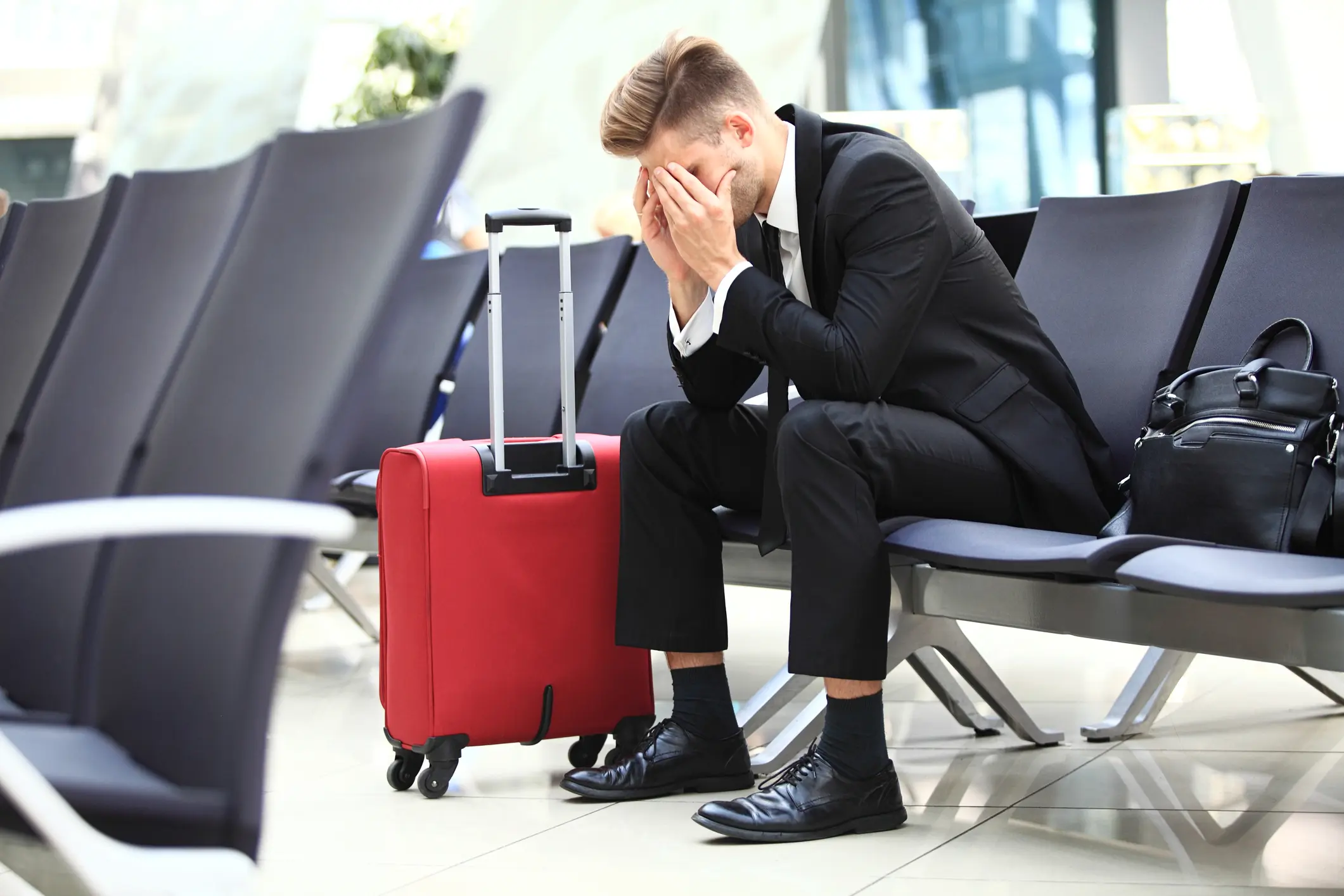
ID 108684443 © Opolja | Dreamstime.com
What Is Airport Theory?
Airport theory is the idea that people don’t need to arrive two or three hours before a flight. Instead, they can enter the airport shortly before boarding, clear security and reach the gate without spending a large part of the day waiting in the terminal.
The most widely shared version gives people approximately 15 minutes to get from the security checkpoint to their gate. Some videos begin the countdown when the person enters the airport. Others begin when boarding has already started.
This distinction caused confusion from the beginning.
Arriving 15 minutes before boarding starts may still leave close to an hour before departure. Arriving 15 minutes before the scheduled departure time could mean that boarding is already closed.
American Airlines says most flights begin boarding 30 to 50 minutes before departure and boarding ends 15 minutes before the scheduled flight time. United Airlines also says boarding generally ends and the doors close about 15 minutes before departure.
The departure time on the boarding pass is the time the plane is expected to leave. It isn’t the final moment when someone can arrive at the gate.
Airport theory became more extreme as it spread. What began as a test of how quickly someone could pass through an airport was often presented as proof that people could arrive shortly before departure and still board.
How Airport Theory Became a Viral Trend
Airport theory began attracting widespread attention in early 2025, when people started posting videos of themselves testing the 15-minute claim at major American airports.
Michael DiCostanzo became one of the creators most closely associated with the trend. He filmed attempts at airports including Los Angeles International Airport, Hartsfield-Jackson Atlanta International Airport and New Orleans after the Super Bowl.
At Atlanta, DiCostanzo reportedly made it from the airport entrance to his gate in less than 15 minutes. However, he had TSA PreCheck, wasn’t checking a bag and already knew which terminal he needed, according to an article documenting the early airport theory attempts.
His videos helped the trend spread because they answered a question many people had already considered. If online check-in, mobile boarding passes and TSA PreCheck had made airports faster, were the old arrival recommendations still necessary?
Many people could relate to the irritation behind the challenge. They had arrived two hours early, cleared security in ten minutes and then spent the remaining time walking around the terminal or sitting near the gate.
Airport theory suggested that this waiting could be removed entirely.
By March 2025, videos using or discussing the trend had accumulated hundreds of millions of views. Some people treated it as a genuine travel strategy. Others watched because they wanted to see whether the person filming would make the plane.
The Early Successes That Made Airport Theory Look Possible
Lexi Smith produced one of the best-known successful attempts. She reached Los Angeles International Airport after boarding for her flight had already started and set a timer to see whether she could reach the gate.
Smith passed through security quickly but was then selected for additional screening. She still made the flight and had enough time to buy M&M’s before boarding, according to the same report on the viral trend.
Her result made airport theory look more convincing. Additional screening was exactly the kind of delay that people warned about, yet she still reached the gate.
There was one important advantage. Boarding for her flight had been delayed, so in a way the airline gave her extra time that she couldn’t have counted on when she entered the airport.
Other videos showed similar successes. People crossed security quickly, found their gates nearby and boarded without spending an hour waiting. In some cases, they were familiar with the airport, had no checked luggage and used priority security lanes.
Those details didn’t always receive as much attention as the final timer.
Viewers saw a person reach the gate in 12 or 14 minutes. They didn’t always see how long parking took, whether someone else had dropped the person at the entrance or whether the flight had started boarding late.
The Missed Flight That Became Airport Theory’s Warning
Jenny Kurtz became one of the most widely shared examples of what could happen when the timing didn’t work.
In her video, she walked through the airport carrying an iced coffee before showing the screen at the gate. The flight was closed.
“For those of you thinking about testing out the airport theory, don’t do it,” she wrote in the caption. The short video received millions of views, according to an article covering her failed attempt.
The coffee became part of the discussion. Some people asked whether she had stopped to buy it while already late. Others argued that arriving early enough to buy coffee would have defeated the purpose of the challenge.
Even this clear failure didn’t end airport theory. Many viewers saw it as a problem with her attempt rather than a problem with the idea. They believed they would move faster, skip the coffee, choose a smaller airport or check the security line before leaving home. Every failure created a new list of mistakes that the next person believed they could avoid.
Airport Theory Didn’t Disappear in 2026
By the end of 2025, airport theory had been explained, criticized, and blamed for missed flights. It would have been reasonable to expect people to move on to the next travel trend.
They didn’t.
In May 2026, Brittany Born accidentally tested airport theory while returning home from a one-day trip to Walt Disney World. She was still in an Uber heading toward Orlando International Airport when she realized she had about 25 minutes before her flight’s doors were expected to close.
Born was caught in traffic and needed to pass through the airport quickly because her family arrangements depended on her returning home that night. According to People magazine, she reached the gate and made the flight.
Her experience became another airport theory success story, but she didn’t recommend repeating it. She described the situation as extremely stressful and said she didn’t want to cut the timing that close again.
That creates a third possible result that the early airport theory videos didn’t discuss very often.
You can make the flight and still decide that the time saved wasn’t worth the journey through the airport.
A May 2026 report citing figures from airport transfer company Hoppa said searches for airport theory had risen by 125% in three months. The figures were released by a travel company rather than Google, but they suggest that interest in the idea had increased again.
Airport theory also remained part of a larger group of social-media airline challenges. People continued experimenting with check-in chicken, where passengers delay checking in because they hope the remaining seat choices will work in their favor.
Both trends promise a reward for waiting until the last possible moment. In both cases, the person gives up control and hopes the airline system produces the desired result.
What Changed at U.S. Airports in 2026?
Some parts of the U.S. airport experience became faster after airport theory first appeared. Others added new ways for people to lose time.
Since July 2025, passengers at regular TSA checkpoints have generally been allowed to keep their shoes on. The Department of Homeland Security said the change was intended to streamline screening and reduce waiting times, according to the official TSA announcement.
More airports have also installed CT scanners that can allow passengers to leave certain liquids and electronics inside their bags. The procedure still varies by airport and checkpoint, so people need to follow the instructions given by security staff.
The identification rules also changed. REAL ID requirements began being enforced in May 2025, and from February 1, 2026, people who arrive at a TSA checkpoint without a REAL ID or another acceptable form of identification can use TSA ConfirmID.
The service costs $45 and attempts to verify the person’s identity, but TSA doesn’t guarantee that verification will be successful. Someone without the correct identification also needs to allow extra time for the process, as explained on the official TSA ConfirmID page.
This is exactly the kind of new step that can ruin a last-minute airport arrival. A person may have passed through the same airport quickly on several previous trips and then discover that a document problem has added another process before security.
Spring 2026 also showed how quickly normal airport timing could change. During a partial U.S. government shutdown, absences among unpaid TSA officers contributed to extremely long lines at several airports.
Security waits reached approximately three hours at some major airports in March. Houston Hobby and New Orleans reported waits of around three to three and a half hours, while Atlanta, Charlotte and other airports also experienced disruption, according to a Reuters report.
Later in March, TSA told Congress that waits had exceeded four and a half hours at certain airports during the funding dispute.
People didn’t need to be testing airport theory to miss their flights during those days. Someone who arrived at what would normally have been a reasonable time could still be caught in the queue.
By summer, TSA said it was prepared for the busy travel season and continued advising people to arrive early. Passenger numbers were expected to remain high, with construction, parking and traffic creating additional delays at some airports.
Flight delays can occasionally help a late passenger, but relying on one is risky. Even airlines with poor punctuality records don’t delay every flight, as the figures in this report on the most delayed airlines demonstrate.
Airport Theory Became a Different Challenge in Europe
Most early airport theory videos were filmed in the United States. The experience can be very different in Europe, particularly for people who need to pass through passport control as well as airport security.
The EU’s Entry/Exit System, known as EES, began operating gradually in October 2025 and became fully operational at external border crossing points on April 10, 2026.
The system records the entry and exit of many non-EU visitors traveling for short stays. On a person’s first journey after the system begins operating at that border, passport officers may collect a facial image and fingerprints, according to the official EU explanation.
The rollout didn’t go smoothly everywhere. Passengers reported machines that weren’t working, unclear instructions, repeat registrations and long queues at passport control.
Some people missed flights despite arriving at the airport well before departure.
One British passenger told The Guardian that he arrived at Copenhagen Airport more than two hours before his flight but became stuck in an EES queue. He missed the departure and said the disruption cost him more than £2,000.
Other people described waiting for three or four hours at European border controls during the first weeks of full implementation.
Airports and airlines continued warning about EES queues into the summer. Some of the worst problems were reported at airports in Spain, Portugal, France and Italy, although waiting times differed considerably between airports and even between different times of day.
These delays don’t mean every person flying in Europe should arrive four hours early. They do show why the simple American version of airport theory can’t be transferred directly to every European journey.
A domestic passenger in the United States may only need to clear TSA before reaching the gate. A non-EU passenger leaving the Schengen area can face both security and exit passport control. If either queue is unusually long, 15 minutes will be nowhere near enough.
A New Report Ranked the Best Airports for Airport Theory
The trend received another push in 2026 when an analysis ranked the major U.S. airports where airport theory was supposedly easiest to try.
Holafly compared 25 airports using factors that included average TSA waiting times, passenger numbers, airport size and on-time departure performance.
Salt Lake City International Airport ranked first. San Diego International Airport came second, followed by Boston Logan International Airport, Washington Dulles International Airport and Baltimore/Washington International Thurgood Marshall Airport, according to an article about the analysis.
The list is interesting, but I wouldn’t use it to decide when to leave for a flight.
An average security wait combines quiet periods and busy periods. It can tell you that one airport usually moves people faster than another, but it can’t tell you how long the line will be when you arrive.
The ranking also can’t account for an accident on the road, parking delays, a full airport shuttle, a closed checkpoint or a gate at the far end of the terminal.
On-time performance is another curious factor. A punctual airport may be efficient, but punctual flights aren’t particularly helpful to someone running late. A delayed flight may save an airport theory attempt. A flight leaving precisely on schedule won’t.
The airport ranked as best for the challenge could therefore be very good at ensuring that the aircraft leaves on time – with or without the person trying airport theory.

Photo source: Pexels
The Question Everyone Considering Airport Theory Should Ask
The majority of people considering airport theory ask whether they can make it.
They think about how quickly they walk, whether they have TSA PreCheck, how well they know the terminal and whether they are carrying only hand luggage.
I think they should also ask:
What would happen if everyone tried airport theory?
The idea works best when the person arriving late is an exception.
Security lines stay manageable because passengers for the same flight arrive over a longer period. Some appear two hours before departure. Others arrive 90 minutes early, while a smaller number enter the terminal closer to boarding.
If passengers from several flights all decided to reach security during the final 15 or 20 minutes, the short queue would disappear. More people would also reach their gates while boarding was closing, seats were being reassigned and employees were preparing flights for departure.
The person testing airport theory benefits from all the people who arrived earlier.
They have already checked their luggage, passed through security and moved away from the checkpoint. Their decision to spread their arrival times across several hours creates the shorter line the late passenger hopes to find.
If airport theory became normal, airports wouldn’t suddenly stop operating. The trend would simply become much less successful. The final pre-boarding period would become busier, slower and far more stressful.
This also affects airport employees. Gate agents have to enforce boarding deadlines while late passengers argue that the plane is still visible or the scheduled departure time hasn’t arrived.
The aircraft can still be outside the window while boarding is already over. Passenger numbers may have been finalized, vacant seats may have been given to people on standby and the door may have been closed.
The airport theory countdown shown in a video is personal. The airline’s departure process isn’t.
What Airport Theory Looks Like Today
Airport theory is still active, but it no longer looks like one simple 15-minute test.
In the United States, some security procedures are faster than they were when the trend began. People can generally keep their shoes on, more modern scanners are being installed and expedited programs can shorten the process.
At the same time, REAL ID enforcement, TSA ConfirmID, staffing problems, airport construction and record passenger numbers can add delays that weren’t present on someone’s previous trip.
In Europe, the full introduction of EES has added another unpredictable stage for many non-EU passengers. A person may move through security quickly and then spend far longer than expected at passport control.
The successful attempts continue because there will always be quiet airports, short security lines and people who know exactly where they are going. There will also be late boarding, delayed departures and gates located close to security.
There will be other days when the same person, using the same strategy at the same airport, misses the flight.
This is why airport theory belongs with the types of travel advice that can backfire. A result achieved by one person under one set of conditions can look like a rule when it is shared without the surrounding details.
People who want to spend less time at the airport have more reliable options. They can check in online, prepare their documents, verify the terminal, monitor security waits and finish packing using a night-before flight checklist.
That can remove unnecessary airport time without reducing the entire journey to a race against a closing gate.
My husband traveled frequently for work and usually arrived at least an hour early, even when he had no checked luggage. On some trips, most of that hour was used by queues, document checks or the distance to the gate.
I’ve also had flights where security took only a few minutes and I spent much longer waiting than necessary. I still prefer that result to discovering at the airport that the queue is unusually long and I have no time left.
Airports are already among the most stressful parts of many trips. Deadlines, unfamiliar layouts and limited control over delays are some of the reasons I discussed in my article about airport stress.
Airport theory deliberately adds another source of pressure.
Conclusion
Airport theory didn’t disappear after the first missed flights. It continued through 2025 and returned to wider attention in 2026 with new viral attempts, rising reported search interest and a ranking of the airports where people supposedly have the best chance of succeeding.
Some of the people who tried it made their flights. Others reached closed gates. Brittany Born made it through Orlando International Airport in time but said she didn’t want to repeat the experience.
The airport environment also changed. U.S. security became faster in some respects, while new identification procedures and serious staffing shortages created other delays. In Europe, the EES rollout produced long passport-control queues and missed flights among people who hadn’t arrived at the last minute.
Airport theory can still work today. It can also fail for reasons that are impossible to see when deciding what time to leave home.
I don’t think everyone needs to spend three hours at the airport for every flight. The airport, destination, luggage and airline all influence how much time is reasonable.
I do think people need enough time for one ordinary delay: a longer line, a document check, a gate change or a slow journey from the entrance to the terminal.
Sometimes that extra time will be spent sitting at the gate.
On another day, it may be the reason you reach your destination.
More amazing articles for you:
Scientists Analyzed Millions of People - and Found the Personality Trait That Quietly Adds Years to ...
This Is Why You Could Get Fined, Judged, or Kicked Out in Thailand - And It’s Not What You Think
This Munich Attraction Is Half Playground, Half Museum - And Totally Unmissable
Science-Backed Mental Habits That Can Help You Live Longer - Which One Are You Using?
Turkey Has 20 Jaw-Dropping Places – And You Need to Add Them to Your Bucket List Now
One Visit to This Spanish City and You’ll Be Smitten Forever
Skip Big Ben - These 10 Secret London Places Will Leave You Speechless
Thailand Unlocked: Insider Hacks, Culture Must‑Dos & Bucket‑List Places You Can’t Miss

Violeta-Loredana Pascal is a communications expert, business mentor, and the founder of Earth’s Attractions and PRwave INTERNATIONAL. A pioneer in the Romanian digital PR landscape since 2005, she holds a degree in Communication and Social Sciences from SNSPA Bucharest. Violeta is a senior trainer at AcademiadeAfaceri.ro, where she leverages over 20 years of experience to teach professional courses in PR strategy and workplace productivity. By blending high-level business consulting with a passion for holistic travel and wellness, she empowers solopreneurs to overcome procrastination, build profitable brands, and design a life of purposeful adventure.