“Underneath this heavy cross
Lies my poor mother-in-law.
If she had lived three more days,
I’d be lying here, and she’d be reading this.
You who pass by, try not to wake her up,
For if she comes back home,
She’ll start nagging at me again.
So I’ll carry her this way,
And never bring her back.
You who read these lines,
May you not suffer like me.
Find a good mother-in-law,
And live well with her.”
Yes, this is really written on a cross! The mother-in-law roast!
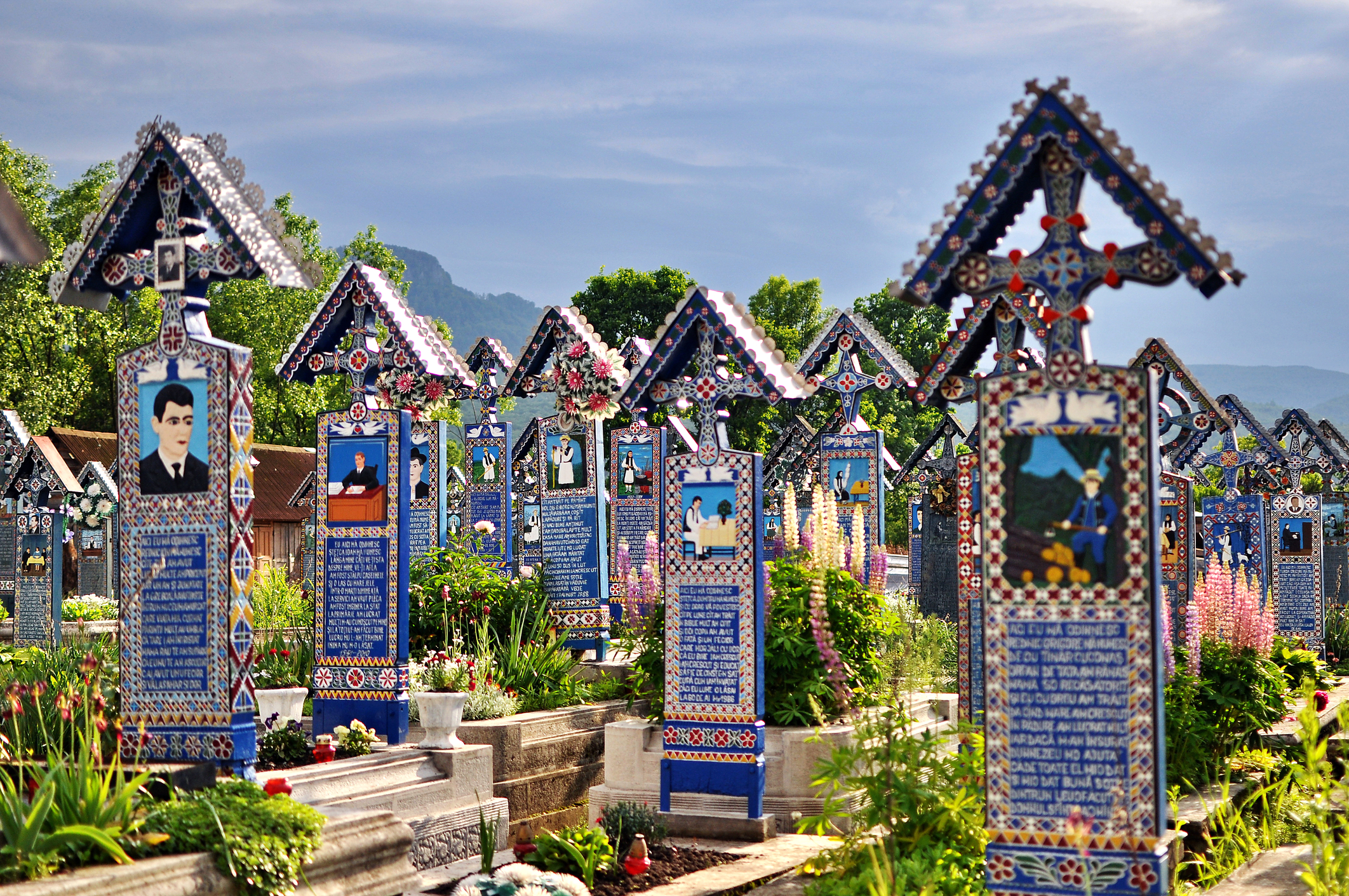
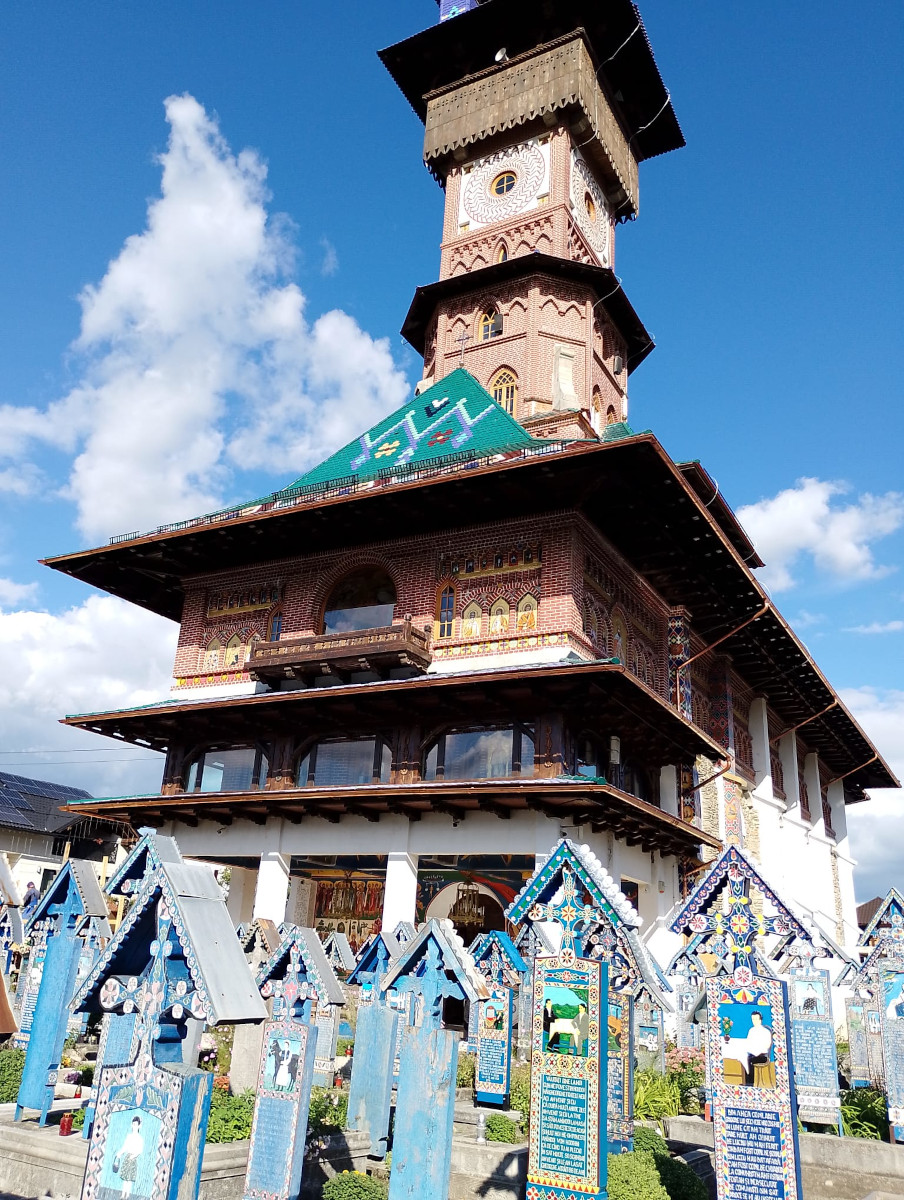
The Merry Cemetery (Cimitirul Vesel) in Săpânța, Romania, is world-famous for its colorful blue crosses and humorous, honest poems about the deceased. Located in the Maramureș region, it is considered one of the most unique burial grounds in the world because it celebrates life through folk art and “Săpânța Blue” woodcarvings.
In this guide, I’ll take you through the ancient history of this site, the funniest “roasts” carved in wood, and the practical tips you need for a 2026 visit.
 ID 57626822 ©Andrei Stancu | Dreamstime.com
The Ancient Roots: Why Romanians Laugh at Death
While the cemetery was founded in 1935, its roots reach back to the ancient Dacians. The Greek historian Herodotus wrote that the Getae (Dacians) believed they were immortal. He described how their leader, Zalmoxis, promised them that after death, they would go to a place of ‘complete happiness‘ and eternal banqueting.
Romanian philosophers, including Mircea Eliade, have long argued that this ancient belief – that death is merely a journey to a better party – is what created the unique Romanian resilience we see in Săpânța today. It’s why a ‘Merry’ cemetery isn’t seen as disrespectful in Romania; it’s a modern echo of a 2,000-year-old tradition of facing the end with a smile rather than a tear.
Who Created the Merry Cemetery? (The Story of Stan Ioan Pătraș)
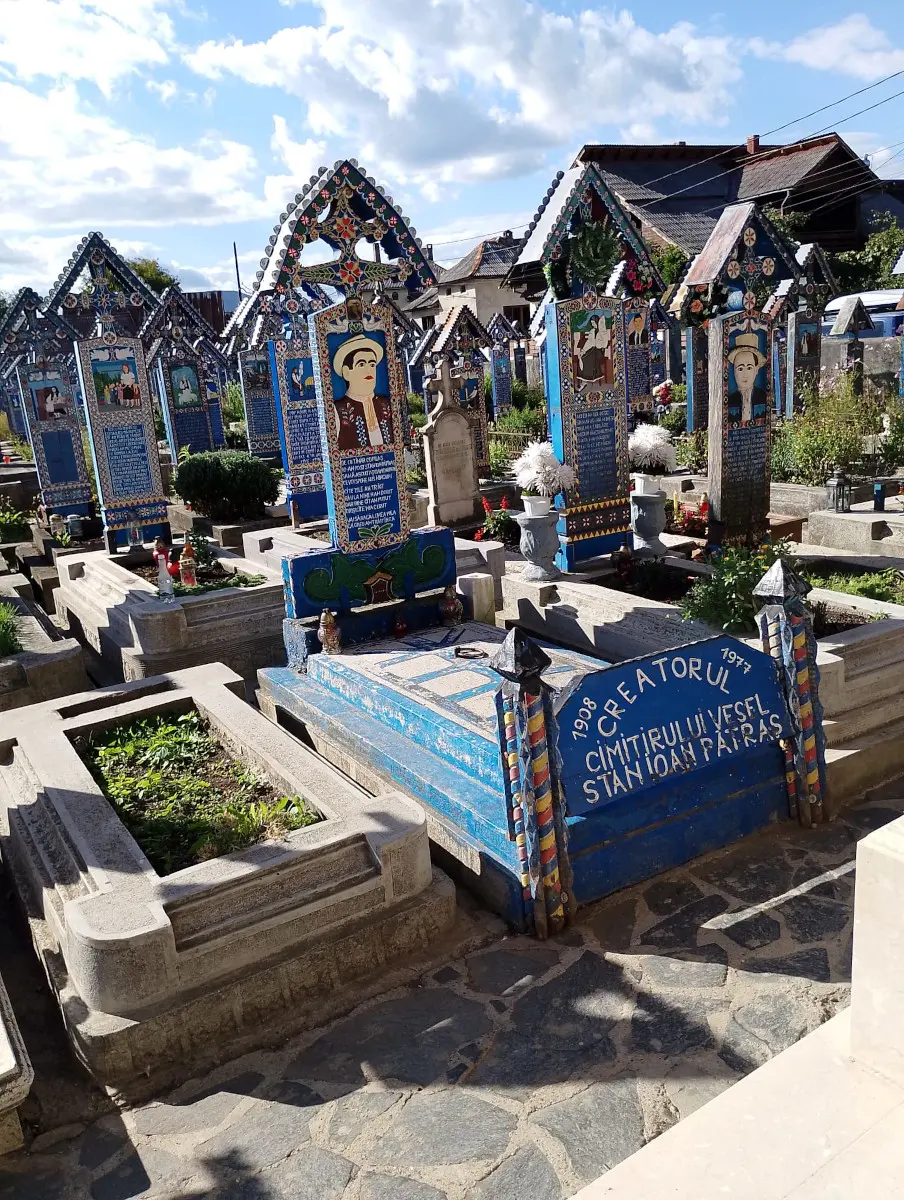
The story of the Merry Cemetery of Săpânța begins in the 1930s with Stan Ioan Pătraș, a local woodcarver, sculptor, and painter. Pătraș had the idea to break away from traditional gravestones and instead craft brightly painted wooden crosses, each with a short poem or epitaph telling the story of the person buried there.
Some epitaphs are humorous, gently poking fun at the person’s quirks.
Others are brutally honest, revealing flaws or the cause of death.
Many are deeply touching, telling stories of hardworking lives, family ties, or local tragedies.
By the 1960s, Pătraș’s work had gained recognition beyond the village, and today the cemetery is home to over 800 colorful crosses, all continuing his tradition. After Pătraș’s death in 1977, his apprentice, Dumitu Pop Tincu, carried on the craft, ensuring that this unique folk art survives.
The art continues today, and I hope they will manage to pass it over to the next generation too!
In 2005, UNESCO recognized the Merry Cemetery as part of Romania’s intangible cultural heritage, highlighting its unique blend of art, humor, and local tradition.
What Makes the Merry Cemetery Unique
When you walk through Săpânța’s Merry Cemetery, the first thing that strikes you is the explosion of color. Unlike the dark, heavy atmosphere of most cemeteries, this one is filled with cheerful hues – especially the famous “Săpânța Blue”, a bright sky-blue background used on most crosses.
Here’s what makes it truly special:
Colorful Crosses and Naïve Folk Art
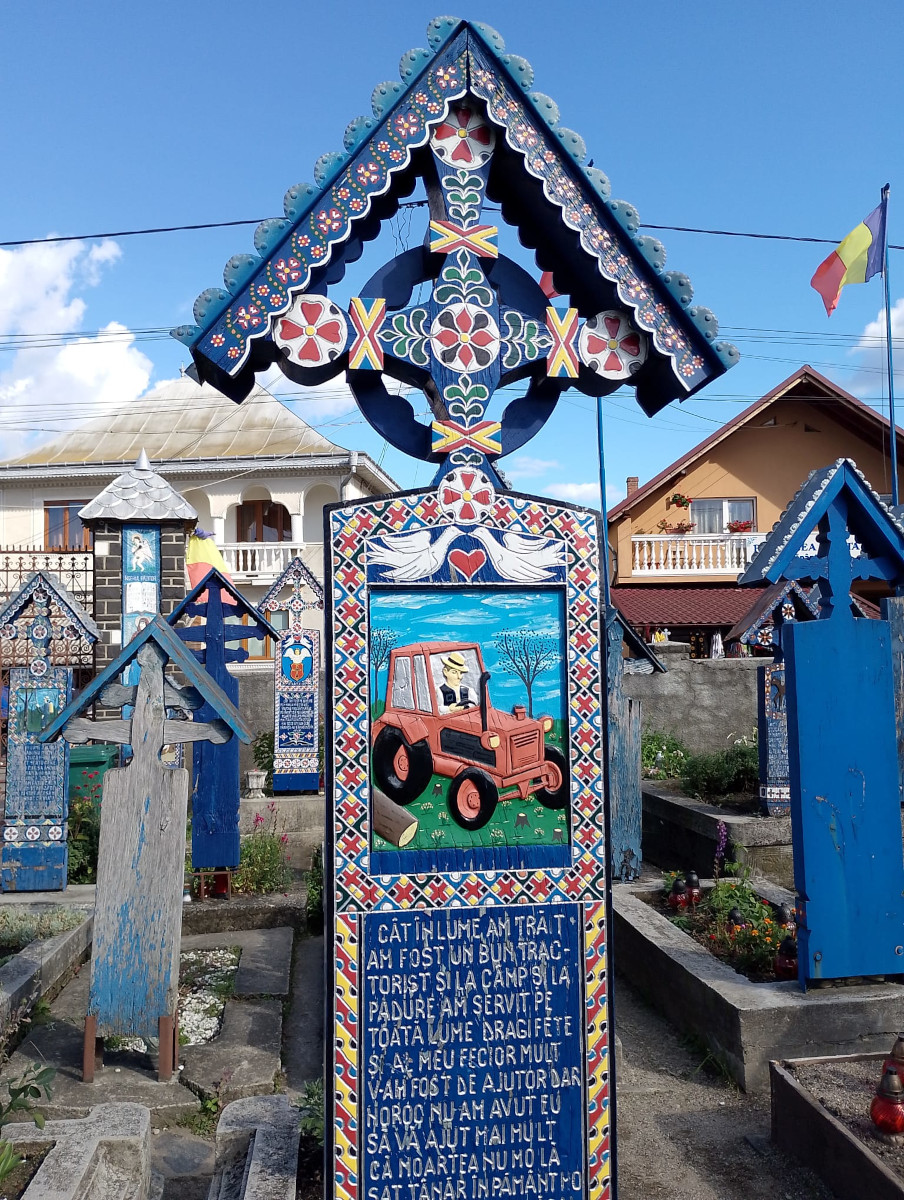
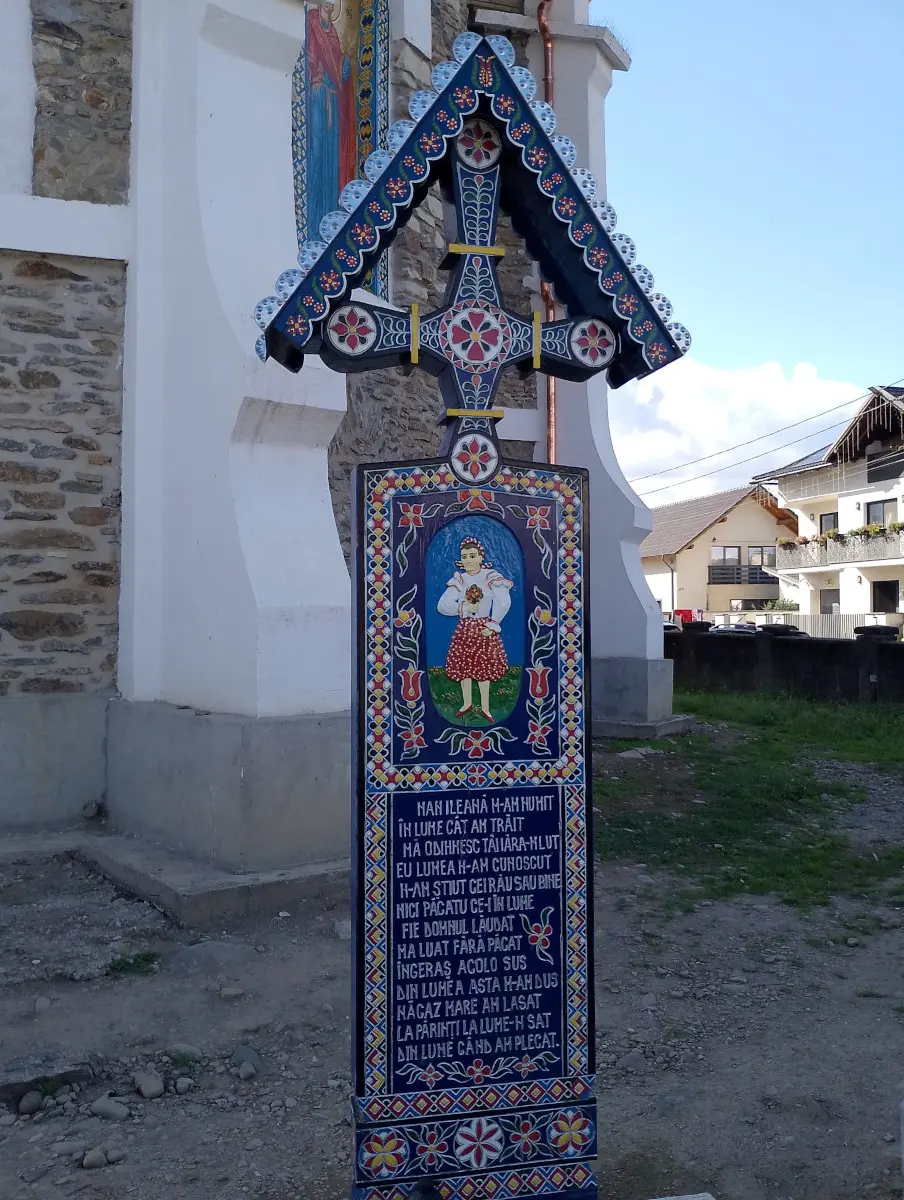
Each wooden cross features an image carved and painted in a folk-art style. These images often depict the deceased at work, doing something they loved, or even the manner in which they died.
For example, you might see a woman baking bread, a shepherd with his sheep, or a tragic accident illustrated with brutal honesty.
Best Merry Cemetery Epitaph Translations
The poems in Săpânța cover the entire spectrum of human life. While some mock the ‘Mother-in-law’ or a ‘Drunkard,’ others – like the Miner who built two houses or the Spinner who worked the markets to leave an inheritance for her son—show the deep pride and hardworking spirit of the Maramureș people.
The short poems or verses inscribed on the crosses are the heart of the Merry Cemetery. Some are funny, others bittersweet, and a few downright blunt. They are written in the first person, as if the deceased is speaking to you from beyond the grave.
Examples include lines like:
- The Drunk’s Regret: “Here I rest. I loved my car too much, and it killed me.”
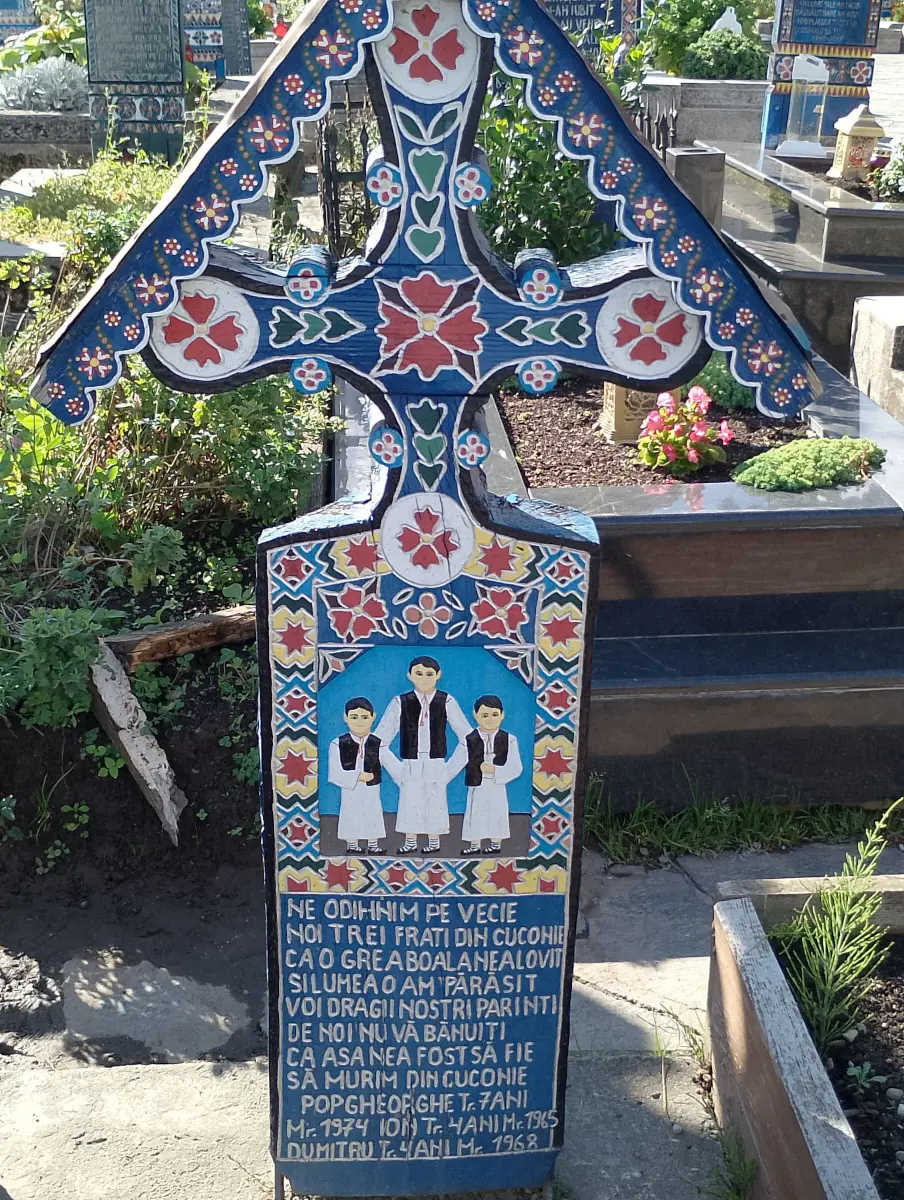
- The Sad Story:
“We rest here forever,
We three brothers from childhood.
A grave illness struck us,
And we left this world.
You, our dear parents,
Do not blame yourselves,
For it was destined to be this way,
That we should die in childhood.”Pop Gheorghe, age 7 (d. 1974)
Ion, age 7 (d. 1965)
Dumitru, age 7 (d. 1968)
- The Curse of the Taxi Driver:
“May you burn in hell
Taxi driver from Sibiu!
In all of Romania
You could find no other place
But here, near our house
To stop and hit me
And bring grief to my parents.
For as long as they live
They will weep for me.”
- The Philanderer’s Roast:
“Ioan Toaderu loved horses.
One more thing he loved very much:
To sit at a table in a bar
Next to someone else’s wife.”
(one of many – there are a few such stories)
- The Communist Party Lover:
“As long as I lived, I loved the Party
And all my life I tried to help the people.”
In a region that lived through decades of communism, seeing a grave that openly celebrates ‘loving the Party’ is a fascinating, unfiltered look at the complex history of Maramureș.
- The Miner’s Pride
“I left from Săpânța
And got a job at the mine
I earned a lot of money
And I built two houses
This is what I liked most
Because I had two children
I did a lot for them
I raised them and educated them
They finished high schools
But even though I finished it all
A heavy illness found me
And there was no way to escape
So I left this world
At 78 years old. †2005”
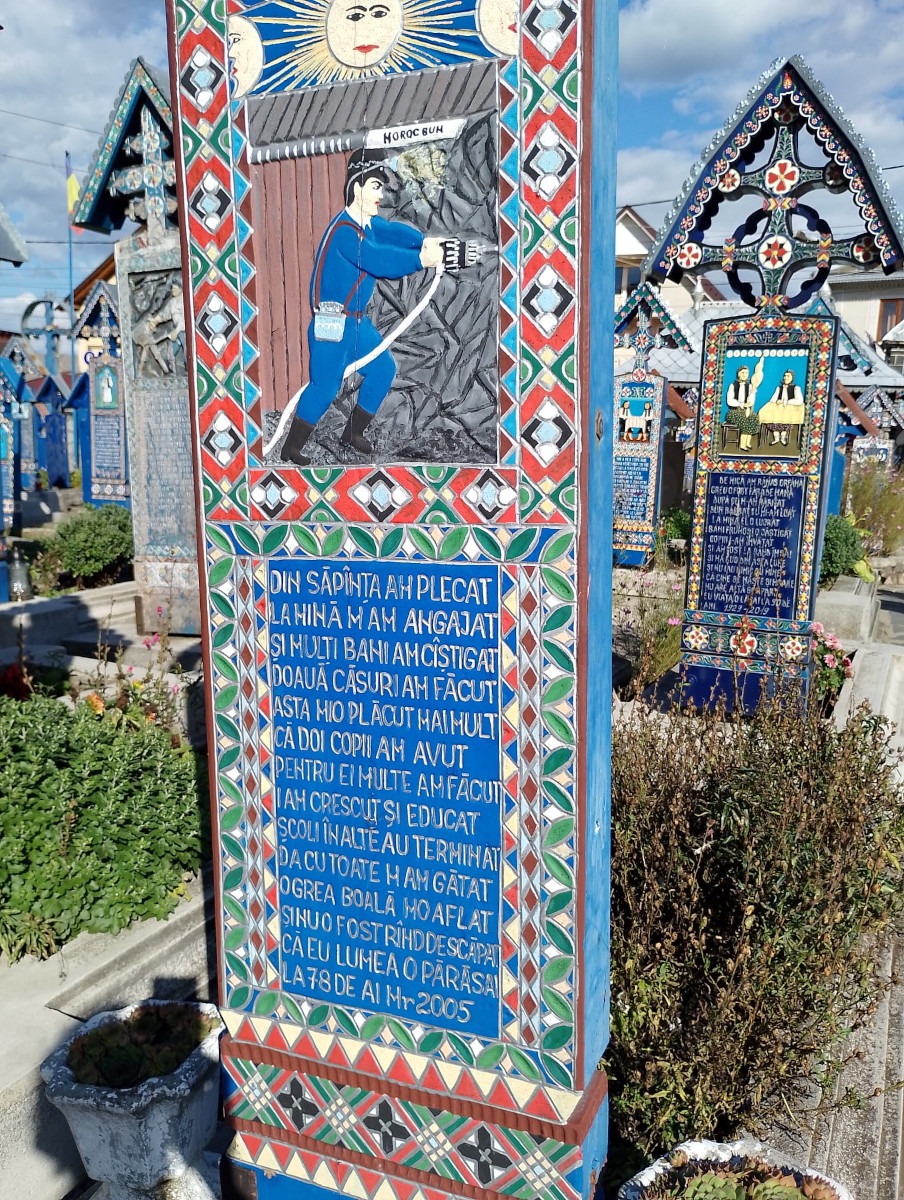
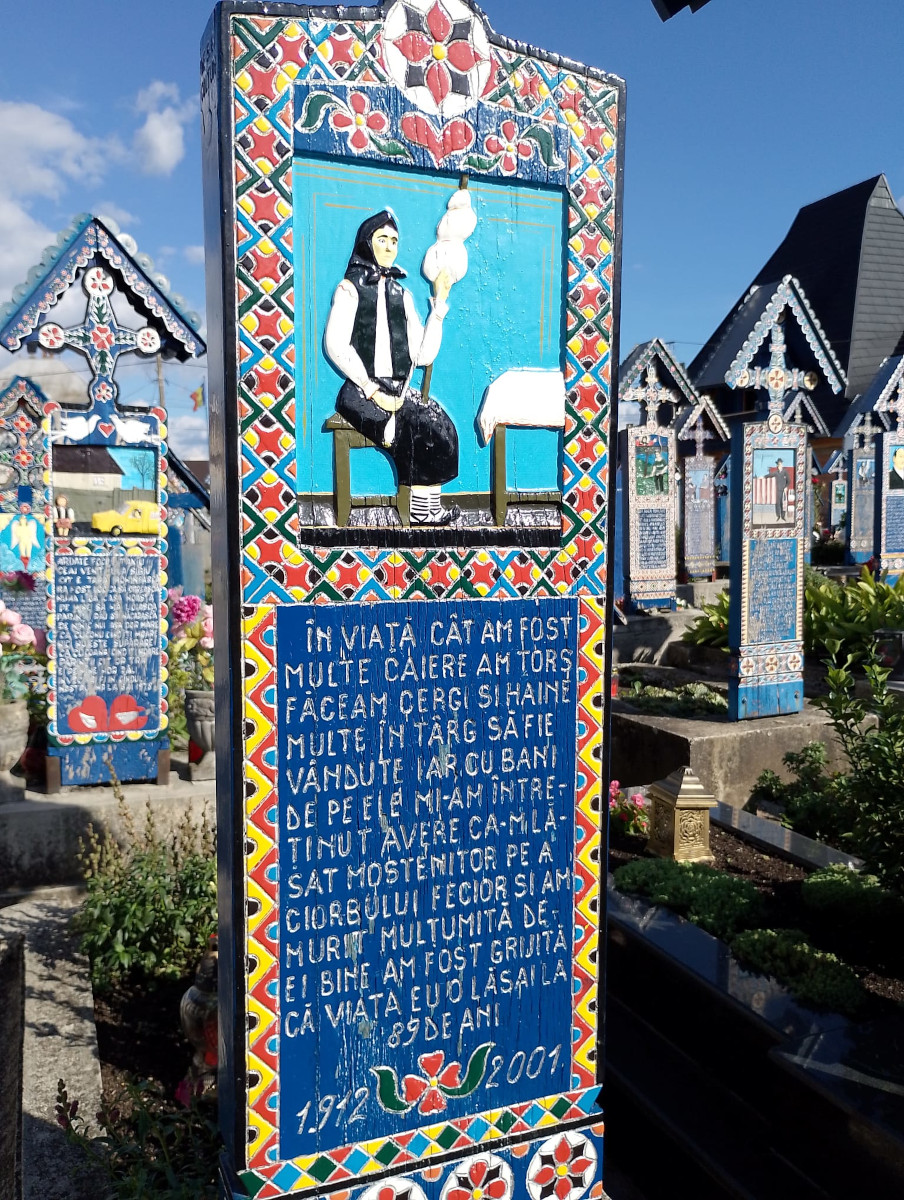
- The Spinner’s Legacy
“While I was in this life
I spun many spools of wool
I made blankets and clothes
So there would be many in the market
To be sold; and with the money
I earned from them, I maintained my wealth
Which I have left as an inheritance
To my son, Ciorbul
And I died satisfied
Because they took good care of me
Now I leave this life
At 89 years old.
1912 – 2001”
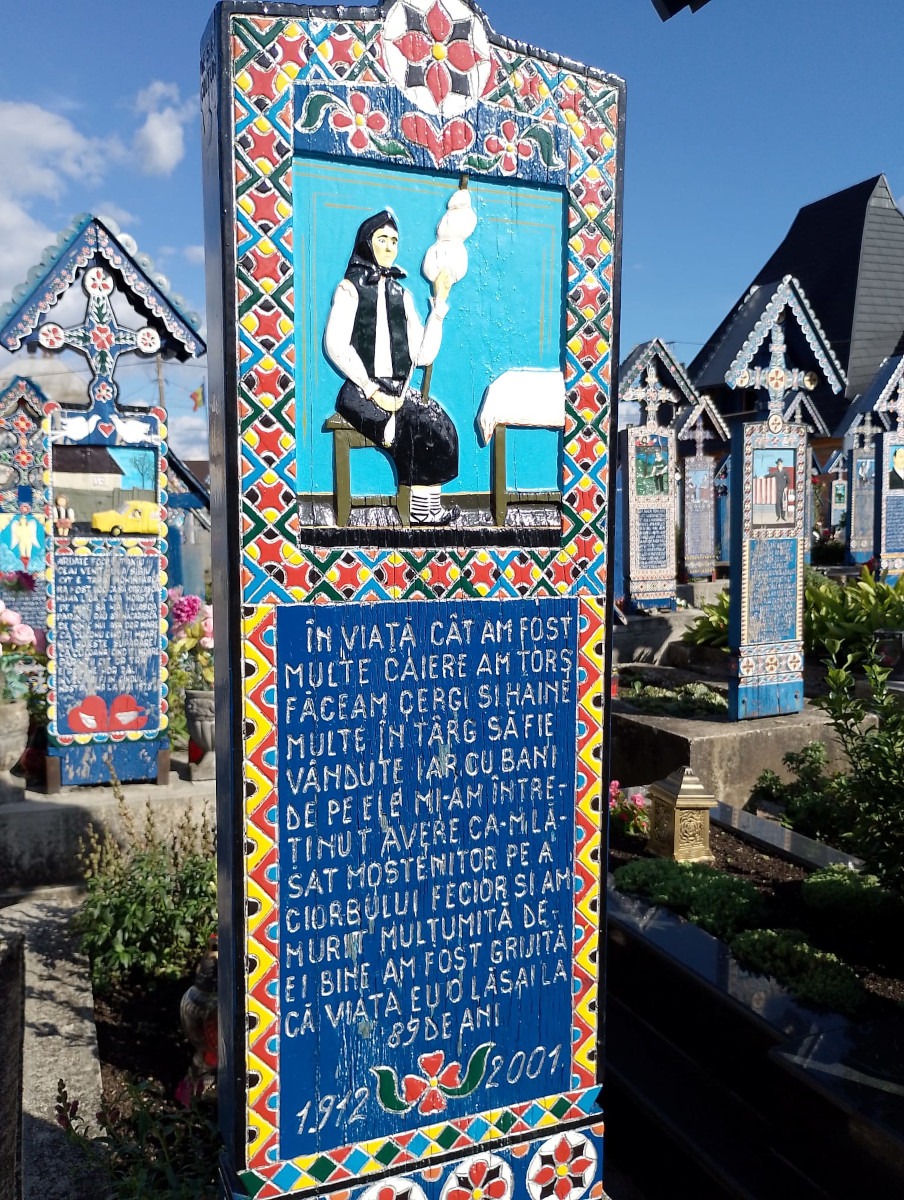
These epitaphs bring out a smile, surprise, or even discomfort or deep sadness – but they always make you think.
A Philosophy of Acceptance: More Than Just a Grave
At its core, the Merry Cemetery reflects a philosophy of acceptance.
What struck me most during my visit was that in the Merry Cemetery, a cross is never just a cross. It’s not simply a name, a date, and a generic inscription like you often see elsewhere. Instead, each one tells a life story, a mini-biography carved and painted in wood, meant to be read and remembered for generations.
Through the naïve folk art, the painted portraits, and the witty or emotional epitaphs, you get to know something real about the person who rests there – what they loved, how they lived, or even how they died. It feels like every cross is a snapshot of a human life, condensed into a few verses and an image that captures their essence.
Visiting the cemetery, I realized I wasn’t just walking among graves. I was meeting people – farmers, teachers, mothers, children, soldiers – ordinary lives preserved in extraordinary ways.
Some of their stories made me smile, others made me cry, but all of them made me pause and reflect.
The Merry Cemetery ensures that the past isn’t reduced to just names and dates. Instead, it reminds us that every life, no matter how long or short, has meaning and leaves a trace worth remembering.
Is the Săpânța Cemetery Really ‘Merry’?
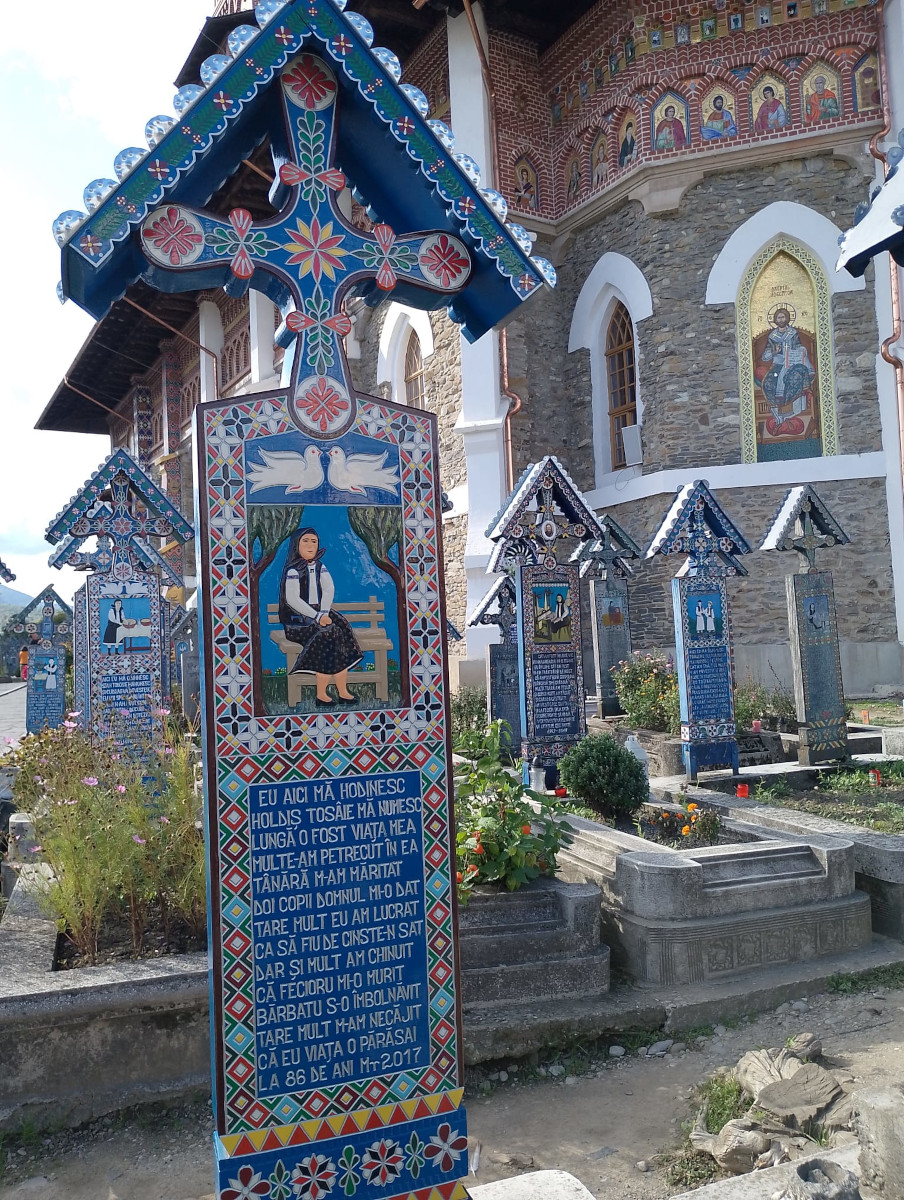
When I first stepped inside, I wasn’t sure how to feel. Can a cemetery really be “merry”?
The truth is, it’s a mix of emotions. The “merriness” doesn’t mean the place mocks death. Instead, it’s about celebrating life and facing death without fear.
Why the Epitaphs Make You Smile
One of the most unforgettable aspects of the Merry Cemetery is the playfulness of the epitaphs. Written in the first person, as though the deceased is speaking directly to you, they often include witty remarks, humorous confessions, or even sarcastic commentary on their own lives.
Reading them feels like hearing someone’s unfiltered last words – sometimes cheeky, sometimes brutally honest, but always human. I remember stopping in front of a cross where the “voice” of the deceased joked about their love for drinking and how it had led them to an early grave. Instead of sadness, I caught other visitors smiling. And I smiled while reading some of the epitaphs too.
The Meaning of ‘Săpânța Blue’ and Folk Art
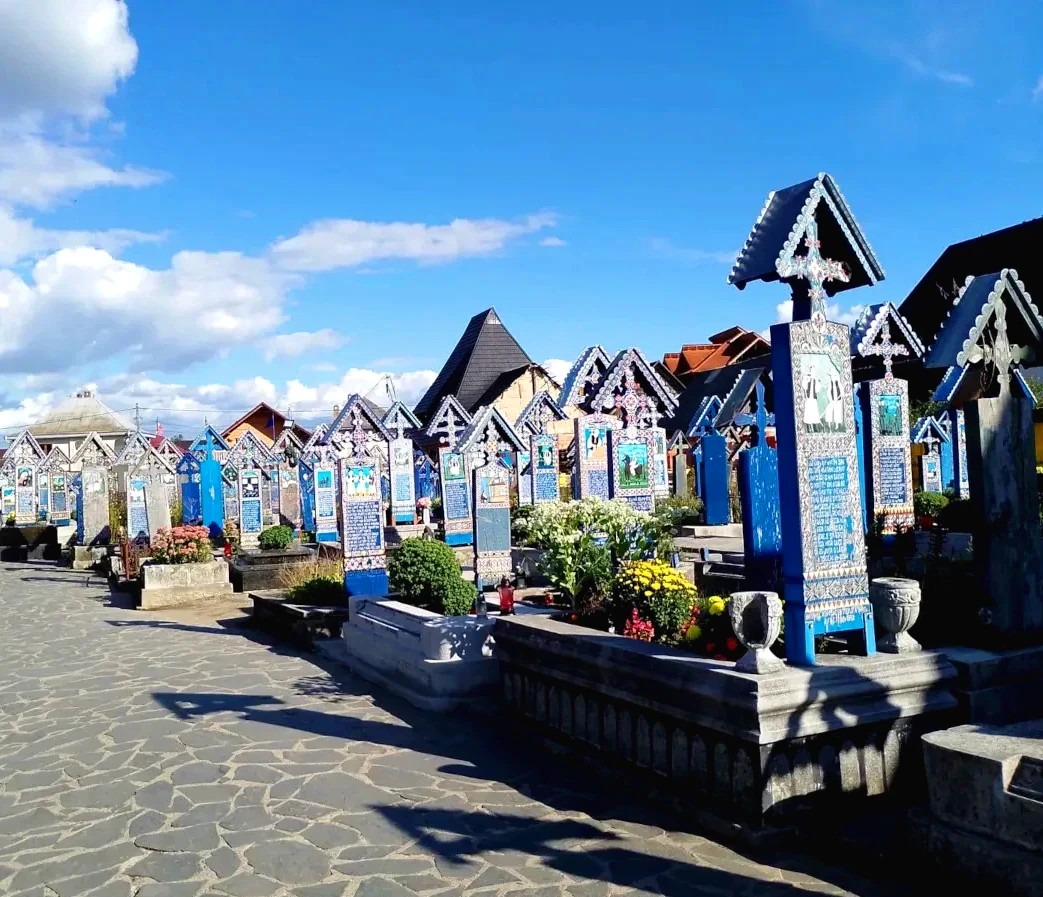
Another reason the Merry Cemetery truly deserves its name is the explosion of color that greets you at every turn. For me, this is THE reason I believe this cemetery can be called merry. It is not gray and sad.
Bright blues, vivid reds, cheerful yellows, and bold greens dominate the crosses, each stroke of paint bringing life to a place usually associated with muted grays and blacks. The famous “Săpânța Blue,” a vibrant sky-blue background used on many crosses, has become a symbol of the cemetery itself.
Walking among them, I didn’t feel weighed down by gloom – instead, the crosses seemed to celebrate the lives of those who had passed.
The naïve folk-style paintings, often depicting the deceased doing something they loved – working in the fields, weaving, playing an instrument – made the cemetery feel more like a gallery of life stories than a resting place for the dead.
The Sobering Reality: When the Laughter Stops
Of course, not every story in the Merry Cemetery is merry. Some of the most striking epitaphs are also the saddest, recounting tragic deaths from accidents, illness, or war. Or children dying young. I had tears in my eyes reading these stories.
Seeing a painted cross of a young woman holding her child, with an inscription about her untimely passing, stopped me in my tracks. Another showed a man killed in a car crash, the image painted with blunt honesty. There was another one about a man who was in an elevator in a foreign country. The elevator crashed.
These stories remind visitors that behind the humor and the bright colors lies a deep respect for the struggles and sorrows of life in Maramureș.
For me, these sobering moments balanced the smiles and emphasized again that the Merry Cemetery isn’t about mocking death – it’s about telling life’s story truthfully, with all its joys and tragedies woven together.
So yes, it’s merry, but in a uniquely Romanian, Maramureș way, where humor and tragedy intertwine naturally in folk culture.
The Traveler’s Dilemma: Is it Ethical to Laugh?
When you see a grave roasting a man’s drinking habits or a mother-in-law’s temper, you might feel a pang of guilt. Is it okay to laugh in a graveyard?
In Săpânța, the answer is a resounding yes. Or at the very least to smile. The locals believe that a silent grave is a forgotten grave. By reading the poems aloud, laughing at the jokes, and discussing the deceased’s life, you are performing an act of remembrance. In Maramureș culture, being “merry” isn’t about mocking the dead – it’s about refusing to let death have the last word. You aren’t visiting a site of grief; you are visiting a gallery of lives well-lived. It is a must-see stop on any trip through Romania.
Plus, some of the stories are not funny, so you will not smile/laugh continuously, but you will learn, like nowhere else on earth, about each person’s life!
Visiting the Merry Cemetery: What to Expect
Location
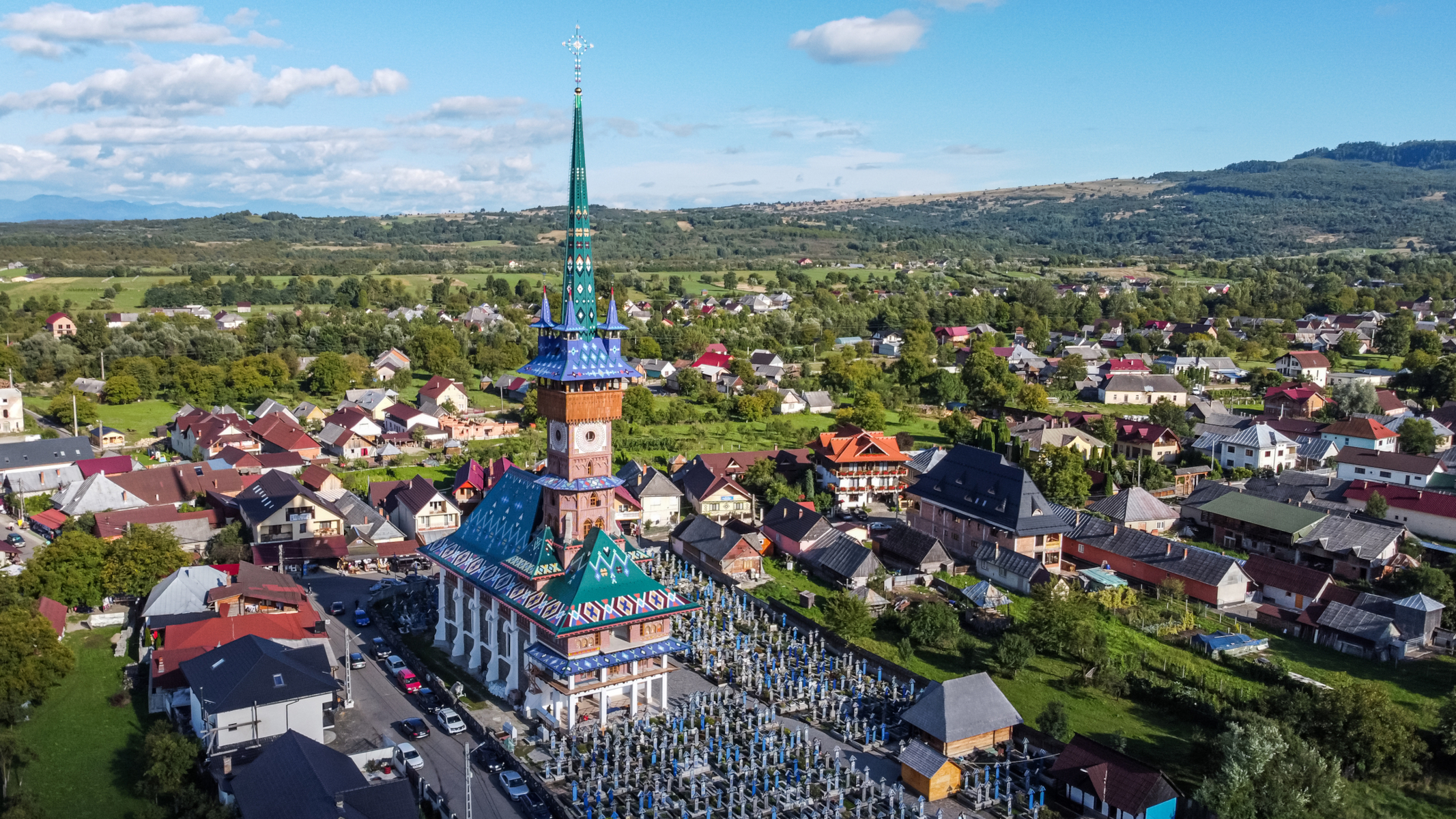
The Merry Cemetery is located in Săpânța, a small village in Maramureș County, northern Romania, close to the Ukrainian border. Săpânța is located about 20 minutes (20km) from Sighetu Marmației and 4 hours from Cluj-Napoca.
How To Get To Sapanta Merry Cemetery
| From | Distance | Travel Time | Best Mode of Transport |
| Sighetu Marmației | 20 km | 25 mins | Car / Taxi |
| Baia Mare | 80 km | 1.5 hours | Car / Bus |
| Cluj-Napoca | 220 km | 4 hours | Car / Rental |
Atmosphere
ID 232258880 ©Vladescu Bogdan | Dreamstime.com
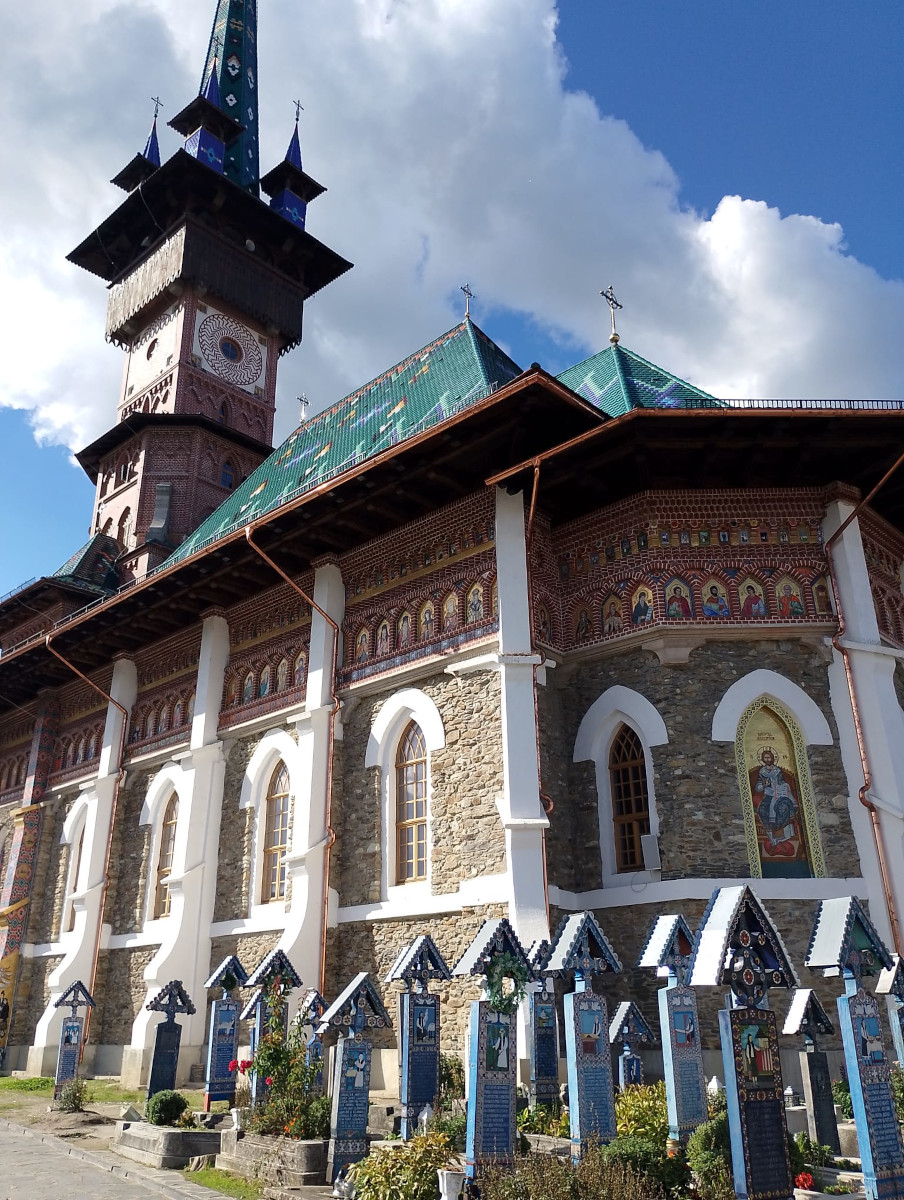
When you walk in, you’re greeted not just by the colorful crosses but also by the wooden church at the center. The church itself is part of the experience, decorated in the same style of folk art and colors.
You’ll often see tourists wandering quietly, smiling as they read epitaphs, sometimes even chuckling softly. There’s an unspoken agreement: respect, but also acceptance of the humor.
Best Time to Visit the Merry Cemetery
Spring and summer bring the brightest atmosphere, with flowers adding even more color. In winter, under the snow, the crosses look magical.
We visited in autumn, on a weekday. There weren’t many visitors – people were at their jobs, and most of the people in the cemetery were tourists. But not crowded.
Pro tip: Visit in the morning (8:00 AM – 10:00 AM) for the best lighting for photos and to avoid the tour buses. Also, remember your Google Translate app so that you understand what it is written on the crosses.
How Long to Spend
I recommend at least 1–2 hours. You’ll want to slowly read the epitaphs, admire the artwork, and take in the unique vibe.
While the epitaphs are in Romanian, you can use the Google Translate app – picture feature – and translate them.
Fact: Allow 90 minutes to 2 hours. You will find yourself wanting to translate more poems than you originally planned!
The Living Workshop (A 2026 Insider Tip)
One of the biggest mistakes travelers make is thinking the Merry Cemetery is a “static” museum. It is actually a living, breathing tradition. If you listen closely while walking through the rows of blue crosses, you might hear the rhythmic clack-clack of a chisel.
Just 200 meters from the cemetery gates is the Stan Ioan Pătraș Memorial House (use Google Translate from Romanian to English or your mother tongue for this). This is where the magic still happens.
Pătraș’s apprentice, Dumitru Pop Tincu, continues to carry the torch. He lives and works in the same house where the tradition began, carving new “roasts” for the village’s recently departed. Visiting the workshop allows you to see the raw oak logs before they are transformed into “Săpânța Blue” masterpieces. It’s a rare chance to see an intangible UNESCO heritage craft in action in 2026.
20 Years Later: My Personal Journey Through the Merry Cemetery
I first visited the Merry Cemetery in Săpânța 20 years ago on my honeymoon. I know how that sounds – a cemetery on a honeymoon! – but while vacationing in Vatra Dornei, we couldn’t resist a day trip to see the famous monasteries and this legendary blue burial ground.
I honestly wasn’t sure what to expect. How could a place associated with grief be “merry”? But walking among the crosses, I found something much deeper than a quirky tourist attraction.
I smiled at the witty epitaphs, felt moved by the tragic ones, and admired the raw artistry of every carving. It made me pause and reflect: How would I want my life summed up in a few lines? Walking here doesn’t just make you think about death; it forces you to think about how you are living right now. It is a surreal, beautiful reminder that every life – ordinary as it may seem – is a story worth telling with honesty and art.
Practical Tips for Visiting the Merry Cemetery
Entry Fee: There’s usually a small fee (a few lei) to enter. It is around 2 $ or 2 euros.
Photography: Allowed, but be respectful. Don’t treat it like a theme park.
Guides: Local guides can explain the stories in English, which makes the experience richer.
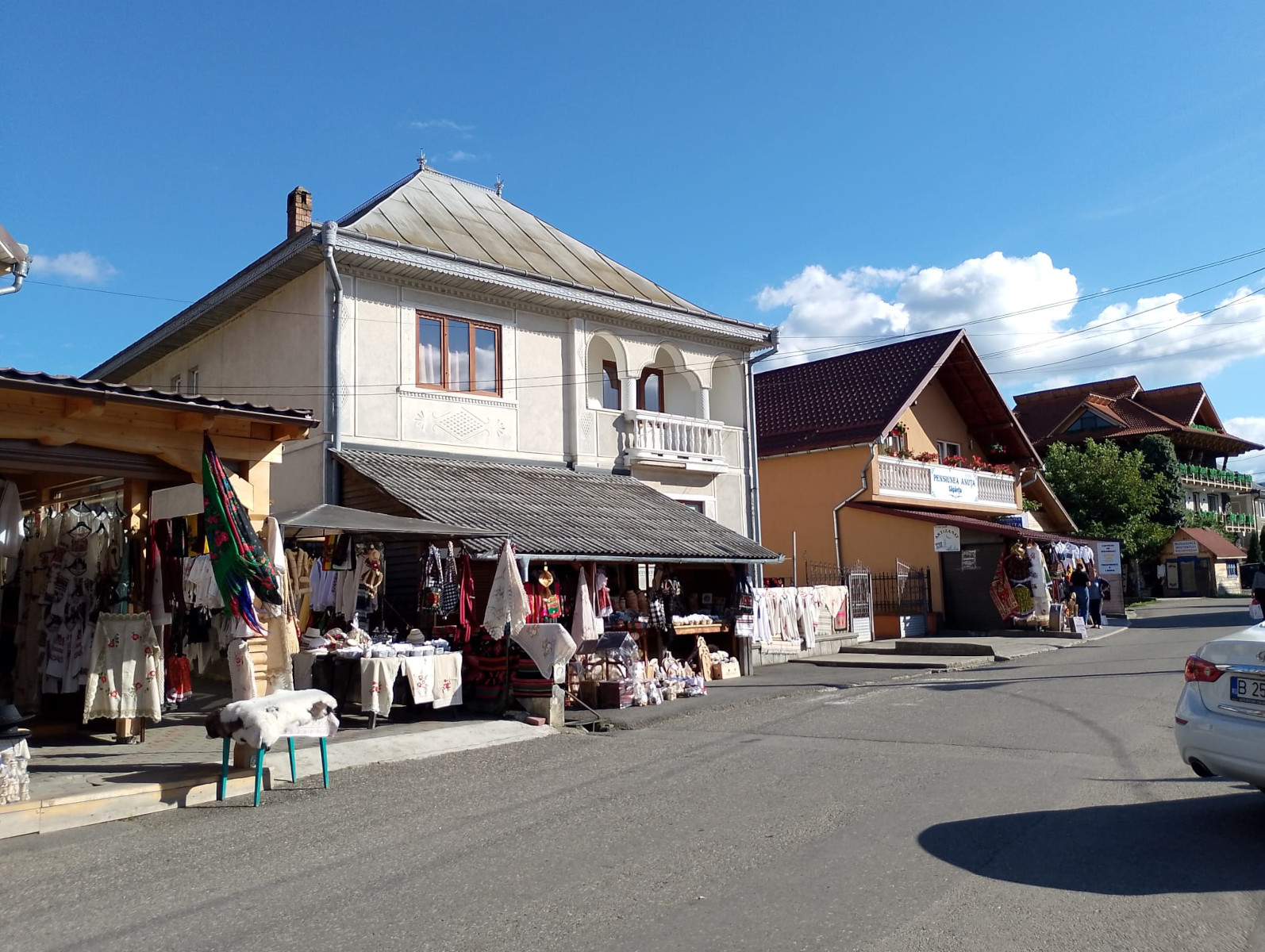
Souvenirs: You can buy miniature wooden crosses or books with epitaph translations – or many other traditional souvenirs.
Combine with Other Attractions: Maramureș is full of wooden churches (many UNESCO sites), traditional villages, and beautiful countryside.
Why You Should Visit the Merry Cemetery
If you’re traveling to Romania, especially northern Romania – Maramures area, the Merry Cemetery is a must-see because:
- It’s one of the most unique cemeteries in the world.
- It offers a window into Romanian humor, culture, and folk art.
- It makes you reflect on life in a lighthearted way.
- It’s a UNESCO-recognized cultural treasure.
- It’s unlike anything you’ll find anywhere else.
Conclusion
The Merry Cemetery of Săpânța is more than just a quirky tourist attraction – it’s a philosophy in wood and paint. It teaches us that death isn’t just something to fear or mourn but something to acknowledge with honesty, humor, and humanity.
When you visit, you’ll smile, laugh, maybe even shed a tear, and you’ll walk away with a new perspective on how we tell our life stories.
If you’re planning a trip to Romania, especially the Maramureș region, don’t miss the Merry Cemetery. It’s a once-in-a-lifetime experience that will stay with you long after you’ve left.
More amazing articles for you:
This Underrated English City Has Lavender Fields, Roman History, and a Stunning Coastline
The Iconic Christmas Pavlova Everyone Loves - Here’s How to Make It Perfect
200 Fun August Trivia Questions and Answers - Easy to Hard
Indian Dishes You Have To Try At Least Once In Your Lifetime
Every City Has These 15 Free Things - You Just Have to Know Where to Look
If You Do These Things Naturally, You’re Probably Smarter Than You Realize
New to Indian Food? Start With These Dishes Everyone Falls in Love With
Why Ljubljana Might Be the Most Beautiful Capital You’re Not Visiting

Violeta-Loredana Pascal is a communications expert, business mentor, and the founder of Earth’s Attractions and PRwave INTERNATIONAL. A pioneer in the Romanian digital PR landscape since 2005, she holds a degree in Communication and Social Sciences from SNSPA Bucharest. Violeta is a senior trainer at AcademiadeAfaceri.ro, where she leverages over 20 years of experience to teach professional courses in PR strategy and workplace productivity. By blending high-level business consulting with a passion for holistic travel and wellness, she empowers solopreneurs to overcome procrastination, build profitable brands, and design a life of purposeful adventure.