I love traveling, but I’ve heard enough stories about what happens on airplanes to know not everyone has the same idea of acceptable passenger behavior. And flight attendants, who deal with hundreds of passengers, have probably seen things the rest of us wouldn’t even imagine.
I’ve watched several flight attendants share their experiences and advice, and I have to admit some of what they describe is quite disgusting. Others involve safety risks or passenger behavior that can create unnecessary problems for everyone on board. What gets me is that much of this advice is common sense, yet flight attendants still have to repeat it.
I’ve collected 19 things flight attendants say you should never do on an airplane, along with their explanations and a few real incidents involving passengers and crew members.
I’m starting with two things that really shouldn’t need explaining, yet they still happen.
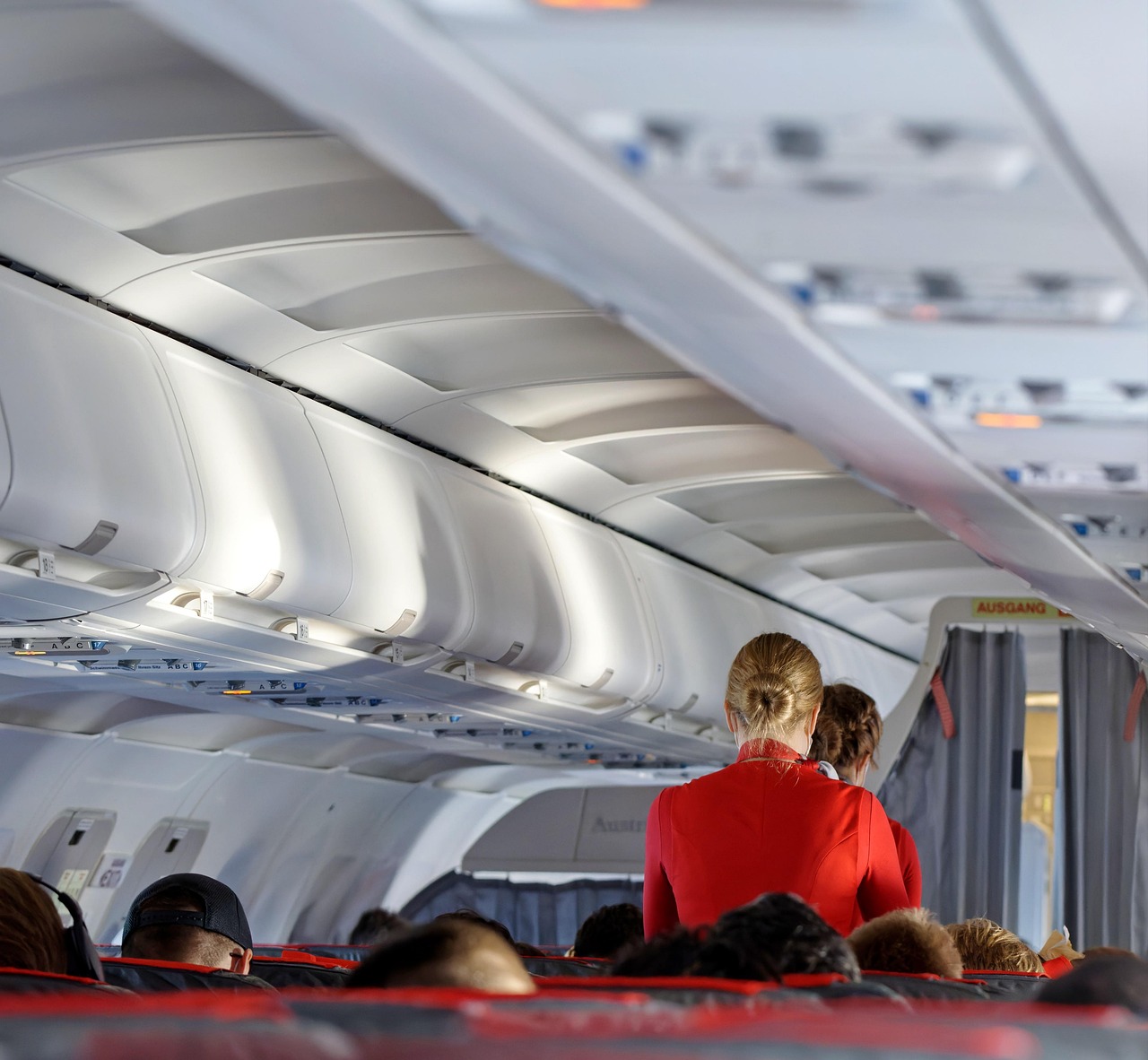
What Not to Do on an Airplane According to Flight Attendants
Personal Space and Safety: Where Problems Can Start
1. Don’t touch flight attendants to get their attention
It still happens: passengers tap a flight attendant on the shoulder, grab an arm or reach out while the crew member is busy with another task.
I understand wanting to ask a question, especially if you’ve been waiting a while. But you wouldn’t grab a stranger’s arm in a restaurant to ask for something, and there’s no reason to do it on a plane. Use the call button when appropriate, or politely say “excuse me” when a flight attendant is nearby.
And the crew already have plenty to deal with. In another article, I shared flight attendants’ complaints about passenger behavior, including people who ignore repeated requests or become verbally abusive.
2. Don’t stand up immediately after landing
The plane touches down, someone unbuckles their seatbelt, and suddenly half the cabin seems ready to jump into the aisle. But landing isn’t the same as arriving at the gate.
The aircraft may still need to taxi, stop or turn. Standing before the seatbelt sign goes off can lead to injuries if it brakes unexpectedly. And even after the sign goes off, rushing into the aisle doesn’t mean you’ll get off first. There’s a reason people have started calling this behavior aisle lice.
Flight attendant Ale has spoken about staying seated while the aircraft is moving. It’s one of the simplest things passengers can do to avoid an unnecessary accident.
3. Don’t ignore the seatbelt sign
If the seatbelt sign comes on during a flight, fasten your belt. It might be because the crew expects turbulence, or because conditions have already become uncomfortable.
Even when the sign is off, it’s sensible to keep your seatbelt loosely fastened while seated. Turbulence isn’t always predictable, and an unexpected jolt can throw an unrestrained passenger out of their seat. If you need something while the crew have been told to sit down, a routine request can wait. I’ve also covered passenger red flags flight attendants mentioned, including people calling for service during turbulence or landing.
4. Don’t sleep through important instructions during takeoff or landing
On an early flight, staying awake may be the last thing you want to do. And sleeping during takeoff or landing isn’t generally prohibited.
Still, make sure you’ve heard the safety briefing, followed the crew’s instructions and prepared your seat and belongings properly. If an unusual situation develops, you’ll need to respond quickly to instructions. Ale has also advised passengers to remain aware during critical phases of a flight.
If pressure changes make your ears uncomfortable, swallowing, yawning or chewing can help. Sleeping through a descent may mean you don’t do those things as often.
Airplane Hygiene: Habits Flight Attendants Wish Passengers Would Avoid
5. Don’t walk barefoot or in socks around the plane
Taking your shoes off while sitting in your seat is one thing. Walking to the lavatory in bare feet or socks is another.
Flight attendants regularly warn passengers that the liquid on a bathroom floor might not be water. Considering how many people use those tiny lavatories during a flight, I wouldn’t want my socks touching the floor either.
And the bathroom isn’t the only concern. I’ve shared more about the dirtiest airplane surfaces, based on what flight attendants say they’ve seen on the job.
6. Don’t rest your face against the airplane window
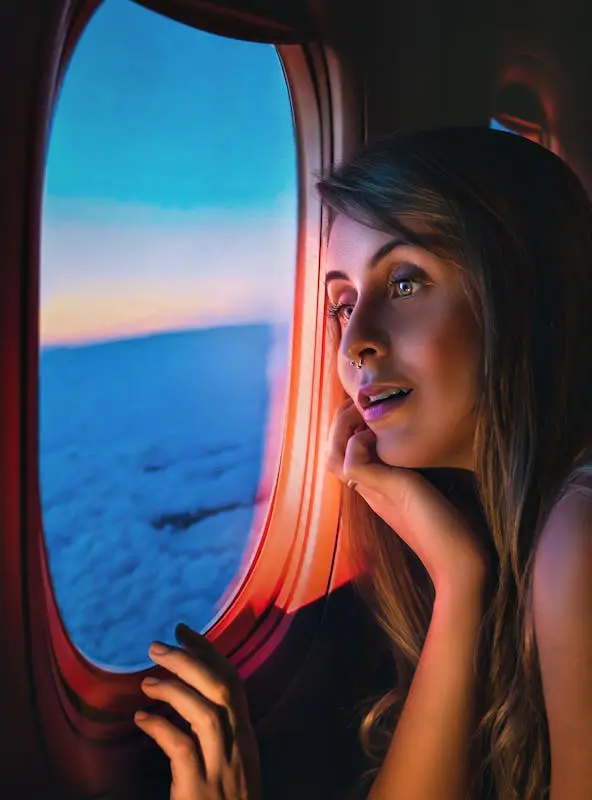
I love a window seat and a good view, but there’s a difference between looking outside and pressing your face against the window.
Passengers touch the windows and shades throughout the day, and there’s no guarantee those surfaces were thoroughly cleaned before your flight. Flight attendant Tommy Cimato put it this way: “You don’t know how many people or children have wiped their hands or other things on the window”.
If you want to nap against the side of the cabin, a travel pillow or a clean layer of clothing between your face and the wall is a better idea.
7. Think twice about wearing shorts or very short skirts
This isn’t a dress-code rule. It’s a hygiene suggestion from flight attendants who know how many passengers use the same seat.
Tommy Cimato recommends covering your legs because bare skin comes into direct contact with the seat upholstery. That doesn’t mean you’ll necessarily get sick from sitting in shorts, but it’s worth considering, especially on a long flight.
I’ve covered more advice on what not to wear on an airplane, including some of the less pleasant reasons a flight attendant gave for her recommendations.
8. Don’t touch the lavatory flush button with bare hands if you can avoid it
Lavatory flush buttons and door handles are used by passenger after passenger. You can’t avoid every shared surface on a flight, but using a tissue to press the flush button is reasonable.
More importantly, wash your hands thoroughly with soap and water after using the bathroom. The same goes for handling tissues, used diapers or anything else that belongs in the trash.
In-Flight Behavior That Can Cause Problems for Everyone
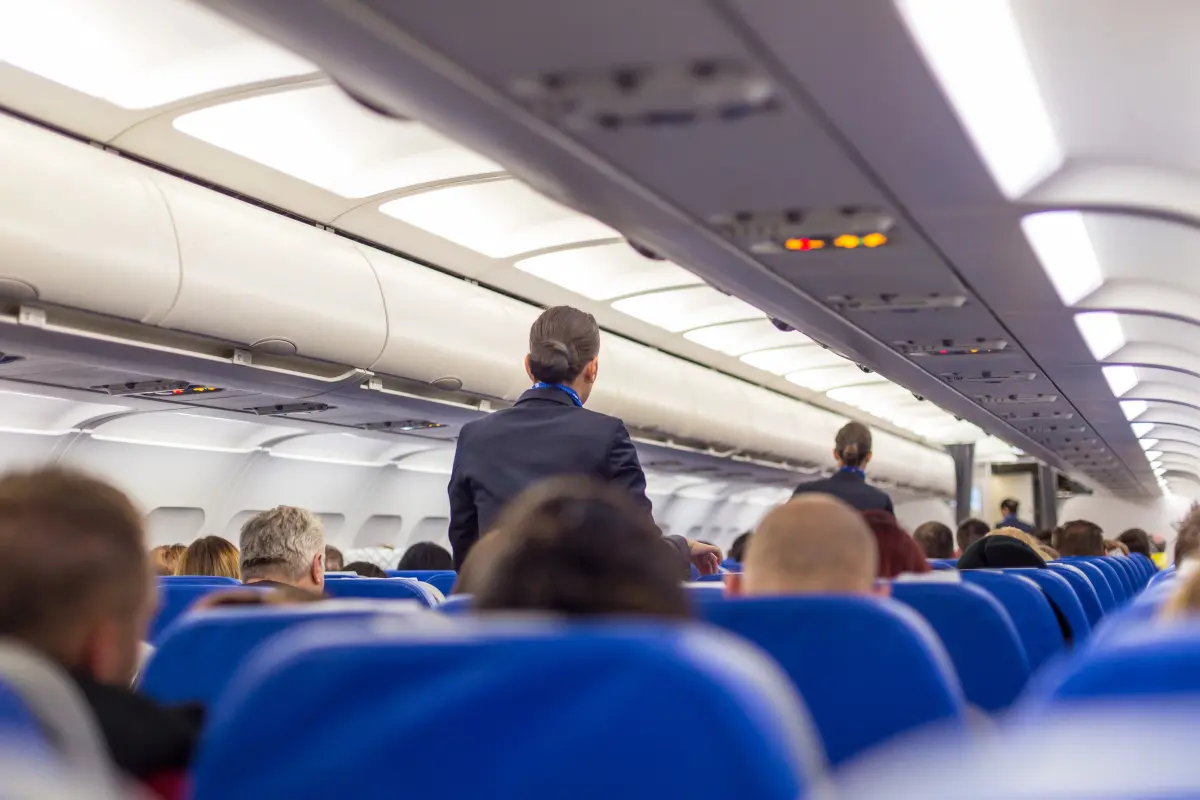
Image from Depositphotos
9. Don’t drink alcohol you’ve brought yourself aboard
You may be allowed to bring certain alcoholic drinks onto a plane, subject to security and airline restrictions. That doesn’t mean you can open a bottle and serve yourself during the flight.
On US airline flights, federal regulations say passengers can’t drink alcohol unless the airline has served it to them. The crew need to monitor alcohol service and can refuse to serve someone who appears intoxicated. Rules elsewhere may vary, so always follow the airline’s instructions.
10. Don’t try to squeeze past the service cart unnecessarily
Anyone who’s flown in an economy cabin knows how narrow the aisle can be. Once the meal or drinks cart is out, getting past it may be difficult or impossible.
If you can, use the lavatory before service starts or wait until the cart has passed your row. Of course, if you urgently need the bathroom or feel unwell, tell a crew member. There’s no reason to turn a genuine need into an etiquette problem.
11. Don’t hand flight attendants your trash while they’re serving food
It might seem helpful to get rid of your empty cup or used napkin while a flight attendant is already beside your seat. But if they’re handling drinks or food, they may not have anywhere hygienic to put it.
Most flights have a separate trash collection. Keep your rubbish together and hand it over when the crew comes through with a bag. And please don’t leave anything unpleasant stuffed into the seat pocket. I covered an incident in which a dirty diaper was reportedly left there despite a flight attendant’s warning. Just imagine being the next passenger in that seat.
12. Don’t use hairspray or spray deodorant in the lavatory
This is one of the less obvious recommendations, but it makes sense given how small an airplane bathroom is.
Spraying hairspray or deodorant in an enclosed lavatory can be unpleasant for the next person, especially someone sensitive to fragrances or aerosols. Sprays and mists may also interfere with some detectors, depending on the product and circumstances, so it’s best not to use them there. A non-aerosol alternative is more considerate.
Luggage and Boarding: Mistakes Worth Avoiding
13. Don’t bring a cabin bag you can’t safely lift
Before choosing a carry-on, think about whether you can actually get it into the overhead bin. Some bags meet the size allowance but become extremely heavy once they’re packed.
Flight attendants aren’t generally there to lift every passenger’s luggage, and doing so repeatedly can cause injuries. That doesn’t mean you should be afraid to ask about assistance if you need it. Check the airline’s accessibility arrangements in advance, and never risk hurting yourself or someone else to get a bag into a compartment.
14. Don’t assume you can fill an overhead bin with all your belongings
Overhead space can fill up quickly, especially on busy flights. Putting a jacket, backpack and multiple bags into the bin when one item could fit under your seat makes boarding harder for other passengers.
And people do argue about this. In one incident I covered, a passenger repeatedly ignored requests about overhead-bin space until a flight attendant had to intervene. Follow the airline’s baggage rules and the crew’s instructions about where to stow your items.
15. Don’t make nonurgent requests while everyone is boarding
During boarding, flight attendants check the cabin, help people find their seats, deal with bags, and get the aircraft ready to leave.
Asking for a blanket or a drink can usually wait until the crew is available to provide it. If you need water to take medication, feel unwell, or have another urgent need, speak up. The point isn’t that passengers shouldn’t ask for help; it’s that ordinary requests can wait when the crew is busy preparing for departure.
16. Don’t put your passport, phone or wallet in the seat pocket
The seat pocket is convenient, which is exactly why it’s so easy to forget something there. You put your phone away for a moment, collect your bag after landing, and walk off without checking.
I’d keep passports, wallets and other essentials in a small bag or a secure pocket instead. I’ve also shared other places people lose phones, and some of them are just as easy to overlook.
Other Important Things Not to Do on a Plane
17. Don’t change a baby’s diaper on the seat or tray table
I wish this one didn’t need to be included. Tray tables are where people eat, work and sometimes rest their personal belongings. They aren’t changing tables.
Many aircraft lavatories have a fold-down baby-changing table. If you can’t find one, ask the crew which lavatory has one or how they recommend handling the situation. Changing a diaper on a shared tray table creates a hygiene problem for the people who use it afterward.
18. Don’t ignore illness or hand a used airsickness bag straight to the crew
If you start feeling unwell during a flight, let a flight attendant know. Don’t assume you have to manage everything on your own, especially if your symptoms are severe or getting worse.
If you’ve used an airsickness bag, keep it securely closed and ask the crew how they’d like you to dispose of it. Don’t place it in a seat pocket or hand it over unexpectedly while someone is serving food. Different airlines may have different procedures for dealing with contaminated waste.
19. Don’t ignore the safety briefing, especially in an exit row
Yes, you may have flown many times and heard the instructions before. But exit locations and procedures can differ between aircraft, so it’s still worth paying attention.
Exit-row seating comes with additional responsibilities. My husband has sat in an exit row a few times, and he confirmed that he was willing and able to do what would be required in an emergency.
There’s also a reason crew members check this carefully. In one exit-row incident I covered, a passenger said an airline agent moved him into the row and confirmed he could assist, only for a disagreement with flight attendants to develop later. The circumstances were disputed, but the story shows how seriously exit-row seating is treated.
If you’re unable or unwilling to help in an evacuation, tell the crew so you can be seated elsewhere. And if something in the briefing isn’t clear, ask.
What Flight Attendants Want Passengers to Stop Doing
Some of these habits are simply inconsiderate. Others involve hygiene, safety or the way passengers treat the people working on the aircraft.
I’ve seen enough unusual flight stories to know that even the obvious advice deserves repeating. People still stand up while the aircraft is moving, argue about bin space, leave revolting things where other passengers will sit, and expect flight attendants to deal with the consequences.
I love flying, and I don’t think most passengers behave this way. But I do think a little consideration makes a difference, especially when we’re all sharing such a small space for several hours.
If you’d like to hear the advice directly from flight attendants, these are some of the videos mentioned or used as sources for the article:
- Ale – flight attendant advice (video 1)
- Ale – flight attendant advice (video 2)
- Tommy Cimato – airplane hygiene advice
- More flight attendant tips (video 1)
- More flight attendant tips (video 2)
- Additional flight attendant advice
FAQ: What Not to Do on a Plane
Can I use hairspray or spray deodorant on a plane?
It’s best to avoid using aerosol sprays in an airplane lavatory. The space is small, other passengers may be sensitive to the spray, and some mists may interfere with detectors. Choose a non-aerosol product when possible.
Why can’t I drink my own alcohol on a flight?
On US airline flights, federal rules don’t allow passengers to consume alcohol unless it’s served by the airline. Flight attendants need to monitor alcohol service and may refuse drinks to anyone who appears intoxicated. Check your airline’s rules when flying elsewhere.
Why don’t flight attendants want passengers touching them?
Grabbing or tapping someone without permission crosses a personal boundary and may interrupt their work. Use the call button when appropriate or politely say “excuse me” instead.
Why shouldn’t passengers walk barefoot on a plane?
Airplane floors aren’t guaranteed to be clean, particularly in the lavatory. Liquids on the floor may include urine or other contaminants, so wear shoes when moving around the cabin.
Is it rude to hand trash to flight attendants during meal service?
It can create a hygiene problem when the crew are handling food and drinks. Unless a crew member asks for your rubbish, wait until the trash collection.
Why should passengers stay seated after the plane lands?
The aircraft may still be taxiing, and unexpected braking can injure someone who’s standing. Stay seated with your belt fastened until the crew indicate it’s safe to get up.
Can I change a baby’s diaper on an airplane seat?
Don’t change a diaper on the seat or tray table. Ask a flight attendant which lavatory has a changing table and what to do if there isn’t one available.
Should I put my passport or phone in the seat pocket?
I’d avoid it. It’s easy to leave important belongings behind when you’re gathering your bags and getting off the aircraft. Use a secure pocket or personal bag instead.
Why do flight attendants check passengers in emergency exit rows?
Passengers seated there may need to assist during an evacuation. Crew members must check that they’re willing and able to carry out the necessary actions. Anyone who isn’t should be moved to another seat.
What are the biggest airplane etiquette mistakes?
Common complaints include touching flight attendants, standing before the seatbelt sign goes off, blocking the aisle, taking too much overhead-bin space, walking barefoot to the lavatory, handing over trash during food service and ignoring crew instructions.
More amazing articles for you:

Indian Dishes You Have To Try At Least Once In Your Lifetime
7 Simple Phrases That Help You Say No Without Sounding Rude or Feeling Guilty
Stop Burnout Before It Starts: Science Says These Simple Habits Protect You

This Fairytale Dutch City Feels a World Away - and It’s Only 20 Minutes from Amsterdam

Your Brain Ages Faster Than You Think - These Simple Habits Slow It Down (According to New Research)

12 Iconic Australian Foods You Can’t Miss - From Tim Tam Slam To Prawns on the Barbie

Why Do You Like Some People Almost Instantly? Watch for These 5 Things in Conversation

Scientists Identified 15 Hidden Signs of High Emotional Intelligence - How Many Do You Have?

Violeta-Loredana Pascal is a communications expert, business mentor, and the founder of Earth’s Attractions and PRwave INTERNATIONAL. A pioneer in the Romanian digital PR landscape since 2005, she holds a degree in Communication and Social Sciences from SNSPA Bucharest. Violeta is a senior trainer at AcademiadeAfaceri.ro, where she leverages over 20 years of experience to teach professional courses in PR strategy and workplace productivity. By blending high-level business consulting with a passion for holistic travel and wellness, she empowers solopreneurs to overcome procrastination, build profitable brands, and design a life of purposeful adventure.