
Pistachios are increasingly being studied for their possible effects on cholesterol, blood pressure, blood sugar, weight management, eye health, and the gut microbiome.
I’ll be the first to admit it: I have a serious weakness for pistachios. There is something incredibly satisfying about cracking open the shells, and that vibrant green color makes them especially tempting.
But I also wanted to know whether pistachios are genuinely as healthy as they are often presented online.
The answer is yes – pistachios can be a nutritious addition to a balanced diet. But some of the claims surrounding them, especially those involving sleep, are considerably stronger than the available evidence.
I previously took a detailed look at walnuts and heart health. Pistachios provide a somewhat different combination of nutrients and plant compounds, and several newer studies have produced interesting results.
I am sharing below what researchers have actually found, what remains uncertain, how many pistachios are in a standard serving, and the situations in which you may need to be careful.
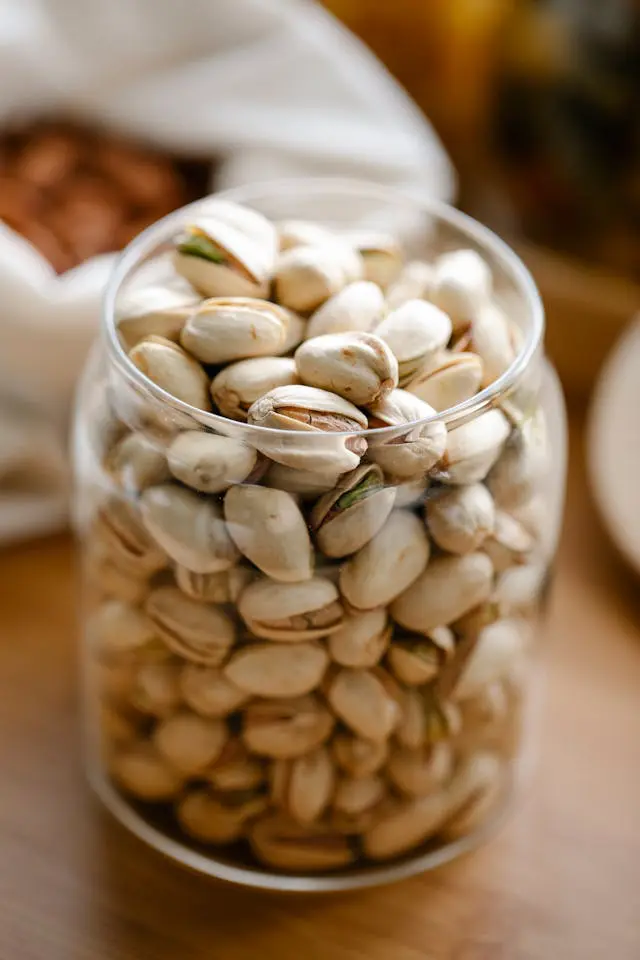
What Is in a 28g Serving of Pistachios?
Before looking at individual health benefits, it helps to understand what a normal serving provides.
According to USDA nutrition data, approximately 28 grams, or 1 ounce, of raw pistachios provides around:
159 calories
5.7 grams of protein
3 grams of fiber
12.8 grams of fat, most of which is unsaturated
A 28g serving is generally described as approximately 49 kernels, although the exact number depends on their size.
Pistachios also provide vitamin B6, copper, phosphorus, potassium, thiamine, carotenoids, and several antioxidant compounds.
However, the familiar 28g amount is a standard serving, not a medically established maximum or a special therapeutic dose. Many clinical trials have used considerably larger portions.
1. Pistachios May Help Improve Cholesterol Levels
The evidence for cholesterol is among the strongest areas of pistachio research.
Pistachios contain mostly monounsaturated and polyunsaturated fats rather than large amounts of saturated fat. They also provide fiber, phytosterols, carotenoids, polyphenols, and other compounds that may contribute to their cardiovascular effects.
A systematic review and meta-analysis of randomized controlled trials found that pistachio consumption was associated with modest average reductions in total cholesterol, LDL cholesterol, and triglycerides.
The average changes were approximately:
Total cholesterol: 7.5 mg/dL lower
LDL cholesterol: 3.8 mg/dL lower
Triglycerides: 11.2 mg/dL lower
There was no significant improvement in HDL cholesterol.
These are average results across multiple studies, and individual responses will differ. Pistachios should not be considered a replacement for prescribed cholesterol medication or other medical treatment.
Their value is more practical: replacing foods high in saturated fat or refined carbohydrates with a reasonable serving of unsalted pistachios may improve the overall nutritional quality of a diet.
2. Pistachios May Support Healthy Blood Pressure
Pistachios provide several nutrients involved in normal cardiovascular function, including potassium, magnesium, unsaturated fats, and the amino acid L-arginine.
L-arginine is used by the body to produce nitric oxide, which helps blood vessels relax. However, eating an arginine-containing food does not automatically produce a large or immediate change in circulation.
The more useful evidence comes from controlled dietary studies.
A systematic review and meta-analysis found that pistachio consumption was associated with a modest reduction in systolic blood pressure. Other controlled trials have reported improvements in certain measurements of vascular function and cardiovascular risk.
The results do not mean that pistachios treat hypertension. They suggest that pistachios can fit into a dietary pattern designed to support cardiovascular health.
Salt also needs to be considered. A large serving of heavily salted pistachios may not be the best option for someone who has been advised to limit sodium.
3. Pistachios and Blood Sugar: The Evidence Is Promising but Mixed
Pistachios contain protein, fat, and fiber, so they generally produce a different glucose response from refined carbohydrate snacks.
Studies have examined whether pistachios can help with blood sugar control, especially in people with prediabetes or other metabolic risk factors. The results are encouraging in some situations, but they are not uniform.
What the 57g nighttime-snack trial found
In a randomized crossover trial, adults with prediabetes were asked to eat 57 grams of dry-roasted, unsalted pistachios after dinner and before bed for 12 weeks.
The researchers compared this with standard advice to consume one or two carbohydrate exchanges.
The study found no significant differences between the two conditions in fasting glucose, HbA1c, insulin resistance, blood lipids, blood pressure, or vascular health.
However, the pistachio period improved the participants’ overall diet-quality scores.
Therefore, the study does not show that eating pistachios before bed improves overnight glucose control. It does suggest that pistachios can be a more nutritious alternative to certain carbohydrate-rich nighttime snacks.
Sleep quality was not measured in this trial.
What a newer premeal trial found
A separate randomized controlled trial studied Asian Indian adults with prediabetes.
Participants in the intervention group ate 30 grams of pistachios before breakfast and another 30 grams before dinner, for a total of 60 grams per day.
After 12 weeks, the pistachio group experienced a modest reduction in HbA1c, along with improvements in triglycerides, waist circumference, and several other cardiometabolic measurements.
The participants did not experience significant changes in fasting glucose or glucose measured two hours after a glucose challenge.
This was a specific intervention involving adults with prediabetes from one population. It should not be interpreted as proof that everyone should eat 60 grams of pistachios before meals.
People with diabetes or prediabetes should also avoid changing their diet or medication plan based on one food or one study.
4. Pistachios Can Fit Into a Weight-Management Diet
Nuts are energy-dense, which means portions can add a substantial number of calories. At the same time, regular nut consumption is not consistently associated with weight gain when the nuts are incorporated sensibly into a diet.
Pistachios contain protein, fiber, and fat, creating a combination that many people find satisfying.
A meta-analysis of randomized controlled trials found that pistachio-containing diets produced a small reduction in BMI but did not significantly change overall body weight or waist circumference.
In another four-month behavioral weight-loss study, adults who were prescribed 42 grams of pistachios per day lost a similar amount of weight to those who followed the weight-loss program without the daily pistachio prescription.
The pistachio group also increased its fiber intake and reduced its consumption of sweets.
The useful conclusion is not that pistachios cause weight loss. It is that a measured serving can be included in a weight-management plan without necessarily preventing progress, especially when the nuts replace sweets, chips, or another less nutritious snack.

5. Buying Pistachios in Their Shell May Help With Portion Control
This is one of my favorite practical findings because it reflects something many pistachio lovers will recognize.
Opening each shell slows you down.
In a controlled study involving university students, participants who were given in-shell pistachios consumed an average of 125 calories. Participants given shelled pistachios consumed an average of 211 calories.
That represented approximately 41% fewer calories consumed when the pistachios were still in their shells.
The researchers suggested two possible explanations.
First, removing every shell requires time and effort, which reduces eating speed.
Second, the discarded shells provide a visual reminder of how much has already been eaten.
It was a relatively small behavioral study, so it does not prove that everyone will eat 41% less. However, buying pistachios in their shells remains a simple way to make mindless snacking less convenient.
A useful trick is to keep the empty shells in a separate bowl until you finish eating rather than removing them immediately.
6. Pistachios May Support Eye Health
One of the most interesting newer areas of research involves the eyes.
Pistachios contain lutein, a carotenoid also found in foods such as leafy green vegetables and egg yolks. Lutein and zeaxanthin are found in the macula, the central part of the retina responsible for detailed vision.
A randomized controlled trial asked healthy middle-aged and older adults to add 57 grams of roasted, unsalted pistachios to their daily diet for 12 weeks.
The researchers found an increase in macular pigment optical density among participants in the pistachio group.
Macular pigment optical density is used as a measurement of the lutein and zeaxanthin concentrated in the retina. It is not the same as visual acuity, and the trial did not prove that pistachios prevent macular degeneration or vision loss.
The result does suggest that regularly eating pistachios can increase a measurable marker associated with retinal carotenoids.
The trial used 57 grams per day, twice the standard 28g serving, and the pistachios were supplied by American Pistachio Growers, which also funded the research. That does not invalidate the results, but it is relevant context when interpreting a small nutrition study.
7. Pistachios Can Change the Gut Microbiome
Pistachios provide fiber, polyphenols, and other compounds that reach the digestive system and may interact with intestinal bacteria.
An earlier controlled feeding study found that pistachio consumption altered the composition of the gut microbiota and appeared to have a stronger effect than almonds under the conditions tested.
More recently, researchers analyzed stool samples collected during the 57g nighttime-pistachio trial involving adults with prediabetes.
The 2025 analysis found that eating pistachios changed the diversity and relative abundance of several groups of intestinal bacteria compared with the carbohydrate-snack condition.
Some of the changes involved bacterial groups capable of producing short-chain fatty acids, which are compounds created when gut bacteria ferment certain dietary components.
However, a change in bacteria is not automatically a proven health benefit.
The study did not establish that pistachios relieve bloating, improve bowel habits, repair the intestinal barrier, prevent disease, or produce a specific long-term health outcome.
The most accurate conclusion is that pistachios can influence the gut microbiome, but researchers are still determining what those changes mean clinically.
This research was also funded partly by American Pistachio Growers.
8. Pistachios Provide Antioxidant Compounds
The purple and green colors in pistachio kernels are connected to naturally occurring plant pigments and antioxidant compounds.
Pistachios contain polyphenols, carotenoids such as lutein, and tocopherols. These compounds can help the body manage oxidative processes.
Some controlled studies have reported improvements in markers such as oxidized LDL when pistachios were incorporated into a heart-healthy diet.
However, terms such as “antioxidant” and “anti-inflammatory” are often stretched far beyond what a food study demonstrates.
Eating pistachios does not detoxify the body, eliminate chronic inflammation, or treat an inflammatory disease. Their antioxidant compounds are one part of the broader nutritional profile of the food.
Do Pistachios Help You Sleep?
This is one of the most popular claims about pistachios – and one that requires an important distinction.
Laboratory analyses have detected melatonin in pistachios. Melatonin is a hormone involved in regulating the body’s sleep-wake cycle.
Published reviews of dietary melatonin sources include pistachios among the foods in which researchers have measured the compound.
But the amount detected can vary substantially according to the pistachio variety, growing conditions, storage, analytical method, and other factors.
More importantly, finding melatonin in a food does not prove that eating the food improves sleep.
At the time of writing, high-quality human trials have not established that a serving of pistachios:
Helps people fall asleep faster
Increases total sleep time
Reduces nighttime waking
Improves insomnia
Produces an effect comparable to a melatonin supplement
The frequently mentioned nighttime-pistachio trial did not measure sleep.
Pistachios can still be part of a balanced evening snack, particularly when they replace candy, cookies, or another highly refined food. But they should not be presented as a proven natural sleep treatment.
If you are trying to improve your sleep, the habits in a consistent sleep routine are supported by considerably more evidence than relying on one specific nighttime food.
How Many Pistachios Should You Eat?
For many people, 28 grams, or approximately 1 ounce, is a practical daily serving.
That is around 49 kernels and approximately 159 calories, depending on the product.
This amount provides useful nutrients without adding the 300 or more calories found in some of the larger portions used in clinical trials.
However, 28 grams is not a strict scientific boundary.
Some studies have used 42 grams, 57 grams, 60 grams, or even larger quantities. Researchers select these amounts to test particular questions under controlled conditions. That does not turn the study portion into a universal recommendation.
Your suitable serving will depend on:
Your overall calorie needs
What the pistachios replace
Whether you are eating them as a snack or as part of a meal
The sodium and added ingredients in the product
Any medical dietary restrictions you follow
A measured 28g serving is a sensible starting point for someone who wants to eat pistachios regularly without accidentally consuming half a bag.
Raw, Roasted, Salted, or Flavored: Which Pistachios Are Best?
You do not have to eat only raw pistachios to receive nutritional value.
Both raw and roasted pistachios contain protein, fiber, unsaturated fat, and micronutrients. Roasting can alter the concentration or availability of certain compounds, but it does not turn pistachios into an unhealthy food.
One laboratory digestion study found no significant difference between raw and roasted salted pistachios in the measured bioaccessibility of several pistachio compounds.
The most useful comparison is often found on the nutrition label.
Raw pistachios
Raw pistachios have not undergone roasting and usually contain no added oil or salt. They are a good option if you prefer their softer texture and natural flavor.
Dry-roasted pistachios
Dry-roasted pistachios can be a convenient and nutritious choice. They are roasted without needing a substantial amount of added oil.
Oil-roasted pistachios
Oil-roasted varieties are not automatically unhealthy, but the added oil changes the final nutritional profile. Check the ingredient list to see what was used.
Salted pistachios
Salted pistachios can fit into many diets, but sodium can accumulate quickly when eating a large portion.
Unsalted or lightly salted versions make it easier to control sodium, particularly for people who have high blood pressure or have been advised to follow a lower-sodium diet.
Sweet or heavily flavored pistachios
Chocolate-covered, candied, honey-roasted, and strongly flavored products may contain substantial amounts of added sugar, sodium, or oil.
They can still be enjoyed, but their nutritional profile may be closer to that of a dessert or flavored snack than plain pistachios.
Easy Ways to Add Pistachios to Your Diet
Pistachios do not have to be eaten alone from a bag.
You can add a measured serving to Greek yogurt, oatmeal, salads, roasted vegetables, rice dishes, or homemade trail mix.
Chopped pistachios also work well as a topping for fruit, soups, fish, or chicken.
For a more balanced snack, combine pistachios with a food that provides additional protein or fiber, such as plain yogurt or fresh fruit.
Pistachios also provide non-heme iron. Pairing plant sources of iron with foods containing vitamin C, such as berries, citrus fruit, or bell peppers, can help the body absorb more of that iron.
There is no need to create elaborate “nutrient synergy” combinations. The overall diet is more important than finding a supposedly perfect pairing.
Who Should Avoid or Limit Pistachios?
Pistachios are safe for many people, but they are not suitable for everyone.
People with a pistachio or tree-nut allergy
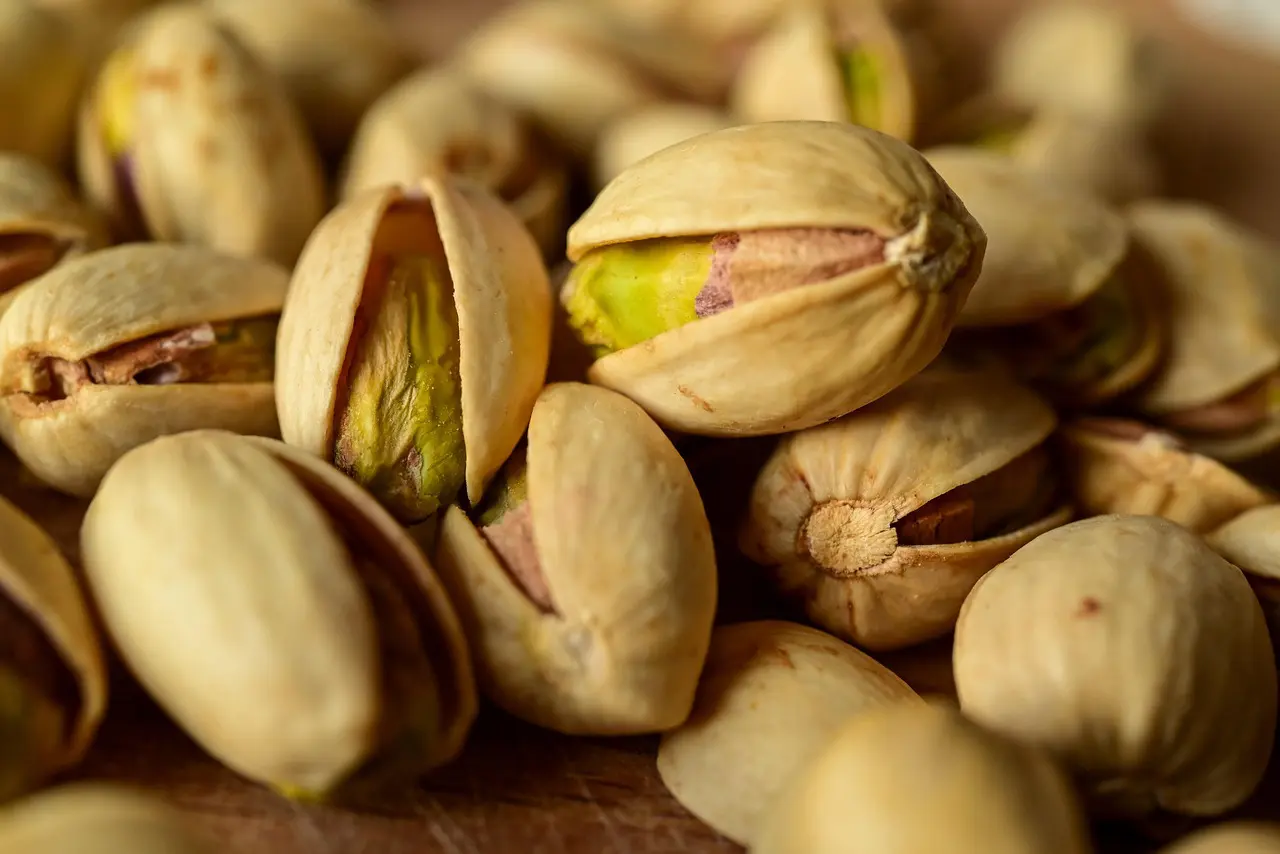
Pistachios are tree nuts and can trigger serious allergic reactions.
People with a known pistachio allergy should avoid them completely. Someone allergic to cashews may also be advised to avoid pistachios because the two are botanically related, but individual allergy advice should come from a qualified allergist.
The FDA classifies tree nuts among the major food allergens that must be declared on packaged-food labels in the United States.
People following a medically restricted diet
People with kidney disease or another condition requiring restrictions on potassium, phosphorus, sodium, protein, or total calories should follow the plan provided by their clinician or registered dietitian.
A generally healthy food is not automatically appropriate for every medical diet.
People watching their sodium intake
The sodium content of salted and flavored pistachios varies widely. Check the serving size as well as the sodium number because a label may show the amount for a much smaller serving than you normally eat.
Anyone eating directly from a large bag
Pistachios are easy to keep eating, especially while watching television or working.
Portioning them into a small bowl before you start is more reliable than trying to estimate how much you have eaten afterward.
Conclusion: Are Pistachios Good for You?
Yes. Pistachios are a nutritious food that provides protein, fiber, predominantly unsaturated fat, vitamin B6, copper, potassium, carotenoids, and several antioxidant compounds.
The best-supported research suggests that pistachios may produce modest improvements in cholesterol and certain cardiovascular risk markers. They can also fit into a weight-management diet without automatically causing weight gain.
Newer studies have found increases in macular pigment optical density and measurable changes in the gut microbiome. These findings are interesting, but they do not prove that pistachios prevent eye disease or improve digestive symptoms.
Blood-sugar research has produced mixed results. Some specific interventions have reported benefits, while the nighttime-pistachio trial did not improve glycemic or cardiovascular markers more than the comparison advice.
And although pistachios contain melatonin, we do not yet have convincing human evidence that eating them improves sleep.
For most people, a 28g serving of plain, unsalted, or lightly salted pistachios is a practical amount. Buying them in their shells may also slow you down and make portion control easier.
They are not a miracle food. But they are a satisfying and nutrient-dense choice that can contribute to a healthy overall diet.
Pistachios FAQ: What People Commonly Ask
Is it healthy to eat pistachios every day?
For most people without a tree-nut allergy or a relevant medical restriction, a measured serving of pistachios can be included in a healthy daily diet.
The rest of the diet still counts. Adding pistachios on top of an already excessive calorie intake will have a different effect from using them to replace sweets, refined snacks, or foods high in saturated fat.
How many pistachios should I eat per day?
A practical serving is approximately 28 grams, 1 ounce, or around 49 kernels.
This is a standard serving rather than a strict medical limit. Individual needs vary according to calorie requirements, health conditions, and the rest of the diet.
Do pistachios help you sleep?
Pistachios contain measurable melatonin, but human trials have not yet proved that eating them improves sleep quality, sleep duration, or insomnia.
They can be a nutritious evening snack, but they should not be treated as a sleep aid.
Should I eat pistachios in the morning or at night?
There is no established best time for everyone to eat pistachios.
They can be eaten with breakfast, between meals, before a meal, or in the evening. Choose the time that helps them replace a less nutritious food and fits your overall eating pattern.
Are pistachios good for weight loss?
Pistachios do not directly cause weight loss.
However, controlled studies suggest that measured servings can be included in a weight-loss diet without preventing weight reduction. Their protein, fiber, and fat may make them a satisfying replacement for sweets or other snacks.
Are pistachios good for blood sugar?
Research in people with prediabetes and metabolic risk factors has produced mixed results.
A 60g premeal intervention improved HbA1c and several cardiometabolic measurements in one specific population. A separate 57g nighttime trial did not improve glycemic markers more than its comparison condition.
People with diabetes or prediabetes should consider pistachios as one component of an overall eating plan, not as a treatment.
Are salted pistachios unhealthy?
Not necessarily.
The main concern is the amount of sodium consumed, particularly when someone eats several servings. Unsalted or lightly salted pistachios make sodium easier to control.
Are raw pistachios healthier than roasted pistachios?
Both raw and dry-roasted pistachios can be nutritious.
Roasting can change some plant compounds, but it does not remove all nutritional value. The added salt, sugar, flavorings, and oil often create a larger practical difference than roasting alone.
Are American pistachios healthier than Iranian, Turkish, or other pistachios?
Pistachio varieties can differ in size, flavor, color, fat composition, and concentrations of individual plant compounds.
However, there is not enough independent clinical evidence to say that one national origin is universally healthier than all others.
Choose pistachios from a reputable producer, check the ingredients and nutrition label, and store them properly.
Do pistachios boost the immune system?
Pistachios provide nutrients such as vitamin B6 and copper, which participate in normal immune function.
However, no individual food “boosts” the immune system or guarantees protection from illness. Pistachios contribute nutrients as part of a varied diet.
Medical Disclaimer: The information in this article is provided for educational and informational purposes only and is not intended as medical advice, diagnosis, or treatment. Individual nutritional needs and medical circumstances vary. Consult a qualified healthcare professional or registered dietitian before making significant dietary changes, particularly if you have diabetes, kidney disease, cardiovascular disease, food allergies, or another underlying condition, or if you take medication.
More amazing articles for you:
8 Neuroscience-Backed Ways to Feel Mentally Sharp Again After 40
If You Do These 11 Behaviors Naturally, Research Says Your Intelligence Is Likely Above Average - Mo...
The Morning Reset: 5 Tiny Habits That Instantly Boost Your Mood (Backed by Neuroscience)
The Personality Trait That Quietly Adds Years to Your Life (According to a Massive Study)
“You’re So Good at This” - When a Compliment Turns Into Hours of Free Work (and How to Stop It)
Put Your Phone in One of These Places and You May Walk Away Without It - I Did
A Passenger Complained About What She Was Eating on a Plane. She Didn’t Stop - Then Her Response Mad...
Stop Burnout Before It Starts: Science Says These Simple Habits Protect You

Violeta-Loredana Pascal is a communications expert, business mentor, and the founder of Earth’s Attractions and PRwave INTERNATIONAL. A pioneer in the Romanian digital PR landscape since 2005, she holds a degree in Communication and Social Sciences from SNSPA Bucharest. Violeta is a senior trainer at AcademiadeAfaceri.ro, where she leverages over 20 years of experience to teach professional courses in PR strategy and workplace productivity. By blending high-level business consulting with a passion for holistic travel and wellness, she empowers solopreneurs to overcome procrastination, build profitable brands, and design a life of purposeful adventure.