I’ve heard of people cutting their vacations short. In fact, a friend of mine did exactly that last year because the destination he’d chosen was nothing like he expected it to be.
And I believe there can be many valid reasons to leave earlier than planned: a hotel may look nothing like its photographs; construction work may begin outside the window before breakfast; a supposedly peaceful retreat may turn out to be beside a busy road; the room may be dirty, the area may feel uncomfortable or the entire experience may simply be wrong for you. The list can go on and on.
But a recent complaint from northern Italy was different. Borrowing a line from the old wedding rhyme, it was something new about something very old. And yes, you will see why this is in some ways funny.
The original Facebook post said it was almost impossible to remain at the destination and claimed that some vacationers had already returned home.
ID 83824478 ©Janoka82 | Dreamstime.com
Hundreds of responses followed.
Then the mayor stepped in. He published his own humorous “special ordinance” before giving a much more serious explanation to the Italian press.
His first response made people laugh. But the discussion behind it is important, especially now, when so many people say they want peaceful, natural and authentic vacations.
All comments and statements translated from Italian in this article have been translated into English. The precise wording may vary between translations.
The Vacation Complaint That Started the Dispute
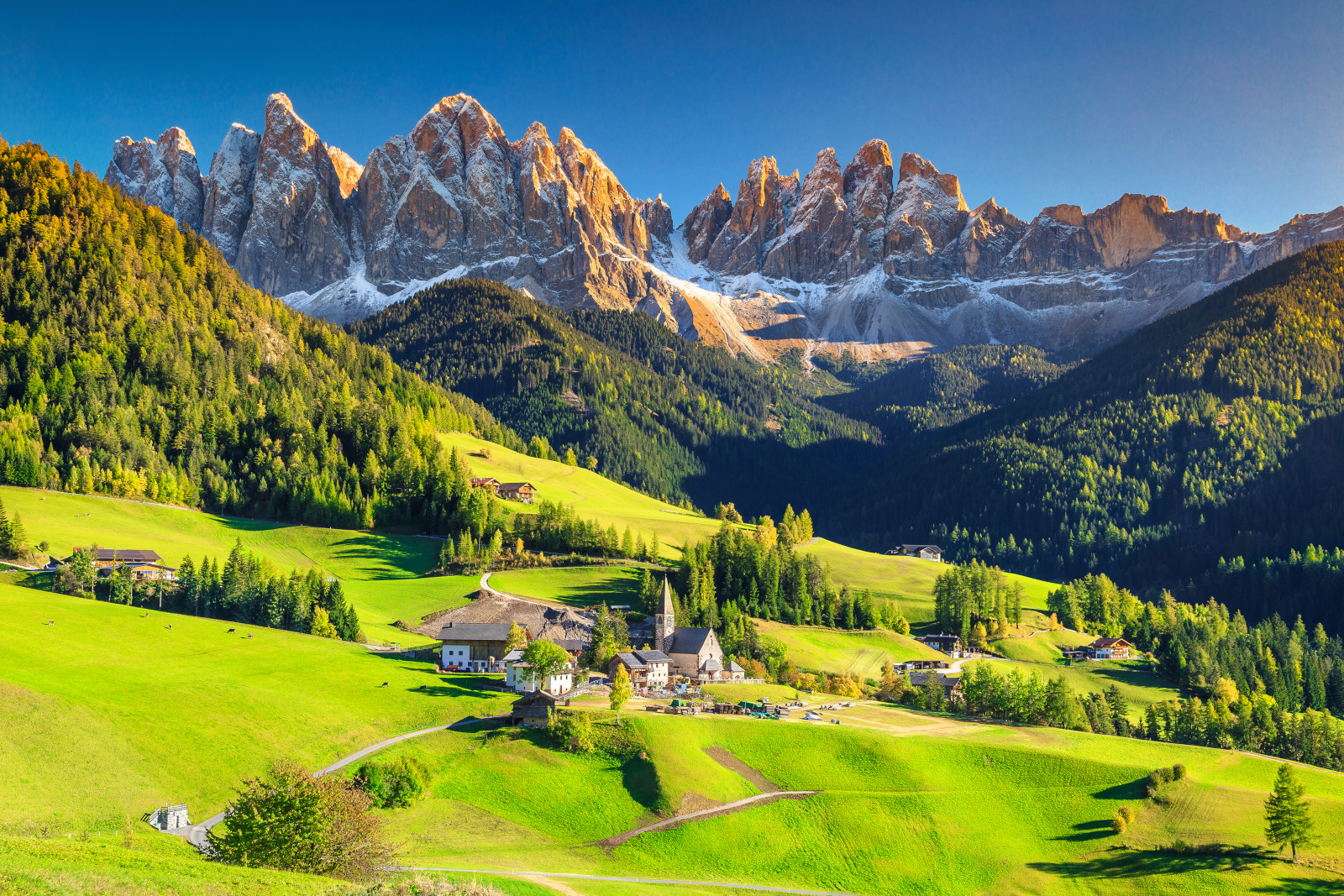
The controversy began in Serina, a mountain town in the province of Bergamo in northern Italy.
Someone posted in the local Facebook group “Sei di Serina se…”, saying it was impossible to vacation in the Bagnella area because of a sound heard “day and night.” The source of that sound was reportedly less than 10 meters – approximately 33 feet – from the condominium building.
The author also claimed that some vacationers had already returned home because it was so difficult to remain there and complained that the mayor hadn’t responded.
So, what was keeping them awake?
It wasn’t construction machinery, traffic, loud music or late-night parties. It was the sound of cowbells.
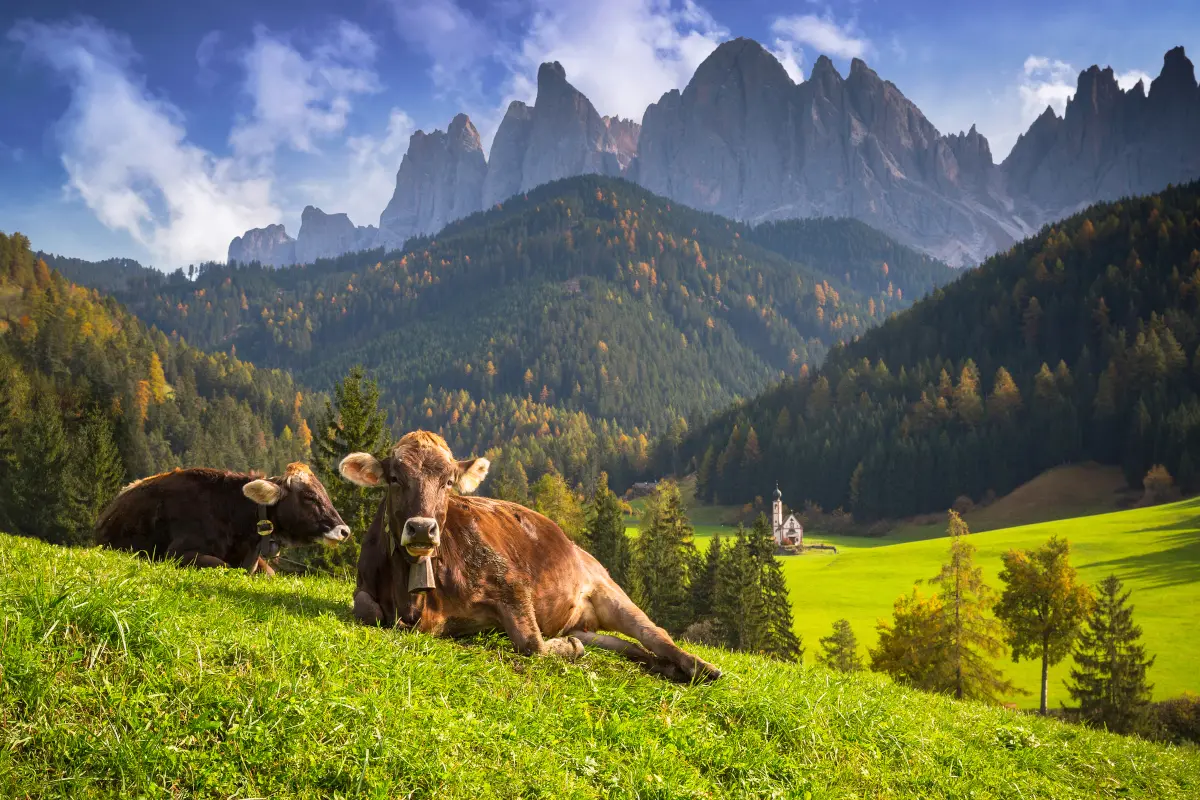
Cows were grazing close to the accommodation, and the bells around their necks could reportedly be heard during the day and at night.
Translated from Italian, the original complaint said:
“It’s impossible to vacation in Serina, in the Bagnella area, with cowbells less than 10 meters from the condominium day and night. Some vacationers have returned home. It’s truly difficult to stay.”
For the person who wrote the post, the constant metallic sound made the vacation extremely difficult. But the reaction from other people was probably not what the author expected.
Hundreds of People Responded – and Almost All Defended the Cows
By the time I checked the original Facebook post, it had reached 401 comments.
I didn’t read every one of them. I did, however, read many, and I didn’t find a single comment agreeing with the complaint.
Some people couldn’t understand how anyone could visit a mountain destination and then object to the animals and sounds that are part of mountain life.
One person wrote:
“What did you think you’d find in the mountains? It’s so beautiful. The cows and sheep are now in the mountain pastures, and it’s completely normal to hear them.”
Another compared the cowbells with the sounds visitors accept in a city:
“You’re in the mountains. If you go to Milan, you hear the roar of scooters.”
Someone who’d stayed in another mountain community described a very different reaction to the same type of sound:
“I was in Oltre il Colle, and hearing the sheep and cows from the balcony at night was paradise.”
A local resident said the cowbells weren’t even the sounds that caused the most irritation:
“I live in Serina, and I don’t even notice the cowbells. What bothers me is the roar of motorcycles and cars speeding as if they were on a racetrack.”
Other commenters stressed that the animals were in their normal environment and that the farmers caring for them were doing demanding work.
One person told the poster to choose another destination and respect the people whose livelihoods depended on those cows. Another said that anyone visiting the mountains and then complaining about the mountains had a lot of nerve.
A few responses were much less polite. I won’t repeat those, but the general reaction was unmistakable: the cows had very strong public support.
The discussion quickly moved beyond the Facebook group. L’Eco di Bergamo reported that the post had received more than 250 comments within only a few hours, with the overwhelming majority defending the grazing animals.
And then the mayor became involved.
Then the Mayor Published a “Special Ordinance”
Serina Mayor Michele Villarboito did eventually respond, although not in the way the original poster may have expected.
He published an illustrated mock announcement titled “Special Ordinance of the Mayor,” supposedly containing regulations for Alpine peace and grazing. In the image, the mayor joked that he’d attempted to summon the cows to the town hall so that they could sign an administrative silence order.
Unfortunately, he explained, they’d replied with a highly uncooperative “Moooo.”
He then added that the cowbells and the scent of the pasture were “included in the price of the stay” and apologized because the authorities hadn’t yet managed to install “silent mode” on the cows.
At the bottom of the illustration, a friendly disclaimer read:
“This ordinance is intended as a joke. Please respect local traditions.”
Translated into English, the full message on the illustration reads:
“SPECIAL ORDINANCE
FROM THE MAYORREGULATIONS ON
ALPINE PEACE AND GRAZINGGood morning, Serina!
I’ve just tried to summon the cows to the town hall to sign an administrative silence order, but unfortunately they responded with a very uncooperative Moooo. 🐮❌
Joking aside, we’re in the mountains: the cowbells and the scent of the pasture are included in the price of the stay! I’m sorry for those who went home, but I assure you that we still haven’t managed to install “silent mode” on the cows. 😉
Warm regards from the Mayor…
SERINA
…who, in the meantime, is going to negotiate the volume of the bells directly with the bull! 🔔🐂
MUNICIPALITY OF SERINA (BERGAMO) – TOURIST OFFICE
FRIENDLY DISCLAIMER
Note: The ordinance is intended as a joke. Please respect local traditions. ❤️”
The illustration was funny, but the written message accompanying it was far more serious. The mayor spoke about the daily work of the families and farmers who keep the mountain area alive despite the many difficulties involved.
He described the sound of the cowbells as “the breath of our land” and as evidence that the meadows were still being used and maintained. People who choose to live or vacation in the mountains, he wrote, also choose the local ecosystem, including its rhythms, scents and sounds.
He added that he was willing to listen to and respect different opinions, but that there had to be a limit. As mayor, he believed he had a responsibility to protect the identity, work and traditions of the territory.
His final message was direct: long live the mountains, the farmers and the cowbells. Otherwise, Serina may not be the right choice.
His Interviews Explained the Serious Point Behind the Joke
ID 166305873 ©Patryk Kosmider | Dreamstime.com
The controversy didn’t end with the Facebook illustration.
The mayor also spoke to Corriere della Sera about why some city residents may find mountain sounds so unexpected.
From an acoustic perspective, he explained, the sound wasn’t comparable to a construction site or a demolition hammer. It was a normal part of mountain life.
Someone accustomed to the “artificial silence of air conditioning” or the familiar background hum of urban traffic may find the metallic sound of bells surprising, particularly during the night or around dawn.
He suggested that some people arrive from cities carrying schedules and expectations that don’t belong to the area they’re visiting.
Most people who come to Serina, he said, seek nature, greenery, clean air and authenticity. Yet visitors increasingly approach nature as though it were a “static postcard, a theme park or a muffled resort.”
And this reminded me of my childhood, and I couldn’t agree more with this description.
A postcard doesn’t make noise; a photograph of a green meadow contains no smells, animals, work, weather, or early mornings – I wish they could transport me, through smell, instantly to that place. But a real mountain community does.
The beautiful fields aren’t simply scenery positioned behind a vacation rental. They’re working land, the pasture requires maintenance, and the animals are alive with all that this means (including natural sounds and cowbells). The products people expect to find locally – milk, cheese, and meat – are connected to that entire system.
The mayor also pointed out that the bells help farmers identify their livestock and protect the animals. For people who sleep very lightly, he suggested double-glazed windows or earplugs while they become accustomed to what he called the voice of the Alps.
This Wasn’t the First Complaint About an Animal Bell
During the Corriere interview, the journalist mentioned a similar complaint from the previous year involving the bell worn by a horse in nearby Selvino.
For the mayor, that example showed that the Serina dispute was part of something larger: a growing disconnection between urban expectations and the realities of mountain life.
Whether the animal is a horse in Selvino or a cow in Serina, grazing remains part of someone’s livelihood. Without animals and farmers, he argued, there’d be no well-maintained pastures or many of the local products people associate with mountain destinations.
He compared complaining about ordinary mountain sounds with going to the coast and objecting to the sound of the waves. Of course, the comparison isn’t perfect. Waves don’t usually pass less than 33 feet from a bedroom window wearing bells.
But his broader argument is easy to understand: people can’t ask for an authentic environment while also demanding that every authentic element be removed whenever it becomes inconvenient.
More People Want Peaceful Vacations – and Rural Experiences
The desire for a calm vacation is real, and studies and surveys show just that.
Hilton’s 2026 travel research found that 56% of respondents considered rest and recharging their leading reason for taking a leisure trip. Spending time in nature was another major motivation, selected by 37%.
The company described the growing demand for quiet and restorative experiences as “hushpitality.” Interest extends beyond quiet hotel rooms to reading retreats, nature immersion, meditation and silent vacations.
Booking.com also identified “Hushed Hobbies” as a 2026 travel prediction, describing a desire to replace everyday noise and overstimulation with calming activities and time in nature.
At the same time, rural tourism and farm stays are growing in popularity. Expedia Group and Vrbo identified “Farm Charm” as another 2026 trend. Their research found that 84% of surveyed vacationers were interested in staying on or near a farm. Vrbo also recorded a 300% year-over-year increase in farm-related mentions in guest reviews.
The combination creates an interesting contradiction.
Many people want silence. Many people also want authentic rural experiences.
But authentic rural life isn’t silent. It may be quieter than a major city, but its sounds are different rather than nonexistent.
There may be cowbells, sheep, dogs, tractors, church bells, agricultural equipment and roosters beginning their day hours before the people on vacation intended to wake up.
My Childhood Visits to the Countryside Were Never Silent
When I was a child, I sometimes went with my grandmother to visit her sisters in the countryside.
They lived in a village approximately 2 kilometers – around 1.2 miles – from the nearby city of Făurei in Romania.
We had to walk through cultivated fields to reach the village. Depending on the year and season, we passed corn, sunflower or wheat fields.
The house was normal and simple, with nothing created especially for visitors. The water came from a well and not the public water network.
I hold those memories dear.
But countryside life had its own rhythm.
Dogs barked. Roosters began waking people at four or five in the morning. Sheep, cows and other animals started moving and making sounds early. People also began working much earlier than many city residents would during a vacation.
Those weren’t carefully selected “nature sounds” playing softly through a speaker in a wellness resort.
They were the sounds of life.
A village, a farm or a mountain community isn’t an empty space that becomes active only when visitors are ready. People live and work there every day, and the animals follow their own schedules.
We Don’t Know Everything About the Vacationers’ Expectations
There’s also an important part of this story that we can’t know from a Facebook complaint and as a business owner and communication expert I think that these could be relevant.
I don’t know how the accommodation was promoted.
I don’t know whether the booking was made directly, through an accommodation platform or through an agency.
I don’t know whether the vacationers specifically requested a silent place, whether anyone promised them silence or whether reviews mentioned that cows sometimes grazed close to the building.
I don’t know why they chose Serina or what they believed the experience would be like.
As a marketing specialist, I know that destinations and accommodation providers often emphasize the benefit people are seeking.
A rural property may be promoted as peaceful, relaxing, secluded or ideal for escaping city noise. Photographs may show empty fields, mountain views and comfortable bedrooms without explaining that farm animals sometimes graze nearby.
When that happens, the marketing can create an incomplete expectation.
If an accommodation provider specifically promised complete silence while knowing that cows with bells regularly came close to the windows, the guests would have a legitimate reason to be disappointed.
We don’t have evidence that this happened here.
The original Facebook post tells us that the sound was disturbing. It doesn’t tell us what was advertised or promised before the vacation.
And noise is subjective. A sound one person considers charming can prevent someone else from sleeping.
I can understand how several nights of interrupted sleep could become exhausting, even when the source is entirely natural and expected in that environment.
Research Can Prevent a Vacation From Becoming the Wrong Experience
I’m always in favor of visiting new places and trying unfamiliar experiences. But research is essential, particularly when you’re choosing a destination to meet a very specific need.
When rest is the main purpose of a trip, don’t look only at the property photographs. Read recent guest reviews. Examine the exact location on a map. Look at what surrounds the accommodation. Contact the host and ask directly about nearby roads, restaurants, farms, animals, church bells, construction and other regular sources of sound.
The absence of city traffic doesn’t automatically mean complete silence. A secluded mountain property could still be close to grazing land. A charming room in a historic European town could be beside a church whose bells ring early. A countryside cottage could have roosters, dogs and tractors nearby.
You may still choose it. You simply arrive knowing what the experience includes. And another note: Research doesn’t remove every surprise from travel, but it can reveal whether a destination fits your expectations and needs.
As a Communication Specialist, I Liked the Mayor’s Response
From a communication and public-relations perspective, I liked the way the mayor responded.
He began with humor. The image was memorable, easy to understand and highly shareable. It attracted attention without beginning with an angry official statement.
But he didn’t rely only on the joke. He followed it with an explanation of the farmers’ work, the purpose of the pastures and the relationship between the animals and the identity of the community.
He also said that his door remained open to people who wanted to talk. At the same time, he drew a clear boundary: listening to a complaint doesn’t mean accepting every requested change. Some things can be improved; some problems can be mediated, while other requests would require a destination to remove part of what makes it real.
His response told potential visitors what Serina represents. It supported local families, defended the community’s identity and made the destination’s position clear.
And, because he used humor first, people far beyond the village are now discussing that position.
A Peaceful Place Isn’t Always a Silent Place
People have the right to want sleep, rest and comfort during a vacation. They also have the right to decide that a particular sound makes an accommodation unsuitable for them.
But rural and mountain destinations have their own sounds, work and schedules. They can’t always offer the controlled silence of an insulated hotel room.
The lesson I take from the Serina dispute isn’t that people should tolerate every inconvenience without complaining. It’s that “peaceful,” “natural,” “rural” and “silent” don’t mean the same thing.
Travel requires some adaptation. It also requires careful research and realistic expectations. You may travel to the mountains to escape the sound of cars. What you find instead may be cowbells before sunrise. For some people, that would ruin the vacation. For others, it would be one of the reasons to stay.
More amazing articles for you:
Top museums in Costa Brava
A Local's Guide to Minneapolis–Saint Paul
5 Tips for Securing Your Passport in Time
78 travel guides from locals and experts - free ebooks
Sofia sightseeing: local's guide to Sofia
175 Europe Travel Trivia Questions (With Answers) by Category (How Many Can You Get Right?)
The Best Day Trips from Toronto, Canada
The Thief Launches Apparatjik Eclectic Hotel Suite

Violeta-Loredana Pascal is a communications expert, business mentor, and the founder of Earth’s Attractions and PRwave INTERNATIONAL. A pioneer in the Romanian digital PR landscape since 2005, she holds a degree in Communication and Social Sciences from SNSPA Bucharest. Violeta is a senior trainer at AcademiadeAfaceri.ro, where she leverages over 20 years of experience to teach professional courses in PR strategy and workplace productivity. By blending high-level business consulting with a passion for holistic travel and wellness, she empowers solopreneurs to overcome procrastination, build profitable brands, and design a life of purposeful adventure.