I’ll be honest: I’ve had enough.
I write about travel every day, and I usually enjoy discovering new destinations, useful advice, and stories worth sharing. Lately, though, my news feed seems to deliver a new airplane incident almost every time I open it.
Flying is already stressful. You are sitting close to strangers, you have very little room to move, and you depend on the crew to keep everything running safely. Most passengers are simply trying to reach their destination without unnecessary conflict or disruption.
Yet more and more people seem to treat the cabin as their private living room, personal stage, or social media set. The behavior is often avoidable, sometimes ridiculous, and exhausting to watch. At this point, I can’t be the only one wondering when basic consideration became so difficult.
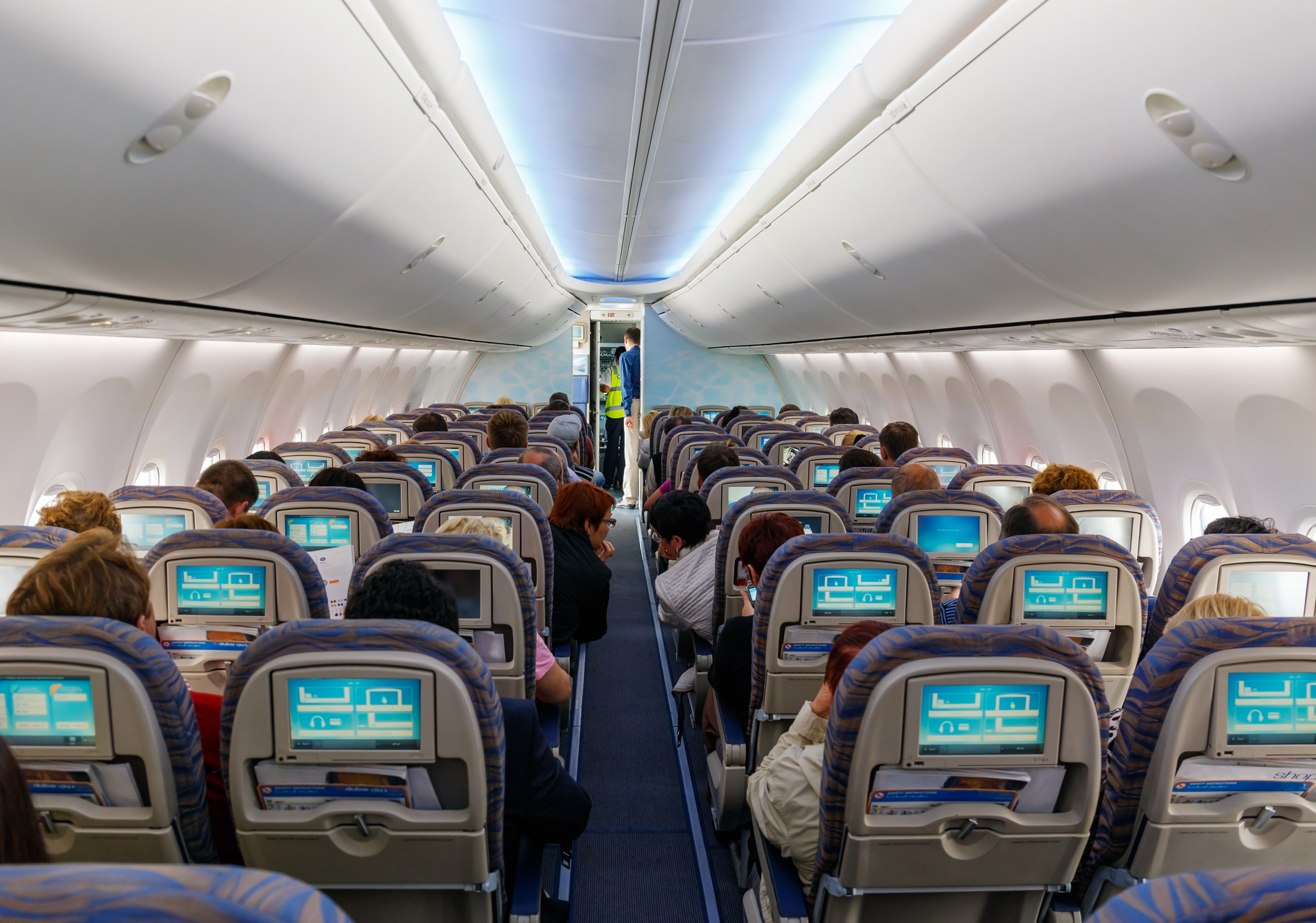
ID 37248421 | Airplane Cabin ©Carabiner | Dreamstime.com
Airplane Etiquette 101: Why the Cabins Are Not Private Living Rooms
The core of the problem, as I see it, is that too many people have forgotten that an airplane is a collective environment. Somewhere along the line, the “me first” attitude took over, and it has manifested in some truly bizarre ways.
We keep seeing the same kind of behavior: passengers acting as if the cabin belongs to them and everyone else is just background noise. The now-infamous trend of bare feet on planes is one of the clearest examples. I understand wanting to feel comfortable on a flight – we all do. But there is a difference between settling in for a long journey and forgetting that other people are sitting inches away from you.
I’ve written before about how bare feet on a plane has become a focal point of traveler rage, and for good reason. And while I wrote about one situation, I see almost daily such news… It’s not just about aesthetics; it’s about hygiene and respect for the people sharing that confined space with you. This ties directly into the lack of awareness regarding personal space, something I highlighted when discussing viral airplane seat etiquette incidents.
Then there is the “noise pollution.” I was actually relieved to see an airline finally implementing a strict headphone rule, because “barebeating” – the act of playing audio out loud on a device – is one of the most selfish things a passenger can do. It’s the ultimate sign that you’ve forgotten other people exist.
The High Cost of Virality: Dangerous TikTok Travel Hacks and Plane Stunts
Perhaps the most exhausting trend is the rise of the social media stunt. Airplanes are no longer just a mode of transport; for some, they are a movie set for viral content.
We’ve seen a man turning an airplane lavatory into the place where he claimed to run a 5K, a woman making pasta from scratch at her seat (not cooking, just the pasta!), and even a man climbing into an overhead bin for the camera. These stories may look ridiculous at first glance, but they all create the same problem: the cabin becomes a stage, the crew becomes responsible for managing the performance, and other passengers are stuck inside someone else’s attempt to go viral.
And once you look past the absurdity, the practical problems are obvious. Making food on a tray table raises hygiene and health questions. Blocking a lavatory affects other passengers. Climbing into an overhead bin creates a situation the crew has to treat as a safety issue, not as “funny content.
When I see these stories, I don’t think “how creative.” – even though I work in marketing and I understand the rush for social media likes and shares. I think about the burden placed on the flight crew who have to manage these performances while also doing their actual job: keeping hundreds of people safe in a confined space. And I also think about all the other passengers!
Apparently, the Airplane Cabin Is a Beauty Salon Now Too
There is another category of passenger behavior that I keep seeing more often: people carrying out personal grooming routines at their seats as if the airplane cabin were a private bathroom or beauty salon.
I am not talking about applying lip balm, brushing your hair quickly, or fixing a broken nail that is catching on your clothes. I mean the full routines that involve nail clippers, files, nail polish, heated styling tools, and sometimes the tray table.
Clipping and Filing Nails Beside Other Passengers
One of the most disgusting examples is clipping or filing nails on a plane. Videos have shown passengers clipping fingernails, filing toenails, and painting their nails while the people around them sit only inches away.
Nail clippings do not always fall into one tidy place. They can jump onto the floor, disappear between seats, or land near someone’s belongings. Filing creates dust, and nail polish introduces a strong smell into a cabin where nobody can open a window or move to another room.
I also have misophonia, so even the repeated sound of clipping or filing would be extremely difficult for me to ignore. Other passengers may be eating, resting, trying to work, or simply hoping to get through the flight without someone conducting an entire grooming session beside them.
A broken nail that needs to be dealt with quickly is understandable. Clipping or filing every nail at your seat is something else entirely. This is the kind of private routine that can wait until the person reaches an airport bathroom, a hotel room, or home.
Using a Curling Iron in a Cramped Airplane Row
Then I saw the video of a passenger apparently curling her hair during a flight.
The video was presented as “air curling,” almost as if using the travel time to style your hair were simply clever time management. But a curling iron is a heated device being used in a narrow row beside other passengers. One unexpected movement or patch of turbulence could bring it into contact with another person, clothing, a seat, or something on the tray table.
Even without an accident, the passenger sitting beside the person using it has to spend part of the flight watching a hot styling tool move close to them. They cannot easily step away, change rooms, or decide that they would rather not be involved.
That is what people defending these routines seem to forget. A passenger may be sitting in their assigned seat, but the surrounding air, surfaces, armrests, and limited personal space are still shared.
The nail clippers and curling iron may look different from the louder stunts that go viral, but the attitude behind them is remarkably similar: one person decides to do whatever is convenient for them, while everyone nearby is expected to tolerate it.
Why Following Flight Safety Rules and Crew Instructions is Non-Negotiable
Beyond the annoyance of social media stunts lies a more dangerous category: the refusal to comply with safety instructions. This is where “inconvenience” turns into “danger.”
Recently, we saw a Delta passenger refuse to hang up the phone, causing a massive disruption. It seems small – just a phone call – but it’s a symptom of a larger defiance. When you ignore a flight attendant, you aren’t just “standing your ground”; you are potentially delaying hundreds of people and compromising safety.
We are even seeing dangerous “travel hacks” spread online, including the TikTok plane sleep hack that encouraged passengers to buckle their seatbelts around their ankles while trying to sleep. This is not just a quirky tip or an uncomfortable-looking trend. It is the kind of advice that can create real safety problems during turbulence or an emergency, especially if a passenger cannot react quickly when the crew gives instructions.
I’ve looked into several cases of air rage and flight diversions, and the common thread is usually not complicated: alcohol, conflict, refusal to follow crew instructions, or one passenger escalating a situation while everyone else is stuck on the same aircraft.
Whether it’s incidents on the runway or conflicts fueled by excessive drinking, the result is the same: dozens or even hundreds of people have their journey disrupted because one person refused to behave like part of a shared space.
The Case for Boring Travel: How Common Sense Can Fix the Airplane Circus
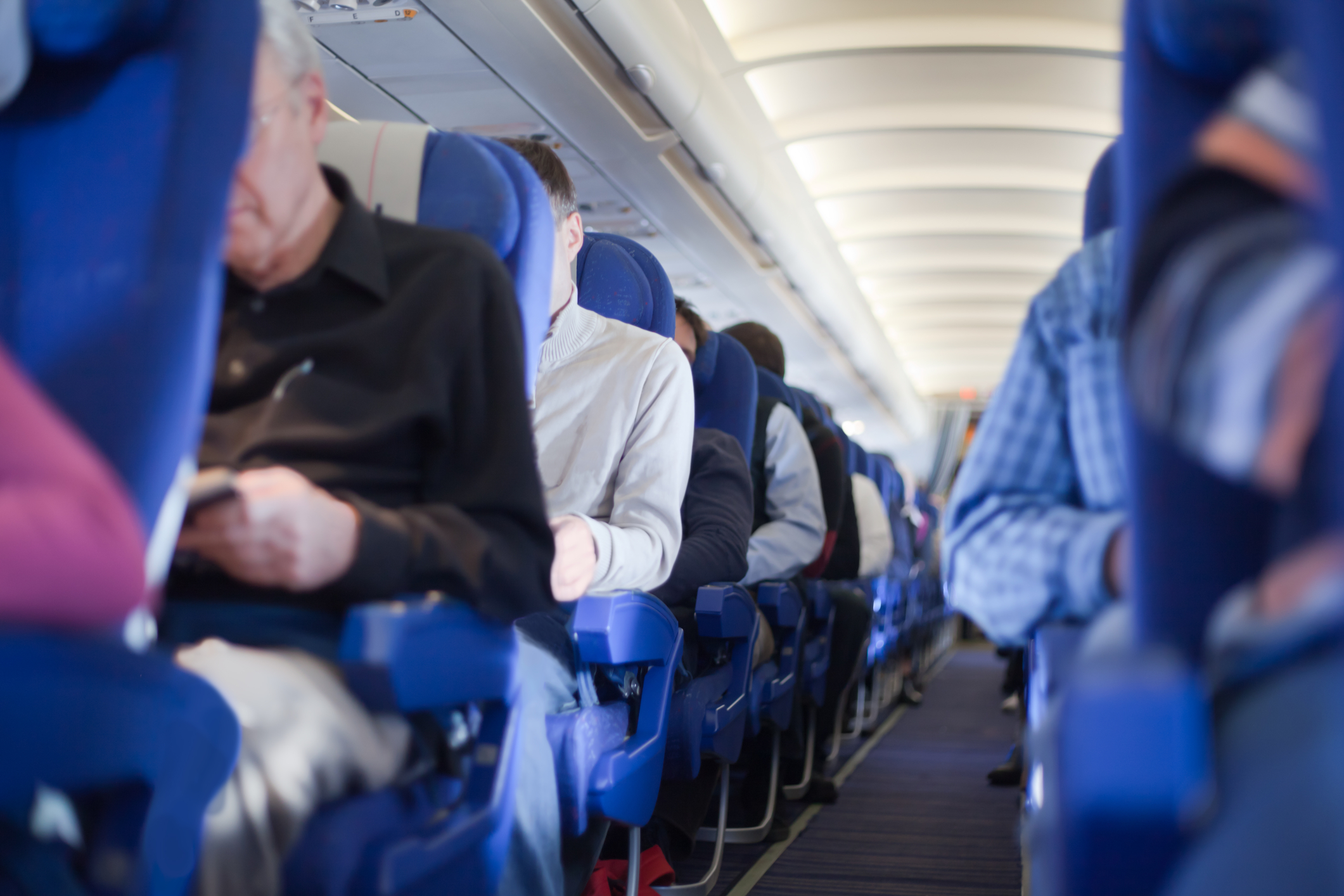
ID 18361496 | Airplane Cabin ©Pavel Losevsky | Dreamstime.com
I want to be clear: I am not one of those people who says we need to go back to the “Golden Age” of travel. I see people online saying we should go back to the 60s or 70s when people wore suits and ate lobster on planes.
I didn’t even start flying until 2012, so I don’t have some nostalgic attachment to the past. I don’t think we need to dress up, and I don’t expect perfection. I just want peace.
In my years of travel, my best experiences have been the “boring” ones. The flights where everyone minded their own business, wore their headphones, kept their shoes on, and followed the crew’s instructions. We all arrived at our destination stress-free and happy.
The “loud minority” of unruly passengers is what makes the news, but the reality is that shared spaces only work when we remember that we are part of a community, however temporary it may be.
All of these incidents – the pasta, the phone calls, the bare feet, the nail clippers, the curling iron, and the stunts – come back to the same basic issue: some people forget that a flight is not just their experience. It is everyone’s experience. Flying does not have to feel glamorous, formal, or special. But it should not feel like a circus, a private living room, or a personal beauty salon either.
I, for one, am ready for the news to be boring again.
More amazing articles for you:
This Budapest Cat Café Will Steal Your Heart - Read This Before You Go
Why You Keep Saying Yes When You Mean No (And the 8 Psychology Tricks Behind It)
Why Some “Normal” Conversations Leave You Mentally Drained — The One Habit That’s Draining Your Ener...
Forgotten Subscriptions Can Drain Your Budget Every Month - Here’s the Fast Check to Do This Weekend
The Secret Logic of Choice: 7 Fascinating Patterns That Shape Your Decisions Every Single Day
The Skills You Already Have Could Be Making You Extra Money - Here Are 7 Ways You May Not Have Consi...
5 Unmissable Places to Visit in Macau - From Iconic Towers to Cultural Gems
People Keep Talking Over You? These Small Conversation Cues May Be Why - And How to Stop It

Violeta-Loredana Pascal is a communications expert, business mentor, and the founder of Earth’s Attractions and PRwave INTERNATIONAL. A pioneer in the Romanian digital PR landscape since 2005, she holds a degree in Communication and Social Sciences from SNSPA Bucharest. Violeta is a senior trainer at AcademiadeAfaceri.ro, where she leverages over 20 years of experience to teach professional courses in PR strategy and workplace productivity. By blending high-level business consulting with a passion for holistic travel and wellness, she empowers solopreneurs to overcome procrastination, build profitable brands, and design a life of purposeful adventure.