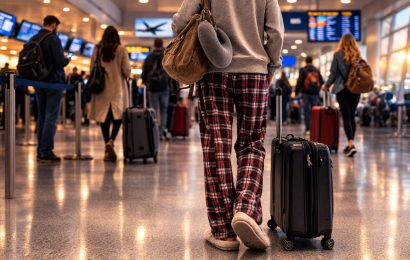
Somewhere in the world right now, a departure board is blinking “DELAYED,” a gate agent is repeating the same sentence for the ninth time, and a traveler is googling “Can I get compensation for emotional damage?”
If that sounds familiar, you’re not alone – and it’s not just bad luck.
Multiple outlets have been covering a 2025 delay ranking based on Flighty’s flight-tracking data, which analyzed millions of flights and flagged delays using the common industry threshold (arrival 15+ minutes behind schedule).
The punchline: some airlines ran late so often in 2025 that delays basically became part of the itinerary.
Below is the list of the world’s most delayed airlines for 2025, followed by a look at U.S. airlines and practical tips to help you plan flights more realistically.
I am also including my tips on helping you plan your flights better.
The 10 most delayed airlines in the world for 2025
Here they are. The most delayed airlines in the world for 2025 as mentioned by Flighty and quoted in TimeOut.
- Ryanair
- Air France
- easyJet
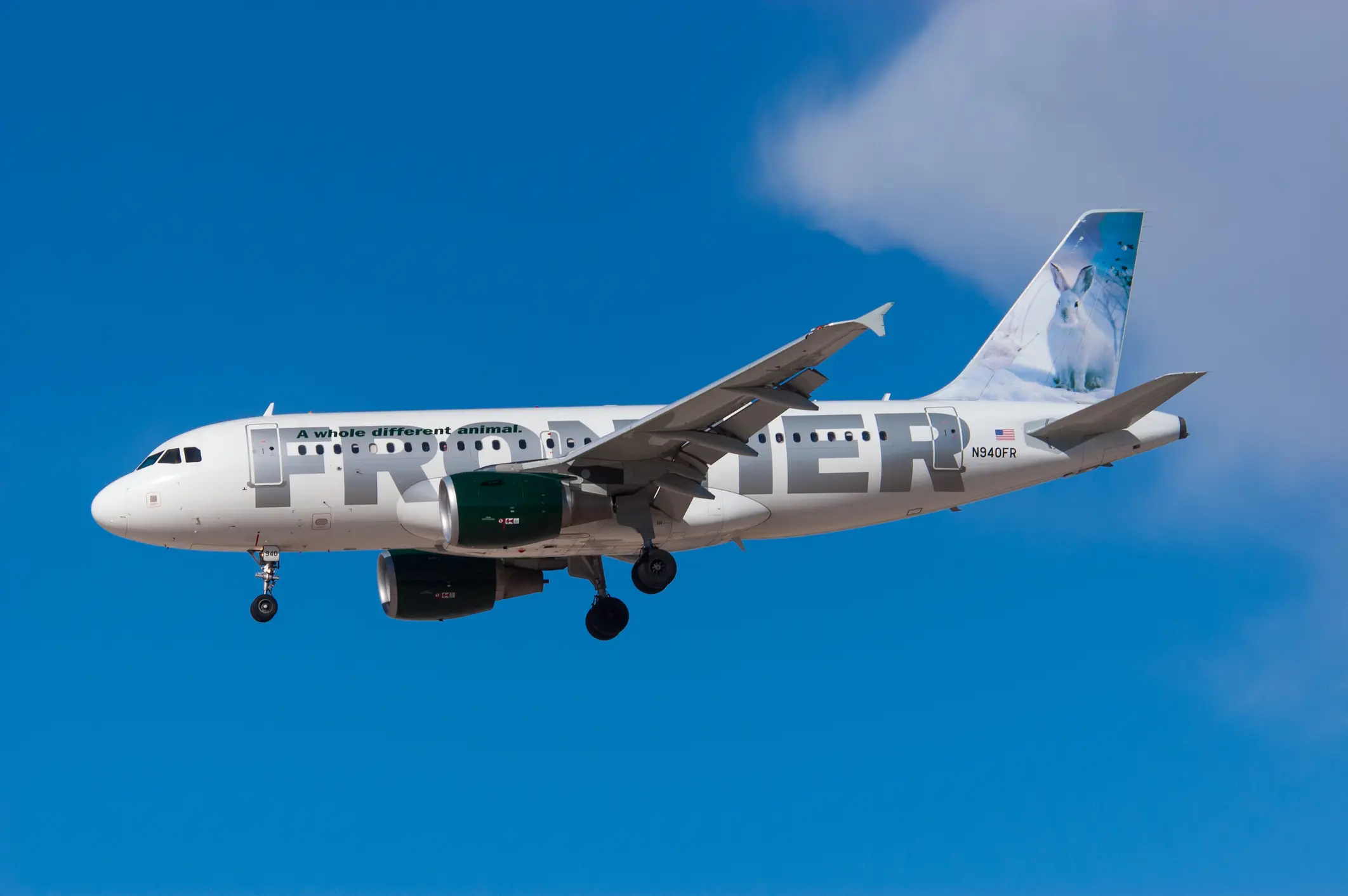
- Frontier Airlines
- Lufthansa
- Qantas
- KLM Royal Dutch
- Air Canada
- JetBlue Airways
- Southwest Airlines
Several outlets also added context around delay-rate clusters rather than exact percentages. Roughly speaking, some major European carriers hovered around 29% delayed flights, Frontier around 28%, and several others closer to 25%.
Not catastrophic.
But also… not exactly reassuring when you’re watching the minutes tick by at the gate.
ID 79913437 ©Radarman70 | Dreamstime.com
What this list actually tells us (and what it doesn’t)
The first thing worth noting: this is not a “low-cost airline problem.”
Yes, Ryanair and easyJet are here – but so are Air France, Lufthansa, KLM, Qantas, Air Canada. These are household names. Flag carriers. Airlines people associate with reliability, experience, and long-haul comfort.
Which makes the list more interesting.
Delays aren’t limited to budget airlines cutting corners. They happen across:
- ultra-low-cost carriers
- full-service European airlines
- North American legacy airlines
- long-haul flag carriers on the other side of the world
In other words: this is a global systems issue, not a branding issue.
Also worth saying: delays aren’t always the villain
Here’s the nuance that rarely makes headlines.
A delayed departure doesn’t automatically mean a delayed arrival.
I still remember leaving 10 minutes late on an Air France flight to Paris… and landing five minutes early.
Same plane. Same crew. Same day.
Airlines sometimes build buffer time into routes. Sometimes tailwinds help. Sometimes gates free up faster than expected.
That’s why most travelers don’t actually panic at the first “Delayed” label. We panic when:
- delays stack,
- connections shrink,
- communication disappears,
- or the delay quietly becomes a cancellation.
The frustration isn’t just the delay – it’s the uncertainty.
Why this list still matters (even if you’ve had “fine” flights)
Because patterns matter.
If an airline shows up consistently in delay rankings across regions and seasons, that’s useful context when you’re:
- booking a tight connection,
- planning a same-day event,
- flying with kids,
- or trying to decide whether a 40-minute layover is “adventurous” or “delusional.”
This isn’t about fear-mongering.
It’s about going in eyes open.
The real takeaway
Delays happen.
Sometimes they don’t matter at all.
Sometimes they unravel your entire day.
And while no list can predict your exact flight, knowing which airlines struggle more than others helps you decide:
- when to build buffer time,
- when to choose a different route,
- and when to mentally prepare for Gate Limbo.
If nothing else, the next time your flight runs late, you’ll know whether you’re dealing with bad luck… or a familiar pattern.
And honestly?
That knowledge alone already feels like being five minutes ahead.
How to Plan Flights More Realistically (Based on How Airlines Actually Operate)
Knowing which airlines tend to run late is useful, but only if you adjust how you book. These are the habits that reduce stress when delays are no longer rare exceptions.
1) Stop trusting “minimum connection time”
A 30-minute layover may look efficient on paper. In real life, it’s a gamble.
If your first flight is even slightly late, that “tight but doable” connection turns into:
- sprinting through terminals,
- missed boarding by minutes,
- or being rebooked hours later.
A safer baseline:
- Domestic connections: aim for at least 1.5 hours
- International connections: aim for 2 hours or more, especially at large hubs
Yes, it may add time on paper, but it often saves time in reality.
2) Earlier flights really are safer
It’s boring advice. It’s also consistently true.
Delays compound as the day goes on. The first flight of the day has:
- fewer inbound delays to inherit,
- fewer crew timing issues,
- and fewer knock-on disruptions.
If you care about arriving on time, book earlier, even if it hurts.
3) Treat hub airports with respect (and caution)
Large hub airports are efficient – until they’re not.
Weather, congestion, gate shortages, and air traffic control constraints hit hubs first and hardest. When booking through major hubs, assume:
- longer taxi times,
- more competition for gates,
- higher odds of cascading delays.
If you must connect through a hub, increase your buffer time accordingly.
4) Don’t let “arrival time optimism” fool you
Airlines sometimes build buffer time into routes, and yes – late departures can still arrive on time.
But booking tight connections based on optimism (“they’ll make it up in the air”) is not a strategy. It’s a hope.
Use delay rankings and historical performance as context,not reassurance.
5) If timing matters, avoid the last flight of the day
When a morning flight is delayed, it can often be fixed. When the last flight of the day is delayed or canceled, options disappear fast.
If you absolutely need to be somewhere the same day:
- avoid final departures,
- or accept that you’re trading convenience for risk.
6) Plan like delays will happen, not like they won’t
This doesn’t mean panic or paranoia. It means realism.
Build slack into:
- connections,
- same-day plans,
- and arrival expectations.
Ironically, planning for delays often results in the smoothest trips, because when things go right, you simply arrive early instead of stressed.
The quiet truth
Most travel frustration doesn’t come from delays themselves.
It comes from planning as if delays are rare, when the data clearly shows they’re not.
Once you plan with that reality in mind, airline rankings stop being anxiety-inducing and start being useful.
Now, the global delay rankings tell one part of the story, but what about flights closer to the USA? U.S. airline punctuality data from 2025 reveals a mixed bag of performance across major domestic carriers, with some surprising leaders and laggards. Below are recent on-time arrival rates that offer a more localized view of how dependable your next flight might be.
The Most (and Least) On-Time U.S. Airlines in 2025
If the global “most delayed airlines” list makes you grit your teeth, here’s a more focused look at how U.S. carriers performed on punctuality this year.
Data compiled from Bureau of Transportation Statistics results and visualized by industry outlets shows that on-time arrival rates varied significantly across U.S. airlines in the first half of 2025. Flights that landed within 15 minutes of their scheduled arrival were counted as on time – the same industry standard used in global delay reports. I saw this data into a visual format on The Visual Capitalist.
Best and Worst On-Time Performance (U.S. Carriers, 2025)
Top on-time performers:
- Hawaiian Airlines – ~83.1% on time
- Horizon Air – ~81.3% on time
- Southwest Airlines – ~78.9% on time
- United Airlines – ~78.6% on time
Mid-range performers:
- Spirit Airlines, Delta Air Lines, SkyWest Airlines, Republic, Mesa, Alaska Airlines – ~76–78% on time
Lower on-time performers:
- JetBlue Airways – ~74.5% on time
- American Airlines – ~73.6% on time
- United Express & Air Wisconsin – ~71–72% on time
- Frontier Airlines – ~70.0% on time
- PSA Airlines – ~65.7% on time (lowest)
This range shows that even within the U.S., punctuality can swing dramatically depending on the airline’s operations and hubs – something many travelers do not realize until their own flight is late.
On a funny note… maybe the “airport theory” isn’t as ridiculous as it sounds
You know that idea floating around online where people intentionally show up at the airport dangerously late – sometimes just 15 minutes before departure – and still make their flight?
That’s airport theory.
And with delays being as common as they are now, some travelers might argue it’s less of a gamble and more of a weirdly calculated risk.
When flights regularly leave late, gates change at the last minute, and boarding drags on, the idea that “everything will be delayed anyway” starts to feel… almost logical (especially if you discover in the morning that you forgot to pack something). Not responsible. Not advisable. But logical enough that people keep trying it.
If you want the entertaining deep dive into why this theory exists – and why it sometimes appears to work – you can read the full breakdown here.
(For the record: this is not a recommendation (quite the opposite, in fact). It’s just an observation about how airline delays have quietly warped traveler psychology.)