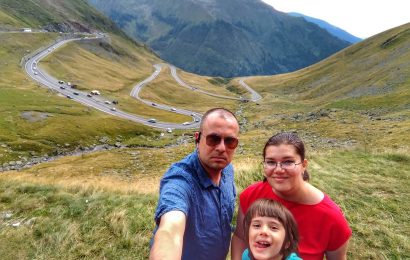
If you want to see the Perseids this week, 2026 is a very good year to go. The meteor shower peaks tomorrow night, August 12 to 13, and the New Moon means there won’t be bright moonlight hiding many of the fainter meteors.
NASA says the New Moon should provide excellent viewing opportunities this year, weather permitting. I go to watch the Perseids almost every year, including years when the Moon was visible. We still saw meteors then – mainly the brighter ones – and I was always happy we went.
You can also start watching tonight. The Perseids are active from July 17 to August 24, and activity is already high this close to the peak. So you have three particularly good nights to try: August 11 to 12, August 12 to 13, and August 13 to 14, with August 12 to 13 expected to offer the highest activity.
We’ve had wonderful clear skies, a cloudy year when we barely saw two to five meteors, and one year when it rained during all three nights when we could have gone.
So, if you’re planning to watch the Perseids tonight, tomorrow night or the night after, here’s how I’d prepare. I’m sharing how to find the best viewing spot, what you need to bring with you, when to go, where to look, how long to stay, and how to see the Perseids if you DON’T have a car or can’t travel outside the city, along with tips from our years of watching them.
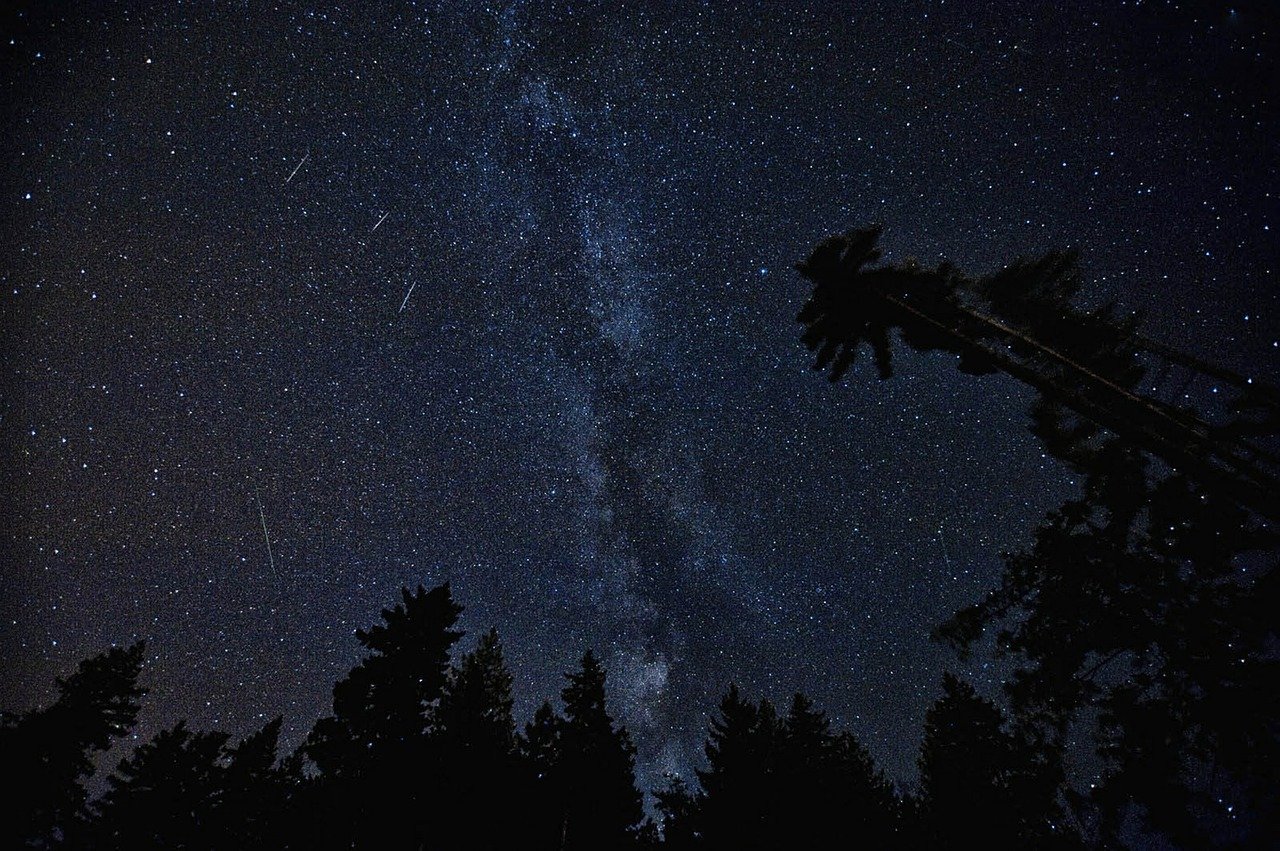
When do the Perseids peak in 2026?
The main Perseid peak is during the night of Wednesday, August 12 to Thursday, August 13, 2026.
The International Meteor Organization places the nominal maximum between 02:00 and 04:00 UTC on August 13, with the traditional broader maximum extending from approximately 21:00 UTC on August 12 until 09:00 UTC on August 13.
If you’re in the United States, 02:00 to 04:00 UTC corresponds approximately to:
Eastern Time: 10:00 p.m. to midnight on August 12
Central Time: 9:00 p.m. to 11:00 p.m.
Mountain Time: 8:00 p.m. to 10:00 p.m.
Pacific Time: 7:00 p.m. to 9:00 p.m.
If you can’t go during those exact hours, I still have good news for you: you can enjoy the Perseids earlier too. If the sky is clear, you can start watching from around 10:00 p.m. and continue into the early morning. NASA says the pre-dawn hours usually offer the best Perseid viewing in the Northern Hemisphere, so staying later can increase your chances of seeing more meteors.
We usually arrive at our chosen spot at around 11:30-11:45 p.m. By the time we park, get the chairs out, settle in and give our eyes 20-30 minutes to adjust to the darkness, it’s around midnight. We then stay until about 2:00-3:00 a.m., so in total we spend roughly two to three hours there.
You don’t have to follow the same schedule, of course. Even if you can only stay for an hour or two, give your eyes time to adjust first and then spend at least one full hour actually watching the sky.
Pack these things before you leave
You don’t need a telescope, binoculars or any special meteor-watching equipment. There are, however, several things I wouldn’t leave home without.
Reclining chairs or a thick blanket: You’ll spend a long time looking upward. A reclining camping chair is much more comfortable than a normal chair. I’ve used ordinary chairs too, and yes, my neck noticed the difference the following day.
Warm clothes: Check the forecast for 2:00 a.m. or 4:00 a.m., not only the temperature at 9:00 p.m. An August day can be very hot while the open countryside feels surprisingly cool several hours after midnight.
We’ve been taking our son to see the Perseids since he was young. On one of those early outings, he said he was feeling cold – we changed jackets and it was ok. Since then we’ve always taken additional warm layers.
Long trousers and closed shoes: They help with insects, long grass and uneven ground.
Insect repellent and whatever you normally use after insect bites: Apply the repellent when you arrive. I also prefer locations that aren’t immediately beside water because unfortunately I am a magnet for mosquitoes.
Water: Bring enough for the hours you’re planning to stay. Once you’re in a genuinely dark location outside the city, you probably won’t have a shop nearby.
Snacks: If you need, bring sandwiches, crackers, fruit or protein bars. Some friends bought protein bars one year and they were surprisingly useful! Don’t leave any mess/garbage behind.
A flashlight or headlamp: A red-light mode is ideal. You’ll need enough light to move safely without shining a bright white light across the viewing area. This is something we usually forget to pack 😀 and end up using the phone flashlights.
Your phone and a power bank: You’ll probably use the phone for navigation, a compass and perhaps a sky app. Once you’re settled, lower the brightness and use it as little as possible.
A rubbish bag: Take food packaging, tissues and everything else back with you.
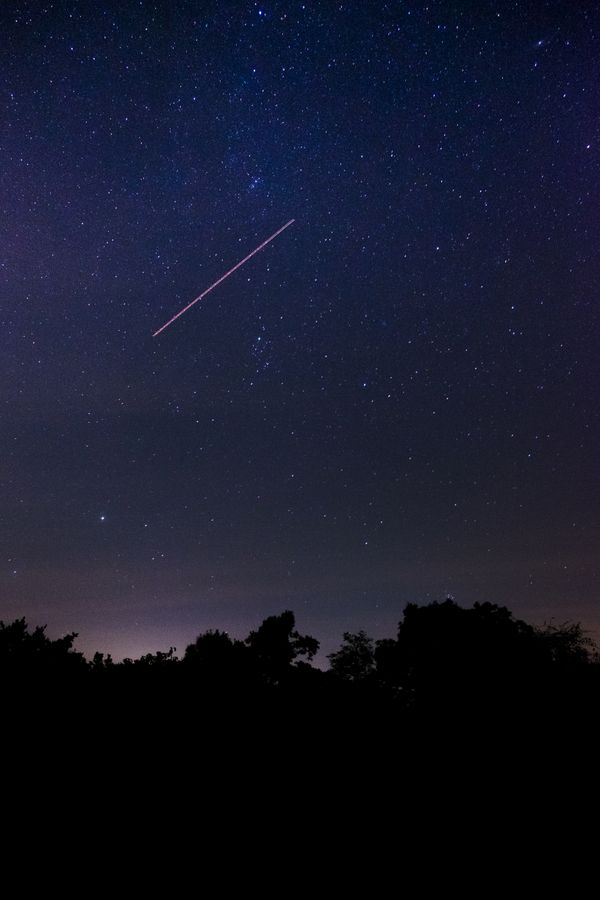
How to find a good place to watch the Perseids
“Drive away from the city” is good advice, but it doesn’t tell you where to stop.
I start with Google Maps and look at the areas around the city that I can realistically reach. Then I compare possible locations with a light-pollution map.
Don’t choose a place based only on the number of miles between you and the city. Around one town, 15 or 20 miles may take you into a much darker area. A major metropolitan area can create a glow that extends much farther.
Once you’ve identified a darker area, zoom in and look for an actual viewing location.
I look for:
An open area with a wide view of the sky. Avoid forests and places surrounded by tall trees. A location can be beautifully dark and still give you a poor view if half the sky is hidden.
As few nearby lights as possible. Check for major roads, gas stations, illuminated businesses, parking lots, houses and other sources of direct light.
Safe, legal access. Don’t park on private property, block farm entrances or leave your car where passing traffic won’t see it.
Somewhere you can safely stay for several hours. Remember that you’ll arrive and leave in the dark.
If possible, visit the place during daylight before the Perseids. A road that looks perfectly accessible on Google Maps may have a gate. A field may be private property. There may be ditches, difficult ground or no safe place to park.
We’ve saved the coordinates of places that worked well for us. It removes a lot of guesswork the following year.
How to see the Perseids if you don’t have a car
If you don’t have a car and you can’t go with friends who drive, check what is available in your own city before giving up on seeing the Perseids.
Look for astronomical observatories, planetariums, astronomy clubs and public stargazing events. Some cities also open parks, terraces or other viewing areas for major astronomical events.
We have options like this in my city too, including an astronomical observatory and terraces where special viewing events have been organized. And I found similar examples in cities in the United States and across Europe.
Chicago’s Adler Planetarium, for example, organizes public telescope observing and also takes its ‘Scopes in the City program to parks and other locations around Chicago. Griffith Observatory offers public observing in Los Angeles. In Paris, free summer stargazing events are organized in city parks, while Berlin’s Archenhold Observatory is even holding a special Perseid observing night on August 12 this year.
Search for “Perseids viewing + your city,” “meteor shower viewing + your city,” “public observatory + your city” or “astronomy club + your city.” Also check the websites and social media pages of local observatories and planetariums, as special Perseid events may only be announced shortly before the peak.
If there isn’t an organized event, look for the darkest open place you can safely and legally reach by public transportation. A large park, an open area away from streetlights or a location where buildings shield you from direct lights can be better than watching from a brightly lit street or balcony.
You will probably see fewer meteors inside a city because light pollution hides the fainter ones. The brighter Perseids and fireballs can still be visible, though, so I would still try if leaving the city isn’t possible.
And use the same tips from the rest of this article: find the darkest part of the sky available to you, stay away from direct lights, give your eyes 20-30 minutes to adjust and spend at least an hour actually watching.
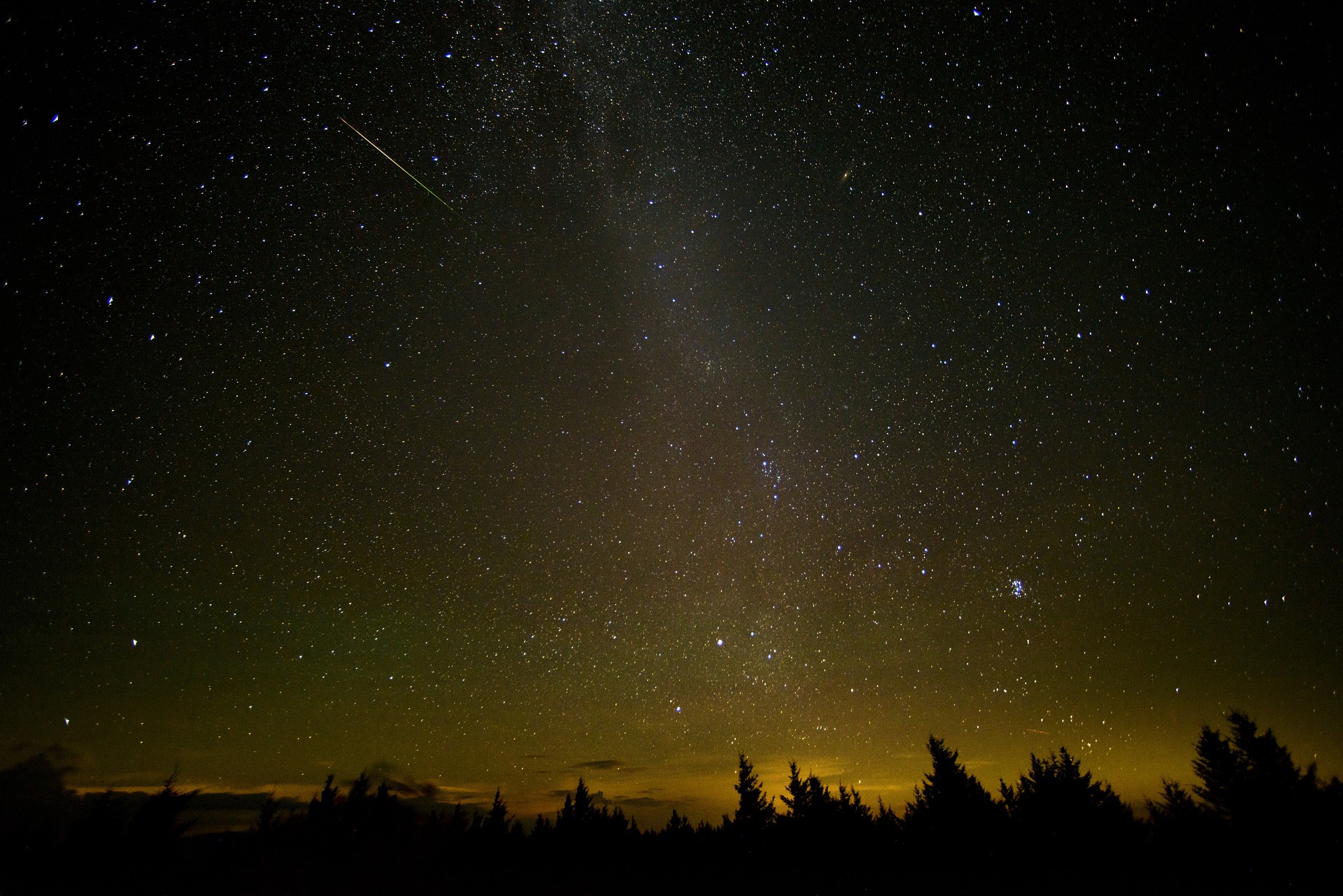
When you arrive, don’t start counting meteors immediately
Your eyes need time to adapt to the darkness.
NASA recommends allowing roughly 20 to 30 minutes. During that time, get your chairs or blanket ready, put on another layer if you need it and stop looking at bright screens.
A phone that looked perfectly normal in the car can seem incredibly bright once you’re standing in a dark field. Turn the brightness down as far as practical and use a red-light setting if you have one.
If you open a sky app, I’d do it during this first part of the evening, then put the phone away.
Which direction should you face to see the Perseids?
You don’t have to find one tiny area of the sky.
The Perseids appear to radiate from the constellation Perseus, which is in the northeastern part of the sky during the relevant hours for observers across much of the Northern Hemisphere.
If you have no idea which way northeast is from your viewing place, use the Compass app on your phone. You can also use an astronomy app such as Sky Map on Android or Sky Guide on iPhone to locate Perseus.
You only need to do that once if you’re curious about the radiant.
Don’t keep staring directly at Perseus. Meteors can appear across a huge portion of the sky, and some of the most impressive trails may be farther away from the radiant.
A comfortable setup is to lie back with your feet pointing roughly northeast and look upward, taking in as much sky as you can. If that direction has trees, buildings or light pollution, turn toward the darker, more open part of the sky instead.
The large field of view is also why a telescope isn’t useful for watching the Perseids. It lets you see a tiny part of the sky at a time, while your eyes can watch a much larger area.
How long should you stay?
I wouldn’t judge the Perseids after ten or fifteen minutes.
First allow those 20 to 30 minutes for your eyes to adapt. After that, give yourself at least one full hour of actual watching.
Meteors aren’t evenly spaced. We’ve had periods when several appeared quite close together and other periods when we waited much longer.
We usually spend around two to three hours there in total. That gives us time to settle in, let our eyes adapt and actually enjoy the night rather than constantly checking the time.
You don’t have to count meteors either. The frequently quoted rates for meteor showers assume ideal conditions and shouldn’t be read as a promise that you’ll personally see one every few seconds. Your sky brightness, cloud cover, obstructions and the height of the radiant all affect what you’ll see.
Check cloud cover, not only the chance of rain
This is one of the reasons I always check more than one possible night.
A forecast can show no rain and still give you enough cloud, haze or humidity to ruin much of the view.
One year, we went despite the clouds and saw perhaps two to five meteors during the entire outing. We kept hoping the sky would clear.
Another year, it rained during all three nights around the peak. We couldn’t go at all.
If you’re reading this on August 11 and tonight is beautifully clear while the forecast for August 12 to 13 looks awful, you can go tonight. Perseid activity is already high close to the peak. August 13 to 14 is another possibility if tomorrow night is lost to clouds.
You can make it a night out with friends or family
We often have someone with us when we watch the Perseids. Some of our friends don’t have a car, so coming with us gives them a chance to get well outside the city too.
Over the years, several friends have joined us and enjoyed the experience. You can also meet another couple, family or group of friends at the viewing location and travel in separate cars.
There isn’t much to organize once everyone knows where to meet. Bring chairs, snacks and something warm to wear, then talk while you’re waiting for the next meteor.
If other people have chosen the same viewing area, keep music low or skip it and avoid bright lights. Someone who’s been sitting in darkness for half an hour won’t appreciate headlights or a flashlight suddenly pointed in their direction.
And yes, I think I’ve made wishes
Apparently, seeing a falling star still brings out the child in me.
I think I’ve made wishes over the years, especially when the first meteor of the night appeared.
I can’t tell you whether any of them came true because I don’t remember what I wished for.
Perhaps I should start writing them down when we get home.
What are the Perseids?
If you’re mainly interested in seeing them, you don’t need to know the astronomy before going outside.
The short version is that the “falling stars” aren’t stars.
Every year, Earth passes through debris associated with comet 109P/Swift-Tuttle. Small particles hit Earth’s atmosphere at very high speed, producing the streaks of light we see as meteors.
The shower is called the Perseids because the meteors appear to trace back toward an area near the constellation Perseus.
NASA describes the Perseids as one of the most plentiful annual meteor showers and notes that they’re known for fast, bright meteors, persistent trails and fireballs.
One more thing before you go
If you’re planning to stay until 2:00, 3:00 or 4:00 in the morning, think about the drive home before you leave.
Watching the sky from a reclining chair for several hours can make you much sleepier than you expect. Share the driving if possible, rest before leaving the viewing location or stay nearby if you’ve driven a long distance.
I’m hoping for a clear sky tomorrow night
I go to see the Perseids almost every year because I still find the spectacle amazing.
We’ve watched them when our son was so young that he didn’t really understand what he had just seen. We’ve gone with friends. We’ve sat under a bright Moon and mainly caught the larger meteors. We’ve waited through clouds for only a handful of them. We’ve also had nights when the sky rewarded the whole trip.
And now we have a Perseid peak with a New Moon.
If the weather cooperates where you live, choose your location before dark, take a reclining chair or blanket, pack warm clothes and insect repellent, give your eyes 20 to 30 minutes to adjust, and stay long enough to enjoy it.
I know I’ll be looking up.
And perhaps making another wish I won’t remember next year.
Photo sources: 1, 2, 3, second pin photo
More amazing articles for you:
These Mistakes Could Get You Shamed or Fined in Japan - and Why They’re So Easy to Make
10 Italian Cities That Belong on Every Traveler’s Bucket List
Stop Spending a Fortune on Napa Valley - This Nearby Historic Wine Region Lets You Walk Between Tast...
Feeling Drained? Here’s What Chronic Stress Does to Your Body - and 14 Proven Ways to Fix It
They Said His Carry-On Was Too Big. He Refused to Pay - and His Next Move Has People Calling It Geni...
They Said His Carry-On Was Too Big. He Refused to Pay - and Did Something No One Expected
I Started Asking for Things I Knew Would Be Rejected - Here is the Bizarre Reason My Success Rate Ac...
The San Diego Local-Approved Guide You Have to Read

Violeta-Loredana Pascal is a communications expert, business mentor, and the founder of Earth’s Attractions and PRwave INTERNATIONAL. A pioneer in the Romanian digital PR landscape since 2005, she holds a degree in Communication and Social Sciences from SNSPA Bucharest. Violeta is a senior trainer at AcademiadeAfaceri.ro, where she leverages over 20 years of experience to teach professional courses in PR strategy and workplace productivity. By blending high-level business consulting with a passion for holistic travel and wellness, she empowers solopreneurs to overcome procrastination, build profitable brands, and design a life of purposeful adventure.