
I think we’re all fascinated by science in one way or another. There’s so much we already understand about our bodies, our planet, matter and the universe – and still an extraordinary amount left to discover. New research can answer a question people have asked for decades and immediately give scientists several new ones to investigate.
I can see that curiosity in the articles people read here. The general knowledge trivia has been popular, and readers have also enjoyed the more recent human body trivia. So I wanted to create a much bigger challenge devoted entirely to science.
Below you’ll find 200 science trivia questions and answers separated into seven domains: biology, space and astronomy, chemistry, inventions and engineering, Earth science, physics, and famous scientists. Within every category, the questions also progress by difficulty. I tried to make the first questions in each category easy science trivia questions that give you a good chance to start collecting points. The medium questions require a little more recall, while only a relatively small number move into hard and expert territory.
Keep going as the questions are grouped by domain, and for each domain, by difficulty. When the subject changes, you may suddenly find yourself knowing answer after answer again. Give yourself one point for every correct response and keep a running total because there’s a score guide after Question 200.

ID 385047326 | People ©Wavebreakmedia Ltd | Dreamstime.com
You can use these science trivia questions for adults and teens as a personal challenge, a family game, a classroom activity, a science quiz, a pub quiz or a trivia night. Every answer appears directly below its question, and there are no True/False questions or multiple-choice answers to turn difficult questions into lucky guesses.
I also checked the complete set to avoid asking the same trivia fact twice from different directions. No correct answer is deliberately recycled as a later question, and I left out several popular science-trivia claims that become inaccurate once you look at the definitions more closely.
Biology Trivia Questions and Answers
Biology is a good place to begin because many of us remember more than we expect from school, documentaries, museum visits and everyday life. These biology trivia questions and answers cover plants, cells, genetics, animals and human physiology. The easy biology trivia questions come first, while the final few hard biology trivia questions move into processes and concepts that may take an extra moment to recall.
Natural-history museums can make these ideas much easier to picture. Bucharest’s natural-history museum has collections spanning biodiversity, fossils and animals from different environments, while the Oxford Natural History Museum adds fossils and dinosaur remains to the experience.
Easy Biology Trivia Questions
1. What green pigment in plant cells absorbs light energy used in photosynthesis?
Answer: Chlorophyll. It absorbs red and blue wavelengths especially well, while much of the green light is reflected.
2. What molecule carries hereditary instructions in humans and most other living organisms?
Answer: DNA.
3. Which blood components gather at a wound and help form a clot?
Answer: Platelets.
4. What is the largest organ of the human body?
Answer: Skin. In adults, it can cover roughly 1.5 to 2 square meters of surface area.
5. Which cell organelle produces most of a eukaryotic cell’s usable energy?
Answer: Mitochondrion.
6. What process causes plants to lose water vapor mainly through tiny openings in their leaves?
Answer: Transpiration.
7. What tough band of tissue connects a muscle to a bone?
Answer: Tendon.
8. What is the largest animal known to have lived on Earth?
Answer: Blue whale. Blue whales can grow longer than a basketball court, yet their diet consists largely of tiny krill.
Medium Biology Trivia Questions
9. What oxygen-carrying protein gives red blood cells their characteristic color?
Answer: Hemoglobin. Iron-containing groups within the protein bind oxygen for transport around the body.
10. Which part of the brain plays a major role in balance and coordination?
Answer: Cerebellum.
11. Which hormone helps lower blood glucose by allowing cells to take in glucose from the bloodstream?
Answer: Insulin.
12. What type of light-sensitive cell in the retina includes rods and cones?
Answer: Photoreceptor.
13. Which substance in saliva begins breaking down starch before food reaches the stomach?
Answer: Amylase. It’s one reason starchy foods can begin tasting slightly sweeter after you chew them for a while.
14. Which plant tissue carries water and dissolved minerals upward from the roots?
Answer: Xylem.
15. What form of cell division produces eggs and sperm with half the usual chromosome number?
Answer: Meiosis.
16. Which body system includes the lymph nodes, spleen and thymus?
Answer: Lymphatic system.
17. What are the protective caps at the ends of chromosomes called?
Answer: Telomeres.
18. What tiny air sacs in the lungs are the main sites of gas exchange?
Answer: Alveoli. Their enormous combined surface area allows oxygen and other gases to move efficiently between the lungs and bloodstream.
19. What is the smallest bone in the human body?
Answer: Stapes. It sits in the middle ear and is only a few millimeters long.
20. What do biologists call a relationship in which both species benefit?
Answer: Mutualism.
21. What term usually describes a biological molecule, most often a protein, that speeds up a biochemical reaction without being permanently consumed?
Answer: Enzyme.
22. Which cell organelle contains digestive substances that break down worn-out cell parts?
Answer: Lysosome.
23. What movement of water through a selectively permeable membrane is driven by a difference in solute concentration?
Answer: Osmosis.
Hard Biology Trivia Questions
24. What process copies genetic information into a messenger RNA molecule?
Answer: Transcription.
25. What type of immunity develops when a person’s own immune system responds to a vaccine or infection?
Answer: Active immunity. The immune response can create memory cells that allow a faster reaction if the same threat is encountered again.
26. Which group of living reptiles has a four-chambered heart similar in structure to those of birds and mammals?
Answer: Crocodilians.
27. Which RNA base takes the place of thymine when genetic instructions are copied into RNA?
Answer: Uracil.
28. What antibody-producing cells develop from activated B lymphocytes?
Answer: Plasma cells.
Expert Biology Challenge
29. What term describes the controlled, programmed death of a cell?
Answer: Apoptosis. This carefully regulated process helps remove damaged or unnecessary cells without producing the same response as uncontrolled cell injury.
30. What theory proposes that some organelles in complex cells originated as free-living bacteria that entered into a long-term partnership with another cell?
Answer: Endosymbiotic theory. Several features of these organelles, including their own genetic material and bacteria-like ribosomes, support the idea.
Biology score: ___ / 30
Keep that number. The next category changes the subject completely, which may be exactly what your score needs.
Space and Astronomy Trivia Questions and Answers

ID 96151380 ©Denys Bilytskyi | Dreamstime.com
I think that space can make an excellent science trivia round. I’ve mixed planets, stars, spacecraft, orbital terms and deep-space phenomena into these space trivia questions and answers. The astronomy trivia questions get noticeably harder near the end, but there are plenty of points available before you reach them.
If seeing spacecraft and astronomy exhibits sounds better than reading about them, the Smithsonian museums include the National Air and Space Museum, while the Nagoya Science Museum is known for its huge planetarium.
Easy Space Trivia Questions
31. Which planet has the highest average surface temperature in our solar system?
Answer: Venus. Its dense atmosphere produces an extreme greenhouse effect, pushing surface temperatures to around 467°C (872°F).
32. Which planet is the largest in our solar system?
Answer: Jupiter.
33. Which planet is famous for the most prominent system of icy rings?
Answer: Saturn.
34. Which planet orbits closest to the Sun?
Answer: Mercury.
35. Which planet has two small moons named Phobos and Deimos?
Answer: Mars.
36. Which officially recognized dwarf planet lies in the main asteroid belt?
Answer: Ceres. It was discovered in 1801 and is the only officially recognized dwarf planet in the inner solar system.
37. What galaxy contains our solar system?
Answer: Milky Way.
38. What was the first artificial satellite placed into orbit around Earth?
Answer: Sputnik 1. Its launch in October 1957 marked the beginning of the Space Age.
Medium Space Trivia Questions
39. What is the largest moon in our solar system?
Answer: Ganymede (Jupiter). Its diameter is greater than that of the smallest planet.
40. Which planet rotates on its side, with an axial tilt of about 98 degrees?
Answer: Uranus.
41. Which planet is the most distant of the eight planets from the Sun?
Answer: Neptune.
42. What is the boundary around a black hole beyond which nothing can escape?
Answer: Event horizon.
43. What broad region beyond the orbit of the eighth planet contains many icy bodies and dwarf planets?
Answer: Kuiper Belt.
44. What small lander made the first controlled touchdown on a comet in 2014?
Answer: Philae. Its first touchdown was followed by unexpected bounces before it came to rest on the comet’s surface.
45. What major infrared space observatory launched in 2021 and began returning deep-space images in 2022?
Answer: James Webb Space Telescope. Its segmented primary mirror is about 6.5 meters (21.3 feet) across.
46. What is the nearest star system to our own solar system?
Answer: Alpha Centauri system.
47. What geometric shape describes the path of a planet around the Sun?
Answer: Ellipse.
48. What is the point in an orbit where an object is closest to the Sun called?
Answer: Perihelion.
49. What nuclear process powers ordinary stars by combining light atomic nuclei?
Answer: Fusion.
50. What astronomical event occurs when Earth passes between the Sun and the Moon and its shadow falls on the Moon?
Answer: Lunar eclipse.
51. What is a cloud of gas and dust in space, often associated with star formation, called?
Answer: Nebula.
52. What apparent backward movement of a planet against the background stars is seen from Earth at certain times?
Answer: Retrograde motion. The planet hasn’t actually reversed its orbit; the apparent change comes from the relative motions of the planets as seen from Earth.
53. Which spacecraft completed the first close flyby of Pluto in 2015?
Answer: New Horizons. It traveled for more than nine years before reaching its primary target.
Hard Space Trivia Questions
54. What is the largest volcano in the solar system?
Answer: Olympus Mons. The enormous shield volcano rises more than 20 kilometers above its surrounding reference level.
55. What distant, roughly spherical reservoir is thought to be the source of many long-period comets?
Answer: Oort Cloud. No spacecraft has reached it; its existence is inferred from the behavior and origins of long-period comets.
56. Which spacecraft became the first human-made object to enter interstellar space?
Answer: Voyager 1. NASA determined that it crossed into interstellar space in August 2012, decades after its 1977 launch.
57. Which spacecraft became the first to fly through the Sun’s corona?
Answer: Parker Solar Probe. It entered the Sun’s upper atmosphere in 2021 and continues making exceptionally close passes.
58. What NASA mission deliberately struck the asteroid moonlet Dimorphos in 2022 to test asteroid deflection?
Answer: DART mission. The impact measurably changed the time Dimorphos takes to orbit its larger companion.
Expert Space Challenge
59. What boundary marks the outer edge of the heliosphere, where the solar wind gives way to interstellar space?
Answer: Heliopause.
60. What playful term describes the extreme stretching an object could experience in a very strong gravitational gradient near a black hole?
Answer: Spaghettification. The name sounds like a joke, but it’s a real term used to describe stretching caused by extreme differences in gravitational pull from one part of an object to another.
Space score: ___ / 30
You’ve reached Question 60. Add the space score to biology, then move on to a category where the clues are much closer to everyday life.
Chemistry Trivia Questions and Answers

ID 14262437 ©Irochka | Dreamstime.com
Chemistry gets a bad reputation in quizzes when every second question asks for an obscure formula. I’ve kept these chemistry trivia questions and answers broader, with elements, familiar compounds, reactions, materials and periodic-table knowledge. The easy chemistry trivia questions should produce a few quick points, while the hard chemistry trivia questions ask for concepts rather than pages of memorized equations.
Science also has a place in cities better known for art. The huge choice of Paris museums, for example, includes collections devoted to science, technology and discovery alongside the famous art institutions.
Easy Chemistry Trivia Questions
61. What is the lightest chemical element?
Answer: Hydrogen. It’s also the most abundant chemical element in the universe.
62. Which element has the chemical symbol Au?
Answer: Gold.
63. What is the everyday name for sodium chloride?
Answer: Table salt.
64. What word describes an aqueous mixture with a pH below 7?
Answer: Acidic.
65. Which nonflammable noble gas is commonly used to make party balloons float?
Answer: Helium. Scientists detected it in the Sun’s spectrum before the element was isolated on Earth.
66. Which element is commonly used in swimming-pool disinfection because its compounds kill many harmful microorganisms?
Answer: Chlorine.
67. Which element forms both diamond and graphite?
Answer: Carbon. Their properties are very different because their atoms are arranged in different structures.
Medium Chemistry Trivia Questions
68. What number, determined by the number of protons in an atom’s nucleus, identifies an element?
Answer: Atomic number.
69. What type of chemical bond forms when atoms share pairs of electrons?
Answer: Covalent bond.
70. What type of chemical bond is created by the attraction between oppositely charged ions?
Answer: Ionic bond.
71. What substance increases the rate of a chemical reaction without being permanently consumed by it?
Answer: Catalyst.
72. Which acid gives vinegar its characteristic sourness?
Answer: Acetic acid.
73. Which gas is dissolved under pressure to give many soft drinks their fizz?
Answer: Carbon dioxide.
74. Which element has the chemical symbol K?
Answer: Potassium.
75. Which metal is the most abundant by mass in Earth’s crust?
Answer: Aluminum. The spelling aluminium is standard in British English and many other countries.
76. Which pure metal has the highest electrical conductivity at room temperature?
Answer: Silver.
77. What do chemists call a homogeneous mixture in which one substance is dissolved in another?
Answer: Solution.
78. Which noble gas gave its name to the brightly glowing advertising signs first developed in the early 20th century?
Answer: Neon. Pure neon produces a characteristic reddish-orange glow in a discharge tube.
79. What phase change takes a substance directly from a solid to a gas?
Answer: Sublimation.
80. What is the common name of the compound H2O2?
Answer: Hydrogen peroxide.
81. Which gas is the main component of natural gas?
Answer: Methane.
Hard Chemistry Trivia Questions
82. Which pure metal has the highest melting point?
Answer: Tungsten. Its melting point is about 3,422°C (6,192°F).
83. What collective name is given to the elements in Group 17 of the periodic table?
Answer: Halogens.
84. What one-atom-thick material forms a hexagonal lattice and is known for exceptional strength and electrical conductivity?
Answer: Graphene.
85. What is the SI base unit for the amount of substance?
Answer: Mole.
86. What are atoms of the same element with different numbers of neutrons called?
Answer: Isotopes.
87. What process uses an electric current to drive a chemical change that would not occur spontaneously?
Answer: Electrolysis.
Expert Chemistry Challenge
88. What industrial process synthesizes ammonia from atmospheric nitrogen on a large scale and transformed fertilizer production?
Answer: Haber-Bosch process. The laboratory synthesis was developed first, and the high-pressure industrial method that followed made large-scale ammonia production possible.
Chemistry score: ___ / 28
If chemistry wasn’t your category, inventions may be. The next questions deal with machines and technologies people actually built.
Inventions and Engineering Trivia Questions and Answers
I especially like this category because science becomes something you can see, touch and use. These inventions trivia questions and answers cover communication, photography, computing, medicine, transportation and major engineering breakthroughs. There are also several engineering trivia questions that connect familiar technologies with the machines that came before them.
I’ve spent almost a full day at the Technisches Museum Wien, and on another trip my son and I spent a full day exploring the Deutsches Museum. Those visits are a good reminder of how quickly a familiar object becomes more interesting when you can follow the stages that led to it. We deliberately gave the museum an entire day in our Munich itinerary, and even then we didn’t manage to see everything.
Easy Inventions Trivia Questions
89. What 15th-century technology made it possible to reproduce books rapidly using reusable individual letters?
Answer: Movable-type printing press. Movable type existed in East Asia earlier, while the system developed in Europe transformed book production there.
90. Which communication device was at the center of Alexander Graham Bell’s famous 1876 patent and early demonstrations?
Answer: Telephone. Its invention history involved several experimenters and competing claims, which is why careful trivia wording is important here.
91. What early device recorded and reproduced sound using physical grooves?
Answer: Phonograph.
92. What machine converts mechanical energy into electrical energy, as happens in many power stations?
Answer: Generator.
93. Which optical instrument transformed biology by allowing scientists to study cells and microorganisms directly?
Answer: Microscope.
94. What instrument is used to measure temperature?
Answer: Thermometer.
95. What type of internal-combustion engine ignites fuel through high compression rather than a spark plug?
Answer: Diesel engine.
Medium Inventions and Engineering Trivia Questions
96. What machine greatly accelerated the separation of cotton fibers from their seeds?
Answer: Cotton gin.
97. What loom used punched cards to control complex woven patterns automatically?
Answer: Jacquard loom. Its punched-card control system became an important early example of automated instructions.
98. What instrument measures ground motion produced by earthquakes?
Answer: Seismometer.
99. What instrument is known for producing clicks as it detects ionizing radiation?
Answer: Geiger counter.
100. What communication system sent coded electrical signals over wires and became central to long-distance messaging in the 19th century?
Answer: Telegraph.
101. What early photographic process produced a detailed image on a metal plate coated with a light-sensitive surface?
Answer: Daguerreotype. Announced publicly in 1839, it produced a direct positive image rather than a negative for repeated printing.
102. What 19th-century mechanical computing design was conceived as a general-purpose programmable machine?
Answer: Analytical Engine. It was never completed in its intended form during its designer’s lifetime, but its plans contained ideas recognizable in later computing.
103. What type of bridge has a roadway hanging from main cables draped over towers?
Answer: Suspension bridge.
104. What imaging method uses high-frequency sound waves to create pictures inside the body?
Answer: Ultrasound. Diagnostic ultrasound creates images without ionizing radiation.
105. What electrical device raises or lowers alternating-current voltage between circuits?
Answer: Transformer.
106. What name is commonly given to a rigid airship built with an internal structural framework?
Answer: Zeppelin.
107. What technology uses reflected radio waves to determine the position, distance or speed of objects?
Answer: Radar.
108. What satellite-based system allows receivers to calculate their position on Earth?
Answer: GPS.
109. What information system of linked documents was invented at CERN in 1989 and made the internet far easier to navigate?
Answer: World Wide Web. It was created to make information sharing easier between scientists, and CERN later released the software so it could spread freely.
Hard Inventions Trivia Questions
110. What semiconductor device demonstrated at Bell Labs in 1947 became a basic building block of modern electronics?
Answer: Transistor. It offered a much smaller and more energy-efficient alternative to the vacuum tubes used in many earlier electronic systems.
111. What medical imaging technology reconstructs cross-sectional images from many X-ray measurements taken around the body?
Answer: CT scan. The technique made it possible to reconstruct detailed internal slices rather than relying only on overlapping structures in a conventional radiograph.
112. What Paris landmark was originally expected to stand for only 20 years but was preserved in part because of its scientific and radio uses?
Answer: Eiffel Tower. Gustave Eiffel encouraged meteorological, physics and radio experiments there, and its usefulness for wireless communication helped secure its future. The tower also appears in a very different context in my famous landmark quiz.
113. What pioneering electronic computer unveiled in 1946 became famous as a general-purpose digital machine?
Answer: ENIAC. It used thousands of vacuum tubes and occupied a large room.
114. What dry-copying process creates images using electrostatic charges and powdered toner?
Answer: Xerography. The technology became the basis of modern photocopying.
Expert Inventions Challenge
115. What electronic codebreaking machine was used at Bletchley Park during World War II to help process encrypted German communications?
Answer: Colossus.
116. What electronic invention allows many circuit components to be fabricated together on a single small piece of semiconductor material?
Answer: Integrated circuit. Independent work in the late 1950s led to practical versions that became fundamental to modern electronics.
Inventions and engineering score: ___ / 28
Four categories are complete. The next one brings the quiz back outside – into rocks, oceans, weather and the structure of Earth itself.
Earth Science Trivia Questions and Answers
Earth science overlaps naturally with travel because the landscapes we visit are shaped by geology, oceans, weather and plate movement. These Earth science trivia questions and answers cover all of those areas instead of turning into another geography quiz. If you like both subjects, the geography trivia takes the map-based side much further, while the geology trivia questions below stay focused on physical processes and materials.
The subject is also much easier to appreciate when you’re looking at real specimens. The Natural History Museum is one of the very different museums included in my Vienna museums guide, with fossils, minerals and exhibits connected with the history of our planet.
Easy Earth Science Trivia Questions
117. Which layer of the atmosphere contains almost all of Earth’s weather?
Answer: Troposphere.
118. What type of rock forms when molten material cools and solidifies?
Answer: Igneous rock.
119. What scale ranks minerals from talc to diamond according to scratch hardness?
Answer: Mohs scale. The scale is ordinal rather than linear, so a mineral with a rating of 10 isn’t simply twice as hard as one rated 5.
120. What process breaks rock down at or near Earth’s surface without moving it away?
Answer: Weathering. Transporting the broken material away is a different process.
121. What type of plate boundary occurs where two tectonic plates move apart?
Answer: Divergent boundary.
122. What atmospheric layer rich in a particular form of oxygen absorbs much of the Sun’s harmful ultraviolet radiation?
Answer: Ozone layer.
123. What instrument measures atmospheric pressure?
Answer: Barometer.
Medium Earth Science Trivia Questions
124. What is molten rock beneath Earth’s surface called?
Answer: Magma.
125. What type of rock commonly forms when layers of sediment are compacted and cemented together?
Answer: Sedimentary rock.
126. What process changes existing rock through heat, pressure or chemically active fluids without completely melting it?
Answer: Metamorphism.
127. What name is commonly given to large-scale ocean circulation driven in part by density differences caused by temperature and salinity?
Answer: Thermohaline circulation. You’ll sometimes see it simplified as a global ocean conveyor, although real ocean circulation is more complex than a single continuous belt.
128. What type of plate boundary occurs where two plates slide horizontally past each other?
Answer: Transform boundary.
129. What is the point inside Earth where an earthquake rupture begins called?
Answer: Hypocenter.
130. What is the point on Earth’s surface directly above an earthquake’s underground starting point called?
Answer: Epicenter.
131. What line on a weather map connects places with equal atmospheric pressure?
Answer: Isobar. When these lines are packed closely together, the pressure changes rapidly across a short distance and winds are often stronger.
132. Which tall, dense cloud type is most closely associated with thunderstorms?
Answer: Cumulonimbus.
133. What phase change turns water vapor into liquid water?
Answer: Condensation.
134. What rigid outer shell of Earth includes the crust and the uppermost mantle?
Answer: Lithosphere.
135. What softer, slowly deforming mantle layer lies beneath the rigid outer shell?
Answer: Asthenosphere.
136. Which major Atlantic current carries warm water from the Gulf of Mexico toward the North Atlantic?
Answer: Gulf Stream. It forms part of a much larger ocean-circulation system.
137. Which mineral commonly makes up stalactites and stalagmites in limestone caves?
Answer: Calcite.
Hard Earth Science Trivia Questions
138. What is the name of the zone where one tectonic plate sinks beneath another into the mantle?
Answer: Subduction zone.
139. What boundary between Earth’s crust and mantle is often shortened to the “Moho”?
Answer: Mohorovičić discontinuity. Scientists identified it through changes in the speed of seismic waves passing through Earth.
140. Which type of seismic body wave cannot pass through Earth’s liquid outer core?
Answer: S-waves. Their inability to travel through liquids helped scientists understand the planet’s internal structure.
141. What supercontinent existed roughly 300 million years ago before breaking apart?
Answer: Pangaea.
142. What is the deepest ocean-depth zone, generally beginning around 6,000 meters, called?
Answer: Hadal zone. Its name comes from Hades, the underworld of Greek mythology.
143. What warm phase of the El Niño-Southern Oscillation is associated with unusually warm surface waters in the central and eastern tropical Pacific?
Answer: El Niño.
Expert Earth Science Challenge
144. Which earthquake magnitude scale is now the standard measure for large earthquakes and avoids the saturation problems of older scales?
Answer: Moment magnitude scale. The familiar Richter scale is still part of earthquake vocabulary, but the U.S. Geological Survey notes that it isn’t commonly used for most earthquakes today and that moment magnitude gives a more reliable estimate for very large events.
Earth science score: ___ / 28
Only two categories remain. Physics comes next, then the final 28 questions put names to many of the discoveries behind the rest of the quiz.
Physics Trivia Questions and Answers
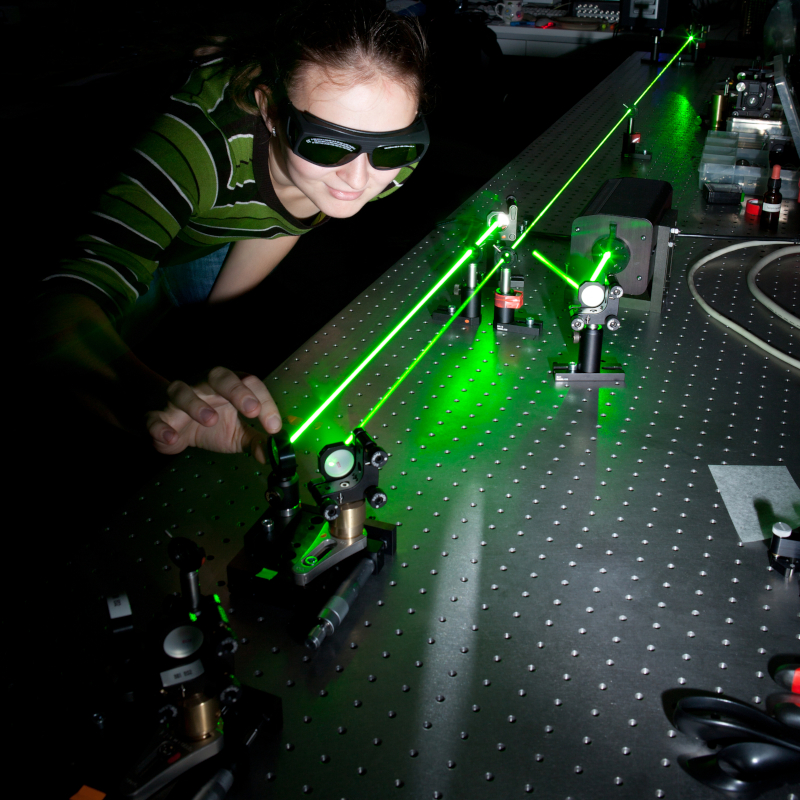
ID 18003345 ©Lightpoet | Dreamstime.com
Physics can be intimidating when a quiz suddenly turns into equations, so I’ve kept the focus on ideas you can recognize in the world around you. The physics trivia questions and answers begin with units, forces and light before moving into heat, waves and modern physics. Anyone searching for physics quiz questions with a real difficulty progression should find the first part much more approachable than the final hard physics questions.
Interactive museums are perfect for this subject. Ljubljana’s House of Experiments is built around hands-on science, and the energy, optics and experiment areas in larger technical museums are exactly the places where abstract ideas become much easier to understand.
Easy Physics Trivia Questions
145. What SI-derived unit measures electrical potential difference?
Answer: Volt.
146. What phenomenon causes a light ray to bend when it passes between materials with different optical properties?
Answer: Refraction. It’s why an object partly submerged in water can appear displaced or bent.
147. What unit measures frequency in cycles per second?
Answer: Hertz.
148. What force resists the relative motion of two surfaces in contact?
Answer: Friction.
149. Approximately how fast does light travel through a vacuum?
Answer: 299,792 kilometers per second. The exact defined value is 299,792,458 meters per second, or about 186,282 miles per second.
150. What property describes an object’s tendency to resist a change in its state of motion?
Answer: Inertia.
151. What SI-derived unit measures power?
Answer: Watt.
Medium Physics Trivia Questions
152. What type of energy does an object have because it is moving?
Answer: Kinetic energy.
153. What type of stored energy can an object have because of its position in a force field?
Answer: Potential energy.
154. What effect changes the observed frequency of a wave when the source and observer move relative to each other?
Answer: Doppler effect. The change in the sound of a passing siren is one familiar example.
155. What process separates white light into its component colors because different wavelengths bend by different amounts?
Answer: Dispersion. It’s one of the processes involved when water droplets separate sunlight into the colors of a rainbow.
156. What form of heat transfer occurs through direct molecular interaction within or between materials in contact?
Answer: Conduction.
157. What form of heat transfer occurs through the bulk movement of a fluid?
Answer: Convection.
158. What form of heat transfer can travel through empty space as electromagnetic waves?
Answer: Thermal radiation.
159. What particle carries electromagnetic radiation?
Answer: Photon.
160. What SI-derived unit measures electric charge?
Answer: Coulomb.
161. What law relates electrical potential difference, current and resistance through the relationship V = IR?
Answer: Ohm’s law.
162. What is the lowest possible temperature in thermodynamics called?
Answer: Absolute zero. It corresponds to 0 kelvin, -273.15°C or -459.67°F.
163. What type of wave has oscillations perpendicular to the direction in which the wave travels?
Answer: Transverse wave.
164. What condition makes orbiting astronauts appear weightless even though gravity is still acting on them?
Answer: Continuous free fall. The spacecraft and everything inside it are falling around Earth together.
165. What type of spherical mirror curves inward and can focus parallel light rays?
Answer: Concave mirror.
Hard Physics Trivia Questions
166. What principle states that pressure applied to a confined fluid is transmitted throughout the fluid?
Answer: Pascal’s principle.
167. What phenomenon occurs when light striking a material causes electrons to be emitted from its surface?
Answer: Photoelectric effect.
168. What term describes the smallest discrete packet of a physical quantity such as electromagnetic energy?
Answer: Quantum.
169. Which conservation law says that the total momentum of an isolated system remains constant?
Answer: Conservation of momentum.
170. What principle links faster fluid flow with lower pressure in many idealized flow situations?
Answer: Bernoulli’s principle.
171. What particle discovered at CERN in 2012 confirmed the existence of the field associated with the mass-giving mechanism in the Standard Model?
Answer: Higgs boson. The particle’s discovery confirmed the existence of the associated field; elementary particles acquire mass through their interaction with that field.
Expert Physics Challenge
172. What rule prevents two identical fermions, such as electrons in an atom, from occupying an identical physical state at the same time?
Answer: Pauli exclusion principle. It plays a fundamental role in the way electrons are arranged in atoms.
Physics score: ___ / 28
You’re at Question 172. The last round is less about formulas and more about remembering which person made which breakthrough.
Famous Scientists Trivia Questions and Answers
The final category puts people behind the discoveries. These famous scientists trivia questions include household names, but I didn’t want all 28 answers to be the same small group that appears in every science quiz. The scientist quiz questions become more challenging as you continue, bringing in researchers whose work had an enormous impact even when their names aren’t as familiar.
There are wonderful science, natural-history, medical and technology collections that can be explored without travelling at all. My collection of virtual museum tours includes several places connected with scientific history and discovery.
Easy Famous Scientists Trivia Questions
173. Which naturalist developed the theory of evolution by natural selection and published On the Origin of Species?
Answer: Charles Darwin.
174. Which scientist became the first person to win Nobel Prizes in two different scientific fields, physics and chemistry?
Answer: Marie Curie. She received the physics prize in 1903 and the chemistry prize in 1911.
175. Which scientist formulated the three laws of motion and the law of universal gravitation?
Answer: Isaac Newton.
176. Which physicist developed the special and general theories of relativity?
Answer: Albert Einstein.
177. Which Renaissance astronomer proposed a Sun-centered model in his 1543 work De revolutionibus orbium coelestium?
Answer: Nicolaus Copernicus.
178. Which Italian scientist used telescopic observations of the heavens to provide powerful evidence against the traditional Earth-centered model?
Answer: Galileo Galilei.
Medium Famous Scientists Trivia Questions
179. Which chemist organized the periodic table in a way that allowed him to predict the properties of elements not yet discovered?
Answer: Dmitri Mendeleev. Several elements discovered later closely matched properties he had predicted for gaps in his table.
180. Which Scottish bacteriologist discovered penicillin in 1928 after noticing that mold inhibited bacterial growth?
Answer: Alexander Fleming. Turning the observation into a widely usable treatment required major work by other researchers afterward.
181. Which scientist’s experiments with pea plants established fundamental patterns of inheritance?
Answer: Gregor Mendel.
182. Which French scientist is strongly associated with pasteurization and experiments that helped establish germ theory?
Answer: Louis Pasteur.
183. Which English scientist discovered electromagnetic induction in 1831?
Answer: Michael Faraday. His experimental work became fundamental to the development of electric motors and electrical generation.
184. Which German physicist discovered X-rays in 1895?
Answer: Wilhelm Conrad Röntgen. His discovery earned him the first Nobel Prize in Physics in 1901.
185. Which French physicist discovered spontaneous radioactivity while studying uranium salts?
Answer: Henri Becquerel.
186. Which Austrian-Swedish physicist helped explain nuclear fission with her nephew Otto Frisch?
Answer: Lise Meitner.
187. Which scientist supervised the X-ray diffraction research that produced Photo 51, crucial evidence for understanding the structure of genetic material?
Answer: Rosalind Franklin. The famous image itself was taken by Raymond Gosling while working under her supervision.
188. Which meteorologist proposed continental drift decades before plate tectonics provided its mechanism?
Answer: Alfred Wegener. His evidence was intriguing, but he couldn’t provide a convincing physical mechanism for continental movement during his lifetime.
189. Which astronomer formulated three mathematical laws describing planetary motion?
Answer: Johannes Kepler.
190. Which English physician pioneered vaccination against smallpox using material from cowpox lesions?
Answer: Edward Jenner.
191. Which physicist introduced a constant, symbol h, that became fundamental to modern physics while studying blackbody radiation?
Answer: Max Planck. His work required energy to be exchanged in discrete amounts, an idea that changed physics profoundly.
192. Which Scottish physicist unified electricity, magnetism and light in a set of equations now bearing his name?
Answer: James Clerk Maxwell.
Hard Famous Scientists Trivia Questions
193. Which 19th-century mathematician published what is often described as the first computer algorithm?
Answer: Ada Lovelace. Her 1843 notes showed a remarkable understanding of how a programmable calculating machine could be used for much more than ordinary arithmetic.
194. Which theoretical physicist wrote A Brief History of Time and made major contributions to the study of black holes?
Answer: Stephen Hawking.
195. Which naturalist independently developed the idea of evolution by natural selection and presented it jointly with another researcher in 1858?
Answer: Alfred Russel Wallace. Their papers were presented together before the better-known book on the subject appeared the following year.
196. Which astronomer showed in her 1925 doctoral thesis that stars have a composition very different from Earth’s, overturning prevailing assumptions?
Answer: Cecilia Payne-Gaposchkin. Her work established the extraordinary abundance in stars of the two lightest elements, a conclusion that was initially treated with skepticism.
197. Which astronomer discovered the first pulsars while she was a graduate student at Cambridge?
Answer: Jocelyn Bell Burnell. The remarkably regular radio signals were so unexpected that the research team initially had to rule out numerous possible explanations.
198. Which physicist discovered the neutron in 1932?
Answer: James Chadwick. The discovery provided a crucial new piece of the picture of atomic nuclei.
199. Which physicist concluded from alpha-particle scattering experiments that the atom has a tiny, dense nucleus?
Answer: Ernest Rutherford. Interestingly, the scientist remembered as a founder of nuclear physics received his Nobel Prize in Chemistry rather than Physics.
Expert Scientist Challenge
200. Which astronomer discovered the period-luminosity relationship of Cepheid variable stars, providing a powerful way to measure cosmic distances?
Answer: Henrietta Swan Leavitt. Her discovery became a crucial step in the cosmic distance ladder because the behavior of these variable stars could be used to determine how luminous they really are.
Famous scientists score: ___ / 28
That’s Question 200. Add all seven category scores and see where you finished.
How Many Science Trivia Questions Did You Get Right?
There are 200 points available: 30 from biology, 30 from space and astronomy, and 28 each from chemistry, inventions and engineering, Earth science, physics and famous scientists.
0-50 correct: A lot of the article was new territory for you, which means you probably picked up more new facts than someone who already knew most of the answers.
51-90 correct: You have a good base of science knowledge, and your category scores should make it fairly obvious which subjects are strongest.
91-130 correct: That’s a strong result. You made it through plenty of the medium questions as well as the easier opening rounds.
131-160 correct: Very impressive. You knew a broad range of science rather than relying on one particularly strong category.
161-185 correct: Excellent score. By this point, you were getting many of the hard questions right too.
186-200 correct: Exceptional. Getting into this range without looking anything up requires an unusually broad knowledge of science, scientific history, technology and astronomy.
Conclusion: There’s Always More Science to Discover
One of the things I like most about science is that knowing an answer usually gives you another question to think about. We can explain a huge number of processes inside cells, measure events happening billions of kilometers away, reconstruct the history of our planet and build machines that earlier generations couldn’t have imagined. There are still major questions that don’t have complete answers.
That also makes science trivia much more interesting than memorizing isolated definitions. A good question can remind you of something you once knew, correct an old misconception or send you searching for the story behind an answer.
If you made it through all 200 questions, which category gave you the most points – and which one surprised you?

Science Trivia Questions and Answers: Common Questions
What are good science trivia questions for adults?
Good science trivia questions for adults have one clear, verifiable answer while still requiring some thought. Familiar concepts from biology, chemistry, physics, astronomy, Earth science, technology and scientific history work particularly well because players have a realistic chance of knowing the answer without every question feeling obvious.
How difficult are these science trivia questions?
The 200 questions are arranged from easy to medium, hard and expert within each scientific domain. Medium questions make up the largest part of the quiz, while the genuinely difficult questions are concentrated near the end of each category.
Can these science trivia questions be used for a pub quiz or trivia night?
Yes. You can use a complete category as one round, choose a mixture from all seven subjects, or divide the 200 questions across several games. Since the answers appear immediately below each question, a quiz host can simply keep the screen turned away from the players or copy the bold question lines before the game.
What topics are included in this science trivia quiz?
The quiz covers biology and life sciences, space and astronomy, chemistry and elements, inventions and engineering, Earth science, physics, and famous scientists. Each category begins with more accessible questions and finishes with a much shorter hard or expert round.
How the Science Facts Were Checked
I deliberately avoided questions based on temporary records such as current moon totals, since those can change as new objects are confirmed. I also checked commonly misstated science-trivia topics against authoritative scientific sources, including NASA for astronomy and space exploration, the U.S. Geological Survey for earthquakes and Earth science, and IUPAC for chemical-element information. Historical discoveries and invention claims were cross-checked against institutions including the Nobel Prize, CERN, ESA, Smithsonian collections and official museum or scientific archives where necessary.
More amazing articles for you:
Travel tips: What to do when you're injured while travelling
Digital Nomad Index 2025: 20 Best Countries for Remote Work (With One Big Surprise)
Sensational Sailing Destinations
Best Christmas Markets in Europe recommended by travel bloggers
The Perfect 2 Day Budapest Itinerary: 48 Hours in Buda & Pest
Domestic vs international travel
5 Ways to Improve Your Outdoor Experience
Travel guide: 24 hours in Paris

Violeta-Loredana Pascal is a communications expert, business mentor, and the founder of Earth’s Attractions and PRwave INTERNATIONAL. A pioneer in the Romanian digital PR landscape since 2005, she holds a degree in Communication and Social Sciences from SNSPA Bucharest. Violeta is a senior trainer at AcademiadeAfaceri.ro, where she leverages over 20 years of experience to teach professional courses in PR strategy and workplace productivity. By blending high-level business consulting with a passion for holistic travel and wellness, she empowers solopreneurs to overcome procrastination, build profitable brands, and design a life of purposeful adventure.