
Last updated: July 2026
Why is the Deutsches Museum Munich worth visiting? For us, it was one of the most fascinating attractions in the city: a huge, hands-on museum filled with science, technology, aviation, music, experiments, and unexpected discoveries for visitors of all ages.
On our trip to Munich, my teenage son and I spent a full day exploring the Deutsches Museum. It wasn’t just a highlight of our visit – it became one of those rare experiences we’ll talk about for years.
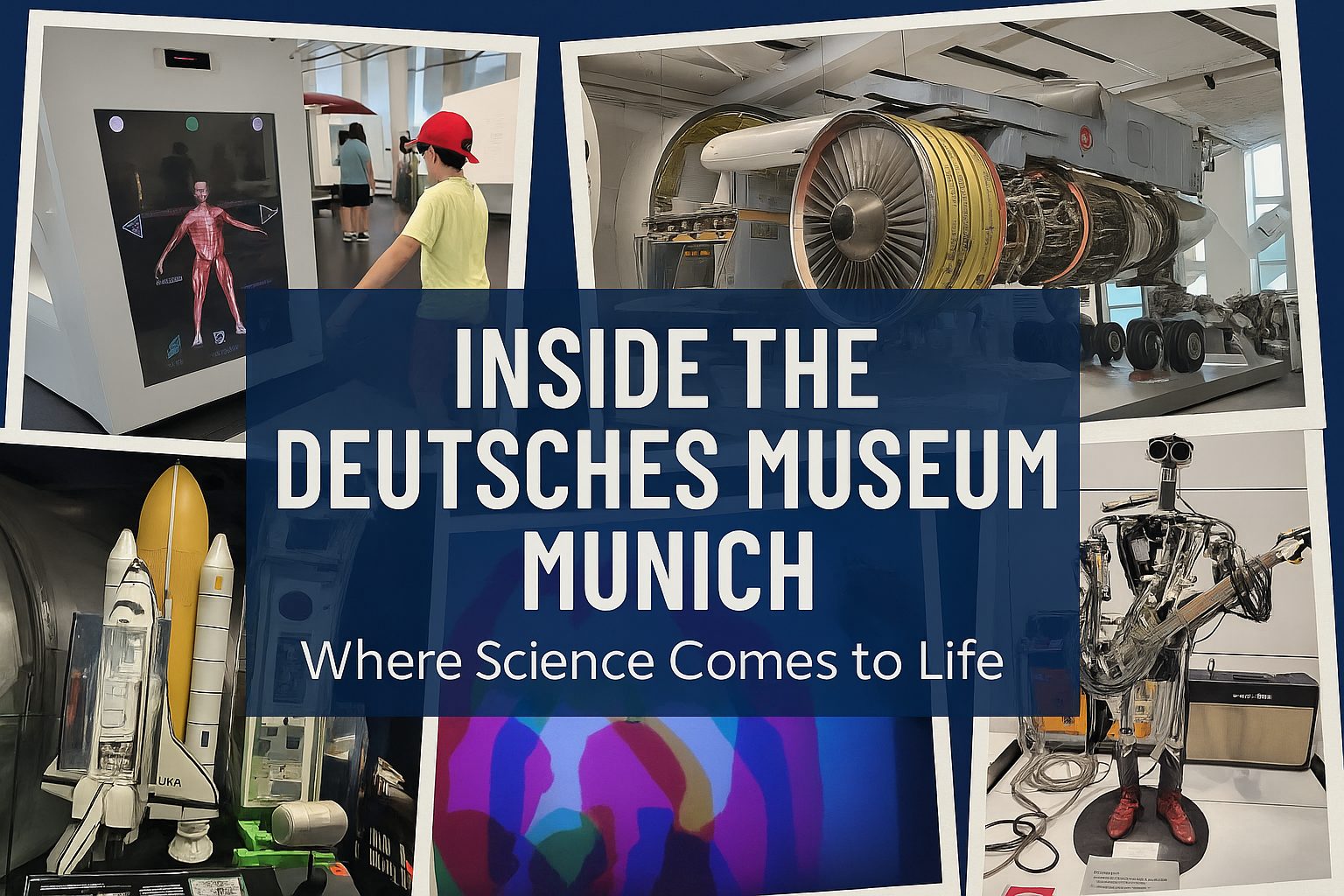
Here I have to add that we do not have such an impressive technical museum in my country. We have some private science-focused museums that are more hands-on than classical museums, but for my son – and for us as a family – visiting a museum of this size is memorable. We always include museums, palaces, and other major attractions in our travels, and the Deutsches Museum became one of the highlights of our five days in Munich.
Why the Deutsches Museum Munich Is So Fascinating
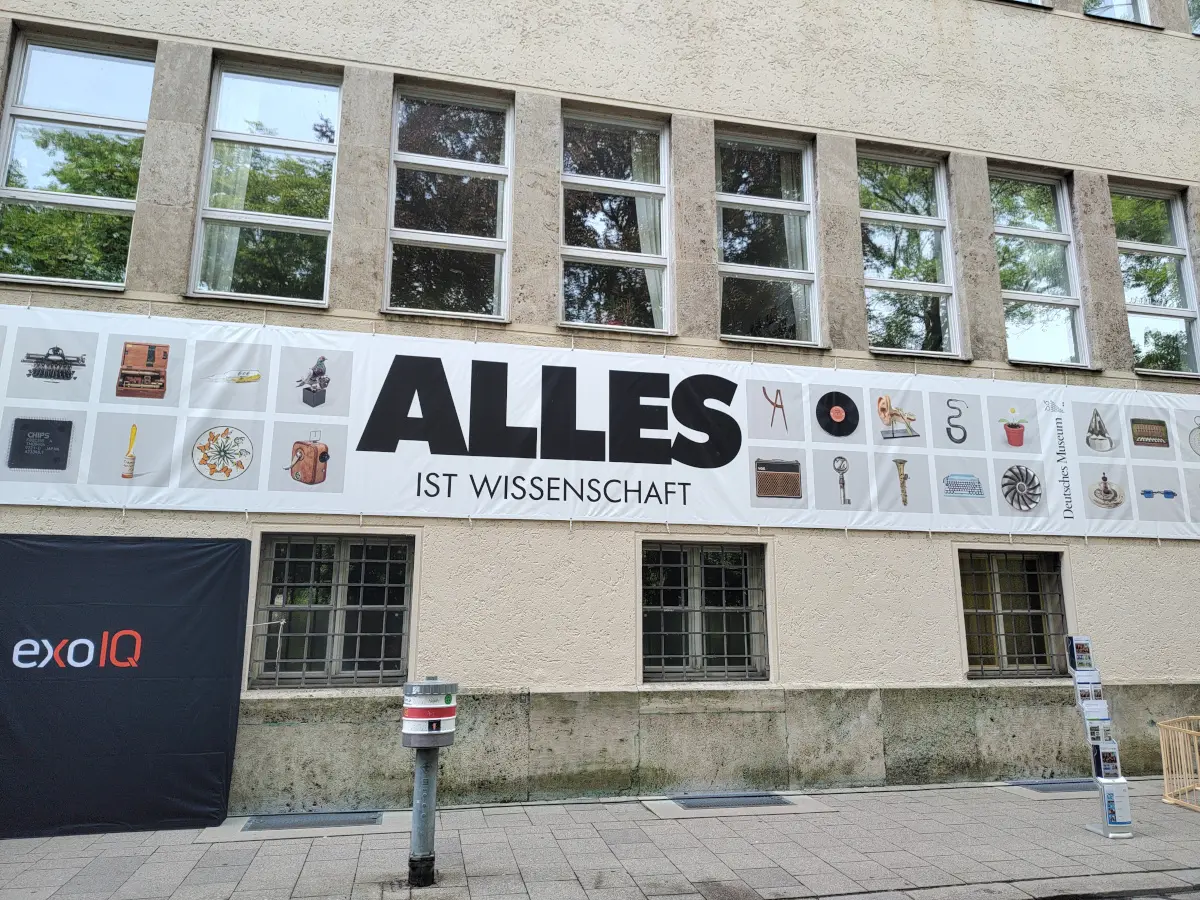
Located on Museum Island in the Isar River, the Deutsches Museum is one of the world’s largest and most important museums dedicated to science and technology. Its collection includes around 125,000 objects, while the part currently open to visitors contains 20 permanent exhibitions across approximately 20,000 square metres.
The museum is undergoing a major modernisation project, but it remains open. The first renovated part of the building is the section we visited, with exhibitions ranging from aviation, astronautics, and robotics to optics, musical instruments, chemistry, health, and agriculture. The second half of the building is being renovated and is scheduled to reopen in 2028.
From historic airplanes to musical instruments, atomic physics to robotics, many sections invite you to see, touch, test, listen, and explore.
This museum isn’t just for scientists or engineers – it’s for anyone who has ever been curious about how the world works. And while I visited with my son, this is the kind of place that appeals to travelers of all ages. My husband, a lifelong fan of science and technology, sadly missed out due to illness, but he has already made us promise to return with him next time.
So, what can you see and do at the Deutsches Museum? Let me walk you through our tour.
It will be a relatively short presentation, and I am including practical tips for visiting the Deutsches Museum after our experience.
Why a short presentation?
Because I could write a very long article and include more than 50 relevant photos. Instead, I wanted to make a selection, show you the exhibitions we visited and our favourite surprises, and then share the tips I wish I had known before our visit.
Touch, Play, Discover: A Hands-On Museum
Apart from the impressive size and number of objects, one of the biggest advantages of the Deutsches Museum is how interactive it is.
Many exhibitions include hands-on elements – whether you are turning a crank to understand how a motor works, experimenting with light and sound, trying an instrument, or exploring how the human body functions.
This is perfect not only for children and teenagers, but also for adults. Visitors of all ages were testing the interactive exhibits!
What We Saw at the Deutsches Museum Munich
We love technical museums and normally want to enter every exhibition. At the Deutsches Museum, however, that is a serious challenge because the museum is huge. These are the exhibitions and displays we managed to explore during our visit.
Robotics
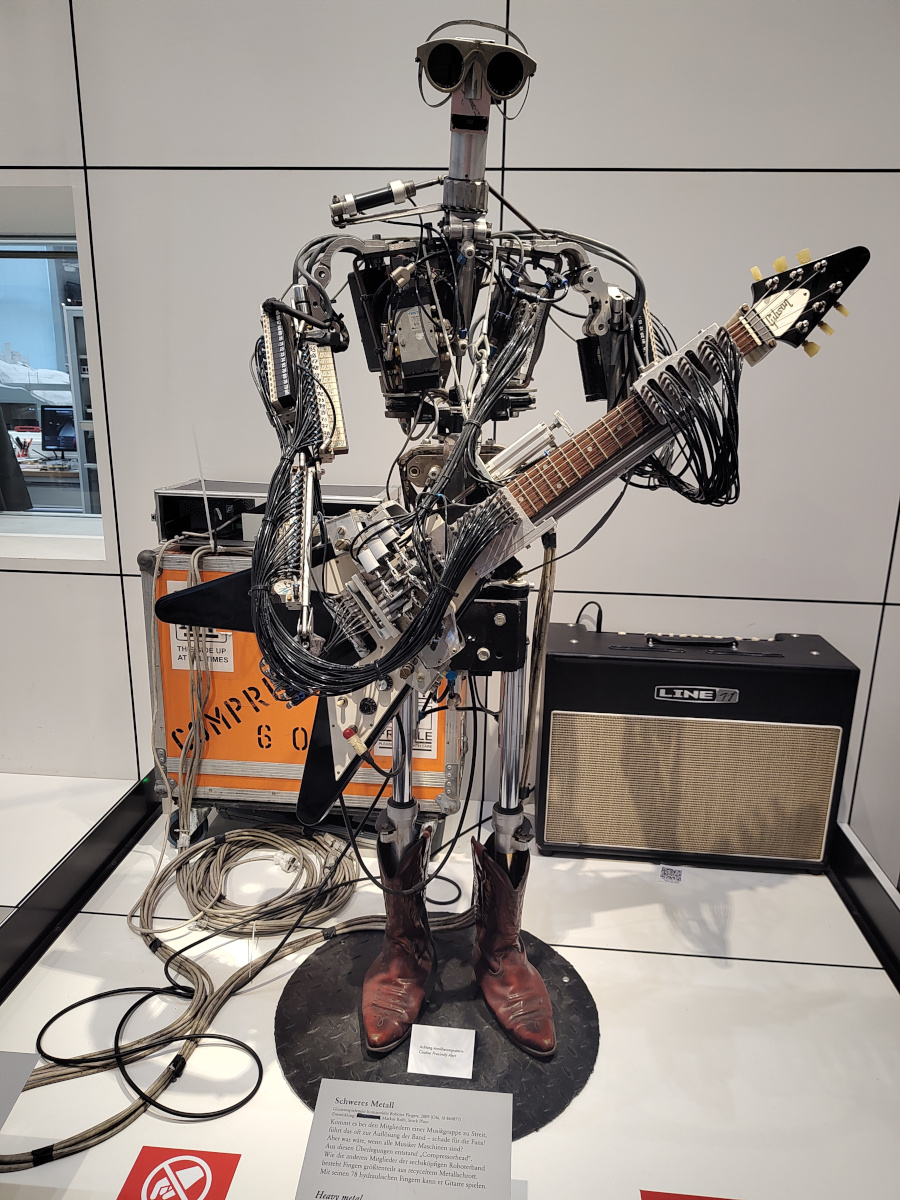
The Robotics exhibition explores the rise of robotics, from early automation to intelligent machines and robots used in everyday life. It is not one of the largest exhibitions, but the displays are interesting and fun.
One of the projects we saw was a robot designed to play music. Imagine an entire band made only of robots!
The Model Railway
The next room was heaven for me!
I adore model trains!
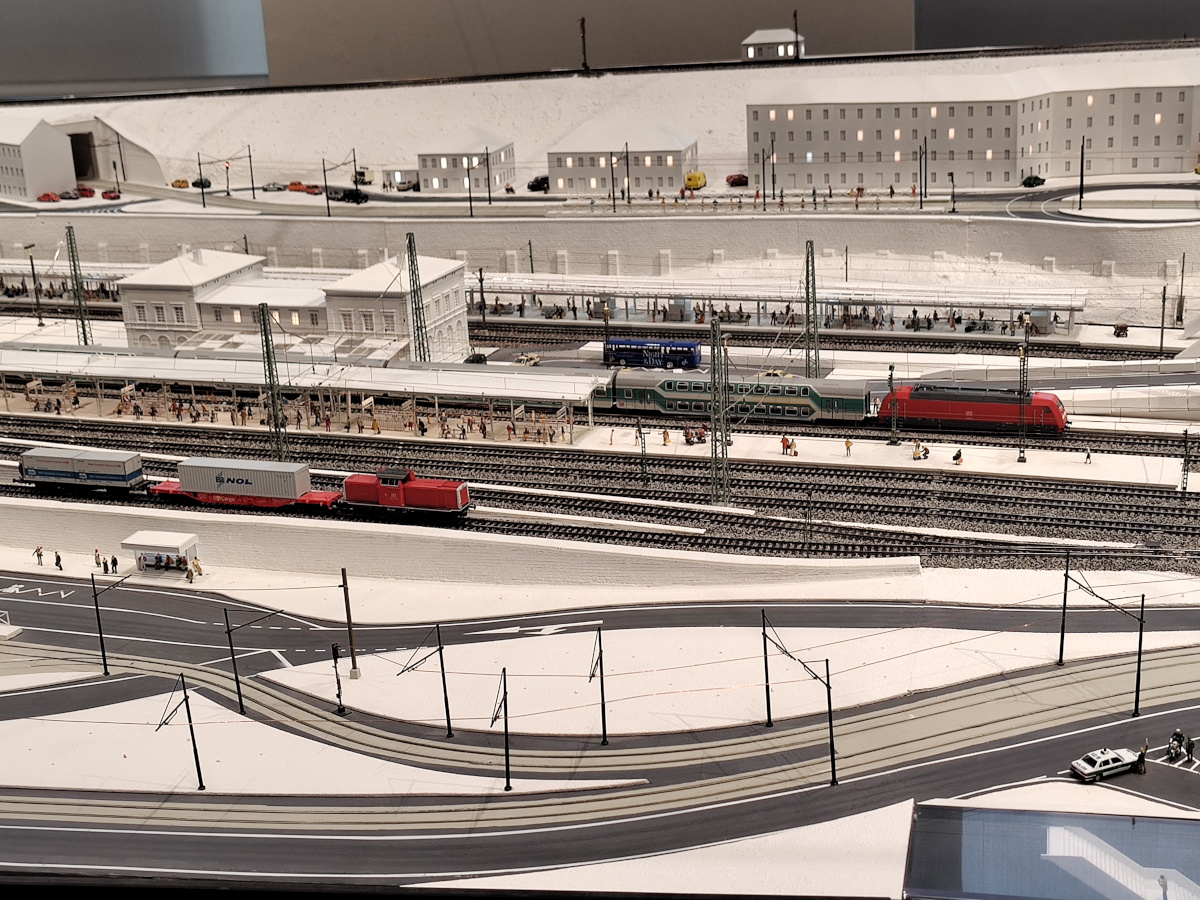
This room has a large diorama with many different trains. It surprised me because the landscape is almost entirely white. I am more familiar with model railways that imitate nature and use many colours, but here the trains – together with a few vehicles and model people – provide most of the colour.
Don’t miss this detailed model railway. It attracts fascinated children and adults alike.
Foucault’s Pendulum: Proof That the Earth Is Spinning
One of the most mesmerising exhibits is also one of the simplest: Foucault’s Pendulum.
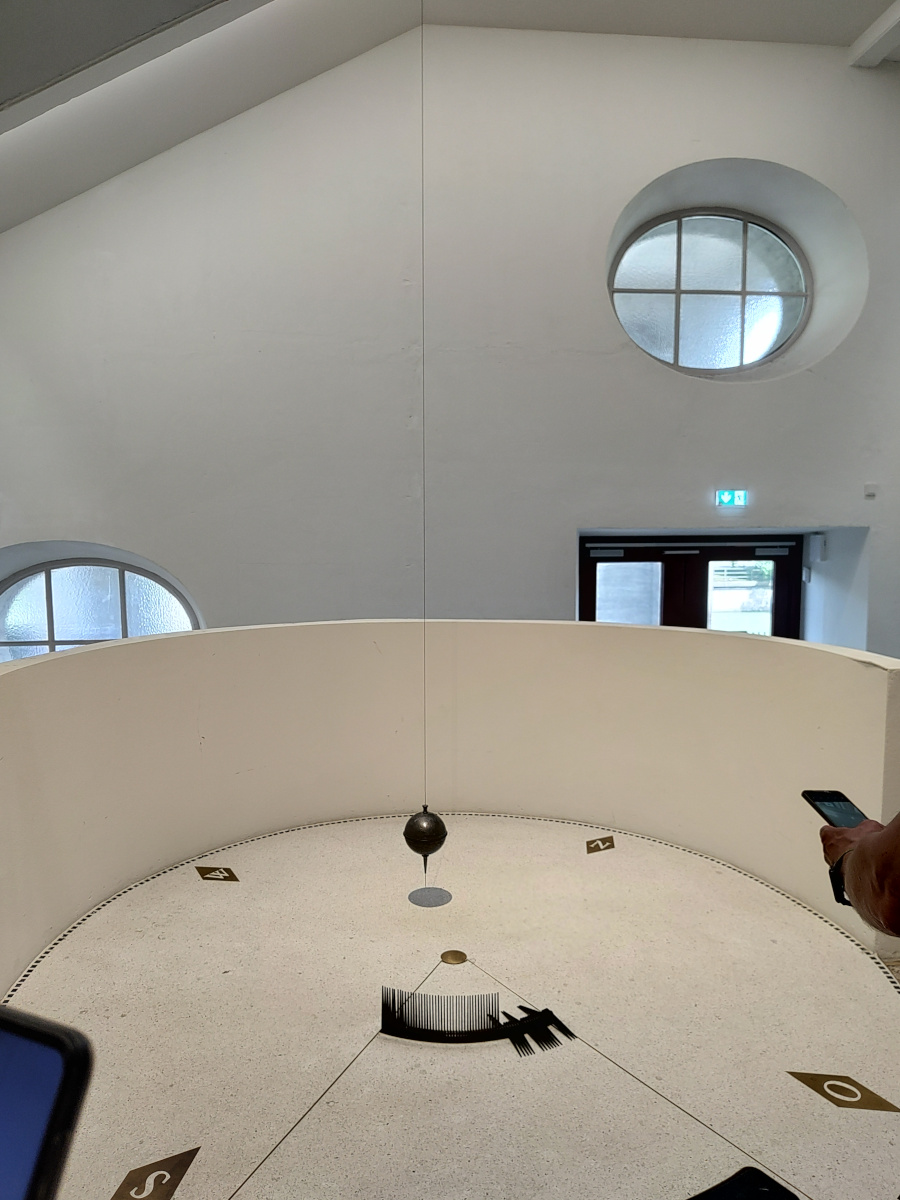
It is in a passage between exhibitions, so you can see it several times as you move through the museum.
The information beside it explains its purpose and what it proves. Suspended in the museum tower, the pendulum continues to swing in the same plane while the Earth rotates beneath it. As it moves, it gradually knocks over the cones arranged below.
We saw it twice during our visit, and it was fascinating both times.
Prepare to spend a few minutes here. There is a distinctive sound when one of the cones falls. My son and I waited for it twice and filmed it both times!
Temporary July 2026 update: The Foucault Pendulum is not operating from June 23 until approximately July 31, 2026 because of maintenance work in the museum tower. Check the official museum information if seeing it is essential to your visit.
Historic and Modern Aviation
Next, it was airplane bliss!
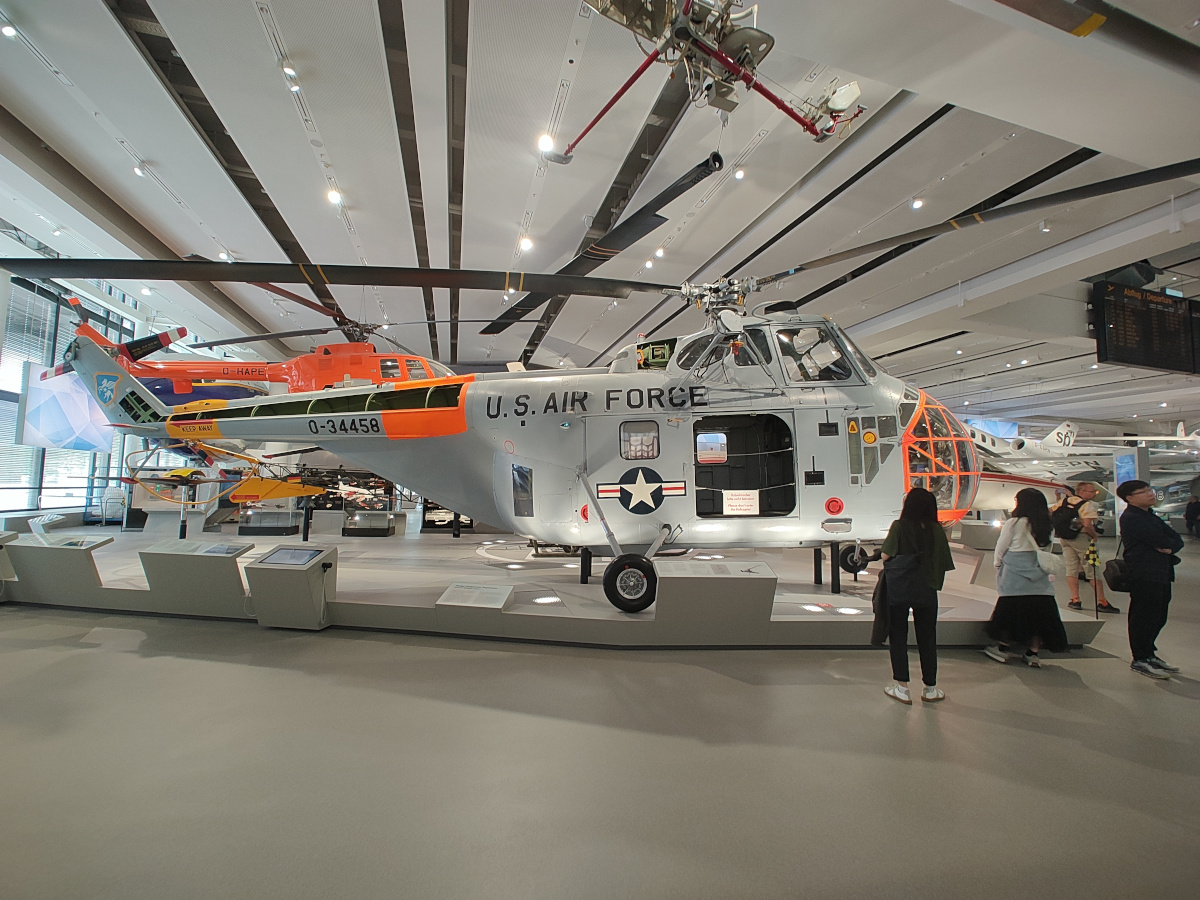
You can see the Junkers Ju 52, affectionately known as “Tante Ju” or “Aunt Ju,” view suspended airplanes from different eras, and explore the evolution of flight from gliders to jets.
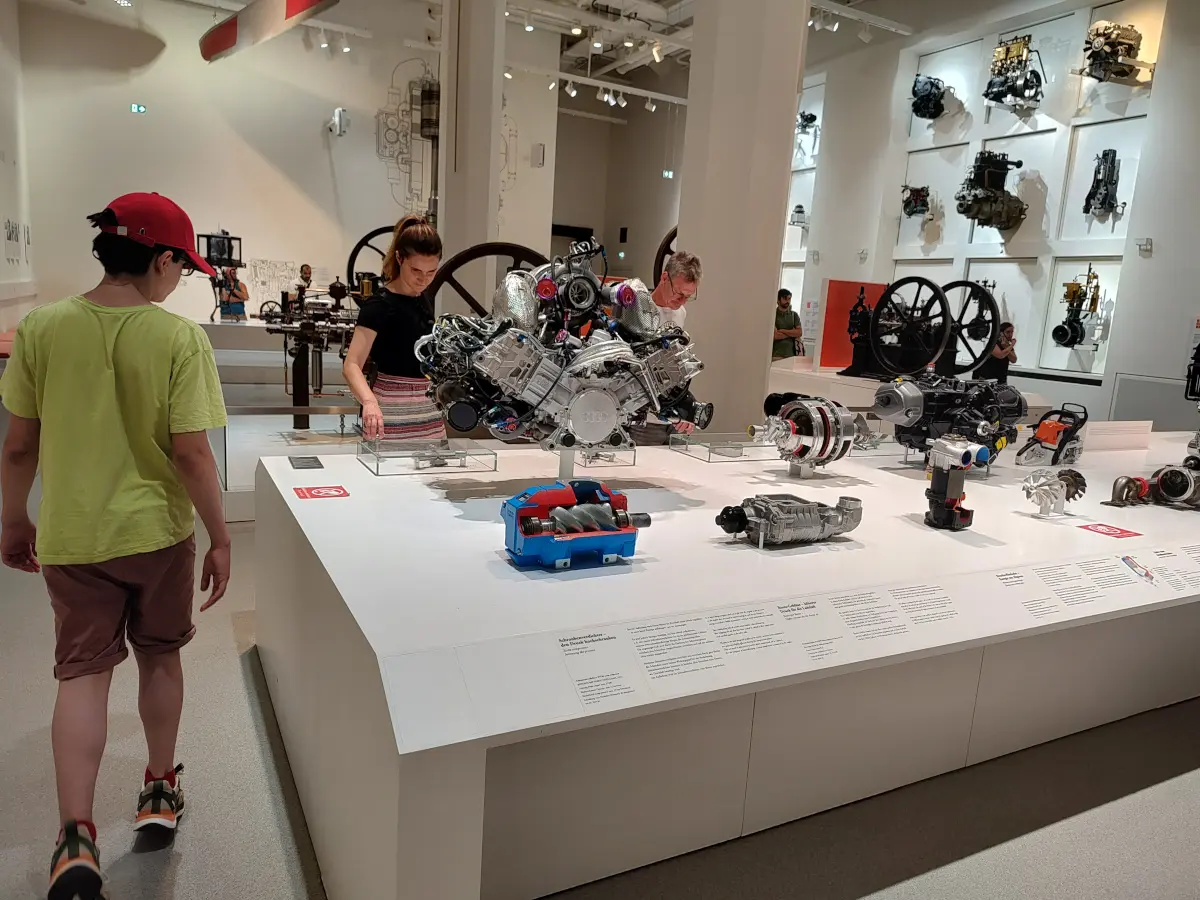
There are also many engines on display.
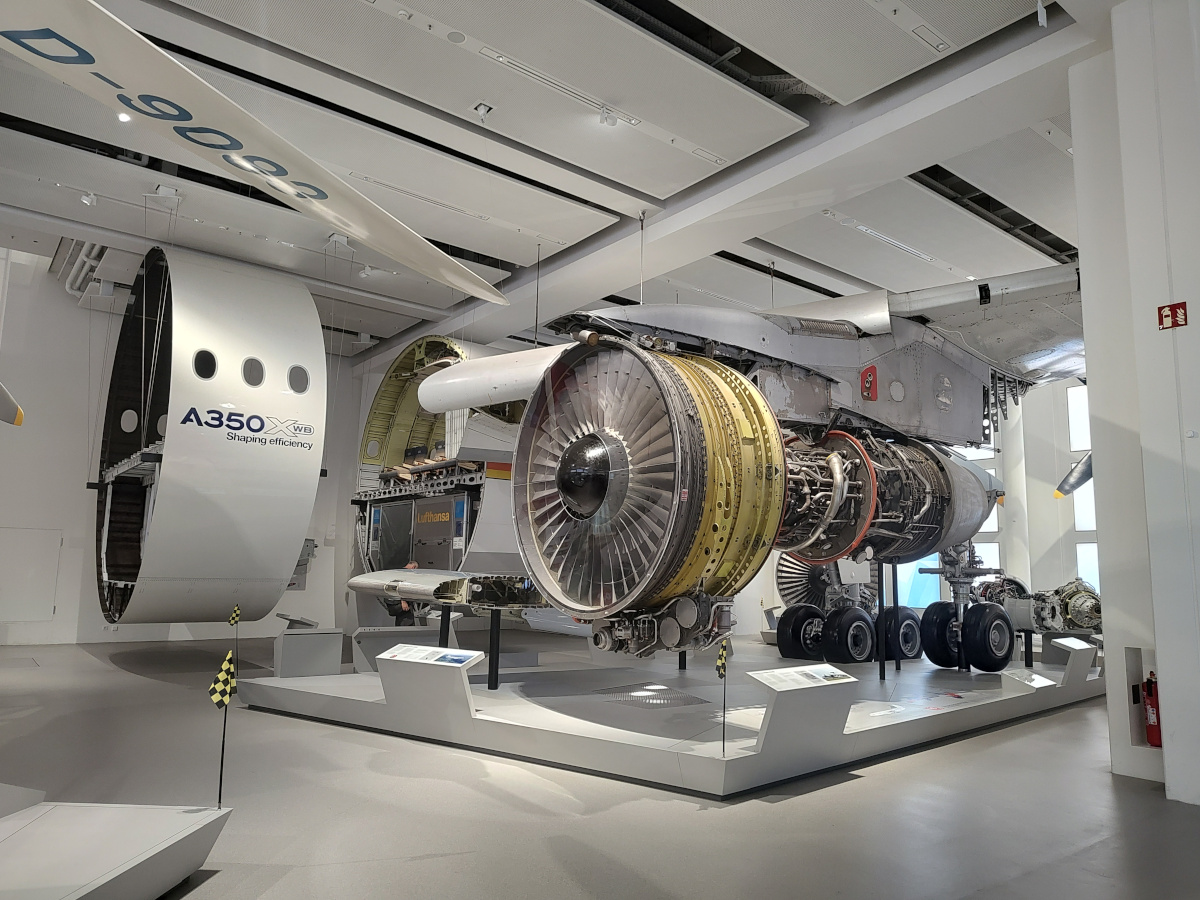
I particularly liked the disassembled airplane because you can examine parts that are normally hidden. Almost everyone stopped for a few minutes at this exhibit.
It is a Lufthansa aircraft and, trust me, it is impressive to see.
There is also a flight simulator, although demonstrations and access depend on the museum’s daily programme.
If engineering and vehicles are among your interests, this part of the museum pairs naturally with a separate visit to BMW Welt and BMW Museum.
Classical Optics

The next section was all about mirrors, lenses, prisms, colour, and perspective, with many visually interesting experiments involving light.
There were several experiments to try, and you can imagine that we spent quite a while here!
Musical Instruments
The next exhibition was a very nice surprise.
It is all about musical instruments.
What I loved:
- You can try various instruments.
- You can explore how sound is created and amplified.
- You can hear the sounds of many of the exhibits.
I loved the instrument below because it was the first time I had seen one like it:
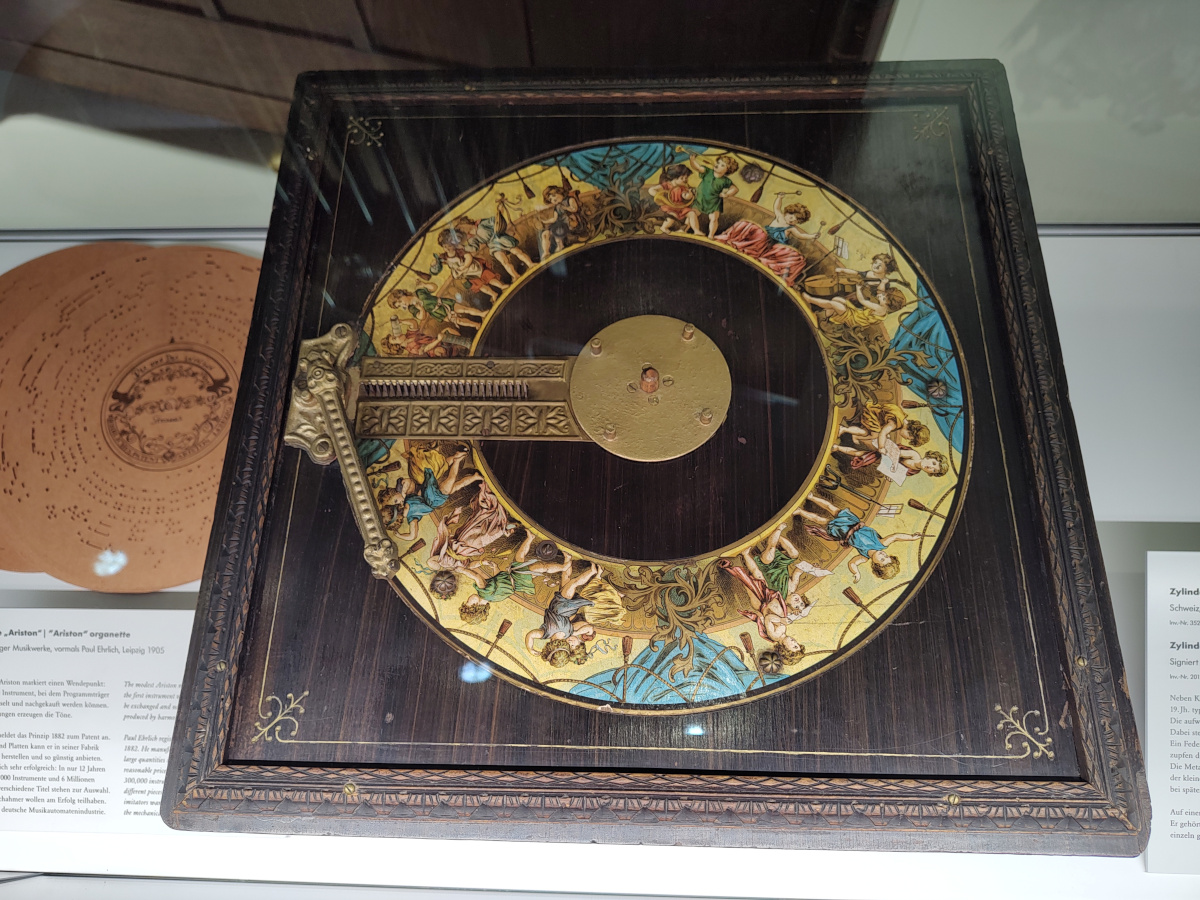
We loved playing with the theremin – yes, we actually stopped here twice! We would have stayed longer, but other visitors also wanted to try it.
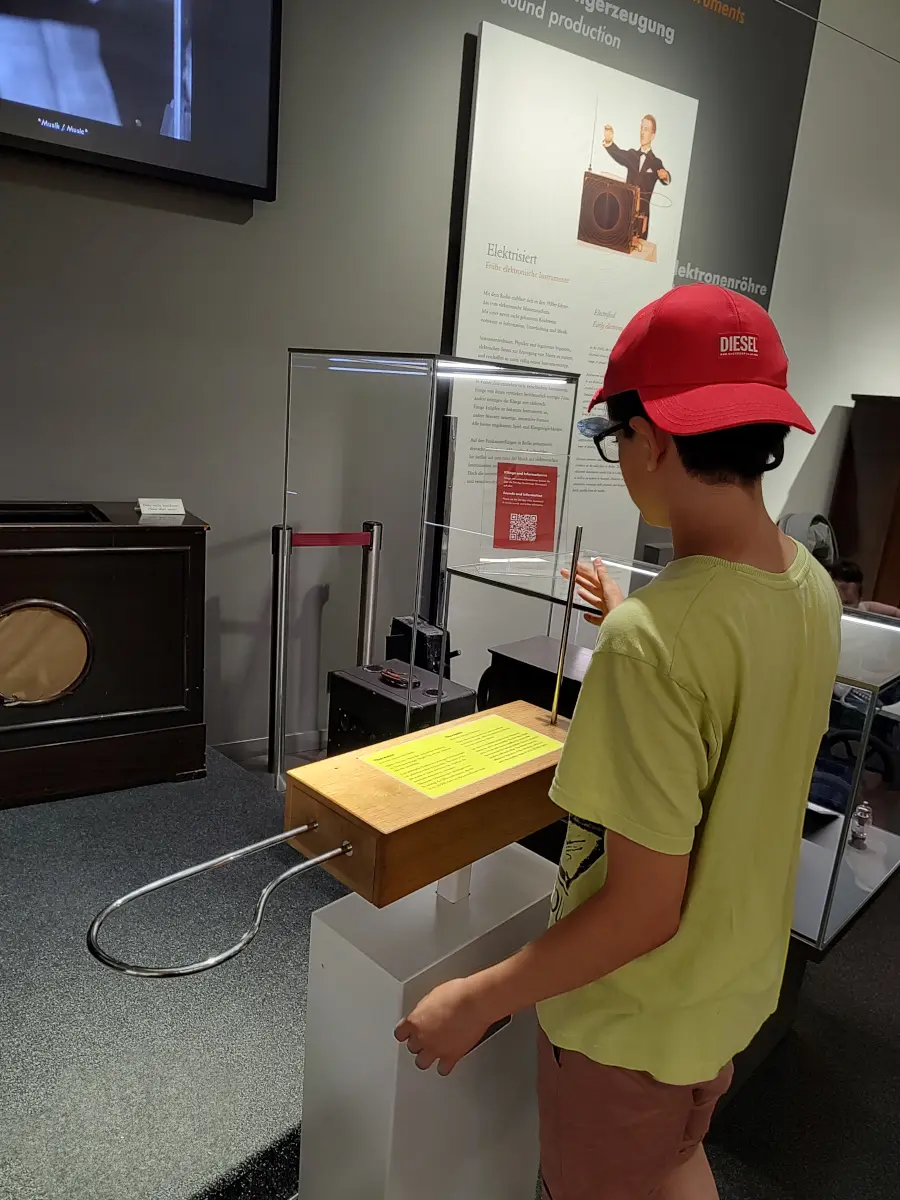
The Musical Instruments exhibition is quite large. You can see everything from a functional organ to many classical instruments grouped by type.
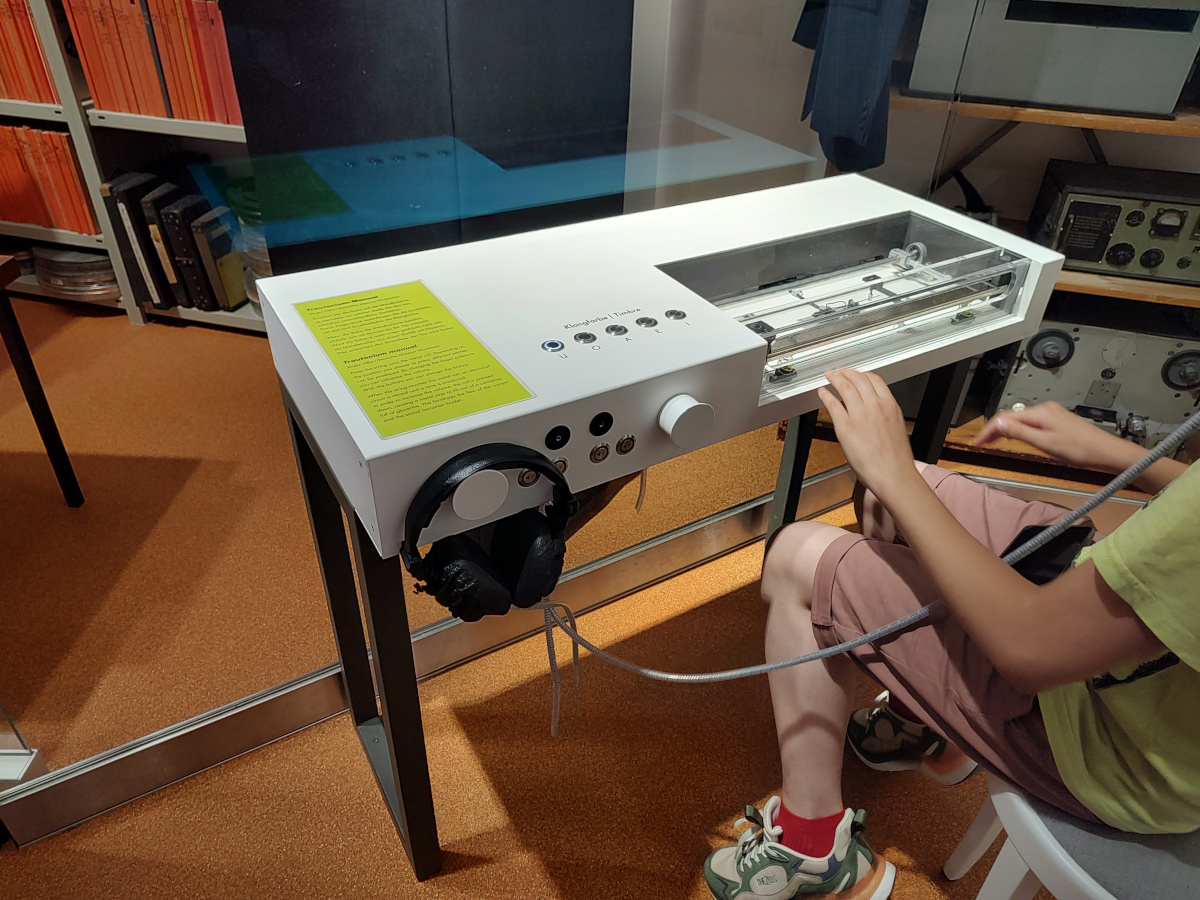
There are also stations like the one above where you can listen to different sounds 🙂
Chemistry and Atomic Physics
The next areas we visited were Chemistry and Atomic Physics. Even at the atomic level, interaction is encouraged, with exhibits explaining radiation, atomic structures, materials, and real-world applications.
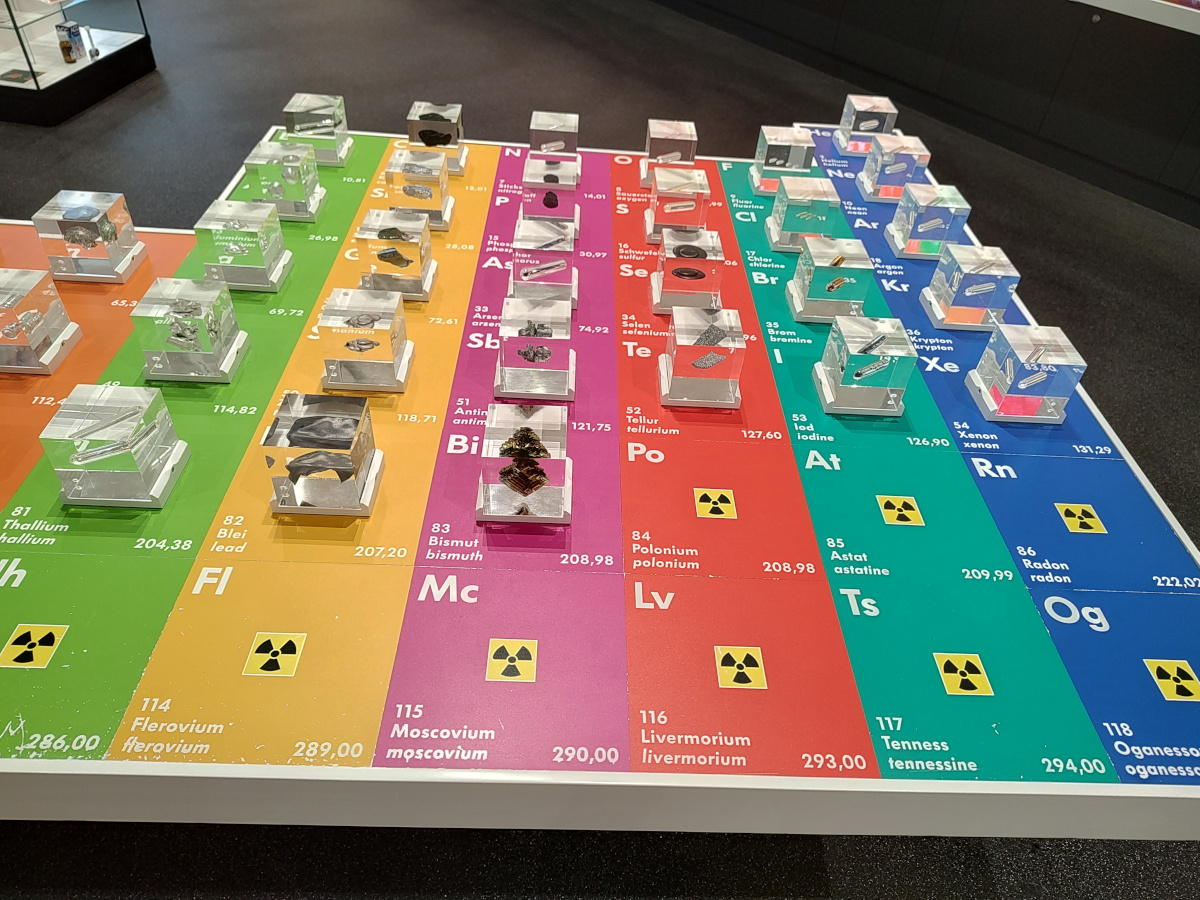
You can try safe experiments, explore different materials, and learn about the colourful and creative world of modern chemistry.
One practical observation: after spending a long time trying the experiments in the Optics exhibition, you may want to visit a less interactive area before arriving here. That way, you will still have the energy and patience to enjoy the Chemistry experiments properly.
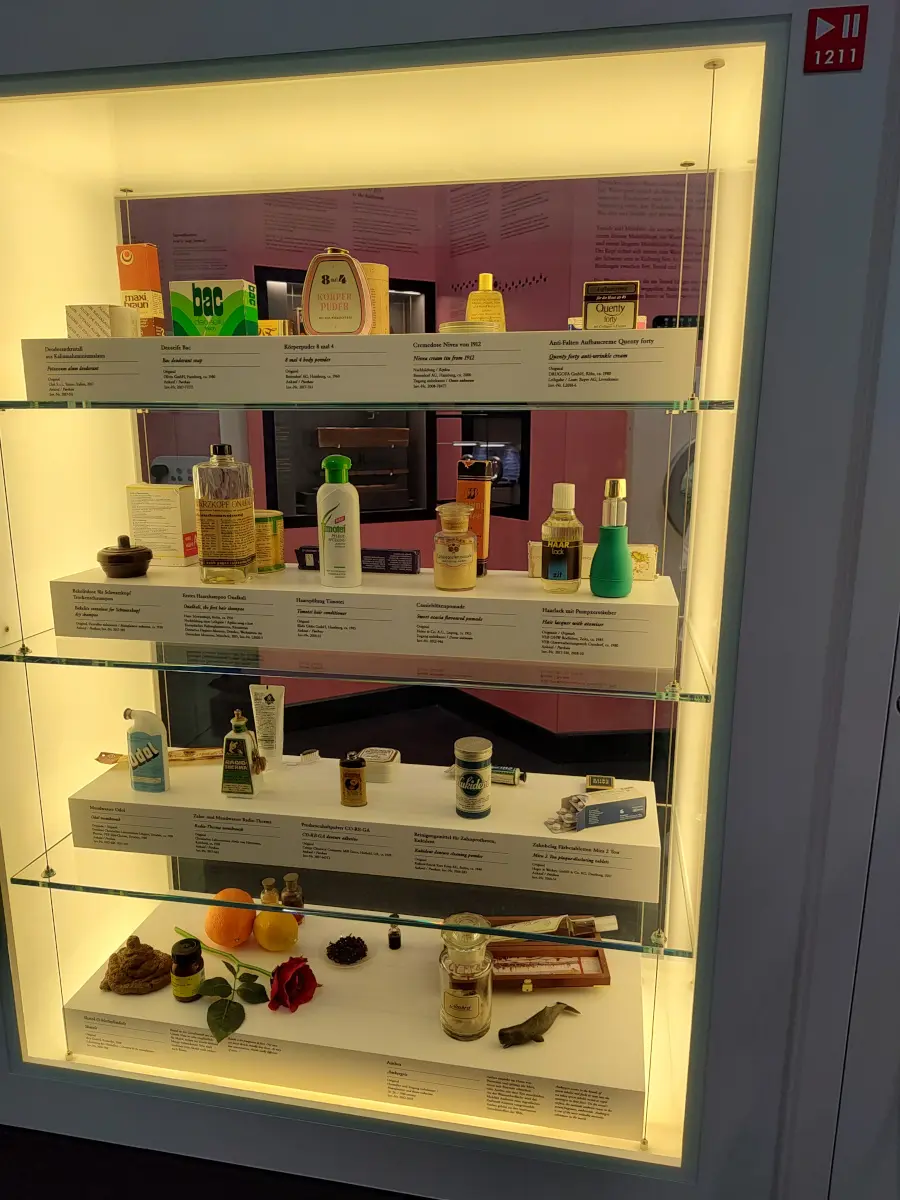
You can see different foods under a microscope and explore older everyday products, including soap, shower gel, powder containers, and more.
Astronautics
After this section, prepare to step beyond Earth.
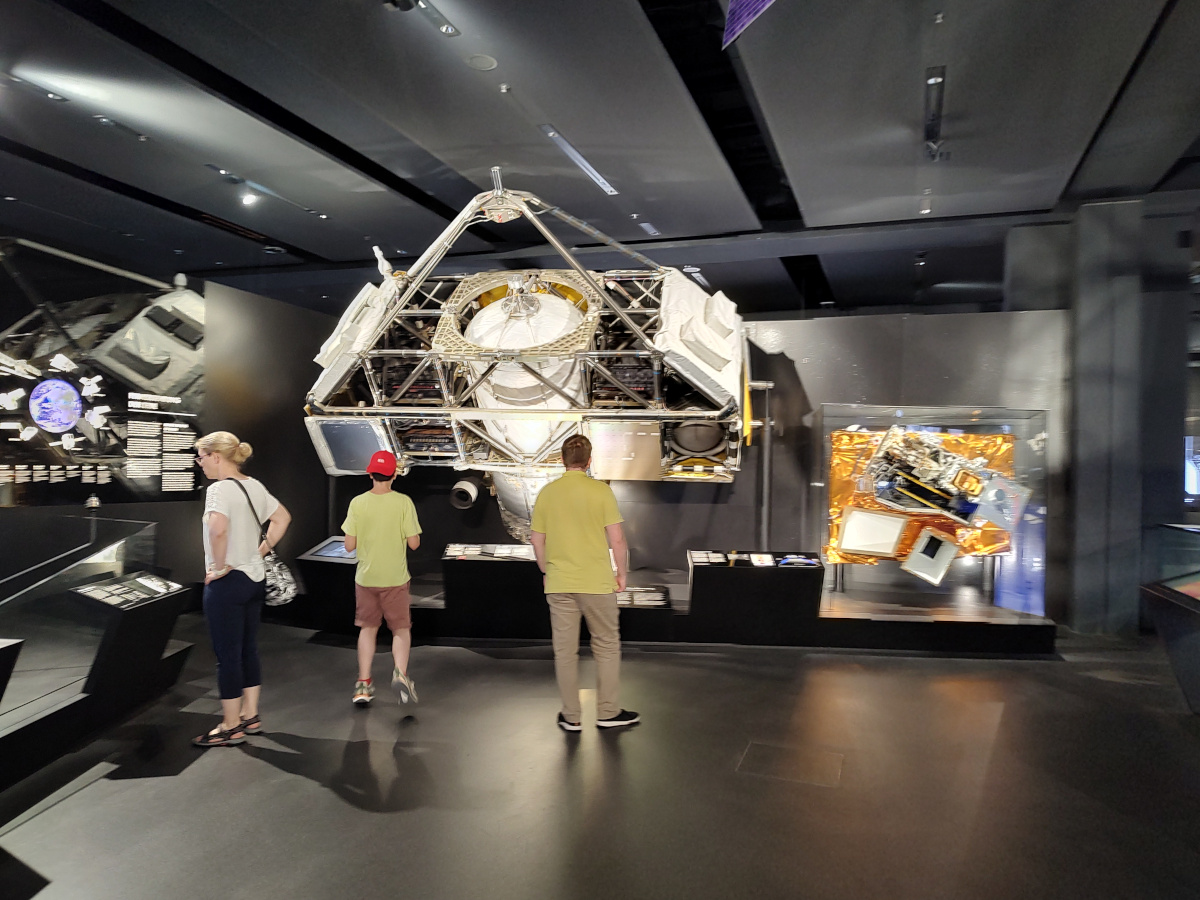
Dive into the world of space travel with satellite models, astronaut equipment, rockets, engines, and interactive displays about space missions and life in orbit.
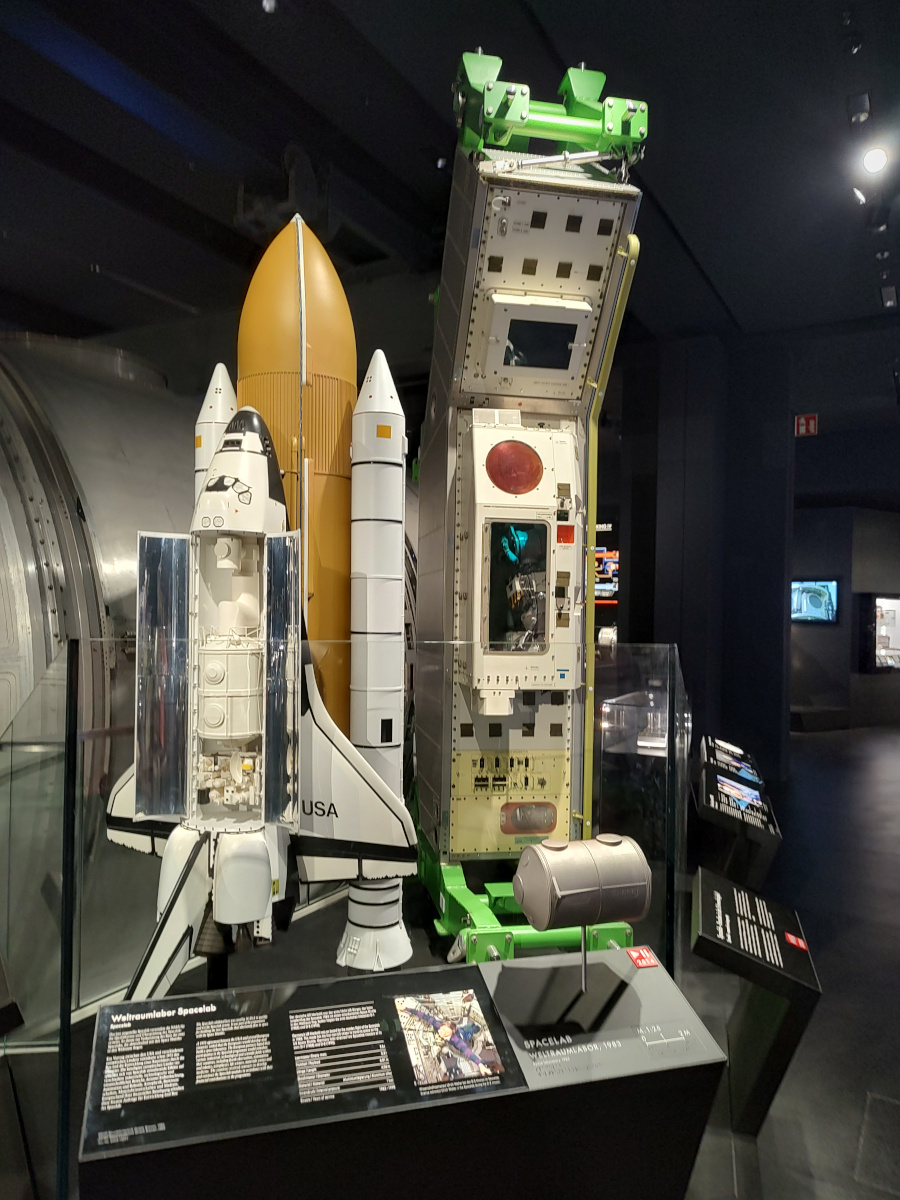
You can see vehicles, rockets, engines, suits, and much more.
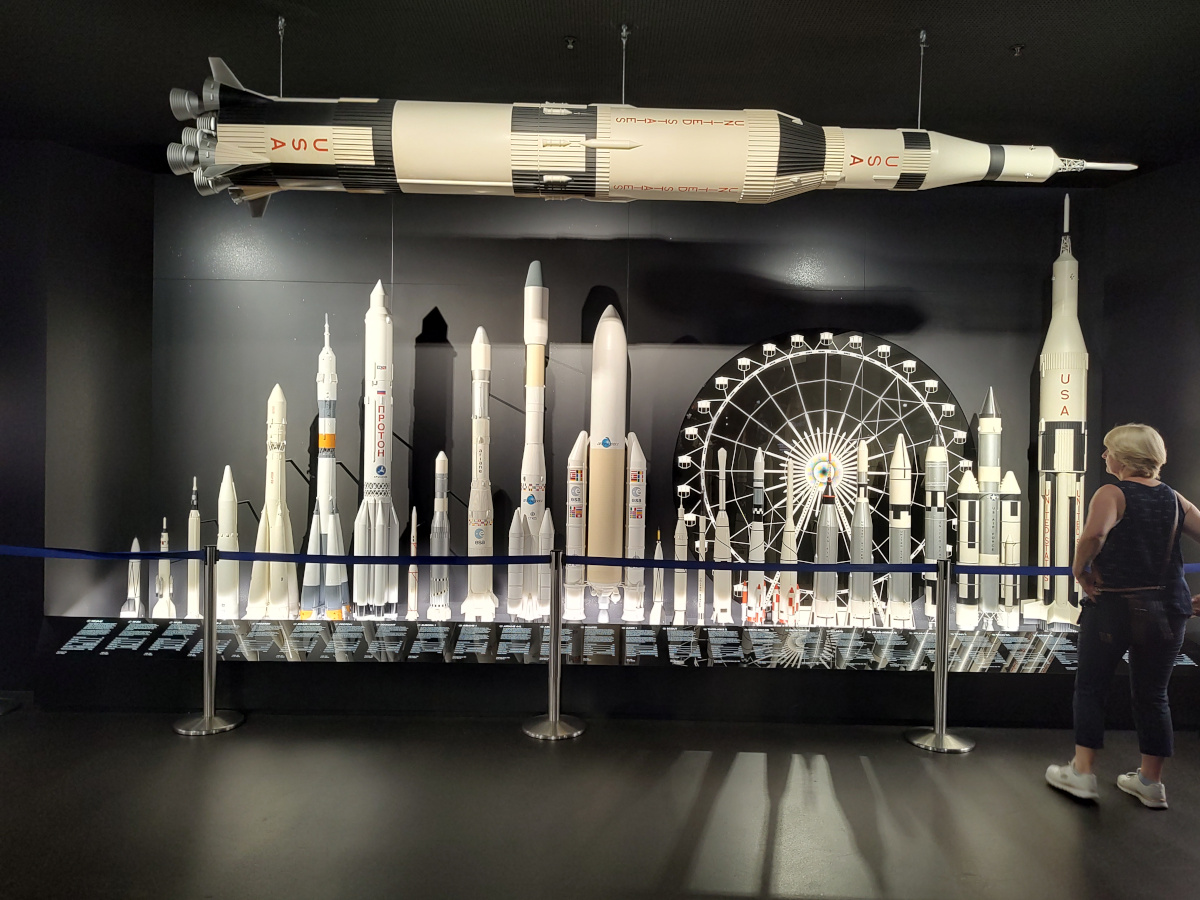
And yes, even here there are interactive elements!
This is a fun way to learn about space, missions, rockets, and the technology needed to leave Earth. If you are particularly passionate about space exploration, you could spend hours in this exhibition alone.
Image, Script, Codes
Next, we stepped back in time through an exhibition about writing, codes, communication, and code machines, with many interesting notes and facts.
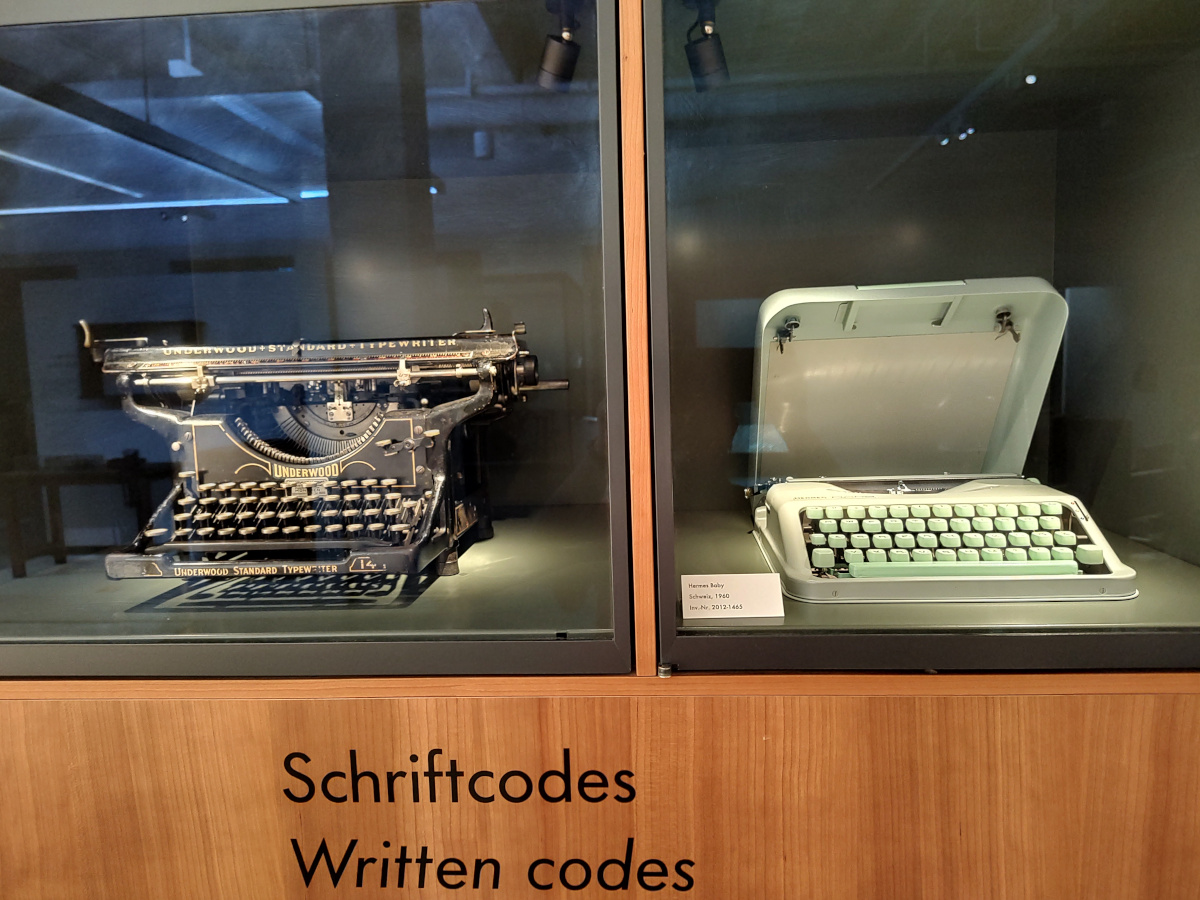
There was also an area that felt like a small library, with books visitors could read. We sat on a bench and went through a few comic books. My son and I had fun because the books we chose were… quite surprising.
I took pictures, but I do not want to ruin the surprise! The comic books were only a small part of the different and interesting books available. For us, this was also a welcome opportunity to rest our feet for a while.
Old Cameras, Radios, Phones, Games, and More
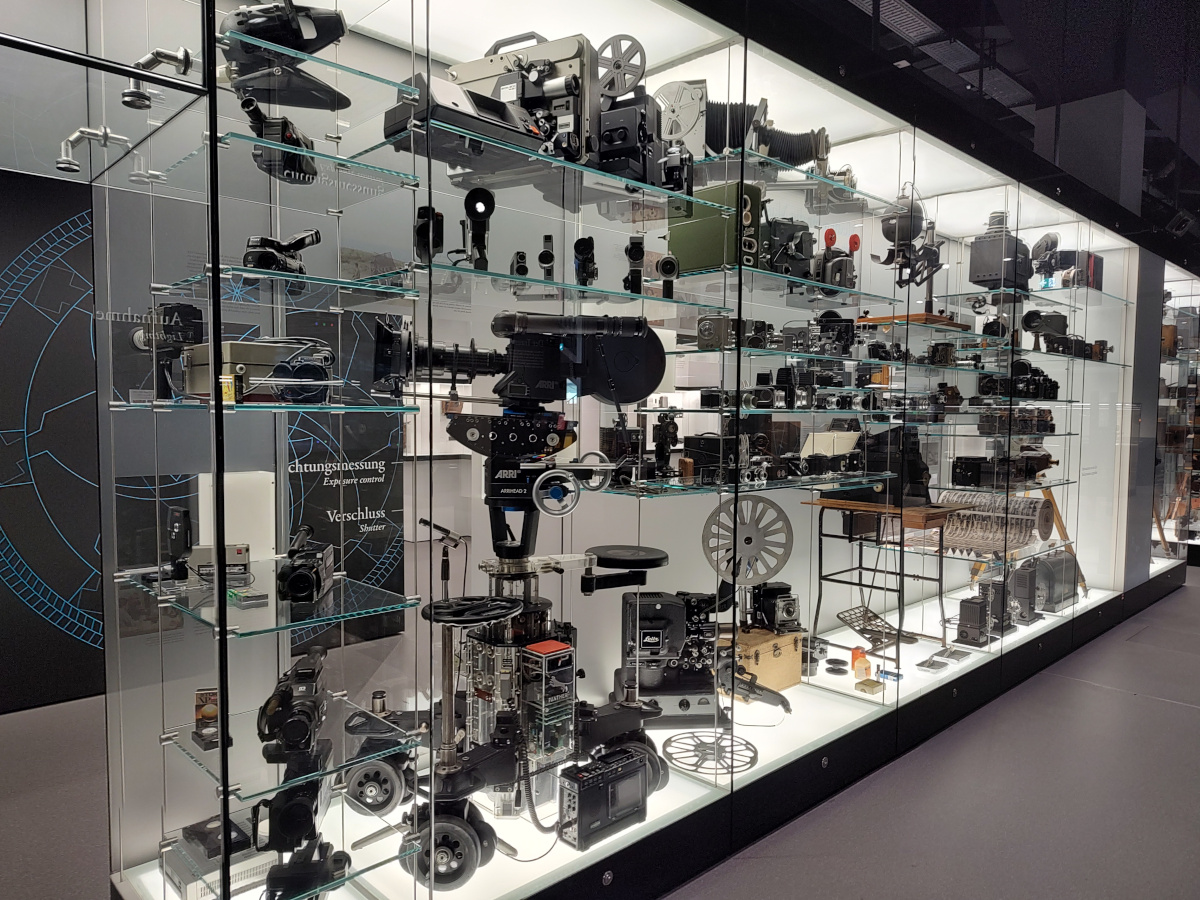
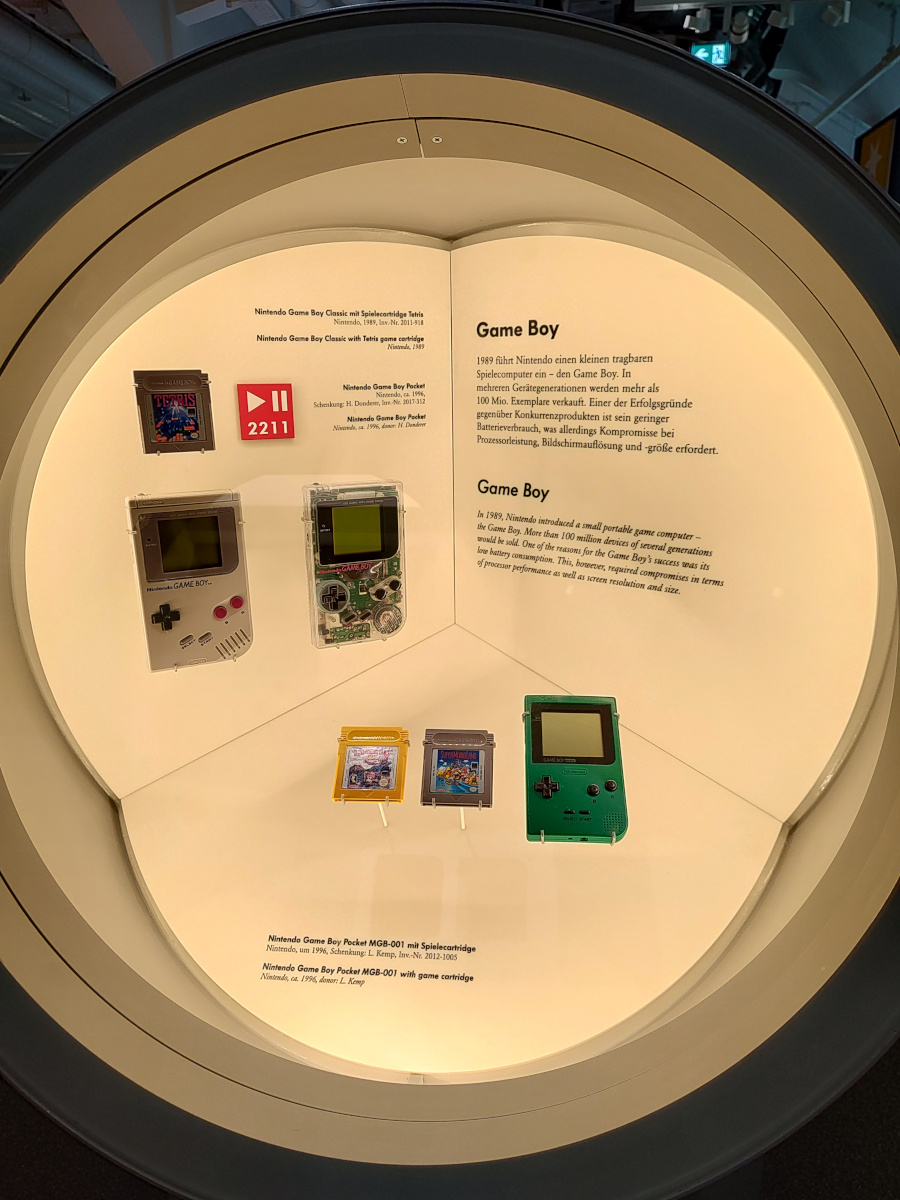
The next section is where, if you are over 35 or 40, you may suddenly feel old.
You will basically see parts of your own life in the objects you grew up with. Others are older and may remind you of things you saw at your grandparents’ homes.
Electronics
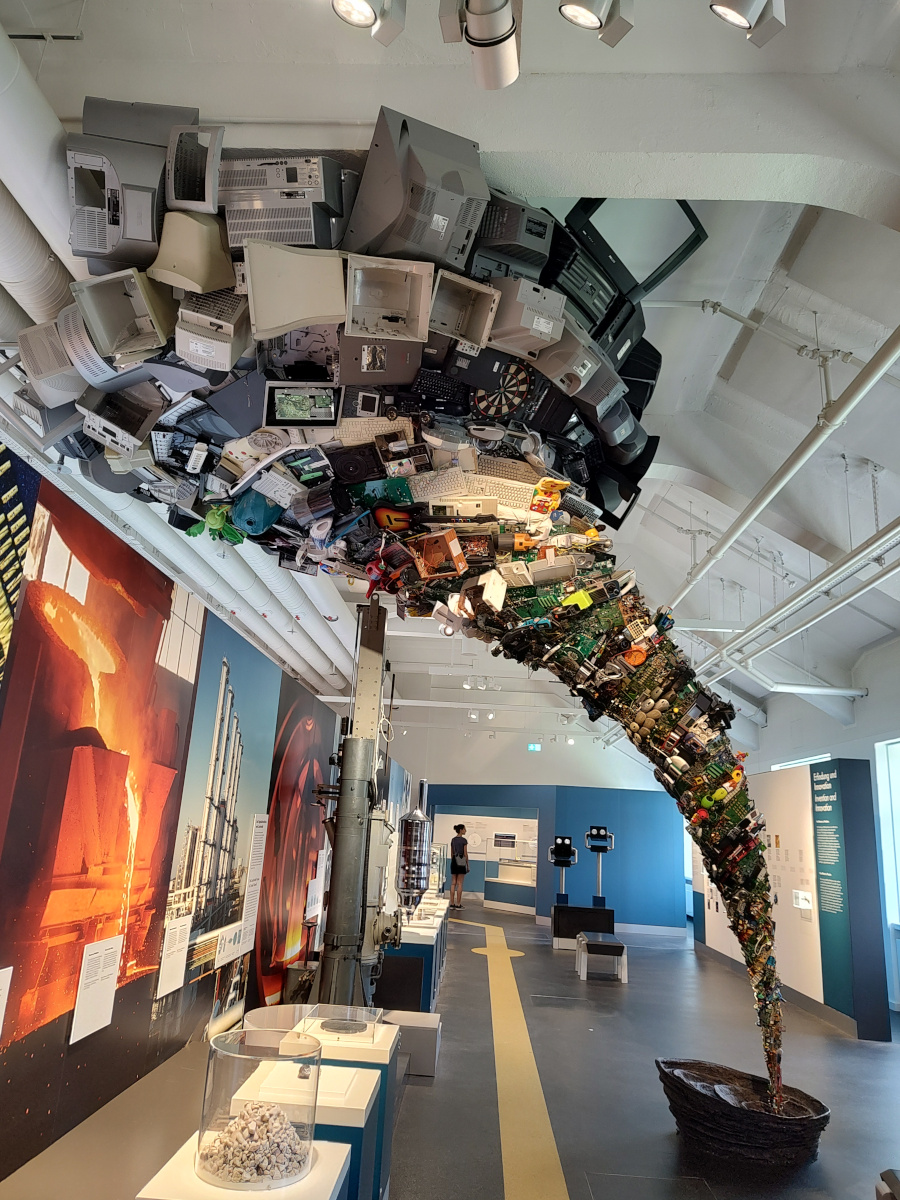
I already mentioned going back in time. The Electronics exhibition took me back too.
There are many interesting objects on display, but I chose this cool tornado made from old electronic devices to show you. I liked it – I hope you do too!
Health and the Human Body
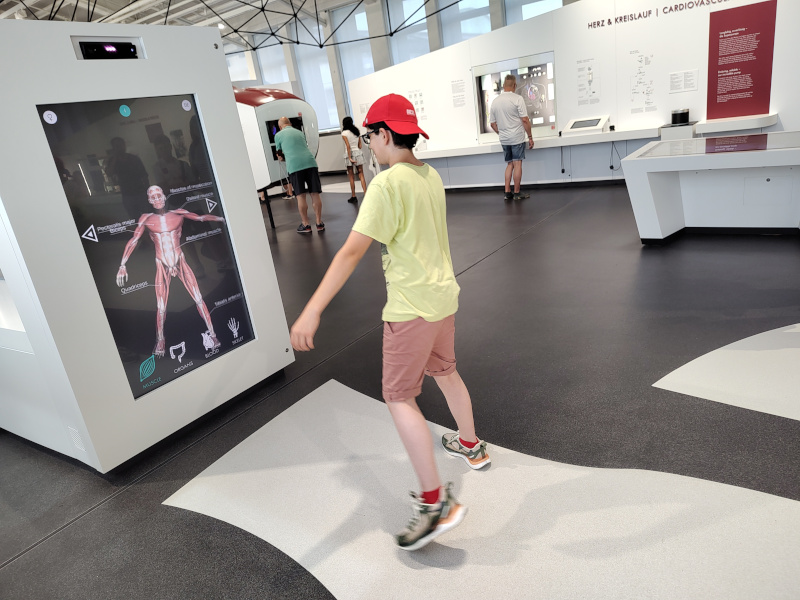
The Health exhibition covers human anatomy, body systems, medicine, and health technology in an accessible and exploratory way.
And don’t think this is fun only for children. I saw seniors trying the interactive exhibits too. And I tried them myself, obviously 😀
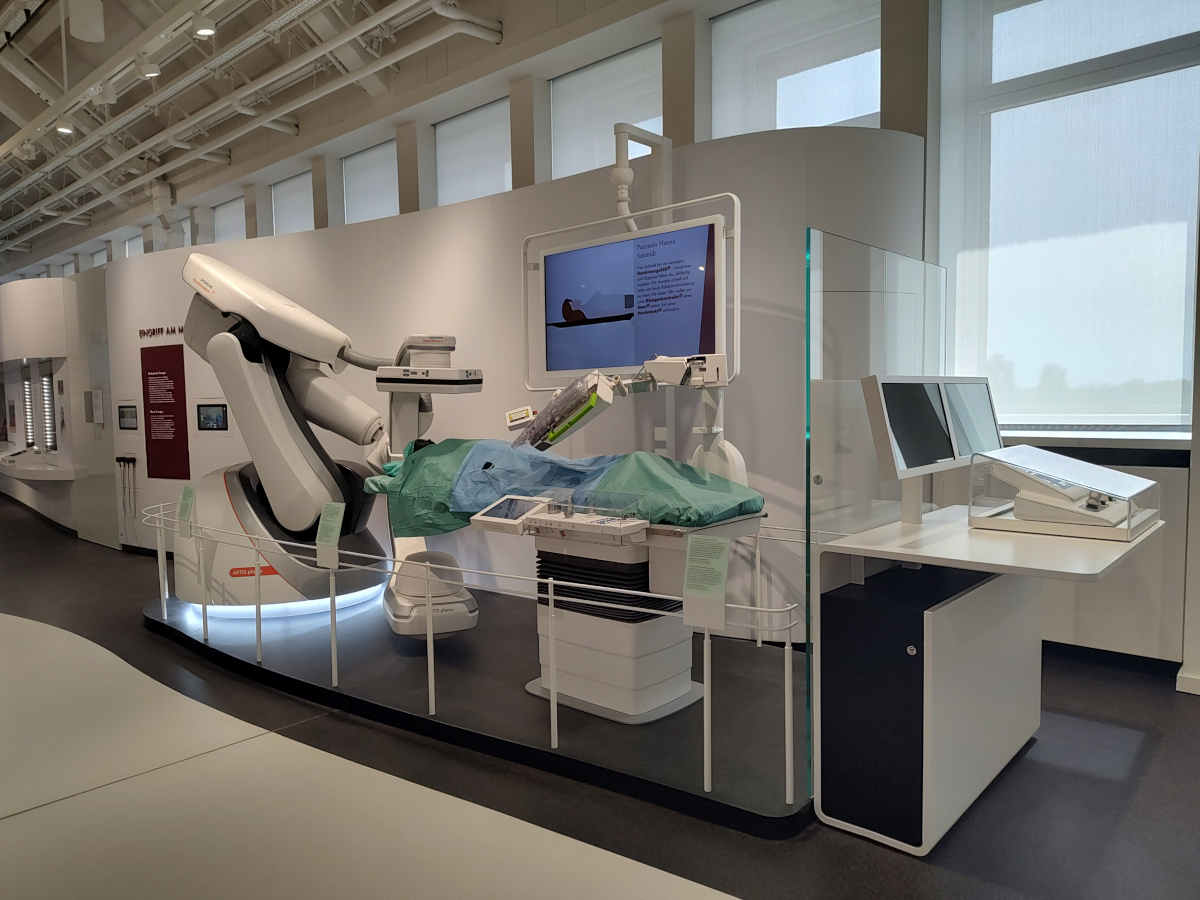
Apart from the human-body displays and the useful information accompanying each part, there is also an interactive activity that allows visitors to attempt an operation, including a bypass procedure.
Yes, you guessed it: I spent some time here!
Agriculture and Food
From older farming tools to modern agricultural technology, this exhibition examines how food is produced, distributed, and consumed.
There were also preserved ticks on display, together with many other agriculture-related objects and large machines.
What We Did Not Manage to See
There were more exhibitions and objects we could have explored, including a boat outside, but by this point my feet were killing me, so this was the end of our visit.
That is also why I do not recommend arriving with the expectation that you will study every object in every exhibition. Even a full day requires choices.
Planning Your Visit to the Deutsches Museum Munich
Visitor information below was checked in July 2026. Ticket prices, temporary closures, and programme times can change, so verify the official information shortly before your visit.
Is the Deutsches Museum Worth Visiting During the Renovation?
Yes – especially if you enjoy science, technology, aviation, space exploration, interactive experiments, or large museums where adults and children can explore together.
The second half of the building has been closed for renovation since 2022 and is scheduled to reopen in 2028. However, the currently open, renovated section contains 20 permanent exhibitions across around 20,000 square metres. All the exhibitions described from our visit – including aviation, robotics, astronautics, musical instruments, optics, chemistry, atomic physics, health, electronics, and agriculture – are in the open part of the museum.
Some famous attractions mentioned in older guides are currently unavailable, including the historic mine, the planetarium, and the high-voltage demonstration. The ongoing modernisation project is expected to be completed in 2028.
Even with part of the building closed, we spent a full day here and still did not see everything. For us, the museum was absolutely worth visiting.
How Long Do You Need at the Deutsches Museum?
About two hours: This is enough only if you select a small number of exhibitions or follow a highlights route. You will need to move past many objects and interactive stations.
Three to four hours: You can explore several exhibitions properly, but you will still have to skip large parts of the museum.
Four to six hours: This is a more realistic amount of time if you want to visit several floors, try the interactive exhibits, read some of the information, and take a break.
A full day: You can easily spend the entire day here if you want to examine some exhibitions in greater depth, repeat the most enjoyable experiments, wait for demonstrations, take photographs, and simply have more fun. We spent almost the whole day in the museum, did not see everything, and would happily return.
The Deutsches Museum is also one of the easiest attractions to choose when you need a substantial indoor activity. I included it among my recommendations for a rainy day in Munich because it can fill several hours or the entire day without feeling like a backup plan.
How to Choose Which Exhibitions to Visit
We love technical museums, so our natural instinct is to enter every exhibition. At the Deutsches Museum, the better approach is to decide before your visit how long you can stay and then choose the exhibitions according to your preferences.
If you have only two or three hours, check the museum map before arriving and select a few priority areas. Aviation and astronautics may appeal most to aircraft and space fans; Musical Instruments, Classical Optics, Chemistry, Health, and Robotics offer many interactive elements; the Model Railway is an excellent stop for train enthusiasts; and the older cameras, phones, radios, games, and electronic devices bring a strong element of nostalgia.
If you have four to six hours or a full day, you can explore more widely, but it is still wise to visit your personal priorities first. Fatigue eventually catches up with you, especially when you spend time standing at the interactive exhibits.
Opening Hours, Tickets, Address, and Entrance
Address: Museumsinsel 1, 80538 Munich.
Opening hours: The Museum Island location is generally open daily from 9:00 AM to 5:00 PM. Last admission is at 4:30 PM. It closes on several dates during the year, so check your exact day before visiting.
Adult day ticket: €16.
Reduced day ticket: €9. This includes children and teenagers aged 6 to 17, as well as other eligible visitors with valid identification.
Family ticket: €33, valid for up to two adults with their own children aged 17 and under.
Children under six: Free.
Current visitor entrance: During the renovation, visitors enter through the multi-storey glass entrance building beside Corneliusbrücke rather than through the historic museum courtyard.
We bought our tickets when we arrived and did not face a large crowd, but the museum recommends buying online in advance. Check the current prices, closures, and ticket information on the official visitor page.
How to Get to the Deutsches Museum
The museum is central and easy to reach by public transport. We took the subway and used the app to plan the route and buy our transport tickets.
The closest S-Bahn station is Isartor, and the closest U-Bahn station is Fraunhoferstraße on lines U1 and U2. You can also take tram 17 to the Deutsches Museum stop or bus 132 to Corneliusbrücke.
The museum has no visitor parking on Museum Island, so public transport is the easier option. My complete guide to getting around Munich explains the tickets and apps we used.
The Deutsches Museum App and Daily Programme
The free official app includes an interactive map, short introductions to the exhibitions, self-guided highlight routes, information about the daily programme, and English audio commentary for selected objects.
Download it before your visit and bring headphones if you want to use the audio material. The map is especially useful because the museum is large and it is easy to spend more time than expected in the first exhibitions.
Also check the daily programme when you arrive. Demonstrations, tours, workshops, the model railway, and the flight simulator do not necessarily run continuously. The official Deutsches Museum app includes programme information and an interactive map.
Bags, Lockers, Food, and Places to Rest
During our visit, the guards directed us to leave our backpacks in the lockers. Under the current rules, small bags and rucksacks may be taken into the museum, but bags larger than an A4 sheet of paper must be stored.
The cloakroom and lockers are on Level 1, one level above the entrance hall. Their use is free, but you need a €1 coin as a refundable locker deposit.
You may bring your own food and drinks, but eating and drinking are not permitted inside the exhibitions. There is a picnic area near the cloakroom on Level 1, with vending machines for snacks and drinks.
There are also places to buy food. Frau im Mond, the self-service rooftop restaurant and café, is beside the Astronautics exhibition on Level 2, and Café Exponat is near the museum shop and entrance area.
We stopped at the café in the upper part of the museum to eat, drink something, and rest for a while. Do not underestimate the value of a proper break during a long visit.
Is the Deutsches Museum Good for Children and Teenagers?
Yes. I visited with my teenage son, and the variety made the museum interesting for both of us. Aviation, space travel, robotics, light experiments, musical instruments, health displays, technology, and the model railway create a very different experience from a museum where visitors only look at objects behind glass.
Families with younger children should also know about Kids’ Kingdom, a separate hands-on area designed mainly for children aged 3 to 8. We did not use it because I visited with a teenager.
If you are planning a longer family trip, you may also find my guides to Sea Life Munich and Legoland Germany useful.
Accessibility at the Deutsches Museum
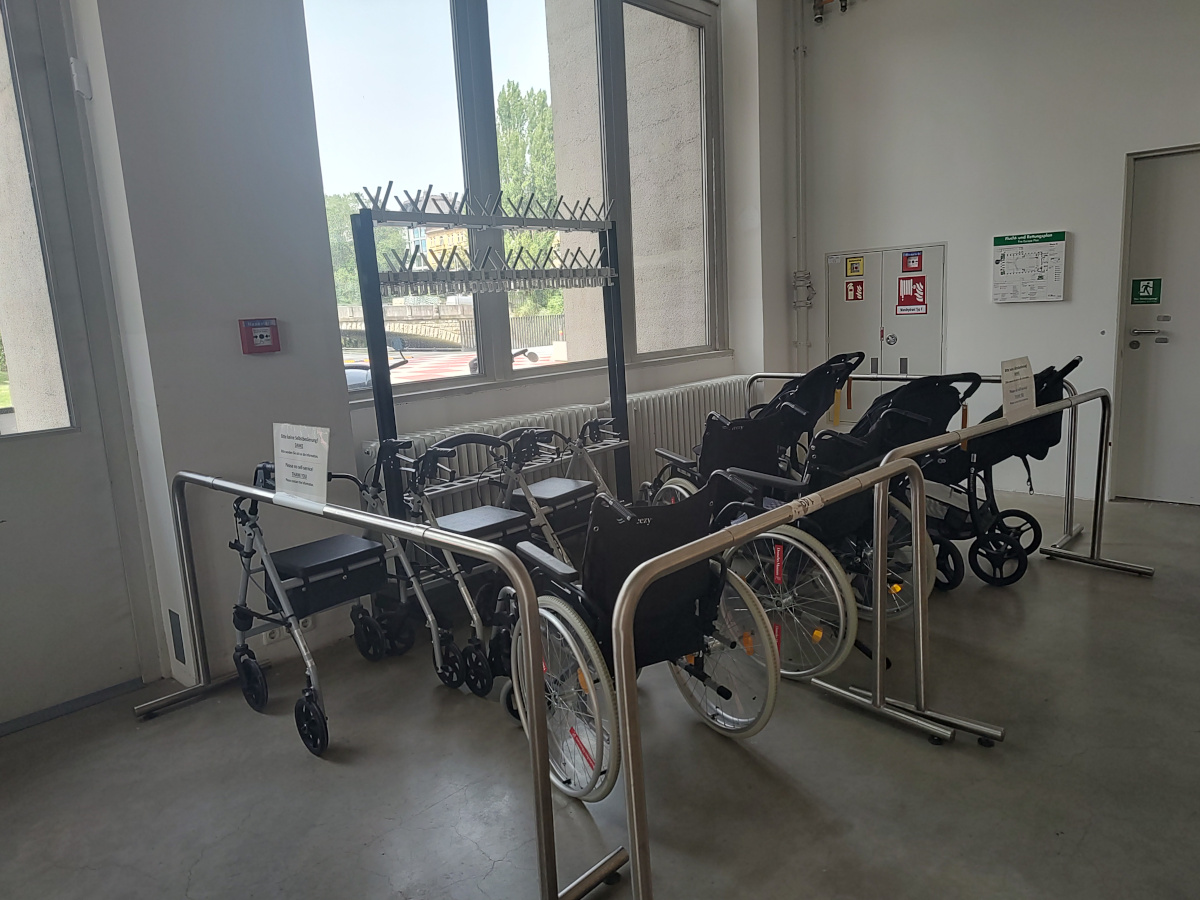
The currently open collection building, exhibitions, event areas, dining areas, and accessible toilets are designed for wheelchair users and visitors with mobility limitations. Wheelchairs and walking frames can be borrowed free of charge from the information desk.
There are lifts, but this is still a very large museum and visitors may cover several kilometres. Plan breaks, wear comfortable shoes, and do not feel that you have to complete every floor.
My Practical Tips for Visiting the Deutsches Museum
Wear very comfortable shoes. You will walk and stand far more than you expect.
Choose your priorities before arriving. The museum is too large to examine everything carefully in one visit.
Check the daily programme early. If a demonstration or activity interests you, plan the rest of your route around its scheduled time.
Take a proper break. A café or picnic stop can help you enjoy the later exhibitions instead of rushing through them because you are tired.
Do not leave your favourite exhibition until the end. Your feet and attention may not cooperate after several hours.
Accept that you may need another visit. We spent almost the entire day here and still left with reasons to return.
Souvenir Shop
The museum has a comprehensive souvenir shop with items ranging from fridge magnets and 3D cards to books, games, gadgets, and science-themed gifts.
We bought a few items from this place, I have to admit 🙂
My Honest Verdict: Is the Deutsches Museum Munich Worth Visiting?
Yes. Whether you are visiting Munich with children, a partner, or on your own, the Deutsches Museum is a place where history, innovation, experiments, and imagination come together. It is much more than a room filled with technical objects – it can become a full day of discovery and fun.
We left feeling smarter, more curious, and genuinely surprised by how entertaining science and technology can be when they are presented this way.
And yes – we are already planning to go back.
Based on our experience, I consider it the best museum we visited in Munich and one of the city’s most memorable attractions. If you enjoy learning, exploring, testing things, or simply being impressed by what people have invented, the Deutsches Museum deserves a place in your itinerary.
To plan the rest of your trip, you can combine it with our day in Munich’s historic centre or visit a completely different type of museum at the Residenz Palace.
Frequently Asked Questions About the Deutsches Museum Munich
Is the Deutsches Museum fully open in 2026?
The museum remains open, but only the first renovated half of the main building is currently accessible. It contains 20 permanent exhibitions across approximately 20,000 square metres. The second half is being renovated and is scheduled to reopen in 2028.
How long should I spend at the Deutsches Museum?
Allow at least three to four hours for several selected exhibitions. Four to six hours is better for a broader visit, while science and technology fans can easily spend the entire day here.
How much are Deutsches Museum tickets in 2026?
Adult day tickets cost €16, reduced tickets cost €9, and a family ticket costs €33. Children under six enter free. Check the official website before visiting because prices can change.
Can you bring food into the Deutsches Museum?
Yes. You may bring your own food and drinks, but you must consume them in the designated picnic area rather than inside the exhibitions.
Are there lockers at the Deutsches Museum?
Yes. The cloakroom and lockers are on Level 1. They are free to use, but lockers require a refundable €1 coin. Bags larger than A4 size must be stored.
Is the Deutsches Museum suitable for teenagers?
Yes. I visited with my teenage son, and the aviation, astronautics, robotics, optics, musical instruments, health, electronics, and hands-on experiments gave us plenty to explore together.
Can you visit the Deutsches Museum without speaking German?
International visitors can still enjoy the museum. The official app is available in English and includes an interactive map, exhibition introductions, and English audio commentary for selected objects. Not every object has complete English audio coverage, and many live programmes are mainly in German.
More amazing articles for you:
Hidden London gems - experience London like a local: 10 cool places you won’t find in the guidebooks
19 Best Cities to Visit in Europe in October: Weather, Festivals and Fall Experiences
150 French Proverbs and Meanings: Famous French Sayings About Life, Love, Food, Work, and Everyday W...
Great British Staycation Locations
Chernobyl today: the ultimate travel guide to visiting Chernobyl, Ukraine
Quirky things to do in Amsterdam #infographic
23 Things Americans Should Know Before Traveling to Europe - Unwritten Rules That Can Catch You Off ...
Monument in front of the „Ion Luca Caragiale” National Theater in Bucharest

Violeta-Loredana Pascal is a communications expert, business mentor, and the founder of Earth’s Attractions and PRwave INTERNATIONAL. A pioneer in the Romanian digital PR landscape since 2005, she holds a degree in Communication and Social Sciences from SNSPA Bucharest. Violeta is a senior trainer at AcademiadeAfaceri.ro, where she leverages over 20 years of experience to teach professional courses in PR strategy and workplace productivity. By blending high-level business consulting with a passion for holistic travel and wellness, she empowers solopreneurs to overcome procrastination, build profitable brands, and design a life of purposeful adventure.