Last updated: August 2026
Are you planning a trip to Munich and wondering how to get around? Munich’s public transportation system makes it easy to reach the historic center, museums, palaces, parks, the Olympic area, the airport, and attractions outside the areas most visitors explore on foot.
In this guide, I’ll walk you through how Munich public transport works, which tickets and zones you may need, where to buy tickets, how validation works, how to use the MVV app, and how to avoid paying more than necessary.

We used public transport throughout our Munich trip, and it became our preferred way to travel around the city. I had already created our Munich itinerary, so each morning we used the app to check the route, the zones, the departure time, and the available connections.
Is Munich Public Transport Easy and Safe for Tourists?
When I first arrived in Munich, I was immediately impressed by how easy it was to get around. The network is extensive, the signs are generally clear, and one ticketing system covers the U-Bahn, S-Bahn, trams, and buses within the zones you pay for.
I have to add that this was the first time I felt completely safe using public transport during a city trip, did not experience unpleasant smells, and rarely encountered serious crowding. I am comparing Munich, from this point of view, with my hometown, Bucharest, Romania, but also with Paris and Vienna.
So, while in many cities I prefer taxis, Uber, or similar services regardless of the cost, I can say that in Munich public transport was the best option for us.
Of course, no large city is entirely free of delays, busy vehicles, or petty theft. Keep your phone, wallet, and bag secure, especially at large stations and during events. Still, based on our experience, Munich public transport felt clean, comfortable, organized, and easy to use.
How Munich Public Transport Works
Munich’s integrated public transport network is coordinated by the MVV – Münchner Verkehrs- und Tarifverbund. The same MVV fare system covers the main forms of local transport, so you do not usually need separate tickets when you change from an U-Bahn to a bus, tram, or S-Bahn during a valid journey.
| Transport | What it is most useful for |
|---|---|
| U-Bahn | Fast journeys within Munich, including many central neighborhoods and major attractions. |
| S-Bahn | Longer cross-city trips, suburban destinations, Munich Airport, and connections to regional transport. |
| Tram | Central and residential areas, with the added advantage of seeing the city while you travel. |
| Bus | Places that are not directly served by rail and the final part of some journeys. |
You will see a blue “U” for U-Bahn stations and a green “S” for S-Bahn stations. “Hbf” is the abbreviation for Hauptbahnhof, or Central Station, while “Flughafen” means airport.
Munich Public Transport Zones Explained
Munich uses a zone system. Zone M covers the entire city of Munich and some neighboring areas. Zones 1 to 12 extend outward through the wider MVV network.
For many visitors, Zone M is enough for most or all city sightseeing. It covers central attractions such as Marienplatz and the New Town Hall, Frauenkirche, St. Peter’s Church, the Toy Museum, the Deutsches Museum, the Munich Residenz, Nymphenburg Palace, the English Garden, Olympiapark, SEA LIFE Munich, and BMW Welt and BMW Museum.
Munich Airport is in Zone 5. A ticket covering only Zone M is therefore not valid for a journey between the airport and central Munich. For that trip, you usually need Zones M–5.
Some stops sit on two zone boundaries and are marked with two zones, such as M/1. Depending on the direction of travel, you may be able to use the cheaper of the two zones. The easiest approach is to enter your starting point and destination in the MVV app and let it show the required fare area.
Munich Public Transport Tickets and Current Prices
Munich has several ticket types, and the best one depends on how many people are traveling, how many journeys you will make, and which zones you need.
The prices below were checked for August 2026. Fares can change, so verify the current amount on the official MVV ticket and price page before your trip.
| Ticket | Current price | What it covers |
|---|---|---|
| Zone M single ticket | €4.20 | One journey in Zone M, with transfers permitted within the ticket’s validity period. Return travel is not included. |
| Short journey ticket | €2.10 | Up to four stops after boarding, with no more than two of those stops on U-Bahn, S-Bahn, express bus, or regional train services. |
| Zone M single day ticket | €10.10 | Unlimited travel for one adult in Zone M until 6 a.m. the following day. |
| Zone M group day ticket | €19.70 | Unlimited travel for a group of two to five people in Zone M until 6 a.m. the following day. |
| Child single ticket | €2.00 | One journey for a child aged 6–14 throughout the MVV network. |
| Child day ticket | €3.80 | Unlimited travel for one child aged 6–14 throughout Zones M–12 until 6 a.m. the following day. |
| Strip ticket – Streifenkarte | €18.70 | Ten strips that can be used for multiple journeys. An adult aged 21 or older validates two strips for a Zone M journey. |
| Zone M weekly ticket | €23.80 | Unlimited Zone M travel for seven consecutive days, plus until noon on the following day. |
| Zone M monthly ticket | From €71.40 | Unlimited travel in the selected area for one month. |
| Airport-City-Day-Ticket – single | €17.50 | Unlimited travel for one adult in Zones M–5, including the airport and Munich city area, until 6 a.m. the following day. Current accompanying-child rules apply. |
| Airport-City-Day-Ticket – group | €32.60 | Unlimited travel in Zones M–5 for a group of two to five people until 6 a.m. the following day. |
Single Ticket
A single ticket is for one journey in one direction. You may change between the U-Bahn, S-Bahn, tram, and bus as needed, provided you stay within the zones and validity period of the ticket. You cannot use the same single ticket for the return journey.
A Zone M single ticket is valid for up to two hours. Tickets covering more zones have longer validity periods.
Day Ticket – Tageskarte
A day ticket gives you unlimited travel within the selected zones until 6 a.m. the following day. It is especially useful if you plan to make at least three Zone M journeys, as three single tickets would cost more than one Zone M day ticket.
Group Day Ticket
The group day ticket can be an excellent choice for couples, families, or friends. It covers two to five people traveling together, and two children aged 6–14 count as one person.
If one person holds the group ticket on a phone, that person must remain with the group. This is something we kept in mind because we bought our tickets digitally.
Strip Ticket – Streifenkarte
The strip ticket has ten strips and can be shared or used for several journeys. Adults aged 21 or older validate two strips for a journey within Zone M. A short journey requires one strip. For journeys covering more zones, more strips are required.
It can be useful if you expect to make only a few journeys spread across several days. However, compare the cost with a day ticket before buying. If you use several strips in one day, the day ticket may be the better choice.
Weekly and Monthly Tickets
If you are staying longer or using transport several times every day, compare the weekly ticket, monthly ticket, and Deutschlandticket. The Zone M weekly ticket has a freely selectable start date and remains valid for seven consecutive days, plus until noon on the day after the final day of validity.
Munich Public Transport With Children
Children under 6 travel free on Munich public transport and do not need a ticket.
Children aged 6–14 can use discounted single tickets and child day tickets. Since January 2026, an adult single day ticket also allows the ticket holder to take an unlimited number of their own children or grandchildren aged 6–14, or up to three other children in that age group, free of charge.
This means families should not automatically assume that a group day ticket is the cheapest choice. Compare the price and accompanying-child rules for your family before buying.
Which Munich Public Transport Ticket Should You Buy?
| Your plans | Ticket to compare first |
|---|---|
| One journey inside Munich | Zone M single ticket |
| A very short journey of up to four stops | Short journey ticket |
| Three or more journeys in Zone M in one day | Zone M single day ticket |
| Two adults traveling together for the day | Zone M group day ticket |
| One adult traveling with children aged 6–14 | Check the accompanying-child rules on the single day ticket before buying a group ticket |
| A few journeys spread over several days | Strip ticket |
| Seven days of frequent city travel | Zone M weekly ticket |
| Airport arrival followed by more city journeys that day | Airport-City-Day-Ticket |
| Munich plus a regional day trip in Bavaria | Bayern-Ticket or another regional ticket, depending on the route and departure time |
How to Buy Munich Public Transport Tickets
You can buy tickets in several places:
At U-Bahn and S-Bahn stations: Use the ticket machines at stations and platforms. English is available on many machines.
On buses and trams: Tickets are available from machines or the driver, depending on the vehicle and route. Tickets bought from machines inside buses or trams are generally already validated.
In the MVV app or MVGO: You can plan journeys, see real-time information, check disruptions, identify the required zones, and buy many ticket types digitally.
Online: Some day tickets and tourist cards are available as online tickets that can be displayed on a mobile device or printed.
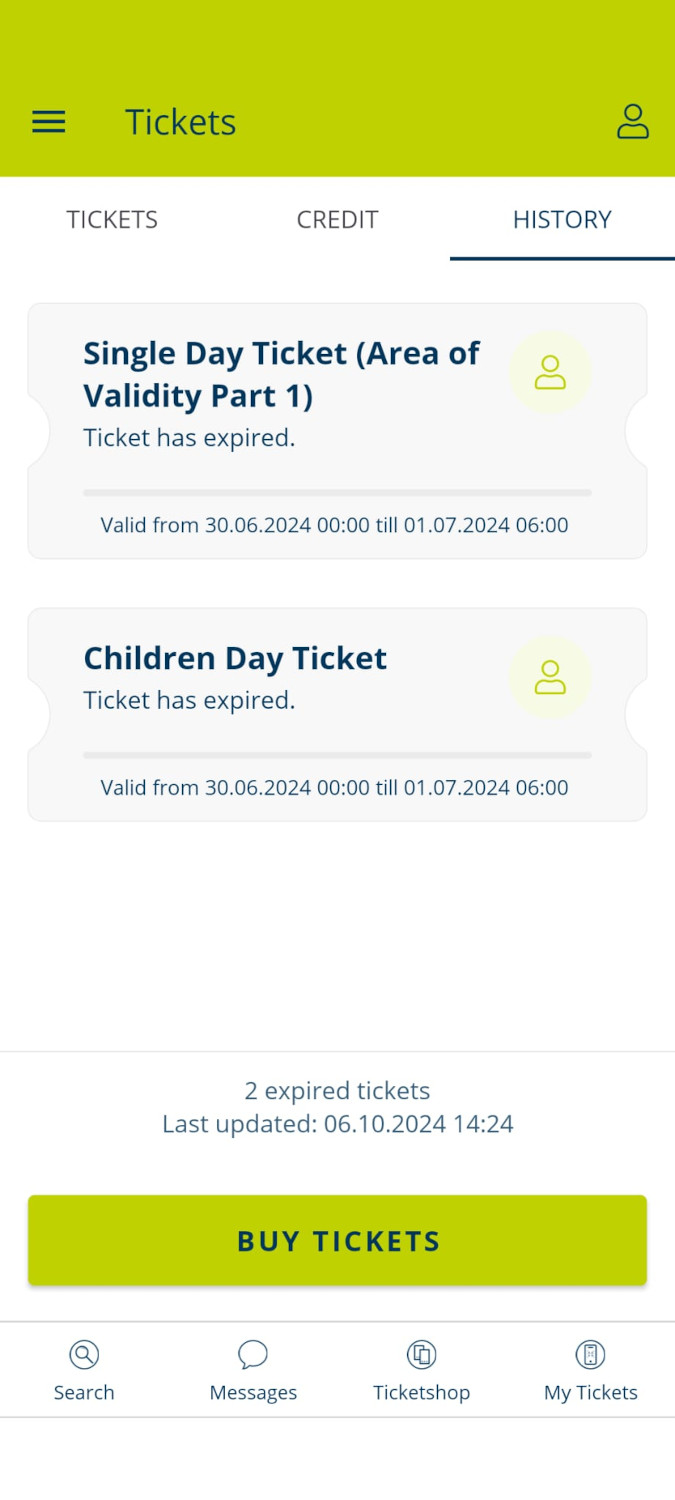
Frankly, we only used the MVV app. It was easy to use, we could pay with Google Pay, which we both had configured on our phones, and the tickets remained on the phone, so they were always with us.
We liked the MVV app because it was helpful for planning each day and had an English-language menu that made the directions easy to understand.
Do You Need to Validate Munich Public Transport Tickets?
Important: Check every paper ticket before traveling. If the ticket says “Validate here,” stamp it before beginning the journey. Buying an unvalidated paper ticket is not enough. Traveling without a valid ticket can result in an increased transport charge of €60.
Not every ticket follows exactly the same validation rule:
Paper tickets that say “Validate here” must be stamped in a validator before the journey.
Tickets bought from machines inside buses or trams are generally already validated when purchased.
Deutsche Bahn ticket machines may allow you to choose between a validated and an unvalidated ticket.
Mobile tickets do not need to be stamped, but they must be purchased or activated before boarding or entering the controlled platform area.
Munich’s U-Bahn and S-Bahn stations do not always have physical ticket barriers. This does not mean travel is free. Inspections take place on vehicles and in station areas.
Using the MVV App and MVGO
The MVV app was the app we used throughout our trip. It combines route planning, departure information, service updates, network maps, and ticket purchases. It supports payment methods including Google Pay and Apple Pay.
MVGO is another official app for Munich mobility. It includes route planning and public transport tickets, as well as other mobility services.
The MVV app also offers MVVswipe, a check-in/check-out option. You swipe before starting the journey and again after getting off, and the app calculates the fare. It can be useful if you do not want to work out the zones and ticket type yourself, but you must remember to check in before boarding and check out after the journey.
You can check the current app functions on the official MVV app page.
Carry an official photo ID when using personalized digital or online tickets that require identification. Also make sure your phone has enough battery for the entire journey.
Can You Use the Deutschlandticket or Bayern-Ticket in Munich?
Deutschlandticket
The Deutschlandticket is valid on Munich’s U-Bahn, S-Bahn, trams, buses, and eligible regional trains. It is not normally valid on long-distance ICE, IC, or EC trains.
It currently costs €63 per month and is a personal monthly subscription, not a one-day tourist ticket. It is not transferable, identification is required during inspections, and cancellation deadlines apply. A visitor who buys it for only one month must understand the subscription terms before completing the purchase.
Bayern-Ticket
The Bayern-Ticket is valid on eligible local and regional transport throughout Bavaria, including Munich U-Bahn, S-Bahn, trams, and buses.
On Monday to Friday, the standard Bayern-Ticket is valid from 9 a.m. until 3 a.m. the following day. On weekends and public holidays, it is valid from midnight until 3 a.m. the following day. It is not valid on ICE or IC trains.
It can be a good choice if you are combining Munich with a Bavarian day trip. If you are spending the entire day only in central Munich, an ordinary Zone M ticket may be cheaper.
The Munich CityTourCard and Munich Card
There are two additional tourist cards that combine public transport with attraction discounts.
The CityTourCard includes unlimited public transport within the selected area and discounts at more than 100 partner attractions, museums, tours, restaurants, and shops. It is available for 24 hours, 48 hours, or 3, 4, 5, or 6 days, depending on the option. Check whether the attractions you genuinely plan to visit – such as the Deutsches Museum – are included and what the current discount is.
The Munich Card also includes unlimited public transport within the selected area and discounts at more than 100 participating attractions and services. It is available for 24 hours or 2, 3, 4, or 5 days. Attractions such as the Munich Residenz and SEA LIFE Munich may be relevant to your calculation, depending on the current card benefits.
Both have options for Zone M and larger areas that include the airport. Check the exact area before buying, because the tourist-card airport options currently cover Zones M–6 rather than only Zone M.
To decide which one is better for you, first create your itinerary and calculate the ordinary transport tickets plus the full admission prices for the attractions you genuinely plan to visit. Then compare that total with the tourist-card price plus the discounted attraction prices.
While I am a huge fan of these combinations and use them when they save money, we did not use one during this trip. Based on our itinerary, it was not the best-value option for us.
Traveling to and From Munich Airport
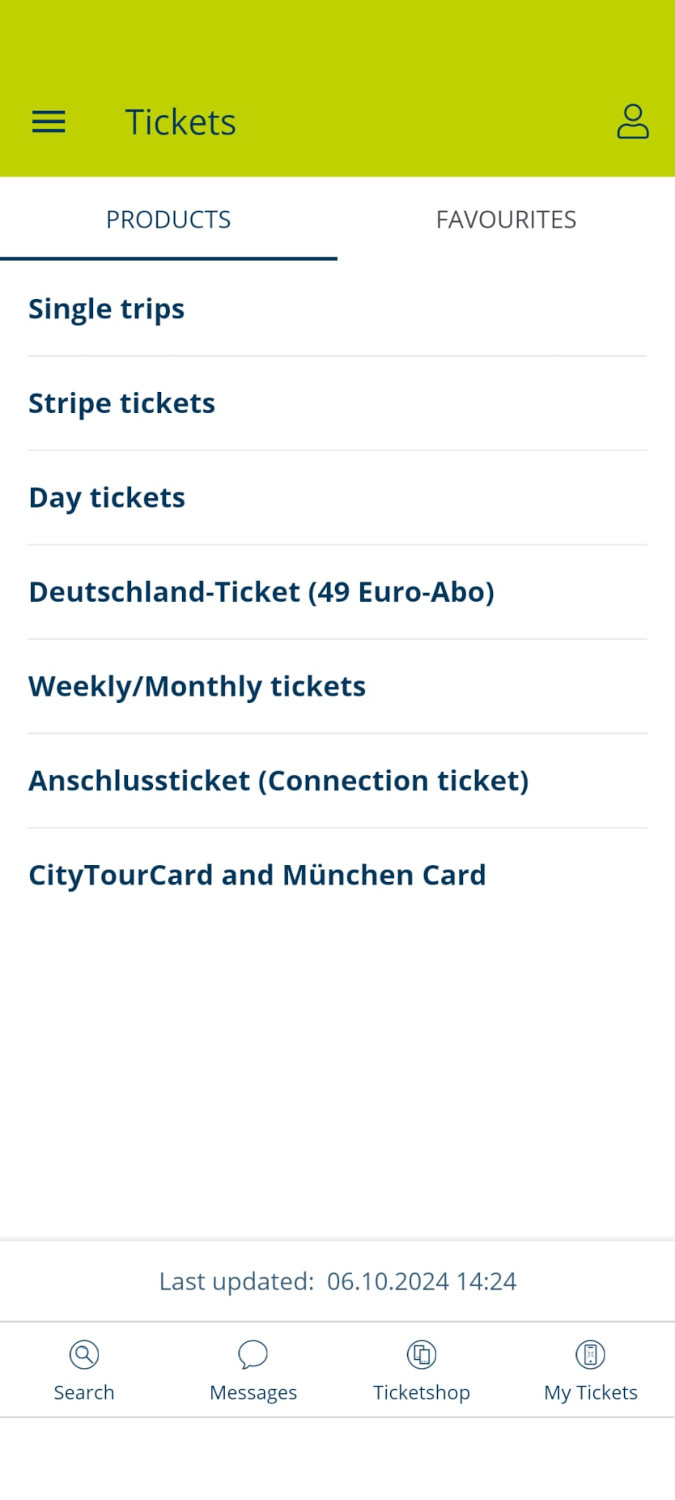
One of the biggest advantages of Munich’s public transportation system is how easy it is to travel between Munich Airport and the city.
The S1 and S8 S-Bahn lines connect the airport directly with central Munich. Each line normally runs approximately every 20 minutes, creating an alternating service approximately every 10 minutes.
The S1 approaches central Munich from the west, while the S8 approaches from the east. The journey to central locations generally takes around 35–45 minutes, depending on the station and connection.
Munich Airport is in Zone 5, so a Zone M ticket does not cover the airport journey. For travel between the airport and central Munich, you generally need Zones M–5.
The Airport-City-Day-Ticket is particularly useful if you want to travel from the airport and continue using public transport in Munich that day. It covers unlimited journeys in Zones M–5 until 6 a.m. the following day. There is a single version and a group version.
If you only need a one-way airport journey and will not use public transport again that day, compare the Airport-City-Day-Ticket with a regular M–5 single ticket before buying.
Public Transport During Oktoberfest
If you are visiting Munich during Oktoberfest, public transport is the easiest way to reach the festival grounds at Theresienwiese. The U4 and U5 stop at Theresienwiese, close to the entrances.
On a funny note, I installed and used the app in late June and early July. I wrote the original version of this article at the beginning of October, and the app was already displaying a notice about the public transportation options for Oktoberfest.
Isn’t this cool?
Munich usually increases capacity for major events, but trains and stations can become much busier than normal. Check the journey planner before leaving, follow event signs and staff instructions, and consider walking from a nearby station if Theresienwiese is heavily crowded.
Essential Tips for Using Public Transport in Munich
Check the Route Shortly Before You Leave
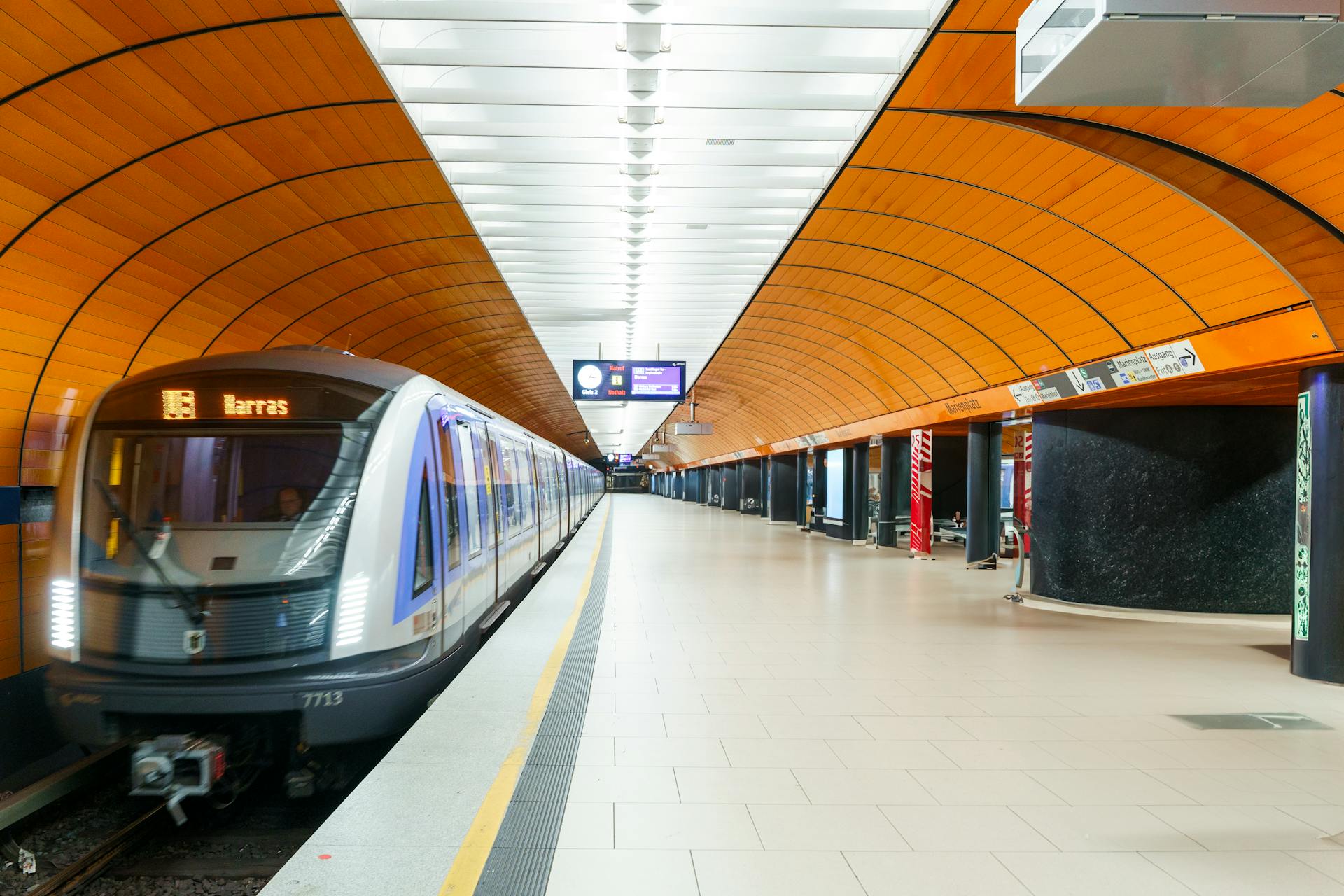
Although trains, trams, and buses run frequently on many routes, it is still a good idea to check your connection shortly before leaving. Delays, engineering work, event traffic, and platform changes can affect the best route.
This is what we did each day during our trip. I had a pre-made itinerary because I like to plan, so we checked which zones we needed and then reviewed the available routes. The app usually displayed several options, and we could choose the one that suited us best.
For other practical details that can affect your plans, including weather, Sundays, payments, and opening hours, read my first-timer tips for Munich. If the forecast changes, my guide to Munich in the rain can help you reorganize museum and indoor-attraction days.
Keep Mobile Data Available
I used mobile data throughout the trip. It did not cost me extra because roaming data was included in my subscription. Having data available made route changes, live information, and maps much easier to manage.
Before your trip, check your roaming allowance. You can also save essential addresses, hotel details, and screenshots in case your signal or battery fails.
Do Not Follow the App Without Checking the Stop Name
We had no real problems in the city. Well, except for one: we got off the S-Bahn one station too early while going to Motorworld München.
When we asked for the street shown in the app, several people nearby – locals, people selling baked goods at the station, and a bus driver – did not know which street we meant.
On the same bus, however, there was a kind older lady who got up from her seat, came to the bus door, and explained that we needed to take the S-Bahn for one more station. She also told us that after taking the stairs there, we would see the street mentioned in the app.
The app had the correct destination. We had simply left the train too early.
Expect More Crowds During Rush Hour and Events
Rush hour is usually around 7–9 a.m. and 4–6 p.m., although crowd levels vary by line, direction, and day.
I cannot say that Munich public transport was very crowded during our visit. We often left around 8:30–9 a.m., and there were many empty seats or only three or four people standing.
One exception was an evening when we were returning to the hotel on an U-Bahn that continued toward the stadium, where a major match was taking place. UEFA EURO 2024 was being held in Germany during our trip, and Munich hosted several matches.
Taking a Bicycle on Munich Public Transport
Munich is a bicycle-friendly city, but you cannot take a full-size bicycle on every form of public transport.
Single-seat bicycles are generally permitted on the U-Bahn, S-Bahn, and approved regional trains. They are not normally allowed on buses or trams, apart from exceptions for small children’s bicycles and folded bicycles.
A bicycle ticket may be required. The current MVV bicycle day ticket starts at €3.70.
There are also restricted times. On the U-Bahn, bicycles are not permitted Monday to Friday from 6–9 a.m. or 4–6 p.m.; the afternoon restriction does not apply during Bavarian school holidays. On the S-Bahn with an MVV bicycle day ticket, the weekday restriction is 6–9 a.m., with no restricted times during Bavarian school holidays. Rules differ for some regional and Bavarian bicycle tickets, so check the app for your exact journey.
Does Munich Public Transport Run All Night?
The U-Bahn does not run throughout every night.
From Monday to Thursday, U-Bahn trains generally operate until around 1 a.m. Night trams and night buses then serve many routes throughout the night.
On Friday-to-Saturday nights, Saturday-to-Sunday nights, and nights before public holidays, Munich’s U-Bahn operates overnight. The principal lines generally run every 30 minutes, arranged so that central Munich has frequent connections.
Night routes and departure times can change, so check the official Munich night-service information or the app for your exact date.
Luggage, Strollers, and Accessibility
You can travel with normal luggage on Munich public transport, provided it does not block doors, aisles, or emergency exits. Keep suitcases close to you and allow extra time when changing platforms.
Many stations and vehicles are accessible, but lifts can occasionally be unavailable. Travelers who depend on step-free access should check the route planner and current station information before leaving.
Strollers are widely used on the network. Board through the appropriate doors, use designated multipurpose spaces where available, and avoid blocking other passengers.
Common Munich Public Transport Mistakes to Avoid
Buying only Zone M for an airport journey: Munich Airport is in Zone 5, so travel between the airport and the city normally requires M–5.
Forgetting to validate a paper ticket: If it says “Validate here,” stamp it before the journey.
Assuming a day ticket covers every zone: A day ticket offers unlimited travel only within the zones you selected.
Buying separate single tickets without comparing the day ticket: Three Zone M single journeys cost more than one Zone M day ticket.
Buying a group ticket without checking the child rules: One adult single day ticket may include children aged 6–14 under the current accompanying-child rules.
Separating from the person holding the digital group ticket: The ticket holder and accompanying passengers must travel together.
Boarding first and buying or activating the mobile ticket afterward: The ticket must be valid before boarding or entering the controlled area.
Assuming the U-Bahn runs all night every day: Weekday overnight travel usually relies on night trams and buses.
Forgetting identification: Personalized digital and online tickets may require official photo ID.
Munich Public Transport: Quick Answers
Is Munich public transport easy for tourists?
Yes. The U-Bahn, S-Bahn, trams, and buses use the same MVV fare system within the zones covered by your ticket.
Which zone covers most Munich attractions?
Zone M covers the entire city and most attractions visited during a typical Munich city break.
Which zones do you need for Munich Airport?
The airport is in Zone 5, so travel between central Munich and the airport normally requires Zones M–5.
How much is a Zone M single ticket?
€4.20 as of August 2026.
How much is a Zone M day ticket?
€10.10 for one adult and €19.70 for a group ticket as of August 2026.
Do paper tickets need validation?
Tickets marked “Validate here” must be stamped before the journey. Tickets purchased inside buses or trams are generally already validated.
What is the charge for traveling without a valid ticket?
The increased transport charge is €60.
What are the best apps?
The MVV app and MVGO both provide route information and mobile ticket options.
Is the Deutschlandticket valid in Munich?
Yes, on local and regional transport, including the U-Bahn, S-Bahn, trams, and buses. It is a personal monthly subscription and is not normally valid on ICE, IC, or EC trains.
Final Thoughts: Is Munich Public Transport Worth Using?
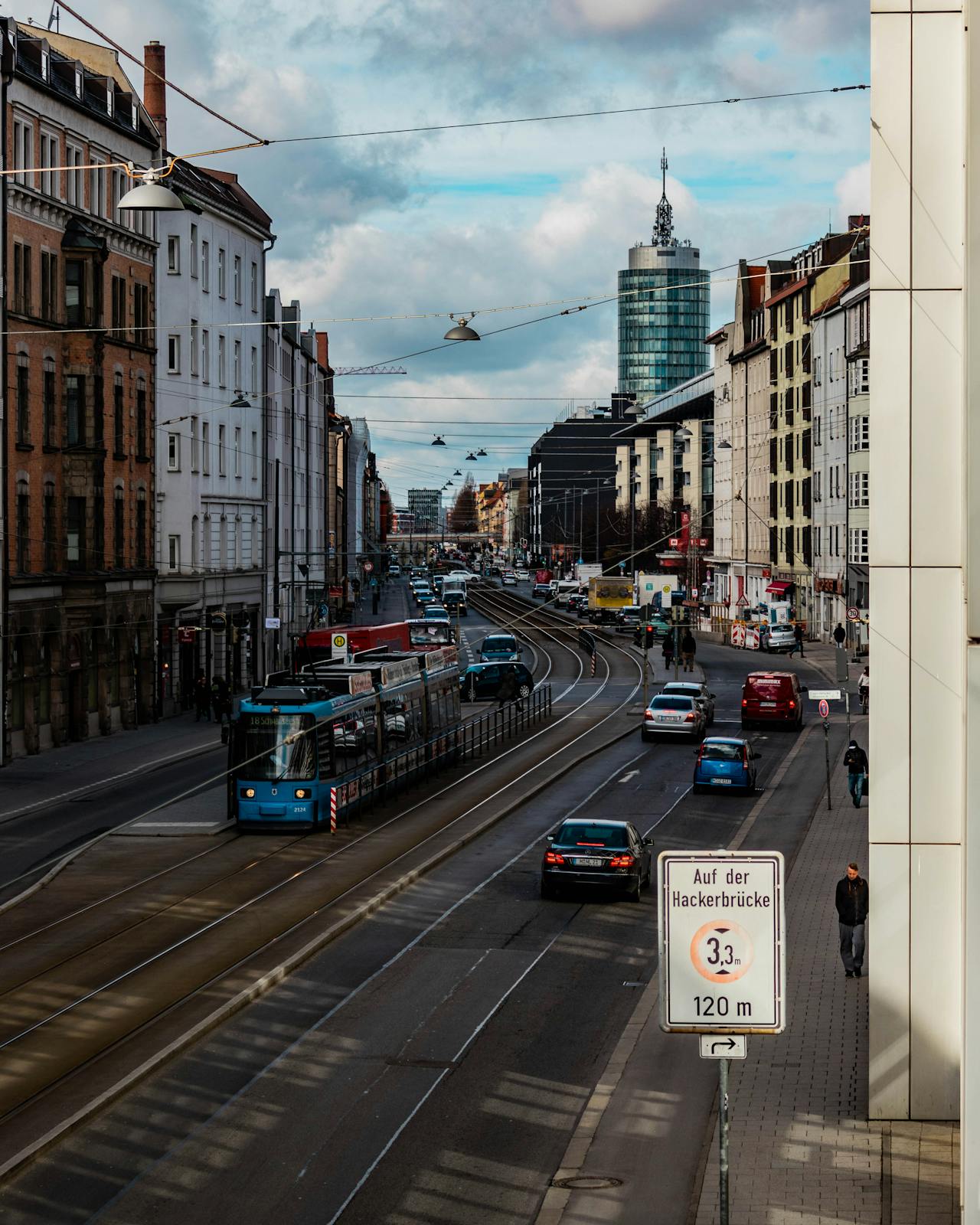
Munich’s public transportation system is efficient and easy to use, whether you are visiting for the first time or returning to explore more of the city. The U-Bahn, S-Bahn, trams, and buses connect the historic center with museums, palaces, parks, family attractions, residential areas, and the airport.
For us, public transport was the best way to get around Munich. We used the MVV app every day, bought all our tickets digitally, reached everything on our itinerary, and felt comfortable throughout the trip.
The ticket system may look complicated when you first see the zones and ticket names. Once you know that most city attractions are in Zone M, the airport is in Zone 5, and tickets marked “Validate here” must be stamped, it becomes much easier.
Whether you are visiting for Oktoberfest, following a museum-heavy itinerary, exploring the historic center, or traveling from the airport, Munich public transport gives you a practical alternative to driving and taxis.
If you have already been to Munich, I would love to hear about your experience using public transport. Share your tips and stories in the comments.
FAQ
Is Munich public transport easy for tourists?
Yes. Munich’s U-Bahn, S-Bahn, trams, and buses use one integrated MVV ticket system. The route planner can show the connection, required zones, real-time departures, and suitable ticket options.
Can I use the same ticket on the U-Bahn, S-Bahn, tram, and bus?
Yes, provided the ticket is valid for the zones, route, time, and passengers involved. You can transfer between local transport services during a valid journey.
Is Zone M enough for visiting Munich?
For most city sightseeing, yes. Zone M covers the whole city of Munich and most principal attractions. You need additional zones for the airport and some destinations outside the city.
Do Munich public transport tickets need to be validated?
Paper tickets marked “Validate here” must be stamped before the journey. Tickets bought inside buses or trams are generally already validated, while mobile tickets do not require paper stamping but must be active before travel.
How much is the increased transport charge in Munich?
The increased transport charge for traveling without a valid ticket is €60.
Do children travel free on Munich public transport?
Children under 6 travel free. Children aged 6–14 normally use reduced tickets, but the adult single day ticket can include an unlimited number of the holder’s own children or grandchildren, or up to three other children, under the current rules.
Is the Deutschlandticket valid on Munich public transport?
Yes. It is valid on local buses, trams, U-Bahn, S-Bahn, and eligible regional trains. It is a personal monthly subscription and is not normally valid on ICE, IC, or EC long-distance trains.
Does Munich public transport run all night?
Night buses and trams operate every night. The U-Bahn runs overnight on Friday-to-Saturday nights, Saturday-to-Sunday nights, and before public holidays, but not throughout ordinary weekday nights.
Which ticket should I buy from Munich Airport to the city?
Munich Airport is in Zone 5, so you generally need Zones M–5. The Airport-City-Day-Ticket is useful when you want unlimited airport and city travel on the same day. A regular M–5 single ticket may cost less if you need only one airport journey.
Can I take a bicycle on Munich public transport?
Full-size bicycles are generally allowed on the U-Bahn, S-Bahn, and approved regional trains with the appropriate ticket, subject to restricted times. They are not normally permitted on buses or trams. Folded bicycles and small children’s bicycles have different rules.

Photo sources: The MVV app photos are my own. I did not take photos of the metro, trams, or buses, so the other images are from Pexels: 1, 2, 3.
More amazing articles for you:
Local's guide to Yakutsk with the best things to do in Yakutsk
People Take Towels From Hotels. But What He Did Left Everyone Shocked
The San Siro: One of the world's finest football grounds
Best free things to do in Valencia
The 21 Most Beautiful Waterfalls in the World: Nature’s Most Mesmerizing Masterpieces
A local's guide to Koh Samui, Thailand
How To Choose A Honeymoon Destination You and Your Bride Will Love
A ‘Once-in-a-Lifetime’ Experience Took an Unexpected Turn - You Won’t Believe What Stopped Them Cold

Violeta-Loredana Pascal is a communications expert, business mentor, and the founder of Earth’s Attractions and PRwave INTERNATIONAL. A pioneer in the Romanian digital PR landscape since 2005, she holds a degree in Communication and Social Sciences from SNSPA Bucharest. Violeta is a senior trainer at AcademiadeAfaceri.ro, where she leverages over 20 years of experience to teach professional courses in PR strategy and workplace productivity. By blending high-level business consulting with a passion for holistic travel and wellness, she empowers solopreneurs to overcome procrastination, build profitable brands, and design a life of purposeful adventure.