
I love good food. Trying local dishes is one of my favorite parts of traveling, and sometimes I end up preparing them at home afterward. I also like discovering dishes from countries far away, including places I haven’t visited yet. Food gives me one more way to discover a country, whether I’m traveling or simply deciding what to cook next.
I share many of those discoveries here too, including Hungarian dishes and foods from many other parts of the world. And while I have plenty of friends who are much more skilled cooks than I am, I still love cooking. Romanian papanași and lava cakes are two of my strongest recipes – yes, both are desserts.
I also enjoy trying new spices and ingredients. Some become favorites. Some definitely don’t. But I like discovering them anyway.
That’s why I wanted to create these 200 food trivia questions and answers for food lovers without turning the quiz into an exam for professional chefs. The questions start easy, become more challenging as you go, and cover everyday food, famous dishes, ingredients, desserts, brands, cooking, food history and cuisines from around the world.
Most of all, I want this food trivia to be fun. It may remind you of foods you love, introduce you to something you’d like to taste, give you an idea for your next meal, or simply give you something entertaining to do during a game night with friends or family.
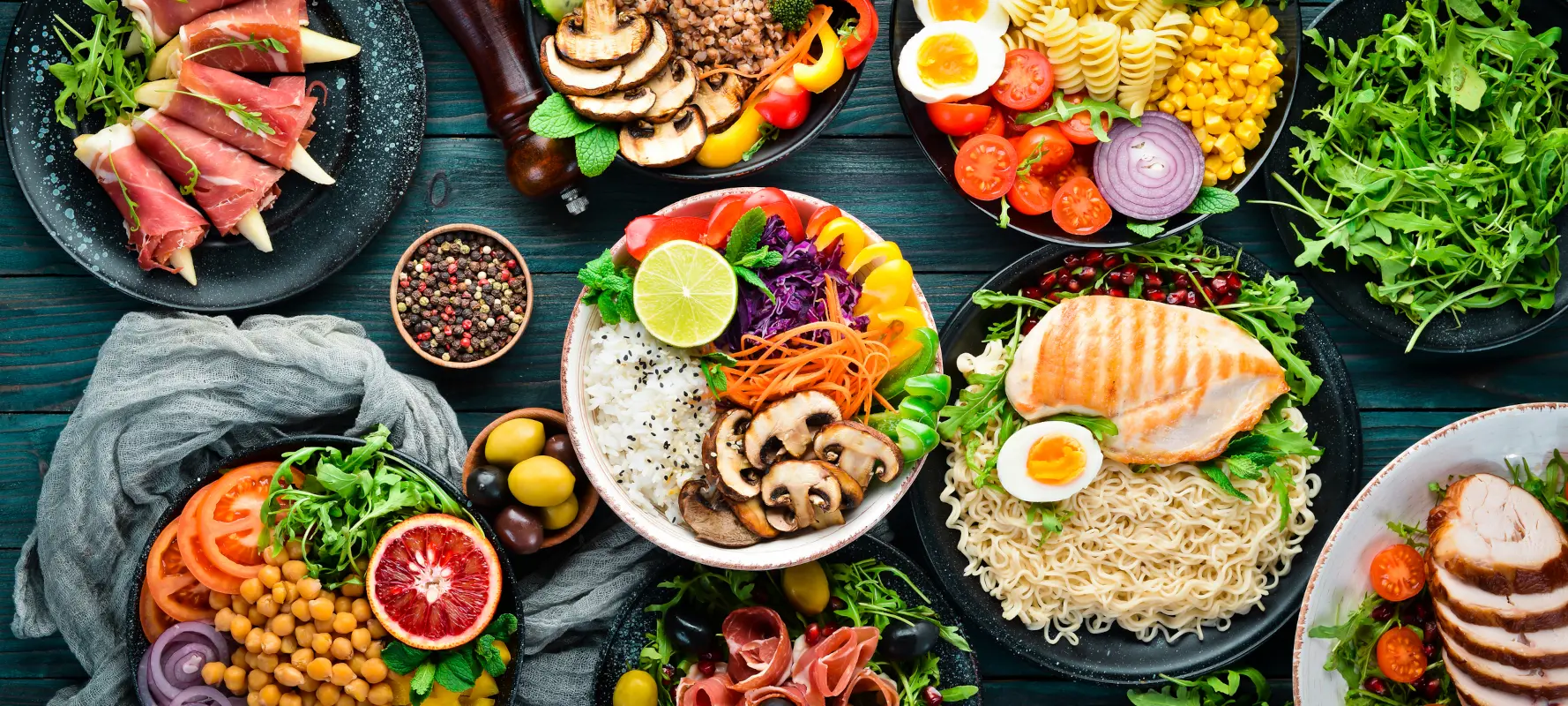
ID 164632471 | Food ©Nataliia Mysak | Dreamstime.com
Easy Food Trivia Questions and Answers
The first 70 questions are meant to give you plenty of correct answers without becoming ridiculously easy. If you’re looking for easy food trivia for adults, a family game or a relaxed food trivia game night, this is a good place to start.
You’ll find familiar dishes, ingredients, brands and foods from several countries. Some answers should come immediately. Others may take a few seconds, which is much more fun than being asked what color a banana is.
1. What fruit is the main ingredient in guacamole?
Answer: Avocado.
2. What pale-green condiment with a sharp, sinus-clearing heat is commonly served with sushi?
Answer: Wasabi.
3. Venison is the culinary name for the meat of which animal?
Answer: Deer.
4. Which herb gives traditional Genovese pesto its characteristic green color?
Answer: Basil.
5. What cooking step gives a traditional bagel its distinctive chewy crust before it goes into the oven?
Answer: Boiling. Bagels are briefly boiled before baking, which helps create their characteristic chewy exterior.
6. Paella is most closely associated with which Spanish city and surrounding region?
Answer: Valencia. The traditional Valencian version is only one of many styles you may encounter among the Spanish foods worth trying.
7. Which creamy Italian cheese is traditionally used in tiramisu?
Answer: Mascarpone.
8. What legume forms the base of classic hummus?
Answer: Chickpeas.
9. Which McDonald’s burger has two beef patties, special sauce and a three-part bun?
Answer: Big Mac.
10. The spice cinnamon is made mainly from which part of a tree?
Answer: Bark.
11. Which snack is made when certain corn kernels burst open as they’re heated?
Answer: Popcorn. Water trapped inside the kernel turns to steam, pressure builds, and eventually the kernel bursts open.
12. What liquid is collected from maple trees and boiled down to make maple syrup?
Answer: Maple sap.
13. Which salty white cheese is strongly associated with Greek cuisine and is commonly stored in brine?
Answer: Feta.
14. What is the name of the edible seaweed sheet commonly wrapped around sushi rolls?
Answer: Nori.
15. Which part of the egg is whipped to make a classic meringue?
Answer: Egg whites.
16. What flaky crescent-shaped pastry is a breakfast classic in France?
Answer: Croissant.
17. Which hard Italian cheese is commonly grated over pasta and risotto?
Answer: Parmesan.
18. What round Middle Eastern flatbread can puff up to form a pocket?
Answer: Pita.
19. Which white fish is one of the classic choices for British fish and chips?
Answer: Cod. Haddock is another traditional choice. If this question made you hungry, you can also make fish and chips at home.
20. The Whopper is the signature burger of which fast-food chain?
Answer: Burger King.
21. What noodle soup is commonly served in a savory broth with toppings such as sliced pork, scallions or egg?
Answer: Ramen.
22. What sandwich cookie is famous for its dark wafers and white cream filling?
Answer: Oreo.
23. Which candy combines a chocolate cup with a peanut-butter center?
Answer: Reese’s Peanut Butter Cups.
24. Chocolate begins with seeds from the fruit of which tropical tree?
Answer: Cacao tree.
25. Polenta is traditionally made from which ground grain?
Answer: Cornmeal.
26. What bean is used to make tofu?
Answer: Soybean.
27. Which vegetable is fermented to make sauerkraut?
Answer: Cabbage.
28. Which short-grain rice variety is one of the best-known choices for risotto?
Answer: Arborio rice.
29. What fresh Italian cheese is the classic filling for many cannoli?
Answer: Ricotta.
30. Couscous is traditionally made from granules of which wheat product?
Answer: Semolina.
31. Which crunchy vegetable is mixed with yogurt and garlic in classic tzatziki?
Answer: Cucumber.
32. Which meringue dessert named after ballerina Anna Pavlova is usually topped with whipped cream and fruit?
Answer: Pavlova. It looks impressive, but it’s a dessert you can make at home too. This Pavlova recipe is one of the international recipes on my site.
33. What Korean dish usually combines rice with assorted vegetables, meat or egg and a spicy sauce?
Answer: Bibimbap.
34. Which Australian cake is usually coated in chocolate and desiccated coconut?
Answer: Lamington. It’s one of several well-known Australian foods.
35. Poutine, made with fries, cheese curds and gravy, is associated with which country?
Answer: Canada, particularly Quebec.
36. What baked snack is traditionally twisted into a knot-like shape and often sprinkled with coarse salt?
Answer: Pretzel.
37. Pho is most closely associated with which country?
Answer: Vietnam.
38. Which small citrus fruit gives Key lime pie its name?
Answer: Key lime.
39. Satay is typically cooked on what before it’s served?
Answer: Skewers.
40. Which flour is used to make the shells of classic French macarons?
Answer: Almond flour.
41. What gives sushi rice its characteristic tangy seasoning?
Answer: Rice vinegar. It’s generally combined with sugar and salt before being mixed with the cooked rice.
42. Dulce de leche is made by slowly heating which two basic ingredients?
Answer: Milk and sugar.
43. What starchy vegetable is the main ingredient in many versions of Italian gnocchi?
Answer: Potato.
44. How is gazpacho traditionally served?
Answer: Chilled.
45. Which tart green fruit is a classic base for Mexican salsa verde?
Answer: Tomatillo.
46. What buttery sauce is traditionally spooned over eggs Benedict?
Answer: Hollandaise.
47. Which setting agent is commonly used in modern marshmallows?
Answer: Gelatin.
48. What chocolate-hazelnut spread was created by the Ferrero company?
Answer: Nutella.
49. What finely ground Japanese green tea is used both as a drink and in desserts?
Answer: Matcha.
50. The chicken wings that carry an upstate New York city’s name were popularized in which city?
Answer: Buffalo, New York.
51. What concentrated coffee is made by forcing hot water through finely ground coffee under pressure?
Answer: Espresso.
52. Which U.S. city gives the cheesesteak its best-known name?
Answer: Philadelphia.
53. Which spice gives traditional Hungarian goulash much of its characteristic red color and flavor?
Answer: Paprika. It plays an important role in a traditional Hungarian goulash, although different varieties of paprika can change both the color and flavor.
54. Jambalaya is strongly associated with the cuisine of which U.S. state?
Answer: Louisiana.
55. Which crisp pancakes are traditionally eaten during Hanukkah?
Answer: Latkes.
56. What shredded salad, often served with barbecue, is usually dressed with mayonnaise or vinegar?
Answer: Coleslaw.
57. What two ingredients form the heart of a classic Spanish tortilla?
Answer: Eggs and potatoes.
58. What Italian frozen dessert is churned with less air than typical American-style ice cream?
Answer: Gelato.
59. Which type of cracker is commonly crushed to make an American cheesecake crust?
Answer: Graham crackers.
60. Which French dessert has a custard base topped with a thin layer of hardened caramelized sugar?
Answer: Crème brûlée.
61. What Mexican dish folds a tortilla around melted cheese and may include other fillings?
Answer: Quesadilla.
62. Which green chile is the classic spicy topping on the original nachos?
Answer: Jalapeño.
63. Which Indian flatbread is traditionally baked against the hot wall of a tandoor?
Answer: Naan.
64. Which pie made from orange winter squash is a U.S. Thanksgiving classic?
Answer: Pumpkin pie. If holiday food is your strongest subject, there are plenty more food and tradition questions in my Thanksgiving trivia.
65. What do British diners commonly call what Americans call French fries?
Answer: Chips. And what Americans call chips are generally called crisps in the UK.
66. In the sandwich name BLT, what do the three letters stand for?
Answer: Bacon, lettuce and tomato.
67. What airy baked side dish made from batter is a traditional partner for a British roast?
Answer: Yorkshire pudding.
68. Which soft fresh cheese is the base of most American-style cheesecakes?
Answer: Cream cheese.
69. Which candy is known for the slogan “Melts in your mouth, not in your hands”?
Answer: M&M’s.
70. What Thai stir-fried noodle dish is usually flavored with tamarind and often topped with peanuts?
Answer: Pad Thai.
Medium Food Trivia Questions and Answers
It’s time to move to move to the medium food trivia questions – they are still not complicated, as you will see. The foods are still familiar, but now you’ll need more knowledge about ingredients, cooking, world cuisines, and what actually happens to food when we prepare it.
I like trying new spices, so this is also the part of the quiz I find especially interesting. I’ve discovered spices I enjoy and others that simply aren’t to my taste, but I like finding out what they are and how they’re used. These general knowledge food trivia questions mix that kind of curiosity with food and drink trivia, desserts and dishes from around the world.
71. Which microorganism makes bread dough rise by producing carbon dioxide during fermentation?
Answer: Yeast.
72. Which breaded cutlet, usually made from veal or pork and fried until golden, is one of Austria’s best-known dishes?
Answer: Schnitzel. Note: In my country, we make schnitzel from chicken too (and it tastes amazing!).
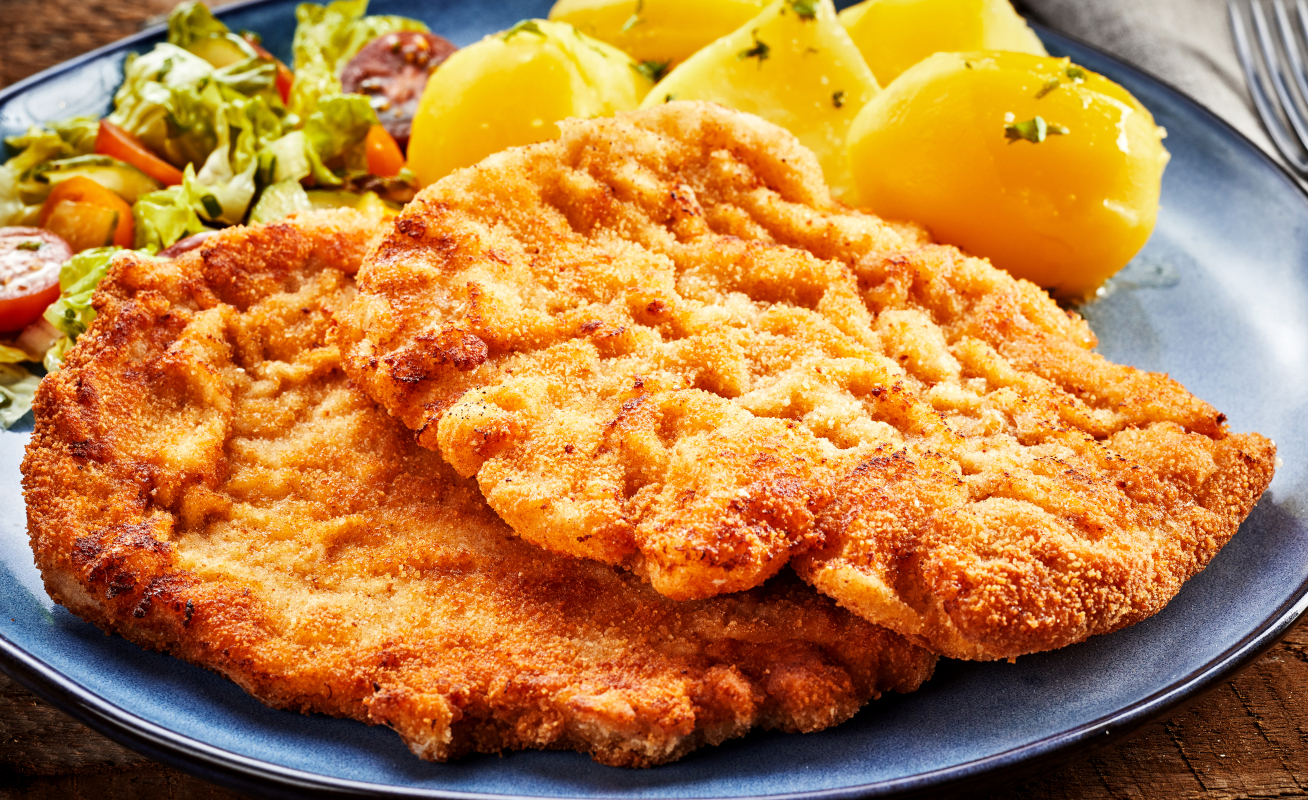
ID 87430090 | Food ©stockcreations | Dreamstime.com
73. What compound is responsible for the burning sensation from hot chile peppers?
Answer: Capsaicin.
74. Which Indian cooking fat is made by clarifying butter until the milk solids are removed?
Answer: Ghee.
75. Which natural substance in many fruits helps jams and jellies set?
Answer: Pectin.
76. A classic roux is made by cooking together which two ingredients?
Answer: Flour and fat.
77. What is the name of the final rise a bread dough goes through before baking?
Answer: Proofing.
78. What does a julienne cut make food resemble?
Answer: Thin matchsticks.
79. What makes choux pastry puff dramatically even though it contains no baking powder?
Answer: Steam. Water in the dough turns to steam in the oven and expands, helping create the hollow interior.
80. What technique briefly immerses food in very hot water and then rapidly cools it, usually in ice water?
Answer: Blanching.
81. What pastry is made by repeatedly folding layers of dough and fat to create a flaky structure?
Answer: Puff pastry.
82. When pasta is cooked al dente, how should it feel when bitten?
Answer: Firm to the bite.
83. What two ingredients make a basic chocolate ganache?
Answer: Chocolate and cream.
84. In cooking, what is zest?
Answer: The colored outer peel of a citrus fruit.
85. What traditional English dessert layers sponge cake, fruit, custard and whipped cream?
Answer: Trifle.
86. What kitchen technique cooks a container of food gently inside a larger pan of hot water?
Answer: Bain-marie, or water bath.
87. What Italian dessert is made by gently cooking sweetened cream and setting it until softly firm?
Answer: Panna cotta. Its name means “cooked cream.”
88. Which three vegetables make up the classic French mirepoix?
Answer: Onion, carrot and celery.
89. What classic American snack mixes caramel-coated popped corn with peanuts?
Answer: Cracker Jack.
90. Which paper-thin pastry is layered with nuts and syrup or honey in many versions of baklava?
Answer: Phyllo dough.
91. Tahini is a paste made from which seeds?
Answer: Sesame seeds.
92. A traditional dosa batter is made mainly from rice and which type of pulse?
Answer: Black gram, also known as urad dal.
93. Juniper berries provide the defining botanical flavor of which spirit?
Answer: Gin.
94. Gochujang is a fermented chile paste from which country?
Answer: South Korea.
95. What citrus fruit gives Earl Grey tea its distinctive aroma?
Answer: Bergamot.
96. Which fresh herb usually forms the green base of Argentine chimichurri?
Answer: Parsley.
97. Which small fish is traditionally included in Worcestershire sauce?
Answer: Anchovies.
98. Which fresh Indian cheese keeps its shape when heated and is common in dishes such as palak paneer?
Answer: Paneer. If you’re still getting to know the cuisine, this introduction to Indian food includes many more dishes and ingredients.
99. What bitter compound gives tonic water its characteristic taste?
Answer: Quinine.
100. What type of rice is pounded to make traditional Japanese mochi?
Answer: Glutinous rice. Despite the name, “glutinous” refers to its sticky texture, not to gluten.
101. Black, green, oolong and white tea all come from which plant species?
Answer: Camellia sinensis. The differences come largely from how the leaves are grown and processed.
102. What bowl-shaped Sri Lankan pancake is made from a fermented rice-flour batter, often with coconut milk?
Answer: Hopper. Egg hoppers are just one of the foods you may encounter while exploring Sri Lankan food.
103. Despite its name, a coffee “bean” is botanically what part of the fruit?
Answer: Seed.
104. Which generally contains more caffeine by weight: Arabica or Robusta coffee?
Answer: Robusta.
105. What cocoa-derived fat is the defining cocoa ingredient in white chocolate?
Answer: Cocoa butter.
106. What reaction creates many of the browned, roasted flavors on seared meat and toasted bread?
Answer: Maillard reaction. It involves reactions between amino acids and certain sugars and produces a huge range of aromas and flavors.
107. What Italian dessert is made by pouring a shot of very strong hot coffee over a scoop of ice cream?
Answer: Affogato.
108. Which famous American cook and television personality helped popularize French cooking in U.S. homes?
Answer: Julia Child.
109. Vanilla pods grow on what type of flowering plant?
Answer: Orchid.
110. What red-purple vegetable is used to give classic Ukrainian borscht its distinctive color in many recipes?
Answer: Beetroot, or beets.
111. The red threads sold as saffron are which part of the crocus flower?
Answer: Stigmas. Each flower produces only a few, which helps explain why harvesting saffron requires so much work.
112. What tangy Greek soup is thickened with egg and flavored with lemon?
Answer: Avgolemono.
113. Cloves are actually dried unopened what?
Answer: Flower buds.
114. Which round Dutch cheese is widely recognized by its traditional red wax coating?
Answer: Edam.
115. What is mace in relation to nutmeg?
Answer: The lacy aril surrounding the nutmeg seed. Mace and nutmeg come from different parts of the same fruit.
116. Which flour is traditionally used for Japanese soba noodles?
Answer: Buckwheat flour.
117. Black peppercorns are dried fruits that botanically are what?
Answer: Berries.
118. Botanically, an almond is the edible kernel inside what type of fruit?
Answer: Drupe.
119. Which Singapore favorite pairs tender chicken with fragrant seasoned rice and dipping sauces?
Answer: Hainanese chicken rice. It’s one of the foods included among these Singaporean dishes.
120. Bell peppers, tomatoes and eggplants all belong to which botanical family?
Answer: The nightshade family, Solanaceae.
121. What sharp aged sheep’s-milk cheese is traditionally grated over Roman dishes such as cacio e pepe?
Answer: Pecorino Romano. If you know your pasta, coffee and dining customs too, the dedicated Italian food trivia goes much deeper into Italian food culture.
122. Ginger is an underground plant stem called what?
Answer: Rhizome.
123. The part of an asparagus plant we eat is a young what?
Answer: Shoot.
124. The familiar cashew nut grows attached to a fleshy structure commonly called what?
Answer: Cashew apple.
125. What sweet-tart syrup made from reduced pomegranate juice is used in many Middle Eastern dishes?
Answer: Pomegranate molasses.
126. Which pigment gives turmeric its bright yellow-orange color?
Answer: Curcumin.
127. In ceviche, what acidic ingredient changes the texture and appearance of raw seafood?
Answer: Citrus juice. The acid denatures proteins in the seafood, changing its texture even though no heat is applied.
128. The tiny dot-like structures on the outside of a strawberry are actually small dry fruits called what?
Answer: Achenes.
129. Poke is a dish most closely associated with which U.S. state?
Answer: Hawaii.
130. What aromatic compound is largely responsible for the characteristic flavor of vanilla?
Answer: Vanillin.
131. Which part of rhubarb is normally eaten?
Answer: Stalk.
132. Which seed-derived seasoning gives Guam’s traditional red rice its characteristic color?
Answer: Annatto. Red rice is one of several foods included among these Guamanian dishes.
133. What do you call soaking food in a seasoned saltwater solution before cooking?
Answer: Brining.
134. What process gives sour cream its tangy flavor and thicker texture?
Answer: Lactic fermentation.
135. Which Italian cured ham is typically sliced paper-thin and served uncooked?
Answer: Prosciutto.
136. A pineapple develops from many flowers whose fruits fuse together, making it what type of fruit?
Answer: Multiple fruit.
137. What peppery salad leaf is commonly called “rocket” in the UK and Australia?
Answer: Arugula.
138. Peanuts belong to which plant family rather than the tree-nut family?
Answer: Legume.
139. What fermented paste gives many Japanese soups and sauces their deep savory flavor?
Answer: Miso.
140. Botanically, which familiar curved yellow fruit is classified as a berry?
Answer: Banana. Botanical definitions don’t always match the way we use fruit names in everyday life.
Hard Food Trivia Questions and Answers
ID 465383959 | Food ©Maria Saifutdinova | Dreamstime.com
If you are still reading this post and going all the way through the end, I am congratulating you! As you saw, by question 141, the easy wins are behind you. These hard food trivia questions and answers I have included below take you through food history, brand stories, international dishes, and some lesser-known facts, but I still tried to keep this food trivia accessible.
Some of my friends are much more skilled cooks than I am, and I didn’t want this section to become the kind of quiz only they could answer. The food history trivia questions below are harder because the facts are less familiar, not something we talk about or think about every day.
141. Who is most commonly credited with creating the Caesar salad at his restaurant in Tijuana in the 1920s?
Answer: Caesar Cardini. There are competing versions of the salad’s early history, which is why “most commonly credited” matters here.
142. Which Romanian spirit is traditionally distilled from plums?
Answer: Țuică. (OK, I had to include a Romanian-related question in here. It is ok if you don’t know about this drink – you can always try it when you visit. I promise, the next questions are less niche:D)
143. German chocolate cake was named for which American baker and chocolate maker rather than for Germany?
Answer: Samuel German.
144. Which canned meat product introduced by Hormel in 1937 became especially important to Allied troops during World War II?
Answer: SPAM.
145. The sandwich is traditionally named after which 18th-century English nobleman?
Answer: John Montagu, 4th Earl of Sandwich.
146. Which French pastry was named for a bicycle race between Paris and Brest?
Answer: Paris-Brest. Its circular shape is often compared to a bicycle wheel.
147. Which now-classic cookie was popularized by Ruth Wakefield at the Toll House Inn in the 1930s?
Answer: Chocolate chip cookie. The Library of Congress notes that Wakefield’s 1938 cookbook contains what food historians consider the first published chocolate chip cookie recipe.
148. What red food coloring can be made from cochineal insects?
Answer: Carmine.
149. What frozen treat is associated with Frank Epperson’s early frozen drink-on-a-stick idea?
Answer: Popsicle.
150. What style of coffee is traditionally brewed unfiltered in a small cezve or ibrik?
Answer: Turkish coffee.
151. Which breakfast cereal is associated with brothers John and Will Kellogg and their work at a Michigan sanitarium?
Answer: Corn Flakes.
152. What is a wine called when cork taint gives it musty, damp-cardboard aromas?
Answer: Corked.
153. What kitchen appliance did Percy Spencer help pioneer after noticing a candy bar melting near microwave-generating equipment?
Answer: Microwave oven. Smithsonian recounts the famous melted-candy-bar episode from Spencer’s work with magnetrons.
154. What process is used in chocolate making to refine texture and develop flavor by prolonged mixing and aeration?
Answer: Conching.
155. Which food-preservation technology is Clarence Birdseye famous for developing commercially?
Answer: Quick freezing.
156. Which fizzy citrus soft drink began as a mixer for whiskey in Tennessee?
Answer: Mountain Dew.
157. What preservation method did Nicolas Appert pioneer by heating food in sealed containers?
Answer: Canning.
158. What Mexican sauce can combine chiles, spices, nuts or seeds and, in some versions, chocolate?
Answer: Mole. There are many different types of mole, so chocolate isn’t an ingredient in every version.
159. What food-preservation process is named after Louis Pasteur?
Answer: Pasteurization.
160. What classic French dish braises chicken in wine with ingredients such as mushrooms and bacon?
Answer: Coq au vin.
161. Which convenience food did Momofuku Ando introduce in 1958?
Answer: Instant noodles.
162. Which Australian spread is made from a concentrated extract left from brewing beer?
Answer: Vegemite.
163. Which fairground sweet was once promoted as “fairy floss” after a machine for making it was patented by William Morrison and John C. Wharton?
Answer: Cotton candy.
164. Which Italian sparkling wine is made primarily from the Glera grape?
Answer: Prosecco.
165. Which country is associated with Daniel Peter’s development of milk chocolate in the 1870s?
Answer: Switzerland.
166. What informal British name is commonly used for sausages?
Answer: Bangers.
167. What was the fermented fish sauce widely used in ancient Roman cooking called?
Answer: Garum.
168. What Spanish fried dough is often served with sugar and sometimes dipped in thick chocolate?
Answer: Churros.
169. What braided enriched bread is traditionally associated with Jewish Sabbath meals?
Answer: Challah.
170. Which Greek anise-flavored spirit often turns cloudy when water is added?
Answer: Ouzo.
171. Which layered French dessert uses almond sponge, coffee syrup, buttercream and chocolate ganache?
Answer: Opera cake.
172. Which spice blend from Morocco can contain a long list of spices and has a name meaning “head of the shop”?
Answer: Ras el hanout. The exact blend varies, so there isn’t one universal ingredient list.
173. Which bitter red Italian aperitif is one of the three equal parts in a classic Negroni?
Answer: Campari.
174. What French dish of vegetables traditionally includes eggplant, zucchini and tomatoes?
Answer: Ratatouille.
175. Which Japanese batter-fried dish was influenced by Portuguese cooking techniques introduced in the 16th century?
Answer: Tempura.
176. What Mexican street food consists of corn on the cob dressed with toppings such as mayonnaise, cheese, chile and lime?
Answer: Elote.
177. Which cocoa compound is one reason chocolate is dangerous for dogs?
Answer: Theobromine.
178. Which Indonesian dish slowly cooks beef with coconut milk and spices until it becomes deeply flavored and nearly dry?
Answer: Beef rendang. It takes time, but you can also make beef rendang at home.
179. Which cooking method browns food rapidly under intense heat from above?
Answer: Broiling.
180. What type of sour, spongy flatbread is central to Ethiopian and Eritrean meals?
Answer: Injera.
The Final Food Trivia Challenge
The final 20 questions are deliberately unpredictable. You may get a cheese question followed by food science, Roman cooking, a Balkan condiment or a French sauce. I prefer the ending this way because you can’t settle into one subject and guess what will come next.
This is the hardest food trivia in the article, but the goal is still a satisfying challenge rather than obscure knowledge for its own sake. If you reach question 200 with a high score, you’ve covered a surprisingly wide range of food knowledge.
181. What is the title of the 1796 book widely recognized as the first cookbook written by an American and published in the United States?
Answer: American Cookery. The Library of Congress describes Amelia Simmons’s book as the first American cookbook written and published in the United States.
182. Capers are the pickled, unopened buds of what kind of plant structure?
Answer: Flowers.
183. Which Balkan condiment is made primarily from roasted red peppers and is often spread on bread or served with grilled meat?
Answer: Ajvar.
184. How many sauces are traditionally counted among the classic French mother sauces?
Answer: Five.
185. Manchego cheese is traditionally made from the milk of which animal?
Answer: Sheep.
186. Which classic French mother sauce is made from milk thickened with a white roux?
Answer: Béchamel.
187. Which mold, also called koji mold, is central to converting starches during sake production?
Answer: Aspergillus oryzae.
188. Which Sicilian snack consists of breaded, fried rice balls often filled with ragù and cheese?
Answer: Arancini.
189. Michelin began awarding restaurant stars in which decade?
Answer: The 1920s. Michelin introduced its first restaurant stars in 1926, with the three-star hierarchy following later.
190. Which method preserves meat by slowly cooking it and traditionally storing it in fat?
Answer: Confit.
191. Modern marshmallows take their name from a plant used in much older versions of the confection. What plant is it?
Answer: Marsh mallow.
192. Truffles belong to which major group of organisms?
Answer: Fungi.
193. Traditional caviar comes from the eggs of which family of fish?
Answer: Sturgeon.
194. Which tiny ancient grain native to Ethiopia is widely used in traditional flatbreads?
Answer: Teff.
195. Which compound forms when garlic is chopped or crushed and contributes strongly to its pungent aroma?
Answer: Allicin. Crushing or chopping damages the plant cells and triggers the reaction that produces it.
196. Peking duck takes its English name from an older English rendering of which city’s name?
Answer: Beijing.
197. Which Cypriot brined cheese is famous for keeping its shape when grilled?
Answer: Halloumi.
198. What protein network gives wheat dough its elasticity and helps it trap gas as it rises?
Answer: Gluten.
199. Which ancient Roman recipe collection is traditionally associated with the name Apicius?
Answer: De re coquinaria.
200. What cooking technique seals food in a bag and cooks it in precisely temperature-controlled water?
Answer: Sous vide.
How Many Food Trivia Questions Did You Get Right?
If you answered all 200 before checking the answers, I hope you kept score. I also hope at least a few questions made you say, “I knew that!” about two seconds after you saw the answer.
0–50 correct: You found plenty of new foods and facts along the way. Now you also have a very long list of things you could taste.
51–100 correct: You have a good base of everyday food knowledge, and you probably did particularly well in a few categories.
101–140 correct: Very good. You know far more than the obvious dishes, ingredients and brands.
141–170 correct: That’s an impressive score. I would definitely want you on my team during a food trivia night.
171–190 correct: Excellent. Food history, ingredients, cooking and international cuisine clearly didn’t intimidate you.
191–200 correct: That’s exceptional. At this point, you may need to be the person hosting the next quiz rather than playing it.
Ways to Use These Food Trivia Questions
You don’t have to play all 200 questions at once. For a casual food trivia game night, choose 20 to 30 and mix easy, medium and hard questions. If everyone still wants another round afterward, you can change the subject completely with a general knowledge quiz.
For a longer game, divide players into teams of two to four and use several rounds of 10 questions. I would give one point for every correct answer rather than making hard questions worth more. That keeps the scoring easy and means every question counts the same.
You can also build themed rounds from the complete list. Use the Italian questions and then continue with a full round of Italy trivia, or collect questions about Spain, France, Hungary, the UK and other European countries for a food-and-travel game.
Food trivia works well for team building too because different people usually know very different things. Someone may recognize every American brand while another person knows international dishes, baking or ingredients. If travel knowledge turns out to be the strongest category in your group, an Europe travel trivia round can continue the game.
For a pub quiz, I would use mostly medium and hard questions with a few easier ones scattered through the round. Ten questions are enough for a short food category, while 20 gives you room to mix brands, history, world cuisine, desserts and cooking without spending too long on one subject.
Conclusion
Food is one of those subjects where you can know a lot and still discover something new all the time. You can eat a dish for years without knowing where its name came from, use a spice without knowing which part of a plant it is, or discover that something familiar has a much stranger history than you expected.
That’s one reason I enjoy trying local dishes when I travel and then sometimes preparing them at home. The food itself can become part of the memory of a destination. And when you’re actually eating out abroad, knowing a little about local customs can be useful too – Italian dining etiquette is a good example of how much can vary from one country to another.
I hope these 200 food trivia questions gave you a few surprises, some satisfying answers and perhaps a dish or two that you now want to try. Most of all, I hope you have fun using them with your friends or family.
Food Trivia Questions: Common Questions
What makes a good food trivia question?
A good food trivia question asks about something people have a reasonable chance of recognizing without giving away the answer. It can involve a familiar dish, ingredient, brand, cuisine or cooking method, but there should still be something to work out or remember.
What makes a hard food trivia question fair?
A difficult question should test knowledge rather than obscurity. Food history, recognizable ingredients, famous dishes and cooking science can all make excellent hard questions because the answer usually feels familiar once it’s revealed, even if you couldn’t remember it in time.
How many food trivia questions do you need for a game night?
Around 20 to 30 questions can work well for a relaxed game. For a longer trivia night, use 40 to 60 questions divided into rounds. This collection of 200 gives you enough material to create several different games without repeating the same facts.
What are good categories for food trivia?
Popular categories include everyday foods, American food, international cuisine, desserts and candy, fast food and brands, fruits and vegetables, cooking and baking, spices and ingredients, food history and food science. Mixing categories makes a game less predictable and gives different players a chance to do well.
Are these food trivia questions suitable for kids?
The easy section is the best place to start with younger players, although this quiz was created for a general audience rather than specifically for children. Mixed-age teams can also work well, especially if adults and kids have different areas of knowledge.
More amazing articles for you:
Mountain Climbing: Tips For Beginners
An American Visited 3 of Italy’s Most Famous Cities and Called the Country “Trash.” People Absolutel...
150 Halloween Would You Rather Questions: Funny, Spooky, Creepy & Hard
A complete travel guide to Arches National Park, USA
A guide to Turin (Torino)
Japan Etiquette Guide 2026: 8 Critical Mistakes That Get Tourists Shamed (and How to Avoid Fines)
Famous City or Destination Dupe? Read This Before You Book the Trip Everyone Says Is Smarter
Insider's guide to Manchester with the best things to do in Manchester, hotels, restaurants, and mor...

Violeta-Loredana Pascal is a communications expert, business mentor, and the founder of Earth’s Attractions and PRwave INTERNATIONAL. A pioneer in the Romanian digital PR landscape since 2005, she holds a degree in Communication and Social Sciences from SNSPA Bucharest. Violeta is a senior trainer at AcademiadeAfaceri.ro, where she leverages over 20 years of experience to teach professional courses in PR strategy and workplace productivity. By blending high-level business consulting with a passion for holistic travel and wellness, she empowers solopreneurs to overcome procrastination, build profitable brands, and design a life of purposeful adventure.