Romania is my country, and over the years I have spent time with several Americans who came here for holidays, work, or longer visits. They stayed in hotels, but we joined some of them on city tours, visited attractions and other places together, and helped others choose day trips to destinations such as Bran Castle, Peleș Castle, and Brașov.
Hearing their reactions made me notice how many details I had always taken for granted.
Many Americans arrive in Romania with a few familiar images in mind: Dracula, castles, communist-era apartment buildings, and perhaps a country that will feel less modern or more difficult to travel around than Western Europe. Romania certainly has castles and visible traces of its communist past, but those are only a small part of what visitors encounter.
What shocks Americans when visiting Romania is often found in everyday life: how safe many places feel, how late families stay outside during summer, how direct people can be, how small the cars and parking spaces are, how many cakes and pastries we have, and how quickly a trip can move between modern cities, medieval towns, mountain roads, villages, beaches, and enormous monuments.
Some of these surprises are delightful, while a few require a little adjustment. Many simply reflect the differences between life in Romania and life in the United States.
Based on the reactions I have heard directly from Americans visiting Romania, here are the cultural, practical, and everyday differences that stood out most.
ID 46760909 ©Sorin Colac | Dreamstime.com
1. Romania Feels Safer Than Many Americans Expect
One of the first surprises Americans mention is how safe Romania feels. They notice people walking in the evening, families spending time in parks long after dinner, and children still playing outside at 10 or even 11 p.m. during summer.
So, is Romania safe for American tourists? No country is crime-free, and visitors should still pay attention to their belongings in crowded places. However, Romania is currently listed at Level 1: Exercise Normal Precautions by the U.S. Department of State.
The sense of safety in public spaces – especially in pedestrian areas, old town squares, parks, and many residential neighborhoods – is often a welcome surprise. Americans who are used to car-centered cities or areas where they would not walk after dark notice the contrast quickly.
In Romanian cities, it is common to see people of all ages taking an evening walk, buying ice cream, sitting on a terrace, or enjoying a park after sunset. The relaxed atmosphere is one of the first things several American visitors we know commented on.
2. Romania Is More Modern Than Visitors Expect
Many Americans arrive imagining an older, slower, post-communist country. They quickly discover that Romania blends old and new in ways that are hard to understand until you see them together.
Historic buildings sit beside glass office towers. Medieval streets lead to modern shopping malls. Family-owned stores coexist with technology companies, coworking spaces, specialty coffee shops, and new residential developments.
Romania is also known for fast and relatively affordable internet access. Even though coverage and quality vary, as they do everywhere, visitors are often surprised by the connection speeds available in cities and in many smaller communities.
This mix is one of Romania’s defining features. You can see communist-era apartment blocks beside modern complexes, centuries-old churches near stylish restaurants, and cobblestone centers surrounded by contemporary neighborhoods.
The Romania many Americans encounter is far more modern, connected, and varied than the image they had before arriving.
3. More People Speak English Than Americans Expect
Another positive surprise is how easy it can be to communicate in English, especially in Bucharest, Brașov, Sibiu, Cluj-Napoca, and other major tourist destinations.
The Americans we spent time with could generally use English in hotels, restaurants, museums, stores, and popular attractions. Younger Romanians often speak very good English, and many people have learned it through school, television, films, music, the internet, work, and travel.
That does not mean every person in Romania speaks English. Communication may be more difficult in villages, smaller towns, local markets, or when speaking with older residents. Learning a few Romanian words is always appreciated.
Still, Americans who expect a difficult language barrier are often relieved by how easily they can ask for directions, order food, book a tour, or have a longer conversation.
4. The Hospitality Is Warm, Generous, and Deeply Rooted
It is hard to talk about Romania without mentioning hospitality. The Americans we know often remembered it as one of the most enjoyable cultural differences.
I would add that it can feel even more striking in smaller cities and villages.
Romanian hospitality often means:
- large meals, even when you insist you are not hungry
- homegrown vegetables, homemade wine, and elaborate home cooking
- invitations to family gatherings
- people going out of their way to help
- treating guests as if they are part of the family
When a Romanian family welcomes a guest, food appears quickly and refusing the second or third serving may become a friendly negotiation.
For Americans accustomed to more scheduled visits or lighter refreshments, the generosity can feel almost overwhelming at first – but it is usually remembered with affection.
5. Romania Can Feel Surprisingly Affordable to American Visitors
Costs have risen in Romania, as they have in many countries, but American visitors are still often surprised by how far their travel budget can go compared with many destinations in the United States or Western Europe.
The Americans we interacted with commented on the price of:
- restaurants
- groceries
- bakeries and pastries
- museum tickets
- public transportation
- intercity trains
- fresh produce in markets
- taxis and ride-hailing services
This does not mean Romania is cheap for the people who live here. Romanian salaries are lower, and rising prices affect locals very differently.
From an American travel-budget perspective, however, Romania can offer very good value. Visitors may feel more comfortable ordering an extra appetizer, stopping for coffee and cake, entering another museum, or choosing a lovely hotel without reaching the prices they expected.
6. Romania Loves Sweets – and Americans Notice
This is one of the funniest and most consistent reactions I have heard: Americans are surprised by how many cakes, pastries, and desserts Romania has.
Several visitors told us variations of the same thing:
- “I can’t believe how many cakes there are!”
- “I tried a different dessert every day!”
- “There are bakeries everywhere!”
Romania has a deeply rooted dessert culture, both at home and in shops. You will find:
- cozonac
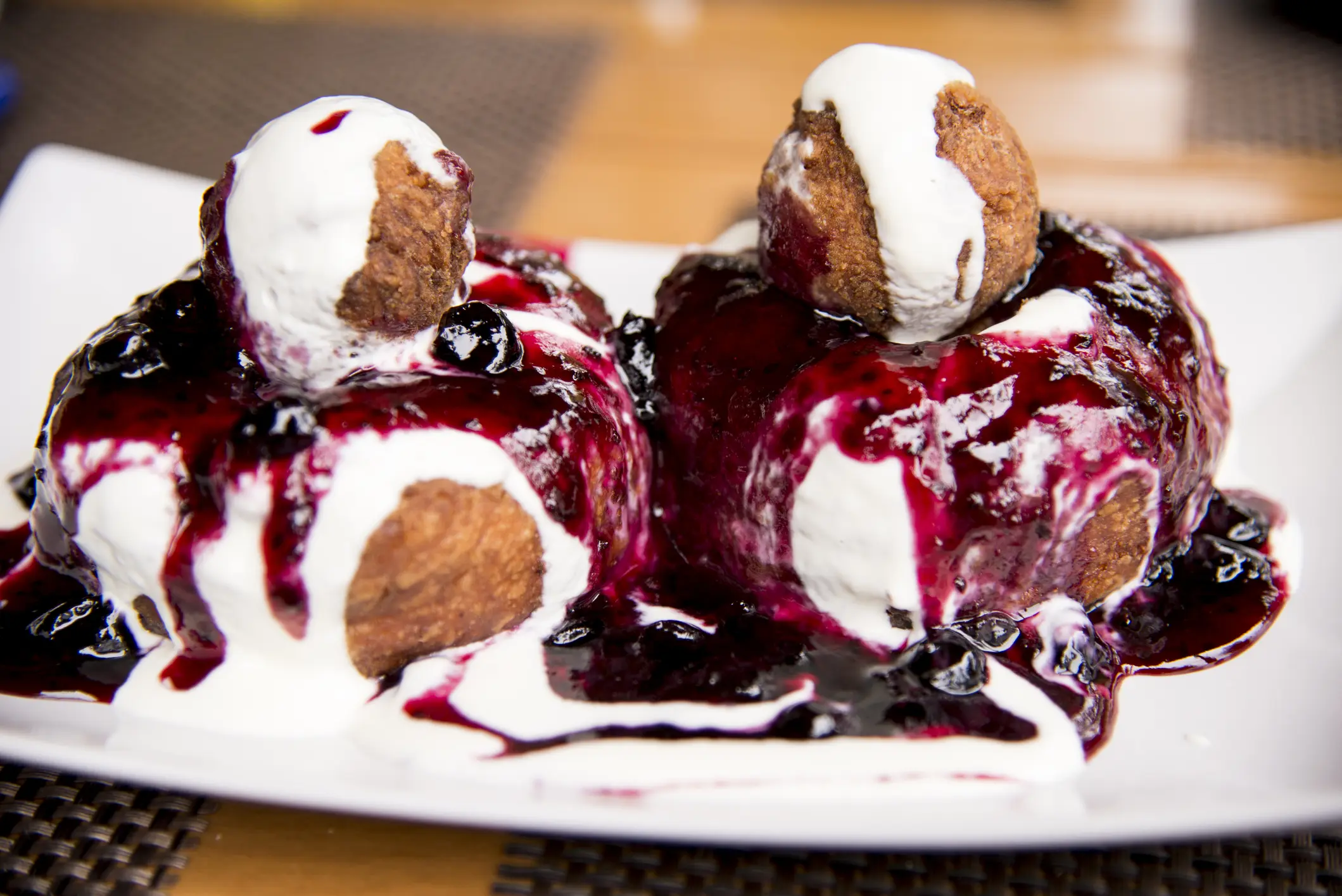
- papanași
- savarină
- amandină
- French-inspired cakes
- cream-filled pastries
- fruit tarts
- multilayered chocolate creations
- bakery and cake-shop counters with an impressive number of choices
Romania even has what is sometimes described in English as a “funeral cake”: colivă. It is a sweet ritual dish made with boiled wheat, sugar, walnuts, and flavorings that may include cocoa, vanilla, lemon, or rum essence. It is traditionally prepared for funerals and memorial services, but many Romanians genuinely like its taste. You can also find versions sold as desserts outside those occasions.
ID 122359403 ©Adfoto | Dreamstime.com
Even small towns usually have at least one cofetărie, or cake shop. And when visiting family, expect dessert even when you are already full.
For Americans from places with fewer independent bakeries or more standardized chain desserts, the variety and abundance can become one of the most enjoyable surprises of the trip.
7. Romanian Restaurant Habits Can Catch Americans Off Guard
Eating at a restaurant in Romania is usually straightforward, but several details differ from common U.S. habits.
A tip of around 10% is customary for good table service, but the American expectation of 18%, 20%, or more is not the standard here. Tipping remains voluntary. Under Romanian rules, restaurants and bars provide a space on the bill where customers can choose a percentage between 0% and 15% or write a fixed amount, and the tip is shown separately on the fiscal receipt. You can read the Romanian tipping rules here.
Other differences Americans may notice include:
- free soda refills are uncommon
- a second soft drink usually means ordering and paying for another bottle or serving
- drinks may arrive with less ice than Americans expect
- side dishes are often ordered separately from the meat
- bread may appear as a separate item on the bill
- the waiter usually brings a portable card terminal to the table
- bottled water is often the default, although customers can ask for tap water
This can create a funny first restaurant experience when someone orders meat and then realizes that the potatoes, salad, sauce, and bread were not automatically included.
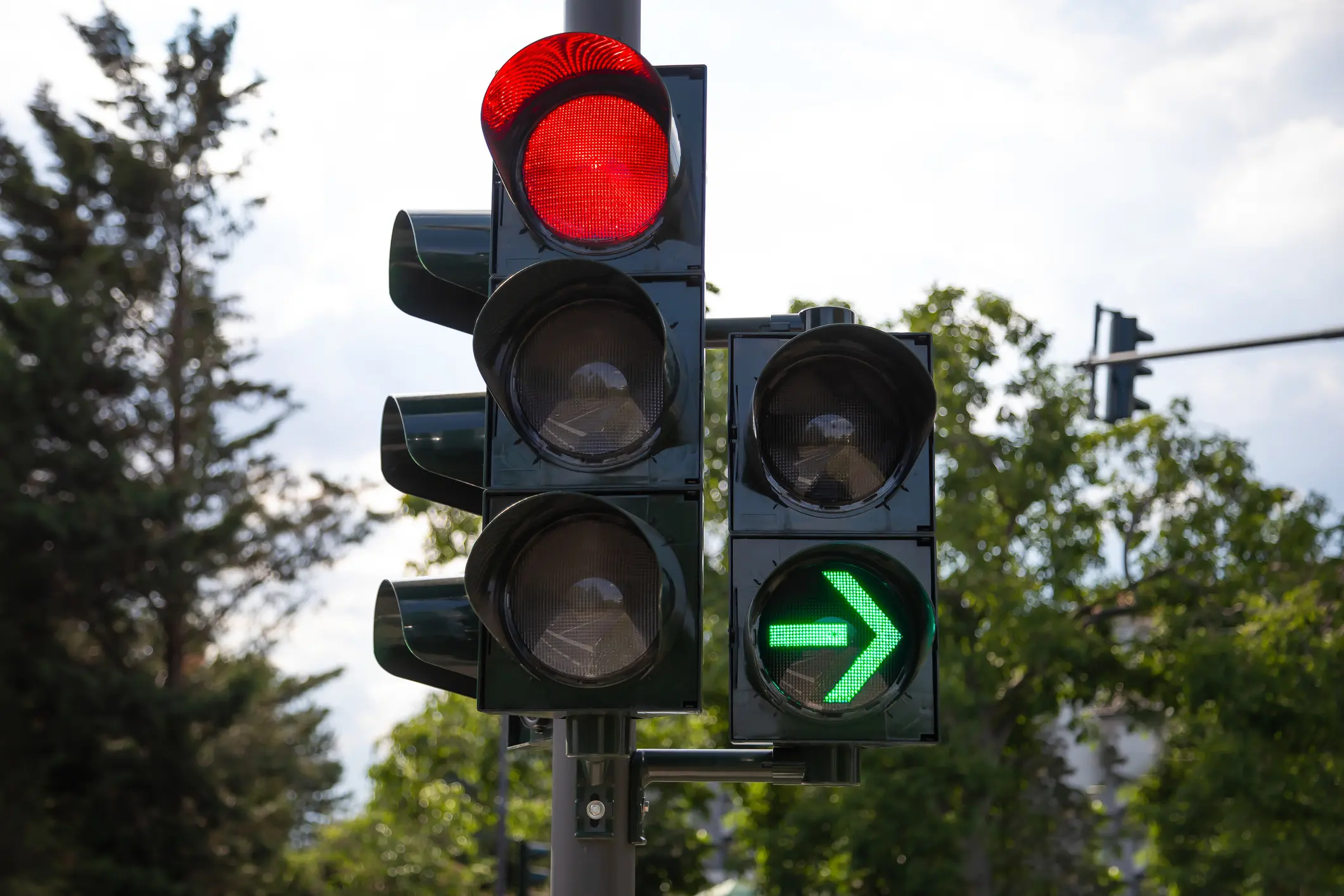
8. The Flashing Green Arrow Changes the Right-on-Red Rule
ID 201195714 ©Mattin Ott | Dreamstime.com
This practical difference caught several Americans we know off guard.
In many parts of the United States, drivers may turn right on red unless a sign prohibits it. In Romania, a red light means you must wait unless a separate flashing green arrow – known locally as verde intermitent – permits movement in that direction.
Even when the arrow is illuminated, the driver must yield to pedestrians and to vehicles that have priority.
This is not unique to Romania, but it can feel like a Romanian surprise for Americans whose first European driving experience happens here. After a few intersections it becomes easier, but the first reaction is often: “Why is everyone waiting when the road looks clear?”
9. Smaller Streets and Tighter Parking Create “My Car Wouldn’t Fit Here” Moments
One of the biggest practical surprises for Americans – especially those used to broad suburban roads and large parking lots – is how narrow many Romanian streets can be.
Several of our acquaintances noticed this almost immediately 🙂
You may encounter:
- slim one-way streets in historic centers
- residential roads with cars parked on both sides
- narrow driveways
- small underground parking spaces
- compact parking lots at malls or supermarkets
- winding village roads
American friends have commented that their large SUVs, pickup trucks, or long sedans might technically fit, but driving and parking them here would be stressful.
Romanian drivers learn to maneuver around tight corners and fit into spaces that look impossibly small. It is easy to understand why compact cars are so common once you have driven through an old neighborhood or entered a crowded underground garage.
10. Romanian Weddings Can Last All Night
American travelers who attend a Romanian wedding are unlikely to forget the experience.
Weddings in Romania can be:
- long, sometimes continuing until 4 or 6 a.m.
- lavish, with several courses served throughout the night
- filled with music, dancing, and changing styles of entertainment
- connected to regional or family traditions
Of course, weddings vary. A modern city wedding may look different from a traditional celebration in a smaller town, and not every event follows the same schedule.
Still, for Americans accustomed to weddings that end after four or six hours, a Romanian celebration that continues until sunrise can feel like a joyful cultural marathon.
11. Church Customs and Seasonal Traditions Are Still Visible in Everyday Life
ID 214404661 ©Sorin Colac | Dreamstime.com
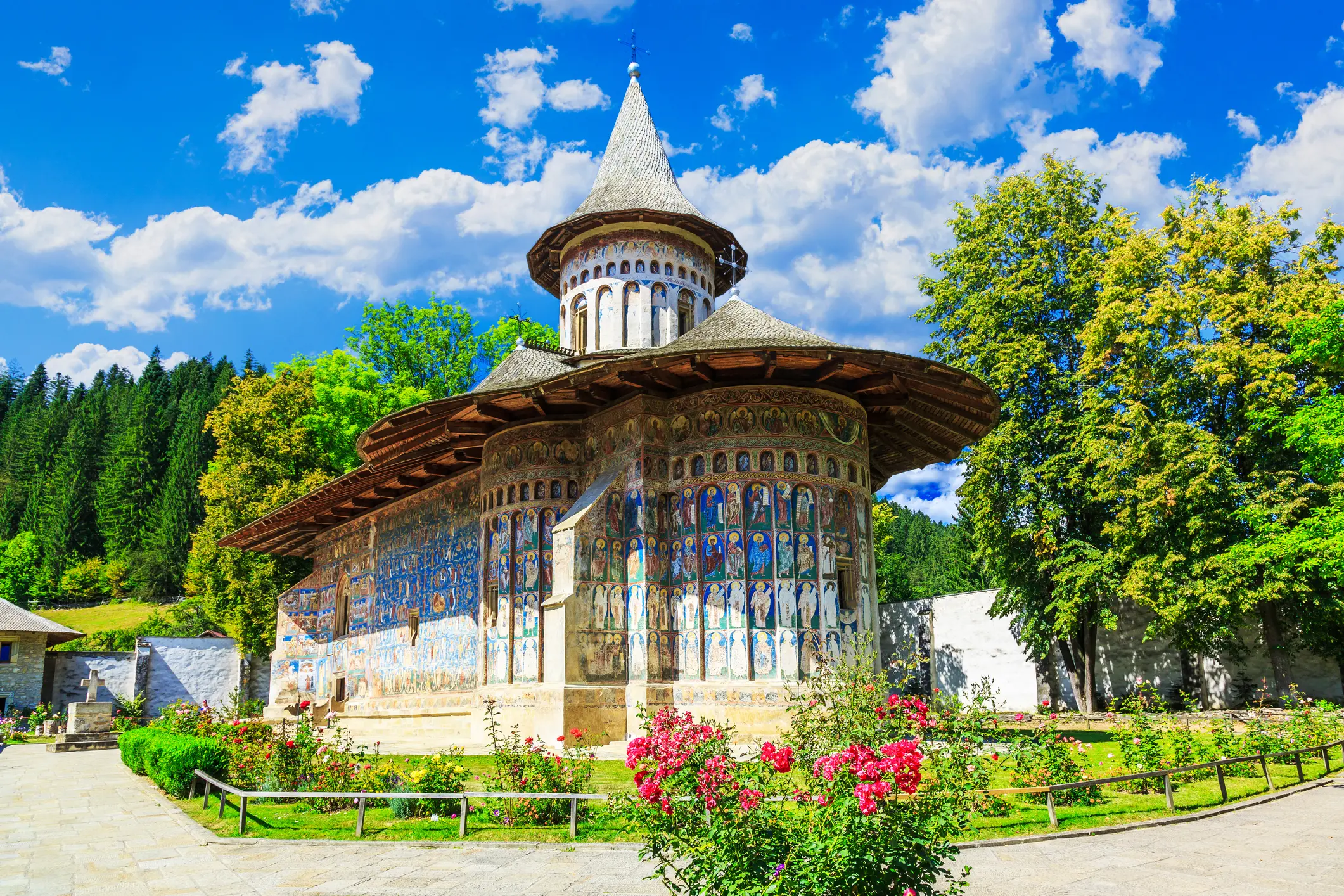
Romania has a strong spiritual and cultural heritage, and Americans often notice that traditions remain visible in ordinary life.
Common observations include:
- people crossing themselves when passing a church
- a large number of churches, including in small villages
- Easter and Christmas customs that vary by region
- traditional foods prepared for religious holidays and memorials
- folk festivals, clothing, dances, and rituals that are still practiced
Romanian traditions also survive through language. Old sayings are still used in conversation, sometimes without people thinking about how old they are. I gathered many of them in this collection of Romanian proverbs with English translations and meanings.
For American visitors, these customs offer a glimpse into a culture that has changed greatly but has not abandoned its older layers.
12. People May Stare – but It Is Usually Curiosity
One of the social differences Americans mention is that people sometimes look at strangers more openly.
Romanians may watch what is happening around them, notice a visitor, or hold eye contact longer than an American expects. In many cases, it is curiosity rather than hostility.
Americans come from a culture where prolonged staring can be interpreted as intrusive, confrontational, or aggressive. That difference can create an awkward moment on a bus, metro train, street, or restaurant terrace.
It does not mean every Romanian stares, of course. But if someone looks at you for a little longer than expected, there is usually no reason to panic.
13. Communication Can Be Direct – and Unsolicited Advice Is Common
Romanian communication can feel more direct than American communication.
Visitors may notice:
- straightforward opinions
- unsolicited advice
- comments about children, clothing, food, health, or weather
- a practical style that may sound blunt when translated into English
Romanians may offer advice because they believe they are helping or showing concern. A relative, neighbor, taxi driver, shopkeeper, or person waiting beside you may tell you what you should wear, eat, visit, or avoid.
For Americans accustomed to softer phrasing and stronger boundaries around personal choices, this can be unexpected. Once the intention becomes clearer, many visitors find it easier to understand – even when they do not follow the advice.
14. Casual Clothing Can Stand Out in Certain Situations
Romanians dress casually every day, but the American version of casual can look different.
Athleisure and sportswear are common, especially among younger people, yet wearing pajama-style clothing, very loose gym clothes, or beachwear to a nicer restaurant may attract more attention than it would in parts of the United States.
Visitors sometimes notice:
- more coordinated outfits in city centers
- well-kept shoes
- people dressing up for restaurants, celebrations, or evening outings
- a stronger interest in appearance in some social settings
There is no need to pack formal clothes for an ordinary vacation. A smart-casual option, however, can be useful for dinner, a concert, a wedding, or a special event.
15. Dinner and Evening Life Start Later
Romanian cities often become more animated in the evening. Families walk through parks, teenagers meet in squares, cafés remain busy, and restaurant terraces fill after sunset.
Restaurants may be busiest between 8 and 10 p.m., especially on warm weekends. Americans who normally eat dinner at 5 or 6 p.m. can find the timing surprisingly late.
Summer evenings are particularly lively. Children may still be playing outside, families stop for ice cream, and people sit at outdoor tables long after dark.
For many American visitors, this becomes one of Romania’s most enjoyable lifestyle differences.
16. Apartment Living Is Normal for Middle-Class Families
Americans used to detached houses and spacious suburbs are often surprised by Romania’s residential patterns.
Romanian cities are generally:
- more vertical
- more compact
- more walkable in many central neighborhoods
- built around apartment blocks and public transportation
Many middle-class families live in apartments, including families with children. This is not automatically viewed as a temporary stage before buying a house. For a large part of the urban population, it is simply normal city life.
Visitors may also notice the contrast between the outside and inside of some buildings. A gray or worn apartment block can contain a renovated, modern, and very comfortable home.
17. Romania Is in the European Union, but It Does Not Use the Euro
This surprises travelers who connect European Union membership with the euro.
Romania’s currency is the Romanian leu, with the plural lei. Euros may be accepted in a few tourist-related situations, but they are not the everyday currency and should not be relied on for normal payments.
Cards and contactless payments are widely accepted in cities, hotels, malls, supermarkets, and many restaurants. Cash still has a role in:
- small shops
- local markets
- rural businesses
- street stalls
- some parking systems
- small purchases in less touristy places
Americans who arrive expecting to use euros everywhere or travel completely without cash may need a small adjustment. My broader guide about using cash in Europe explains why the answer is rarely completely cashless or cash-only.
18. City Transportation Is Useful, but Trips Across Romania Can Take Time
Romania’s transport experience depends greatly on where you are.
In larger cities, Americans may be pleasantly surprised by the presence of:
- metros
- trams
- buses
- trolleybuses
- affordable taxis and ride-hailing services
Bucharest’s metro is particularly useful, while cities such as Brașov, Cluj-Napoca, Timișoara, Oradea, Iași, and Sibiu have extensive public transport networks.
Intercity trains connect a large part of the country and can be affordable, but travel times may be longer than visitors expect. Romania looks compact on a map, yet mountain routes, road traffic, rail speeds, and the distance between regions can turn a seemingly short journey into most of a day.
The contrast is interesting: getting across Bucharest without a car can be simple, while reaching two distant attractions in different parts of the country on the same day may be unrealistic.
19. Amber Turn Signals Are More Common Than Red Ones
Another small detail that several Americans notice is the color of rear turn signals.
European vehicles commonly use amber indicators, while many cars in the United States use red lights for both braking and signaling. Amber indicators make the turn signal easier to distinguish from the brake light.
It is a very small difference, but it becomes surprisingly memorable once someone points it out.
20. The Sheer Diversity of Landscapes in a Small Country
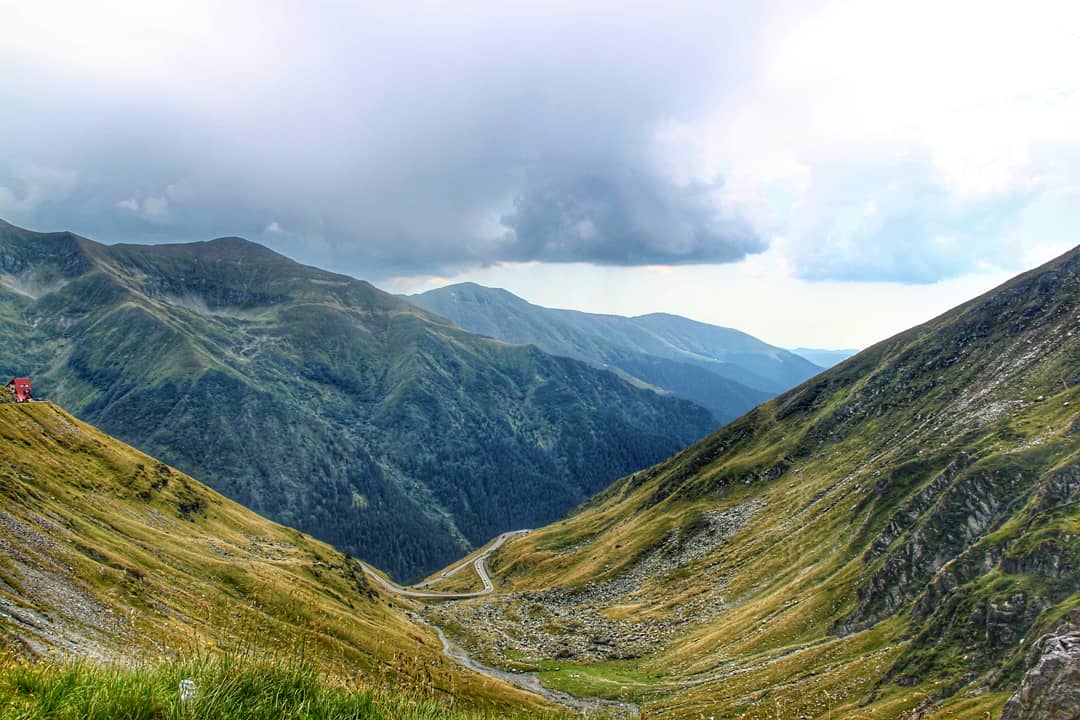
One of the things I love about my country is that we have such a large variety of landscapes.
Romania may not be huge, but it includes:
- the Carpathian Mountains
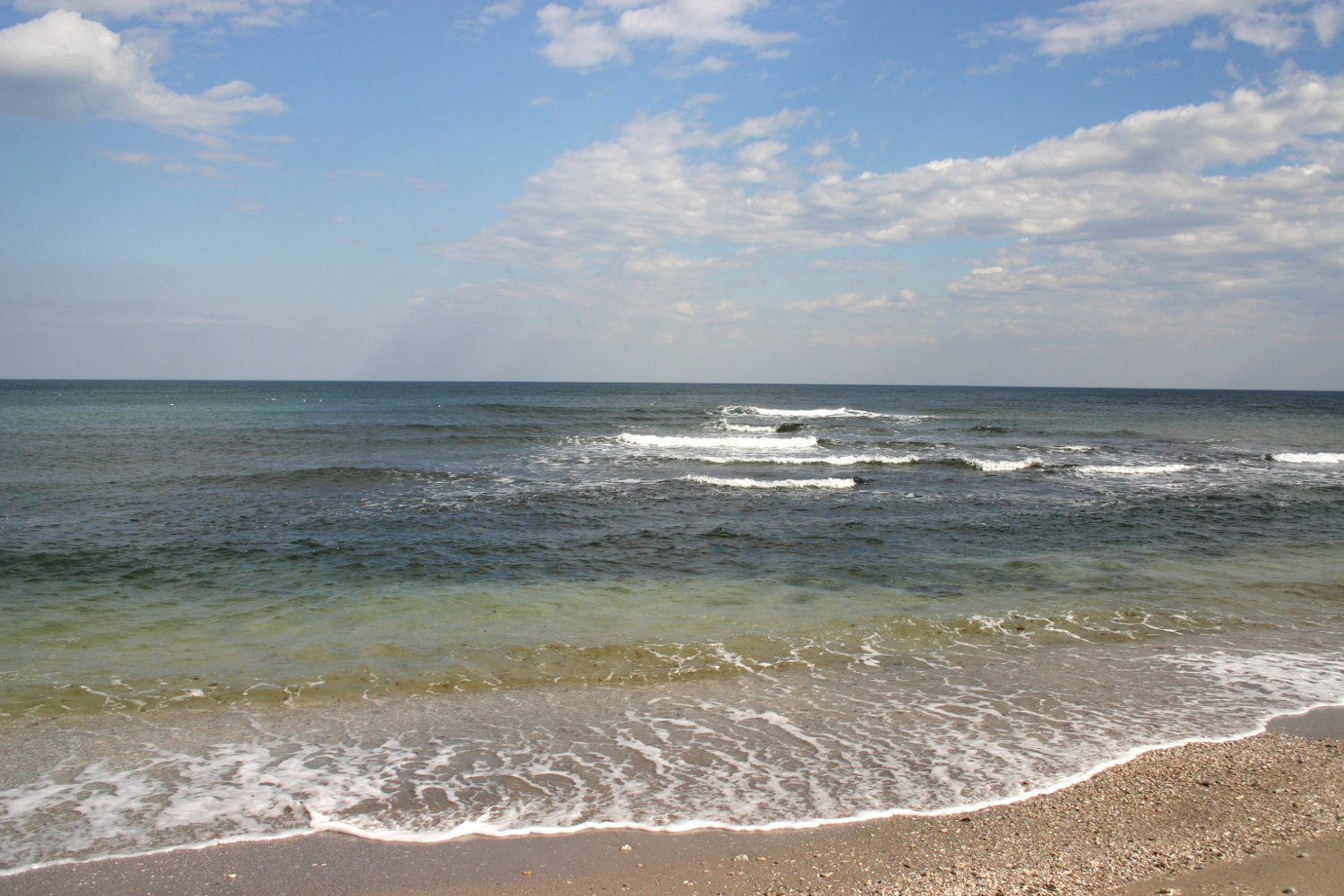
- Black Sea beaches
- the Danube Delta and other wetlands
- rolling hills and vineyards
- forests and mountain lakes
- traditional villages
- painted monasteries
- fortified churches
- modern cities
For Americans coming from a much larger country, the idea that they can travel from mountain roads to the seaside within the same country and without taking a flight can feel surprising.
The Transfăgărășan and Bâlea Lake show one side of Romania: high mountain scenery, winding roads, changing weather, and views that make people stop repeatedly for photos. The Danube Delta, the Black Sea coast, Maramureș, Bucovina, Transylvania, and the southern plains look completely different from one another.
Many American visitors describe Romania as compact but remarkably varied. They may arrive for Dracula or Bucharest and leave talking about mountains, forests, villages, monasteries, or a road they had never heard of before the trip.
21. Romania’s Stunning Towns Look Straight Out of a Storybook
One thing Americans do not always expect before visiting Romania is how beautiful and well-preserved many of its historic towns are. This becomes obvious during a first visit to places such as Brașov, Sibiu, Sighișoara, or Oradea.
For many U.S. visitors, the reaction is immediate:
“I had no idea Romania looked like this.”
Romania’s historic towns offer the features many travelers associate with a classic European trip:
- medieval squares lined with colorful buildings
- clock towers rising above red-tiled roofs
- narrow pedestrian streets leading to cafés
- mountain backdrops
- Baroque, Gothic, Renaissance, and Saxon architecture
When we showed American friends the old town of Brașov – especially the view from above, with its red roofs, Council Square, and mountain setting – they were stunned. To them, it felt like finding a beautiful European city that had not received the same attention as many destinations farther west.
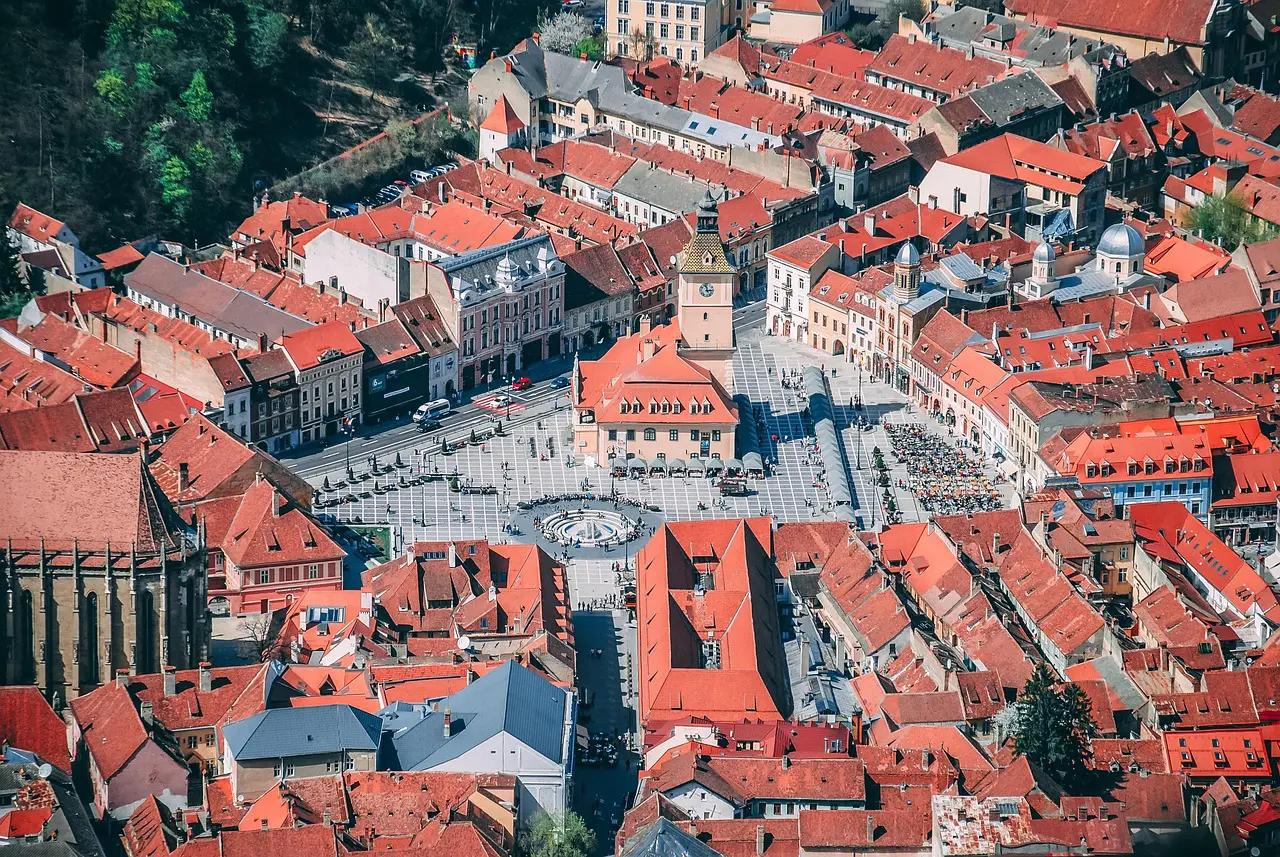
Places that can produce that reaction include:
- Brașov, with Council Square, the Black Church, historic streets, and Tâmpa Mountain
- Sibiu, with pastel buildings and its famous “eyes” in the roofs
- Sighișoara, with a UNESCO-listed medieval citadel
- Oradea, with impressive Art Nouveau architecture
- Cluj-Napoca, where historic architecture meets a large student population and modern city life
Americans sometimes compare these places with towns they have seen in Austria or Germany, but Romania often comes with lower costs and, depending on the season and destination, fewer international tour groups.
For many American travelers, Romania’s towns become one of the favorite discoveries of the entire trip.
22. Romania’s Castles Look Straight Out of Fantasy Films
Another thing that shocks American visitors is how cinematic Romania’s castles can be. Many arrive expecting Bran Castle and perhaps a few medieval ruins. Instead, they discover royal residences, Gothic fortresses, citadels, and castles with completely different histories and architectural styles.
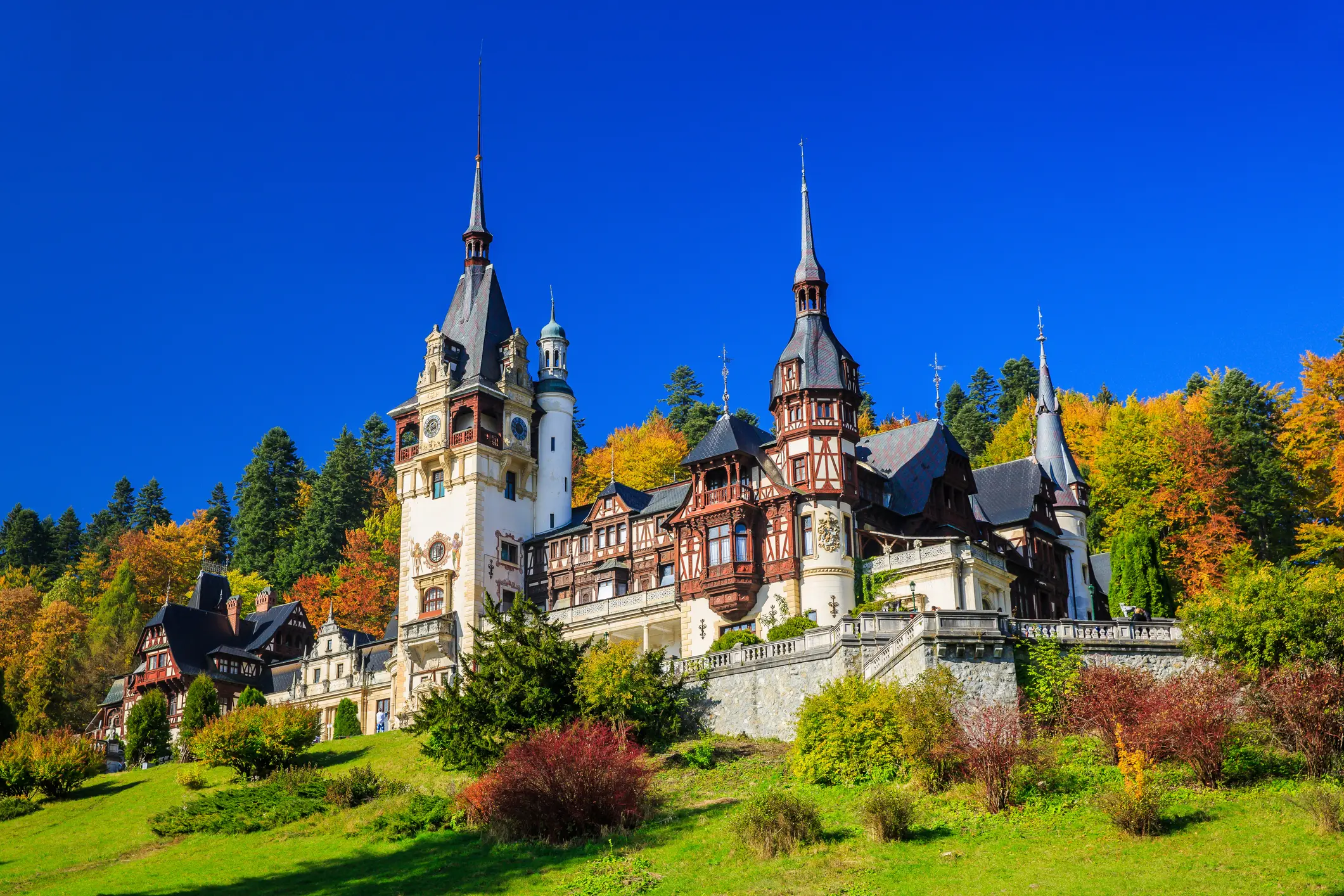
Peleș Castle, shown in the first photo in this article, has detailed architecture and a forested mountain setting that can look like a film set. The interiors include carved wood, stained glass, elaborate rooms, collections, and decorative details that can take visitors by surprise.
I remember how impressed our American acquaintances were by the combination of the building, the mountain resort of Sinaia, and the fact that this extraordinary royal residence was not the only major castle they could visit in Romania.

Corvin Castle offers a very different experience. Its drawbridge, towers, Gothic arches, stone walls, interior courtyards, and legends give it the atmosphere many visitors expect from a medieval fortress.
Americans frequently compare it with locations from fantasy films or historical series. The comparison may be predictable, but when you stand in front of the castle, it is easy to understand.
Bran Castle adds the Dracula story. It was not the home of the fictional Count Dracula, and the connection with Vlad the Impaler is much more limited than many visitors expect. Yet its cliffside position, narrow staircases, passageways, rooms, views, and legends still make it one of Romania’s best-known attractions.
Americans may arrive because of Dracula and leave talking about the setting, the surrounding area, the history, or the other castles they discovered during the same trip.
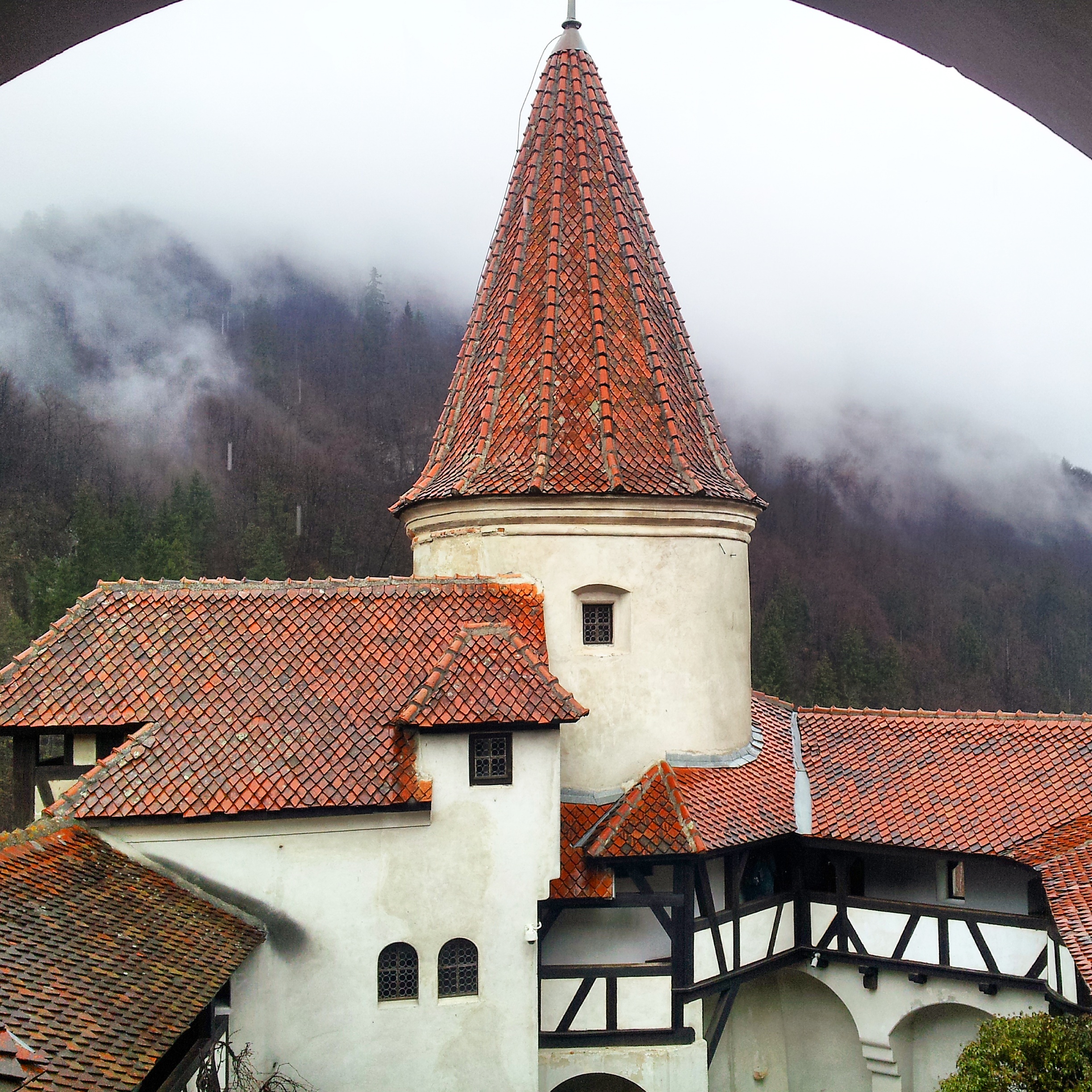
Romania has many castles, fortresses, and citadels beyond these three. My guide to the most beautiful castles in Romania includes more places for travelers who want to build part of their itinerary around them.
The variety is the real surprise. Peleș is an elegant royal residence, Corvin delivers medieval Gothic atmosphere, and Bran mixes history, tourism, and legend. They do not feel like variations of the same attraction.
23. Romania Has a Strong Coffee Culture
Coffee is a large part of Romanian daily life, especially in cities.
Americans may notice:
- espresso-based drinks almost everywhere
- good coffee in small independent cafés
- specialty coffee roasters
- beautiful café interiors
- long coffee breaks centered on conversation
The drink sizes can be smaller than an American visitor expects, but the experience is often more social and less rushed.
Meeting someone “for a coffee” may mean spending an hour or two talking, not buying a large takeaway cup and continuing with the day.
24. Air Conditioning Is Not Universal
Americans accustomed to strong central air conditioning in homes, stores, hotels, and public buildings may notice a difference during a Romanian summer.
Modern hotels, malls, offices, restaurants, and newer apartments often have air conditioning. Older buildings, family homes, small guesthouses, older trains, and some rental apartments may have one wall unit, limited cooling, or no air conditioning at all.
This can become a real surprise during a July or August heat wave.
When booking accommodation in summer, check the listing carefully rather than presuming that air conditioning is included. The same applies to a private apartment or guesthouse in an older building.
Romanians have adapted in different ways – exterior blinds, curtains, fans, opening windows at night, and avoiding the hottest hours – but an American visitor who expects every interior to feel cold may need time to adjust.
25. The People’s House Is Larger Than Many Americans Imagined Possible
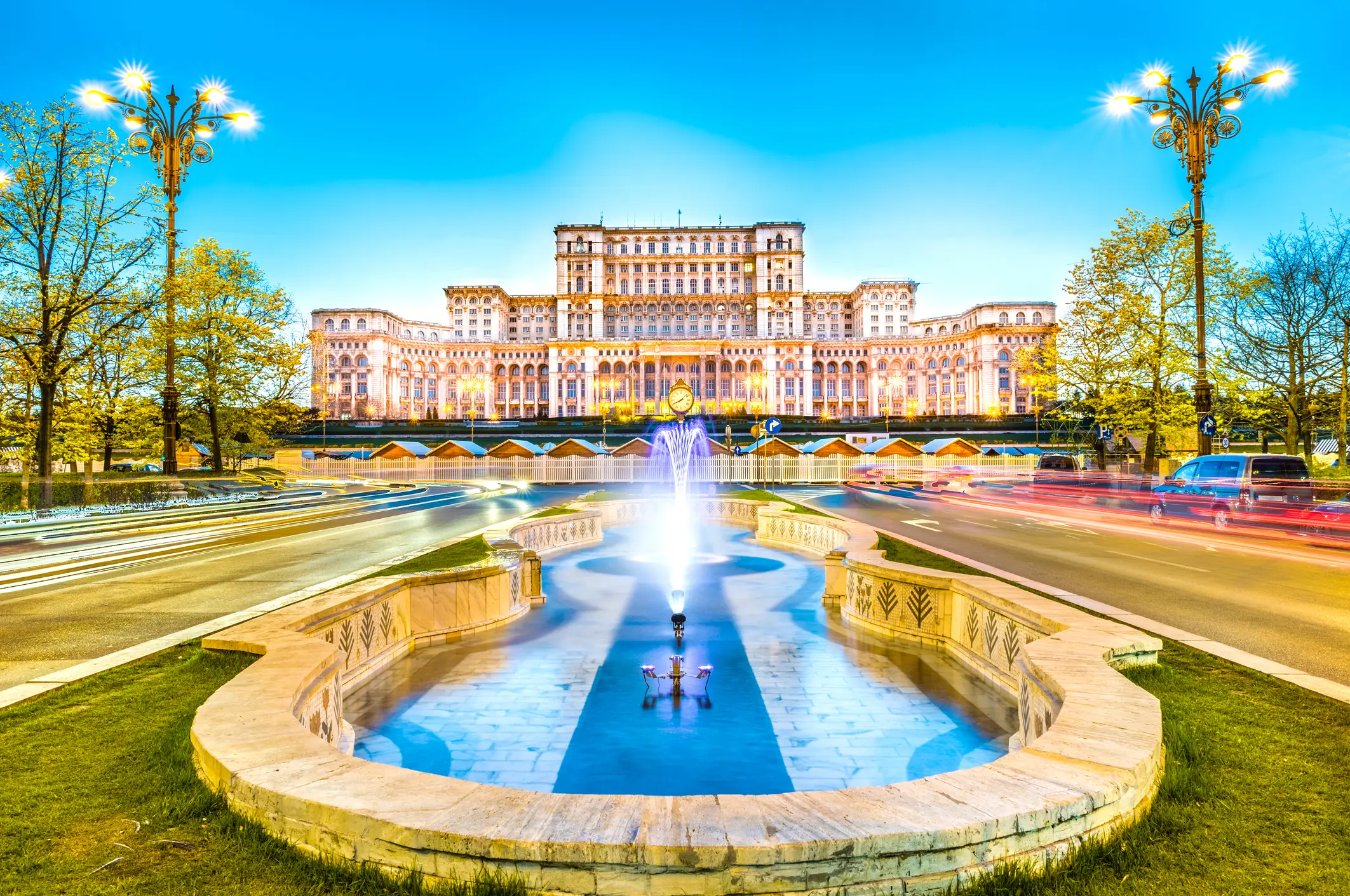
ID 123246257 ©Dorinmarius | Dreamstime.com
Americans visiting Bucharest often stop in front of the Palace of the Parliament and have the same basic reaction:
“How is this building so big?”
Yes, I know many people would place it much earlier on this list, but I kept it close to the end.
The building is still widely known by its former name, the People’s House, or Casa Poporului. It is commonly described as the second-largest administrative building in the world by floor area, after the Pentagon, and Guinness World Records identifies it as the world’s heaviest building.
Its scale is hard to understand from a photograph. The façade appears to continue endlessly, and even walking around part of the complex takes time.
We took one of the Americans visiting Bucharest on a guided tour inside the Palace of the Parliament, and he was truly impressed. The visit covers only a small part of the building, but it reveals vast marble halls, monumental staircases, long corridors, enormous rooms, heavy curtains, and chandeliers that seem too large for an ordinary building.
The palace is also inseparable from Romania’s communist history. It was built under Nicolae Ceaușescu at an enormous human and financial cost, after a large area of historic Bucharest was demolished.
That combination of size, luxury, political history, and loss makes the visit more complicated than simply admiring a huge building. Americans often compare it with monumental architecture in Washington, D.C., but the atmosphere and history are completely different.
26. The World’s Largest Orthodox Church Stands Next to It
If the Palace of the Parliament is not enough of a surprise, the National Cathedral – also known as the People’s Salvation Cathedral – now rises beside it.
The cathedral permanently opened after the consecration of its mosaics in October 2025 and is recognized as the world’s largest Orthodox Christian church.
Its height, dome, iconostasis, mosaics, interior volume, and position above the city make it visible from many parts of Bucharest. Standing nearby, visitors can look from one monumental structure to the other:
- the world’s heaviest building
- beside the world’s largest Orthodox church
The contrast is extraordinary.
One building represents the ambition, control, and excess of the communist period. The other represents the public return and modern scale of Romanian Orthodox identity after communism.
The cathedral’s interior is brighter and newer than the historic Orthodox churches travelers may have already visited. Its scale can feel closer to a national monument than a neighborhood place of worship.
For Americans who pictured Romania as a small country filled mainly with villages, medieval churches, and castles, seeing these two enormous buildings side by side can completely change that image.
27. Is Romania Worth Visiting for American Travelers?
Yes, Romania is worth visiting for Americans who want a European destination with historic cities, castles, mountain scenery, regional traditions, good food, and prices that can still feel reasonable compared with many better-known countries.
It can be particularly rewarding for travelers who enjoy:
- medieval towns and architecture
- castles, fortresses, and royal history
- mountain roads, forests, villages, and nature
- local food, bakeries, markets, and café culture
- destinations that are not overwhelmed by international tourism everywhere
- seeing different regions rather than staying in one capital city
Romania is not perfect. Roads and rail journeys can take longer than expected. Buildings can be beautifully restored on one street and visibly neglected on the next. Traffic can be chaotic. Customer service may feel more direct. English is less reliable away from tourist areas, and cash remains useful.
Those contrasts are part of the experience.
The Americans we know did not leave talking only about Dracula. They talked about safety, desserts, castles, restaurant prices, people, mountain views, enormous buildings, late evenings, and all the details they had not expected before arriving.
Romania Leaves a Lasting Impression on American Travelers
Romania surprises American visitors in countless ways, from hospitality and desserts to traffic lights, small streets, late dinners, castles, historic towns, and the enormous buildings of Bucharest.
These shocks are not automatically negative. They are differences – and they make a trip memorable.
I have lived with many of these details all my life, so hearing Americans react to them helped me look at my own country differently. A green arrow, a cake-shop counter, an evening park filled with families, or a road winding through the mountains may seem ordinary to a Romanian. To a first-time visitor, each can become part of the story they tell after returning home.
Many Americans arrive with only a few images of Romania in mind. They often leave with a much larger, more colorful, and more personal picture of the country.
Frequently Asked Questions About Visiting Romania as an American
Is Romania safe for American tourists?
Romania is generally considered a safe destination for American travelers, and the U.S. Department of State currently advises visitors to exercise normal precautions. Petty theft can occur in crowded tourist areas and on public transportation, so use the same awareness you would in any European city.
Do Americans need a visa to visit Romania?
U.S. citizens can generally visit Romania without a visa for short tourist stays. Romania is part of the Schengen Area, so days spent in Romania count toward the combined Schengen limit of 90 days within any 180-day period. The European Commission offers an official short-stay calculator. Entry systems and requirements can change, so verify the latest rules before departure.
Does Romania use the euro?
No. Romania uses the Romanian leu, or lei in the plural. Cards are widely accepted in cities, but carrying a modest amount of lei is useful for markets, small businesses, rural areas, parking, and small purchases.
Do people speak English in Romania?
English is widely spoken in hotels, restaurants, museums, and tourist attractions in major cities. Younger Romanians often speak it well. In villages, small towns, local markets, and conversations with older people, English may be more limited.
Can you drink tap water in Romania?
Municipal tap water is generally safe to drink in Romanian cities. Taste can vary, and some locals prefer filtered or bottled water because of the pipes inside older buildings. At rural accommodation supplied by a private well, ask the host whether the water is regularly tested.
How much should Americans tip in Romania?
Around 10% is a common restaurant tip for good service. Tipping is voluntary, and the higher percentages expected in the United States are not standard. Rounding up is often enough for a short taxi ride, a drink, or a small service.
Is Romania expensive for American tourists?
Romania is no longer as inexpensive as older travel articles suggest, but many Americans still find restaurants, transportation, attractions, coffee, pastries, and accommodation good value compared with major destinations in the United States and Western Europe.
When is the best time to visit Romania?
Late spring and early autumn are excellent for city trips, castles, and road travel, with pleasant temperatures and fewer peak-summer crowds. Summer is suitable for mountains, festivals, and the Black Sea, although heat waves are possible. Winter can be beautiful in mountain areas and around Christmas markets, but road conditions and opening schedules require more planning.
Plan Your Romania Trip
If Romania is now on your travel list, these guides can help you choose where to go and plan some of the highlights:
- Spend one day in Bucharest – discover some of the capital’s main attractions and ideas for organizing a short visit.
- Explore Brașov in 48 hours – see the historic center, famous landmarks, and mountain views that impressed the American visitors we know.
- Visit the Merry Cemetery in Săpânța – learn about its colorful crosses, honest epitaphs, history, and one of Romania’s most unusual traditions.
- Discover more castles in Romania – find additional royal residences, fortresses, and historic castles to consider for your trip.
More amazing articles for you:
Top Vacation Destinations on Instagram
27 Famous Buildings and Landmarks in the USA You Should See
6 Things to Expect When Flying Business Class
The Fall Routine That Actually Keeps You Healthy - Science-Backed
The Nordic Morning Habits Americans Should Adopt to Live Happier, Longer, and Less Stressed Lives (I...
Ocean Activities For Your Next Vacation
How to get best E-juices when traveling?
200 Halloween Trivia Questions and Answers: History, Traditions, Candy, Superstitions, and Halloween...

Violeta-Loredana Pascal is a communications expert, business mentor, and the founder of Earth’s Attractions and PRwave INTERNATIONAL. A pioneer in the Romanian digital PR landscape since 2005, she holds a degree in Communication and Social Sciences from SNSPA Bucharest. Violeta is a senior trainer at AcademiadeAfaceri.ro, where she leverages over 20 years of experience to teach professional courses in PR strategy and workplace productivity. By blending high-level business consulting with a passion for holistic travel and wellness, she empowers solopreneurs to overcome procrastination, build profitable brands, and design a life of purposeful adventure.