Spain is one of Europe’s most popular destinations for both vacations and relocation, and I understand why. The long evenings, regional food, historic cities, beaches, and remarkably varied landscapes are hard to resist. The Costa del Sol is one place where vacation life and long-term relocation overlap. Some friends from Romania have moved to Valencia, Spain, and I also know Americans who now call the country home.
Yet the country is often reduced to the same familiar images: tapas, flamenco, paella and sunny resorts. Look beyond those images and you’ll find a Spanish town surrounded by France, an island administered by two countries, a whistle-based way of communicating across deep ravines and local traditions that are regularly mistaken for customs followed everywhere in Spain.
These 50 interesting facts about Spain move from borders and geography to daily life, food, history and regional celebrations. They also show why exploring the country through its famous places and lesser-known destinations gives you a much fuller picture than staying with the usual stereotypes.
ID 263827594 @ Aliaksandr Mazurkevich | Dreamstime.com
How these facts were checked: I compared official Spanish sources, UNESCO records, cultural institutions and current information available in July 2026. Regional traditions are identified by region, and figures that may change are dated.
Spain’s Geography and Borders Are Full of Surprises
Spain’s map is much more interesting than it initially appears. The country includes mainland territory, two major island groups and two autonomous cities on the North African coast, but even that description leaves out several unusual borders.
1. Llívia is a Spanish town completely surrounded by France
Llívia belongs to Spain, but you have to travel through France to reach it from the rest of the country. The small municipality sits in the French Pyrenees, less than two kilometres from the Spanish border at its closest point.
The unusual arrangement dates back to the seventeenth century. When Spain transferred a group of villages to France under the Treaty of the Pyrenees, Llívia retained its Spanish status because it was classified as a town rather than a village. Today, it remains a Spanish enclave with its own town hall, residents and everyday links to both sides of the border.
2. You can cross from Spain into Portugal on a zipline
Limite Zero carries riders across the Guadiana River from Sanlúcar de Guadiana in Spain to Alcoutim in Portugal. The 720-metre route takes less than a minute, making it one of the most unusual ways to cross an international border.
The operator describes it as the world’s first cross-border zipline. Since Portugal is one hour behind mainland Spain, riders also gain an hour on the clock during the crossing. They return to Spain by ferry, so the experience includes a border crossing by air and another on the water.
3. Spain and France take turns administering the same island
Pheasant Island sits in the Bidasoa River between Irún in Spain and Hendaye in France. Both countries share sovereignty over the tiny, uninhabited island, while responsibility for administering it changes every six months.
Spain manages it from February through July, and France takes over from August through January. The arrangement grew from the Treaty of the Pyrenees, signed on the island in 1659. Visitors normally can’t step onto it, but it can be seen from the riverbanks. The island doesn’t change nationality; the administrative responsibility rotates.
4. Part of Spain is located on the North African coast
Ceuta and Melilla are Spanish autonomous cities on the Mediterranean coast of North Africa. Their location gives Spain direct land borders with Morocco, something many people don’t expect when looking at a map of Europe.
Both cities combine Mediterranean and North African influences in their architecture, food and urban life. They are also part of the European Union, although special customs and border arrangements apply. Their presence is a reminder that Spain’s territory extends beyond the Iberian Peninsula and its better-known islands.
5. One Canary Island preserves a language made from whistles
Silbo Gomero is a whistled form of communication used on La Gomera in the Canary Islands. It reproduces the sounds of spoken language through whistles that can travel across the island’s deep valleys and ravines far more effectively than a shouted voice.
The practice developed as a practical way for people to communicate across difficult terrain. It is now taught in schools on La Gomera and was added to UNESCO’s Representative List of the Intangible Cultural Heritage of Humanity in 2009. Silbo Gomero isn’t a separate spoken language; it is a way of whistling the local language.
6. Spain’s highest mountain is a volcano on Tenerife
Mount Teide rises to 3,715 metres on Tenerife, making it the highest point in Spain. It is also an active volcano. Tenerife’s most recent eruption occurred in 1909 at Chinyero, rather than from Teide’s summit.
This means Spain’s highest mountain isn’t on the mainland or in the Pyrenees. The highest point on the Iberian Peninsula is Mulhacén in the Sierra Nevada. The distinction is useful for anyone who instinctively pictures Spain’s tallest peak somewhere along its northern mountain border.
7. A Roman lighthouse in Galicia is still operating
The Romans built the Tower of Hercules in A Coruña around the late first century and still serves as a lighthouse. UNESCO describes it as the only fully preserved Roman lighthouse that continues to be used for maritime signalling.
The structure visitors see today includes later restoration work, but its Roman core survives. It stands at the entrance to A Coruña harbour, looking over the Atlantic rather than the Mediterranean scenery more commonly associated with Spain. Galicia’s coastline, weather and maritime traditions give this part of the country a very different atmosphere.
8. A Spanish cathedral keeps a live rooster and hen inside
The Cathedral of Santo Domingo de la Calzada in La Rioja houses a live white rooster and hen in an ornate enclosure. The birds recall a medieval pilgrimage legend linked to the Camino de Santiago.
According to the story, a wrongly accused young pilgrim was hanged but survived through the intervention of Saint Dominic. When a local official was told the young man was alive, he replied that the claim was no more possible than the cooked birds on his plate coming back to life. The birds then reportedly stood up and crowed. It is a legend, but the cathedral’s living birds are very real.
9. The Tabernas Desert has played locations far beyond Spain
ID 23983008 ©Stevanzz | Dreamstime.com
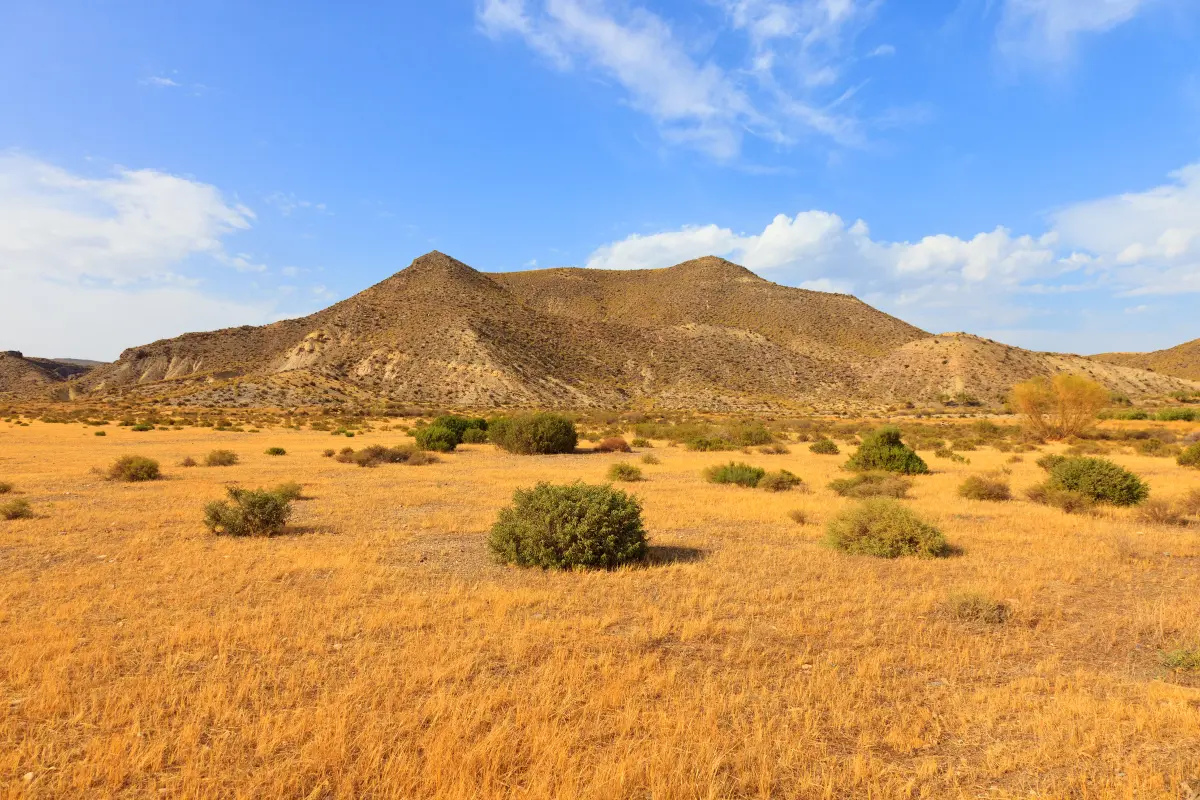
The Tabernas Desert in Almería is widely described as continental Europe’s only true desert area. Its dry ravines, dusty plains and rugged mountains have stood in for the American West, North Africa and the Middle East in hundreds of films and television productions.
Several classic spaghetti Westerns were filmed here, including productions associated with Sergio Leone. The landscape also appears in more recent international projects. Travelers who know southern Spain mainly through the beaches of Malaga may be surprised by how quickly the scenery changes farther east.
10. Roman gold mining created the red landscape of Las Médulas
Las Médulas in Castilla y León looks natural from a distance, but its jagged red cliffs were shaped by large-scale Roman gold mining. Miners channelled water through tunnels and galleries to break apart the mountain, leaving behind the unusual formations visible today.
The operation became one of the Roman Empire’s most important gold-mining sites. Forest later grew around the altered terrain, creating a striking mixture of chestnut trees, red rock and caves. It is both an archaeological landscape and a record of how ancient engineering could transform an entire area.
Spanish Daily Life Is Often Misunderstood
When friends move to Spain, the details they mention first usually aren’t famous monuments. Meal times, shop hours, names, social customs and regional differences shape everyday life far more quickly. These are also among the most useful things to know before visiting Spain.
11. Spanish people commonly use surnames from both parents
People in Spain traditionally receive two surnames, one from each parent. Under the long-established pattern, the first surname came from the father and the second from the mother, but parents can now choose the order for their child.
Women generally keep their own surnames after marriage rather than taking a spouse’s name. This can make Spanish full names look longer to visitors from countries where one family surname is standard. For flights, accommodation and car rentals, the practical rule is simple: enter the name exactly as it appears on the passport.
12. Spain’s languages don’t all have the same status throughout the country
Castilian Spanish is the official language across Spain. Other languages have co-official status in particular autonomous communities, including Catalan or Valencian, Galician, Basque and Aranese.
The result is a multilingual country in which signs, schools, public administration and daily conversation can change from one region to another. A traveler may see Spanish and Catalan in Barcelona, Spanish and Galician in Santiago de Compostela, or Spanish and Basque in Bilbao. This isn’t a minor cultural footnote; it is part of ordinary public life in those regions.
13. Spanish children may receive their main Christmas presents on January 6
For many Spanish families, the Three Kings traditionally bring children’s presents rather than Santa Claus. Towns and cities hold colourful cabalgatas on January 5, with decorated floats, costumed kings and sweets thrown to the crowds.
Children may leave shoes out before going to bed and open their gifts on the morning of January 6. Christmas Eve and Christmas Day are still important, and many families now combine traditions, but Three Kings Day remains a major celebration. The custom also appears in Spanish expressions and stories, alongside many memorable Spanish sayings.
14. Spain’s national anthem has no official lyrics
Spain’s national anthem, the Marcha Real, is instrumental. Various sets of lyrics have been proposed or used at different points in history, but none is part of the anthem’s current official version.
This becomes particularly noticeable at international sporting events, where players and supporters from other countries may sing while the Spanish anthem is played without words. The melody has a long history as a royal and military march, and its present official arrangement was established by royal decree.
15. Mainland Spain has used Central European Time since 1940
Most of mainland Spain lies geographically close to the time zone used by Portugal and the United Kingdom, yet it follows Central European Time, the same standard time as France, Germany and Italy.
Spain adopted this official time in 1940. The result is a noticeable difference between the clock and the sun, particularly in western areas such as Galicia, where summer sunsets can be very late. The time zone contributes to the country’s later daily schedule, although work patterns, climate and social customs also influence meal times.
16. The Canary Islands are one hour behind mainland Spain
ID 137907940 @ Dorinmarius | Dreamstime.com
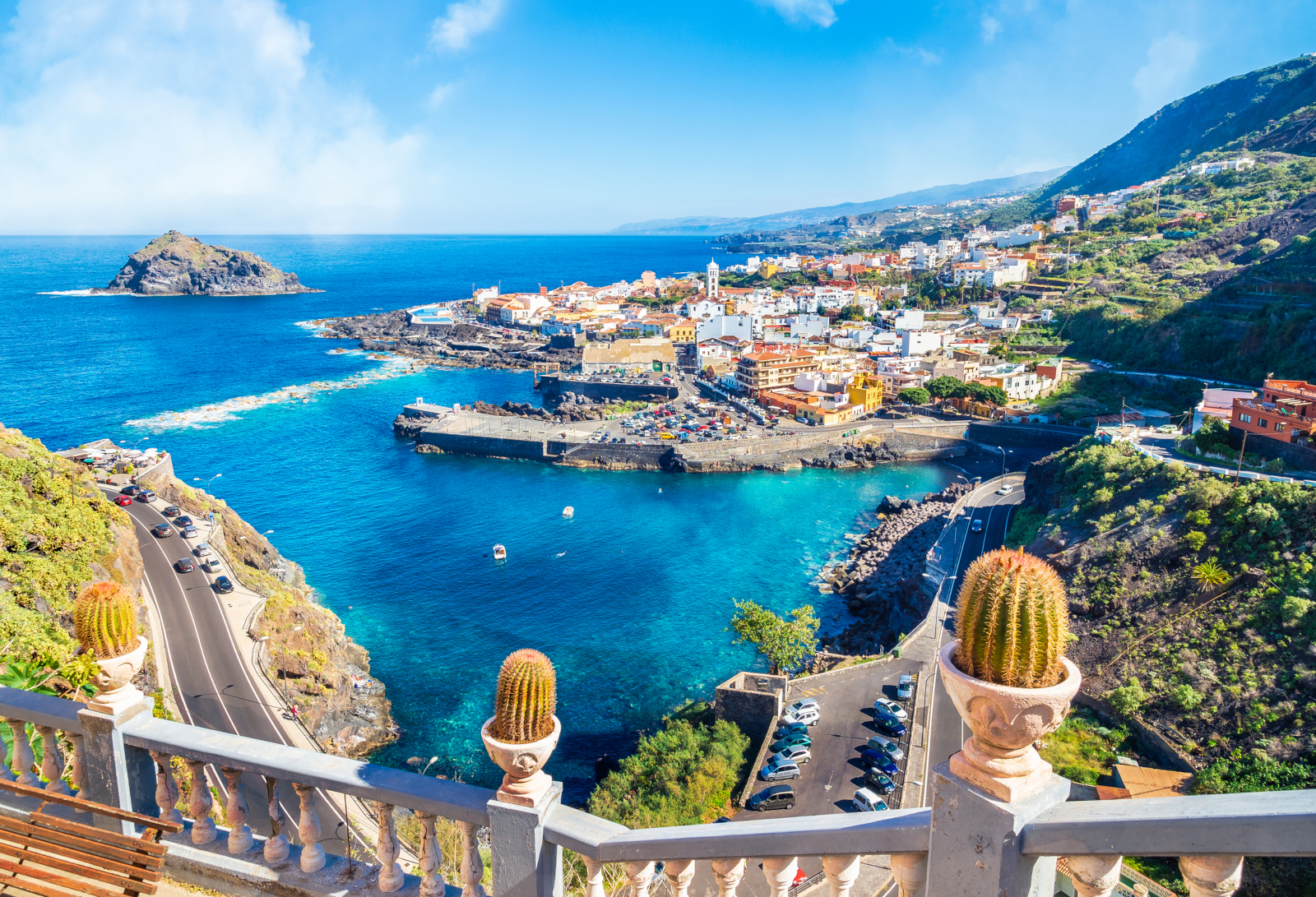
Spain has two standard time zones. The mainland, Balearic Islands, Ceuta and Melilla follow one, while the Canary Islands are one hour behind.
Spanish radio and television announcements often acknowledge this by giving one time for the peninsula and another for the Canaries. Travelers moving between Tenerife or Gran Canaria and mainland Spain should check flight, ferry and event times carefully. The islands are Spanish, but their time difference is one of several details that make the answer to island or country questions more interesting than it first appears.
17. The whole country doesn’t stop for a daily siesta
The image of everyone in Spain going home for a long afternoon nap is outdated. Some people do rest after lunch, particularly when their schedule allows it, but a daily siesta isn’t a nationwide habit.
What visitors may notice is an afternoon break in the opening hours of smaller independent shops, especially outside major tourist areas. Many museums, shopping centres, supermarkets and large urban stores remain open continuously. Checking the actual schedule is more reliable than expecting every door to close – or every business to stay open – from 2:00 PM onward.
18. Spanish lunch and dinner hours are later than in many countries
Lunch is commonly served between about 1:00 PM and 4:00 PM, while dinner service often begins around 8:00 PM and continues late into the evening. These are restaurant windows, not a rule that every person follows at exactly the same hour.
A full dinner at 6:00 PM can be difficult to find in traditional restaurants, although cafés, bars and tourist-oriented places may serve food earlier. The later schedule also helps explain why streets can remain lively well after dark, from family promenades to Barcelona’s nightlife.
19. Tipping is optional, but it isn’t unheard of
Tipping in Spain isn’t compulsory. Service is included in the bill, and leaving a large percentage automatically isn’t expected in the way it may be in the United States.
People may round up a café bill, leave coins after a casual meal or add a larger tip for excellent service. Spain’s official tourism guidance notes that tips of around 5% to 10% are common in some situations, depending on the amount and the customer. Local habits also vary, so there is no need to turn every small purchase into a calculation.
Other practical rules can change by municipality or venue. The same careful approach is useful when checking Spain’s current smoking restrictions, especially for terraces and beaches.
20. Sobremesa begins after the meal is over
Sobremesa is the time people spend talking at the table after eating. The plates may be cleared, but the conversation continues over coffee, another drink or nothing at all.
It is one of those customs that helps explain why a meal can occupy a large part of the afternoon without feeling rushed. I’ve heard this slower social pace praised by friends who moved to Spain, and it also appears alongside walking, Mediterranean food and strong personal connections in discussions about why people in Spain live longer.
Spanish Food Is Far More Regional Than It Appears
Paella and tapas are famous internationally, but Spanish food changes substantially from one region to another. Coastal seafood, mountain dishes, rice traditions, preserved foods and local produce all belong to the same national story without becoming one uniform cuisine.
21. Traditional Valencian paella isn’t automatically made with seafood
ID 366011804 | Authentic Valencian Paella ©Sirboumanphoto | Dreamstime.com
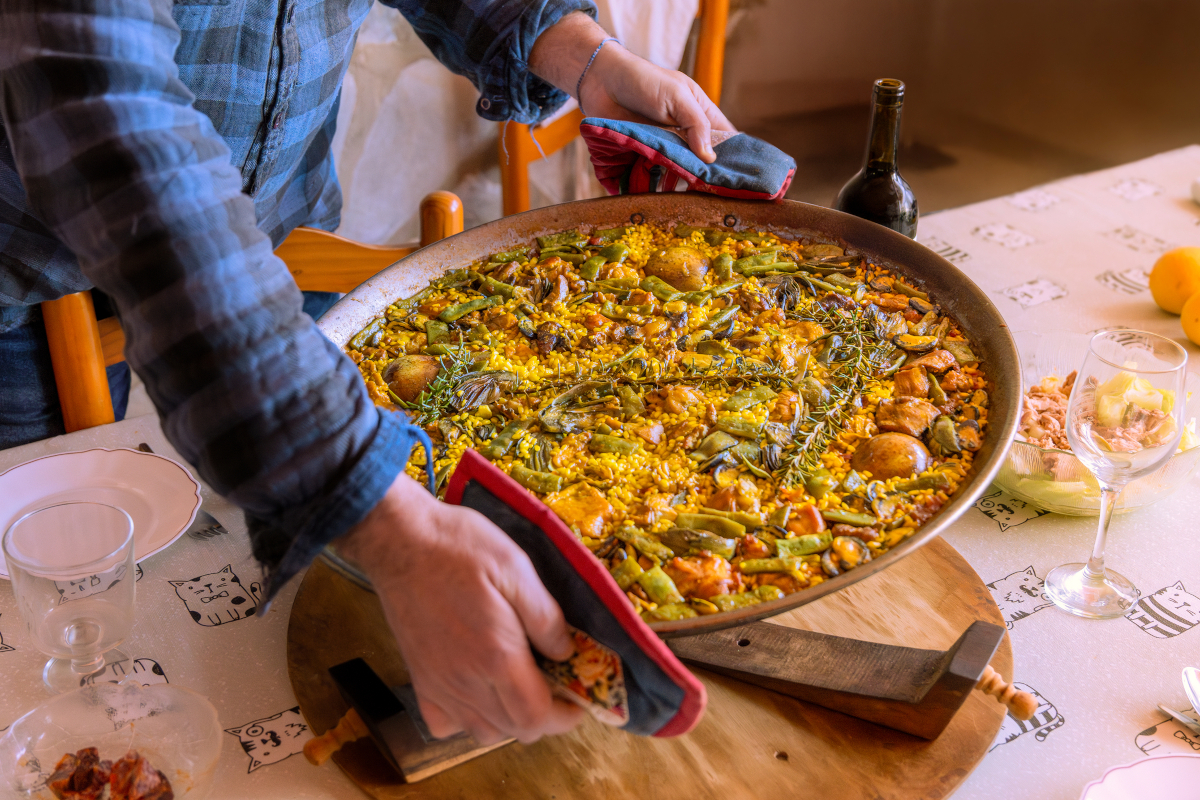
Paella began in Valencia, and the traditional Valencian version usually contains rice, chicken, rabbit, green beans and large local white beans. Snails may also be included. Seafood paella is popular, but it isn’t the original recipe people in Valencia mean when they say paella valenciana.
There are many accepted rice dishes and regional variations, so the point isn’t to declare one pan valid and every other version wrong. It is to understand that Spanish dishes have local roots. Paella is one of many foods worth trying in Spain.
22. Paella is traditionally associated with lunch
In Valencia, paella has traditionally been a lunchtime meal, often prepared for family gatherings or shared on weekends. Cooking it over a wood fire and allowing a large pan to develop flavour takes time, which suits a long midday meal better than a rushed late dinner.
Of course, you can have paella in the evening too. Restaurants serve it at different times, particularly in destinations with international visitors. A more useful sign of care is whether the dish is cooked to order and whether the restaurant is clear about preparation time. A good paella commonly requires patience.
23. A tortilla in Spain usually contains potatoes and eggs
Order a tortilla in Spain and you are likely to receive a thick omelette made with eggs and potatoes, not the thin corn or flour flatbread associated with Mexico and Central America.
Tortilla española or tortilla de patatas can be served warm, at room temperature, as a tapa, in a sandwich or as part of a larger meal. One question still divides households and restaurants: should it contain onion? Both versions are common, and people can be surprisingly loyal to their preference.
24. Tapas aren’t one particular dish
Tapas can be olives, cheese, croquettes, seafood, potatoes, cured meat or countless other small servings. The word describes the format rather than one recipe.
The experience also changes by region and venue. In some cities, a small tapa may arrive with a drink; elsewhere, each plate is ordered and paid for separately. The exact origin of tapas is disputed, so stories about kings, bread covers and flies are better treated as legends than settled history. In Andalusia, a tapas evening can fit naturally into time spent exploring coastal towns such as Sanlúcar de Barrameda.
25. Pintxos are especially associated with northern Spain
Pintxos are closely associated with the Basque Country and Navarre. Many are served on small pieces of bread and held together with a skewer, although modern pintxos can be much more elaborate and don’t all follow the same presentation.
They are often displayed along a bar counter, allowing customers to choose several small creations over the course of an evening. The word and the eating style have a strong regional connection, but a rigid rule such as “every pintxo must have a toothpick” leaves out much of the creativity found in contemporary bars.
26. Tinto de verano is a popular Spanish summer drink
Tinto de verano combines red wine with gaseosa or a fizzy lemon drink and is usually served over ice. It is simple, refreshing and widely ordered during warm weather.
Sangria may be more internationally famous, but tinto de verano is often easier to find as an everyday drink. That doesn’t mean every Spanish person prefers it or that ordering sangria is somehow wrong. The two drinks serve different occasions, and both can vary considerably from one bar to another.
27. Premium seafood can come from a tin
In Spain, canned seafood isn’t automatically a budget substitute for fresh food. High-quality conservas may contain carefully selected mussels, sardines, anchovies, tuna, cockles, octopus or razor clams packed at their seasonal best.
Galicia and other northern coastal regions are particularly well known for this tradition. Attractive tins are sold in specialist shops and served in respected bars and restaurants. The value lies in the quality of the seafood, the preserving process and the sauce or oil inside—not in disguising an inferior ingredient.
28. The Basque Country has member-run gastronomic societies
Gastronomic societies, often called txokos, are private or member-run spaces where people gather to cook, eat and spend time together. They are particularly associated with the Basque Country.
These aren’t ordinary restaurants with a public menu and daily walk-in service. Members generally organize the meals and take responsibility for cooking and sharing costs. Individual societies have their own rules, so one description can’t cover every group. Their popularity reflects the importance of food as a social activity rather than a product delivered only by professionals.
29. Spain is the world’s leading olive-oil producer
Spain produces more olive oil than any other country, with Andalusia contributing most of the national total. Production changes considerably from one harvest to another because rainfall, heat and other growing conditions affect the crop.
The International Olive Council estimated Spanish production at about 1.419 million tonnes for the 2024/2025 crop year, far ahead of Italy and Greece. That single dated figure is more useful than repeating a permanent percentage of world production, since Spain’s share rises and falls with every season.
30. Salvador Dalí designed the Chupa Chups logo
Chupa Chups began in Spain, and surrealist artist Salvador Dalí created its famous daisy-shaped logo in 1969. He placed the brand name inside a bright, simple shape that could be printed on the top of the wrapper and seen clearly from different angles.
The design has been adjusted over time but remains recognizably Dalí’s concept. It is a playful connection between Spanish popular culture and one of the twentieth century’s best-known artists. Dalí’s work is also central to several museums in Costa Brava.
Spain’s History Is More Complicated Than the Familiar Version
Spain’s historic sites preserve Roman engineering, prehistoric art, medieval scholarship, Islamic architecture, Christian additions and modern experimentation. The most familiar one-line descriptions often leave out the detail that makes these places memorable.
31. Madrid has the Guinness-recognized oldest operating restaurant
Casa Botín opened in Madrid in 1725 and is recognized by Guinness World Records as the oldest operating restaurant. Its historic wood-fired oven remains part of the kitchen, and roast suckling pig and lamb are among its best-known dishes.
The record refers to the restaurant’s operation, not simply to an old building that later became a dining room. Madrid is only one stop in a country filled with very different urban experiences, from northern ports to Andalusian cities. A broader look at the best cities in Spain shows how much the atmosphere changes from place to place.
32. Experts initially dismissed the Altamira cave paintings as fake
When Marcelino Sanz de Sautuola argued that the paintings in Altamira were prehistoric, many scholars rejected the claim. The bison and other animals appeared too sophisticated for the prevailing nineteenth-century view of early humans.
Later discoveries of comparable cave art in France and improved archaeological understanding confirmed that Altamira’s paintings were genuinely prehistoric. Today, the cave and other decorated caves in northern Spain form a UNESCO World Heritage property. The episode is a useful reminder that evidence can challenge even firmly held academic expectations.
33. Atapuerca changed what researchers know about early humans in Europe
The archaeological sites of the Sierra de Atapuerca in northern Spain contain human remains, stone tools and animal fossils spanning a very long period of prehistory. Finds from the area have helped researchers study some of the earliest known human populations in Europe.
Atapuerca isn’t one cave with one famous skeleton. It is a group of sites that has produced discoveries across different excavation areas and time periods. Research continues, which is why careful descriptions are preferable to a fixed claim about one uncontested “first European.”
34. The University of Salamanca was founded in 1218
The University of Salamanca traces its foundation to 1218, when King Alfonso IX of León established a centre of higher learning there. It later received royal and papal recognition and became one of Europe’s important medieval universities.
It remains active today, making it one of the oldest continuously operating universities in Europe. Its historic buildings are also known for elaborate stone façades, including the famous search for a tiny carved frog. Salamanca’s university identity gives the city a youthful energy alongside its medieval architecture.
35. Don Quixote is often described as the first modern novel
Miguel de Cervantes published the first part of Don Quixote in 1605 and the second in 1615. The book follows a man who has read so many tales of chivalry that he decides to become a knight himself.
Literary scholars often describe it as the first modern novel because of its complex narration, self-awareness, shifting viewpoints and games with fiction and reality. That label is an interpretation rather than a measurable record, but the book’s influence on later fiction is difficult to overstate.
36. “The Moors ruled Spain for 800 years” is too simple
Muslim forces entered the Iberian Peninsula in 711, and the Nasrid Kingdom of Granada fell in 1492. Those dates create the familiar “almost 800 years” summary, but the political reality changed repeatedly in between.
Territories expanded and contracted, dynasties replaced one another, Christian kingdoms controlled large areas for centuries, and the whole of modern Spain wasn’t governed continuously by one Muslim state. The architecture and language of Al-Andalus remain essential to Spanish history, especially in cities such as Granada, Córdoba and Seville, but the timeline deserves more than one sweeping sentence.
37. The Alhambra wasn’t merely a royal palace
ID 96182900 | Alhambra Granada ©Sorin Colac | Dreamstime.com
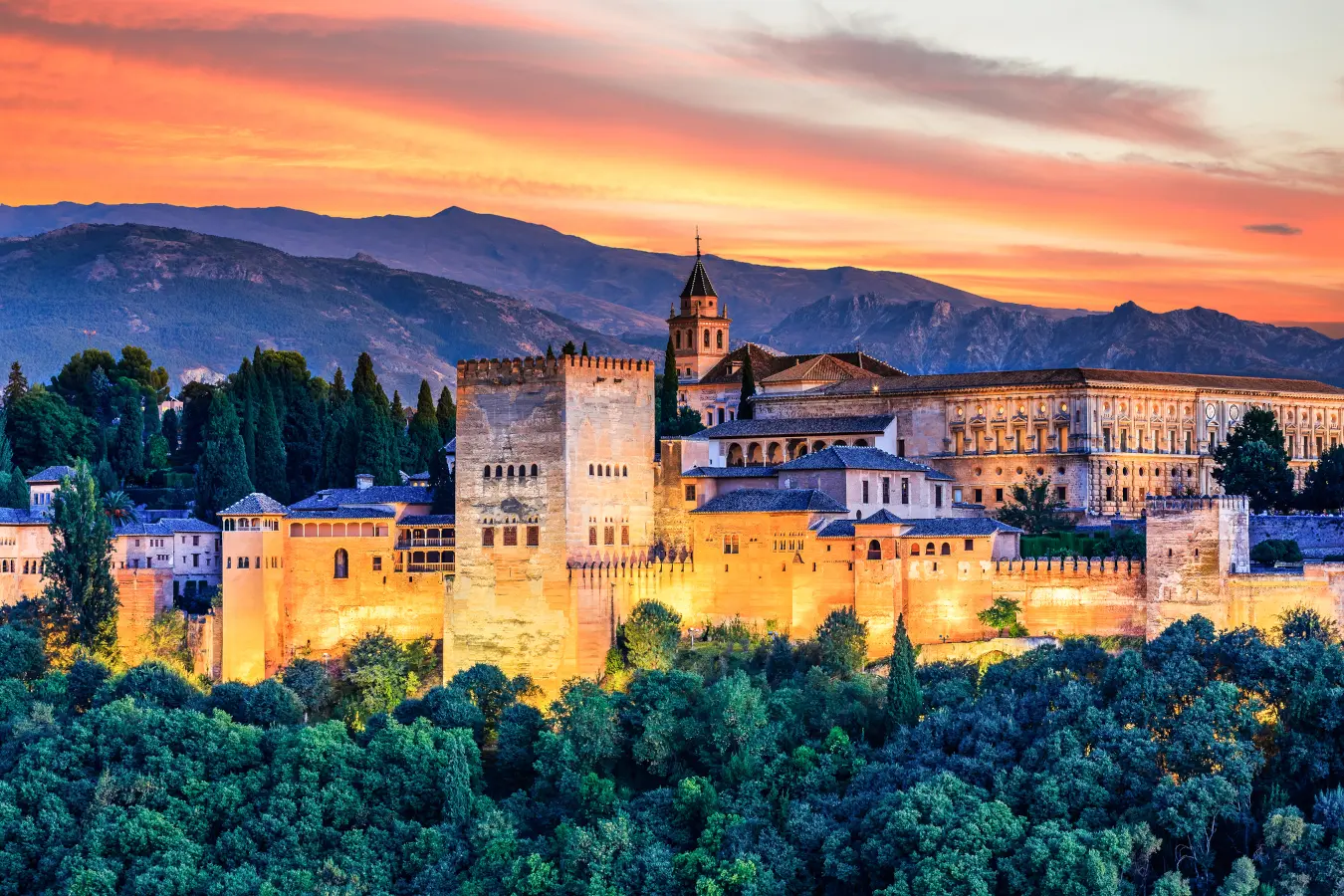
The Alhambra in Granada was a fortified palatine city. It included royal palaces, defensive structures, administrative spaces, homes, workshops, gardens and water systems, with the Generalife serving as a nearby country estate and retreat.
Calling it a palace isn’t wrong, but it leaves out the scale and function of the complex. Its walls enclosed a working court and community, not only decorated ceremonial rooms. Later Christian additions, including the Palace of Charles V, added another historical layer to the site.
38. Córdoba’s Mosque–Cathedral contains several periods of religious history
The Mosque–Cathedral of Córdoba can’t be explained accurately as a mosque that simply became a church overnight. The site has a layered history, while the surviving monumental mosque was begun in the eighth century and expanded under several rulers.
After Córdoba came under Christian rule in 1236, the building was consecrated as a cathedral. Chapels and other Christian elements were added over time, followed by a Renaissance cathedral nave in the sixteenth century. The result is a complex building in which different periods remain visible together.
39. Segovia’s Roman aqueduct was built without mortar between its granite blocks
The monumental section of Segovia’s Roman aqueduct is made from large granite blocks fitted together without mortar. Weight, balance and precise engineering keep the arches standing.
The aqueduct carried water from the Frío River area toward the city and remained part of Segovia’s water system for centuries. Its most famous two-tiered section reaches almost 29 metres at its highest point. Standing below it makes the scale of the engineering much clearer than any photograph.
40. The Sagrada Família reached its maximum height in 2026, but it still isn’t completely finished
On February 20, 2026, the final upper arm of the cross was installed on the Tower of Jesus Christ. The tower reached 172.5 metres, completing the exterior of the basilica’s central and tallest tower. It was blessed on June 10, 2026, exactly 100 years after Antoni Gaudí’s death.
That milestone didn’t complete the entire Sagrada Família. Work continues on other elements, including the Glory Façade and parts of the wider project, and the basilica hasn’t announced one final completion date for everything. The 2026 milestone is still historic and makes the Barcelona landmark especially timely for anyone testing their knowledge with a famous landmark quiz.
Spain’s Most Memorable Traditions Are Highly Local
Many customs labelled “Spanish” belong to one region, city or town. Knowing where they come from makes them more interesting and prevents a Valencian, Catalan, Galician or Andalusian tradition from being presented as something followed everywhere.
41. Valencia still has a historic water court that meets in public
The Water Tribunal of the Plain of Valencia meets at noon on Thursdays outside the Apostles’ Gate of Valencia Cathedral. Its members hear irrigation disputes between farmers and deliver oral decisions in public.
The court is part of a long system for managing the water channels that irrigate Valencia’s farmland. UNESCO recognizes it together with the Council of Wise Men of Murcia as part of the intangible cultural heritage of humanity. It is also one of the most unusual free experiences in Valencia, although public holidays can alter the meeting day.
42. Catalonia’s human towers can reach ten levels
Castells are human towers built by organized groups during festivals in Catalonia. UNESCO describes them as structures formed in six to ten stages, with a wide base called the pinya supporting the increasingly smaller levels above.
The towers depend on training, balance, trust and a large number of participants rather than on one fearless climber. Smaller members complete the upper levels, and helmets are used for the youngest participants. The entire group celebrates a successful construction and safe dismantling.
43. Valencia spends months creating monuments that will be burned
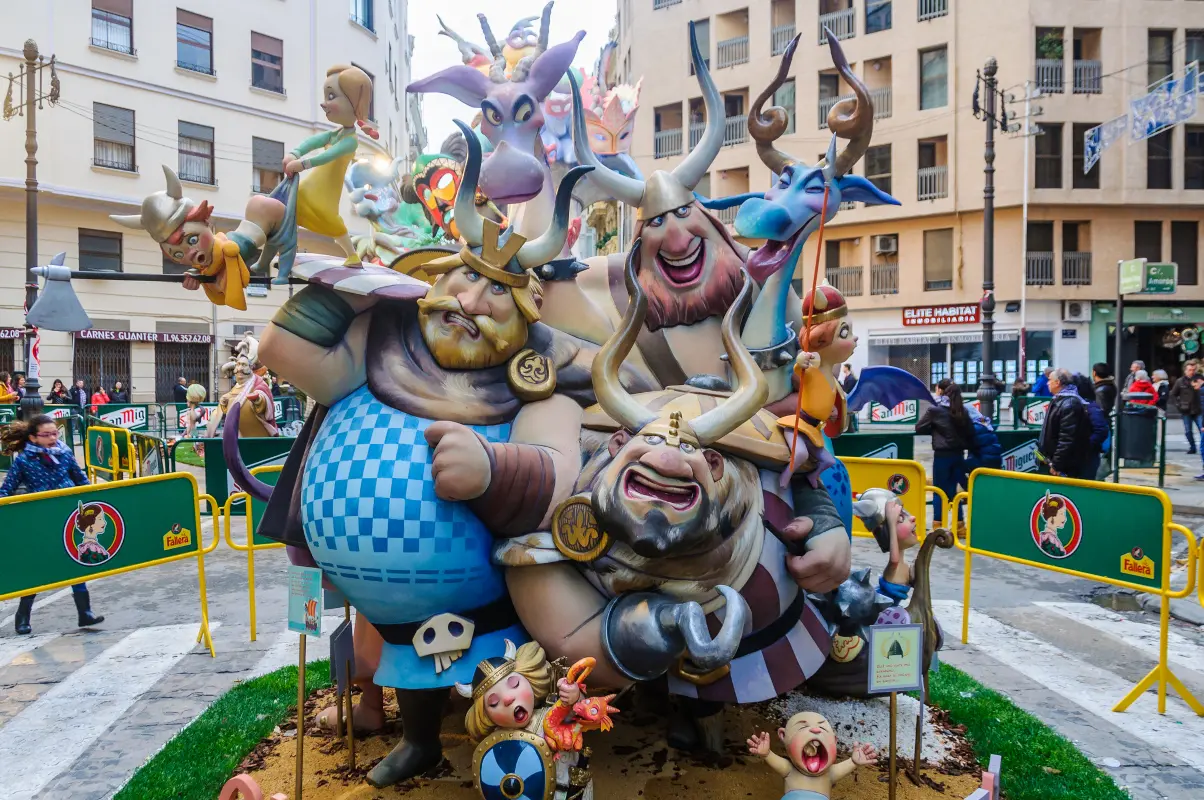
ID 77558899 ©Gábor Kovács | Dreamstime.com
During Las Fallas, neighbourhood groups display enormous artistic monuments made from figures called ninots. The works can be satirical, political, playful or fantastical, and many take months to design and build.
Most are burned during the Cremà in March. Selected figures, known as ninots indultats, are spared through public voting and preserved in the Fallas Museum. The festival combines craftsmanship, fireworks, music, neighbourhood competition and an ending that deliberately destroys almost everything created for it.
44. La Tomatina belongs to one town
La Tomatina takes place in Buñol, a town in the Region of Valencia. Participants throw ripe tomatoes during a tightly managed event held on the last Wednesday of August.
It is famous worldwide, but it isn’t a nationwide Spanish custom. Modern attendance is ticketed, capacity is controlled and participants must follow event rules. The tomatoes are crushed before being thrown to reduce the risk of injury, and the battle lasts for a limited period before the streets are cleaned.
45. The Camino de Santiago is a network of routes
“The Camino” is often spoken about as though it were one fixed path, but pilgrims reach Santiago de Compostela along several routes. The Camino Francés is the best known, while the Portuguese, Northern, Primitive and English routes are among the other established options.
Distances, landscapes and starting points vary widely. Some people walk for more than a month; others complete a shorter final section. The shared destination and pilgrimage tradition connect the routes, but there is no single experience that represents every Camino journey.
46. Spain welcomes the New Year with 12 grapes
At midnight on New Year’s Eve, people across Spain try to eat one grape with each of the clock’s 12 chimes. Finishing all 12 is associated with good luck for the 12 months ahead.
The nationally televised clock at Puerta del Sol in Madrid provides the best-known countdown, but families and groups follow the custom throughout the country. The chimes come quickly, so eating the grapes is less graceful than it may sound. Several stories explain how the custom began, but its exact origin is debated.
47. Spain’s famous Christmas lottery is built around shared tickets
Spain’s Christmas Lottery takes place on December 22, and the excitement extends far beyond one individual buying one ticket. A ticket in one series is divided into ten décimos, and people also buy smaller informal shares called participaciones.
Families, colleagues, clubs, bars and neighbourhood groups commonly share the same number. When that number wins, the prize may be spread across an entire workplace or community. El Gordo is the name associated with the top prize, but the draw distributes many other prizes across a very large number of tickets.
48. Spain’s main prank day is December 28
Día de los Santos Inocentes falls on December 28. Although the date has a religious origin, its modern popular customs include jokes, false stories and harmless tricks, giving it a role similar to April Fools’ Day.
Media outlets may publish deliberately invented stories, and people can attach paper figures to someone’s back without them noticing. The word inocentada is used for the prank. Visitors who encounter a surprising Spanish headline on December 28 should check whether it is genuine before sharing it.
49. Córdoba residents open flower-filled private courtyards during an annual festival
During the Festival of the Courtyards, residents in Córdoba open carefully maintained patios filled with geraniums, carnations, jasmine, fountains and decorative objects. Many of these spaces belong to private homes rather than museums or permanent public attractions.
The competition usually takes place during the first half of May, although exact dates vary. Preparing the patios is a year-round commitment involving watering, pruning, arranging pots and maintaining shared spaces. The festival is recognized by UNESCO as intangible cultural heritage.
50. Spanish children may wait for a mouse rather than a tooth fairy
Ratón Pérez is the little mouse who collects children’s lost teeth and leaves a gift in return. Writer Luis Coloma created the best-known version of the character in the nineteenth century for the young King Alfonso XIII.
Madrid has a small Ratón Pérez House Museum near Puerta del Sol, close to the place where the fictional mouse was said to live in a biscuit box. The tradition offers a warm ending to a list that begins with enclaves and international borders: one of Spain’s most familiar childhood characters is a tiny mouse with a royal literary connection.
Conclusion
Spain becomes much more interesting once its regions are allowed to remain distinct. Valencian paella, Catalan human towers, Galician maritime culture, Andalusian architecture and Canary Island traditions all belong within Spain, but they don’t become interchangeable simply because they share a country.
I understand why so many friends have chosen Spain for a new home and why vacationers return. There is always another city, coastline, landscape, meal or local celebration to discover. A Costa del Sol itinerary, a visit to northern Spain and a weekend in Valencia can feel like three very different trips.
Which of these facts surprised you most, and is there a Spanish tradition or place you would add?
Frequently Asked Questions About Spain
What are some of the most surprising facts about Spain?
Spain includes a town completely surrounded by France, shares the administration of Pheasant Island with France and has a whistled form of communication preserved on La Gomera. The country’s highest mountain is a volcano in the Canary Islands, while one cathedral keeps a live rooster and hen inside.
What makes Spain culturally distinctive?
Spain combines strong regional traditions, several regionally co-official languages, varied landscapes and cuisines that change substantially from one area to another. The food, festivals and daily customs of Galicia, Catalonia, Valencia, Andalusia, the Basque Country and the islands shouldn’t be treated as identical.
Does everyone in Spain take a siesta?
No. A daily afternoon nap isn’t a universal habit in modern Spain. Some smaller shops and independent businesses still close for part of the afternoon, while many museums, shopping centres, supermarkets and urban stores remain open.
What time do people eat dinner in Spain?
Many restaurants serve dinner from around 8:00 PM until 11:30 PM, although schedules vary by region, season and type of venue. Cafés, tapas bars and restaurants in major visitor areas may offer food earlier.
Was the Sagrada Família completed in 2026?
No. The exterior of the Tower of Jesus Christ reached its final height of 172.5 metres in February 2026 and was blessed in June. Other work remains, including parts of the Glory Façade and the wider basilica project, so the entire Sagrada Família wasn’t completed in 2026.
If you enjoyed these facts, continue with surprising facts about France, test yourself with geography trivia, or see how many Europe questions you can answer.
More amazing articles for you:
70 Interesting Facts About Paris - Famous Stories, Hidden History and Surprising Details
Top 50 largest cities in the world (2016 edition)
The Deepest Cave on Earth: The Krubera Cave
Covent Garden's Best-Kept Secrets: Experience the City's Hidden Gems This Spring
Where to Stay in Vienna for First-Time Visitors: Best Districts by Budget, Trip Length, and Transpor...
How to Avoid Tourist Fines in Europe: Rules Travelers Should Know
30 European Art Museums You Can Explore Online: Free Virtual Tours & Collections
A Travel Guide for Colour Lovers #Infographic

Violeta-Loredana Pascal is a communications expert, business mentor, and the founder of Earth’s Attractions and PRwave INTERNATIONAL. A pioneer in the Romanian digital PR landscape since 2005, she holds a degree in Communication and Social Sciences from SNSPA Bucharest. Violeta is a senior trainer at AcademiadeAfaceri.ro, where she leverages over 20 years of experience to teach professional courses in PR strategy and workplace productivity. By blending high-level business consulting with a passion for holistic travel and wellness, she empowers solopreneurs to overcome procrastination, build profitable brands, and design a life of purposeful adventure.