I’ve used English for years, and there are still British expressions that make me wonder, for a moment, what exactly the person means. The individual words can be perfectly familiar, yet put them together and suddenly “Bob’s your uncle,” “that’s your shout,” or “I’m knackered” don’t tell you very much unless you already know the expression.
English isn’t my mother tongue. I learned it at school and later at university, I have a Cambridge certificate, but a lot of my English also came from TV, films, and music. Long before YouTube, language apps, or subtitles whenever you wanted them, I used to hear an unfamiliar word, try to work out how it was spelled, and then look for it in my mom’s old dictionary.
Maybe that’s why expressions have always caught my attention. And British English has plenty of them. Sometimes the confusing part is the vocabulary, but just as often it’s the understatement, irony, politeness, or tone that changes what a perfectly simple sentence actually means.
ID 35329309 ©Tomas Marek | Dreamstime.com
So if you’re visiting the UK, here are 65 British sayings and expressions worth knowing before you find yourself wondering why someone is talking about Bob, biscuits, being gutted, or having a cheeky something.
British Sayings You May Hear in Pubs, Cafés, and Restaurants
Food and drink are where British phrases for travelers become useful very fast. A pub, café, bakery, hotel breakfast room, or casual restaurant can give you a lot of small language surprises, especially if you are used to American English or if you learned English mostly from formal lessons.
1. Bob’s your uncle
Meaning: There you go. That’s it. It’s done. That’s all you need to do.
This is one of the British sayings that sounds completely strange if you take it literally. Nobody is talking about your uncle; the phrase usually appears at the end of a simple explanation.
Example: “My phone wouldn’t connect to the local network, but I toggled airplane mode on and off, and Bob’s your uncle – full bars.”
If you are planning time in the capital, you may hear short explanations like this while asking for directions, especially in busy areas covered in this London travel guide.
2. Fancy a cuppa?
Meaning: Would you like a cup of tea?
“Cuppa” means a cup of tea. “Fancy” here means “would you like,” not elegant or expensive. You may hear this in someone’s home, at a guesthouse, in a casual work setting, or in British TV shows (I see it a lot there).
3. Put the kettle on
Meaning: Make tea.
This phrase is less about the object and more about the moment. Someone may say it when guests arrive, when there is something to discuss, or when everyone needs a small pause. In British culture, tea can be practical, social, comforting, and almost automatic – again, I see this expression a lot in movies.
4. Cheers
Meaning: Thank you, goodbye, or a toast.
This is one of the safest British words you can use naturally. You can say “cheers” when someone gives you change, opens a door, hands you a receipt, or serves you a drink. It can also be used when raising a glass.
You will probably hear it often in shops, pubs, cafés, buses, and casual interactions. It is short, useful, and it doesn’t sound forced when visitors use it naturally.
5. It’s your shout
Meaning: It’s your turn to buy a round of drinks.
If you are going out with friends in the UK, this expression will be useful. One person buys drinks for the group, then someone else buys the next round. If someone says “it’s your shout,” they usually mean it is your turn to pay.
Bonus pub word: pint
A pint is a common way to order beer in a British pub. You can ask for “a pint of lager,” “a pint of ale,” or “half a pint” if you want a smaller drink. Americans know the word too, but in the UK it is part of everyday pub language, especially when people say they are “going for a pint.”
Example: “We stopped for a pint after the museum, then called it a day.”
6. I’m stuffed
Meaning: I’m very full.
After a meal, “I’m stuffed” usually means the person ate enough and cannot eat more. In a restaurant or at someone’s home, it is a normal informal phrase.
Example: “That was lovely, but I’m stuffed.”
7. The bill, please
Meaning: The check, please.
In the UK, “bill” is the normal word in restaurants. If you ask for the check, people will understand you, especially in tourist areas, but “the bill” sounds more local.
8. Eat in or take away?
Meaning: Are you eating here or taking the food with you?
This is the UK version of “for here or to go.” You may hear it in cafés, bakeries, fast-food places, sandwich shops, and casual restaurants.
9. Dog’s dinner
Meaning: A mess.
If something looks like a “dog’s dinner,” it looks messy, badly arranged, or badly done. It can be used about an outfit, a plan, paperwork, a room, a suitcase, or even a plate of food if someone is being unkind.
Example: “We tried to catch the festival in the town square last night, but between the downpour and the sound system failing, the whole evening turned into a proper dog’s dinner.”
10. The dog’s bollocks
Meaning: Excellent, very good, the best. (I know, unexpected meaning!)
This phrase is funny because it sounds negative if you don’t know it. It is also vulgar, so I wouldn’t recommend using it in polite company, with hotel staff, at a nice restaurant, or with people you don’t know well. It is useful to know what it means, though.
11. Cheap as chips
Meaning: Very inexpensive.
This phrase is easy to understand once you know that “chips” in the UK are thick fries, often seen as a simple, affordable food. If something is “cheap as chips,” it is very cheap.
Example: “The bus ticket was cheap as chips.”
12. Cheeky Nando’s
Meaning: An informal, spontaneous, slightly indulgent trip to Nando’s, the popular chicken restaurant chain.
This phrase became a cultural joke because it sounds simple but carries tone, mood, and social context. It usually means a casual meal that was not planned as a big event. You will most likely not use this, but if you hear it, now you know why people may smile.
13. I’m gasping
Meaning: I’m very thirsty.
Someone may say this after a long walk, a warm day, or too much time without a drink. It can sound more intense than simply saying “I’m thirsty.”
Example: “I’m gasping. Let’s stop for a drink.”
14. Not my cup of tea
Meaning: Not something I personally like.
This is one of the best-known British expressions. It sounds gentle, and it often is. Someone may use it about a food, attraction, activity, film, place, or idea.
Example: “That museum wasn’t really my cup of tea.”
British Phrases for Transport, Directions, and Getting Around
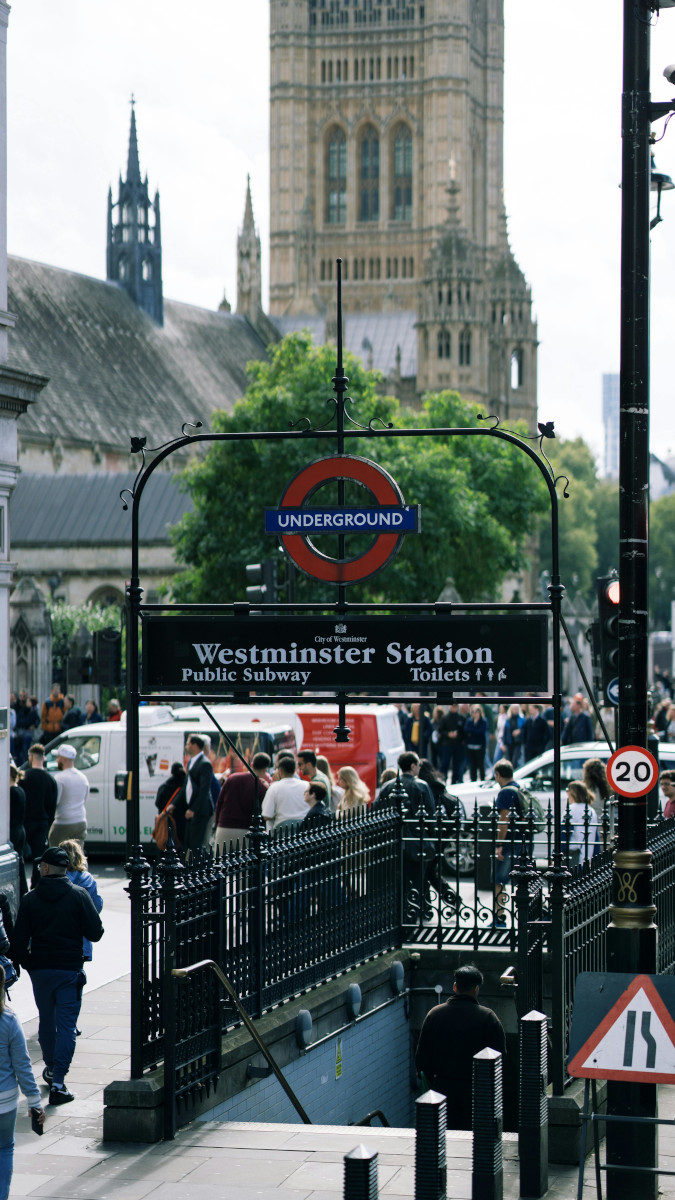
When you are trying to find a train platform, understand a taxi driver, rent a car, or follow local directions, these British English phrases for tourists are practical because they can affect your movement, timing, luggage, and plans.
15. Mind the gap
Meaning: Be careful of the space between the train and the platform.
I saw this one first in a movie – and it is one of the most famous phrases linked to London transport. You may see or hear it on the London Underground, and even if it has become iconic, it is also a real safety warning.
16. The Tube
Meaning: The London Underground.
Both “Tube” and “Underground” refer to London’s underground rail system, but “the Tube” is the everyday conversational term many people use.
Example: “We’ll take the Tube to Covent Garden.”
17. Queue
Meaning: Line.
In the UK, you don’t usually stand “in line”; you stand “in a queue.” You will see this word at airports, museums, attractions, ticket desks, cafés, shops, and transport points.
18. Boot
Meaning: The trunk of a car.
This is useful if you are taking a taxi, renting a car, or putting luggage away. A driver may say, “You can put your bags in the boot.”
19. Bonnet
Meaning: The hood of a car.
As I watched a lot of TV series and movies from both the UK and the US, I couldn’t help noticing the differences. Of course, there are sayings and proverbs, and each country has its own expressions that give a glimpse into local wisdom and the way people see life. But there are also different words for the same thing: lift and elevator, boot and trunk, bonnet and hood.
I discovered a lot of car vocabulary while watching, for years, Top Gear with Jeremy Clarkson, Richard Hammond, and James May, and then The Grand Tour.
20. Lift
Meaning: Elevator.
You will see “lift” in hotels, department stores, museums, train stations, airports, and public buildings. If a British person says “take the lift,” they mean take the elevator.
21. Pop round
Meaning: Visit briefly.
This is more social than transport-related, but it helps if you are staying with friends, meeting locals, or hearing casual plans.
Example: “I’ll pop round later” means “I’ll come by for a short visit later.”
22. Nip out
Meaning: Go out quickly for a short errand.
If someone says, “I’ll just nip out,” they are not leaving for a full afternoon. They are going out briefly, maybe to buy milk, get coffee, pick something up, or handle a small task.
23. Give me a bell
Meaning: Call me.
Nobody is giving anyone an actual bell. It means phone me.
Example: “Give me a bell when you arrive.”
24. Sorted
Meaning: Arranged, fixed, handled, or taken care of.
This is very useful for travel. If your hotel booking, train ticket, taxi, restaurant reservation, or plan is “sorted,” it has been dealt with.
25. Taking the biscuit
Meaning: Going too far, being ridiculous, or pushing someone’s patience.
This is similar to “taking the cake.” You may hear it when someone thinks a situation, price, delay, or behavior has become unreasonable.
Example: “Charging extra for that really takes the biscuit.”
26. Taking the mickey
Meaning: Teasing, mocking, joking at someone’s expense, or not being serious.
You may also hear “taking the mick.” It can be friendly banter, or it can be sharper, depending on tone and relationship.
What they say: “Are you taking the mickey?”
What they may mean: “Are you joking, mocking me, or being ridiculous?”
27. Nicked
Meaning: Stolen, arrested, or caught, depending on context.
If someone says their phone was nicked, it was stolen. If someone says they got nicked, they may mean they were arrested or caught by the police. In casual traffic talk, someone may also say they were nicked for speeding.
28. A stone’s throw away
Meaning: Very close.
This is a useful phrase when people give directions. If a café, station, hotel, or attraction is “a stone’s throw away,” it should be very near.
Example: “The museum is just a stone’s throw from the station.” On a funny note, in Romanian we have “a stick’s throw away”.
29. Tailback
Meaning: A long line of slow or stopped traffic.
You may hear this on traffic reports, especially around motorways, holiday weekends, events, roadworks, and accidents.
30. Get a wiggle on
Meaning: Hurry up.
This sounds softer than “hurry up,” but the message is clear. You may hear it when someone is running late for a train, show, reservation, or tour.
Example: “We need to get a wiggle on or we’ll miss the train.”
British Sayings About Being Tired, Annoyed, or Surprised
After a long day of sightseeing, British slang meanings become easier to understand. You walk too much, the train is delayed, the weather changes, the museum closes early, or the booking system refuses to cooperate. That is when words like “knackered,” “gutted,” “faff,” and “gobsmacked” suddenly feel very useful.
31. Knackered
Meaning: Very tired.
This is one of the most useful British sayings for travelers because UK trips often involve a lot of walking. After a full day in London, York, Edinburgh, Bath, Oxford, or Glasgow, “I’m knackered” can be exactly the right phrase to understand.
Example: “We walked all day, and I’m absolutely knackered.”
32. Gutted
Meaning: Very disappointed.
If someone says they are gutted, they are really disappointed.
Example: “I was gutted the castle was closed.”
This can easily happen when visiting places with seasonal hours, old buildings, weather-dependent walks, or popular attractions. It is one reason I always like checking opening hours and practical details before trips, especially for cities with a lot of historic attractions like York.
33. Chuffed to bits
Meaning: Very pleased, happy, or proud.
This is positive. Someone may be chuffed to bits after getting tickets, finding a bargain, seeing good weather, or receiving good news.
Example: “I’m chuffed to bits we managed to get a table.”
34. Gobsmacked
Meaning: Shocked or amazed.
Gobsmacked can be used for good surprises and bad surprises.
Example: “I was gobsmacked by the view from the hill.”
35. Blimey
Meaning: Mild surprise.
“Blimey” is informal and a little old-fashioned to some ears, but travelers still recognize it because it appears in British media. You may hear it as a light reaction to something surprising. I know a few British TV series where it is used 🙂
36. Bloody hell
Meaning: Surprise, frustration, or disbelief.
This is stronger than “blimey” and more informal. Some people use it casually; others may find it rude, depending on the situation. It is better understood than copied, especially if you are talking to hotel staff, guides, or strangers.
37. What a faff
Meaning: Something is annoyingly complicated or takes more effort than it should.
This is a very useful travel phrase. Ticket machines, airport rules, rail replacement buses, luggage storage, online forms, and unclear booking systems can all become “a faff.”
Example: “Changing trains three times with luggage was such a faff.”
38. It’s doing my head in
Meaning: It is annoying or frustrating me.
This can be used about noise, confusion, delays, bad signs, a repetitive sound, or a situation that becomes too much.
39. I can’t be bothered
Meaning: I don’t feel like doing it. I don’t have the energy or interest.
This is common and direct. You may hear it when someone doesn’t want to go out again, walk farther, cook, make a call, or deal with another small task.
40. Throwing a wobbly
Meaning: Having a tantrum or losing emotional control.
This is usually said about someone else. It is informal and not something I’d say directly to a stranger.
Example: “He threw a wobbly when the train was cancelled.”
41. Pulling my leg
Meaning: Joking, teasing, or trying to make someone believe something that is not true.
If someone tells you a story that sounds unbelievable, you may hear, “Are you pulling my leg?”
Example: “You paid that much for a sandwich? Are you pulling my leg?”
42. Full of beans
Meaning: Full of energy.
This is often used for children, cheerful people, or someone who seems unusually energetic early in the morning.
Example: “The kids were full of beans after breakfast.”
43. Keep your chin up
Meaning: Stay positive during a difficult moment.
This is encouragement. You may hear it after a disappointment, delay, mistake, or stressful travel moment.
44. Catch you later
Meaning: See you later, goodbye for now.
This is casual and friendly. It doesn’t always create a specific plan. It can simply end a conversation in a relaxed way.
British Phrases That Sound Polite but May Mean Something Else
You may already know some of these, but this category is useful not only for traveling, as you will see. This is where British English can confuse travelers more than slang: the words may sound polite, soft, or neutral, while the meaning depends heavily on tone. These British expressions are useful because they help you understand social context, not just vocabulary.
45. With all due respect
Meaning: Often introduces disagreement.
It sounds polite, but the next sentence may be critical. If someone says “with all due respect,” pay attention to what follows.
What they say: “With all due respect…”
What they may mean: “I disagree with you, and I’m about to say why.”
46. I’m not being funny, but…
Meaning: A criticism, complaint, or uncomfortable opinion is coming.
This phrase usually has nothing to do with humor. It often prepares the listener for something direct.
Example: “I’m not being funny, but this bill doesn’t look right.”
47. That’s interesting
Meaning: Sometimes genuinely interesting. Sometimes polite hesitation, doubt, or disagreement.
Tone decides a lot here. If it is enthusiastic, it may be sincere. If it is slow, flat, or followed by silence, there may be another meaning underneath.
48. That’s brave
Meaning: Sometimes praise. Often a polite way to say “I wouldn’t have chosen that.”
This is one of my favorite examples because it looks positive on the surface. In some situations, “brave” means courageous. In others, it means someone thinks your choice is risky, strange, or unwise.
What they say: “That’s a brave choice.”
What they may mean: “I’m surprised you thought that was a good idea.”
49. I’ll think about it
Meaning: Could be genuine, but it may also be a polite no.
Don’t treat it as a confirmed yes. It may mean the person really wants time, or it may be a soft way to avoid refusing directly.
50. I might join you later
Meaning: Maybe. No promise.
If someone says this about a plan, don’t build the whole evening around them definitely coming. It may happen; it may not.
51. Quite good
Meaning: Usually fairly good, depending on tone.
This can confuse Americans because “quite” may sound like “very.” In British English, “quite good” often sounds more restrained. It can mean something is decent, acceptable, or good, but not always excellent.
52. Fair enough
Meaning: Okay. Reasonable. I accept that.
This phrase often ends a small disagreement or acknowledges someone’s explanation.
Example: “I can’t make it tonight.” “Fair enough.”
53. Right…
Meaning: It depends entirely on tone.
A quick, energetic “Right!” can mean “Let’s begin” or “Okay, I understand.” A slow “Right…” can signal discomfort, skepticism, or a desire to move the conversation along.
British delivery can be very deadpan. The face may stay almost still while the meaning sits in the timing, pause, or tone. If you learned English mostly from formal classes, this kind of small social signal can be harder than vocabulary.
54. Are you all right?
Meaning: Can mean “How are you?” or “Can I help you?”
In a shop, “Are you all right there?” may mean the assistant is asking whether you need help. It doesn’t always mean you look sick, lost, or distressed.
That can be surprising the first time you hear it, especially if you are used to more direct customer-service language.
British Weather Sayings Travelers Should Know
You can’t have a useful list of UK phrases for tourists without weather. British weather sayings are common because the weather can change the mood, the plan, the clothes, and sometimes the whole day.
55. It’s tipping it down
Meaning: It is raining heavily.
This is a phrase you should know because you may hear it often, especially when rain arrives suddenly.
Example: “Don’t go out yet. It’s tipping it down.”
56. It’s chucking it down
Meaning: It is raining heavily.
This is similar to “tipping it down.” Both are informal and very useful.
57. It’s a bit nippy
Meaning: It is a little cold.
“Nippy” usually means cold enough to notice, especially if there is wind. It may not be freezing, but you may want a jacket.
58. Lovely weather for ducks
Meaning: It is raining a lot.
This is usually humorous. Nobody is seriously reviewing the weather from the ducks’ perspective. It is a light way to comment on a wet day.
59. The weather’s turned
Meaning: The weather has changed, usually for the worse.
A sunny morning can become windy, rainy, or cold. If someone says “the weather’s turned,” they mean the conditions have shifted.
How to respond to British weather talk: Keep it simple. “Hopefully it clears up later,” “At least we came prepared,” or “It really came down fast” all work. You don’t need a clever line every time.
British Money and Everyday Phrases Travelers Should Understand
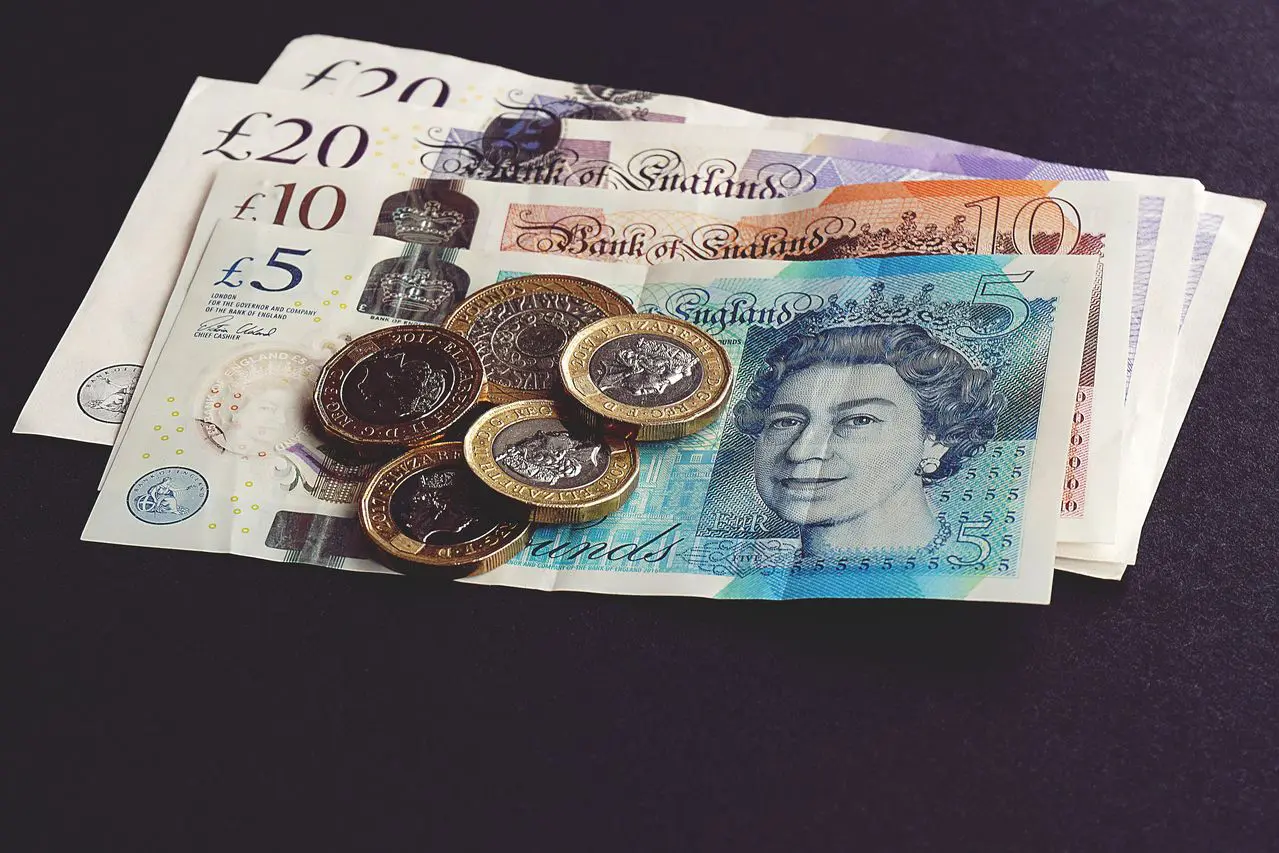
Money, small errands, crowds, and daily routines have their own British vocabulary too. These common British expressions are useful when you are shopping, paying in cash, listening to locals, reading travel forums, or trying to understand a conversation in a market, pub, or train station.
60. Quid, fiver, and tenner
Meaning: Pound, five-pound note, and ten-pound note.
A quid is one British pound. A fiver is five pounds. A tenner is ten pounds. You may hear these words in markets, cafés, taxis, shops, and casual conversations.
Example: “It was only a tenner.”
61. Splashing out
Meaning: Spending more money than usual on something special.
You may hear this when someone books a nicer hotel, buys expensive theatre tickets, chooses a special dinner, or pays more for comfort.
Example: “We’re splashing out on afternoon tea.”
62. Skint
Meaning: Out of money or broke.
This is informal and common. Students, young people, and anyone close to payday may use it jokingly or seriously.
Example: “I’d love to go, but I’m skint.”
63. Spend a penny
Meaning: Go to the toilet.
This is an old-fashioned polite phrase. Travelers may not hear it every day, but it is worth knowing because it appears in British culture and older conversations.
64. Chock-a-block
Meaning: Very full, crowded, or packed.
A market, train, road, pub, museum, or shopping street can be chock-a-block.
Example: “The town centre was chock-a-block on Saturday.”
65. Call it a day
Meaning: Stop what you are doing for now.
This is useful after a long day of sightseeing, walking, driving, shopping, or working.
Example: “We’ve seen enough today. Let’s call it a day.”
British vs American Word Traps That Can Get Awkward
Some British English words confuse travelers because they look familiar but mean something else. These British vs American word differences are especially useful for visitors because they can affect shopping, restaurants, transport, clothes, cars, and casual conversation.
Pants
UK meaning: Underwear.
US meaning: Trousers.
If you are shopping in the UK and need the outer garment, say “trousers.” Telling someone you spilled coffee on your pants can sound much more personal in British English than you intended.
Pissed
UK meaning: Drunk.
US meaning: Angry.
This is one of the classic British vs American traps. In the UK, “I was pissed last night” usually means the person was drunk, not angry.
Rubber
UK meaning: Eraser.
US meaning: Condom.
In a stationery context in the UK, asking for a rubber means asking for an eraser. Americans may hear it differently, which is exactly why this kind of vocabulary can become funny or awkward.
Chips
UK meaning: Thick fries.
US meaning: Potato chips.
In the UK, what Americans call chips are usually “crisps.” If you order fish and chips, you are not getting fish with a bag of potato chips. You are getting fish with fries.
More British Words You May Want to Know
If you want a few extra British English words for travel, these are not complicated, but they are useful. You may see them on menus, signs, hotel websites, public transport information, and attraction pages.
Crisps
Meaning: Potato chips.
If you want a bag of thin, crunchy potato snacks, look for crisps.
Biscuit
Meaning: Usually a cookie.
A British biscuit is usually sweet and eaten with tea or coffee. It is not the same as an American biscuit.
Jumper
Meaning: Sweater.
If someone says it is cold and you should bring a jumper, they mean a sweater.
Holiday
Meaning: Vacation.
In British English, “going on holiday” means going on vacation.
Car park
Meaning: Parking lot.
You will see this on signs, maps, attraction pages, and city information. It is useful if you are renting a car, especially for family trips or countryside routes.
Should Travelers Use British Sayings Themselves?
One of the easiest mistakes is learning a lot of British slang before a trip and then trying to use all of it. I understand the temptation. It feels fun, and if you love language, you want to test what you learned. But many British sayings sound natural only when locals use them casually.
Safe words and phrases travelers can use without sounding forced include “cheers,” “queue,” “loo,” “lift,” “bill,” “take away,” “the Tube,” and “trousers.” They are practical and normal.
Words and phrases I would understand rather than force include “blimey,” “the dog’s bollocks,” “innit,” “throwing a wobbly,” “taking the mickey,” and “bloody hell.” You may hear them, and now you will know what they mean, but using too many at once can sound odd or forced.
If you are exploring different regions, remember that expressions and accents can shift too. The words you hear in London may not be exactly the same as what you hear in Scotland, Wales, Northern Ireland, or smaller towns. That is part of the charm, whether your trip includes London, a Scottish city like Glasgow, or the historic streets and viewpoints of Edinburgh.
How to Understand British Sayings Without Taking Everything Literally
The safest rule is to listen to the situation, not only the words. British sayings often carry meaning through tone, timing, understatement, and the relationship between the people speaking. A phrase can be friendly in one context, sarcastic in another, and completely harmless somewhere else. Language is part of travel, just like food, streets, museums, signs, transport, and habits.
I believe in being prepared, and this kind of preparation is not only about documents, money, or reservations. Of course, you still need the practical side too, especially with rules such as the UK ETA 2026 rules if they apply to your trip, or passport checks if you are worried about issues like a damaged passport. But once you arrive, language preparation can save you from smaller, funnier, and sometimes awkward moments.
And if you enjoy this type of cultural detail, you may also like travel content that turns knowledge into something fun, like travel trivia questions, including Europe trivia, famous landmark quiz questions, travel riddles with answers, or travel would you rather questions for road trips, airport waits, or evenings when everyone needs something easy to do.
British Sayings and the Bigger Reason Local Expressions Are Worth Knowing
Local sayings are never only about words. They show what people joke about, what they avoid saying directly, how they soften disagreement, how they complain, how they talk about weather, and how they turn ordinary situations into shared humor.
If you like discovering more proverbs and sayings from around the world, you can continue with Italian proverbs and meanings, French proverbs and meanings, Japanese proverbs and sayings, and Greek proverbs and sayings. For a different kind of language history, Latin phrases still used today show how many old expressions still appear in everyday English, law, school, books, and public life.
British sayings are more conversational than proverbs, but they have the same appeal: they help you notice how people really speak. And once you start noticing that, travel becomes richer.
Conclusion
You don’t need to memorize every British saying before visiting the UK. You don’t need to speak like a local either. But knowing the most common British sayings that confuse travelers can make pubs, train stations, shops, restaurants, hotels, and casual conversations easier to understand.
Practical words like “queue,” “lift,” “bill,” and “take away” help immediately. Funny phrases like “Bob’s your uncle,” “what a faff,” or “lovely weather for ducks” make the language more memorable. More delicate phrases, especially the polite ones, need context and tone.
In British English, the words are only part of the message. Tone, timing, and context often tell you the rest.
Which British saying confused you the first time you heard it?
British Sayings FAQ
What British sayings confuse travelers the most?
British sayings that often confuse travelers include “Bob’s your uncle,” “taking the mickey,” “knackered,” “chuffed to bits,” “gutted,” “tipping it down,” “with all due respect,” and “that’s brave.” They can be confusing because the literal words don’t always explain the real meaning.
What does “Bob’s your uncle” mean?
“Bob’s your uncle” means “there you go,” “it’s done,” or “that’s all you need to do.” It is often used at the end of an explanation.
What does “taking the mickey” mean?
“Taking the mickey” means teasing, mocking, or making fun of someone. It can be playful between friends, but tone matters. If someone sounds annoyed, it may feel less friendly.
What does “knackered” mean in British slang?
“Knackered” means very tired. Travelers may hear it after a long day of walking, sightseeing, commuting, or dealing with delays.
What does “cheers” mean in the UK?
In the UK, “cheers” can mean thank you, goodbye, or a toast when drinking. It is one of the easiest British words travelers can use naturally.
What British words should American travelers be careful with?
American travelers should be careful with words such as “pants,” “pissed,” “rubber,” “fag,” “chips,” “crisps,” “jumper,” and “holiday.” They may have different meanings in British English and American English.
Should tourists use British slang in the UK?
Tourists can safely use practical British words such as “cheers,” “queue,” “loo,” “lift,” “bill,” “take away,” and “the Tube.” More colorful slang is usually better understood than forced, especially if you are not sure about tone or context.
Are British sayings the same everywhere in the UK?
No. Some British sayings are widely understood, but regional words, accents, and expressions vary across England, Scotland, Wales, and Northern Ireland. Travelers may hear different phrases depending on where they go.
More amazing articles for you:
These 200 Travel Would You Rather Questions Make Long Drives, Airport Waits, Train Rides, and Hotel ...
A Passenger Was Fined $25,500 for Bad Behavior on a Flight - And It’s Only the Beginning
Quirky things to do in Amsterdam #infographic
A local's travel guide to Auckland, New Zealand
Travel Resolutions for 2025: Ideas to Inspire Your Adventures
3 must visit museums in Bucharest, Romania
Top largest cities in the world - new edition
Constanta - The Black Sea

Violeta-Loredana Pascal is a communications expert, business mentor, and the founder of Earth’s Attractions and PRwave INTERNATIONAL. A pioneer in the Romanian digital PR landscape since 2005, she holds a degree in Communication and Social Sciences from SNSPA Bucharest. Violeta is a senior trainer at AcademiadeAfaceri.ro, where she leverages over 20 years of experience to teach professional courses in PR strategy and workplace productivity. By blending high-level business consulting with a passion for holistic travel and wellness, she empowers solopreneurs to overcome procrastination, build profitable brands, and design a life of purposeful adventure.