
Latin is called a dead language, but, in a way, it still lives in schools, books, medicine, law, church language, mottos, abbreviations, public institutions, and phrases people repeat without always knowing where they came from. By the time you finish reading this article, you will discover how many Latin abbreviations, terms, or even sayings you are using or hearing frequently, perhaps not knowing their origin is Latin.
I studied Latin for all four years in a philological class in high school. We conjugated verbs, translated texts, learned about Roman culture, practiced declamation, and spent a lot of time with grammar that did not forgive carelessness. I am not a Latin expert, and I don’t want this article to sound like one of those “Latin makes everything profound” lists. But I do have a personal connection to the language. I am Romanian, and Romanians are a Latin people. Romanian is a Romance language, so Latin never felt completely foreign to me, though it is indeed old, formal, and difficult.

ID 71685628 ©Marek Uliasz | Dreamstime.com
That is why I wanted this list of ancient Latin phrases used today with meanings to be useful, and to provide you with some interesting information. You will see below phrases from famous Roman authors such as Horace, Virgil, Cicero, Ovid, and Caesar. You will also find legal Latin terms still used in courts and public discussion or terms used in medicine, biology, academic writing, mottos, school language, and everyday English.
You will see below Latin sayings about duty, reputation, time, death, law, power, education, discipline, fate, and the practical side of human nature. They are not all soft or inspirational; in fact, some might even surprise you or sound harsh.
If you enjoy cultural sayings, knowledge-based articles, and language history, you may also like my travel trivia section, where I publish quizzes and cultural knowledge articles, plus the proverb series with Japanese proverbs and sayings, Italian proverbs and meanings, French proverbs and sayings, and Greek proverbs and sayings. Latin is different because we usually meet it through preserved phrases rather than normal conversation, but that makes the surviving expressions even more interesting.
How to Read This List of Latin Phrases
This is not a random list of Latin-looking quotes. I kept the selection focused on Latin phrases still used today in English, law, medicine, academic writing, mottos, literature, school, public life, and everyday speech. I’ve included famous Latin sayings, abbreviations, legal or medical expressions, mottos, and short expressions that have survived through centuries.
For each phrase, you will find the meaning, a short origin or usage note, and an everyday example. Where the origin is clear, I mention it. Where it is better to describe the context – classical Latin, legal Latin, medical Latin, medieval Latin, academic Latin, or institutional motto – I do that instead. Not every Latin phrase below is a proverb, and not every phrase is something I would use in casual speech. But they are all phrases you can still encounter today.
Short Latin Expressions Used in Everyday English
I am starting this list with some expressions you are most likely using – perhaps you will be surprised to discover their origin. Many common Latin expressions used in English help us clarify, shorten, organize, or label something. You may use some of these in emails, articles, school assignments, reports, travel plans, and conversations without thinking of them as Latin.
1. Et cetera
Meaning: And the rest; and so on.
Origin / use: Usually shortened to etc. after a partial list.
Everyday example: “Pack chargers, medicine, documents, etc.”
2. Id est
Meaning: That is.
Origin / use: Usually shortened to i.e. and used to clarify exactly what you mean.
Everyday example: “Choose a Romance language, i.e., French, Italian, Spanish, Portuguese, or Romanian.”
3. Exempli gratia
Meaning: For example.
Origin / use: Usually shortened to e.g. and used before examples.
Everyday example: “Bring snacks, e.g., fruit, crackers, or nuts.”
4. Ante meridiem
Meaning: Before midday.
Origin / use: The source of a.m. in time notation.
Everyday example: “The train leaves at 8 a.m.”
5. Post meridiem
Meaning: After midday.
Origin / use: The source of p.m. in time notation.
Everyday example: “Check-in begins at 3 p.m.”
6. Ad hoc
Meaning: For this specific purpose.
Origin / use: Used for temporary solutions, groups, or decisions made for a particular situation.
Everyday example: “They created an ad hoc team to solve the problem.”
7. Ad libitum
Meaning: At one’s pleasure.
Origin / use: Often shortened to ad lib, especially in performance and speaking.
Everyday example: “The actor forgot the line and had to ad lib.”
8. Bona fide
Meaning: In good faith; genuine.
Origin / use: Used to describe something real, legitimate, or sincere.
Everyday example: “She is a bona fide expert in the field.”
9. Per se
Meaning: By itself; in itself.
Origin / use: Used when separating one thing from the wider situation.
Everyday example: “The hotel was not expensive per se, but parking and breakfast added up.”
10. Vice versa
Meaning: The other way around.
Origin / use: Used when two terms or situations can be reversed.
Everyday example: “The station is close to the hotel, and vice versa.”
11. Status quo
Meaning: The existing state of things.
Origin / use: Common in business, politics, education, and daily arguments about change.
Everyday example: “The proposal keeps the status quo.”
12. Quid pro quo

ID 217568290 ©Nastassia Samal | Dreamstime.com
Meaning: Something for something.
Origin / use: Used for exchanges, bargains, favors, and sometimes questionable arrangements.
Everyday example: “It sounded less like a gift and more like a quid pro quo.”
13. De facto
Meaning: In fact; in practice.
Origin / use: Used when something exists in reality even if it is not officially recognized.
Everyday example: “She became the de facto leader of the group.”
14. De jure
Meaning: By law.
Origin / use: Often contrasted with de facto.
Everyday example: “The de jure rule and the de facto practice were not the same.”
15. Ergo
Meaning: Therefore.
Origin / use: Used in logic and formal argument, but also sometimes jokingly.
Everyday example: “The museum is closed on Monday; ergo, we need another plan.”
16. Mea culpa
Meaning: My fault; through my fault.
Origin / use: From a confession formula, now used as an admission of blame.
Everyday example: “I sent the wrong file. Mea culpa.”
17. Persona non grata
Meaning: An unwelcome person.
Origin / use: Used in diplomacy and also more broadly for someone no longer welcome.
Everyday example: “After the scandal, he became persona non grata in that circle.”
18. Alter ego
Meaning: Other self.
Origin / use: Used for a second identity, a close counterpart, or another side of someone’s personality.
Everyday example: “Her stage persona is almost an alter ego.”
19. Alma mater
Meaning: Nourishing mother.
Origin / use: Used for a school, college, or university someone attended.
Everyday example: “He returned to his alma mater to give a speech.”
20. Curriculum vitae
Meaning: Course of life.
Origin / use: Usually shortened to CV, especially outside the United States.
Everyday example: “Send your curriculum vitae by Friday.”
21. Modus operandi
Meaning: Method of operating.
Origin / use: Often shortened to MO. Used for someone’s usual method, especially in crime, work, or behavior.
Everyday example: “That last-minute rush is his modus operandi.”
22. Alibi
Meaning: Elsewhere.
Origin / use: A legal term and common word for proof or claim that someone was somewhere else.
Everyday example: “She had an alibi for the time of the incident.”
23. Verbatim
Meaning: Word for word.
Origin / use: Used when something is repeated exactly as originally said or written.
Everyday example: “The quote was copied verbatim.”
24. Circa
Meaning: Around; approximately.
Origin / use: Often shortened to c. or ca. before approximate dates.
Everyday example: “The church was built circa 1200.”
25. Versus
Meaning: Against.
Origin / use: Used in law, sports, comparisons, debates, and titles.
Everyday example: “The article compares Rome versus Florence for first-time visitors.”
Famous Latin Phrases Still Used Today
These are the famous Latin phrases most people recognize from school, films, books, speeches, tattoos, mottos, and general culture. They are often short, memorable, and easy to reuse, which probably explains part of their survival. As I mentioned, I am including potential examples of how these Latin phrases could be used. I am sure you will find some rather forced – especially as English is not a Latin language – but I still included the examples for reference to see how easy it is to use these in everyday chats. I know that many use these translated – because, as you will see, these are, in a way, evergreen pieces of wisdom.
26. Carpe diem
Meaning: Seize the day.
Origin / use: From Horace. It is usually used as a reminder to make use of the present moment.
Everyday example: “I booked the trip instead of postponing again. Carpe diem.”
27. Veni, vidi, vici
Meaning: I came, I saw, I conquered.
Origin / use: Traditionally attributed to Julius Caesar after a quick military victory.
Everyday example: “She entered the contest, won first prize, and left. Veni, vidi, vici.”
28. Alea iacta est
Meaning: The die is cast.
Origin / use: Associated with Caesar crossing the Rubicon. It is used when a decision has been made and there is no easy return.
Everyday example: “I sent the email and accepted the offer. Alea iacta est.”
29. Et tu, Brute?
Meaning: And you, Brutus?
Origin / use: Known mainly from Shakespeare’s Julius Caesar. It is used jokingly or seriously for betrayal by someone close.
Everyday example: “You voted against my idea too? Et tu, Brute?”
30. Tempus fugit
Meaning: Time flies.
Origin / use: A familiar Latin expression about how quickly time passes.
Everyday example: “The school year is almost over already. Tempus fugit.”
31. Memento mori
Meaning: Remember that you must die.
Origin / use: Used in philosophy, Christian art, literature, and moral reflection as a reminder of mortality.
Everyday example: “The skull in the painting is a memento mori symbol.”
32. Amor vincit omnia
Meaning: Love conquers all.
Origin / use: From Virgil. Still used in art, wedding language, literature, and romantic contexts.
Everyday example: “They engraved amor vincit omnia inside the rings.”
33. In vino veritas
Meaning: In wine, there is truth.
Origin / use: A classical saying about alcohol loosening the tongue and revealing what people really think.
Everyday example: “After the second glass, he finally admitted he hated the plan. In vino veritas.”
34. Ars longa, vita brevis
Meaning: Art is long, life is short.
Origin / use: A Latin version of a saying associated with Hippocrates. Used in medicine, art, craft, and education.
Everyday example: “Learning a serious craft takes years. Ars longa, vita brevis.”
35. Panem et circenses
Meaning: Bread and circuses.
Origin / use: From Juvenal, criticizing how food and entertainment could distract people from civic life. (Seems to be soooo close to our today’s lives?)
Everyday example: “The scandal disappeared under celebrity gossip and sports coverage. Panem et circenses.”
36. Sic transit gloria mundi
Meaning: Thus passes the glory of the world.
Origin / use: Used to express how temporary fame, power, and worldly success are.
Everyday example: “The abandoned palace felt like sic transit gloria mundi in stone.”
37. Dulce et decorum est pro patria mori
Meaning: It is sweet and fitting to die for one’s country.
Origin / use: From Horace, later famously challenged by Wilfred Owen’s war poem.
Everyday example: “The poem questions the old patriotic line dulce et decorum est pro patria mori.”
38. Ad astra
Meaning: To the stars.
Origin / use: Used in mottos linked to ambition, exploration, aviation, and science.
Everyday example: “The school chose ad astra as its motto.”
39. Per aspera ad astra
Meaning: Through hardships to the stars.
Origin / use: A popular motto about reaching something high through difficulty.
Everyday example: “After years of work, per aspera ad astra felt accurate.” My husband’s old blog had this motto 🙂
40. Cogito, ergo sum
Meaning: I think, therefore I am.
Origin / use: René Descartes’ famous philosophical statement, known in both Latin and French forms.
Everyday example: “The philosophy class started with cogito, ergo sum.”
Latin Phrases About Life, Character, and Human Nature
Latin sayings about life often feel practical rather than comforting. They talk about time, fear, effort, discipline, mistakes, truth, and the way people behave when things become difficult. This is where Latin starts to sound close to proverbs, although many of these are better described as maxims, mottos, or quotations.
41. Amor fati
Meaning: Love of fate.
Origin / use: A philosophical expression associated with accepting life as it comes, including difficulty.
Everyday example: “For her, amor fati meant accepting the hard year without pretending it had been easy.”
42. Audentes fortuna iuvat
Meaning: Fortune favors the bold.
Origin / use: A famous Latin saying about action and courage.
Everyday example: “She applied even though she felt underqualified. Audentes fortuna iuvat.”
43. Fortes fortuna adiuvat
Meaning: Fortune helps the brave.
Origin / use: A close variant of the previous saying, often used as a motto.
Everyday example: “The team used fortes fortuna adiuvat before the final match.”
44. Aequam memento rebus in arduis servare mentem
Meaning: Remember to keep a calm mind in difficult times.
Origin / use: From Horace. It is often read as advice about composure under pressure.
Everyday example: “The phrase is long, but the advice is useful: keep your head when things get hard.”
45. Errare humanum est
Meaning: To err is human.
Origin / use: A Latin saying about mistakes being part of human nature.
Everyday example: “You made a mistake. Errare humanum est — now fix it.”
46. Experientia docet
Meaning: Experience teaches.
Origin / use: A practical saying about learning through life, not only through theory.
Everyday example: “After planning a bad itinerary once, experientia docet.”
47. Fabricando fit faber
Meaning: By making, one becomes a maker; by forging, one becomes a blacksmith.
Origin / use: A Latin way of saying skill comes through practice.
Everyday example: “You don’t become a good writer by thinking about writing. Fabricando fit faber.”
48. Faber est suae quisque fortunae
Meaning: Each person is the maker of his own fortune.
Origin / use: A saying about personal agency, often linked with Roman ideas of action and responsibility.
Everyday example: “He believed in planning, work, and persistence: faber est suae quisque fortunae.”
49. Fallaces sunt rerum species
Meaning: The appearances of things are deceptive.
Origin / use: A warning that first impressions can mislead.
Everyday example: “The cheap offer looked good until the fees appeared. Fallaces sunt rerum species.”
50. Gutta cavat lapidem
Meaning: A drop hollows out the stone.
Origin / use: Used for persistence and repeated effort over time.
Everyday example: “Ten minutes of practice every day sounds small, but gutta cavat lapidem.”
51. Labor omnia vincit
Meaning: Work conquers all.
Origin / use: From Virgil. Used as a motto about effort and persistence.
Everyday example: “The motto labor omnia vincit is still used by schools and institutions.”
52. Mens sana in corpore sano
Meaning: A healthy mind in a healthy body.
Origin / use: From Juvenal. Often used in education, sports, and wellness contexts.
Everyday example: “The school promoted mens sana in corpore sano through sports and study.”
53. Nemo malus felix
Meaning: No bad person is happy.
Origin / use: A moral saying about conscience and inner peace.
Everyday example: “The story ends almost like nemo malus felix.”
54. Nil desperandum
Meaning: Never despair.
Origin / use: From Horace. Used as encouragement in difficult situations.
Everyday example: “The first attempt failed, but nil desperandum.”
55. Nosce te ipsum
Meaning: Know yourself.
Origin / use: Latin version of the ancient Greek maxim associated with Delphi.
Everyday example: “The course began with nosce te ipsum.”
56. Omnia mea mecum porto
Meaning: All that is mine I carry with me.
Origin / use: A saying about knowledge, character, and inner resources being more secure than possessions.
Everyday example: “After losing everything material, he still believed omnia mea mecum porto.”
57. Qui totum vult totum perdit
Meaning: He who wants everything loses everything.
Origin / use: A warning against greed and overreaching.
Everyday example: “He tried to control every deal and lost them all. Qui totum vult totum perdit.”
58. Respice finem
Meaning: Consider the end.
Origin / use: A warning to think about consequences before acting.
Everyday example: “Before signing anything, respice finem.”
59. Finis coronat opus
Meaning: The end crowns the work.
Origin / use: A saying about the final result giving value to the effort.
Everyday example: “The project was exhausting, but finis coronat opus.”
60. Dum spiro, spero
Meaning: While I breathe, I hope.
Origin / use: A traditional motto about hope as long as life continues.
Everyday example: “She wrote dum spiro, spero at the end of the note.”
61. Vincit qui se vincit
Meaning: He conquers who conquers himself.
Origin / use: A moral saying about self-control.
Everyday example: “For him, discipline meant vincit qui se vincit.”
62. Acta non verba
Meaning: Deeds, not words.
Origin / use: Used as a motto for action over promises.
Everyday example: “After months of talking, the team wanted acta non verba.”
63. Facta non verba
Meaning: Deeds or facts, not words.
Origin / use: Similar to acta non verba, used as a motto against empty promises.
Everyday example: “The school motto was facta non verba.”
64. Festina lente
Meaning: Make haste slowly.
Origin / use: A saying about moving with both urgency and care.
Everyday example: “With legal paperwork, festina lente is good advice.”
65. Aut viam inveniam aut faciam
Meaning: I shall either find a way or make one.
Origin / use: A strong motto about persistence and resourcefulness.
Everyday example: “When the plan collapsed, she said: aut viam inveniam aut faciam.”
BONUS. Errare humanum est
Meaning: To err is human.
Origin / use: A Latin saying about mistakes being part of human nature. You may also see the longer idea continued with the warning that persisting in error is foolish.
Everyday example: “You made a mistake. Errare humanum est.”
BONUS. Divide et impera
Meaning: Divide and rule.
Origin / use: A political and strategic phrase about gaining or keeping control by dividing people, groups, or opponents instead of letting them stay united.
Everyday example: “The manager kept the teams competing against each other instead of working together. Divide et impera.”
Latin Phrases About Learning, Knowledge, and Writing

ID 289769203 ©Patrizia Pinello | Dreamstime.com
Latin stayed close to education for centuries, so many Latin phrases still used today are connected to school, universities, books, argument, memory, and writing. I remember this very clearly from high school Latin classes. Repetition was not optional. It was verbs, noun cases, translations, corrections, and then doing it again until something finally stayed in your head.
66. Sapere aude
Meaning: Dare to know.
Origin / use: From Horace, later strongly associated with Enlightenment thinking.
Everyday example: “Sapere aude would be a fitting motto for a research library.”
67. Scientia potentia est
Meaning: Knowledge is power.
Origin / use: A Latin form of a widely used idea associated with education and intellectual power.
Everyday example: “For students, scientia potentia est is more than a slogan.”
68. Repetitio est mater studiorum
Meaning: Repetition is the mother of learning.
Origin / use: A school saying familiar in several European cultures.
Everyday example: “Latin grammar taught me repetitio est mater studiorum whether I liked it or not.”
69. Non scholae sed vitae discimus
Meaning: We learn not for school, but for life.
Origin / use: A reversal of Seneca’s criticism that people sometimes learn for school rather than life.
Everyday example: “A good teacher makes non scholae sed vitae discimus feel true.”
70. Docendo discimus
Meaning: By teaching, we learn.
Origin / use: A Latin educational maxim about understanding something better by explaining it.
Everyday example: “After explaining it to others, I understood it myself. Docendo discimus.”
71. Lapsus linguae
Meaning: Slip of the tongue.
Origin / use: Used for an accidental spoken mistake.
Everyday example: “Calling the teacher ‘mom’ was an embarrassing lapsus linguae.”
72. Lapsus calami
Meaning: Slip of the pen.
Origin / use: Used for an accidental writing mistake.
Everyday example: “The wrong date in the letter was a lapsus calami.”
73. Tabula rasa
Meaning: Scraped tablet; blank slate.
Origin / use: Used in philosophy, psychology, and education.
Everyday example: “The theory treated the child’s mind as a tabula rasa.”
74. Magnum opus
Meaning: Great work.
Origin / use: Used for an artist’s, writer’s, or scholar’s most important work.
Everyday example: “That novel became her magnum opus.”
75. Opus
Meaning: Work.
Origin / use: Used in music, literature, and art to identify a work or body of work.
Everyday example: “The symphony is listed as opus 27.”
76. Nota bene
Meaning: Note well.
Origin / use: Often shortened to N.B. in notes, instructions, and formal writing.
Everyday example: “N.B.: The museum is closed on Mondays.”
77. Sic
Meaning: Thus; so.
Origin / use: Used in quoted text to show that an error or unusual wording appeared in the original.
Everyday example: “The article quoted the sentence with sic because the mistake was in the original.”
78. Ibid.
Meaning: In the same place.
Origin / use: Short for ibidem, used in citations to refer to the same source just mentioned.
Everyday example: “The next footnote used ibid. because it cited the same book.”
79. Et al.
Meaning: And others.
Origin / use: Short for et alii or related forms, used in academic citations with multiple authors.
Everyday example: “The study was cited as Smith et al.”
80. Cum laude
Meaning: With praise.
Origin / use: Used in academic honors, especially in the United States.
Everyday example: “She graduated cum laude.”
81. Magna cum laude
Meaning: With great praise.
Origin / use: An academic distinction above cum laude in many systems.
Everyday example: “He graduated magna cum laude.”
82. Summa cum laude
Meaning: With highest praise.
Origin / use: A high academic honor used by many universities.
Everyday example: “She completed the program summa cum laude.”
Latin Phrases in Law, Rights, and Public Life
Legal Latin phrases still used today can feel intimidating because they appear in serious places: courts, contracts, rights, procedures, news reports, and political debates. You don’t need to be a lawyer to recognize many of them, because they also show up in documentaries, history books, legal dramas (I am a fan), and articles about public life.
83. Habeas corpus
Meaning: You shall have the body.
Origin / use: A legal principle requiring that a detained person be brought before a court.
Everyday example: “The article explained why habeas corpus is central to protection against unlawful detention.”
84. Pro bono
Meaning: For the public good.
Origin / use: Usually used for professional work done free of charge, especially legal work.
Everyday example: “The lawyer took the case pro bono.”
85. Subpoena
Meaning: Under penalty.
Origin / use: A legal order requiring someone to appear or produce evidence.
Everyday example: “The company received a subpoena for the records.”
86. Affidavit
Meaning: He or she has sworn.
Origin / use: A written statement confirmed by oath.
Everyday example: “She submitted an affidavit with the application.”
87. Caveat emptor
Meaning: Let the buyer beware.
Origin / use: A legal and commercial warning that buyers should check what they purchase.
Everyday example: “That deal looks too good. Caveat emptor.”
88. Corpus delicti
Meaning: Body of the crime.
Origin / use: Refers to proof that a crime has occurred, not necessarily to a physical body.
Everyday example: “The detective story revolved around proving the corpus delicti.”
89. In camera
Meaning: In chamber.
Origin / use: Used for private legal proceedings or review away from the public.
Everyday example: “The judge reviewed the documents in camera.”
90. In absentia
Meaning: In absence.
Origin / use: Used when something happens while a person is absent, especially in legal or academic settings.
Everyday example: “He was tried in absentia.”
91. Prima facie
Meaning: At first appearance.
Origin / use: Used when something appears valid based on initial evidence.
Everyday example: “There is a prima facie case for negligence.”
92. Sine qua non
Meaning: Without which not; an essential condition.
Origin / use: Used for something absolutely necessary.
Everyday example: “Trust is the sine qua non of a long-term partnership.”
93. Actus reus
Meaning: Guilty act.
Origin / use: A legal term referring to the physical act involved in a crime.
Everyday example: “The law class discussed actus reus and intent.”
94. Mens rea
Meaning: Guilty mind.
Origin / use: A legal term referring to criminal intent or knowledge.
Everyday example: “The prosecution had to prove mens rea.”
95. Amicus curiae
Meaning: Friend of the court.
Origin / use: A person or organization offering information to a court without being a party to the case.
Everyday example: “Several organizations filed amicus curiae briefs.”
96. Ex parte
Meaning: From one side.
Origin / use: Used for legal action involving one party without the other being present.
Everyday example: “The emergency request was heard ex parte.”
97. Stare decisis
Meaning: To stand by decided things.
Origin / use: A legal doctrine about following precedent.
Everyday example: “The debate centered on stare decisis and whether the precedent should stand.”
98. Ab initio
Meaning: From the beginning.
Origin / use: Used when something is treated as invalid or existing from the start.
Everyday example: “The contract was declared void ab initio.”
99. Ipso facto
Meaning: By the fact itself.
Origin / use: Used when a result follows automatically from a fact or action.
Everyday example: “Breaking that rule did not ipso facto end the agreement.”
100. Nolle prosequi
Meaning: To be unwilling to prosecute.
Origin / use: A formal decision not to continue a legal case.
Everyday example: “The prosecutor entered a nolle prosequi.”
101. Pro se
Meaning: On one’s own behalf.
Origin / use: Used when someone represents themselves in court.
Everyday example: “He appeared pro se.”
102. Sub judice
Meaning: Under a judge.
Origin / use: Used for a matter currently before a court.
Everyday example: “The case was sub judice, so public comments were limited.”
103. Veto
Meaning: I forbid.
Origin / use: Used for the power to reject or block a decision or law.
Everyday example: “The president used the veto.”
104. Mala fide
Meaning: In bad faith.
Origin / use: The opposite of bona fide, used for dishonest or deceptive action.
Everyday example: “The complaint accused the company of acting mala fide.”
Latin Phrases in Medicine, Science, and Academic Contexts
Latin was long used in scholarship, anatomy, classification, prescriptions, and formal education, so these Latin phrases in medicine and science survived and are still used. So this section focuses on Latin phrases and terms you may still encounter in medical, biological, forensic, academic, or general science writing.
If you enjoy this more knowledge-based side of the article, you may also like my famous landmark quiz questions and geography trivia questions. They are lighter than Latin, of course, but the pleasure is similar: you recognize something you have seen before and understand it better.
105. Primum non nocere
Meaning: First, do no harm.
Origin / use: A famous medical ethics principle, though its exact historical origin is more complicated than people often assume.
Everyday example: “The doctor’s first concern was primum non nocere.”
106. In vitro
Meaning: In glass.
Origin / use: Used for biological processes studied outside a living organism, such as in a lab dish or test tube.
Everyday example: “The treatment began with in vitro testing.”
107. In vivo
Meaning: In the living.
Origin / use: Used for research or processes taking place inside a living organism.
Everyday example: “The results were later studied in vivo.”
108. In situ
Meaning: In place.
Origin / use: Used in science, archaeology, medicine, and conservation for something found or kept in its original place.
Everyday example: “The mosaic was preserved in situ.”
109. Post mortem
Meaning: After death.
Origin / use: Used in medicine and forensic contexts, but also in business for a review after a project ends.
Everyday example: “The team held a post mortem after the failed launch.”
110. Rigor mortis
Meaning: Stiffness of death.
Origin / use: A medical and forensic term for stiffening of the body after death.
Everyday example: “The crime novel mentioned rigor mortis.”
111. Placebo
Meaning: I shall please.
Origin / use: Used for an inactive treatment or substance used in medical testing or patient care contexts.
Everyday example: “The trial compared the medicine with a placebo.”
112. Cadaver
Meaning: A dead body.
Origin / use: Used in anatomy, medicine, and forensic contexts.
Everyday example: “Medical students study anatomy using cadavers.”
113. Per capita
Meaning: By head; per person.
Origin / use: Used in statistics, economics, public policy, and reports.
Everyday example: “The country has high coffee consumption per capita.”
114. Per diem
Meaning: By the day.
Origin / use: Used for daily payments, allowances, or rates.
Everyday example: “Employees receive a per diem when traveling for work.”
115. Locum tenens
Meaning: Place holder.
Origin / use: Used for someone temporarily filling another person’s professional role, especially in medicine.
Everyday example: “A locum tenens doctor covered the clinic for two weeks.”
116. In extremis
Meaning: At the furthest point; in extreme circumstances.
Origin / use: Used in medical, legal, and general contexts for a critical or final state.
Everyday example: “The decision was made in extremis.”
Latin Mottos and Public Sayings Still Seen Today
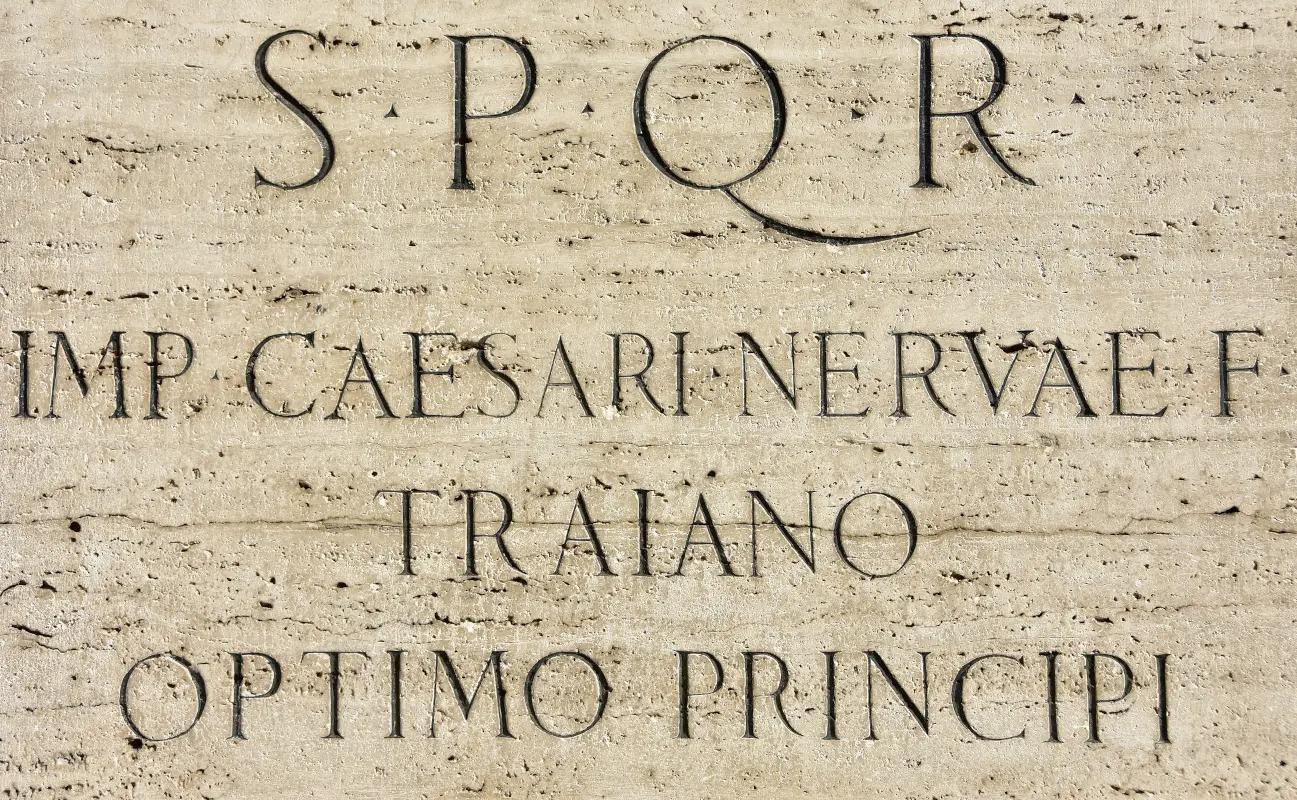
ID 67130032 ©Crisfotolux | Dreamstime.com
Latin mottos are everywhere once you start noticing them: universities, states, military branches, cities, families, seals, coins, and institutions.
117. E pluribus unum
Meaning: Out of many, one.
Origin / use: A famous motto of the United States, appearing on official symbols and currency.
Everyday example: “The coin carried the words e pluribus unum.”
118. Annuit coeptis
Meaning: He has favored our undertakings.
Origin / use: Known from the Great Seal of the United States.
Everyday example: “Annuit coeptis appears above the pyramid on the seal.”
119. Novus ordo seclorum
Meaning: A new order of the ages.
Origin / use: Also known from the Great Seal of the United States.
Everyday example: “The phrase novus ordo seclorum is often discussed in symbolism articles.”
120. Semper fidelis
Meaning: Always faithful.
Origin / use: Best known as the motto of the United States Marine Corps, and also used elsewhere.
Everyday example: “The motto semper fidelis expresses loyalty.”
121. Semper paratus
Meaning: Always ready.
Origin / use: Used as a motto by several organizations, including the U.S. Coast Guard.
Everyday example: “For emergency services, semper paratus makes sense.”
122. Sic semper tyrannis
Meaning: Thus always to tyrants.
Origin / use: The state motto of Virginia, associated with opposition to tyranny.
Everyday example: “The motto sic semper tyrannis appears on Virginia’s state seal.”
123. Citius, altius, fortius
Meaning: Faster, higher, stronger.
Origin / use: The historic Olympic motto.
Everyday example: “Citius, altius, fortius is still linked with Olympic ambition.”
124. Veritas
Meaning: Truth.
Origin / use: Used in mottos, universities, seals, and institutions.
Everyday example: “The motto was only one word: veritas.”
125. Lux et veritas
Meaning: Light and truth.
Origin / use: Used as a university motto, including by Yale.
Everyday example: “The university seal included lux et veritas.”
126. Vox populi
Meaning: Voice of the people.
Origin / use: Used in politics, journalism, and public debate.
Everyday example: “The vote was presented as vox populi.”
127. Vox populi, vox Dei
Meaning: The voice of the people is the voice of God.
Origin / use: A political and religious saying often debated rather than accepted literally.
Everyday example: “The columnist questioned the idea of vox populi, vox Dei.”
128. Cave canem
Meaning: Beware of the dog.
Origin / use: Famously preserved in a Pompeii mosaic and still recognizable today.
Everyday example: “The old sign might as well have said cave canem.”
129. Requiescat in pace
Meaning: May he or she rest in peace.
Origin / use: The source of R.I.P., used in Christian burial and memorial contexts.
Everyday example: “R.I.P. comes from requiescat in pace.”
130. Non ducor, duco
Meaning: I am not led; I lead.
Origin / use: Used as a civic motto, especially associated with São Paulo, Brazil.
Everyday example: “Non ducor, duco fits a leadership program better than a soft slogan.”
How to Use Latin Phrases Without Sounding Pretentious
Latin phrases can be useful, but they can also sound forced if you add them only because they look serious. The safest way to use a Latin phrase is when it names something more precisely than a long explanation would.
Use carpe diem when you truly mean taking the present chance. Use mea culpa when you are clearly admitting your own mistake. Use status quo when you mean the current arrangement. Use quid pro quo only when there is a real exchange, not just any favor. Use bona fide when you mean genuine, legitimate, or sincere.
In formal writing, don’t use Latin just to make a sentence look more important. “Before noon” is clearer than writing out ante meridiem in most cases, though a.m. is completely normal. “For example” is clearer than spelling out exempli gratia, although e.g. is useful when used correctly.
The best test is simple: if the Latin phrase helps the sentence, keep it. If it makes the sentence sound like it is trying too hard, use English.
Latin Phrases You Can Use for Quiz Nights, School, and Cultural Games
This list can also work as a Latin phrases quiz, a classroom activity, or a cultural game for people who enjoy language. You can ask players to match the Latin phrase with the English meaning, guess which phrases come from law or medicine, or identify which abbreviations come from Latin.
Question: What does carpe diem mean?
Answer: Seize the day.
Question: Which Latin phrase gives us etc.?
Answer: Et cetera.
Question: What does caveat emptor mean?
Answer: Let the buyer beware.
Question: Which phrase means “I came, I saw, I conquered”?
Answer: Veni, vidi, vici.
Question: What Latin phrase means “through hardships to the stars”?
Answer: Per aspera ad astra.
If you like this format, you can also try my Italy trivia questions, travel riddles with answers, and the full travel trivia archive. Latin is not travel in the itinerary sense, but it belongs to the cultural map of Europe, education, religion, law, medicine, and languages that still shape how we speak.
Conclusion
Latin survived even if we don’t use it to buy bread, ask for directions, or talk to a neighbor. Yet it is still there when we check the time, write etc., read a university motto, hear a legal phrase, see a medical expression, or recognize a sentence like carpe diem, memento mori, or veni, vidi, vici.
For me, Latin is also personal. I studied it long enough to know it can be difficult, but also long enough to appreciate why it stayed in so many parts of modern life. As a Romanian, I also cannot see Latin as something completely distant. It is part of the older family history of my language, even if the Latin we studied in school was formal, ancient, and sometimes demanding.
These 130 ancient Latin phrases used today show that a language does not need native everyday speakers to keep leaving traces. Sometimes it survives through law, science, education, religion, mottos, books, and small abbreviations people use without thinking twice.
Which Latin phrase do you already use, and which one did you not realize came from Latin?
FAQ About Latin Phrases Still Used Today
What are the most common Latin phrases still used today?
Some of the most common Latin phrases still used today include et cetera, ad hoc, bona fide, carpe diem, status quo, vice versa, per se, quid pro quo, mea culpa, and curriculum vitae. Many people also use Latin abbreviations such as etc., i.e., e.g., a.m., and p.m. without thinking of them as Latin.
What does carpe diem mean?
Carpe diem means “seize the day.” It comes from Horace and is usually used as encouragement to make use of the present moment instead of postponing everything for later.
Is Latin still used today?
Latin is not used as a native everyday language, but it is still used in law, medicine, science, religion, education, mottos, taxonomy, abbreviations, and many common English expressions. It also remains important for understanding Romance languages, including Romanian, Italian, French, Spanish, and Portuguese.
Are Latin phrases and Latin proverbs the same thing?
Not always. A Latin proverb usually expresses a general life lesson or piece of wisdom. A Latin phrase may be a legal term, medical term, motto, abbreviation, quotation, or everyday expression. This article includes Latin sayings and commonly used Latin phrases, but it does not treat every phrase as a proverb.
What Latin phrase means “love conquers all”?
The Latin phrase for “love conquers all” is amor vincit omnia. It comes from Virgil and is still used in literature, art, weddings, tattoos, and romantic contexts.
What Latin phrase means “time flies”?
The Latin phrase tempus fugit means “time flies.” It is used when talking about how quickly time passes.
What Latin phrase means “the die is cast”?
Alea iacta est means “the die is cast.” It is associated with Julius Caesar crossing the Rubicon and is used when a decision has already been made and there is no simple way back.
What Latin phrase means “through hardships to the stars”?
Per aspera ad astra means “through hardships to the stars.” It is often used as a motto about ambition, perseverance, and reaching something important through difficulty.
What is the Latin phrase for “first, do no harm”?
The Latin phrase is primum non nocere. It is strongly associated with medical ethics, although its exact historical origin is more nuanced than the popular version suggests.
Why are so many legal terms in Latin?
Many legal systems in Europe developed through traditions where Latin was used in scholarship, church administration, education, and legal writing. Some Latin legal phrases survived because they refer to precise concepts, such as habeas corpus, prima facie, mens rea, and stare decisis.
More amazing articles for you:
200 New Year Trivia Questions and Answers - Easy to Hard
She Was Showering Alone in Her Cruise Cabin. Then She Heard Someone Moving Around Outside the Bathro...
British Airways Starlink Wi-Fi Rules: What Inflight Voice Calls Mean for Passengers (a Passenger Eti...
200 90s Music Trivia Questions and Answers (Easy to Hard)
“I Would Crash Out”: The Disgusting Mid-Flight Habit Passengers and Flight Attendants Beg People to ...
People Are Booking Trips to Clear Snow in Japan - Yes, Really
A local's guide to Dubai
Best islands in the Philippines

Violeta-Loredana Pascal is a communications expert, business mentor, and the founder of Earth’s Attractions and PRwave INTERNATIONAL. A pioneer in the Romanian digital PR landscape since 2005, she holds a degree in Communication and Social Sciences from SNSPA Bucharest. Violeta is a senior trainer at AcademiadeAfaceri.ro, where she leverages over 20 years of experience to teach professional courses in PR strategy and workplace productivity. By blending high-level business consulting with a passion for holistic travel and wellness, she empowers solopreneurs to overcome procrastination, build profitable brands, and design a life of purposeful adventure.



Love the articule! Congratulations