
I think most of us have seen at least one thing while traveling that we found peculiar, to say the least. I know I have, more than once.
Our first reaction can be impulsive, especially when we’re reacting to only part of the story. We see a few seconds of a video, react based on what we’re used to, and only later find out there may be details we didn’t know.
But a recent situation in Greece has left people in the country – and far beyond it – baffled and deeply divided. And when I say divided, I mean it: the comments range from outrage and accusations of humiliation to people asking why everyone is making such a fuss.
There is also a detail that makes the story more complicated than it first appears, and a similar incident from the past helps explain why some people in Greece reacted so strongly. I’ll get to both below.
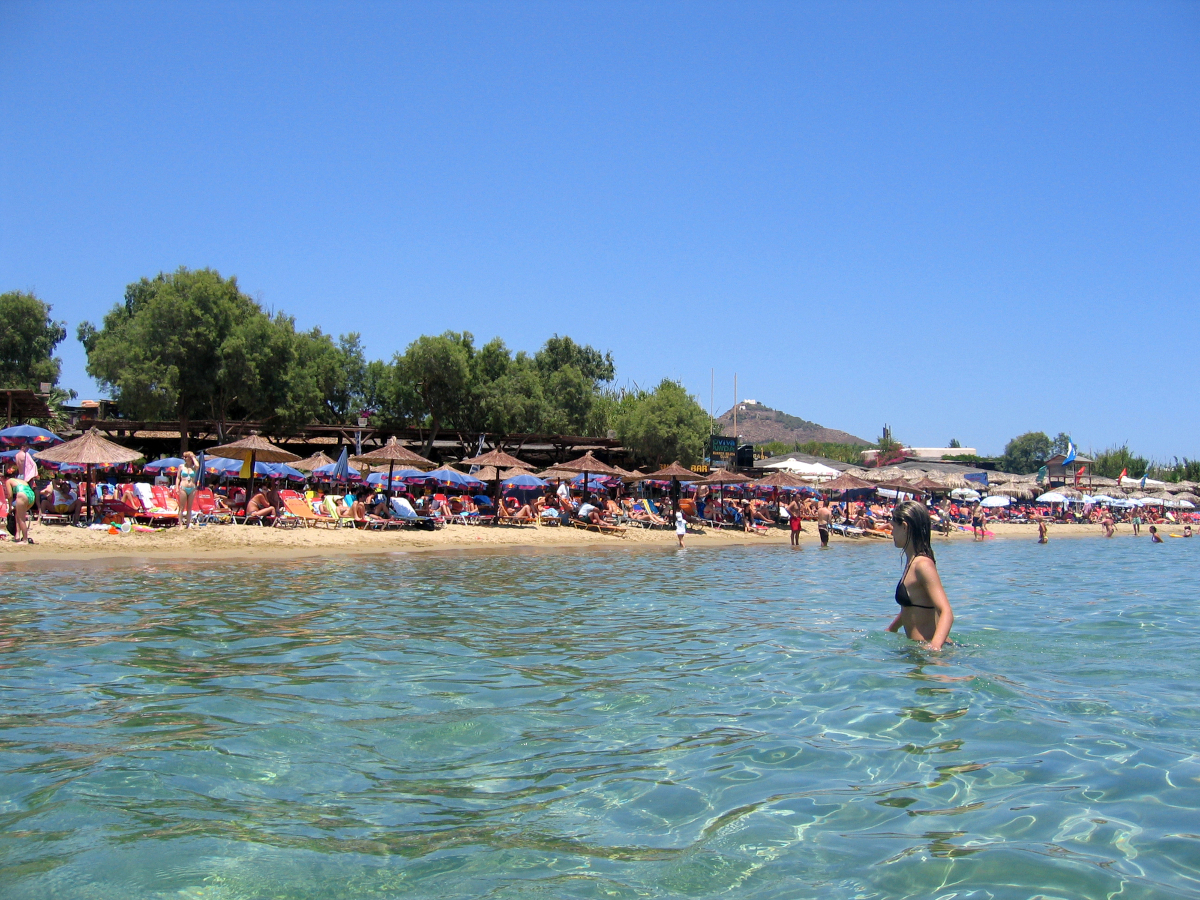
ID 557201 ©Jakich | Dreamstime.com
What Happened in Paros?
The video was recorded at a beach establishment on Paros, the popular Greek island increasingly considered by travelers looking for an alternative to Santorini and some of the busiest Cycladic destinations.
It shows a waiter entering the sea while carrying a large bottle of wine. With the water reaching his thighs, he approaches a customer standing farther from the shore and carefully pours wine into the customer’s glass.
A report published by Greek Reporter said the scene sparked a debate in Greece about the demands placed on tourism workers and just how far luxury service should go.
But there is one important thing we still don’t know: whose idea was it? The waiter may have chosen to enter the water. The customer may have asked him. It may be something this establishment offers, or something staff sometimes do when they think it may lead to a generous tip.
When the first reports appeared, neither the waiter nor the establishment had publicly explained what happened. And, as you’ll see, that missing information is behind a lot of the arguments in the comments.
YouTube Viewers Were Mostly Critical
When I checked the YouTube video, it had 17 comments. That isn’t a large sample, but the reactions were overwhelmingly critical.
The following comments were translated into English and lightly edited for clarity.
“Where are the worker’s labor rights and dignity? All they care about is profit, even if the worker becomes a laughingstock. Exploitation in the catering industry is also blatant.”
“First of all, both the owners of the establishment and the customers should be ashamed. Waiters aren’t slaves. Someone should tell them that. Shame on Greece. Shame on the Greeks.”
“Shame and disgrace. We’ve hit rock bottom.”
“The young man who doesn’t do it could lose his job. What about the idiots asking him to bring drinks into the sea? And the employer who advertises it?”
“Decline. And then they complain because they can’t find staff.”
One comment also referred to something that happened in Rhodes a few years ago:
“He’ll probably come out and say he likes it because it helps him cool down, just like everyone said after the Rhodes incident.”
I’ll come back to Rhodes later, because that reference isn’t random.
Instagram Reactions Were Much More Divided
The Instagram comments I saw were different. There was criticism there too, but there were also quite a few people who couldn’t understand why the video had caused such outrage.
Some Saw It as Harmless or Even Sensible
“I can’t understand why you’re all screaming. He cools down nicely, too. What’s better than serving in the water instead of walking on the hot sand? It’s a very cool idea, and well done to them. I wish they did it at other beach bars as well.”
“Relax. He’s doing it voluntarily and collecting tips. What nonsense are you writing? Would he be better off working on scaffolding in the sun for €50? Come on.”
Others Said It Should Never Be Expected
“You all keep asking what’s wrong and what happened. Some people ask whether the water reaches his waist or only his knees. Normally, it shouldn’t even reach his ankles. Either he did it because he wanted to at that moment or because the establishment told him to, and both possibilities are bad.”
“The people he served in the sea while they stood there smiling are the number one problem. Even if they gave him a €1,000 tip, it’s still wrong. You don’t have to imagine that it’s your child or that it’s happening to you to understand it. Don’t accept something like this. It’s humiliating, even if the salary is all the money in the world.”
“Spoiled nouveau riche people who can’t stand on their own feet and want to show that they have money and can do whatever they want. Stupid people spending their father’s money.”
Some Responded With Sarcasm – or Thought It Was Completely Normal
“He’ll get a good tip and everything will be fine. We’ve seen this countless times. Stop turning it into a headline as though we don’t have other priorities.”
“Normally, there should have been a bar in the sea.”
But There May Be Another Side to This
There is another detail worth considering before deciding exactly what happened here. A Proto Thema report spoke to people familiar with upscale beach bars, and what they said adds a different perspective.
According to the report, some seasonal hospitality workers may choose to offer unusual or very personalized service because tips can make a significant difference to what they earn. At expensive beach establishments, doing something memorable for a customer may result in a much larger tip.
The report also mentioned business owners who say employees aren’t forced to enter the sea. They maintain that some waiters decide to do it themselves because they know the extra effort may be rewarded.
Maybe that’s what happened in Paros. The waiter may have thought walking a few meters into the water was worth it for a good tip. Maybe someone asked him and he didn’t mind. Or maybe he did mind – but we don’t know because the video isn’t that long and we can’t have a full picture of what happened before or after it was recorded.
And this is where I think we have to be careful with some of the very definite conclusions online. People are saying he was exploited. Others are just as certain that he did it voluntarily for the money. Unless the waiter himself explains what happened, we don’t really know.
This Isn’t Exactly a Typical Day at the Beach in Greece
I also wouldn’t watch this video and assume this is what service looks like everywhere in Greece. Greek beaches can operate very differently. Some are organized beaches with loungers, umbrellas, restaurants, bars and staff bringing food and drinks to customers. Others have very few facilities, while commercial activity is restricted or prohibited on some protected Greek beaches.
The same applies to many other parts of a Greek holiday. Beach access, sunbeds, accommodation fees, ferries, archaeological sites and other practical details vary depending on where you are, so checking the relevant Greece travel rules before a trip is always a good idea.
And, of course, one viral clip can’t tell you what an entire country is like. Greece isn’t this waiter, this beach establishment or these customers. Its hospitality, language, food, traditions, everyday behavior and Greek culture can’t be reduced to a few seconds filmed on a beach.
But the video did happen, and I understand why people started arguing about it.
Where Would You Draw the Line?
I don’t know the rules of this particular beach establishment. I don’t know what the waiter’s job includes, whether this kind of service is regularly offered there, whether he suggested it himself or whether someone asked him to do it.
What I do know is how I would feel if I were the customer.
Many of my friends travel to Greece every year, visiting different islands as well as mainland destinations. They usually return talking about how well local people treated them, and they aren’t staying only in luxury resorts or five-star hotels. Their experiences come from regular hotels, apartments, tavernas, restaurants, shops and beaches.
I also enjoy going to nice restaurants. If I choose an expensive establishment, I expect good food and attentive service. That’s part of what I’m paying for.
But I wouldn’t ask someone to walk into the sea to refill my wine glass.
Even if the waiter offered to do it, I think I’d tell him not to bother and walk back to shore myself. Not because walking through shallow water with a bottle is some enormous hardship. It simply isn’t something I’d feel comfortable having another person do for me when I could easily walk a few meters myself.
Other people obviously see this very differently. Some of the commenters thought he was probably earning excellent tips and couldn’t understand why anyone cared. Others looked at the customer standing comfortably in the sea while a waiter came to serve them and immediately saw rude tourist behavior and entitlement.
And that is probably why this little video has generated so much discussion. Two people can watch exactly the same scene and see something completely different.
But the Waiter Isn’t the Only Person in This Story
Most of the argument has focused on him: was he asked to do it, did he volunteer, was he hoping for a bigger tip? Those are important questions, especially if we’re talking about working conditions.
But there are other people in that video too.
Maybe the customers gave him a huge tip. Maybe he told them to stay where they were and offered to bring the wine himself. Maybe this happens regularly there and nobody involved thought it was strange. Again, we don’t know enough to say.
Still, when I put myself in their place, I reach the same conclusion. I wouldn’t want him coming into the sea for me.
People can pay a lot for luxury service, and naturally they expect more than they would at an ordinary café or restaurant. But I think there comes a moment when I’d simply say, “No, you don’t need to do that. I’ll come to you.”
I’ve seen similar arguments around other viral travel stories. When a passenger ate garlic chicken on a plane, for example, part of the debate revolved around whether the passenger was allowed to eat food they’d brought with them.
I tend to look at these situations from another angle too. Even if I’m allowed to do something, would I actually do it if it made someone else’s experience worse or put them in an awkward position?
In this case, I wouldn’t.
Then I Saw Why So Many Greek Commenters Mentioned Rhodes
Remember that YouTube comment about “the Rhodes incident”? If you didn’t follow Greek news in 2023, the reference probably meant very little. But there is a reason people brought it up almost immediately.
In that earlier case, a waiter in Rhodes was filmed moving through much deeper water while carrying an order to customers seated on floating platforms. The footage caused widespread criticism and was followed by an inspection concerning employee health and safety.
The Paros situation isn’t identical. The water here appears considerably shallower, and we still don’t know whether this waiter was asked to enter it, offered to do it himself or regularly provides this kind of service.
But for Greek viewers who remembered what happened in Rhodes, this wasn’t simply a strange new video of a waiter walking into the sea with a bottle of wine. They had already watched a very similar controversy unfold before, including the same arguments about tips, working conditions and how far hospitality workers should be expected to go for customers.
And now that you’ve seen the different reactions and the context behind them, here is the video that started the latest debate:
Conclusion
Now that you’ve seen the video, I’m curious whether your reaction changed after reading the different sides of the story first.
Mine didn’t when it comes to what I would do as a customer. Even if the waiter offered and even if he expected a generous tip, I wouldn’t stay in the water waiting for him to bring my wine. I’d walk back to shore.
At the same time, I don’t think everyone who sees nothing wrong with the video is defending bad treatment of workers. Some genuinely see a waiter offering unusual service, perhaps making good money from tips, and wonder why people are angry about it. Others see the same footage and immediately feel uncomfortable.
Perhaps that’s why such a short video managed to start such a big argument. People aren’t only disagreeing about what happened. They’re also disagreeing about what they themselves would consider acceptable.
What would you do? Would you consider this exceptional luxury service, or would you walk back to shore for your wine?
More amazing articles for you:
These Hotel Guests Checked Into Their Rooms - What They Discovered Was Worse Than You Think
17 Travel Expenses People Forget to Budget For - Check These Before You Book
One Problem Delayed an Entire Flight Until the Next Day. People Online Had No Doubt Who Was to Blame...
A local's travel guide to Auckland, New Zealand
Your Guide to Oahu, Hawaii with the best Oahu Attractions, Restaurants, and Tips
2 awesome Dominican Republic itineraries - with and without Punta Cana
Japan Etiquette Guide 2026: 8 Critical Mistakes That Get Tourists Shamed (and How to Avoid Fines)
25+ Best Free Travel Apps You’ll Really Use on Your Next Trip

Violeta-Loredana Pascal is a communications expert, business mentor, and the founder of Earth’s Attractions and PRwave INTERNATIONAL. A pioneer in the Romanian digital PR landscape since 2005, she holds a degree in Communication and Social Sciences from SNSPA Bucharest. Violeta is a senior trainer at AcademiadeAfaceri.ro, where she leverages over 20 years of experience to teach professional courses in PR strategy and workplace productivity. By blending high-level business consulting with a passion for holistic travel and wellness, she empowers solopreneurs to overcome procrastination, build profitable brands, and design a life of purposeful adventure.