
I grew up fascinated by Greek mythology. I found the gods, the heroes, the warnings, the pride, the punishments, the impossible journeys interesting, dramatic, and unforgettable. But Greek culture is not only in myths, ruins, islands, and ancient temples (while they are all truly amazing). It is also in the everyday sayings and proverbs people use.
At university, I had a friend who loved Greece so much that she learned Greek. She didn’t move there, but she kept returning to Greece often, almost every year, and she loves the country deeply. I always found that beautiful, because learning a language is not just about grammar. It is also about getting closer to how people think, joke, warn, love, complain, and explain life.

ID 161058663 ©Poike2017 | Dreamstime.com
In Greek, proverbs are called παροιμίες (paroimíes), and they open a window into many areas of life: patience, wisdom, family, friendship, love, money, reputation, work, gossip, fate, and human behavior. Some sound very close to English sayings – love is blind is one of the examples you will find below. Others use images that feel unmistakably Greek: the donkey, the rooster, the unripe grape, the wolf, the sea, the storm, the house, the tongue, and the crowded village.
Below you’ll find 130 Greek proverbs and sayings with English meanings. I included the Greek phrase, an easy pronunciation guide, a literal translation when useful, and the real meaning in English.
If you enjoy this kind of cultural wisdom, you may also like my collections of French proverbs and meanings, Japanese proverbs and sayings, and Italian proverbs and meanings.
Embracing Philotimo: How to Use Greek Proverbs to Connect with Locals
Greek culture values philotimo – a deep sense of honor, hospitality, and doing the right thing for your community. When you show an understanding of Greek proverbs, you aren’t just showing off language skills; you are showing respect for their foundational way of thinking.
- When Facing Uncertainty: If you are dealing with a chaotic travel day, a delayed flight, or an unpredictable situation, channel the local mindset by remembering “Κάθε εμπόδιο για καλό” (Káthe empódio giá kaló – Every obstacle is for a good reason). It’s the ultimate Greek reminder to shift your mindset from frustration to acceptance, trusting that things will work out in the end.
- Connecting with Local Hosts: If a guesthouse owner, baker, or taverna chef goes out of their way to help you or share an extra dish, referencing their cultural values or dropping a simple proverb about friendship and hospitality shows that you see them as a person, not just a service provider.
- For Creative Writing and Visual Hooks: Because Greek proverbs heavily feature nature, the sea, wind, and light, they make stunning titles for travel journals, photo albums, or creative blog headers. Use them to give your digital storytelling an authentic, grounded anchor.
Famous Greek Proverbs and Sayings
These are some of the best-known Greek proverbs and sayings, and many have close equivalents in English. They are easy to remember because the images are simple, but the meanings go straight to real life.
1. Αγάλι αγάλι γίνεται η αγουρίδα μέλι.
Pronunciation: Agáli agáli gínetai i agourída méli.
Literal translation: Slowly, slowly, the unripe grape becomes honey.
Meaning: Good things take time. This is one of the most beautiful Greek proverbs about patience, maturity, and slow progress.
2. Είπε ο γάιδαρος τον πετεινό κεφάλα.
Pronunciation: Ípe o gáidaros ton peteinó kefála.
Literal translation: The donkey called the rooster big-headed.
Meaning: This is the Greek version of “the pot calling the kettle black.” It is used when someone criticizes another person for a flaw they also have.
3. Η γλώσσα κόκαλα δεν έχει, αλλά κόκαλα τσακίζει.
Pronunciation: I glóssa kókala den échei, allá kókala tsakízei.
Literal translation: The tongue has no bones, but it breaks bones.
Meaning: Words can hurt deeply. This Greek saying is a strong reminder that speech can damage people even when no physical force is used.
4. Ένας κούκος δε φέρνει την άνοιξη.
Pronunciation: Énas koúkos de férnei tin ánoixi.
Literal translation: One cuckoo does not bring spring.
Meaning: One sign is not enough to prove that something has truly changed. It is similar to “one swallow does not make a summer.”
5. Κάλλιο αργά παρά ποτέ.
Pronunciation: Kállio argá pará poté.
Literal translation: Better late than never.
Meaning: It is still worth doing something good or necessary, even if you do it later than planned. We have this proverb in Romania too – I always love finding similar proverbs – or even word-for-word, like this one is – in other languages.
6. Όπου λαλούν πολλοί κοκόροι, αργεί να ξημερώσει.
Pronunciation: Ópou laloún polloí kokóroi, argeí na ximerósei.
Literal translation: Where many roosters crow, dawn is delayed.
Meaning: When too many people interfere, give orders, or try to lead, the work becomes slower. It is close to “too many cooks spoil the broth.”
7. Και οι τοίχοι έχουν αυτιά.
Pronunciation: Kai oi toíchoi échoun aftiá.
Literal translation: Even the walls have ears.
Meaning: Be careful what you say, because someone may hear you.
8. Ο πνιγμένος από τα μαλλιά του πιάνεται.
Pronunciation: O pnigménos apó ta malliá tou piánetai.
Literal translation: A drowning person grabs his own hair.
Meaning: A desperate person will cling to anything, even something that cannot really help.
9. Συν Αθηνά και χείρα κίνει.
Pronunciation: Syn Athiná kai cheíra kínei.
Literal translation: With Athena’s help, move your hand too.
Meaning: Help, luck, faith, or support are not enough if you do nothing. You must also act.
10. Τα εν οίκω μη εν δήμω.
Pronunciation: Ta en oíko mi en dímo.
Literal translation: What belongs in the house should not be in public.
Meaning: Private family matters should not be exposed carelessly in public.
Greek Proverbs About Wisdom, Truth, and Knowledge

ID 366582271 ©Vinicius Marino | Dreamstime.com
Greek sayings about wisdom often focus on experience, self-awareness, and the difference between speaking and understanding. Many of them are blunt because they are meant to correct behavior, not decorate a sentence.
11. Κάλλιο γαϊδουρόδενε παρά γαϊδουρογύρευε.
Pronunciation: Kállio gaïdouródene pará gaïdourogýreve.
Literal translation: Better to tie the donkey than to search for the donkey.
Meaning: Better safe than sorry. It is wiser to prevent a problem than to repair the damage later.
12. Το έξυπνο πουλί από τη μύτη πιάνεται.
Pronunciation: To éxypno poulí apó ti mýti piánetai.
Literal translation: The clever bird is caught by the beak.
Meaning: Even smart people can make foolish mistakes, especially when they are overconfident.
13. Όποιος βιάζεται σκοντάφτει.
Pronunciation: Ópoios viázetai skontáftei.
Literal translation: Whoever rushes stumbles.
Meaning: Haste creates mistakes. This is a Greek proverb about slowing down enough to do things properly.
14. Όπου ακούς πολλά κεράσια, κράτα μικρό καλάθι.
Pronunciation: Ópou akoús pollá kerásia, kráta mikró kaláthi.
Literal translation: Where you hear of many cherries, hold a small basket.
Meaning: Be skeptical when promises sound too good. Keep your expectations realistic.
15. Η αλήθεια πλέει σαν το λάδι στο νερό.
Pronunciation: I alítheia pléei san to ládi sto neró.
Literal translation: The truth floats like oil on water.
Meaning: The truth usually comes out, even when someone tries to hide it.
16. Έξω από το χορό πολλά τραγούδια λες.
Pronunciation: Éxo apó to choró pollá tragoúdia les.
Literal translation: Outside the dance, you sing many songs.
Meaning: It is easy to give advice or criticize when you are not the one dealing with the situation.
17. Από μικρό κι από τρελό μαθαίνεις την αλήθεια.
Pronunciation: Apó mikró ki apó treló mathaíneis tin alítheia.
Literal translation: From a child and from a mad person, you learn the truth.
Meaning: People who do not filter themselves may say truths others avoid.
18. Όσα ξέρει ο νοικοκύρης, δεν τα ξέρει ο κόσμος όλος.
Pronunciation: Ósa xérei o noikokýris, den ta xérei o kósmos ólos.
Literal translation: What the householder knows, the whole world does not know.
Meaning: Outsiders rarely know the full truth about another person’s home, business, or private problem.
19. Καθαρός ουρανός αστραπές δεν φοβάται.
Pronunciation: Katharós ouranós astrapés den fovátaι.
Literal translation: A clear sky is not afraid of lightning.
Meaning: A person with a clear conscience has less reason to fear accusations.
20. Μάθε τέχνη κι άστηνε, κι αν πεινάσεις πιάστηνε.
Pronunciation: Máthe téchni ki ástine, ki an peináseis piástine.
Literal translation: Learn a craft and leave it aside; if you get hungry, use it.
Meaning: A skill is never wasted. You may need it later.
21. Ρώτα να μαθαίνεις.
Pronunciation: Róta na mathaíneis.
Literal translation: Ask so you can learn.
Meaning: Asking questions is part of learning, not a weakness.
22. Η ημιμάθεια είναι χειρότερη από την αμάθεια.
Pronunciation: I imimátheia eínai cheiróteri apó tin amátheia.
Literal translation: Half-knowledge is worse than ignorance.
Meaning: Knowing a little and thinking you know everything can be more dangerous than admitting you do not know.
23. Τα μεγάλα λόγια λένε οι μικροί άνθρωποι.
Pronunciation: Ta megála lógia léne oi mikroí ánthropoi.
Literal translation: Big words are spoken by small people.
Meaning: People who boast a lot may not have much substance behind their words.
24. Το ψέμα έχει κοντά ποδάρια.
Pronunciation: To pséma échei kontá podária.
Literal translation: A lie has short legs.
Meaning: Lies do not travel far forever. The truth usually catches up.
25. Όποιος λέει την αλήθεια, έχει τον Θεό βοήθεια.
Pronunciation: Ópoios léi tin alítheia, échei ton Theó voítheia.
Literal translation: Whoever tells the truth has God’s help.
Meaning: Truthfulness is seen as morally stronger than deception.
Greek Proverbs About Life, Fate, and Human Nature
These Greek proverbs look at life in a practical way. They speak about fate, hardship, character, consequences, and the uncomfortable truth that people often reveal who they are through repeated behavior.
26. Κάθε εμπόδιο για καλό.
Pronunciation: Káthe empódio gia kaló.
Literal translation: Every obstacle is for good.
Meaning: A difficulty may eventually lead to something better.
27. Ο λύκος κι αν εγέρασε, την τέχνη του δεν ξέχασε.
Pronunciation: O lýkos ki an egérase, tin téchni tou den xéchase.
Literal translation: Even if the wolf grew old, he did not forget his craft.
Meaning: People rarely lose their old habits or core traits completely.
28. Όσα δεν φτάνει η αλεπού τα κάνει κρεμαστάρια.
Pronunciation: Ósa den ftánei i alepoú ta kánei kremastária.
Literal translation: What the fox cannot reach, she says is for hanging up.
Meaning: This is the Greek “sour grapes” proverb. People often dismiss what they cannot have.
29. Ο παθός μαθός.
Pronunciation: O pathós mathós.
Literal translation: The one who suffers learns.
Meaning: Experience, especially painful experience, teaches powerful lessons.
30. Το πεπρωμένο φυγείν αδύνατον.
Pronunciation: To peproméno fygéin adýnaton.
Literal translation: It is impossible to escape destiny.
Meaning: Some things are seen as unavoidable, no matter how much people try to avoid them.
31. Η αρχή είναι το ήμισυ του παντός.
Pronunciation: I archí eínai to ímisy tou pantós.
Literal translation: The beginning is half of everything.
Meaning: Starting is often the hardest and most important part.
32. Όμοιος ομοίω αεί πελάζει.
Pronunciation: Ómoios omoío aeí pelázei.
Literal translation: Like always approaches like.
Meaning: People are often drawn to others who resemble them in values, habits, or character.
33. Όποιος σκάβει λάκκο για άλλον, πέφτει ο ίδιος μέσα.
Pronunciation: Ópoios skávei lákko gia állon, péftei o ídios mésa.
Literal translation: Whoever digs a pit for another falls into it himself.
Meaning: Plans made to harm others can turn against the person who made them.
34. Γελάει καλύτερα όποιος γελάει τελευταίος.
Pronunciation: Geláei kalýtera ópoios geláei teleftaíos.
Literal translation: He laughs best who laughs last.
Meaning: Early advantage does not matter as much as the final result.
35. Μπρος γκρεμός και πίσω ρέμα.
Pronunciation: Bros gkremós kai píso réma.
Literal translation: A cliff in front and a stream behind.
Meaning: This describes being trapped between two bad choices.
36. Κάνε το καλό και ρίχ’ το στο γιαλό.
Pronunciation: Káne to kaló kai rích’ to sto gialó.
Literal translation: Do good and throw it into the sea.
Meaning: Do good without expecting praise, payment, or recognition.
37. Πρώτα βγαίνει η ψυχή και μετά το χούι.
Pronunciation: Próta vgaínei i psychí kai metá to choúi.
Literal translation: First the soul leaves, then the habit.
Meaning: Deep habits are extremely hard to change.
38. Ό,τι σπείρεις θα θερίσεις.
Pronunciation: Ó,ti speíreis tha theríseis.
Literal translation: Whatever you sow, you will reap.
Meaning: Actions have consequences. What you do now shapes what you receive later.
39. Ό,τι έγινε, έγινε.
Pronunciation: Ó,ti égine, égine.
Literal translation: What happened, happened.
Meaning: You cannot undo the past. At some point, you must deal with what is real now.
40. Η καμήλα δεν βλέπει την καμπούρα της.
Pronunciation: I kamíla den vlépei tin kampoúra tis.
Literal translation: The camel does not see its own hump.
Meaning: People often fail to notice their own faults.
Greek Proverbs About Love, Family, and Friendship

ID 29720028 ©Iurii Kuzo | Dreamstime.com
Greek sayings about relationships can be warm, funny, severe, or old-fashioned. I included a few traditional proverbs that clearly reflect older social values too, because proverbs show cultural history, not only advice we would all follow today.
41. Το αίμα νερό δεν γίνεται.
Pronunciation: To aíma neró den gínetai.
Literal translation: Blood does not become water.
Meaning: Family bonds are strong and not easily erased.
42. Η μάνα είναι μόνο μία.
Pronunciation: I mána eínai móno mía.
Literal translation: There is only one mother.
Meaning: A mother has a unique place in a person’s life.
43. Ο καλός φίλος στην ανάγκη φαίνεται.
Pronunciation: O kalós fílos stin anánki faínetai.
Literal translation: A good friend is seen in need.
Meaning: True friends show themselves when life becomes difficult.
44. Δείξε μου τον φίλο σου να σου πω ποιος είσαι.
Pronunciation: Deíxe mou ton fílo sou na sou po poios eísai.
Literal translation: Show me your friend and I will tell you who you are.
Meaning: The people around you reveal a lot about your character and values.
45. Αγάπα τον φίλο σου με τα ελαττώματά του.
Pronunciation: Agápa ton fílo sou me ta elattómatá tou.
Literal translation: Love your friend with his flaws.
Meaning: Real friendship includes acceptance, not only admiration.
46. Αγάπα τον γείτονά σου, αλλά μη γκρεμίζεις και τον φράχτη.
Pronunciation: Agápa ton geítoná sou, allá mi gkremízeis kai ton fráchti.
Literal translation: Love your neighbor, but don’t tear down the fence.
Meaning: Be kind and friendly, but keep boundaries.
47. Από μακριά κι αγαπημένοι.
Pronunciation: Apó makriá ki agapiménoi.
Literal translation: From far away, and loved.
Meaning: Some relationships work better when there is a little distance.
48. Τυφλός είναι ο έρωτας.
Pronunciation: Tyflós eínai o érotas.
Literal translation: Love is blind.
Meaning: People in love may ignore flaws that others see clearly.
49. Ο έρωτας με έρωτα περνάει.
Pronunciation: O érotas me érota pernáei.
Literal translation: Love passes with love.
Meaning: A new love can help someone get over an old one.
50. Αγάπη δίχως πείσματα δεν έχει νοστιμάδα.
Pronunciation: Agápi díchos písmata den échei nostimáda.
Literal translation: Love without stubbornness has no flavor.
Meaning: This playful saying suggests that small disagreements can be part of passionate love.
51. Παπούτσι από τον τόπο σου κι ας είναι μπαλωμένο.
Pronunciation: Papoútsi apó ton tópo sou ki as eínai baloméno.
Literal translation: A shoe from your own place, even if it is patched.
Meaning: Traditionally, this suggested that someone familiar or from one’s own background may fit better than someone impressive but unfamiliar.
52. Κάθε σπίτι έχει τον σταυρό του.
Pronunciation: Káthe spíti échei ton stavró tou.
Literal translation: Every house has its cross.
Meaning: Every family has troubles, even if outsiders do not see them.
53. Αν δεν παινέψεις το σπίτι σου, θα πέσει να σε πλακώσει.
Pronunciation: An den painépseis to spíti sou, tha pései na se plakósei.
Literal translation: If you don’t praise your house, it will fall and crush you.
Meaning: Appreciate and support what is yours. It can also be used humorously when someone praises their own family, home, or country.
54. Σπίτι χωρίς Γιάννη προκοπή δεν κάνει.
Pronunciation: Spíti chorís Giánni prokopí den kánei.
Literal translation: A house without Yiannis does not prosper.
Meaning: This is a playful Greek saying connected to the very common name Yiannis.
55. Μπρος στα κάλλη τι είναι ο πόνος.
Pronunciation: Bros sta kálli ti eínai o pónos.
Literal translation: What is pain compared with beauty?
Meaning: People sometimes accept discomfort for beauty, admiration, or love.
Greek Proverbs About Work, Money, and Success
These Greek proverbs are especially practical. They talk about effort, poverty, greed, time, cheap things, wasted energy, and the way people avoid real work when they don’t want to do something.
56. Τα αγαθά κόποις κτώνται.
Pronunciation: Ta agathá kópois któntai.
Literal translation: Good things are acquired through effort.
Meaning: Anything valuable usually requires work.
57. Φασούλι το φασούλι γεμίζει το σακούλι.
Pronunciation: Fasoúli to fasoúli gemízei to sakoúli.
Literal translation: Bean by bean, the sack fills up.
Meaning: Small efforts, savings, or steps add up over time.
58. Όποιος δεν θέλει να ζυμώσει, δέκα μέρες κοσκινίζει.
Pronunciation: Ópoios den thélei na zymósei, déka méres koskinízei.
Literal translation: Whoever does not want to knead spends ten days sifting flour.
Meaning: People who want to avoid real work often hide behind preparation and excuses.
59. Το καλό πράγμα αργεί να γίνει.
Pronunciation: To kaló prágma argeí na gínei.
Literal translation: A good thing takes time to happen.
Meaning: Quality and meaningful results are often slow.
60. Ο χρόνος είναι χρήμα.
Pronunciation: O chrónos eínai chríma.
Literal translation: Time is money.
Meaning: Time has value and should not be wasted.
61. Η φτήνια τρώει τον παρά.
Pronunciation: I ftínia tróei ton pará.
Literal translation: Cheapness eats the money.
Meaning: Buying the cheapest option can cost more in the end if the quality is poor.
62. Το φτηνό το κρέας το τρώνε οι σκύλοι.
Pronunciation: To ftinó to kréas to tróne oi skýloi.
Literal translation: Cheap meat is eaten by dogs.
Meaning: You often get what you pay for.
63. Φύλαγε τα ρούχα σου να έχεις τα μισά.
Pronunciation: Fýlage ta roúcha sou na écheis ta misá.
Literal translation: Guard your clothes so you can keep half of them.
Meaning: Take care of what you have, or you may lose it through carelessness.
64. Οκνός δεν κάμνει προκοπή.
Pronunciation: Oknós den kámnei prokopí.
Literal translation: A lazy person makes no progress.
Meaning: Without effort, there is no real growth or success.
65. Η πολλή δουλειά τρώει τον αφέντη.
Pronunciation: I pollí douleiá tróei ton afénti.
Literal translation: Too much work eats the master.
Meaning: Work matters, but overwork can damage the person doing it.
66. Τα λεφτά δεν φέρνουν την ευτυχία.
Pronunciation: Ta leftá den férnoun tin eftychía.
Literal translation: Money does not bring happiness.
Meaning: Wealth alone does not guarantee a good life.
67. Τα λεφτά πάνε στα λεφτά.
Pronunciation: Ta leftá páne sta leftá.
Literal translation: Money goes to money.
Meaning: Wealth often attracts more wealth.
68. Όποιος κυνηγάει πολλούς λαγούς, δεν πιάνει κανέναν.
Pronunciation: Ópoios kynigáei polloús lagoús, den piánei kanénan.
Literal translation: Whoever chases many hares catches none.
Meaning: Trying to do too many things at once can make you fail at all of them.
69. Κάλλιο πλούσιος στην υγειά του παρά στα λεφτά του.
Pronunciation: Kállio ploúsios stin ygeiá tou pará sta leftá tou.
Literal translation: Better rich in health than rich in money.
Meaning: Health is more valuable than wealth.
70. Η τσιγκουνιά είναι η μισή φτώχεια.
Pronunciation: I tsigkouniá eínai i misí ftócheia.
Literal translation: Stinginess is half of poverty.
Meaning: Extreme stinginess can make life feel poor even when someone has enough.
Funny Greek Sayings and Everyday Idioms
Some Greek sayings are memorable because the image is funny: eggs and baskets, donkeys fighting, wolves guarding sheep, hair turning into rope, or someone trying to carry two watermelons under one arm.
71. Έχασε τα αυγά και τα καλάθια.
Pronunciation: Échase ta avgá kai ta kaláthia.
Literal translation: He lost the eggs and the baskets.
Meaning: Someone became completely confused, lost control, or failed badly.
72. Κάνει την τρίχα τριχιά.
Pronunciation: Kánei tin trícha trichiá.
Literal translation: He makes a hair into a rope.
Meaning: Someone is exaggerating a small problem.
73. Δυο γάιδαροι μαλώνανε σε ξένο αχυρώνα.
Pronunciation: Dyo gáidaroi malónane se xéno achyróna.
Literal translation: Two donkeys were fighting in someone else’s barn.
Meaning: People are arguing over something that does not even belong to them.
74. Έβαλε το λύκο να φυλάει τα πρόβατα.
Pronunciation: Évale to lýko na fyláei ta próvata.
Literal translation: He put the wolf to guard the sheep.
Meaning: Someone trusted the exact person most likely to cause harm.
75. Μια του κλέφτη, δυο του κλέφτη, τρεις και η κακή του μέρα.
Pronunciation: Mia tou kléfti, dyo tou kléfti, treis kai i kakí tou méra.
Literal translation: Once for the thief, twice for the thief, the third time is his bad day.
Meaning: Someone may get away with bad behavior for a while, but not forever.
76. Φωνάζει ο κλέφτης για να φοβηθεί ο νοικοκύρης.
Pronunciation: Fonázei o kléftis gia na fovitheí o noikokýris.
Literal translation: The thief shouts so the homeowner will be afraid.
Meaning: Guilty people may act loud or offended to distract from their own behavior.
77. Δυο καρπούζια κάτω από την ίδια μασχάλη δεν χωράνε.
Pronunciation: Dyo karpoúzia káto apó tin ídia mascháli den choráne.
Literal translation: Two watermelons do not fit under the same armpit.
Meaning: You cannot handle two large responsibilities well at the same time.
78. Έφαγε τον γάιδαρο και του έμεινε η ουρά.
Pronunciation: Éfage ton gáidaro kai tou émeine i ourá.
Literal translation: He ate the donkey and was left with the tail.
Meaning: Someone completed the hardest part of a task and should not give up at the very end.
79. Όποιος καεί με το χυλό, φυσάει και το γιαούρτι.
Pronunciation: Ópoios kaeí me to chyló, fysáei kai to giaoúrti.
Literal translation: Whoever is burned by porridge blows even on yogurt.
Meaning: A bad experience can make people overly cautious later.
80. Ή στραβός είναι ο γιαλός ή στραβά αρμενίζουμε.
Pronunciation: I stravós eínai o gialós i stravá armenízoume.
Literal translation: Either the shore is crooked, or we are sailing crookedly.
Meaning: Something is clearly wrong, and we need to understand whether the problem is outside us or caused by us.
81. Στου κουφού την πόρτα, όσο θέλεις βρόντα.
Pronunciation: Stou koufoú tin pórta, óso théleis vrónta.
Literal translation: At the deaf man’s door, knock as much as you want.
Meaning: It is useless to keep explaining something to someone who refuses or cannot hear you.
82. Όταν λείπει η γάτα, χορεύουν τα ποντίκια.
Pronunciation: Ótan leípei i gáta, chorévoun ta pontíkia.
Literal translation: When the cat is away, the mice dance.
Meaning: When authority is absent, people behave more freely.
83. Από έξω κούκλα κι από μέσα πανούκλα.
Pronunciation: Apó éxō koúkla ki apó mésa panoúkla.
Literal translation: A doll on the outside and plague on the inside.
Meaning: Something may look beautiful from the outside but be very bad underneath.
84. Θέλει και την πίτα ολόκληρη και τον σκύλο χορτάτο.
Pronunciation: Théli kai tin píta olókliri kai ton skýlo chortáto.
Literal translation: He wants the pie whole and the dog full.
Meaning: Someone wants two incompatible things at once. It is similar to “you can’t have your cake and eat it too.”
85. Πήγε για μαλλί και βγήκε κουρεμένος.
Pronunciation: Píge gia mallí kai vgíke koureménos.
Literal translation: He went for wool and came out shorn.
Meaning: Someone tried to gain something but ended up losing instead.
Greek Proverbs About Speech, Gossip, and Reputation
ID 128401316 ©Adrea | Dreamstime.com
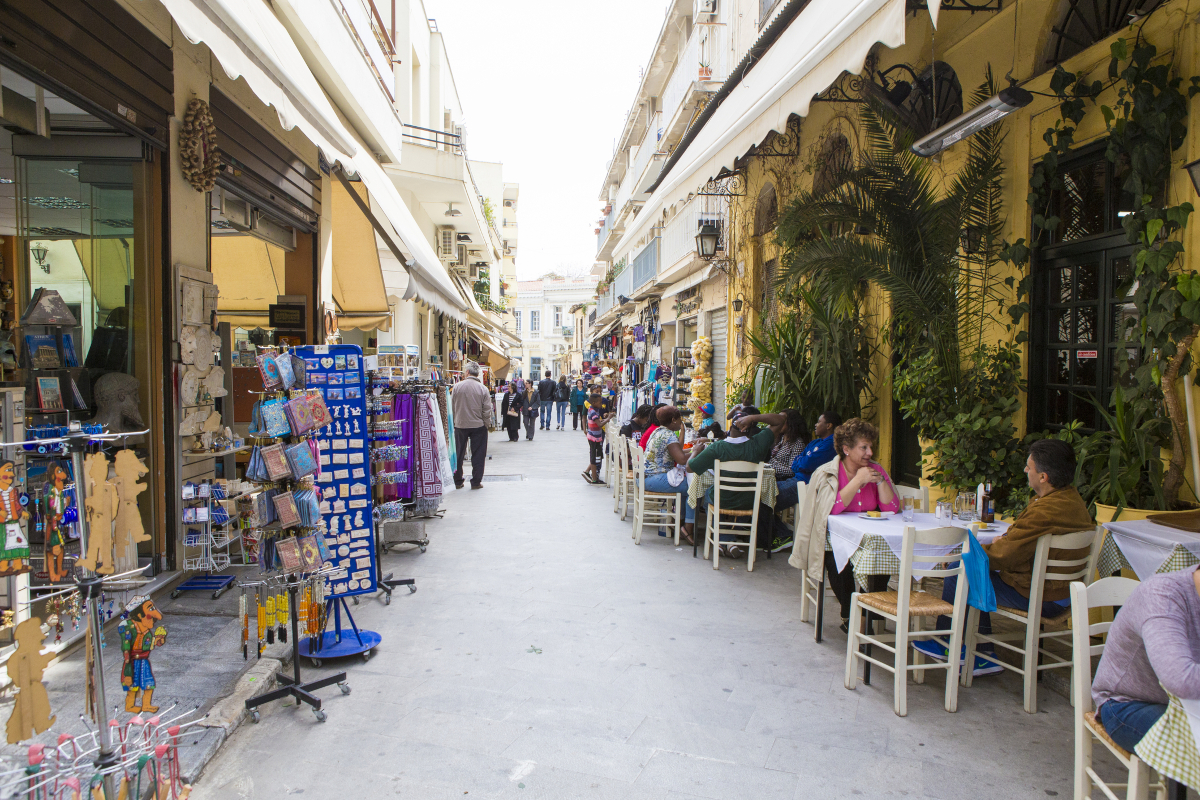
Greek proverbs about speech are some of the strongest in this collection. They warn about gossip, careless words, secrecy, reputation, and the way guilt often reveals itself.
86. Τα λίγα λόγια ζάχαρη και τα καθόλου μέλι.
Pronunciation: Ta líga lógia záchari kai ta kathólou méli.
Literal translation: Few words are sugar, and no words are honey.
Meaning: Sometimes it is better to speak less, especially when extra words may create trouble.
87. Η σιωπή είναι χρυσός.
Pronunciation: I siopí eínai chrysós.
Literal translation: Silence is gold.
Meaning: Silence can be wiser than unnecessary speech.
88. Από στόμα σε στόμα.
Pronunciation: Apó stóma se stóma.
Literal translation: From mouth to mouth.
Meaning: News, rumors, and stories spread through people talking.
89. Όποιος έχει τη μύγα, μυγιάζεται.
Pronunciation: Ópoios échei ti mýga, mygiázetai.
Literal translation: Whoever has the fly feels bothered by flies.
Meaning: A guilty or insecure person reacts quickly when a subject touches them.
90. Ο κόσμος το ’χει τούμπανο κι εμείς κρυφό καμάρι.
Pronunciation: O kósmos to ’chei toúmpano ki emeís kryfó kamári.
Literal translation: The world has it as a drum, and we keep it as a secret pride.
Meaning: Something is already public, even if someone pretends it is secret.
91. Καλύτερα να σου βγει το μάτι παρά το όνομα.
Pronunciation: Kalýtera na sou vgei to máti pará to ónoma.
Literal translation: Better to lose an eye than your name.
Meaning: Reputation is hard to repair once it is damaged.
92. Το πολύ το “Κύριε ελέησον” το βαριέται κι ο Θεός.
Pronunciation: To polý to “Kýrie eléison” to variétai ki o Theós.
Literal translation: Even God gets tired of too much “Lord have mercy.”
Meaning: Too much repetition, flattery, or pleading becomes irritating.
93. Λέγε λέγε το κοπέλι, κάνει την κυρά και θέλει.
Pronunciation: Lége lége to kopéli, kánei tin kyrá kai thélei.
Literal translation: Say it again and again, and the lady begins to want it.
Meaning: Repetition can persuade people over time.
94. Άλλα λέει η θειά μου, άλλα ακούνε τ’ αυτιά μου.
Pronunciation: Álla léi i theiá mou, álla akoúne t’ aftiá mou.
Literal translation: My aunt says one thing, my ears hear another.
Meaning: People may hear what they want to hear, not what was actually said.
95. Κακό χωριό τα λίγα σπίτια.
Pronunciation: Kakó chorió ta líga spítia.
Literal translation: Few houses make a bad village.
Meaning: Small groups can become tense because everyone knows everyone’s business.
Greek Proverbs About Character and Human Behavior
These sayings look at pride, jealousy, generosity, hidden motives, influence, and the way people behave when no one stops them. Many are useful because they are still easy to apply to modern life.
96. Τα σιγανά ποτάμια να φοβάσαι.
Pronunciation: Ta siganá potámia na fovásai.
Literal translation: Fear the calm rivers.
Meaning: People or situations that seem calm may have hidden depth, force, or risk.
97. Ο πεινασμένος καρβέλια ονειρεύεται.
Pronunciation: O peinasménos karvélia oneireúetai.
Literal translation: A hungry person dreams of loaves of bread.
Meaning: People tend to dream about what they lack.
98. Κοντά στο βασιλικό ποτίζεται κι η γλάστρα.
Pronunciation: Kontá sto vasilikó potízetai ki i glástra.
Literal translation: Next to the basil plant, the flowerpot is watered too.
Meaning: Being close to someone powerful, loved, or successful can bring indirect benefits.
99. Με όποιον δάσκαλο καθίσεις, τέτοια γράμματα θα μάθεις.
Pronunciation: Me ópoion dáskalo kathíseis, tétoia grámmata tha mátheis.
Literal translation: Whichever teacher you sit with, those are the letters you will learn.
Meaning: The people you learn from shape your habits, thinking, and behavior.
100. Η ζήλεια είναι αρρώστια.
Pronunciation: I zíleia eínai arróstia.
Literal translation: Jealousy is an illness.
Meaning: Envy can damage a person’s peace of mind and relationships.
101. Όποιος γίνεται πρόβατο, τον τρώει ο λύκος.
Pronunciation: Ópoios gínetai próvato, ton tróei o lýkos.
Literal translation: Whoever becomes a sheep is eaten by the wolf.
Meaning: If you make yourself too passive or defenseless, aggressive people may take advantage of you.
102. Κόρακας κοράκου μάτι δε βγάζει.
Pronunciation: Kórakas korákou máti de vgázei.
Literal translation: A crow does not take out another crow’s eye.
Meaning: People from the same group may protect one another, even when one is wrong.
103. Η φτώχεια θέλει καλοπέραση.
Pronunciation: I ftócheia thélei kalopérasi.
Literal translation: Poverty wants a good time.
Meaning: In hard times, people still need joy and small pleasures.
104. Ο καθένας με τον πόνο του.
Pronunciation: O kathénas me ton póno tou.
Literal translation: Everyone with their own pain.
Meaning: Everyone carries their own troubles.
105. Το χέρι που δίνει δεν μένει ποτέ άδειο.
Pronunciation: To chéri pou dínei den ménei poté ádeio.
Literal translation: The hand that gives never stays empty.
Meaning: Generosity has its own reward, whether practical, emotional, or spiritual.
106. Η αλαζονεία είναι ο προάγγελος της πτώσης.
Pronunciation: I alazoneía eínai o proággelos tis ptósis.
Literal translation: Arrogance is the messenger of the fall.
Meaning: Pride often comes before failure.
107. Ο φίλος του φίλου μου είναι και δικός μου φίλος.
Pronunciation: O fílos tou fílou mou eínai kai dikós mou fílos.
Literal translation: The friend of my friend is also my friend.
Meaning: Friendship and hospitality can extend through trusted relationships.
108. Κακό σκυλί ψόφο δεν έχει.
Pronunciation: Kakó skylí psófo den échei.
Literal translation: A bad dog does not die easily.
Meaning: Troublesome people often seem to survive everything.
109. Έγινε λαγός.
Pronunciation: Égine lagós.
Literal translation: He became a hare.
Meaning: He ran away quickly or disappeared to avoid trouble.
110. Εδώ σε θέλω κάβουρα να περπατάς στα κάρβουνα.
Pronunciation: Edó se thélo kávoura na perpatás sta kárvouna.
Literal translation: Now I want you, crab, to walk on hot coals.
Meaning: This is used when the real difficulty begins and someone has to prove themselves.
Greek Proverbs About Luck, Timing, and Daily Life

ID 124458595 ©Maksym Topchii | Dreamstime.com
These Greek sayings are tied to daily experience: seasons, luck, caution, weather, timing, and the small pieces of wisdom people repeat because ordinary life keeps proving them right.
111. Κάθε πράγμα στον καιρό του.
Pronunciation: Káthe prágma ston kairó tou.
Literal translation: Every thing in its own time.
Meaning: Timing matters. Some things cannot be rushed.
112. Η καλή μέρα από το πρωί φαίνεται.
Pronunciation: I kalí méra apó to proí faínetai.
Literal translation: A good day shows itself from the morning.
Meaning: Early signs can reveal how something is likely to develop.
113. Όπου υπάρχει καπνός, υπάρχει και φωτιά.
Pronunciation: Ópou ypárchei kapnós, ypárchei kai fotiá.
Literal translation: Where there is smoke, there is fire.
Meaning: Rumors or signs may come from something real, although it is still wise to verify before judging.
114. Όποιος ανακατεύεται με τα πίτουρα, τον τρώνε οι κότες.
Pronunciation: Ópoios anakateúetai me ta pítoura, ton tróne oi kótes.
Literal translation: Whoever mixes with bran is eaten by the hens.
Meaning: If you involve yourself with the wrong people or situations, you may suffer the consequences.
115. Μην πουλάς το τομάρι της αρκούδας πριν τη σκοτώσεις.
Pronunciation: Min poulás to tomári tis arkoúdas prin ti skotóseis.
Literal translation: Don’t sell the bear’s skin before you kill it.
Meaning: Don’t count on a result before it is real.
116. Όποιος έχει τα γένια, έχει και τα χτένια.
Pronunciation: Ópoios échei ta génia, échei kai ta chténia.
Literal translation: Whoever has the beard also has the combs.
Meaning: The person with the role or responsibility usually has the tools or authority that come with it.
117. Μ’ ένα σμπάρο δυο τρυγόνια.
Pronunciation: M’ éna sbáro dyo trygónia.
Literal translation: With one shot, two turtledoves.
Meaning: This is the Greek equivalent of “to kill two birds with one stone.”
118. Δεν είναι κάθε μέρα Πάσχα.
Pronunciation: Den eínai káthe méra Páscha.
Literal translation: Not every day is Easter.
Meaning: Life cannot be celebration, abundance, or ease all the time.
119. Από Μάρτη καλοκαίρι κι από Αύγουστο χειμώνα.
Pronunciation: Apó Márti kalokaíri ki apó Ávgousto cheimóna.
Literal translation: From March, summer; from August, winter.
Meaning: Seasons begin to announce themselves before the calendar fully changes.
120. Η τύχη βοηθάει τους τολμηρούς.
Pronunciation: I týchi voitháei tous tolmiroús.
Literal translation: Luck helps the brave.
Meaning: People who dare to act create more chances for luck to appear.
Ancient Greek Sayings and Maxims Often Quoted Today
The sayings in this final section are not all folk proverbs in the same sense as the village-style proverbs above. Some are ancient Greek maxims or philosophical sayings. I included them separately because readers often search for Greek sayings and ancient Greek wisdom together, and these short lines are still widely quoted today.
121. Γνώθι σαυτόν.
Pronunciation: Gnóthi sautón.
Literal translation: Know yourself.
Meaning: Self-awareness is the beginning of wisdom.
122. Μηδέν άγαν.
Pronunciation: Midén ágan.
Literal translation: Nothing in excess.
Meaning: Practice moderation and avoid extremes.
123. Εν οίδα ότι ουδέν οίδα.
Pronunciation: En oída óti oudén oída.
Literal translation: I know one thing, that I know nothing.
Meaning: True wisdom begins with recognizing the limits of your knowledge. This saying is associated with Socrates.
124. Ο βίος βραχύς, η δε τέχνη μακρή.
Pronunciation: O bíos vrachýs, i de téchni makrí.
Literal translation: Life is short, art is long.
Meaning: Human life is brief, while knowledge, craft, and human work can last beyond us.
125. Φίλος μεν Σωκράτης, φιλτάτη δε η αλήθεια.
Pronunciation: Fílos men Sokrátis, filtáti de i alítheia.
Literal translation: Socrates is a friend, but truth is a dearer friend.
Meaning: Truth should come before personal loyalty.
126. Κρεῖττον τοῦ λαλεῖν τὸ σιγᾶν.
Pronunciation: Kreítton tou laleín to sigán.
Literal translation: Silence is better than speaking.
Meaning: It is sometimes better to remain silent than to speak without purpose.
127. Επανάληψις μήτηρ πάσης μαθήσεως.
Pronunciation: Epanálipsis mítir pásis mathíseos.
Literal translation: Repetition is the mother of all learning.
Meaning: Practice and repetition are essential for learning.
128. Αρχή άνδρα δείκνυσι.
Pronunciation: Archí ándra deíknyσι.
Literal translation: Office shows the man.
Meaning: Power and responsibility reveal a person’s character.
129. Μέτρον άριστον.
Pronunciation: Métron áriston.
Literal translation: Measure is best.
Meaning: Balance and moderation are better than excess.
130. Χαλεπά τα καλά.
Pronunciation: Chalepá ta kalá.
Literal translation: Good things are difficult.
Meaning: Valuable things often require effort, patience, and difficulty.
Greek Proverbs Show the Everyday Side of Greece
Greek proverbs are often built from very simple images, and that is why they stay in your mind. An unripe grape becomes honey slowly. A donkey calls a rooster big-headed. A drowning person grabs his own hair. Someone tries to carry two watermelons under one arm. The image may be local, old, or funny, but the behavior behind it is familiar immediately.
People rush and make things worse. They talk too much. They trust the wrong person. They avoid the real work and pretend they are still preparing. They want two things that cannot both happen. They dismiss what they cannot have. They learn only after life makes the lesson painful. These are not grand philosophical ideas placed far away from daily life. They are small, sharp observations about how people actually behave.
That is the part of Greek culture I like seeing through proverbs. Beyond the myths, islands, ruins, food, churches, villages, and blue sea, there is also this practical language of warning, teasing, correcting, remembering, and explaining.
And if you are planning to visit Greece, you may also enjoy browsing more Europe travel content on the site, including what to do in Corfu, Greece, what Greece’s sunbed beach rules mean for visitors, European destination dupes, and my travel trivia articles.
Conclusion
Greek proverbs and sayings are a reminder that language carries more than vocabulary. It carries warnings, jokes, old frustrations, family expectations, moral lessons, and practical advice that people kept repeating because they recognized themselves in them.
I like how many of these sayings use simple images that convey powerful messages/lessons. I always say that proverbs are such a good window into culture.
Greek Proverbs and Sayings: Frequently Asked Questions
What are Greek proverbs called?
Greek proverbs are called παροιμίες (paroimíes). They are traditional sayings that express advice, warnings, observations, or cultural wisdom in a short, memorable form.
What is the most famous Greek proverb?
One of the most famous Greek proverbs is Αγάλι αγάλι γίνεται η αγουρίδα μέλι, which means “slowly, slowly, the unripe grape becomes honey.” It is a proverb about patience and the fact that good things need time.
What Greek proverb means “better late than never”?
The Greek proverb for “better late than never” is Κάλλιο αργά παρά ποτέ (Kállio argá pará poté).
What Greek proverb means “one swallow does not make a summer”?
A common Greek version is Ένας κούκος δε φέρνει την άνοιξη, meaning “one cuckoo does not bring spring.” It expresses the idea that one sign is not enough to prove a full change.
What Greek proverb is similar to “the pot calling the kettle black”?
The Greek proverb Είπε ο γάιδαρος τον πετεινό κεφάλα means “the donkey called the rooster big-headed.” It is used when someone criticizes another person for a fault they also have.
What is a Greek proverb about words?
Η γλώσσα κόκαλα δεν έχει, αλλά κόκαλα τσακίζει means “the tongue has no bones, but it breaks bones.” It is a powerful Greek proverb about how damaging words can be.
What is a Greek proverb about friendship?
Ο καλός φίλος στην ανάγκη φαίνεται means “a good friend is seen in need.” It means that real friends prove themselves when life is difficult.
Are Greek proverbs and Greek quotes the same?
No. Greek proverbs are traditional sayings passed through common usage. Greek quotes usually come from a specific author, philosopher, poet, historical figure, or written work. Some ancient sayings are repeated so often that people treat them like proverbs, but the two categories are not always the same.
Are ancient Greek maxims the same as modern Greek proverbs?
Not always. Ancient Greek maxims such as Γνώθι σαυτόν and Μηδέν άγαν are short wisdom sayings from ancient Greek culture. Modern Greek proverbs are often folk sayings passed down through everyday speech. Both are useful, but they come from slightly different traditions.
More amazing articles for you:
Best European Destination Dupes for 2026: Cheaper Alternatives to Santorini, Prague, and Amalfi
5 great reasons to visit London
Tourist Sparks Outrage for Viral Photo - and This Is Where It Keeps Going Wrong
200 October Trivia Questions and Answers (Easy, Medium & Hard)
The Black Sea in March in Several Gorgeous Photos
No Tricks, Just International Treats: Enjoy These Global Festivals Like Halloween
York sightseeing guide: 20 amazing York activities that will make you want to visit York England now
Hungarian Goulash Recipe

Violeta-Loredana Pascal is a communications expert, business mentor, and the founder of Earth’s Attractions and PRwave INTERNATIONAL. A pioneer in the Romanian digital PR landscape since 2005, she holds a degree in Communication and Social Sciences from SNSPA Bucharest. Violeta is a senior trainer at AcademiadeAfaceri.ro, where she leverages over 20 years of experience to teach professional courses in PR strategy and workplace productivity. By blending high-level business consulting with a passion for holistic travel and wellness, she empowers solopreneurs to overcome procrastination, build profitable brands, and design a life of purposeful adventure.