As always, when visiting a new country, some rules might take you by surprise – as it happened to my husband years ago, who arrived in the afternoon at the hotel, famished, yet the restaurant was closed, and dinner would be served a lot later than he was used to back home. After spending a lot of time visiting Italy, my husband discovered a lot of interesting Italian dining rules that are useful to know in advance, so I am sharing them all in this article.
The important thing to know is that Italian dining etiquette is about understanding how cafés, restaurants, meals, coffee, wine, service, and bills usually work, so you don’t waste time, overspend without realising it, or feel awkward at the table.
ID 195188715 ©Sergiomonti | Dreamstime.com
You may know plenty about Italian food, you can enjoy pasta, pizza, gelato, wine, espresso, and regional dishes without knowing every custom, of course, but a few details make eating out much easier. And if you enjoy the fun side of food culture too, you can later test yourself with these Italian food trivia questions.
Italian Dining Etiquette for Tourists: The Rules That Actually Affect Your Trip
The most useful Italian dining rules are rather straightforward – but they only seem so in hindsight, when you don’t know them before arriving in Italy.
Restaurants may not be open all afternoon. Dinner is often later than many visitors expect. A bar is usually a café, not only a place for alcohol. A coffee at the counter can cost much less than the same coffee at a table. A waiter may leave you alone for a long time because rushing the table would feel rude. The bill usually appears when you ask for it. Coperto on the bill is not automatically a scam. And yes, cappuccino after lunch is possible, but it is not the usual Italian habit. Once you know all of the details, eating in Italy becomes less confusing.
Before You Sit Down: Bar, Trattoria, Osteria, Ristorante, Pizzeria, and Tavola Calda
One of the easiest ways to make a small mistake when eating in Italy is by choosing the wrong type of place for what you need at that moment.
A bar in Italy is often a café. It can be the place for a morning cappuccino and cornetto, a quick espresso, a sandwich, a small pastry, or sometimes an aperitivo. It is not automatically a late-night cocktail bar in the way many visitors understand the word.
A trattoria is usually a casual restaurant, often with a more traditional feel. An osteria can also be casual and food-focused, although the meaning has changed over time and varies from place to place. A ristorante sounds more formal, but it can range from elegant and expensive to simply a normal restaurant using the more formal word.
A pizzeria is the obvious choice for pizza. A tavola calda can be useful when you need prepared food without turning lunch into a long restaurant meal. A panificio or pasticceria can save you when you want bread, pastries, focaccia, or something small between sightseeing stops.
In cities where you are trying to fit food around museums, churches, piazzas, and transport, like Florence, where you may be moving between the Duomo, the Uffizi, the Arno, gardens, viewpoints, and local restaurants, planning food around the day can be just as important as choosing attractions.
Italian Meal Times: Why You May Struggle to Find Dinner at 6 PM
Meal timing is one of the biggest practical surprises for first-time visitors. In many parts of Italy, lunch is usually the real midday meal, while dinner starts later than tourists from the US, UK, Northern Europe, or families with children may expect.
As a general rule, lunch often happens around 1 PM to 2:30 PM. Dinner often starts around 8 PM or later, with many local diners arriving closer to 8:30 or 9 PM. This doesn’t mean you will starve if you want to eat earlier. In tourist-heavy areas, you can usually find restaurants open earlier, but the atmosphere, menu, and pricing may not be the same as in places that follow a more local rhythm.
The bigger problem is the afternoon gap. Many restaurants close between lunch and dinner. If you finish sightseeing at 4:30 PM and expect a proper restaurant meal, you may discover that the place you wanted is closed until evening. This is where bars, bakeries, gelato shops, pizza by the slice, cafés, or aperitivo can save the day.
For travelers with children, medical needs, early trains, or long museum days, this is not a small detail. Check opening hours before building your itinerary around a restaurant. If there is a place you really want for dinner, book it. In many traditional restaurants, a reservation is not only about getting a table; it also reflects the slower Italian meal pace, because the table may be yours for the evening rather than part of a fast turnover system.
Italian Coffee Etiquette: Cappuccino, Espresso, Latte, and the Morning Rule
Italian coffee etiquette gets discussed so much because drinking coffee in Italy is different than in other areas (yes, their coffee habits are different than mine, and I come from a European country).
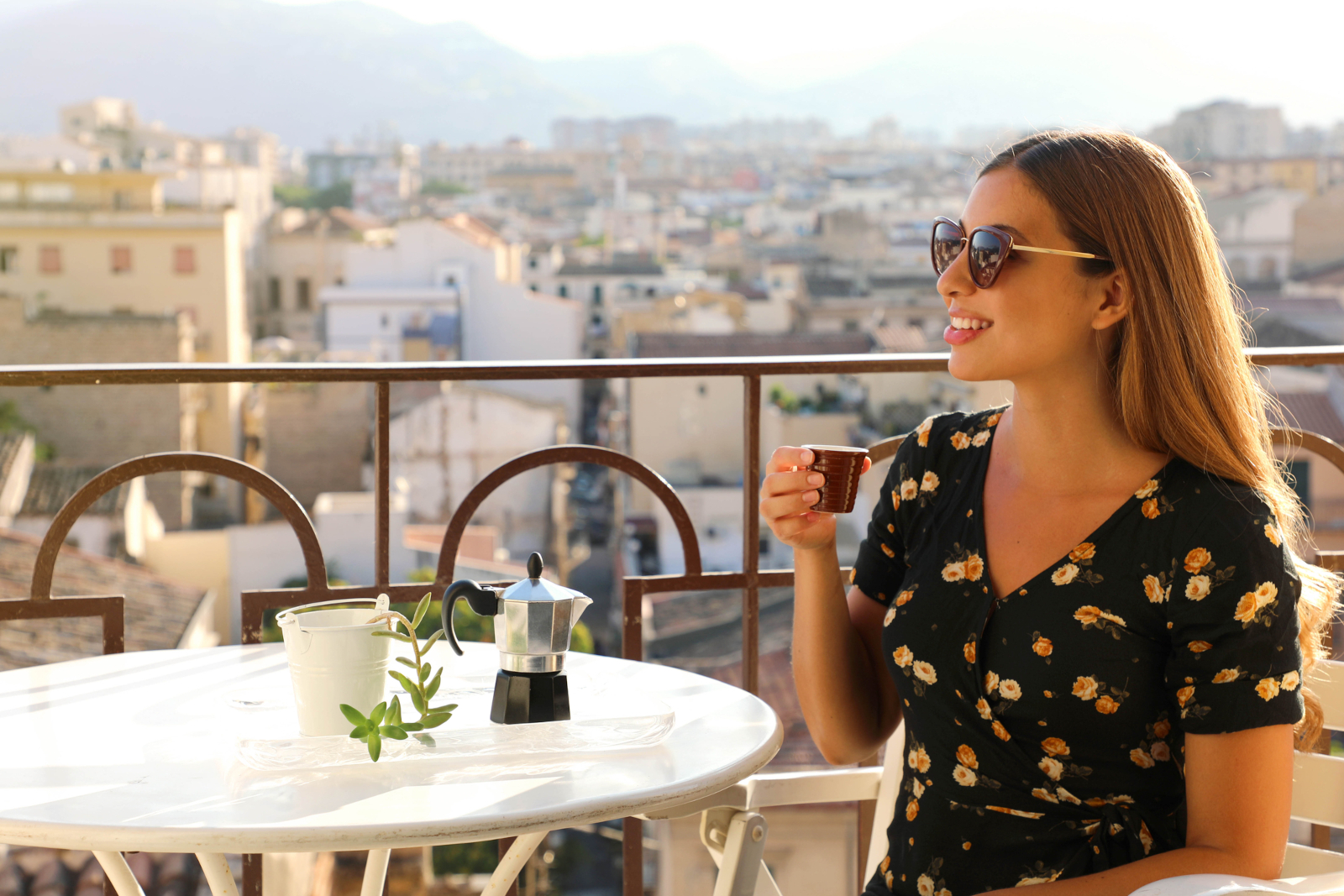
In Italy, cappuccino is usually a morning drink. It is linked to breakfast, often with a cornetto or pastry. After lunch or dinner, the more typical order is un caffè, which means espresso. You can also order a caffè macchiato, an espresso “stained” with a little milk, if you want something softer but not a full milky coffee.
Be careful with the word latte. In Italian, latte means milk. If you ask for “a latte,” you may literally be asking for milk, not the coffee drink many people expect in other countries. Caffè latte is the safer phrase if that is what you want.
Coffee in Italy is also often quick. Many people drink it standing at the counter, especially in the morning or during a work break. Sitting down for a long coffee is possible, and sometimes it is exactly what you want, but it is a different experience from the quick bar counter coffee.
Can You Order Cappuccino After Lunch in Italy?
Yes, you can order a cappuccino after lunch. Nobody is going to stop your trip because of it. But it is not the usual Italian habit, and in a traditional place it may mark you instantly as a tourist.
Milk-based coffee is often seen as heavy after a meal. Italians commonly choose espresso after lunch or dinner because it is small, strong, and fits the end of the meal. A cappuccino after a plate of pasta, a second course, dessert, and wine can feel strange in that context.
That said, tourist areas are flexible. Cafés serve visitors every day. If you truly want a cappuccino at 3 PM, you can usually get one. But if your goal is to follow the local rhythm, keep the cappuccino for the morning and order espresso after meals.
Banco vs Tavolo: Why the Same Coffee Can Cost More When You Sit Down
This is one of the most useful Italy café tips because it affects your wallet immediately.
At many Italian cafés, drinking coffee standing at the counter – al banco – costs less than sitting at a table – al tavolo. At the counter, you order, drink, and leave. At a table, you are paying for service, space, and sometimes the view.
In a normal neighborhood café, the difference may be modest. In a famous square, next to a major monument, or in a heavily touristed area, the difference can be much bigger. That coffee in a beautiful piazza may be worth it if you want the break, the view, the shade, the chair, and the moment. Just check the price before you sit down, especially in places where the location is part of what you are buying.
The same idea applies to travel planning more broadly. Italy has many famous places where the setting itself changes the price and the experience. If you are building a route around Rome, Florence, Venice, Milan, Lake Como, the Dolomites, Naples, Sicily, or Tuscany, it helps to decide where you want to spend more for atmosphere and where you simply need good food without the postcard price.
Italian Restaurant Menus Explained: Antipasto, Primo, Secondo, Contorno, Dolce
ID 78629490 ©Beatrice Preve | Dreamstime.com
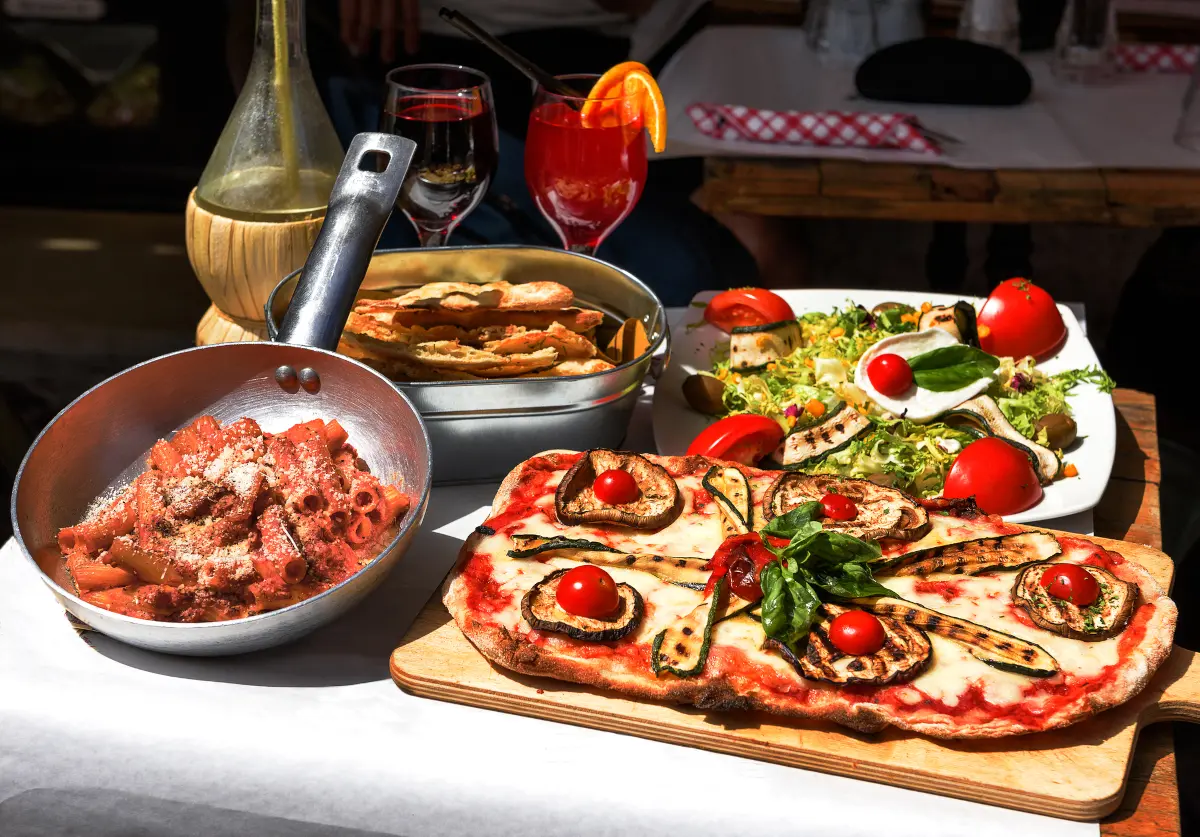
I have to say that Italian menus can feel confusing if you expect every main dish to come with everything on one plate. In many restaurants, meals are structured into courses, each with a specific role.
Antipasto is the starter. This can mean cured meats, cheese, bruschetta, marinated vegetables, seafood starters, or other regional dishes.
Primo is usually the first main course. This is where you often find pasta, risotto, gnocchi, soup, or sometimes other regional first courses.
Secondo is the second main course, often meat or fish.
Contorno is the side dish. Vegetables, potatoes, salad, or other sides may need to be ordered separately because the secondo may arrive without the kind of full side arrangement visitors expect elsewhere.
Dolce is dessert. After that, coffee or a digestivo may follow.
You don’t have to order every course. For lunch, ordering only a pasta dish can be completely fine. At dinner, especially in a slower traditional restaurant, many people may order more than one course, but that still doesn’t imply that you need antipasto, primo, secondo, contorno, dessert, coffee, and digestivo every single time.
Can You Ask for Pasta and Meat to Arrive Together?
Usually, this is not how the meal is structured. A primo and a secondo are separate courses, not a combo plate. If you order pasta and then meat or fish, expect them to arrive in sequence.
For tourists used to one large plate with protein, side, and starch together, this can feel strange at first. In Italy, the separation is part of the meal rhythm. You can order less, share where appropriate, or choose only the course you actually want, but asking the restaurant to rebuild the meal into another country’s structure may not go well.
Rules for Eating Pasta in Italy
Pasta rules are another area where confusion can appear.
Long pasta such as spaghetti is usually twirled with a fork. Cutting spaghetti with a knife looks childish unless you are cutting it for a small child. Using a spoon to help twirl pasta is often seen as touristy or old-fashioned, depending on the place and who you ask.
Also, pasta in Italy may not look like the huge bowls of pasta served in some international restaurants. The portion can be smaller, the sauce may be more balanced, and the pasta shape usually has a reason. Some sauces cling better to ridged pasta, some work with long strands, and some belong to specific regions.
This is also why the phrase “Italian food” can hide enormous variety. Northern Italy, coastal areas, Tuscany, Sicily, Emilia-Romagna, Naples, Rome, Turin, and smaller towns do not all eat the same way. A plate of fresh pasta in Emilia-Romagna, seafood in a coastal town, pizza in Naples, risotto in the north, and street food in Sicily all belong to Italy, but they are not interchangeable.
Parmesan, Seafood Pasta, Bread, and Scarpetta: The Food Habits Tourists Notice Fast
One of the best-known Italian dining etiquette rules is the cheese boundary: do not ask for Parmesan on seafood pasta unless the restaurant offers it. The usual explanation is that strong aged cheese can overpower delicate fish and seafood flavors.
If grated cheese is brought to the table or offered with the dish, use it. If you are eating seafood pasta and no cheese appears, do not ask for it.
Bread is another area where expectations differ. In many Italian restaurants, bread arrives without butter. It may not come with olive oil and balsamic vinegar as a pre-meal dipping ritual either, even though many tourists associate that with “Italian restaurant” dining abroad.
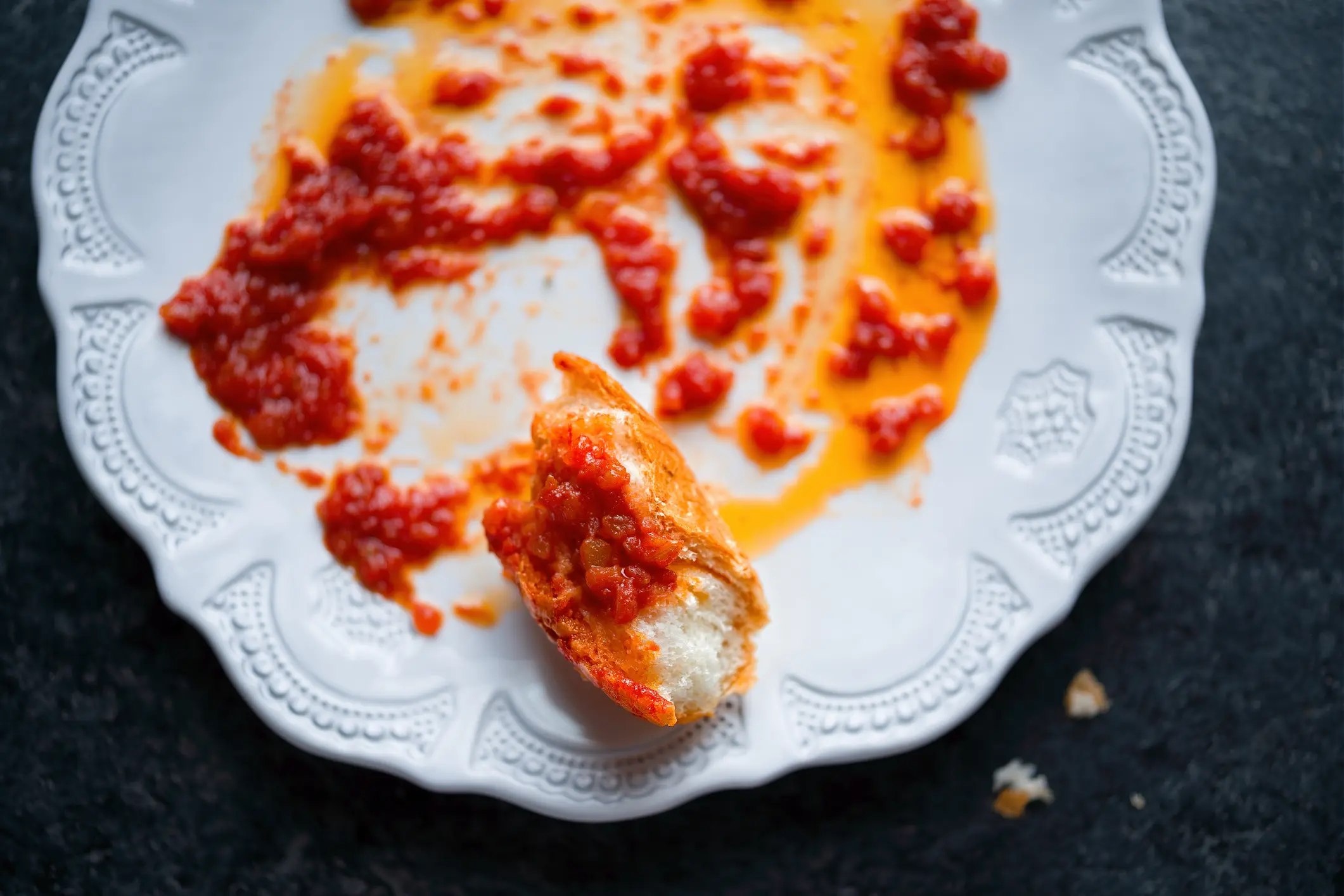
Bread often has a different function. It can sit on the table and accompany the meal. It can also be used for fare la scarpetta, which means using a small piece of bread to mop up sauce left on the plate. Context matters; you may not do this in the most formal setting, but in many casual meals, it is a very understandable sign that the sauce was worth finishing.
ID 204723852 ©Zkruger | Dreamstime.com
Wine, Water, Beer, and Aperitivo: What Belongs on the Italian Table
At a typical Italian meal, water and wine are the classic choices. When you order water, you may be asked whether you want acqua naturale or acqua frizzante, meaning still or sparkling water.
House wine can be a perfectly normal choice, especially in casual restaurants. Wine by the carafe is not automatically a “cheap tourist” move. In the right place, it can be exactly what fits the meal.
Beer with pizza is common. A cocktail with a full dinner is less typical, though of course tourist areas, modern restaurants, hotels, and bars can be flexible. Aperol Spritz and other aperitivo drinks belong more naturally before dinner, during aperitivo, than beside every course of a traditional meal.
Aperitivo itself is worth understanding. It is not only “drinks before dinner.” In some cities, especially Milan, aperitivo can become a real part of the evening rhythm, with drinks and small bites before a later meal. If you are planning northern cities, this Milan travel guide gives useful context for seeing the city beyond the obvious tourist version.
Italian Toasting Etiquette: Salute, Cin Cin, and Eye Contact
If you toast in Italy, you can say Salute! or Cin cin!. Eye contact is often mentioned as part of the ritual, and many people treat it as a small social custom rather than a serious test.
For a toast, raise the glass, acknowledge the people at the table, avoid awkwardly clashing through everyone’s arms, and continue the meal.
Coperto, Servizio, and Mancia: How to Read an Italian Restaurant Bill
I know that there are a lot of discussions about scams in Europe and some of these topics cover restaurant bills. Italy has a few particular things you should know in advance.
Coperto is a cover charge. It is usually a small per-person charge connected to the table setting, bread, linens, and the basic fact of sitting down in the restaurant. It should be listed on the menu.
Servizio is a service charge. It is not the same thing as coperto and is more likely in certain tourist-heavy, formal, or high-demand places. If servizio is included, extra tipping is generally unnecessary.
Mancia means tip. Tipping in Italy is not the same as tipping in the United States. A large percentage tip is not expected as a default in the same way. If service was good and no service charge is included, rounding up or leaving a few euros can be appreciated. In casual situations, especially for a coffee or small snack, rounding is often enough if you want to leave something.
The most important thing is to read the bill before reacting. Check whether coperto or servizio appears, whether prices match the menu, and whether anything has been added that you did not order.
How to Ask for the Bill in Italy
If you wait for the bill to appear automatically, you may wait a long time.
In many Italian restaurants, bringing the bill before the customer asks can feel like pushing people out. The table is not supposed to be rushed the moment you finish eating. This can be lovely when you want a slow evening and annoying when you are tired, but the solution is easy.
Say:
Il conto, per favore. – The bill, please.
You can also ask:
Posso pagare con carta? – Can I pay by card?
Possiamo pagare separatamente? – Can we pay separately?
Splitting the bill may not always be convenient in smaller or more traditional places, especially if the restaurant is busy. If separate payments are important, ask before assuming it will be simple. As I mentioned in a separate article, having some cash in Europe can be really useful!
Italian Restaurant Mistakes Tourists Make Without Realizing It
Many Italian restaurant mistakes are small, and most will not ruin anything. Still, they can make you stand out immediately or make the meal less pleasant than it needed to be.
Expecting dinner too early. If you want a real local dinner atmosphere, 6 PM is usually too early. Use that time for a walk, aperitivo, gelato, or a break before dinner.
Sitting at a famous café without checking prices. A table in a major piazza can be an experience, but it can also be expensive. Look before you sit.
Waiting for the bill without asking. The waiter may not be ignoring you. You probably need to ask for il conto.
Thinking coperto automatically means scam. It is a normal charge in many restaurants, but it should be visible and clear.
Adding a big tip before checking the bill. If servizio is already included, you do not need to tip again unless you really want to.
Asking for too many substitutions. An allergy or dietary need is one thing. Rebuilding the dish completely is another.
Ordering cheese on seafood pasta. If it is not offered, avoid asking.
Cutting spaghetti with a knife. Unless you are helping a child, twirl it with a fork.
Ordering every course because the menu lists them. The structure is there to guide the meal, not to force you into eating more than you want.
Expecting butter with bread. Bread may arrive plain, and that is normal.
Treating aperitivo as identical to dinner. Sometimes aperitivo is generous enough to feel like a light meal, but it is still its own part of the evening rhythm.
Assuming every place near a landmark is bad. Some are overpriced and forgettable. Others are worth it for the view, convenience, or specific dish. The real mistake is not checking the menu, prices, and atmosphere before committing.
How to Spot a Tourist-Trap Restaurant in Italy Without Becoming Paranoid
Tourist-trap warnings shouldn’t make you afraid of every restaurant near a famous square. Sometimes you are paying for a view, and that is fine. Sometimes you want to eat near the Colosseum, the Duomo, Piazza San Marco, the Trevi Fountain, the Spanish Steps, or the waterfront because the setting is part of the trip. We all choose what we do and where we go on vacation based on our preferences and not because of some fancy trends.
Still, there are signs worth noticing.
Be careful with restaurants where staff aggressively wave people in from the street, especially in the busiest tourist zones. Huge laminated menus in many languages, food photos for every dish, a menu that tries to serve every famous Italian dish from every region, unclear prices for seafood or specials, and dramatic “authentic Italian food” signs can all be reasons to slow down before sitting.
A better sign is usually a shorter menu, clear prices, regional dishes, steady customers, and staff who do not need to drag people inside. A menu posted outside is helpful. A place one or two streets away from the main square can sometimes be better, but location alone does not prove quality.
Italy is full of famous places and smaller destinations where food, atmosphere, and daily life feel completely different from one another. If you want to compare the obvious cities with less expected stops, this guide to lesser-known destinations in Italy is a useful reminder that the country is not only Rome, Florence, Venice, and Milan.
Italian Dining Etiquette vs Actual Rules and Fines
It is important to separate etiquette from actual rules.
Ordering cappuccino after lunch is not illegal. Cutting spaghetti with a knife will not get you fined. Asking for the bill too early may look rushed, but it is not a crime. These are cultural habits, table customs, and restaurant expectations.
Italy does, however, have real local rules around public behavior in some historic centers, monuments, beaches, fountains, and fragile areas. Sitting where you should not, entering fountains, taking sand, wearing the wrong footwear on certain trails, eating in restricted monument areas, or ignoring local signs can become expensive mistakes. For that side of the trip, check the actual tourist fines and rules in Italy before you assume every mistake is only an etiquette issue.
Useful Italian Restaurant Phrases for Tourists
You don’t need fluent Italian to eat well in Italy, but a few phrases can make the experience smoother.
Un tavolo per due, per favore. – A table for two, please.
Avete un tavolo libero? – Do you have a free table?
Vorrei prenotare per stasera. – I would like to book for tonight.
A che ora aprite per cena? – What time do you open for dinner?
Acqua naturale. – Still water.
Acqua frizzante. – Sparkling water.
Un caffè, per favore. – An espresso, please.
Un cappuccino, per favore. – A cappuccino, please.
Il conto, per favore. – The bill, please.
Posso pagare con carta? – Can I pay by card?
Senza… – Without…
Sono allergica a… – I am allergic to… (if you are female)
Sono allergico a… – I am allergic to… (if you are male)
Grazie, era tutto buonissimo.– Thank you, everything was very good.
Are Italian Dining Rules the Same Everywhere?
No. Italy is regional. A meal in Turin does not feel exactly like a meal in Naples. Milan has a strong aperitivo culture. Coastal towns have their own seafood habits. Tuscany, Emilia-Romagna, Sicily, Veneto, Lombardy, Campania, and Piedmont all have dishes, wines, timings, and local food traditions that do not fit into one neat “Italian food rules” box.
That is also why it helps to read city and region guides, not only general Italy advice. A route through Milan, Como, Verona, and Venice, for example, gives you a different food and travel rhythm from a beach stay, a Rome weekend, or a southern Italy itinerary. If northern cities are on your list, this Northern Italy itinerary shows how quickly the country changes from one stop to another.
My tip: check opening hours, read the menu, notice what people around you are doing, ask politely, and avoid treating one viral rule as if it explains the entire country.
A Short Note on Italian Table Manners and Galateo
I discovered that Italian etiquette has a long written history, and one famous reference is Il Galateo, Giovanni Della Casa’s 16th-century work on manners. Of course, you don’t need to read a Renaissance etiquette text before eating dinner in Italy, but the cultural background explains why dining is special.
The table is social. Meals are paced. Service is not built around rushing you out. Food has order, context, and regional identity.
Not every Italian meal is formal, but some habits which feel casual to tourists – eating at odd times, changing dishes heavily, treating coffee as a giant milky drink all day, expecting the bill without asking – can clash with how the meal is in Italy. It all goes back to the local culture, the weather, and how people adapted to that.
If you enjoy these cultural details, Italian proverbs and meanings are another way to see how much everyday wisdom, humor, food, patience, and social observation sit inside the language.
How to Eat in Italy Without Turning Every Meal Into a Test
While I mentioned a lot of rules above, I don’t want you to feel nervous before every order. Italy is used to visitors and, even if you make a small mistake, you will still have a wonderful meal.
What I wanted with this article was to show you the particularities and local rhythm. Morning is for cappuccino. Espresso is common after meals. Lunch and dinner have windows. Dinner is often later. Sitting at a café can cost more than standing at the bar. The menu has courses, but you do not need to order all of them. Bread is not usually a butter-and-dipping-bowl appetizer. Coperto is normal when listed. Tipping is not the same as in the US. The bill usually comes when you ask.
Once these details make sense, you can focus on the better part: choosing the restaurant, trying the dish that belongs to that region, drinking the local wine, slowing down, and enjoying the fact that eating in Italy is one of the reasons many people want to visit in the first place.
And if the food side of the trip makes you want more Italy planning, you can continue with the Italy trivia questions, compare culture and wine through this France vs Italy quiz, browse the top cities to visit in Italy, or use this other list of famous Italian cities if you are still deciding where to go.
Conclusion
This article on Italian dining etiquette for tourists is really about helping you better understand the local customs and rules: when restaurants open, where you sit for coffee, what kind of coffee you order, how the menu is structured, what appears on the bill, and how to end the meal without waiting forever for someone to bring the check.
I belive that if you understand coffee timing, dinner hours, coperto, tipping, menu courses, bread, pasta, wine, and the slower pace of service, eating in Italy becomes easier and much more enjoyable.
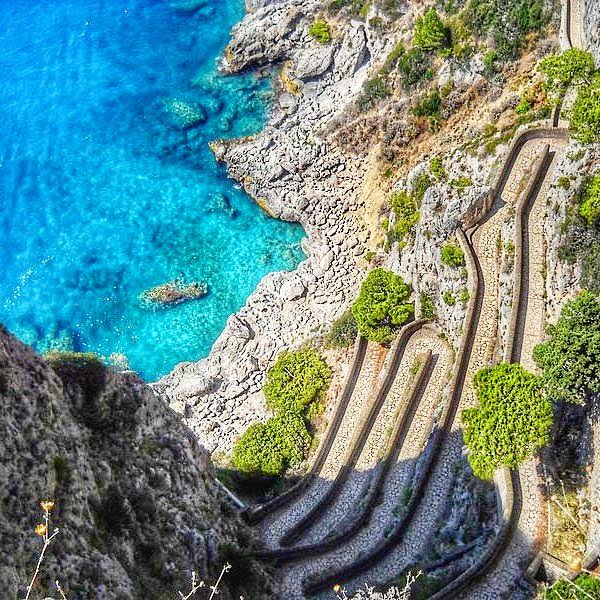
That is true whether you are heading to a major city, a coastal town, a northern itinerary, a beach destination, or an island. A homemade pasta meal in Rimini, a food stop in Turin, or a slow day dreaming over the views in Capri will not all feel the same. That is exactly why the basic etiquette helps: it gives you enough structure to enjoy the differences instead of being confused by them.
FAQ About Italian Dining Etiquette for Tourists
What is the most important Italian dining etiquette rule for tourists?
The most important rule is to understand the rhythm of the meal. Restaurants may not be open all day, dinner is often later than tourists expect, coffee has its own timing, courses are usually served separately, and the bill usually comes only when you ask for it.
Can you order cappuccino after 11 AM in Italy?
Yes, you can order cappuccino after 11 AM, especially in tourist areas. It is just not the usual Italian habit. Cappuccino is mainly a morning drink, while espresso is the more common coffee after lunch or dinner.
Is it rude to order cappuccino after lunch in Italy?
It is usually not treated as deeply rude, but it will look touristy in many places. Italians often see milk-based coffee as too heavy after a meal, so espresso is the more typical choice.
What coffee do Italians drink after dinner?
After dinner, Italians usually drink espresso, ordered simply as un caffè. Some people may also have a digestivo such as amaro, limoncello, or grappa, depending on the region and meal.
What time do Italians eat dinner?
In many parts of Italy, dinner starts later than in countries where 6 PM dinners are common. Restaurants may open around 7:30 PM, but many locals eat closer to 8:30 PM or 9 PM, sometimes later depending on the region and season.
Are restaurants in Italy open all day?
Many traditional restaurants are not open all day. They often serve lunch, close in the afternoon, and reopen for dinner. Bars, bakeries, gelato shops, pizza by the slice, and casual food places can be useful between meal times.
What is coperto in Italy?
Coperto is a cover charge, usually added per person. It is connected to the table setting, bread, linens, and basic service. It should be listed on the menu, and seeing it on the bill does not automatically mean you were scammed.
Is coperto the same as a tip?
No. Coperto is not the same as a tip. It is a cover charge. A tip, or mancia, is discretionary. A separate servizio charge may also appear in some restaurants, especially in tourist-heavy or formal places.
Do you tip in Italian restaurants?
Tipping in Italy is not like tipping in the United States. Large percentage tips are not expected as a default. If service was good and no service charge is included, rounding up or leaving a few euros is usually enough in many casual restaurants.
How do you ask for the bill in Italian?
Say Il conto, per favore, which means “the bill, please.” In many Italian restaurants, waiters do not bring the bill until you ask because bringing it too early can feel like rushing the table.
Do you have to order every course in Italy?
No. Italian menus often include antipasto, primo, secondo, contorno, and dolce, but you do not have to order every course. Many people choose two or three courses, and a single pasta dish at lunch can be completely fine.
Is it rude to ask for Parmesan on seafood pasta in Italy?
It is usually better not to ask for Parmesan on seafood pasta unless the restaurant offers it. Strong grated cheese can overpower fish and seafood, so many Italian restaurants do not serve it with those dishes.
More amazing articles for you:
150 UK Trivia Questions and Answers (Easy to Hard): You May Know More Than You Realize
No Tricks, Just International Treats: Enjoy These Global Festivals Like Halloween
This is how to spend 2 astonishing days in Ibiza
Exploring Europe’s best birding tours
Liverpool travel guide: what to do, where to stay, where to eat, and tips
Best European Destination Dupes for 2026: Cheaper Alternatives to Santorini, Prague, and Amalfi
What to Plan for an Epic Trip to Iceland
Insider's guide to Luoyang, China with the Luoyang attractions, restaurants, hotels, tips, and more

Violeta-Loredana Pascal is a communications expert, business mentor, and the founder of Earth’s Attractions and PRwave INTERNATIONAL. A pioneer in the Romanian digital PR landscape since 2005, she holds a degree in Communication and Social Sciences from SNSPA Bucharest. Violeta is a senior trainer at AcademiadeAfaceri.ro, where she leverages over 20 years of experience to teach professional courses in PR strategy and workplace productivity. By blending high-level business consulting with a passion for holistic travel and wellness, she empowers solopreneurs to overcome procrastination, build profitable brands, and design a life of purposeful adventure.