
You land. You grab your carry-on. You roll it out of the airport and into what looks like a postcard-perfect historic center.
And then you hear it.
Click-clack. Click-clack. Click-clack.
On polished stone, narrow alleyways, marble steps, and centuries-old pavements, the sound amplifies. In some cities, residents have had enough.
In a few European destinations, rolling a wheeled suitcase through historic districts is not just frowned upon – it has been restricted, discouraged, or in some cases linked to potential fines under local noise regulations.

ID 165520147 | Person ©Valerii Honcharuk | Dreamstime.com
Here’s what is actually law, what is rumor, what fines may apply, and why these cities care.
June 2026 update: There is still no Europe-wide ban on rolling suitcases. The confusion comes from local rules, old viral headlines, and tourist-fine stories that mix together several different issues: noise in Dubrovnik, historic-staircase rules in Rome, congestion rules in Portofino, and old Venice rumors about wheeled luggage. The safest way to read this is not “Europe banned rolling suitcases,” but “some historic areas now treat noisy, obstructive, or damaging luggage use as part of broader tourist-behavior rules.”
Dubrovnik, Croatia – The Rolling Suitcase Rule That Started the Viral Confusion
The clearest example of a city targeting rolling luggage is Dubrovnik.
In 2023, as part of the city’s “Respect the City” initiative, Dubrovnik asked visitors not to drag noisy wheeled suitcases through the UNESCO-listed Old Town. The story quickly turned into viral headlines about a “rolling suitcase ban,” but the reality is more careful: the city wanted to reduce noise on the polished limestone streets, especially during early-morning and late-night arrivals, while later clarifications pushed back against the idea of automatic suitcase fines.
What is the actual rule?

The mayor publicly stated that suitcases should not be rolled through the Old Town and that visitors should carry luggage instead. The stated goal was to reduce noise pollution affecting residents living inside the walled city.
The city emphasized that accommodation providers would assist guests with luggage transport where possible.
Are there fines?
Early media reports mentioned possible fines of around €265, and newer viral posts have continued to recycle different fine amounts. I would be careful with those claims. The clearest confirmed point is that Dubrovnik publicly asked visitors not to roll loud wheeled suitcases through the Old Town because of resident noise complaints. The stronger claim – that every tourist dragging a suitcase automatically gets fined – has been disputed by later clarifications.
Why Dubrovnik acted
The Old Town streets are paved in polished limestone that amplifies sound dramatically. Residents reported early-morning and late-night disturbances from constant suitcase traffic during peak tourism months. In a compact medieval city, noise reverberates intensely.
From a resident-impact perspective, the regulation is about quality of life in a city overwhelmed by overtourism.
Dubrovnik’s Old Town draws visitors for the panoramic city walls, the Rector’s Palace, and boat trips to Lokrum Island, but it is still a living historic neighborhood.
Venice, Italy – The Viral Ban That Wasn’t a Ban

ID 34701738 © Michal Bednarek | Dreamstime.com
If you’ve seen headlines claiming that Venice banned rolling suitcases, you’re not alone.
For years, viral articles have claimed wheeled luggage is illegal in Venice, Italy. The truth is more nuanced.
Is it illegal to roll a suitcase in Venice?
No. There is no formal citywide law banning rolling luggage for tourists. What you should not confuse: Venice does have practical luggage problems. Bridges, steps, narrow lanes, and delicate stone surfaces make heavy suitcases difficult and annoying to move around, and large trolleys or commercial carts have been the subject of restrictions. But that is not the same as a general tourist ban on personal rolling suitcases.
Much of the confusion stems from regulations on commercial carts and transport equipment, which were misinterpreted as applying to personal wheeled luggage. Credible reporting clarifying this includes TIME coverage.
So why the controversy?
Venice’s bridges, stone steps, and narrow lanes create friction and noise issues similar to Dubrovnik. There were discussions about limiting hard plastic wheels to protect fragile pavements and reduce disturbance.
However, no enforceable fine specific to rolling carry-ons exists for tourists.
What does exist: strict regulations on behavior, tourist caps, day-trip fees (separate policy), and increasing sensitivity toward visitor impact.
In practice, while you can legally roll your bag in Venice, dragging a hard-wheel suitcase over multiple stone bridges at 6 a.m. is unlikely to make you popular with residents.
There are, however, many rules in Italy that you need to know – because if you break them, you can be fined. You can even be fined for using a towel on one of the Italian beaches – or for building big sandcastles.
Rome, Italy – The Spanish Steps Are the Real Fine Risk
Rome is another Italian city that has to be included on this list, but with the note that the issue is not rolling a suitcase anywhere in Rome. Dragging wheeled luggage on protected historic staircases, especially the Spanish Steps, can lead to fines. Rome’s urban decorum rules include restrictions meant to protect monuments from damage, and the Spanish Steps are actively monitored.
Reports from the 2019 enforcement campaign said visitors could face fines of €250 for sitting on the Spanish Steps and up to €400 for dirtying or damaging them. The same wider crackdown also covered behavior such as dragging wheeled suitcases down historic staircases.
So, if you arrive in Rome with luggage, you shouldn’t drag your suitcase up or down the Spanish Steps or similar protected monument steps. Carry it, use another route, leave it at your hotel, or use luggage storage before sightseeing.
Barcelona, Spain – No Suitcase Ban, But Noise Rules Can Still Apply

Unlike Dubrovnik, Barcelona does not have a suitcase-specific ban. However, rolling luggage can fall under broader public disturbance and noise regulations, especially in residential historic districts such as the Gothic Quarter and El Born.
What does the law say?
Barcelona enforces civic coexistence ordinances designed to reduce disturbances in residential zones. These include noise violations, disruptive behavior, and obstruction in pedestrian areas.
Rolling a carry-on is not explicitly illegal in Barcelona. The more realistic issue is noise or obstruction in residential areas, especially late at night or early in the morning. If enforcement happens, it would be under broader public disturbance or civic-behavior rules, not because Barcelona has a suitcase-specific ban.
Possible fines
Under Barcelona’s civic ordinance framework, disturbances can result in fines that range from approximately €100 to several hundred euros depending on severity and repetition.
There is no suitcase-specific penalty schedule, but behavior causing significant noise in residential zones can trigger enforcement.
Why enforcement is increasing
Barcelona has long struggled with overtourism tensions. Noise – particularly late at night – is a frequent resident complaint. Rolling hard-wheel luggage over cobblestones in echoing alleyways contributes to the problem.
The regulation is not about luggage itself; it is about cumulative tourist impact.
Visitors come to Barcelona for Gaudí’s Sagrada Família, the winding lanes of the Gothic Quarter, and sunset views from Park Güell, but many of those postcard areas are also densely residential zones with strict noise expectations.
Portofino, Italy – Luggage, Crowds and No-Waiting Zones
Portofino has used seasonal public-order rules to reduce congestion in crowded areas, including no-waiting zones and fines for behavior that blocks or disrupts public spaces.
Earlier reporting on Portofino’s red zones focused on tourists lingering too long in crowded photo spots, with fines reported up to €275.
Newer reports describe broader seasonal decorum rules with fines ranging from €25 to €500 for violations such as lingering in public areas with suitcases, picnic equipment, or portable speakers.
Capri, Italy – Quiet-Tourism Rules, But Not a Clear Suitcase Ban

On the island of Capri, authorities have introduced various behavioral controls over the years aimed at preserving the island’s character and reducing disturbance. Capri’s narrow lanes, steps, crowds, and port arrivals make large wheeled luggage inconvenient. If you are visiting only for the day, you could consider leaving your luggage in Naples, Sorrento, at your hotel, or at a storage point before sightseeing.
Why These Rules Exist (And Why They’re Increasing)
This is not only about luggage, but more about noise, crowding, obstruction, and structural stress in historic environments. And I know the noise can be really disturbing, for locals especially. I was talking to a friend in Amsterdam who lives in a popular area, and he told me they hear suitcase wheels at night there too, and it is an issue.
In medieval cities, pavements are often limestone or cobblestone. Sound amplification is significant. Narrow alleyways act as echo chambers. Residential windows sit directly above pedestrian streets.
Hard plastic suitcase wheels create repetitive noise on stone streets, and heavy bags can also chip, scrape, or stress fragile steps when people drag them over monuments instead of carrying them.
As European cities implement broader overtourism controls, noise pollution is becoming a policy focus alongside visitor caps and short-term rental regulations.
What This Means for Travelers
If you are traveling to a historic European city center:
- Research local municipal rules before visiting historic centers.
- Don’t drag luggage on protected monument steps, including Rome’s Spanish Steps.
- Avoid rolling hard-wheel luggage late at night or early in the morning in residential old towns.
- In Dubrovnik’s Old Town, carry your suitcase instead of dragging it where possible.
- In places like Portofino, do not stop in crowded areas with large luggage or block pedestrian routes.
- Use luggage storage, hotel luggage transfer, water transport, or licensed porters when available.
- Consider soft rubber wheels or a convertible backpack-style carry-on for historic European cities.
Is There a Rolling Suitcase Ban in Europe?
There is no Europe-wide ban on wheeled luggage. The real issue is local enforcement in specific historic areas. Dubrovnik has asked visitors not to drag noisy wheeled suitcases through the Old Town. Rome can fine visitors for behavior that damages or disrespects protected monuments such as the Spanish Steps. Portofino has used crowd-control and decorum rules in congested areas. Venice does not have a general tourist ban on personal rolling suitcases, despite years of viral claims.
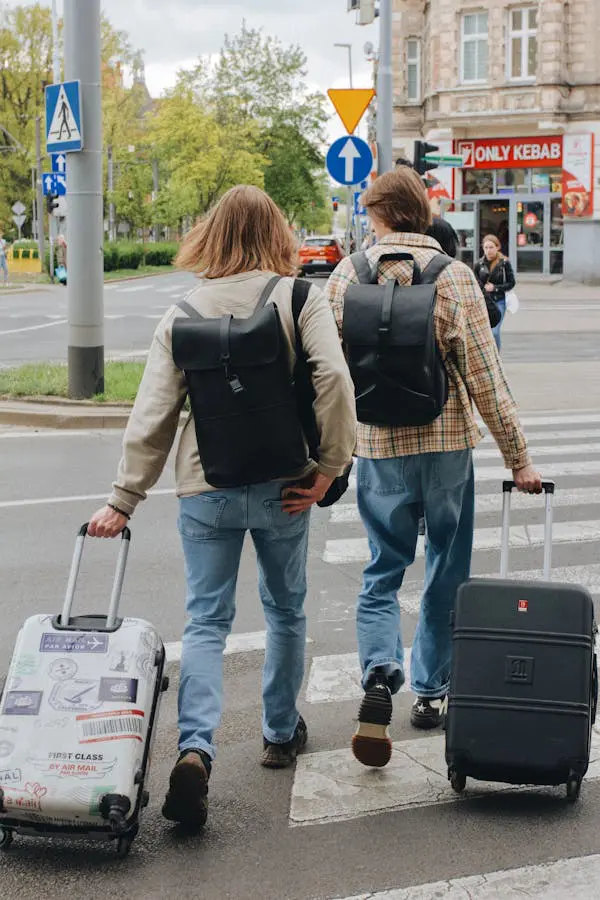
Rolling Suitcase Rules in Europe: Laws, Fines and What Travelers Need to Know
Are rolling suitcases banned in Europe?
There is no Europe-wide ban on rolling suitcases. However, individual cities can introduce local noise, public-order, or monument-protection rules that affect how luggage can be used in specific historic areas. In places like Dubrovnik’s Old Town, authorities have formally discouraged rolling carry-ons due to noise concerns, and enforcement may fall under municipal regulations.
Can you be fined for rolling your carry-on in Europe?
In specific places, yes, but not because Europe has a general suitcase ban. Rome is the clearest case: dragging luggage on protected historic staircases such as the Spanish Steps can fall under urban decorum rules, with reported fines of €250–€400 depending on the violation or damage. In Portofino, lingering or blocking crowded public areas with luggage can also create a fine risk under local public-order rules. Dubrovnik is best treated as a strong luggage-noise warning rather than a simple automatic-fine rule, because the suitcase-fine claims have been disputed.
Is it illegal to roll a suitcase in Venice?
No. Venice does not have a formal ban on rolling suitcases for tourists. Viral reports suggesting otherwise were based on misunderstandings of regulations concerning commercial carts and transport equipment. Visitors can legally use wheeled luggage, although navigating bridges and stone steps may be impractical.
Why are some cities restricting rolling luggage?
The primary concern is noise pollution in historic centers. Cobblestone and limestone streets amplify the sound of hard plastic wheels, especially in narrow medieval streets where buildings reflect sound. In heavily visited cities, residents have complained about early-morning and late-night disturbances caused by suitcase traffic.
Which European city has restricted rolling suitcases?
Dubrovnik, Croatia, is the most prominent example. As part of its “Respect the City” initiative, local officials announced measures discouraging visitors from rolling wheeled luggage inside the Old Town due to noise concerns. While enforcement focuses largely on awareness, the policy has been formally communicated by city authorities.
Are rolling suitcase rules increasing in Europe?
There is no coordinated European policy targeting luggage. However, as cities introduce broader overtourism measures – including tourist caps, day-entry fees, and stricter noise regulations – localized enforcement of disturbance rules has become more visible. Rolling luggage restrictions are part of a wider effort to balance tourism and residential life in historic districts.
How can travelers avoid luggage-related fines in Europe?
Travelers visiting historic city centers can reduce risk by:
- Checking municipal guidance before arrival
- Avoiding rolling luggage late at night or early morning
- Carrying suitcases instead of rolling them in sensitive historic areas
- Not dragging luggage on protected monument steps, including Rome’s Spanish Steps
- Avoiding stopping or lingering with large luggage in crowded no-waiting areas such as Portofino’s busiest zones
- Using soft rubber wheels or smaller carry-ons
- Staying informed about local noise regulations
Most issues arise not from luggage itself, but from how and when it is used.
Can you roll a suitcase on Rome’s Spanish Steps?
No. Don’t drag or roll luggage on Rome’s Spanish Steps. The steps are a protected historic monument, and Rome’s decorum rules allow fines for behavior that damages, dirties, or disrespects the site. Carry your bag, use another route, or leave luggage in storage before visiting.
Is Portofino banning suitcases?
Portofino is not best understood as a simple rolling-suitcase ban. The issue is crowding and obstruction. The town has used no-waiting and decorum rules in busy public areas, and travelers with large luggage can create problems if they stop, block pedestrian routes, or linger in congested spots.
Photo sources (other than Dreamstime and my own): 1, 2, 3
More amazing articles for you:
150 European History Trivia Questions and Answers: Easy to Expert - Can You Reach the Final Round?
100 Japanese Proverbs and Sayings: Meanings Behind Japan’s Most Memorable Expressions
6 Things to Expect When Flying Business Class
Everyone Is “Touching Grass” Now - And It’s Completely Changing How We Travel
A complete travel guide to San Diego, USA
People Take Towels From Hotels. But What He Did Left Everyone Shocked
Dream Destinations For Theater Fans
Door-in-the-Face Technique: Why a First “No” Can Lead to “Yes”

Violeta-Loredana Pascal is a communications expert, business mentor, and the founder of Earth’s Attractions and PRwave INTERNATIONAL. A pioneer in the Romanian digital PR landscape since 2005, she holds a degree in Communication and Social Sciences from SNSPA Bucharest. Violeta is a senior trainer at AcademiadeAfaceri.ro, where she leverages over 20 years of experience to teach professional courses in PR strategy and workplace productivity. By blending high-level business consulting with a passion for holistic travel and wellness, she empowers solopreneurs to overcome procrastination, build profitable brands, and design a life of purposeful adventure.