Updated July 2026: ticket prices, opening hours, visitor rules, and accessibility information verified.
If you are planning a trip to Munich and you are interested in history, art, or beautiful architecture, the Munich Residenz (Münchner Residenz) deserves a place on your itinerary. I visited this enormous royal complex with my 13-year-old son during our family trip to Bavaria, and we were both captivated from the moment we entered.
I like visiting palaces and museums, and I have to say that I did not see all the palaces I wanted to visit in Munich. The reason was simple: we had too few days for everything the city offers, and the trip was planned around our son’s 13th birthday. When I created the itinerary, I included several places especially for him. You can see how the Residenz fitted into our five days in Munich.
We had another attraction planned for later that day, but I knew it stayed open after 5 PM, so we did not rush through the palace. In the end, we spent around six hours at the Munich Residenz, visited the Treasury and most of the Residence Museum, skipped the final part, and still could not see the Cuvilliés Theatre because it was closed.
Below, I am sharing our complete experience, the rooms and objects that impressed us most, and the practical details you need before visiting.
Visiting the Munich Residenz: Our First Impressions
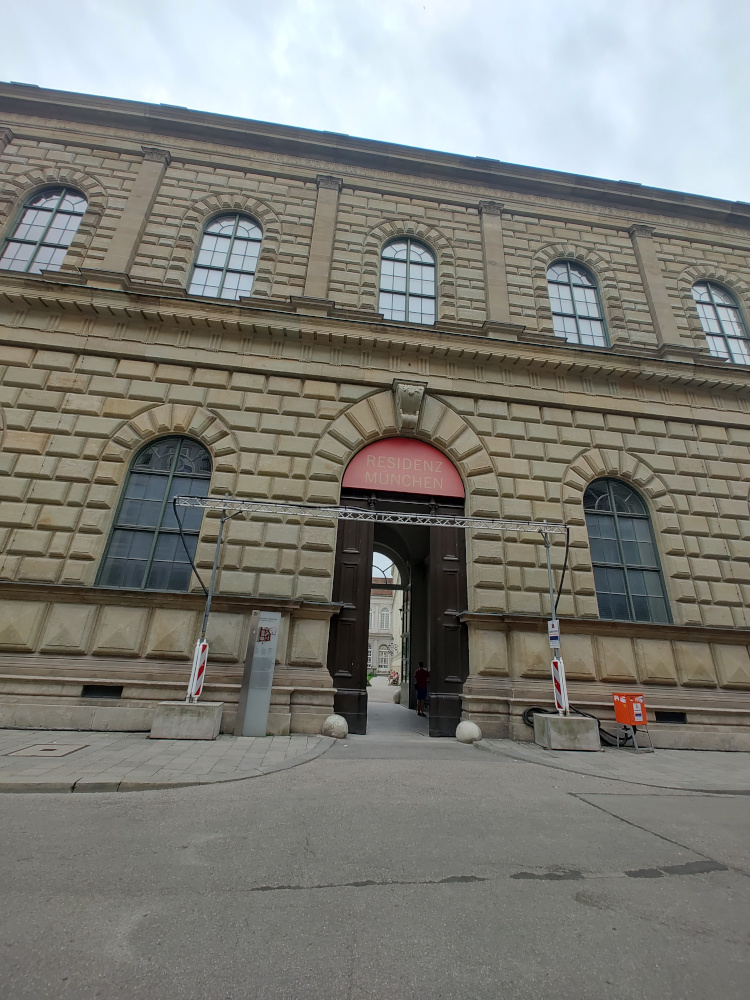
The first surprising thing for me was that, from the street, you may not realize how vast the palace is. It looks like a large building among other city buildings rather than the type of palace you see at the end of a long avenue. I know this is not the perfect entrance photo, but I do not have another one. 🙂
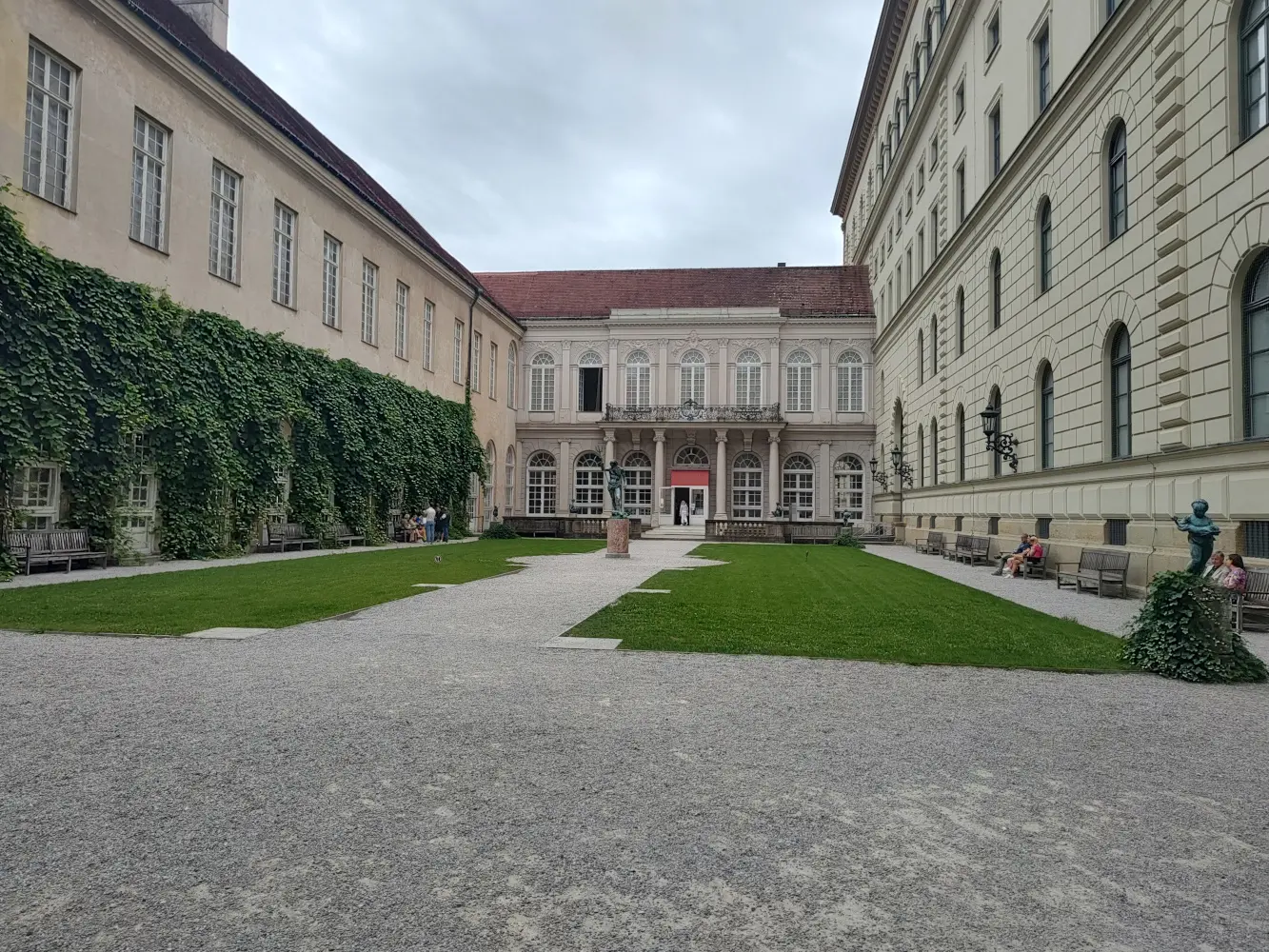
Only after entering and reaching the interior courtyard did we begin to understand the scale of the complex.
Unlike Nymphenburg Palace on Munich’s outskirts, the Residenz feels like a royal world hidden in the city center. “It is like stepping into another world,” my son remarked, and he was right.
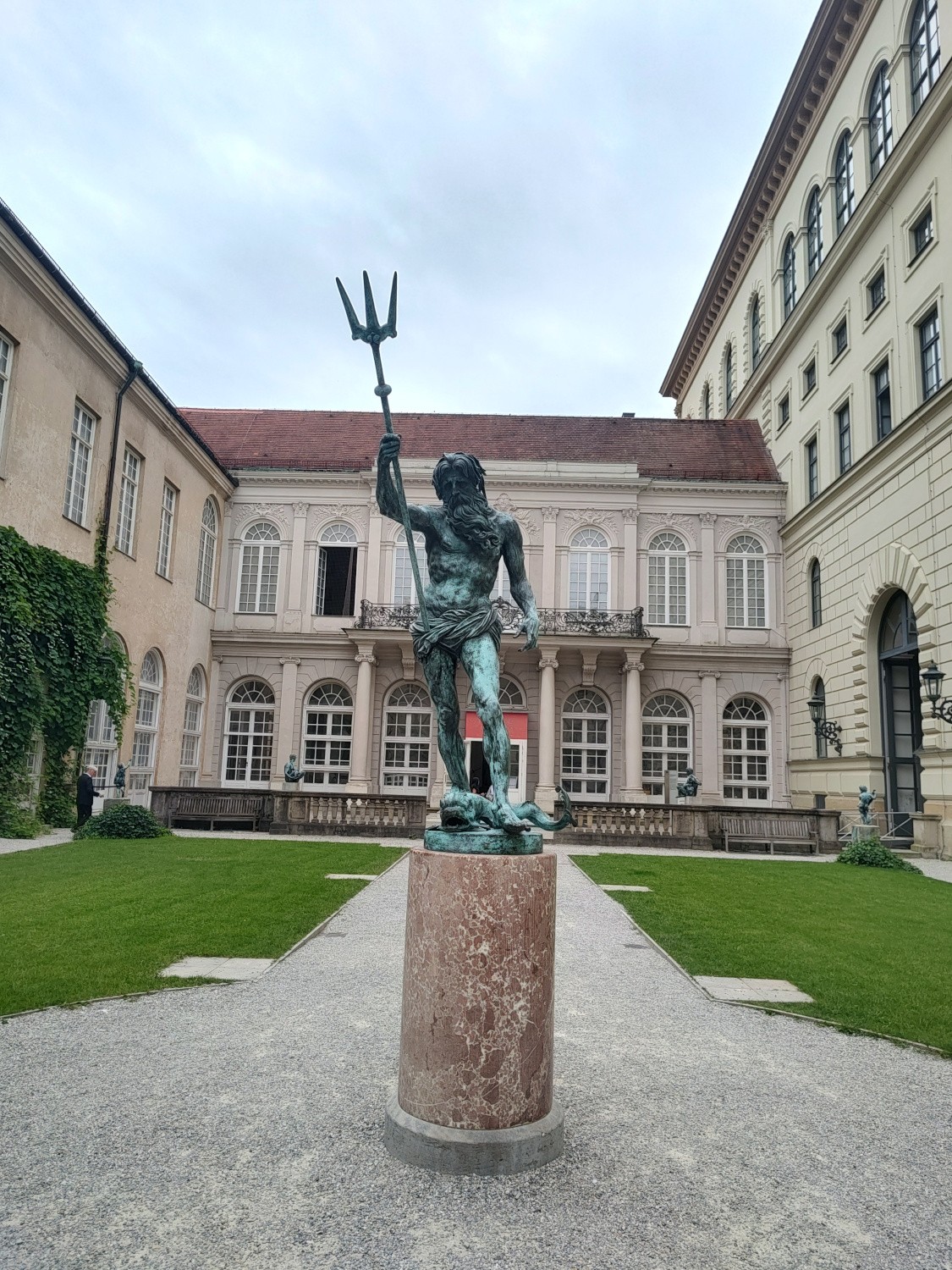
There is also an interesting statue in the courtyard. Here it is up close:
What Is the Munich Residenz?
The Munich Residenz was the seat of government and the home of Bavaria’s dukes, electors, and kings from 1508 to 1918. Today, it is Germany’s largest urban palace complex and one of the largest museum complexes in Bavaria.
The main attractions are the Residence Museum, the Treasury (Schatzkammer), and the Cuvilliés Theatre. The complex also includes courtyards, the Court Church of All Saints, and the neighbouring Court Garden (Hofgarten).
The interiors span several artistic periods, including the Renaissance, Baroque, Rococo, and Neoclassical eras. Walking through it means moving from one style and century to another, often within only a few rooms.
A Brief History of the Munich Residenz
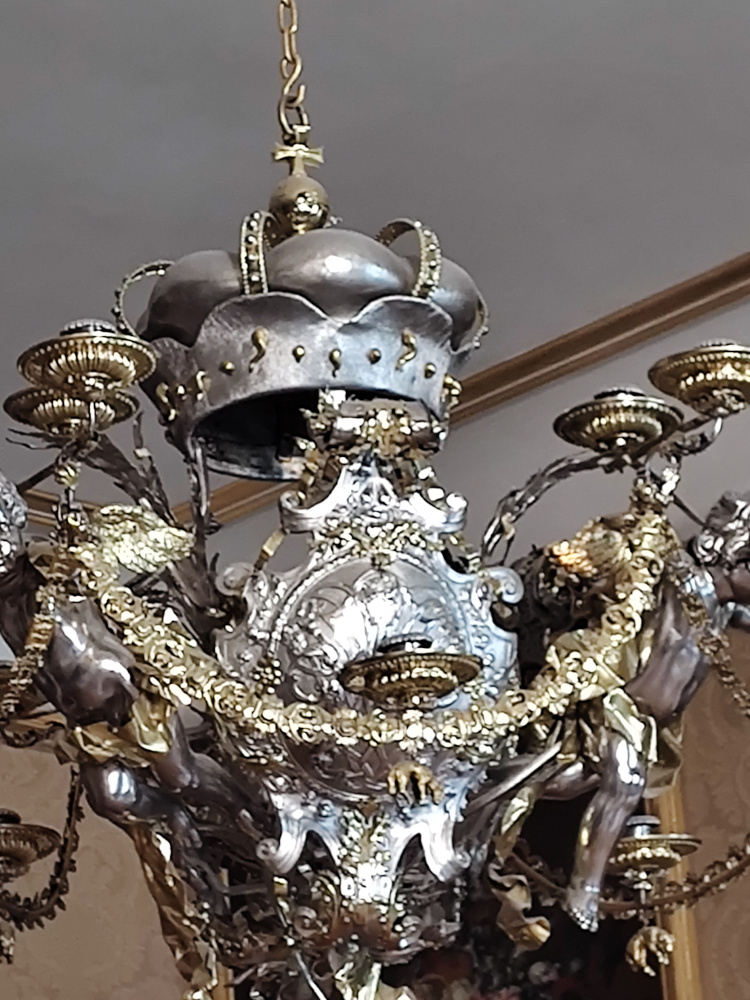
The Munich Residenz began in 1385 with the Neuveste, or “new fortress,” in the north-eastern corner of medieval Munich. Over the following centuries, Bavaria’s rulers expanded the complex with new wings, courtyards, ceremonial halls, apartments, chapels, and collections.
The Wittelsbach dynasty ruled Bavaria for more than 700 years, and each generation left something behind. The palace grew into a mixture of architecture and interior design that reflects the family’s changing power, taste, and political ambitions.
Much of the Residenz was destroyed during the Second World War. Many movable objects had been taken to safety, but the buildings suffered catastrophic damage. Reconstruction began soon after the war and continued for decades. Several rooms contain original furnishings and works of art, while others were carefully reconstructed using surviving plans, photographs, fragments, and objects.
Before We Started: Tickets, Bags, and the Audio Guide
We did not have a reservation. We bought our tickets when we arrived, although tickets can now also be purchased online. Visitors with online tickets can go directly to the entrance rather than joining the ticket-desk queue, but proof is required for reduced or free admission.
Large bags and rucksacks cannot be taken into the exhibition rooms. The official limit is 35 × 30 × 12 cm, and bulky items must be left at the free supervised cloakroom. I had a backpack that was not very big, but it contained our power bank, water, a hand fan, and a few other small items, so I had to leave it at the entrance.
When you are offered the free audio guide, say yes. I truly recommend it. You probably will not listen to every explanation about every room and object, but it is useful whenever something catches your attention.
During our visit, after finishing one section, we had to return to the staff so they could set the audio guide for the next section. The system may change, but listen to the instructions you receive when collecting the device.
The Residence Museum is very large. A guided tour is another option, particularly if you prefer a structured route and want more historical context.
What Can You See Inside the Munich Residenz Treasury?
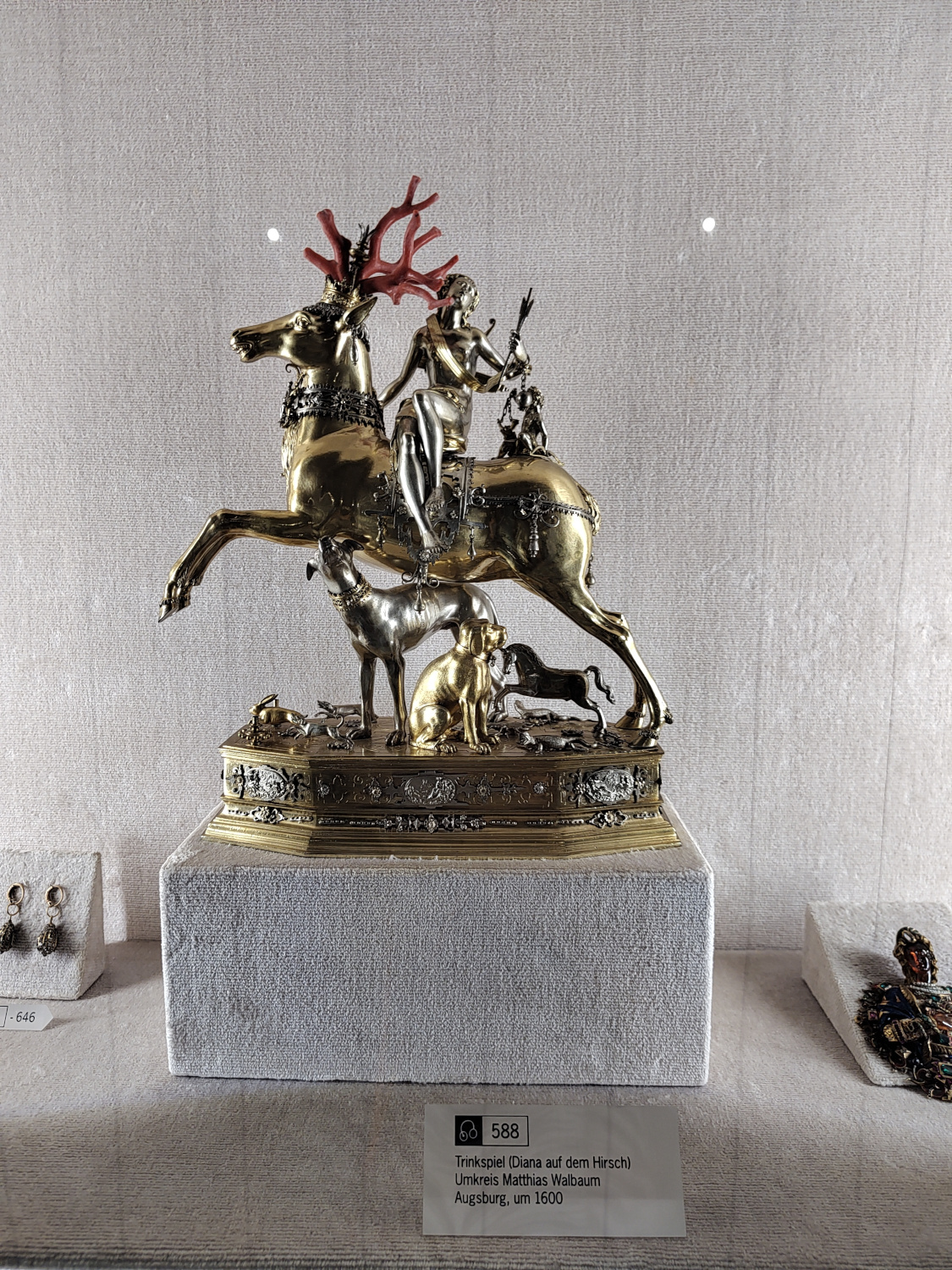
We started our visit with the Treasury, and it was an unforgettable introduction to the complex.
Why did we visit the Treasury first? It was not our choice; this was the instruction we received at the ticket office.
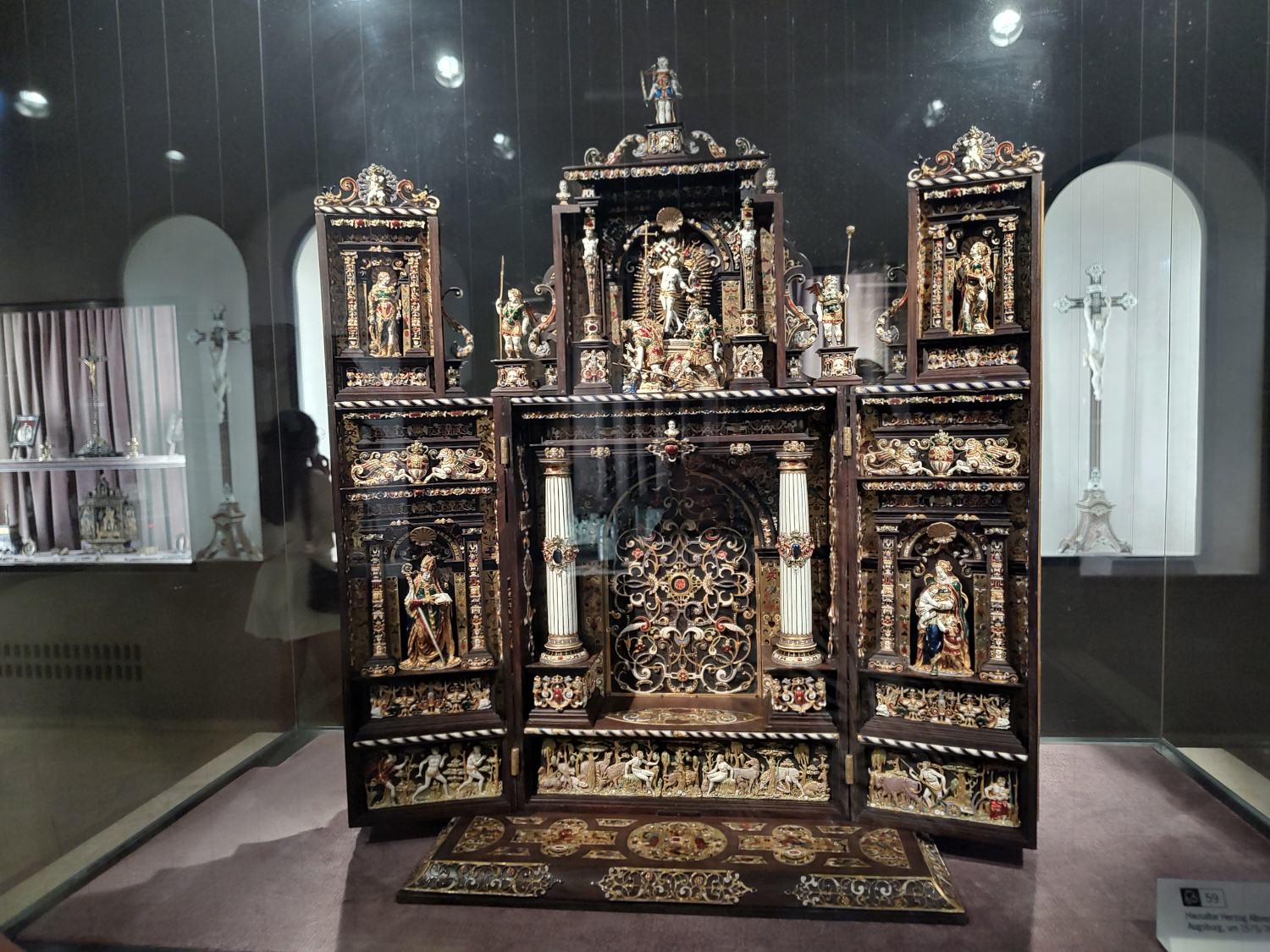
The Treasury (Schatzkammer) contains royal crowns, jewels, reliquaries, ceremonial objects, precious tableware, weapons, and unusual personal items collected by the Wittelsbach family. It became my son’s unexpected favourite part of the visit.
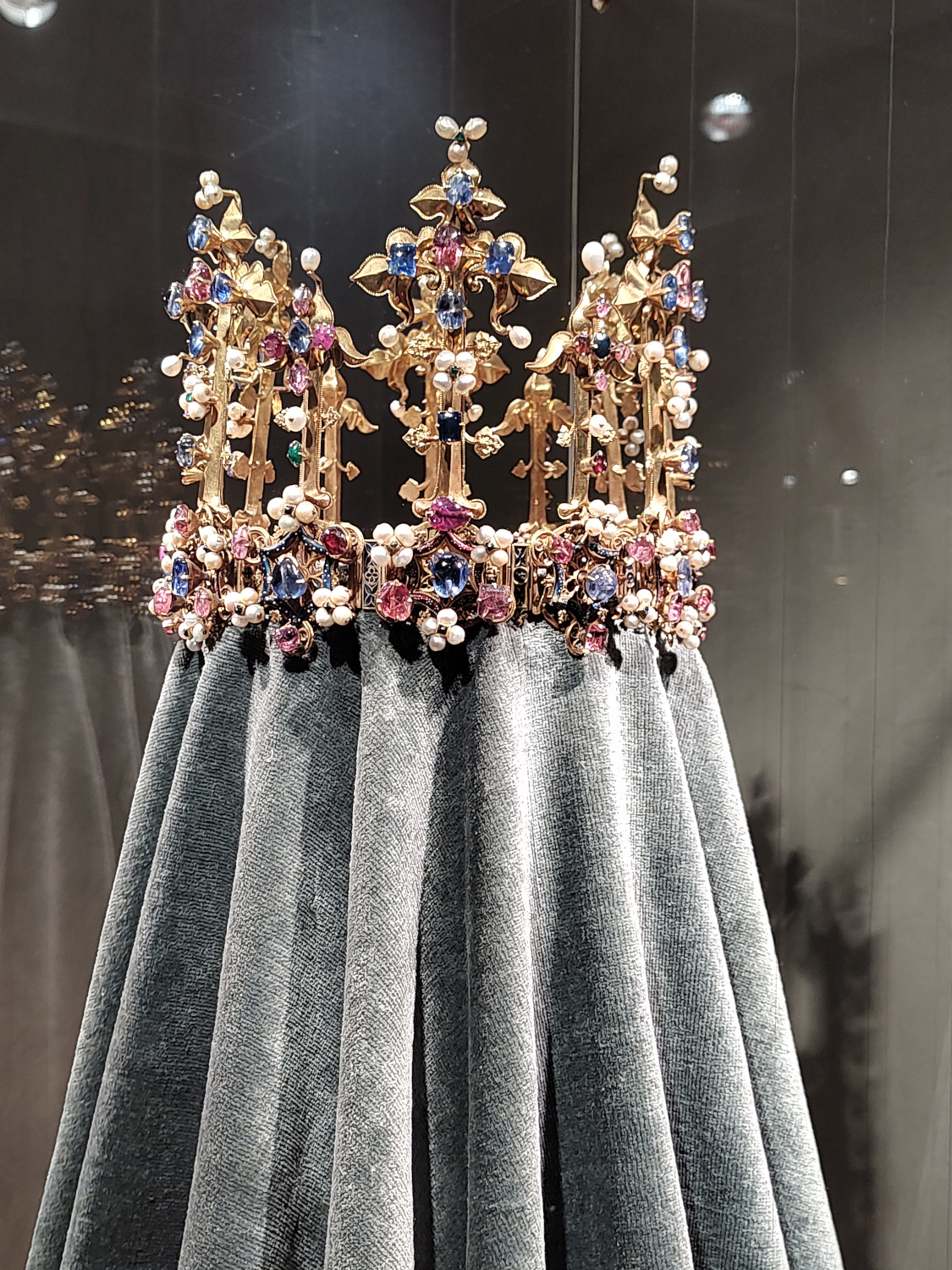
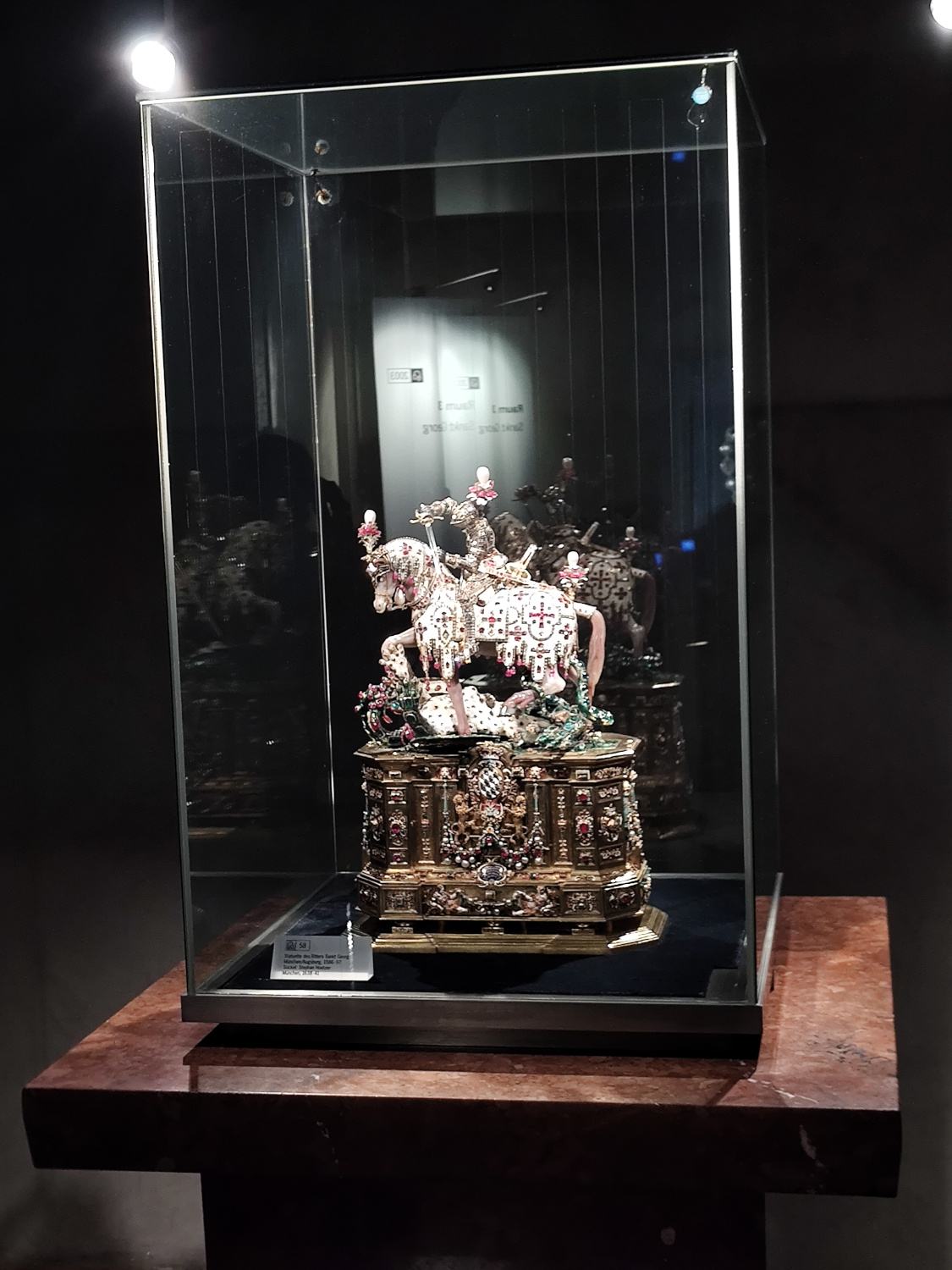
We saw jeweled crowns and royal regalia, ornate crosses and reliquaries, the elaborate St. George statuette made with precious materials, swords, decorative objects, and a spectacular travelling set. The crowns were my favourites.
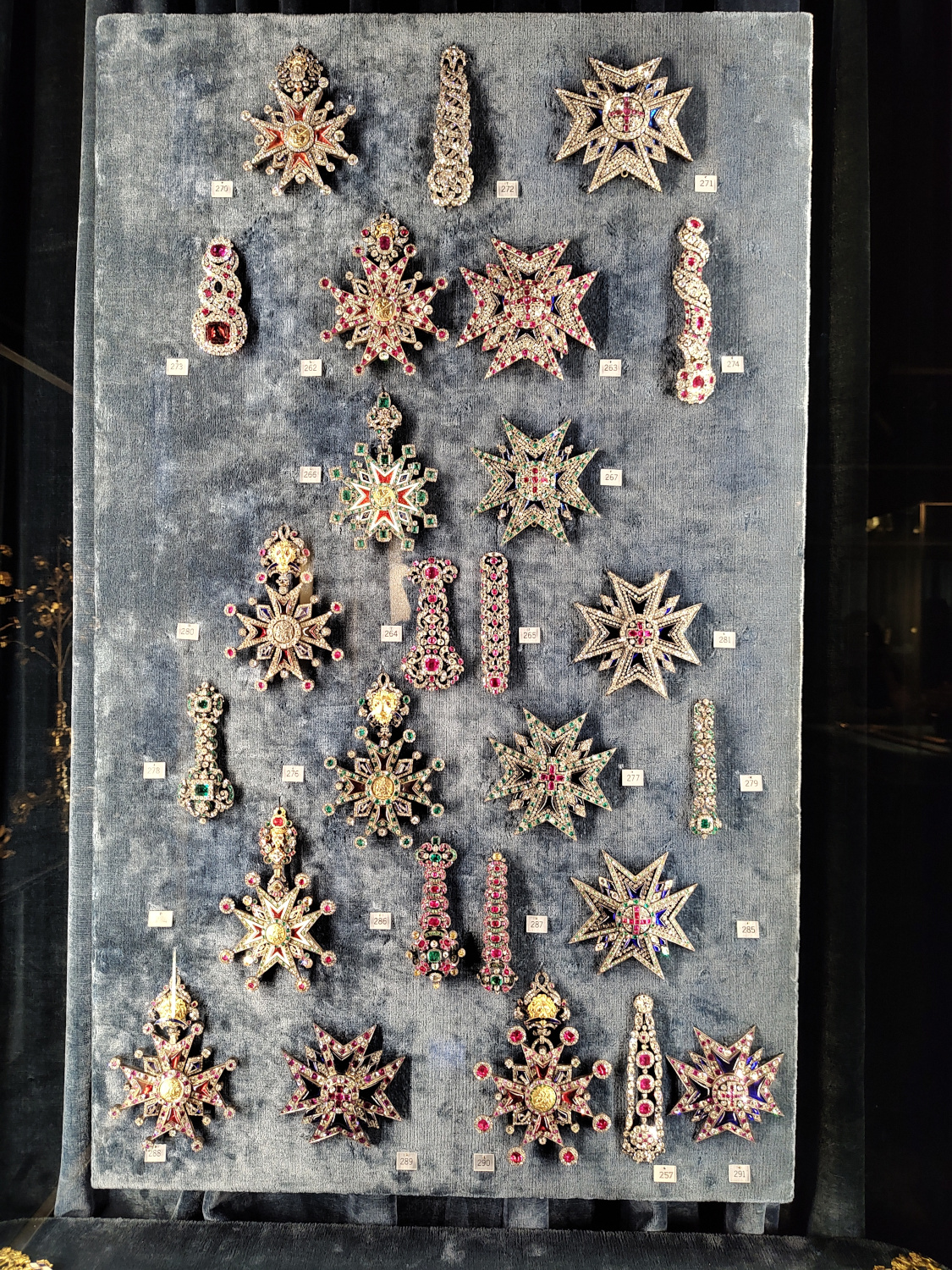
Even my son, who is not usually very interested in historical artefacts, was completely engaged. He kept pointing out objects, particularly the elaborate swords and armour. I would allow at least 45 minutes to an hour for the Treasury, and longer if you enjoy royal jewellery and decorative arts.
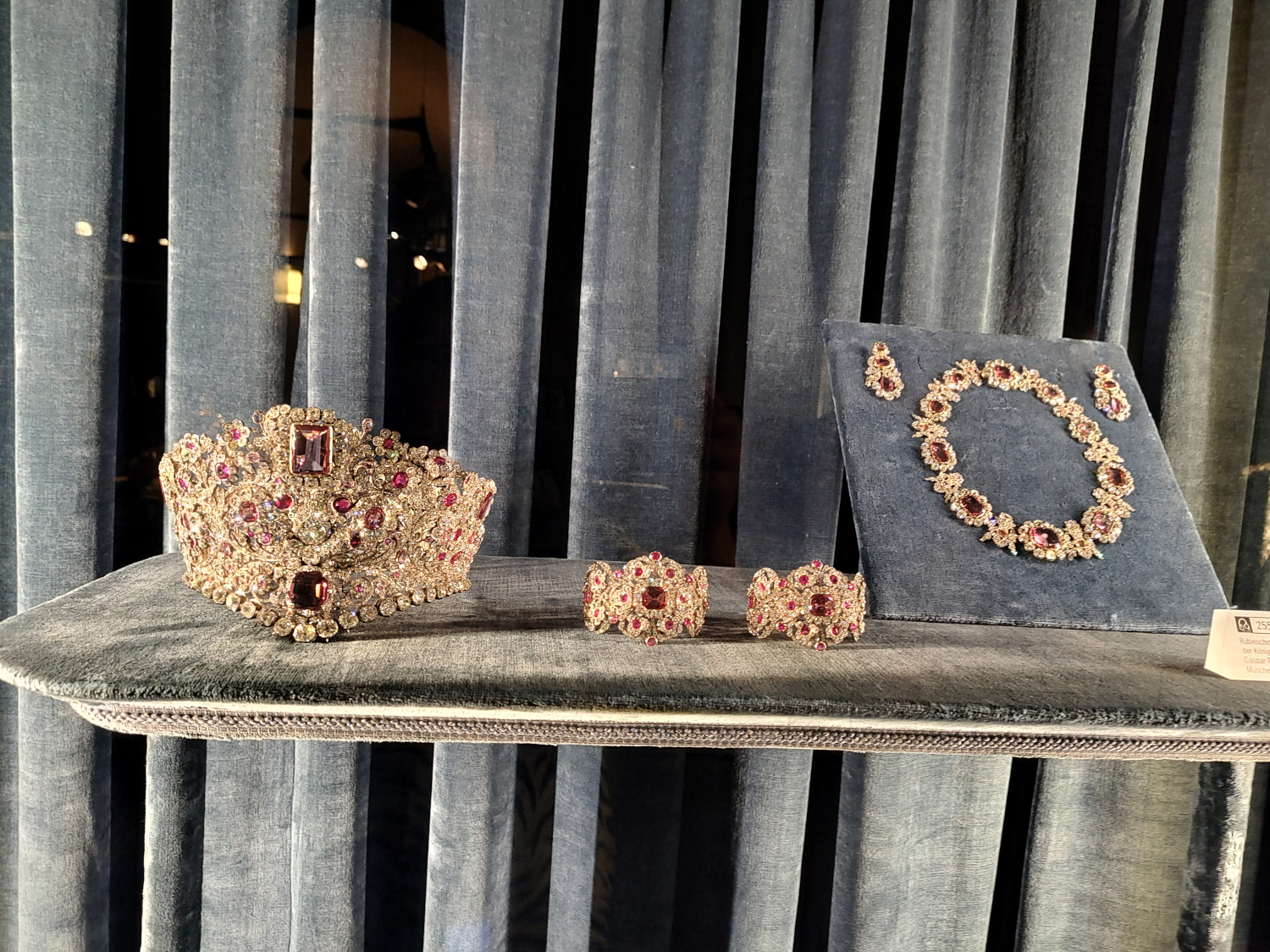
We used the audio guide to learn more about many of the pieces, although some objects did not have an individual recording.
I have to add that I really like jewellery, especially royal jewellery, so this part of the complex was particularly special for me. I also discovered objects I had never heard of before. One of the most memorable was a travelling set given by Napoleon to his second wife, Marie Louise of Austria.
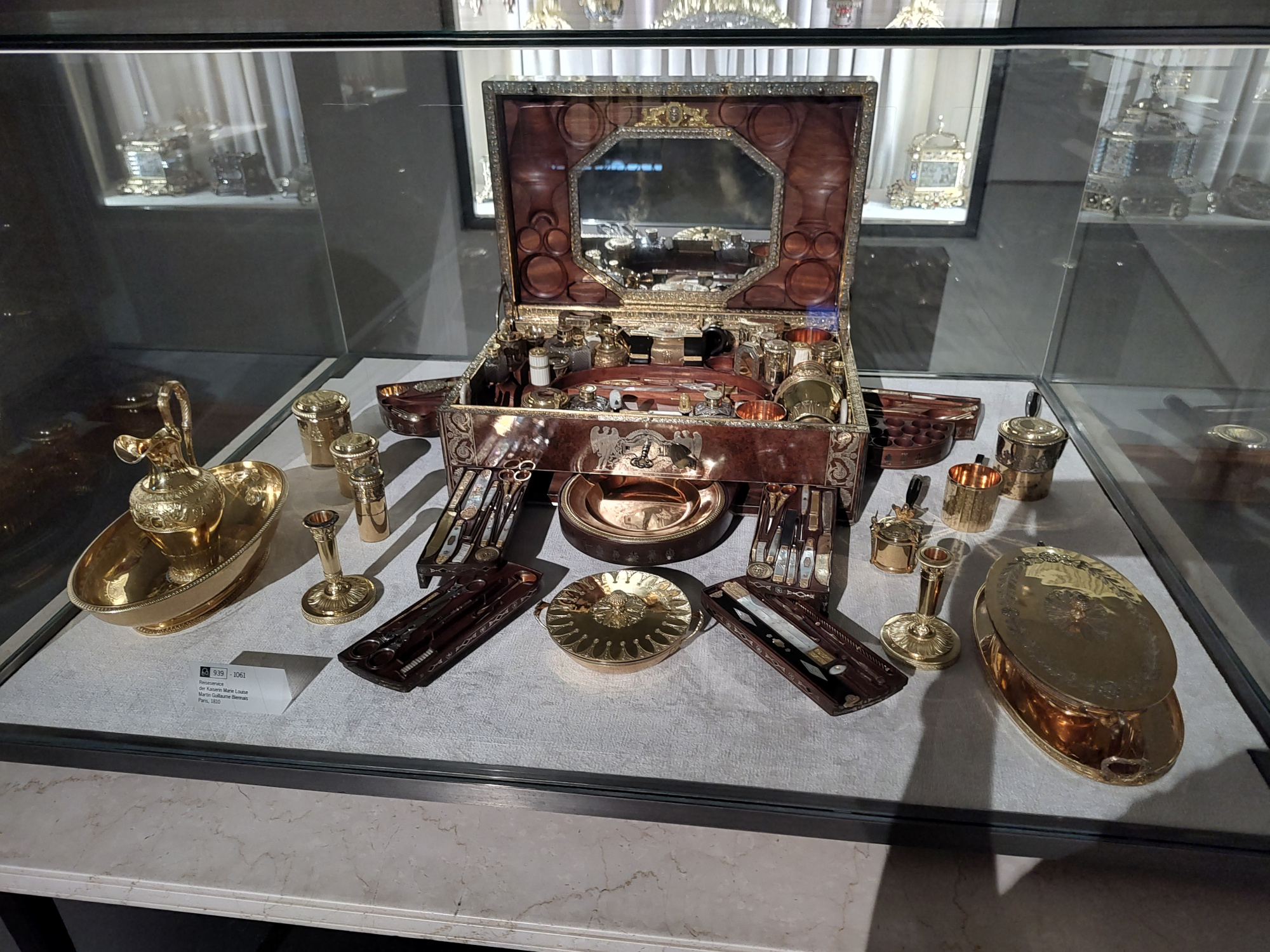
I would have spent even more time in the Treasury, but I knew we still had the Residence Museum ahead of us and another place planned for that day. We definitely needed a longer stay in Munich.
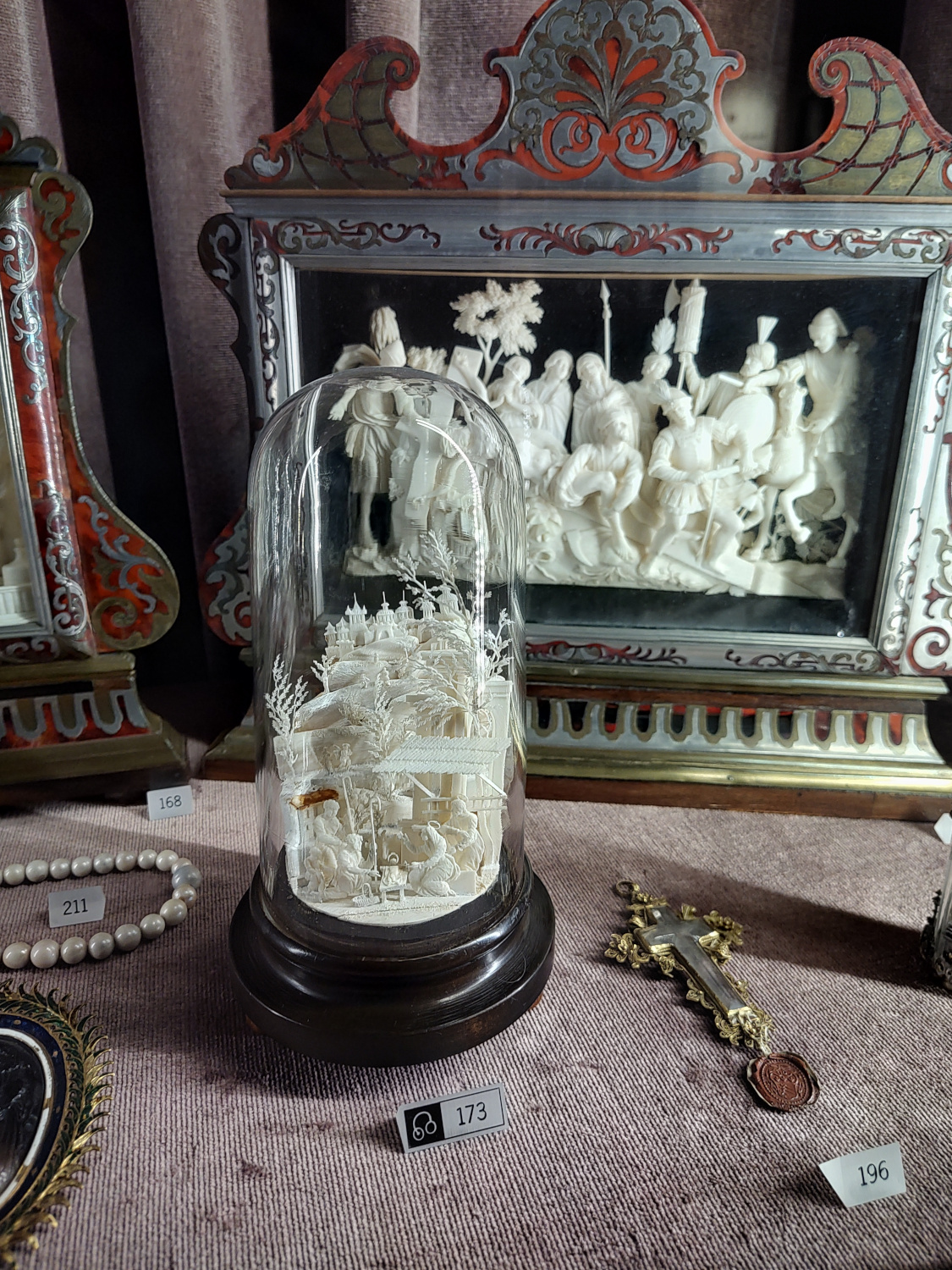
I loved the Treasury, and the photographs here show only a small part of the collection. There are many more precious and unusual objects, each with its own history.
Tip for families: turn the Treasury into a treasure hunt. Children and teenagers can choose the most extravagant object in each room, look for animals in the decorations, or decide which item they would place in an imaginary royal collection.
A tip from my son: after several rooms and many long explanations, he began checking the audio-guide number for each room first. He listened only to the introductions and objects that genuinely interested him. It helped him stay engaged without becoming tired of the recordings.
The Most Impressive Rooms in the Munich Residenz
After the Treasury, we returned to have the audio guides changed and continued into the Residence Museum. The museum is enormous, with one lavish room after another.
The Ancestral Gallery (Ahnengalerie)
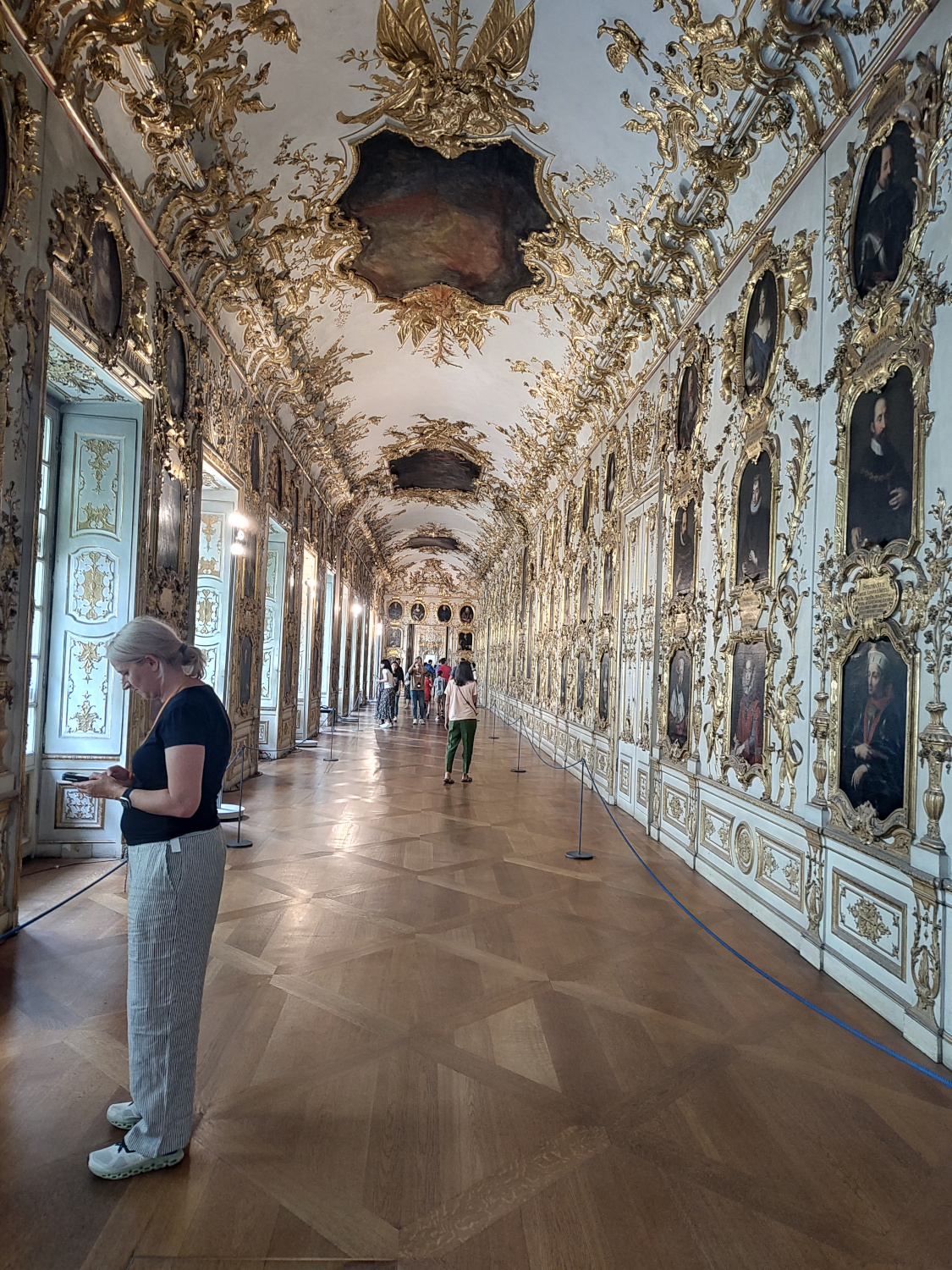
The Ancestral Gallery was the first great ceremonial room we entered after the Treasury. It was commissioned by Elector Karl Albrecht, later Emperor Charles VII, in the 18th century.
Portraits of Wittelsbach men and women are arranged in several rows along the walls. The white and gold Rococo decoration, mirrors, gilded frames, and dense display create a powerful first impression.
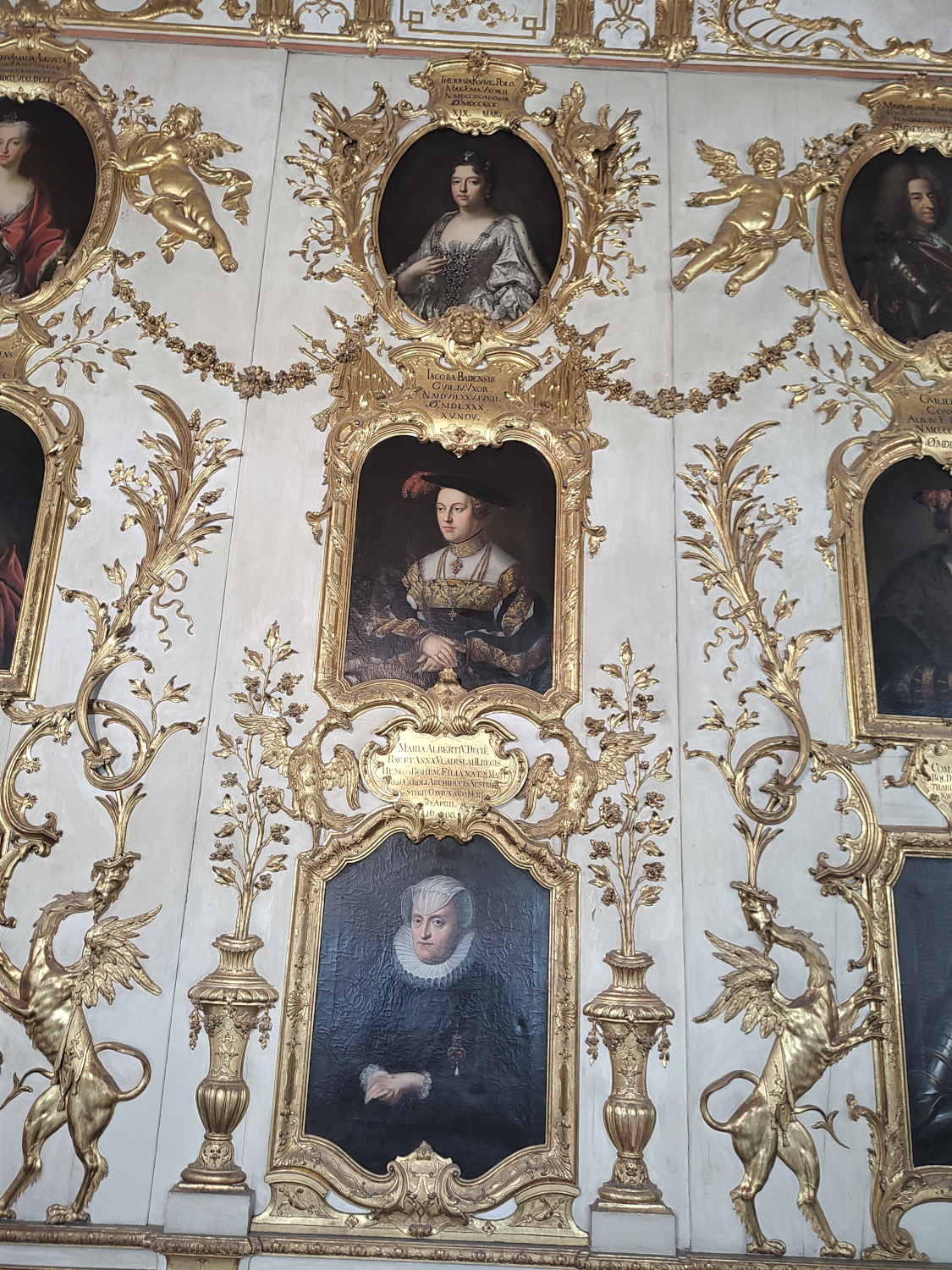
I also found its political role fascinating. The gallery presented the dynasty’s lineage and legitimacy in a way that every important visitor could understand immediately.
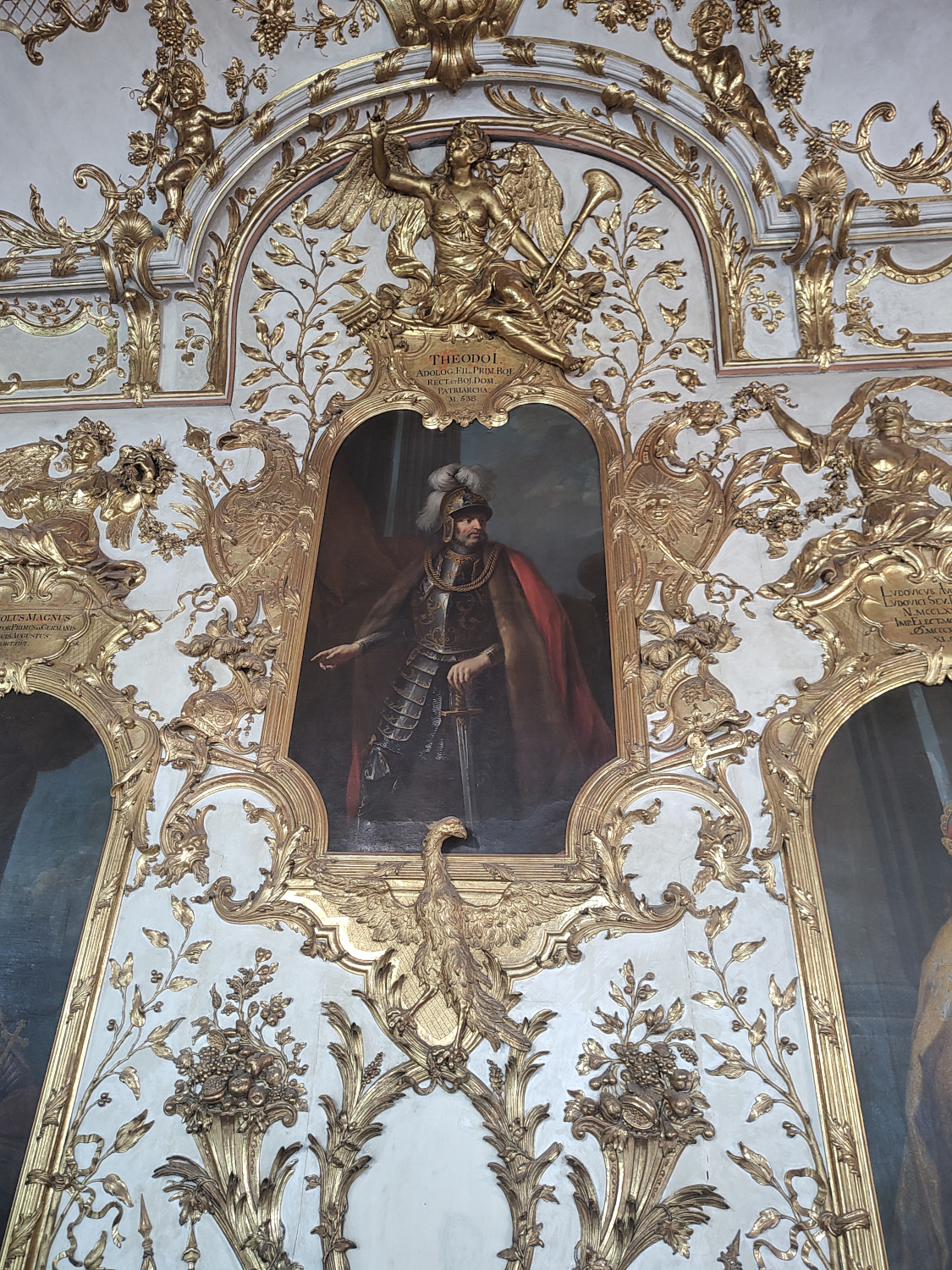
It is a remarkable gallery.
A smaller room connected to it is the Porcelain Cabinet. The display cases contain elegant porcelain sets and decorative pieces. It was a joy to see.
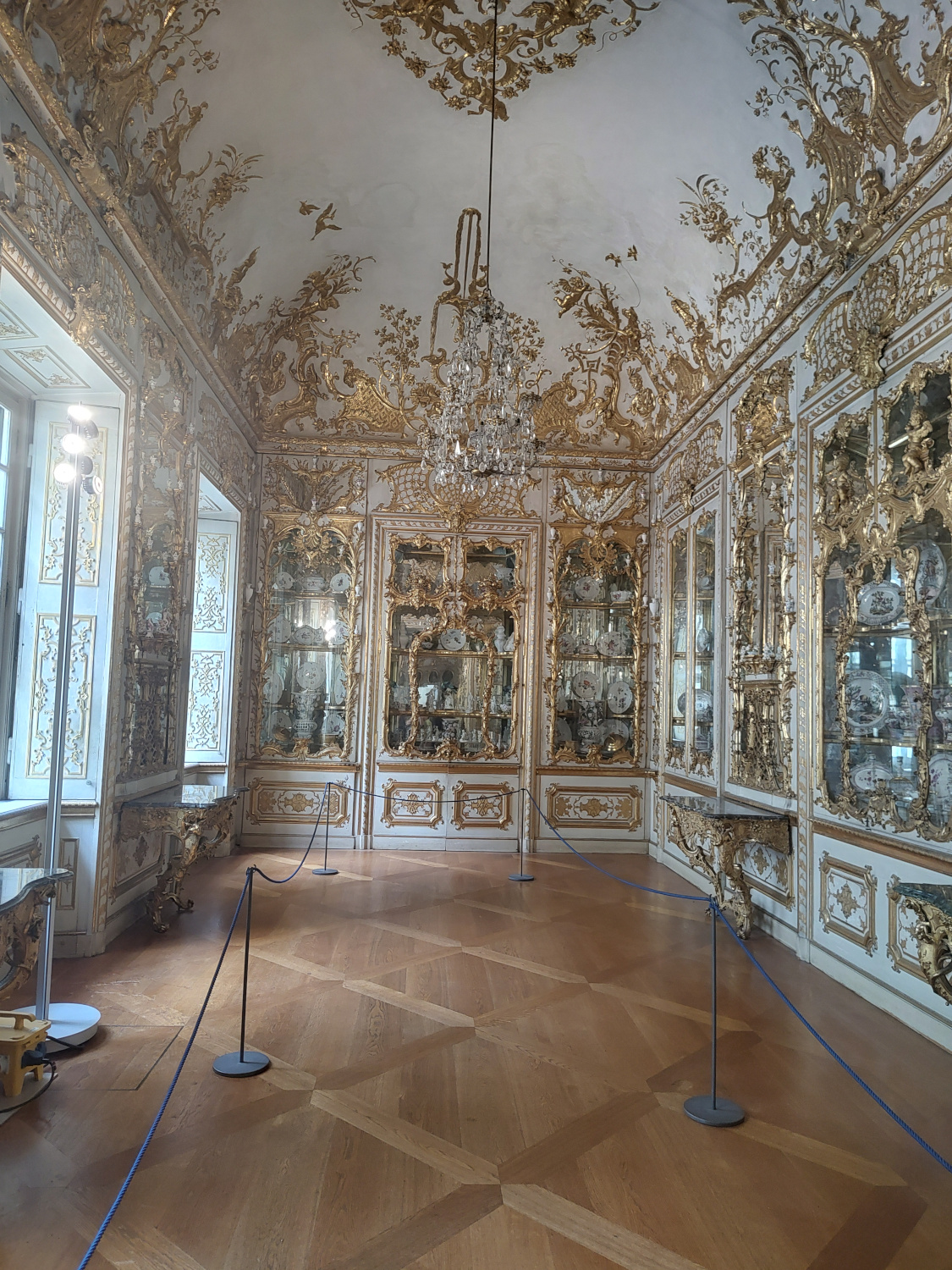
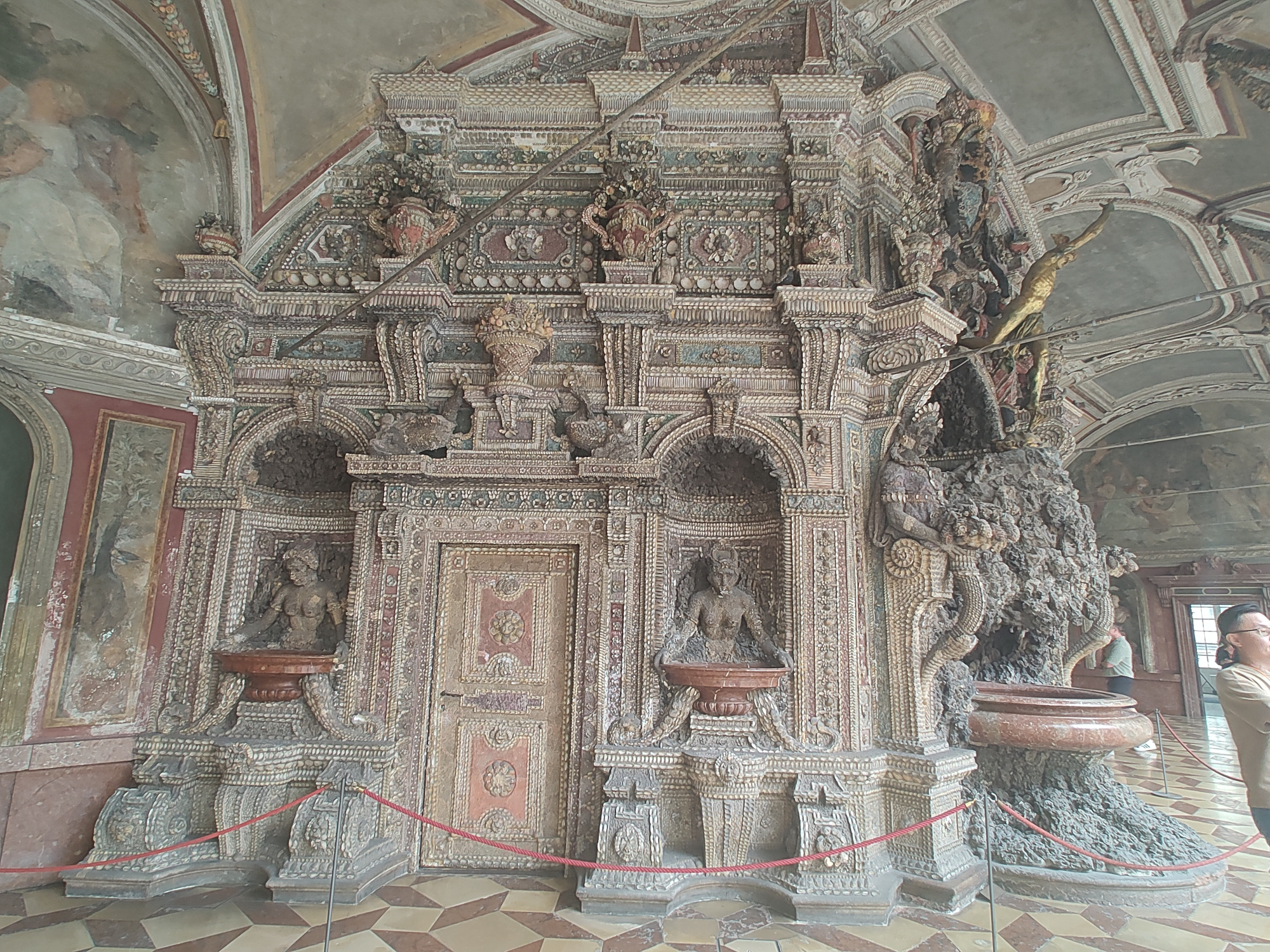
The Grotto Courtyard (Grottenhof)
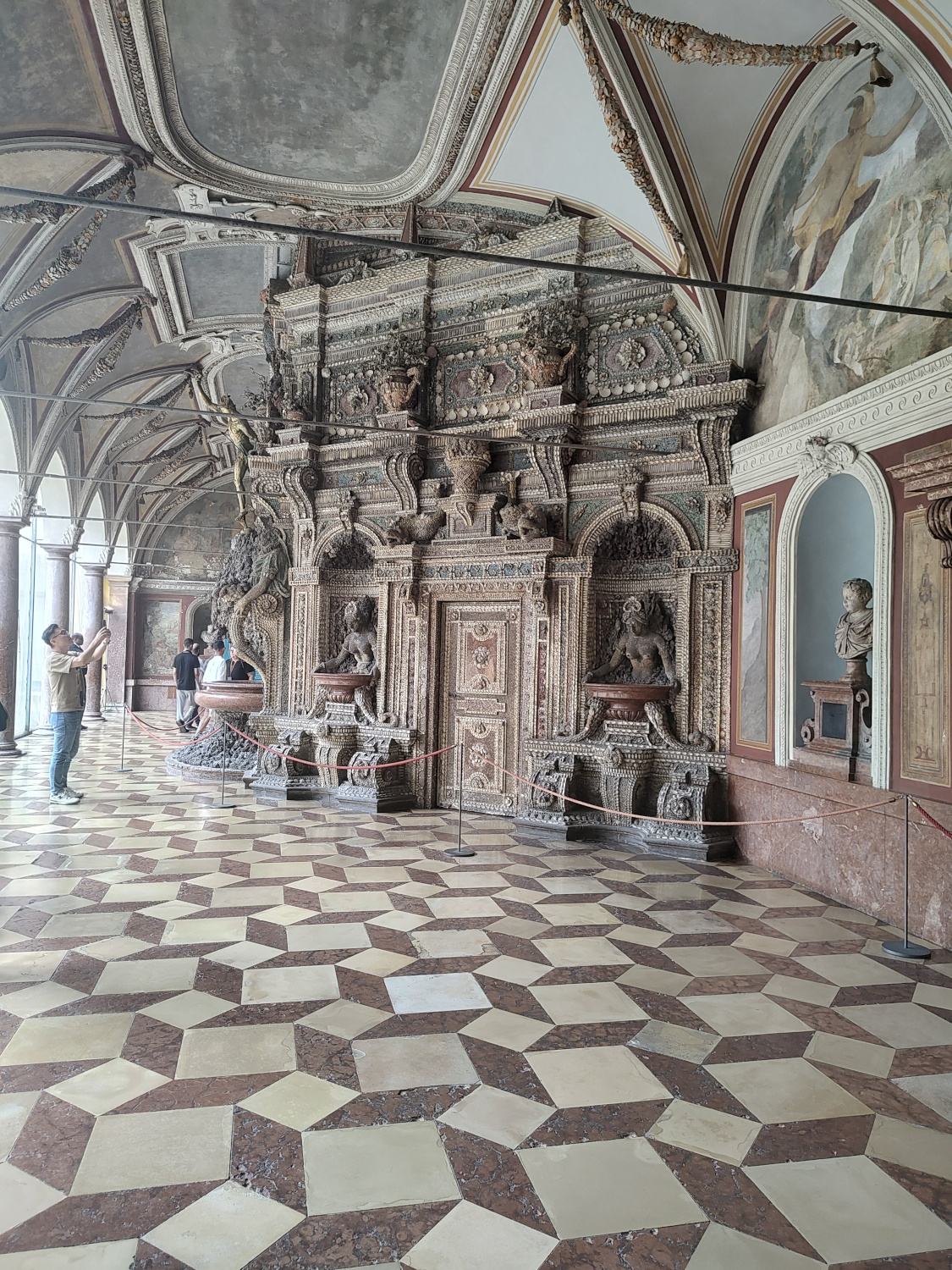
One of the most surprising places we discovered was the Grotto Courtyard.
Yes, a courtyard inside the palace.
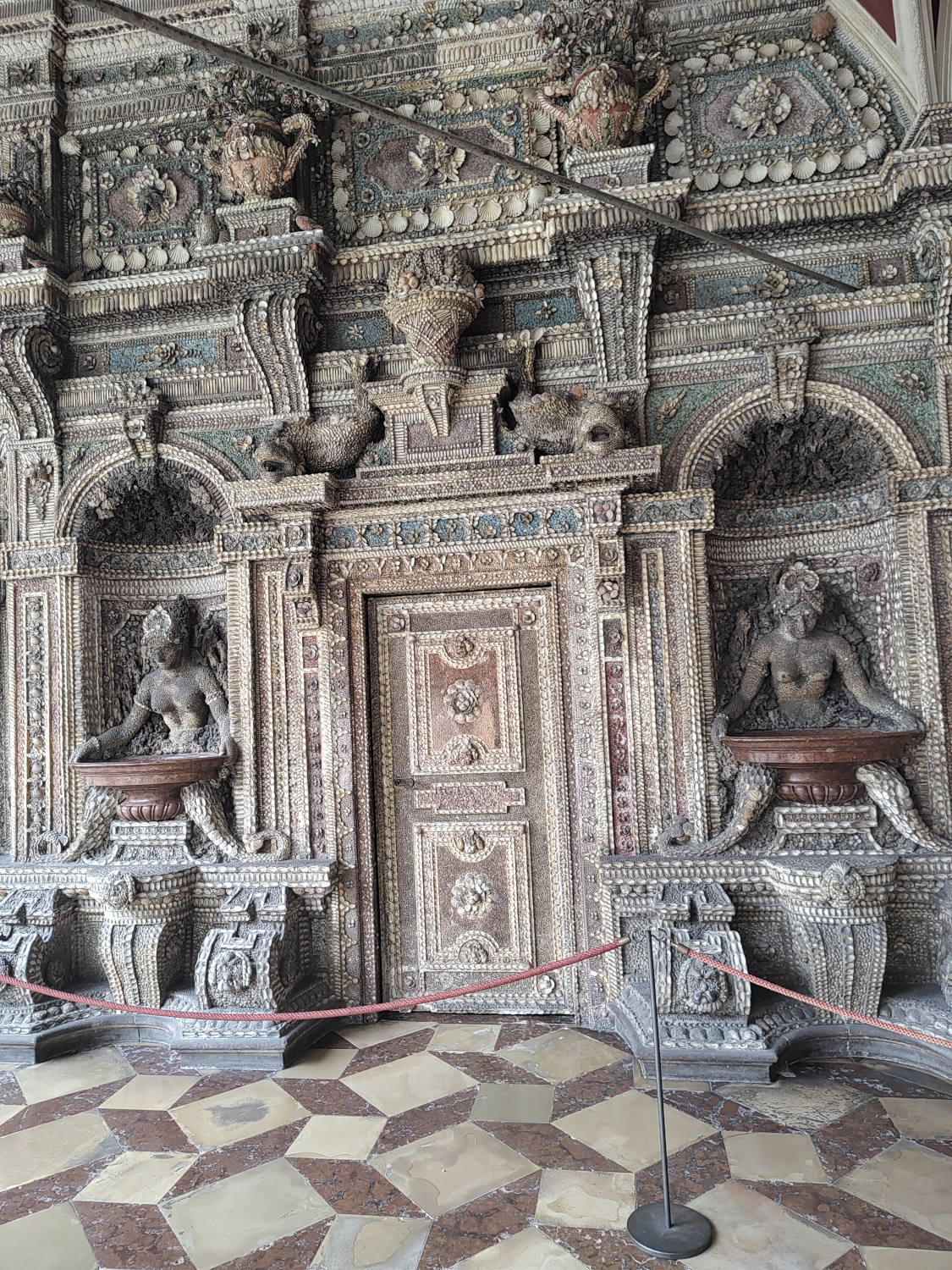
It is an open-air space tucked between the palace walls, with a fountain and surfaces covered in shells, stones, crystals, and decorative figures. It was unlike anything I expected to find in a royal residence.
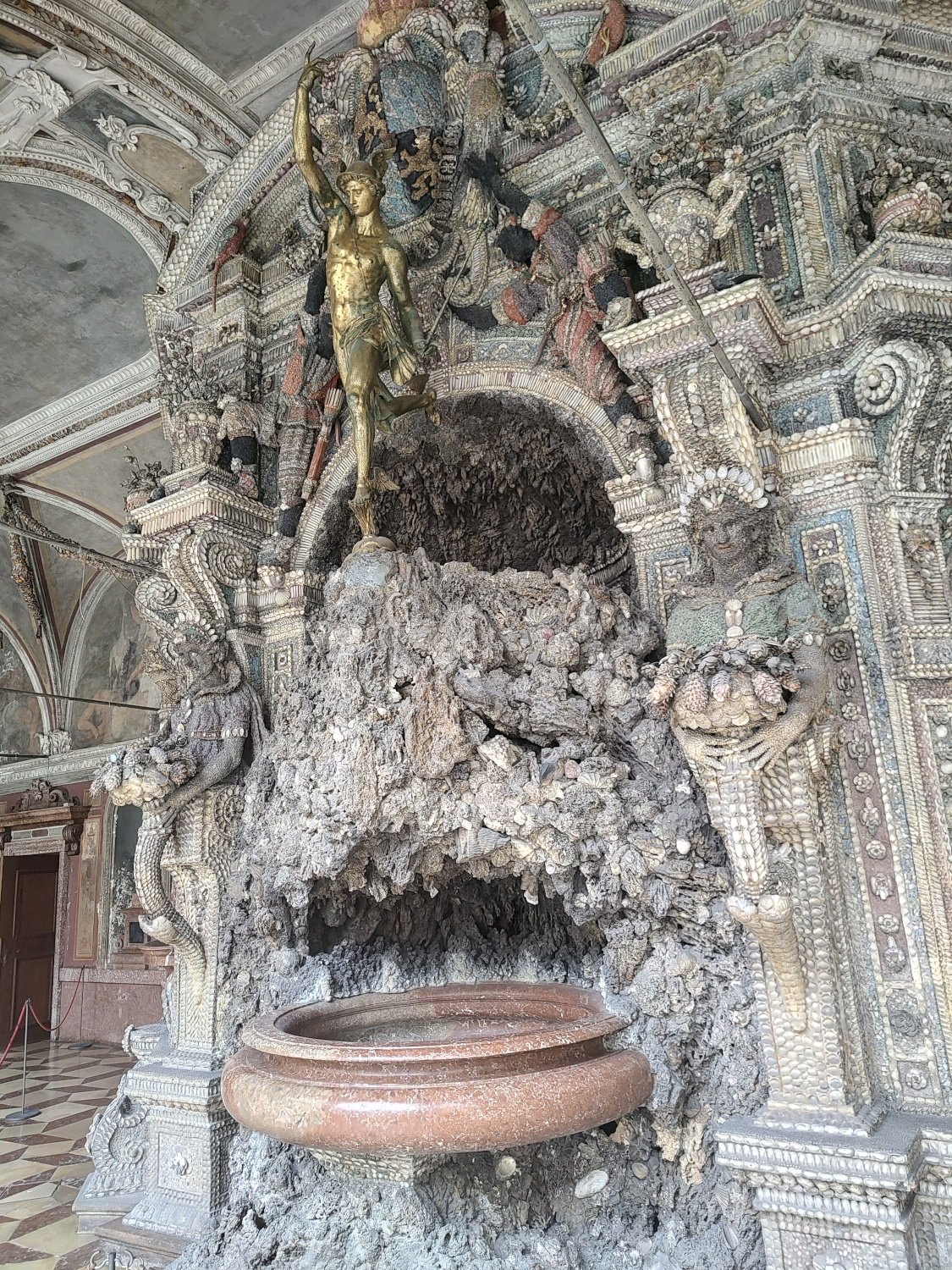
My tip: spend a few minutes looking closely at the fountain and its details. The shell decoration is extraordinary.
We both enjoyed walking slowly through the courtyard and noticing new details as we looked around. The Grottenhof provides a playful visual break between the formal palace rooms.
The Antiquarium
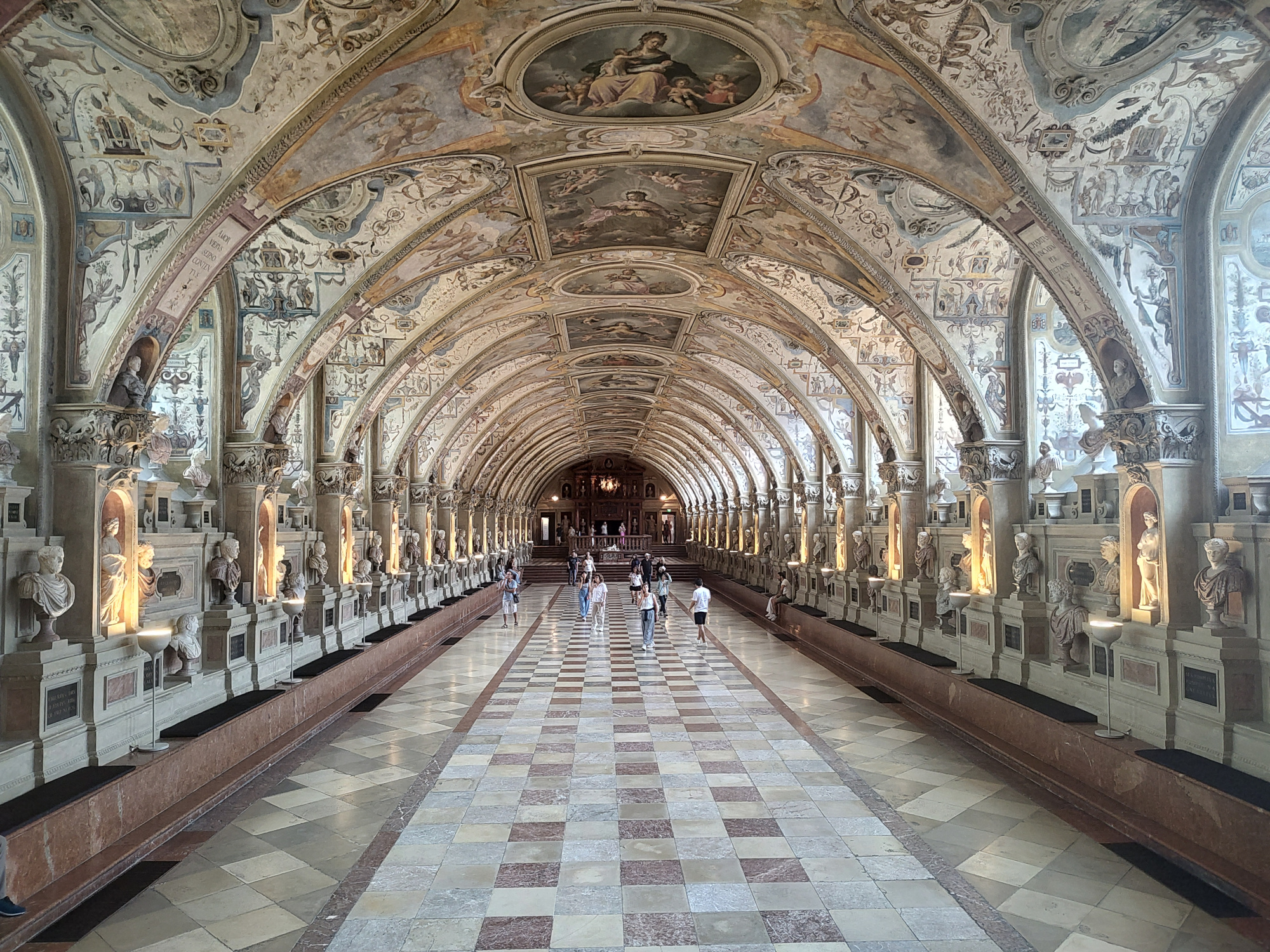
The Antiquarium is the oldest surviving room in the Munich Residenz. Built from 1568 to 1571, the 66-metre-long hall is the largest and most lavish Renaissance hall north of the Alps.
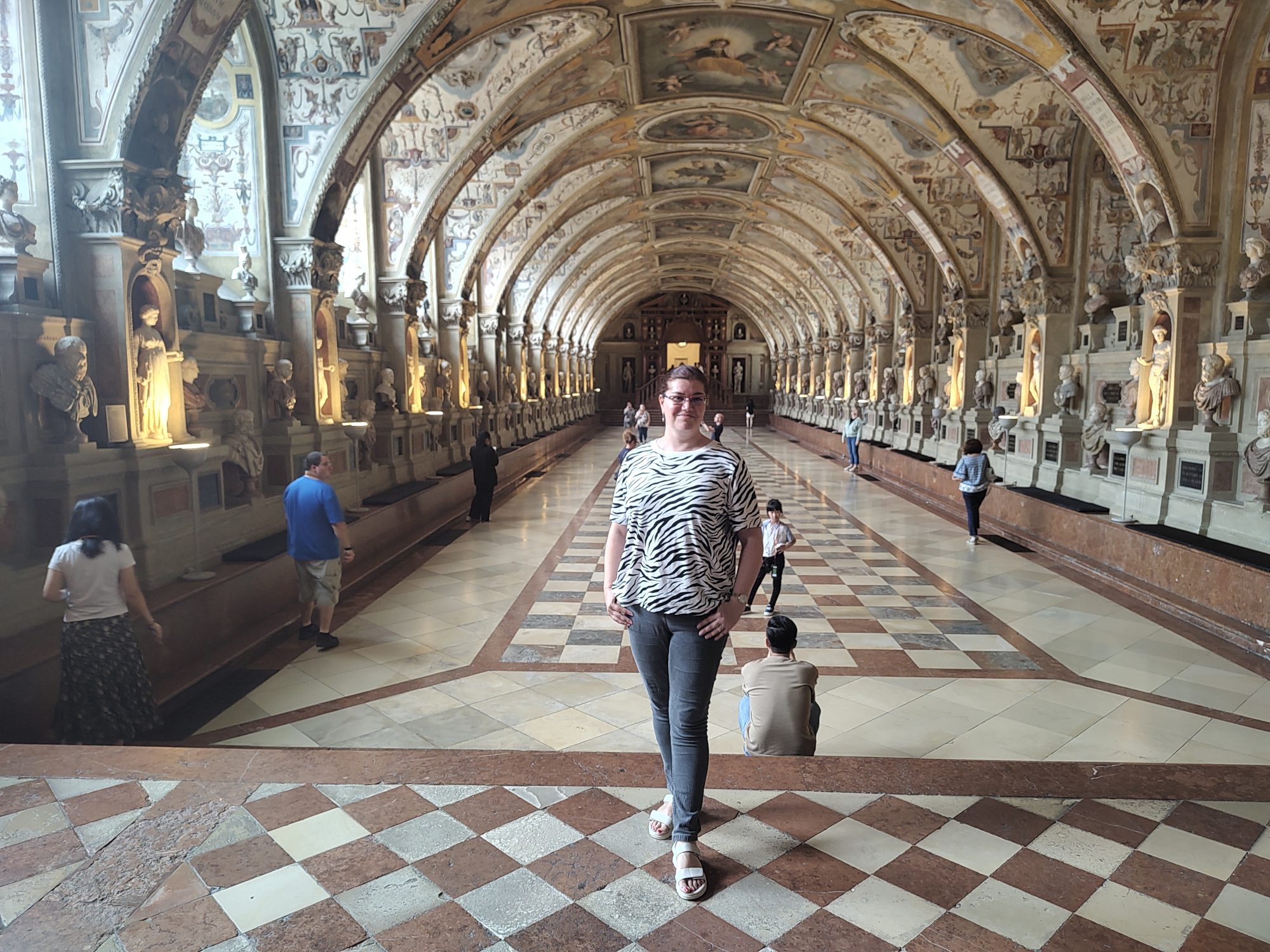
I already knew the Antiquarium from photographs I had seen while researching places to visit in Munich. Being there was still a special experience.
What surprised me: Before visiting, I expected the Antiquarium to look much more yellow because of the photographs I had seen online. In person, the colours appeared softer and more natural. The hall was still spectacular, but it did not have the bright yellow tone I had expected.
I also forgot to mention something important: it was not crowded when we visited. We visited around the end of June and beginning of July, while the European football championship was taking place in Germany. There were other visitors, of course, but the hall was not as crowded as I had expected, and I loved being able to look around without feeling rushed.
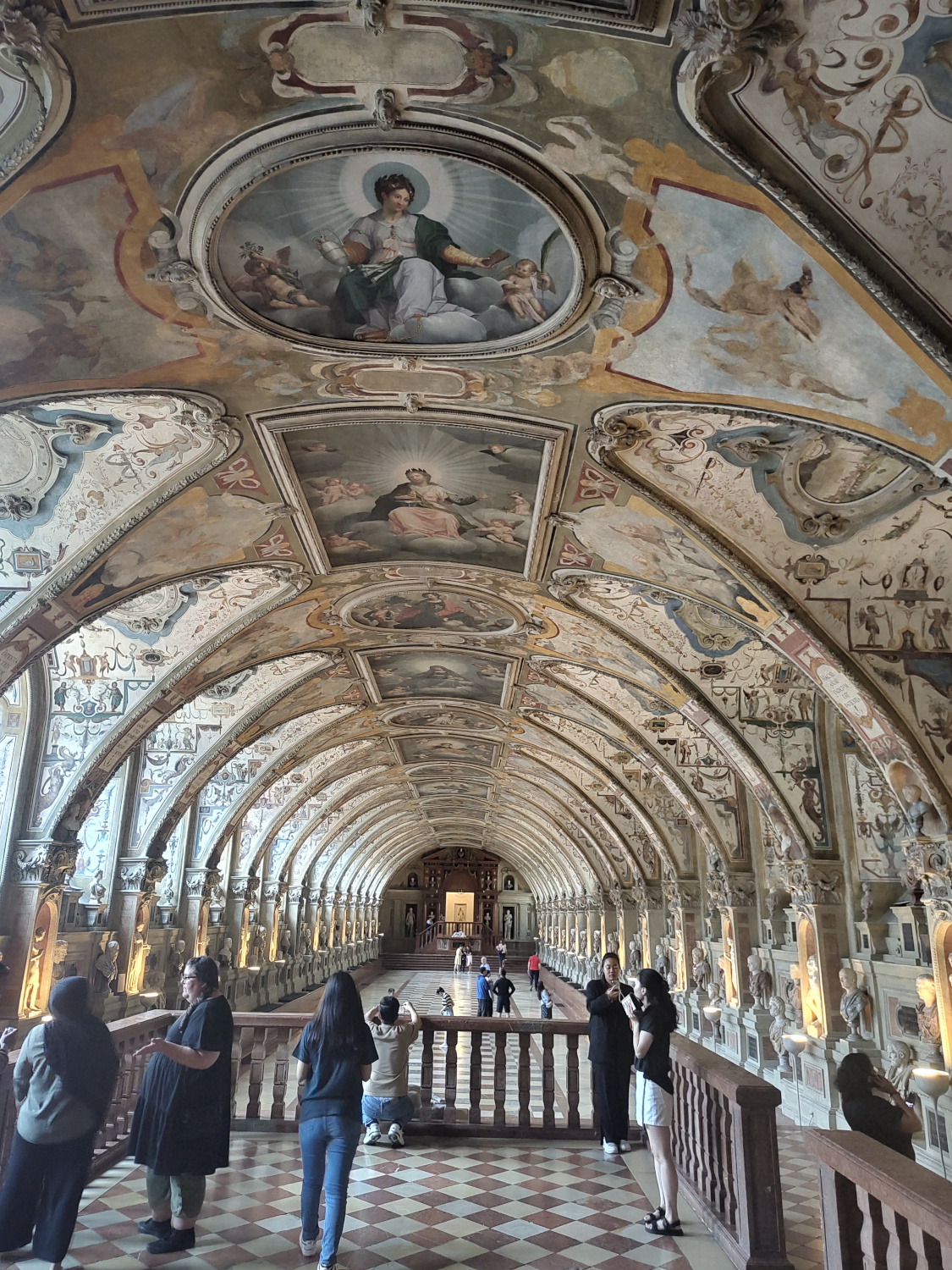
Apart from its impressive size, the Antiquarium is filled with paintings and sculptures. Look at the frescoes depicting Bavarian towns and the classical busts lining the walls.
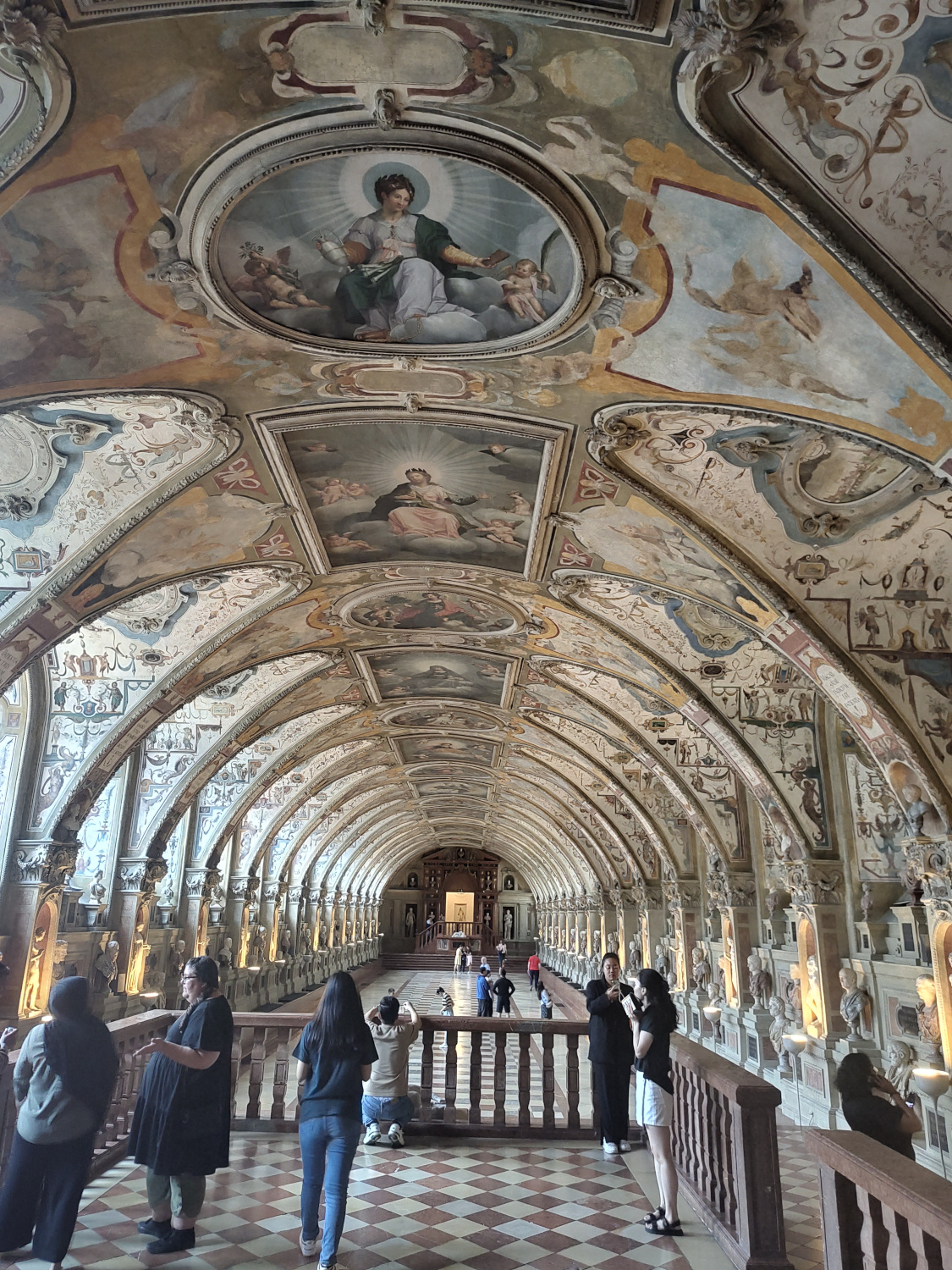
Duke Albrecht V originally commissioned the hall for his collection of antique sculptures. It was later converted into a ceremonial banquet hall.
I could almost hear the echoes of centuries-old festivities as we walked through it. I imagined balls, men in elegant costumes, women in superb dresses, and an orchestra playing at one end of the room.
And yes, I love wide, tall spaces. I feel at home in a palace.
If you visit the Munich Residenz, the Antiquarium alone is worth seeing. Knowing how much of the palace was damaged during the war makes its reconstruction even more impressive.
The Royal Apartments, Rich Rooms, and Charlotte Rooms
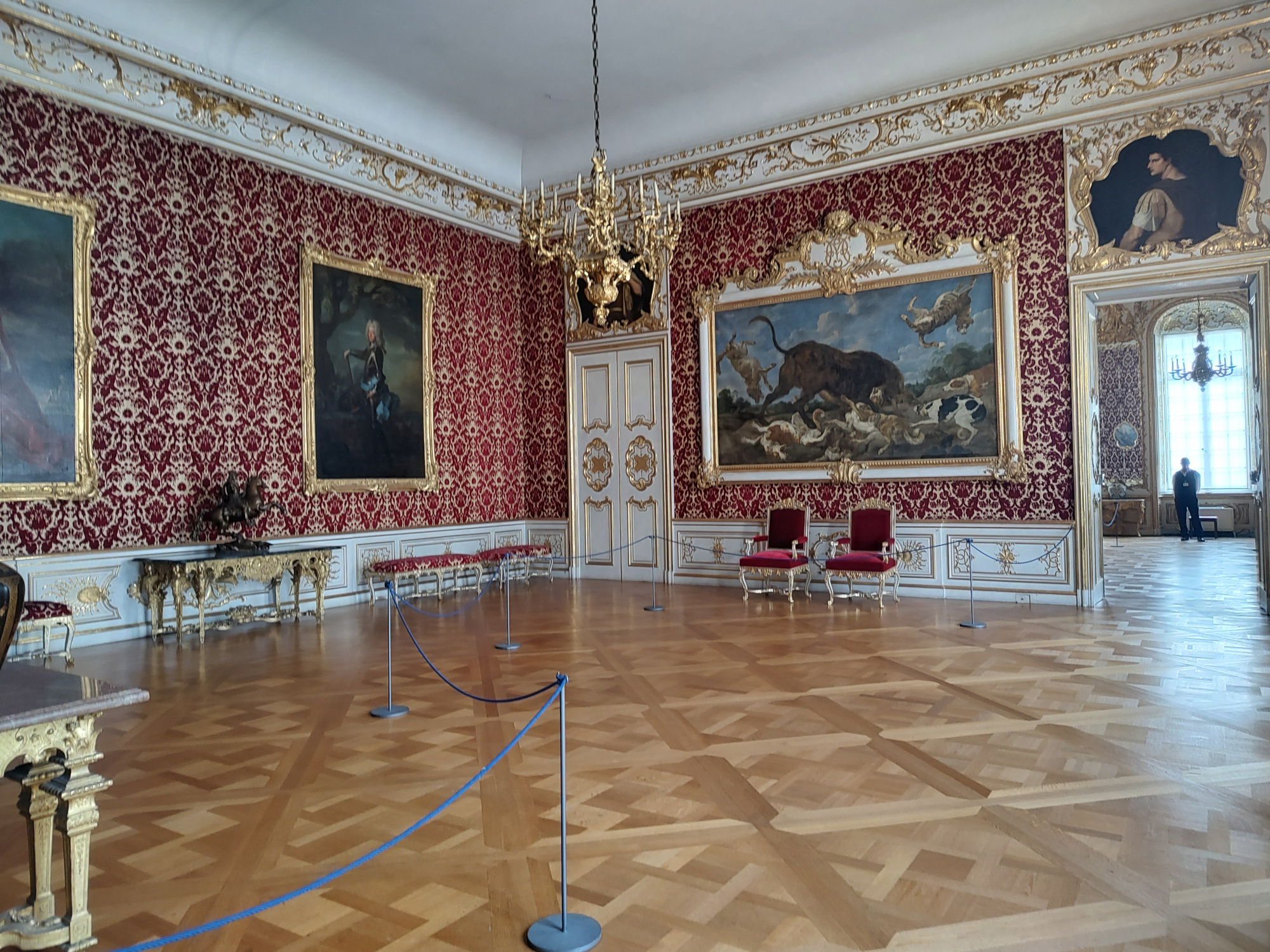
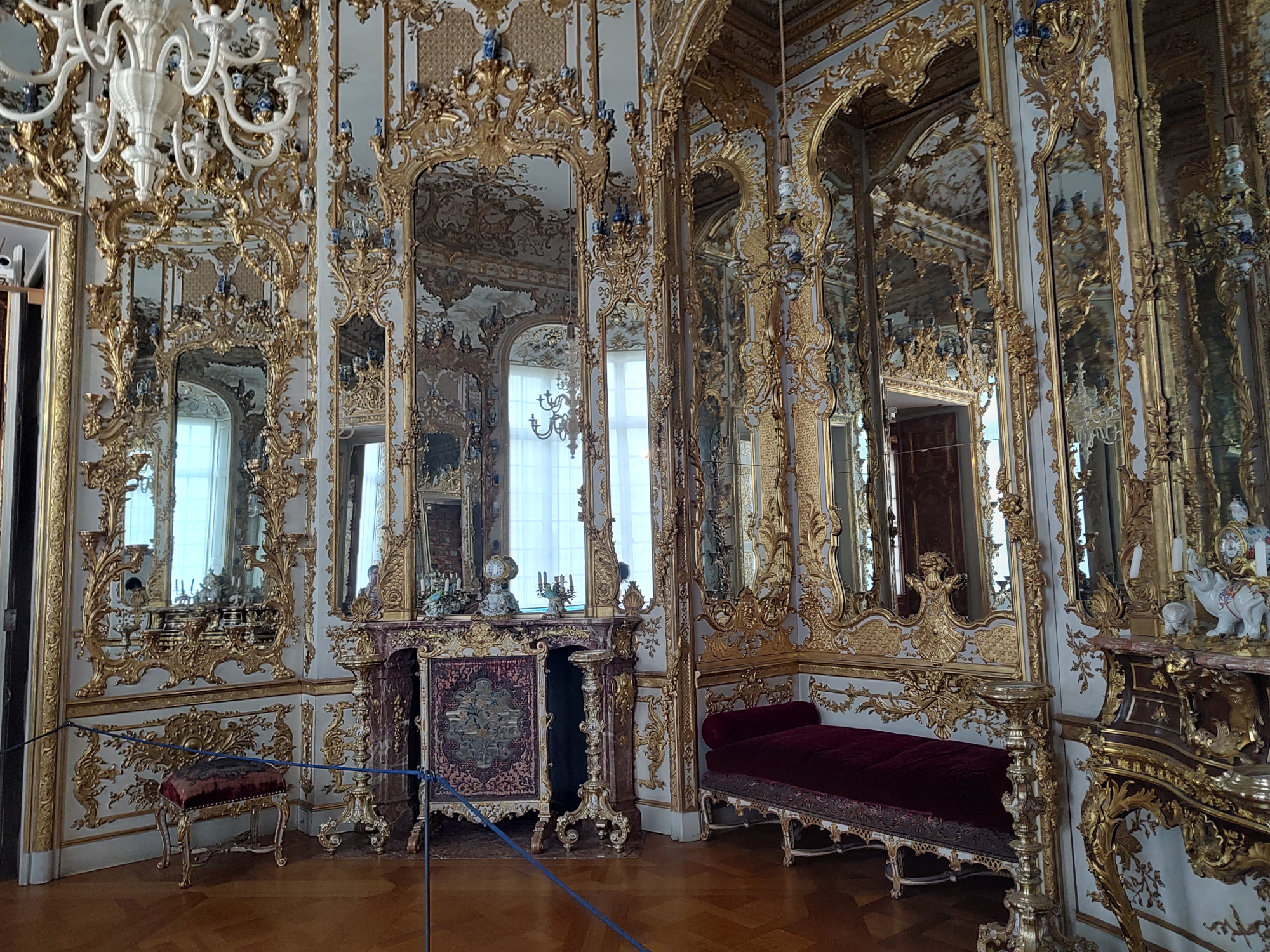
We were particularly impressed by the Rich Rooms (Reiche Zimmer), which represent the height of Rococo decoration with silk wall coverings, gilded ornament, mirrors, and elaborate furniture.
The state rooms and royal apartments offer a glimpse of ceremonial court life as well as the private spaces used by Bavaria’s rulers. They fascinated both me and my son.
I am sharing photographs of only a few rooms and details below.
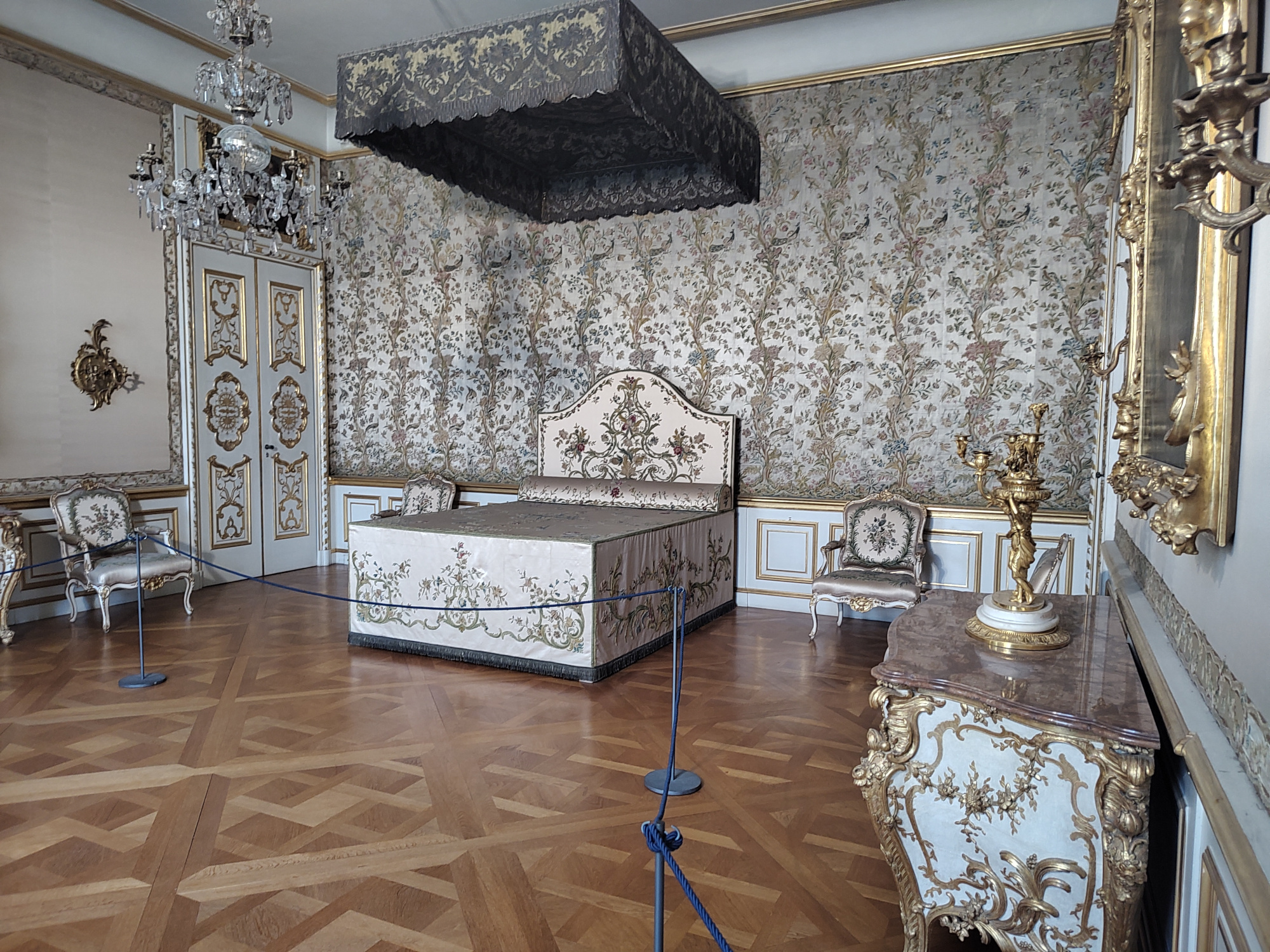
And the room next to it:
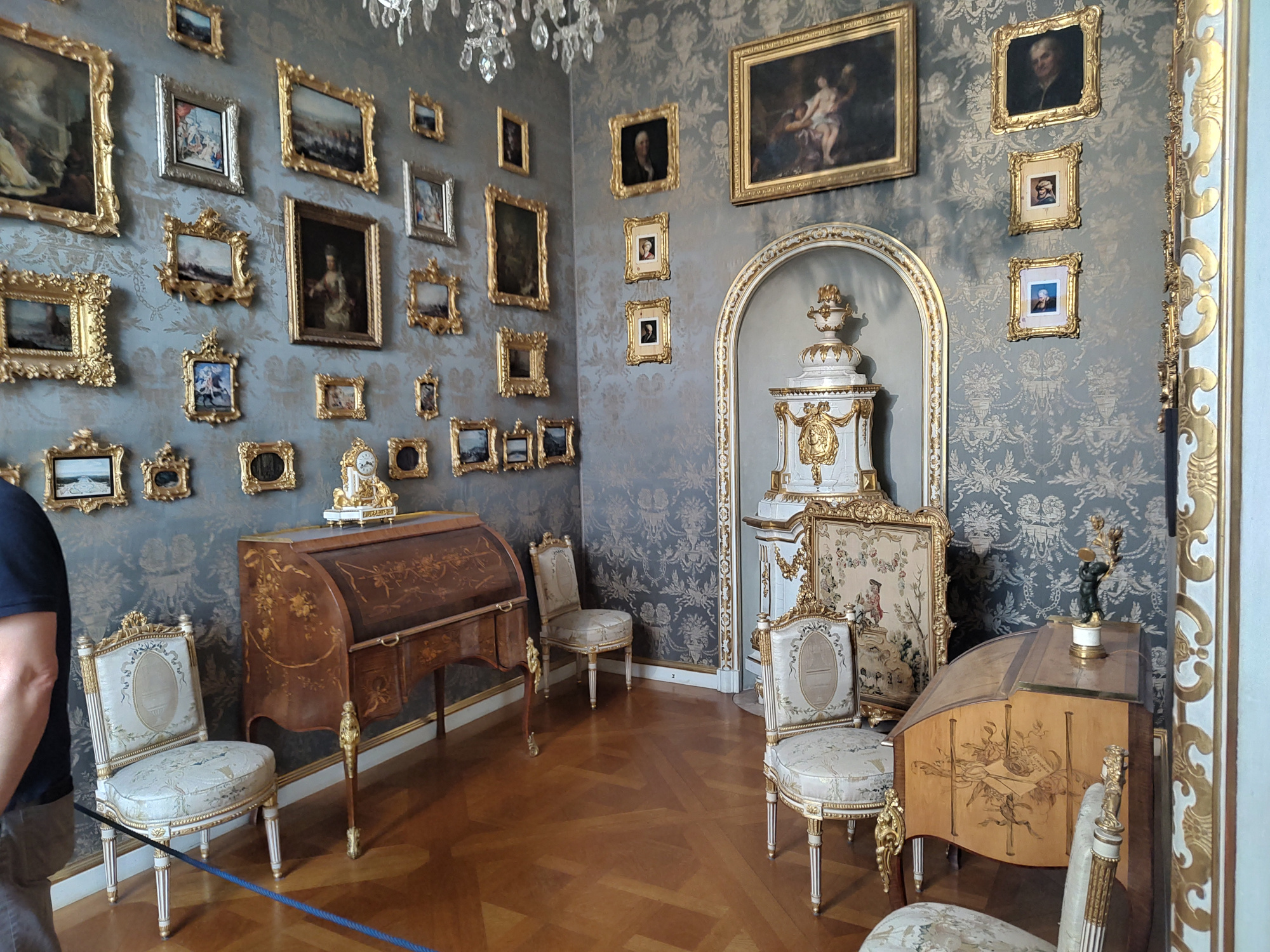
I also liked the Charlotte Rooms (Charlottenzimmer):
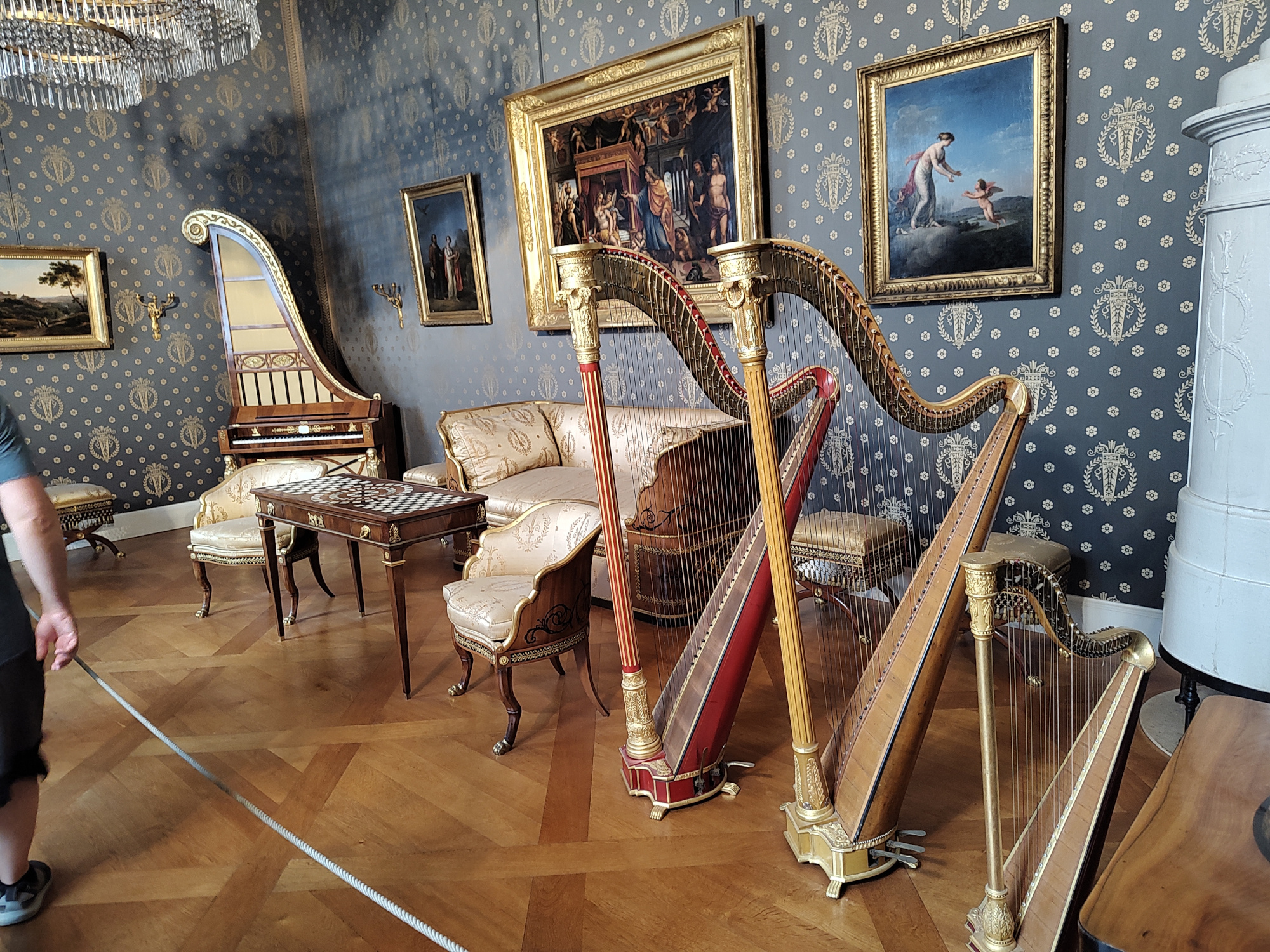
And the many anterooms:
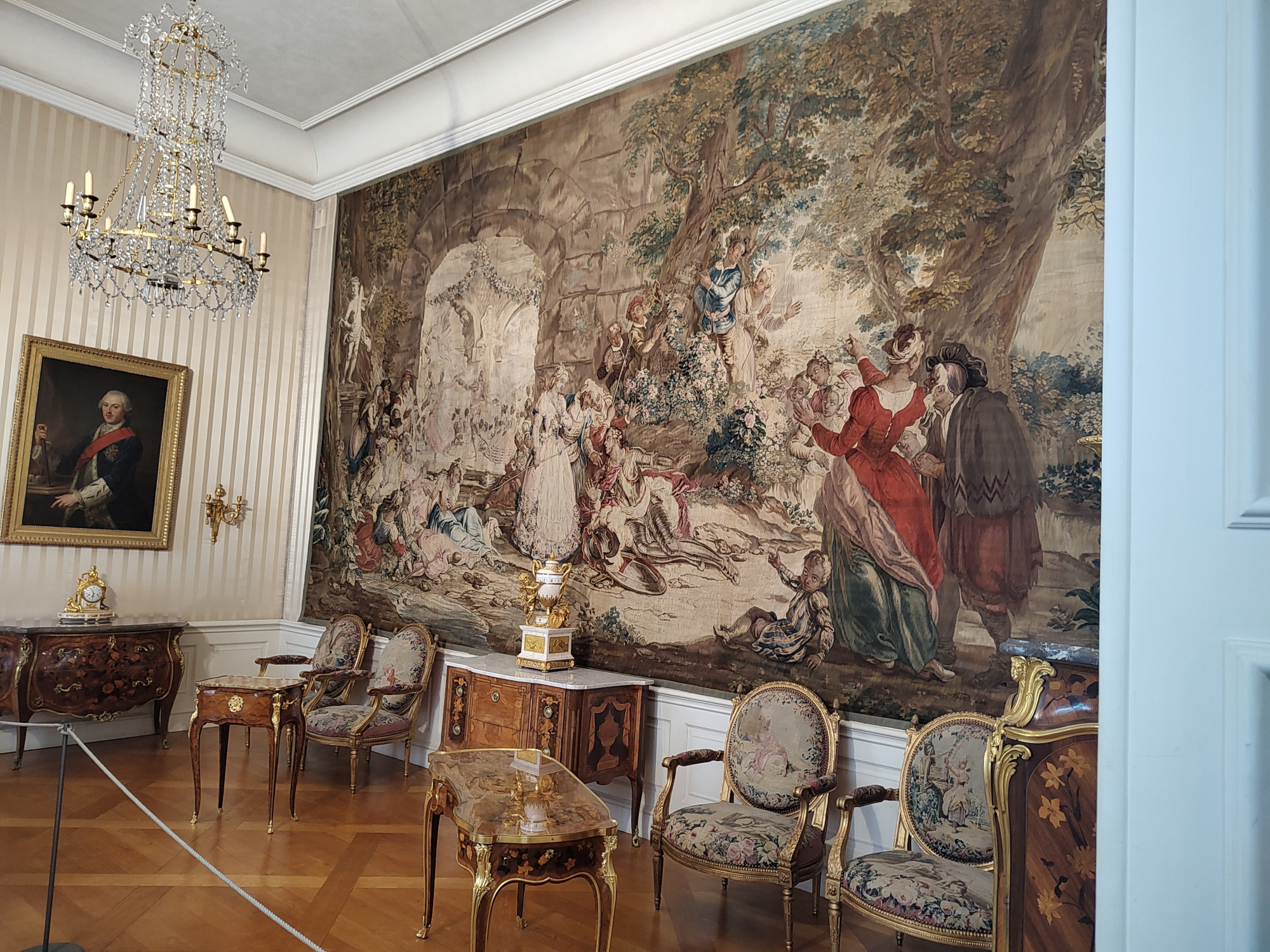
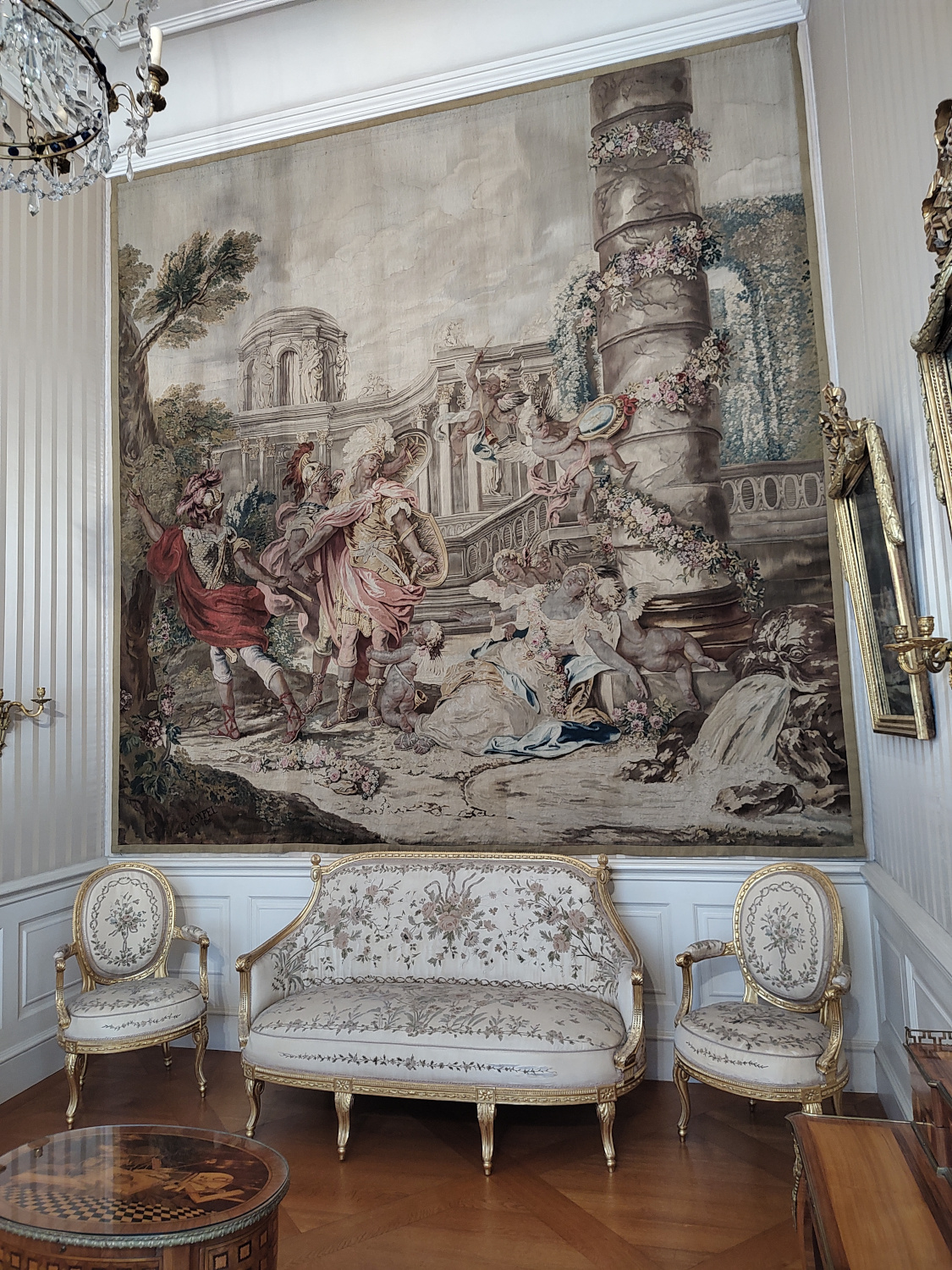
I loved the tapestries:
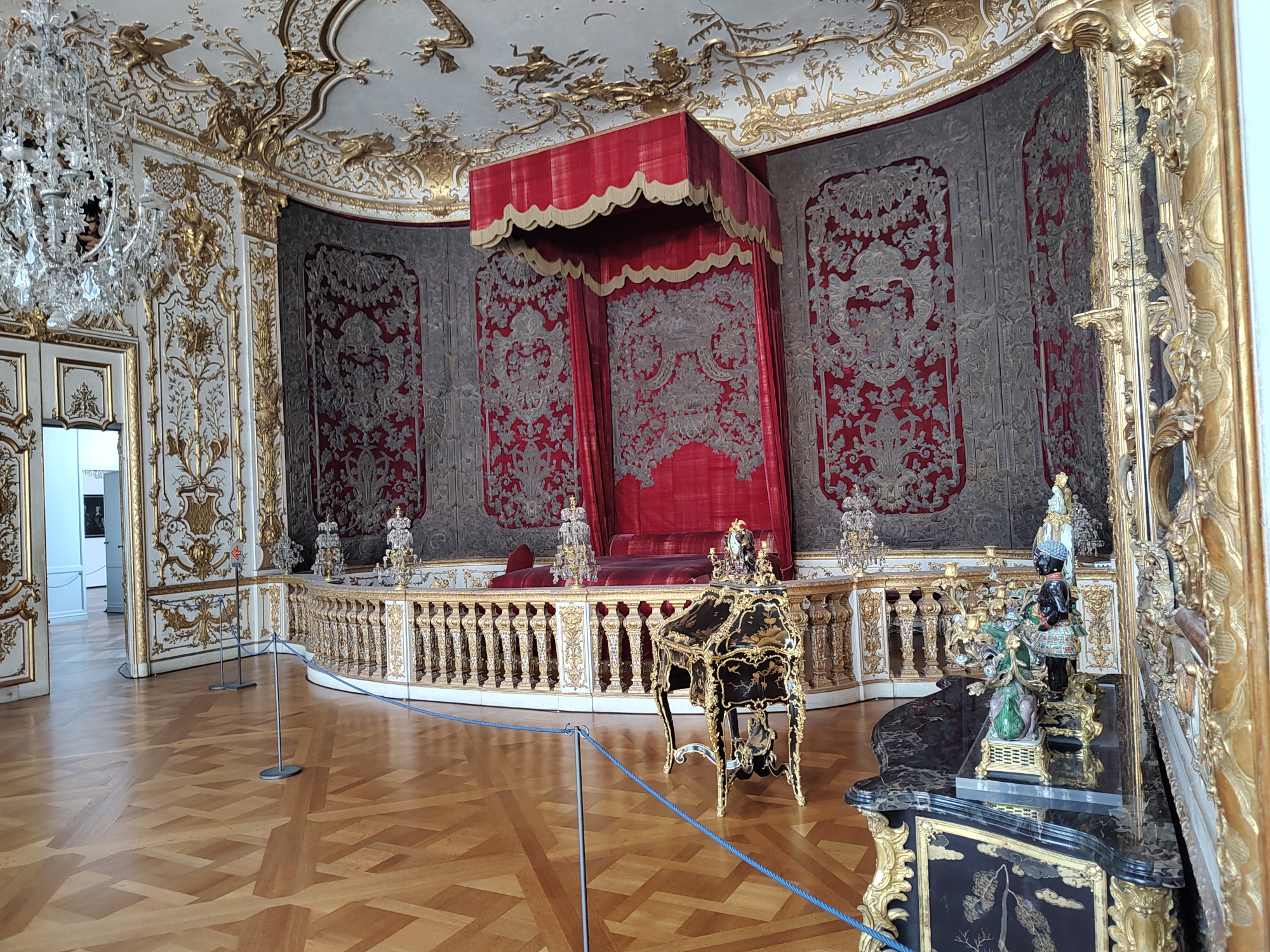
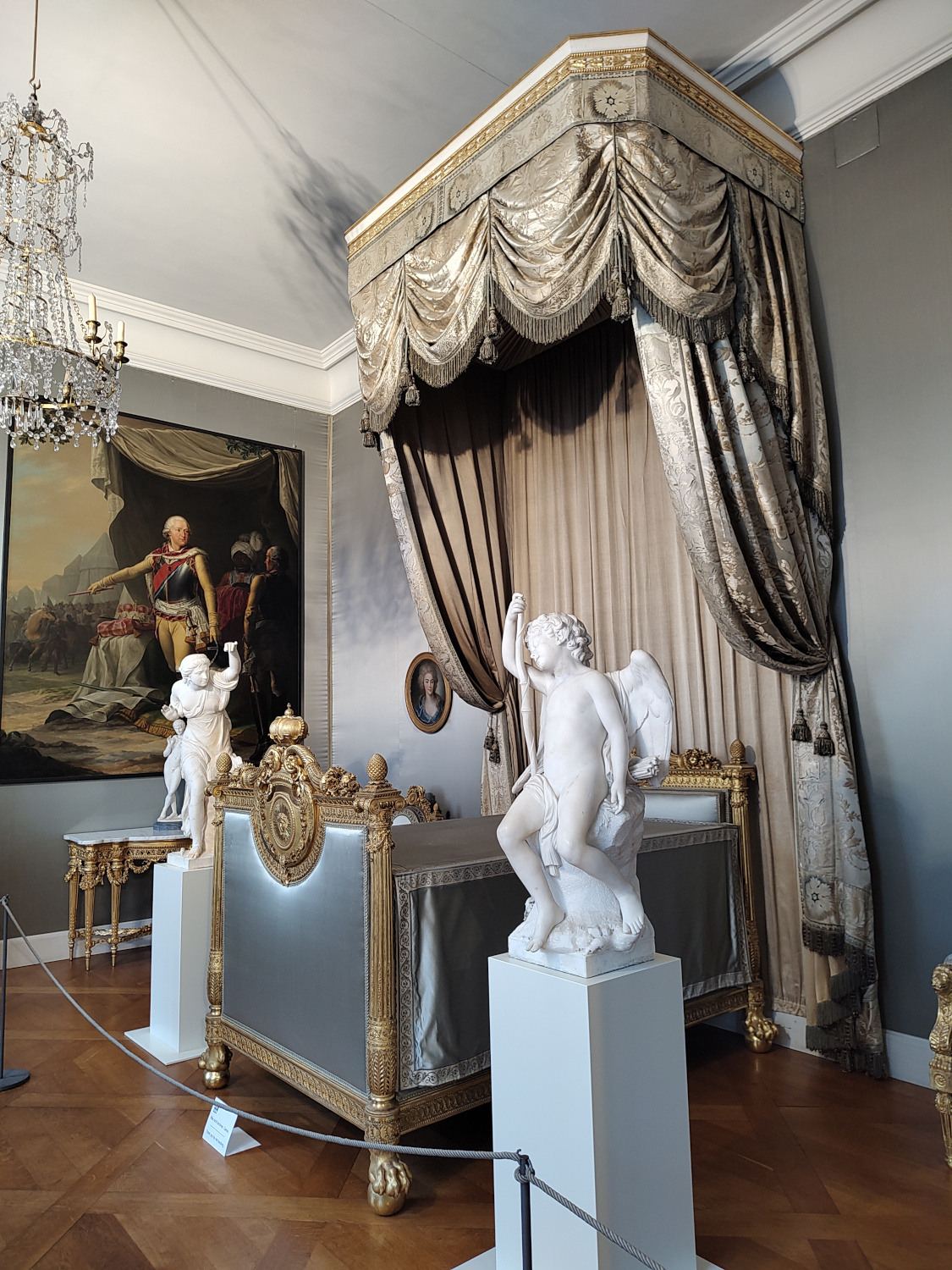
Another splendid bedroom:
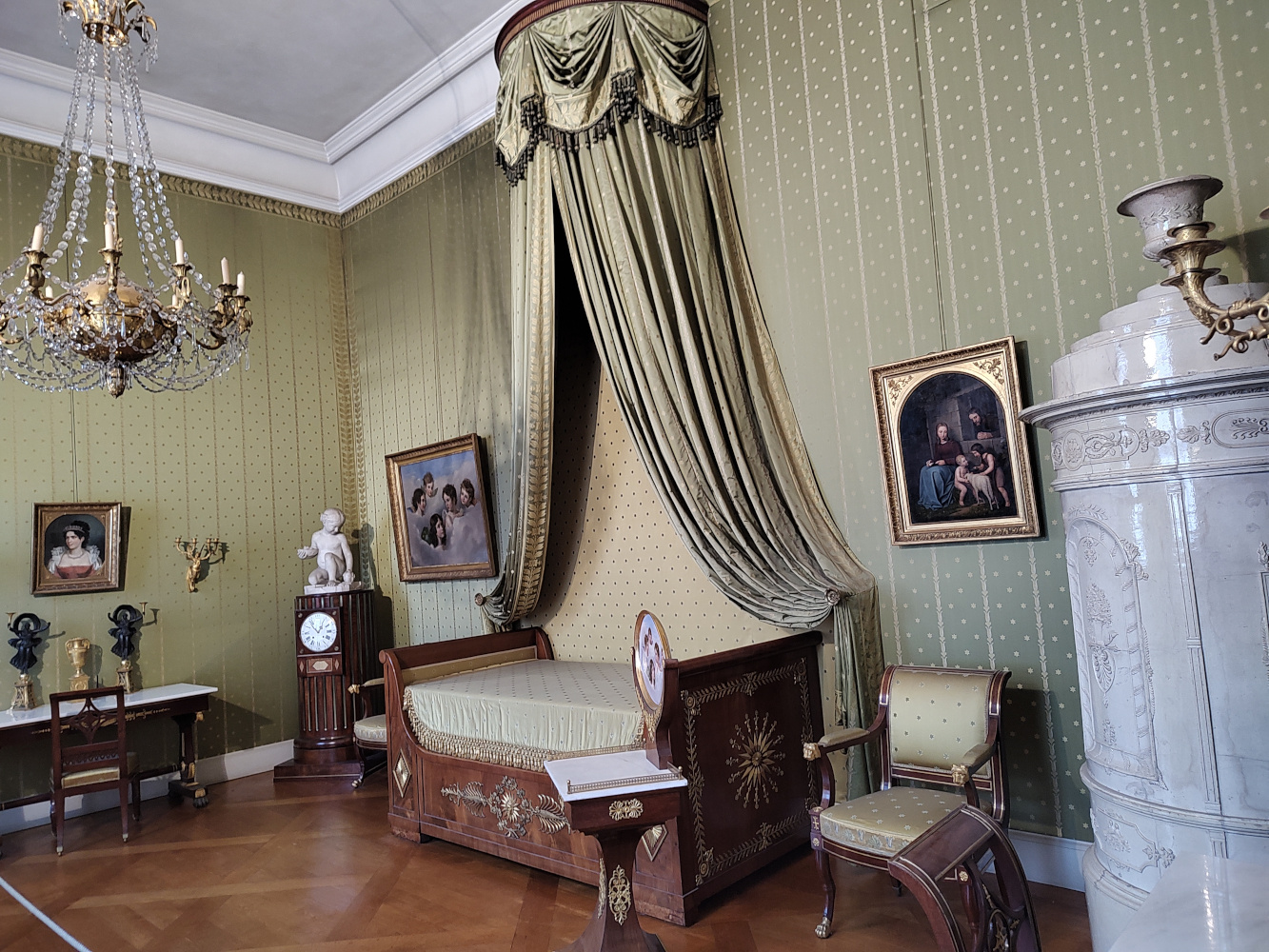
And two more beautiful bedrooms:
The Reconstruction Is Part of the Story
When planning your first visit to the Munich Residenz, prepare to walk through many rooms. Even with an audio guide, you probably will not have the time or energy to listen to every recording.
We were impressed by the furniture and decoration throughout the museum. In several rooms, the audio guide explained that the furniture was not originally from that exact room because so much of the palace was damaged during the war.
Without that explanation, I would not have known. The reconstruction retained the atmosphere and visual coherence of the royal interiors.
Small Details Worth Looking For
There are many details that impressed me during our visit.
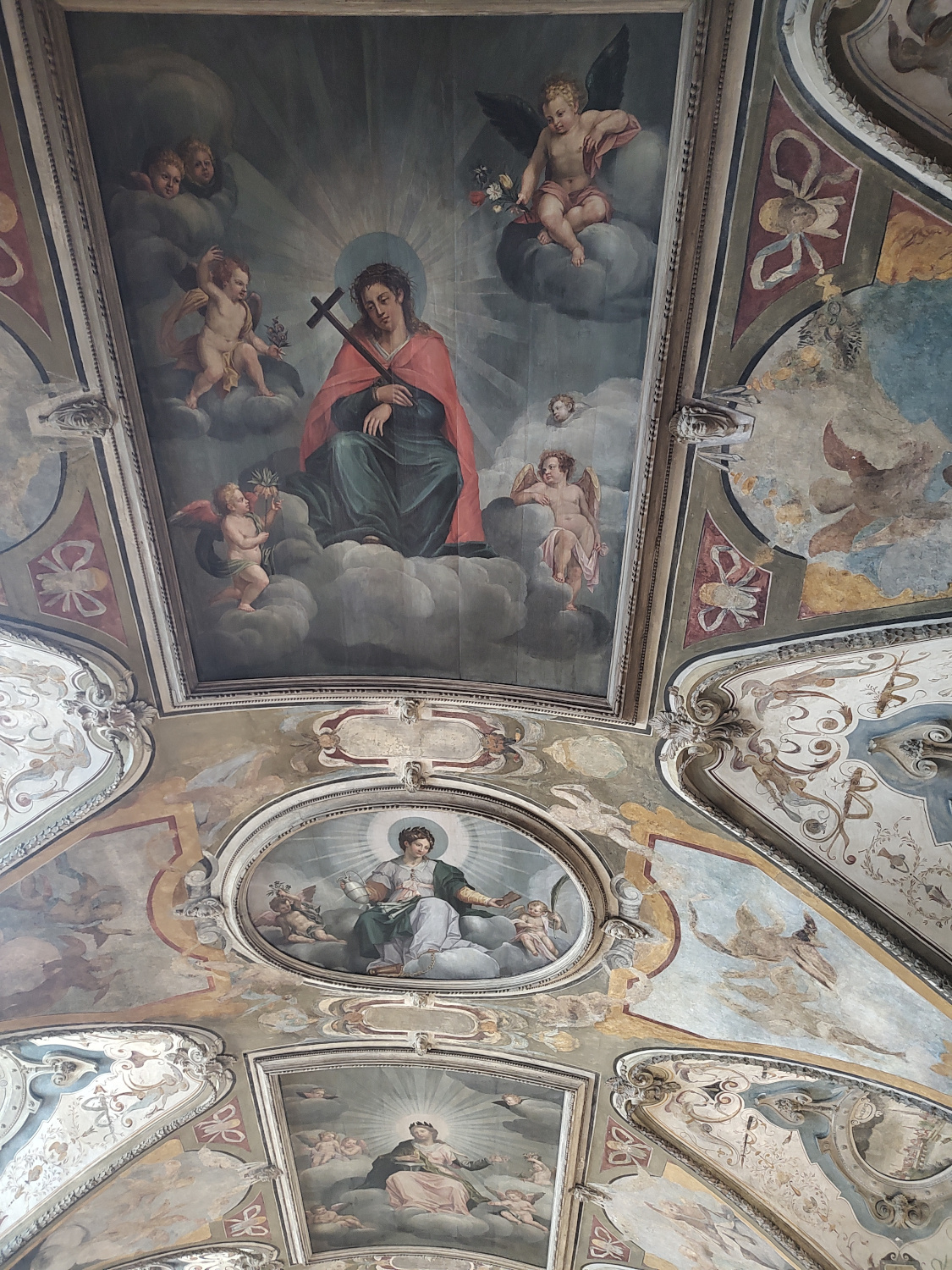
Painted ceilings: In one room, the ceiling is painted to create the illusion that the space is taller.
Porcelain: There are numerous porcelain objects and complete sets in display cases. I took many photographs, but adding all of them would make this article far too heavy.
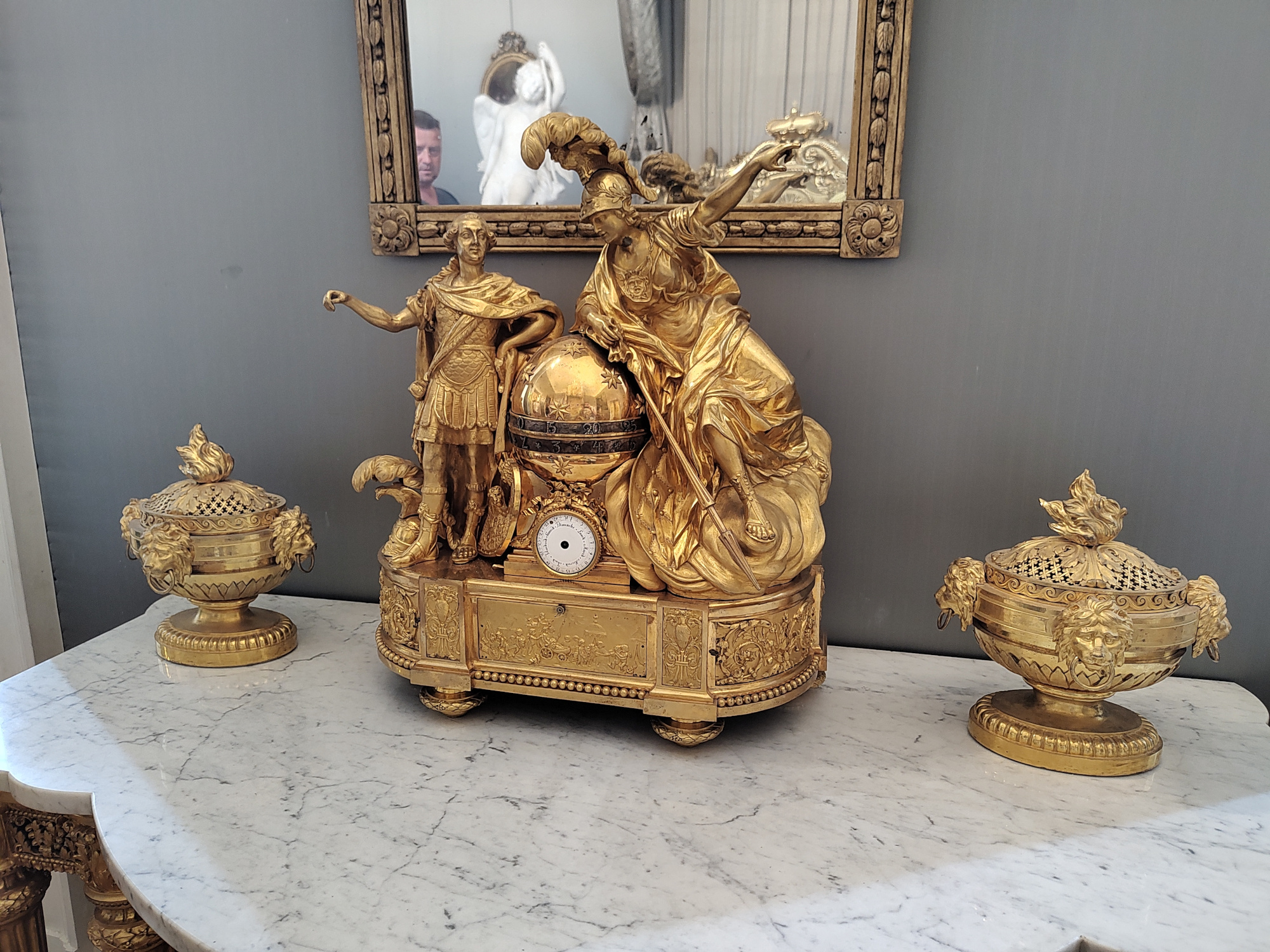
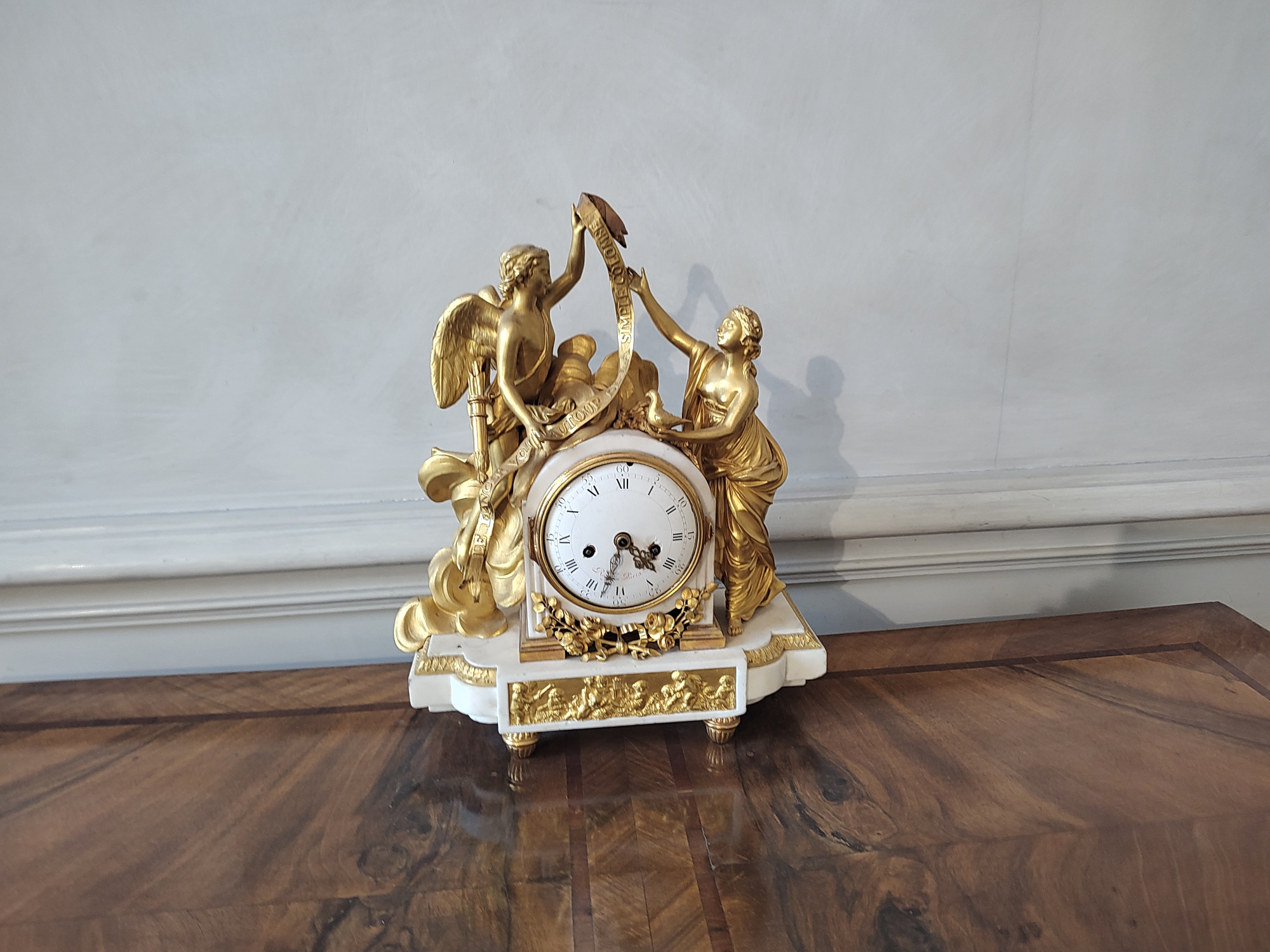
Clocks: The Residenz contains an extraordinary variety of clocks, including table clocks, wall clocks, and freestanding pieces. Keep looking for them as you move through the rooms.
Tapestries: You can find large tapestries in several parts of the museum.
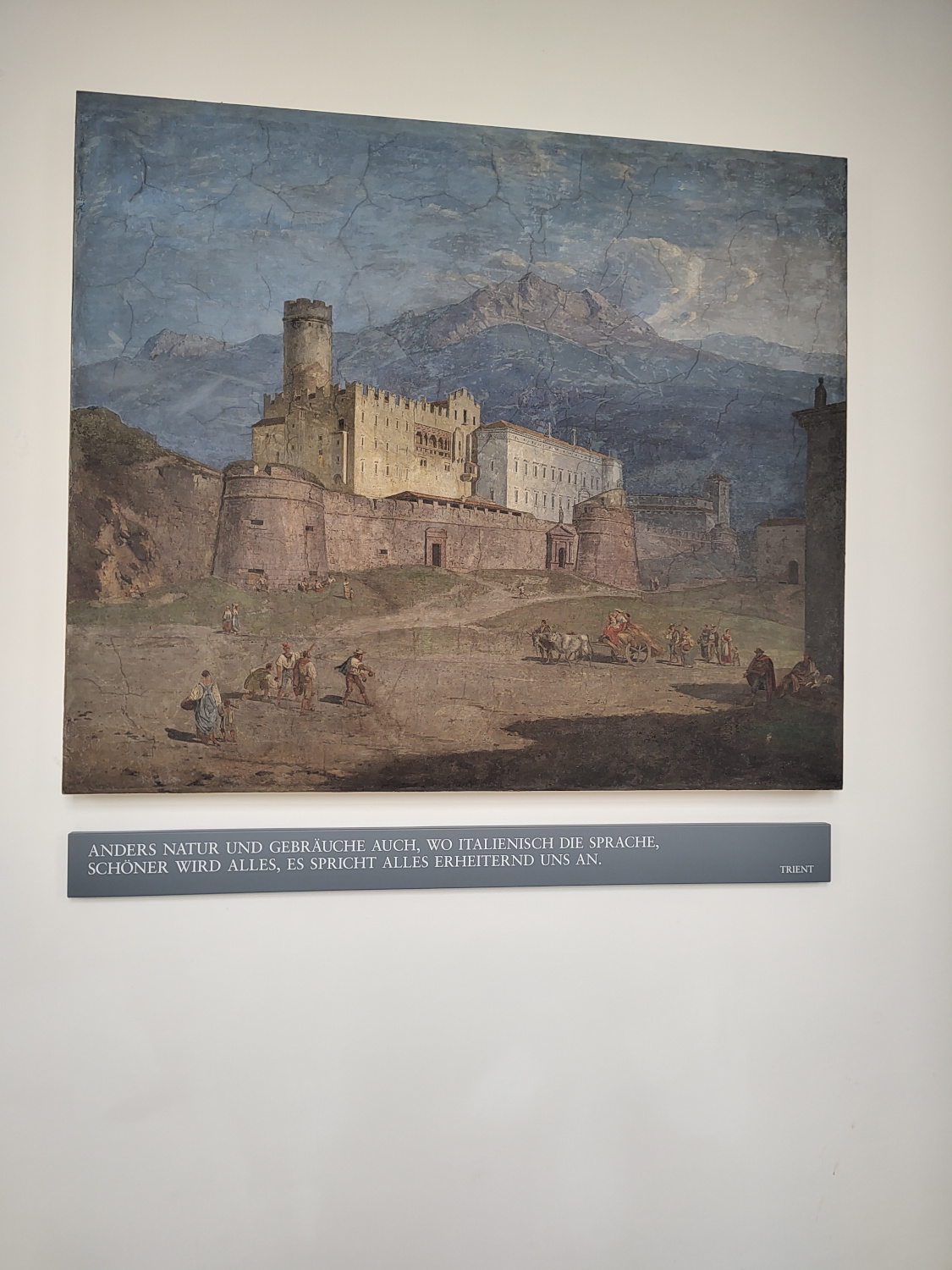
Paintings: Look beyond the paintings inside individual rooms. There is also a corridor filled with them.
The Court Church of All Saints: It is not always accessible. We did not see it during our visit.
The courtyards: The Munich Residenz has ten courtyards, although a standard museum route doesn’t take you through all of them.
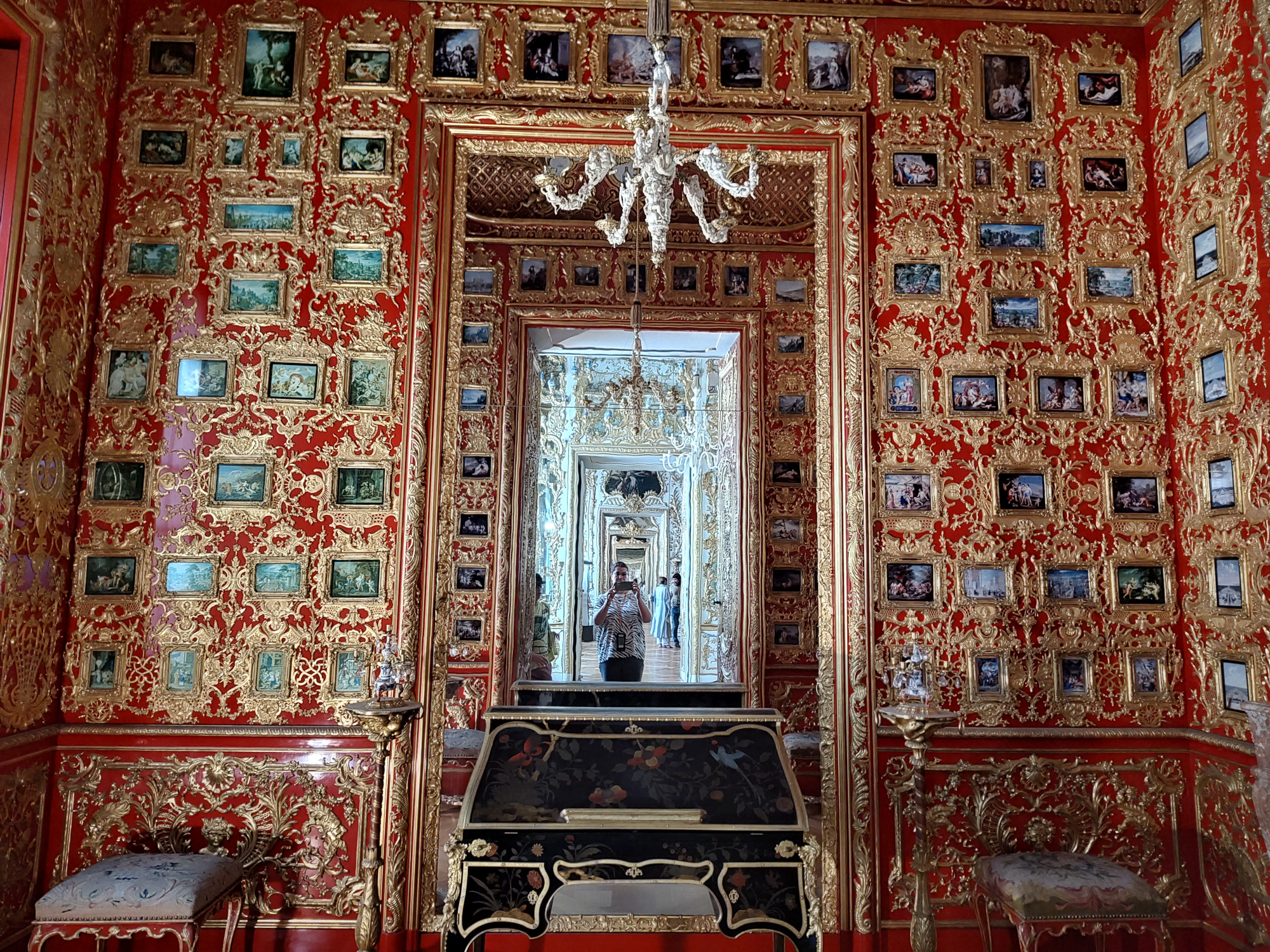
The Miniatures Cabinet: This room is much more impressive than my photograph suggests.
Can You Visit the Cuvilliés Theatre?
This was my small travel heartbreak. I had really hoped to see the Cuvilliés Theatre, but it was closed when we visited.
The theatre was created between 1751 and 1755 as the court opera house. The original theatre building was destroyed in 1944, but its carved and painted interior elements had been removed for safekeeping in 1943. Those surviving elements were restored and reassembled in a new building inside the Residenz, near the Apothecary Courtyard.
The auditorium is now considered a major work of Bavarian Rococo. Its schedule differs from the Residence Museum and Treasury, so check the theatre’s opening hours for the exact date and time of your visit. The entrance is between the Fountain Courtyard and Apothecary Courtyard.
How Long Do You Need at the Munich Residenz?
We arrived at approximately 9:45 AM and spent around six hours at the complex. We visited the Treasury and most of the Residence Museum, took photographs, listened to selected parts of the audio guide, and stopped frequently to examine details. We still skipped the final section, and the Cuvilliés Theatre was closed.
This was not a rushed visit for us, but we also did not listen to every audio-guide recording. The museum is genuinely large.
Allow about two hours if you plan to select only a few Residence Museum highlights.
Allow three to four hours for a more substantial visit combining the Residence Museum and Treasury at a focused pace.
Allow half a day or longer if you love palaces, want to stop for photographs, plan to listen to many explanations, or hope to add the Cuvilliés Theatre.
My tip: Wear comfortable shoes. You will walk through a very large complex and spend a long time standing on hard floors.
What Should You See if You Have Limited Time?
For a shorter visit, I would prioritise the Antiquarium, the Ancestral Gallery, the Grotto Courtyard, and a selection of the state rooms. These give you a strong sense of the palace’s scale and variety.
Add the Treasury if crowns, jewellery, ceremonial objects, weapons, or unusual royal possessions appeal to you. It was one of the best parts of our visit and my son’s favourite.
The Cuvilliés Theatre requires a separate timetable check. Do not build your whole plan around it until you confirm that it will be open when you arrive.
Visiting the Munich Residenz With Children or Teenagers
Children and teenagers under 18 enter the Residence Museum, Treasury, and Cuvilliés Theatre free of charge. Proof of age or eligibility may be requested. Children under 14 must be accompanied by an adult.
My son was 13 when we visited. The Treasury was his unexpected favourite, while the long sequence of palace rooms eventually became tiring. Choosing which audio-guide recordings to hear made the visit easier for him.
Younger children may enjoy looking for animals, crowns, swords, clocks, mirrors, hidden faces, and unusual objects rather than trying to understand every room historically.
Personal prams and buggies are not allowed in the historic exhibition rooms for conservation reasons. Free buggies are available for the duration of the visit.
Munich Residenz Tickets and Prices in 2026
The following prices apply in 2026:
| Ticket | Regular | Reduced |
|---|---|---|
| Residence Museum | €10 | €9 |
| Treasury | €10 | €9 |
| Residence Museum + Treasury | €15 | €13 |
| Cuvilliés Theatre | €5 | €4 |
| Residence Museum + Treasury + Cuvilliés Theatre | €20 | €16 |
| Children and teenagers under 18 | Free | — |
The Court Garden and fountain machinery are free to visit. Tickets are sold at the museum ticket desk and online. Tickets for the theatre and the complete combination ticket are available at the Cuvilliés Theatre ticket desk.
Check the official ticket page before visiting in case prices or conditions change.
Which Ticket Should You Buy?
Residence Museum only: Choose this when your time is limited and the rooms and architecture are your main interest.
Residence Museum + Treasury: This is the option I would recommend for most first-time visitors. The two collections are very different, and the Treasury added a lot to our family visit.
Full combination ticket: Buy this only after checking that the Cuvilliés Theatre will be open at a convenient time.
Treasury only: This is a good choice for visitors primarily interested in royal jewels, precious objects, ceremonial pieces, or decorative arts.
Can a Palace Pass or Munich Visitor Card Save Money?
The Bavarian Palace Administration’s 14-day ticket costs €40 for one person or €80 for a family or two partners in 2026. It covers more than 40 state attractions, including the Munich Residenz, Nymphenburg Palace, Neuschwanstein Castle, Linderhof Palace, and Herrenchiemsee. Because visitors under 18 already receive free admission to these state attractions, calculate the adult ticket costs before buying the family version. You can check the current conditions on the Bavarian Palace Administration website.
The Munich City Pass includes the Residence Museum, Treasury, and Cuvilliés Theatre. The Munich Card currently gives a €1 discount on the Residence Museum, a €1 discount on the Treasury, and 20% off the Cuvilliés Theatre. Benefits can change, so verify the current list on the official Munich visitor-card page.
Munich Residenz Opening Hours
Residence Museum and Treasury:
28 March–19 October: daily from 9 AM to 6 PM, with last admission at 5 PM.
20 October–27 March: daily from 10 AM to 5 PM, with last admission at 4 PM.
Cuvilliés Theatre:
28 March–31 July: Monday to Saturday from 2 PM to 6 PM; Sundays and public holidays from 9 AM to 6 PM.
1 August–14 September: daily from 9 AM to 6 PM.
15 September–19 October: Monday to Saturday from 2 PM to 6 PM; Sundays and public holidays from 9 AM to 6 PM.
20 October–27 March: Monday to Saturday from 2 PM to 5 PM; Sundays and public holidays from 10 AM to 5 PM.
Last admission is one hour before closing. The Munich Residenz is closed on 1 January, Shrove Tuesday, and 24, 25, and 31 December.
Check the official opening-hours page shortly before your visit, particularly if the theatre is important to you.
Are the Munich Residenz Audio Guides Worth Using?
Yes. The free audio guides added a great deal to our visit. They are available for the Residence Museum and Treasury in German, English, French, Italian, Spanish, Russian, Chinese, Japanese, and Arabic.
You do not need to listen to every recording. We selected the rooms and objects that interested us most, which made a six-hour visit much easier.
Bags, Photography, Food, Wi-Fi, and Other Visitor Rules
Bags: Large bags measuring 35 × 30 × 12 cm or more, rucksacks, and bulky objects must be left at the free supervised cloakroom.
Photography: You can take photographs and videos for personal use without flash or a tripod. Commercial and other extended uses require permission.
Food and water: Food is not allowed in the museum area. Water is permitted only in plastic bottles holding up to 0.5 litres.
Café: There is no café inside the Munich Residenz complex, although there are many cafés and restaurants nearby. For a visit as long as ours, eat beforehand or plan a meal after leaving.
Wi-Fi: Free Wi-Fi is available in parts of the complex, including the Antiquarium, Court Church of All Saints, Imperial Hall, Max Joseph Hall, and Imperial Courtyard.
Animals: Dogs and other animals are not allowed inside.
For more practical details that are useful across the city, see my guide to planning a first trip to Munich.
Accessibility at the Munich Residenz
Several important areas of the Residence Museum are accessible to visitors using wheelchairs or with limited mobility. These include the Ancestral Gallery, Grotto Courtyard, parts of the Antiquarium, and many upper-floor rooms reached with staff assistance and lifts.
The Treasury and Nibelungen Halls are not barrier-free. The Cuvilliés Theatre is barrier-free and has an accessible entrance on the south-east side of the Fountain Courtyard.
Conditions can change during restoration or building work, so consult the official accessibility information before your visit.
How to Get to the Munich Residenz
The official address is Residenzstraße 1, 80333 Munich. The main entrance for the Residence Museum and Treasury is on Max-Joseph-Platz.
Getting there by public transport is easy. We used Munich’s transport app to plan our route a day in advance, including which ticket suited our plans and how long the journey would take. My guide to public transportation in Munich explains the main ticket and transport options.
We also used Google Maps for the short walk from the station to the palace. I had enough roaming data, did not have a printed map, and did not want to waste time. We used Odeonsplatz, although Marienplatz is also within walking distance.
Stop at the Souvenir Shop
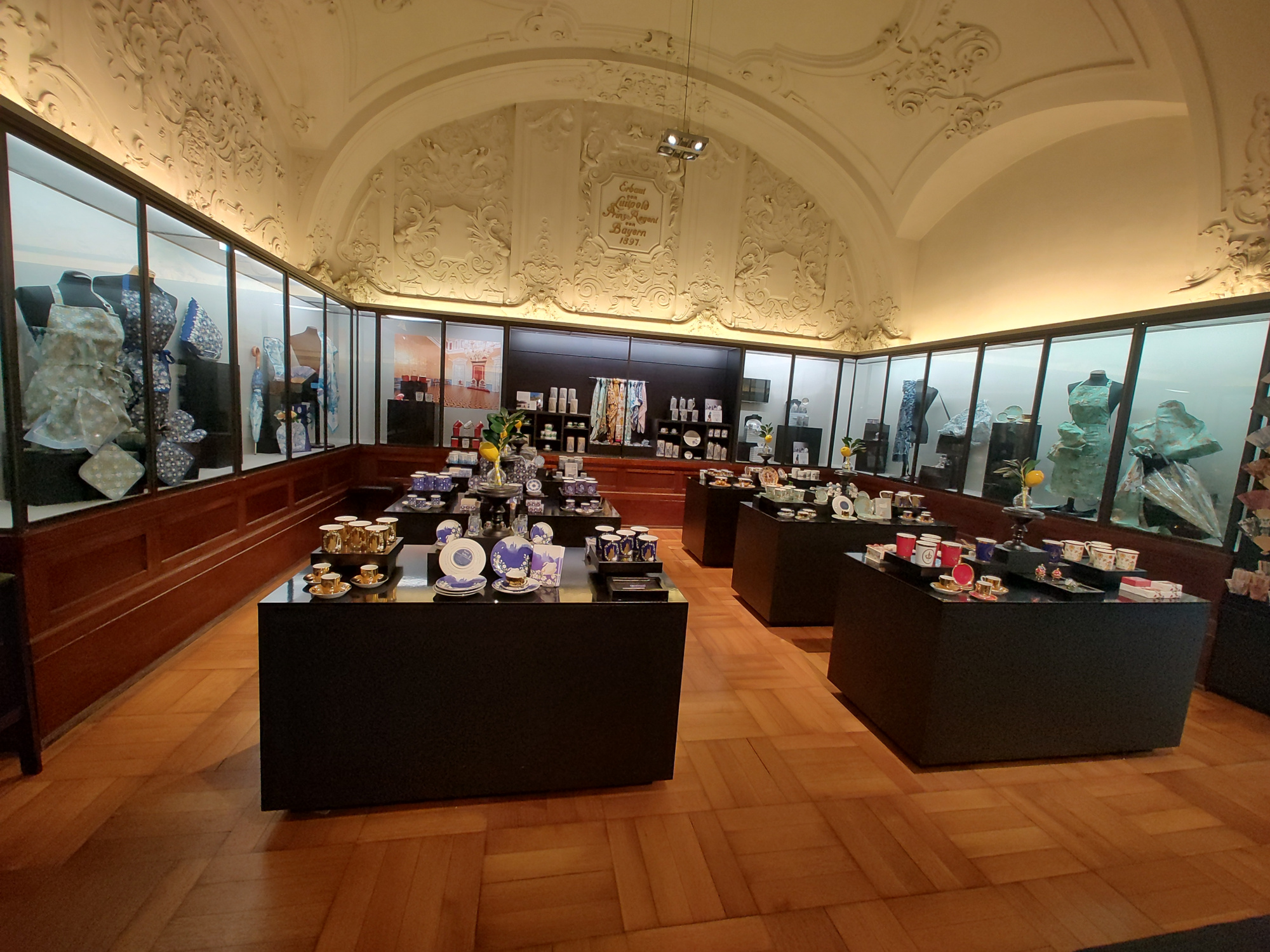
After retrieving my backpack, we stopped at the souvenir shop.
It sells Residenz-themed items, including mugs, plates, hand fans, magnets, books, and other gifts. I bought a hand fan.
Visit the Hofgarten After the Palace
The Court Garden (Hofgarten) is beside the Residenz and is free to enter. Its symmetrical paths, arcades, lawns, and central pavilion provide a pleasant contrast after hours inside the palace.
The historic fountain machinery can be viewed daily. From April through October, it operates from 10 AM to 2 PM. Admission is free.
We did not use the Hofgarten as a rest stop after our visit, so I cannot describe that as part of our day. It is, however, a convenient nearby place to walk or sit when the weather is pleasant. On a wet day, the palace itself is one of the strongest options in my guide to Munich in the rain.
What Attractions Are Near the Munich Residenz?
The central location makes it easy to combine the Residenz with other Old Town attractions, although a long palace visit can occupy most of the day.
Marienplatz is within walking distance. There, you can see the Rathaus-Glockenspiel, visit St. Peter’s Church, see the Frauenkirche, or explore the Munich Toy Museum.
My one-day Munich walking route can help you see how these Old Town places fit together.
I would not recommend adding the Deutsches Museum after a full Residenz visit. We spent an entire day there and still would have liked more time. Combining both works only for someone planning very short, selective visits.
Is the Munich Residenz Worth Visiting?
For us, yes. The Munich Residenz offered far more than a sequence of decorated rooms. The Treasury surprised my son, the Antiquarium was even more impressive in person, the Grotto Courtyard was completely unexpected, and the smaller details kept appearing long after we thought we had seen the main highlights.
It is a long visit, particularly for people who enjoy palaces, jewellery, decorative arts, architecture, and history. Even after around six hours, we skipped the final part and missed the theatre. I would return, especially to see the areas we could not visit the first time.
Frequently Asked Questions About the Munich Residenz
Is the Munich Residenz worth visiting if you have already seen Nymphenburg Palace?
Yes. The two palaces offer different experiences. Nymphenburg is known for its grand exterior, park, and wider estate, while the Munich Residenz has an enormous concentration of historic interiors, the Antiquarium, the royal Treasury, and a central Old Town location.
How long should you spend at the Munich Residenz?
Allow at least two hours for selected Residence Museum highlights, three to four hours for the museum and Treasury, and half a day or longer for a detailed visit. We spent around six hours and still skipped the final section.
Can you take photographs inside the Munich Residenz?
Yes. Personal photography and video are allowed without flash or a tripod.
Is the Munich Residenz stroller-friendly?
Visitors cannot use their own prams or buggies inside the exhibition rooms, but free buggies are available for the duration of the visit.
Is the Treasury included in the Residence Museum ticket?
No. The Residence Museum and Treasury have separate tickets, although a discounted combination ticket is available.
Are children admitted free?
Yes. Children and teenagers under 18 enter free. Children under 14 must be accompanied by an adult.
Do you need to book Munich Residenz tickets in advance?
No reservation is normally required for individual visitors. You can buy tickets at the ticket desk or online. An online ticket allows you to go directly to the entrance, although proof is required for free or reduced admission.
Planning the Rest of Your Munich Trip
It is easy to book a trip to Munich and compare flights to Munich. If a flight is seriously delayed or cancelled, my guide to EU flight compensation explains when passengers may be eligible to claim.
More amazing articles for you:
Travel medical insurance for digital nomads
View over the Alps from the Airplane
Munich Toy Museum (Spielzeugmuseum): Tickets, Stairs & What to See
70 Interesting Facts About Paris - Famous Stories, Hidden History and Surprising Details
5 Must visit places in Malta
Is Hotel Breakfast Worth It? When Paying Extra Makes Sense - And When It Doesn’t (Hint: It’s NOT Jus...
Top Places in Asia by Instagram Likes (infographic included)
Munich Rathaus-Glockenspiel: Show Times, Best Viewing Spot and What to Expect

Violeta-Loredana Pascal is a communications expert, business mentor, and the founder of Earth’s Attractions and PRwave INTERNATIONAL. A pioneer in the Romanian digital PR landscape since 2005, she holds a degree in Communication and Social Sciences from SNSPA Bucharest. Violeta is a senior trainer at AcademiadeAfaceri.ro, where she leverages over 20 years of experience to teach professional courses in PR strategy and workplace productivity. By blending high-level business consulting with a passion for holistic travel and wellness, she empowers solopreneurs to overcome procrastination, build profitable brands, and design a life of purposeful adventure.