I have a personal connection to Germany. I learned German in school, and even though I wouldn’t call myself a good speaker today, I loved discovering German proverbs and the wisdom behind them. A familiar lesson could sound completely different in German, while another saying would be almost identical to one I already knew in Romanian or English.
That interest returned when Germany became part of my travels too. While planning and enjoying our five days in Munich, I kept noticing words I remembered from school, even when I couldn’t build a full conversation around them. Language adds another side to a place, beyond the landmarks and practical details you find in a local guide to Munich.
Below, you’ll find 115 German proverbs and sayings with English translations and meanings. Each entry includes the literal translation and a short explanation of the meaning and use, including the closest English equivalent when there is one. I kept the format compact, and I separated common German idioms from the main list so phrases and proverbs aren’t treated as the same thing.
I noticed several shared ideas while working on my collection of Japanese proverbs and sayings, but German has its own memorable images: sausages with two ends, mice dancing on tables, donkeys walking onto ice, and small animals producing surprisingly useful manure.

ID 15980133 @ Swinnerrr | Dreamstime.com
What Are German Proverbs and Sayings Called?
The German word for a proverb is Sprichwort, and the plural is Sprichwörter. A proverb is usually a complete sentence that expresses advice, a warning, a general observation, or a lesson about life.
A Redewendung is an idiom or fixed expression. It normally becomes part of a larger sentence, and its real meaning may have little to do with the literal words. Übung macht den Meister is a proverb. Ich verstehe nur Bahnhof is an idiom. You’ll find ten well-known German idioms after the 115 proverbs and sayings.
Famous and Common German Proverbs
I think that these common German proverbs with English translations are the best place to begin my article on German proverbs and sayings. For language learners, familiar German Sprichwörter are easier to remember when the English equivalent is already known, and several of the sayings below are still easy to recognise in conversation, books, television, and everyday comments.
Knowing a few familiar sayings can also make the language feel less distant before a trip. They add a cultural layer to the practical things to know before visiting Munich.
1. Übung macht den Meister.
Literal translation: Practice makes the master.
Meaning and use: People become skilled through repeated practice. The closest English equivalent is “Practice makes perfect.”
2. Aller Anfang ist schwer.
Literal translation: Every beginning is difficult.
Meaning and use: Starting is often the hardest part. It is close to “The first step is always the hardest.”
3. Morgenstund hat Gold im Mund.
Literal translation: The morning hour has gold in its mouth.
Meaning and use: Starting early can bring an advantage. The closest English equivalent is “The early bird catches the worm.”
4. Besser spät als nie.
Literal translation: Better late than never.
Meaning and use: It has the same meaning in German and English.
5. Wer rastet, der rostet.
Literal translation: Whoever rests, rusts.
Meaning and use: People lose strength, skill, or momentum when they stop being active. It is similar to “Use it or lose it.”
6. Ende gut, alles gut.
Literal translation: End good, everything good.
Meaning and use: A difficult situation can be forgiven or forgotten when it ends well. The English equivalent is “All’s well that ends well.”
7. Wo ein Wille ist, ist auch ein Weg.
Literal translation: Where there is a will, there is also a way.
Meaning and use: Determination helps people find a solution. It is the German version of “Where there’s a will, there’s a way.”
8. Viele Köche verderben den Brei.
Literal translation: Many cooks spoil the porridge.
Meaning and use: Too many people trying to control the same task can make the result worse. The English equivalent is “Too many cooks spoil the broth.”
9. Was du heute kannst besorgen, das verschiebe nicht auf morgen.
Literal translation: What you can take care of today, do not postpone until tomorrow.
Meaning and use: Do not delay a task that can be completed now. It is a traditional warning against procrastination.
10. Lügen haben kurze Beine.
Literal translation: Lies have short legs.
Meaning and use: Lies do not travel far before the truth catches up with them. “The truth will out” expresses a similar idea.
11. Reden ist Silber, Schweigen ist Gold.
Literal translation: Speech is silver, silence is gold.
Meaning and use: Speaking can be valuable, but knowing when to remain silent may be wiser. The English saying is “Speech is silver, silence is golden.”
12. Aller guten Dinge sind drei.
Literal translation: All good things are three.
Meaning and use: The third attempt may bring success, or three of something may feel complete. English also uses “Third time lucky” and “Good things come in threes.”
13. Der Ton macht die Musik.
Literal translation: The tone makes the music.
Meaning and use: How something is said can be as important as the words themselves. Tone can turn the same sentence into advice, criticism, or an insult.
14. Lieber den Spatz in der Hand als die Taube auf dem Dach.
Literal translation: Better the sparrow in the hand than the dove on the roof.
Meaning and use: A modest certainty is better than a larger but uncertain reward. The English equivalent is “A bird in the hand is worth two in the bush.”
15. Es ist noch kein Meister vom Himmel gefallen.
Literal translation: No master has yet fallen from the sky.
Meaning and use: Nobody is born an expert. Skill takes time, learning, and practice.
16. In der Kürze liegt die Würze.
Literal translation: In brevity lies the spice.
Meaning and use: A concise explanation is often more effective than a long one. The closest English equivalent is “Brevity is the soul of wit.”
17. Aus den Augen, aus dem Sinn.
Literal translation: Out of the eyes, out of the mind.
Meaning and use: People or things can be forgotten when they are no longer seen regularly. The English equivalent is “Out of sight, out of mind.”
Funny German Proverbs and Sayings

ID 145334529 @ Weerapat Wattanapichayakul | Dreamstime.com
Literal translations are what make many funny German proverbs so memorable. The lesson may be perfectly sensible, but the German version can involve sausages, chickens, donkeys, porridge, or a devil willing to eat flies.
German isn’t the only language that can surprise outsiders. These British sayings that confuse travelers show how strange familiar words can become when they form a local expression.
18. Alles hat ein Ende, nur die Wurst hat zwei.
Literal translation: Everything has an end; only the sausage has two.
Meaning and use: Everything eventually finishes. The sausage adds the joke, while the closest English idea is “All good things must come to an end.”
19. Das Leben ist kein Ponyhof.
Literal translation: Life is not a pony farm.
Meaning and use: Life is not always easy, pleasant, or fair. It is a modern German saying rather than an old folk proverb and is similar to “Life isn’t a bed of roses.”
20. Auch ein blindes Huhn findet mal ein Korn.
Literal translation: Even a blind chicken finds a grain sometimes.
Meaning and use: Even an inexperienced or unlucky person can succeed by chance. It is close to “Even a broken clock is right twice a day.”
21. Wenn die Katze aus dem Haus ist, tanzen die Mäuse auf dem Tisch.
Literal translation: When the cat is out of the house, the mice dance on the table.
Meaning and use: People take liberties when the person in charge is absent. The English equivalent is “When the cat’s away, the mice will play.”
22. Wenn es dem Esel zu wohl wird, geht er aufs Eis.
Literal translation: When the donkey becomes too comfortable, it goes onto the ice.
Meaning and use: A person who has things too easy may become reckless and create unnecessary trouble.
23. In der Not frisst der Teufel Fliegen.
Literal translation: In need, the devil eats flies.
Meaning and use: Desperate circumstances make people accept options they would normally reject. It is similar to “Beggars can’t be choosers.”
24. Kleinvieh macht auch Mist.
Literal translation: Small livestock also produces manure.
Meaning and use: Small amounts can add up to something substantial. “Every little helps” is the closest English equivalent.
25. Der dümmste Bauer hat die dicksten Kartoffeln.
Literal translation: The stupidest farmer has the biggest potatoes.
Meaning and use: People who appear undeserving can sometimes have the greatest luck or success. The saying is usually ironic rather than a serious judgment about farmers.
26. Jeder Topf findet seinen Deckel.
Literal translation: Every pot finds its lid.
Meaning and use: There is a suitable partner for everyone. English has the similar expression “There’s someone for everyone.”
27. Was man sich eingebrockt hat, muss man auch auslöffeln.
Literal translation: What one has crumbled into the soup, one must also spoon out.
Meaning and use: People must deal with the consequences of their own choices. It is close to “You’ve made your bed, now lie in it.”
28. Wer den Schaden hat, braucht für den Spott nicht zu sorgen.
Literal translation: Whoever has the damage need not worry about the mockery.
Meaning and use: When something goes wrong for a person, jokes and teasing often follow without invitation. The saying is usually used with dry humour.
29. Wenn der Hahn kräht auf dem Mist, ändert sich das Wetter oder es bleibt, wie es ist.
Literal translation: When the rooster crows on the dung heap, the weather changes or stays as it is.
Meaning and use: This is a deliberately useless weather proverb. It makes fun of predictions that sound knowledgeable but cover every possible outcome.
German Proverbs About Life, Wisdom, and Patience
Ideas about time, patience, experience, and human nature appear in many famous German sayings about life. Several offer comfort, while others give a warning that people usually understand only after making a mistake.
I found similar lessons in French proverbs and meanings, although the images and wording often take a different route.
30. Andere Länder, andere Sitten.
Literal translation: Other countries, other customs.
Meaning and use: Customs vary from place to place. The closest English equivalent is “When in Rome, do as the Romans do.”
31. Wer zuletzt lacht, lacht am besten.
Literal translation: Whoever laughs last laughs best.
Meaning and use: An early victory may not be the final one. The English version is “He who laughs last, laughs best.”
32. Gut Ding will Weile haben.
Literal translation: A good thing needs time.
Meaning and use: Good results cannot always be rushed. It is similar to “Good things take time.”
33. Steter Tropfen höhlt den Stein.
Literal translation: A constant drop hollows the stone.
Meaning and use: Small, repeated effort can overcome something that appears much stronger. The proverb is about persistence rather than speed.
34. Eile mit Weile.
Literal translation: Hurry with leisure.
Meaning and use: Move forward without becoming careless. “More haste, less speed” conveys a similar warning.
35. Kommt Zeit, kommt Rat.
Literal translation: With time comes advice.
Meaning and use: A solution may become clearer when a person has had time to think or when circumstances change.
36. Alles hat seine Zeit.
Literal translation: Everything has its time.
Meaning and use: Every activity, decision, and stage of life has an appropriate moment. The line is often used when patience or acceptance is needed.
37. Die Zeit heilt alle Wunden.
Literal translation: Time heals all wounds.
Meaning and use: Pain usually becomes easier to carry as time passes. The same proverb is used in English.
38. Erfahrung ist die beste Lehrmeisterin.
Literal translation: Experience is the best teacher.
Meaning and use: Direct experience often teaches lessons that theory cannot. The English equivalent is “Experience is the best teacher.”
39. Man lernt nie aus.
Literal translation: One never finishes learning.
Meaning and use: There is always something new to discover, regardless of age or experience. It is similar to “You learn something new every day.”
40. Es ist nicht alles Gold, was glänzt.
Literal translation: Not everything that glitters is gold.
Meaning and use: Attractive appearances can hide poor quality, dishonesty, or disappointment. The English equivalent is “All that glitters is not gold.”
41. Stille Wasser sind tief.
Literal translation: Still waters are deep.
Meaning and use: A quiet person may have deep thoughts, strong feelings, or abilities that are not immediately visible. The same image exists in English.
42. Jeder ist seines Glückes Schmied.
Literal translation: Everyone is the smith of their own fortune.
Meaning and use: People can shape much of their own future through their choices and effort. It is close to “You make your own luck.”
43. Unter den Blinden ist der Einäugige König.
Literal translation: Among the blind, the one-eyed person is king.
Meaning and use: A person with limited ability may still seem exceptional among people who know even less. The English version is almost identical.
44. Auf Regen folgt Sonnenschein.
Literal translation: Sunshine follows rain.
Meaning and use: Difficult periods do not last forever. It is similar to “After the storm comes the calm.”
45. Nichts wird so heiß gegessen, wie es gekocht wird.
Literal translation: Nothing is eaten as hot as it is cooked.
Meaning and use: A problem often becomes less serious once the first reaction has passed and the facts are clearer. The first impression can be worse than the reality.
46. Alter schützt vor Torheit nicht.
Literal translation: Age does not protect against foolishness.
Meaning and use: Growing older does not prevent someone from making an unwise choice. The closest English equivalent is “There’s no fool like an old fool.”
47. Kleider machen Leute.
Literal translation: Clothes make people.
Meaning and use: Clothing and appearance affect the way people are perceived. The traditional English equivalent is “Clothes make the man.”
48. Was Hänschen nicht lernt, lernt Hans nimmermehr.
Literal translation: What little Hans does not learn, grown-up Hans never learns.
Meaning and use: The traditional saying stresses the value of learning skills and habits early in life. It can sound overly absolute today, since adults can still learn new things.
German Proverbs About Work, Effort, and Success
The German proverbs about work and success in this section focus on practice, preparation, patience, risk, and finishing what you begin. They are direct, which is probably why several of them stayed in my memory from school.
I had a similar feeling while researching Latin phrases still used today: old words stay with us when they remain useful. During our visit to the Deutsches Museum in Munich, I was reminded how much learning depends on seeing, trying, and doing, not only reading.
49. Ohne Fleiß kein Preis.
Literal translation: No prize without diligence.
Meaning and use: Success requires effort. The closest English equivalent is “No pain, no gain.”
50. Von nichts kommt nichts.
Literal translation: Nothing comes from nothing.
Meaning and use: Results do not appear without effort, preparation, or investment. It is similar to “You get nothing from nothing.”
51. Probieren geht über Studieren.
Literal translation: Trying is better than studying.
Meaning and use: Practical experience can teach more than theory alone. It does not reject learning; it argues that a person also has to try.
52. Erst die Arbeit, dann das Vergnügen.
Literal translation: First the work, then the pleasure.
Meaning and use: Responsibilities should be completed before relaxation or entertainment.
53. Wer nicht wagt, der nicht gewinnt.
Literal translation: Whoever does not dare does not win.
Meaning and use: A person has to accept some risk to gain a reward. The English equivalent is “Nothing ventured, nothing gained.”
54. Schmiede das Eisen, solange es heiß ist.
Literal translation: Forge the iron while it is hot.
Meaning and use: Act while the opportunity is available. The English equivalent is “Strike while the iron is hot.”
55. Wo gehobelt wird, fallen Späne.
Literal translation: Where wood is planed, shavings fall.
Meaning and use: Work and change can produce mistakes, disruption, or unwanted side effects. It is close to “You can’t make an omelette without breaking eggs.”
56. Viele Hände, schnelles Ende.
Literal translation: Many hands, a quick end.
Meaning and use: A task can be finished faster when people cooperate. The English equivalent is “Many hands make light work.”
57. Wer zuerst kommt, mahlt zuerst.
Literal translation: Whoever comes first, grinds first.
Meaning and use: The first person to arrive is served first or receives the first opportunity. It corresponds to “First come, first served.”
58. Ordnung ist das halbe Leben.
Literal translation: Order is half of life.
Meaning and use: Being organised makes daily life and work easier. The phrase is also used jokingly when someone is especially tidy.
59. Sich regen bringt Segen.
Literal translation: Moving oneself brings blessings.
Meaning and use: Activity and effort are more likely to bring results than waiting passively.
60. Rom wurde auch nicht an einem Tag erbaut.
Literal translation: Rome was not built in one day either.
Meaning and use: Important projects take time. The English equivalent is “Rome wasn’t built in a day.”
61. Frisch gewagt ist halb gewonnen.
Literal translation: Boldly ventured is half won.
Meaning and use: Starting with courage and determination gives a person a better chance of succeeding. It is close to “Well begun is half done.”
62. Not macht erfinderisch.
Literal translation: Necessity makes inventive.
Meaning and use: A shortage, difficulty, or urgent need can lead to creative solutions. The English equivalent is “Necessity is the mother of invention.”
63. Neue Besen kehren gut.
Literal translation: New brooms sweep well.
Meaning and use: A newcomer often begins a role with energy and noticeable changes. The English equivalent is “A new broom sweeps clean.”
German Proverbs About Love, Friendship, and Family

ID 117401883 @ Mirko Vitali | Dreamstime.com
Family resemblance, old love, friendship, teasing, and shared difficulties all appear in German proverbs about love and relationships. The tone is usually practical rather than overly romantic.
Readers who prefer warmer wishes and affectionate lines may also enjoy these Irish sayings and blessings, where friendship, love, luck, and family take centre stage.
64. Alte Liebe rostet nicht.
Literal translation: Old love does not rust.
Meaning and use: Strong feelings from the past may remain even after many years. The closest English idea is “Old flames never die.”
65. Liebe macht blind.
Literal translation: Love makes blind.
Meaning and use: A person in love may overlook faults that others see clearly. The same proverb exists in English as “Love is blind.”
66. Liebe geht durch den Magen.
Literal translation: Love goes through the stomach.
Meaning and use: Cooking and sharing good food can express affection. English uses the similar saying “The way to someone’s heart is through their stomach.”
67. Was sich liebt, das neckt sich.
Literal translation: Those who love each other tease each other.
Meaning and use: Playful teasing can be a sign of affection. The English saying “Teasing is a sign of affection” expresses the same idea.
68. Gleich und Gleich gesellt sich gern.
Literal translation: Like and like gladly associate.
Meaning and use: People with similar interests, habits, or personalities often spend time together. It is close to “Birds of a feather flock together.”
69. Kleine Geschenke erhalten die Freundschaft.
Literal translation: Small gifts preserve friendship.
Meaning and use: A thoughtful gesture can help maintain a friendship. The value of the gift is less important than remembering the person.
70. Eine Hand wäscht die andere.
Literal translation: One hand washes the other.
Meaning and use: People help one another, often with the expectation that assistance will be returned. The English expression is the same.
71. Geteiltes Leid ist halbes Leid.
Literal translation: Shared sorrow is half sorrow.
Meaning and use: Talking about a difficulty with someone can make it feel easier to bear.
72. Blut ist dicker als Wasser.
Literal translation: Blood is thicker than water.
Meaning and use: Family bonds are often treated as stronger than other relationships. The same saying is used in English.
73. Der Apfel fällt nicht weit vom Stamm.
Literal translation: The apple does not fall far from the tree.
Meaning and use: Children often resemble their parents in behaviour, character, or ability. The English equivalent is identical.
74. Kleine Kinder, kleine Sorgen, große Kinder, große Sorgen.
Literal translation: Small children, small worries; big children, big worries.
Meaning and use: Parents may face different and more complicated concerns as their children grow older.
75. Kindermund tut Wahrheit kund.
Literal translation: A child’s mouth reveals the truth.
Meaning and use: Children often say what they see without the filters adults use. It is similar to “Out of the mouths of babes.”
76. Geteilte Freude ist doppelte Freude.
Literal translation: Shared joy is double joy.
Meaning and use: Happiness can feel greater when it is shared with another person. The English saying “A joy shared is a joy doubled” expresses the same idea.
German Proverbs About Money, Luck, and Opportunity
ID 193880858 @ Wirestock | Dreamstime.com
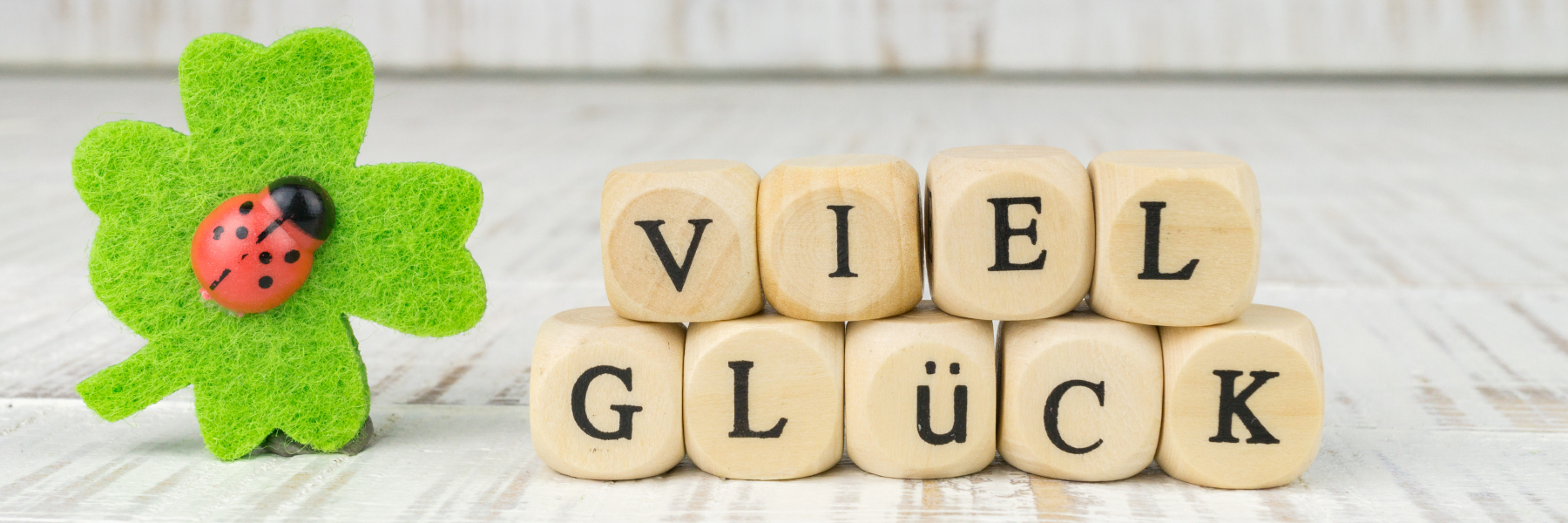
Saving small amounts, avoiding debt, recognising opportunity, and accepting that luck is unpredictable are recurring ideas in German proverbs about money and luck. Several are still useful because the financial lesson has not changed, even when the old coins named in the proverb have disappeared.
77. Wer den Pfennig nicht ehrt, ist des Talers nicht wert.
Literal translation: Whoever does not value the penny is not worthy of the thaler.
Meaning and use: People who waste small amounts are unlikely to manage larger sums well. “Take care of the pennies and the pounds will take care of themselves” is a close English equivalent.
78. Spare in der Zeit, so hast du in der Not.
Literal translation: Save in good times, so you have something in times of need.
Meaning and use: Saving before a problem occurs provides security later. It is close to “Save for a rainy day.”
79. Wer billig kauft, kauft zweimal.
Literal translation: Whoever buys cheaply buys twice.
Meaning and use: A very cheap product may fail quickly and have to be replaced. Paying less at first can cost more in the end.
80. Borgen macht Sorgen.
Literal translation: Borrowing creates worries.
Meaning and use: Debt and borrowed possessions can bring stress, obligation, or conflict. The rhyme makes the warning easy to remember.
81. Nur Bares ist Wahres.
Literal translation: Only cash is real.
Meaning and use: Cash is treated as more certain than promises, credit, or vague assurances. The saying is often used in transactions and discussions about payment.
82. Gelegenheit macht Diebe.
Literal translation: Opportunity makes thieves.
Meaning and use: An easy opportunity can tempt someone into dishonest behaviour. The English equivalent is “Opportunity makes a thief.”
83. Pech im Spiel, Glück in der Liebe.
Literal translation: Bad luck in games, good luck in love.
Meaning and use: A person who loses at cards or another game may joke that their luck is being saved for romance.
84. Scherben bringen Glück.
Literal translation: Broken pieces bring luck.
Meaning and use: Broken porcelain is traditionally associated with good luck, especially around a wedding celebration. It does not normally refer to broken mirrors.
85. Unverhofft kommt oft.
Literal translation: The unexpected comes often.
Meaning and use: Unexpected events occur more frequently than people think. The phrase can refer to a welcome surprise or an unwelcome complication.
86. Das letzte Hemd hat keine Taschen.
Literal translation: The last shirt has no pockets.
Meaning and use: Money and possessions cannot be taken beyond death. The closest English saying is “You can’t take it with you.”
German Proverbs About Food, Animals, and Nature
Food and animals give German proverbs some of their clearest images. These German food proverbs and animal sayings talk about appetite, leadership, old habits, gifts, early starts, and the first signs of change.
Food is just as prominent in Italian proverbs and meanings, while animals, weather, and daily life also appear throughout these Greek proverbs and sayings.
87. Das Auge isst mit.
Literal translation: The eye eats too.
Meaning and use: The appearance of food influences how appetising it seems. Presentation is part of the eating experience.
88. Der Appetit kommt beim Essen.
Literal translation: Appetite comes while eating.
Meaning and use: Interest or enthusiasm can grow after a person begins. The saying can refer to food, work, travel, or another activity.
89. Hunger ist der beste Koch.
Literal translation: Hunger is the best cook.
Meaning and use: Food tastes especially good when a person is genuinely hungry. The English equivalent is identical.
90. Essen und Trinken hält Leib und Seele zusammen.
Literal translation: Eating and drinking keep body and soul together.
Meaning and use: Food and drink are basic pleasures and necessities that sustain a person.
91. Ein voller Bauch studiert nicht gern.
Literal translation: A full stomach does not like to study.
Meaning and use: A heavy meal can make concentration difficult. It is often said after eating too much.
92. Der Fisch stinkt vom Kopf her.
Literal translation: The fish stinks from the head.
Meaning and use: Problems in an organisation often begin with its leadership. English also uses “A fish rots from the head down.”
93. Eine Schwalbe macht noch keinen Sommer.
Literal translation: One swallow does not make a summer.
Meaning and use: One encouraging sign is not enough to prove that a lasting change has occurred. The English equivalent is the same.
94. Hunde, die bellen, beißen nicht.
Literal translation: Dogs that bark do not bite.
Meaning and use: People who make loud threats may be less dangerous than they sound. The English saying is “Barking dogs seldom bite.”
95. Die Katze lässt das Mausen nicht.
Literal translation: The cat does not give up catching mice.
Meaning and use: People often return to their old habits, even after claiming they have changed. It is similar to “A leopard can’t change its spots.”
96. Einem geschenkten Gaul schaut man nicht ins Maul.
Literal translation: One does not look into the mouth of a gifted horse.
Meaning and use: Do not criticise something received as a gift. The English equivalent is “Don’t look a gift horse in the mouth.”
97. Der frühe Vogel fängt den Wurm.
Literal translation: The early bird catches the worm.
Meaning and use: Starting early can bring an advantage. This modern German version is the same as the English proverb.
98. Keine Rose ohne Dornen.
Literal translation: No rose without thorns.
Meaning and use: Beautiful or desirable things often come with difficulties. The same image appears in English.
German Proverbs About Mistakes, Honesty, and Consequences
Warnings about lies, pride, criticism, revenge, and repeated risk form a large part of traditional wisdom. These German proverbs about mistakes and consequences are often blunt, but the lesson is usually clear.
The tone reminded me of several Romanian proverbs and sayings I grew up hearing. Different words can lead to the same warning: choices have consequences, and people eventually have to face them.
99. Ehrlich währt am längsten.
Literal translation: Honesty lasts the longest.
Meaning and use: Honesty is the best long-term policy. The English equivalent is “Honesty is the best policy.”
100. Wer einmal lügt, dem glaubt man nicht, und wenn er auch die Wahrheit spricht.
Literal translation: Whoever lies once is not believed, even when telling the truth.
Meaning and use: Once trust is damaged, truthful statements may also be doubted. It recalls the lesson of “The boy who cried wolf.”
101. Wer anderen eine Grube gräbt, fällt selbst hinein.
Literal translation: Whoever digs a pit for others falls into it themselves.
Meaning and use: A plan intended to harm someone else may harm the person who created it. “What goes around comes around” is a similar English idea.
102. Wer im Glashaus sitzt, soll nicht mit Steinen werfen.
Literal translation: Whoever sits in a glass house should not throw stones.
Meaning and use: People with faults of their own should be careful when criticising others. The English equivalent is almost identical.
103. Wie man in den Wald hineinruft, so schallt es heraus.
Literal translation: As one calls into the forest, so it echoes back.
Meaning and use: The way a person treats others often influences how others respond. It is close to “You get what you give.”
104. Hochmut kommt vor dem Fall.
Literal translation: Pride comes before the fall.
Meaning and use: Excessive pride often leads to failure or humiliation. The English equivalent is “Pride comes before a fall.”
105. Wer A sagt, muss auch B sagen.
Literal translation: Whoever says A must also say B.
Meaning and use: Once a person begins something or accepts its first step, they should be prepared to continue and accept the consequences.
106. Wer nicht hören will, muss fühlen.
Literal translation: Whoever will not listen must feel.
Meaning and use: A person who ignores advice may have to learn through unpleasant consequences.
107. Wer Wind sät, wird Sturm ernten.
Literal translation: Whoever sows wind will reap storm.
Meaning and use: Harmful actions can return with much greater force. The English equivalent is “Sow the wind and reap the whirlwind.”
108. Der Krug geht so lange zum Brunnen, bis er bricht.
Literal translation: The jug goes to the well until it breaks.
Meaning and use: A risky action may succeed several times, but repeated risk eventually brings consequences.
109. Gebranntes Kind scheut das Feuer.
Literal translation: A burned child fears the fire.
Meaning and use: A painful experience makes a person more cautious in a similar situation. The English equivalent is “Once bitten, twice shy.”
110. Was du nicht willst, das man dir tu, das füg auch keinem anderen zu.
Literal translation: What you do not want done to you, do not do to anyone else.
Meaning and use: Treat other people as you would want to be treated. It is the German form of the Golden Rule.
111. Aus Schaden wird man klug.
Literal translation: Through damage, one becomes wise.
Meaning and use: Mistakes and unpleasant experiences can teach lessons that advice alone may not. It is similar to “You learn from your mistakes.”
112. Man soll den Tag nicht vor dem Abend loben.
Literal translation: One should not praise the day before evening.
Meaning and use: Do not celebrate or judge the result before everything is finished. The closest English equivalent is “Don’t count your chickens before they hatch.”
113. Ein Unglück kommt selten allein.
Literal translation: A misfortune seldom comes alone.
Meaning and use: Problems sometimes seem to arrive one after another. The closest English equivalent is “When it rains, it pours.”
114. Wie man sich bettet, so liegt man.
Literal translation: As one makes one’s bed, so one lies.
Meaning and use: People must live with the results of their own choices. It corresponds to “You’ve made your bed, now lie in it.”
115. Eigenlob stinkt.
Literal translation: Self-praise stinks.
Meaning and use: Boasting about your own qualities or achievements can create a poor impression. The closest English idea is “Self-praise is no recommendation.”
10 Famous German Idioms Often Mistaken for Proverbs
Not every funny German saying is a proverb. Common German idioms with English meanings are often mixed into proverb lists because their literal translations are memorable, but they function differently in a sentence.
The same distinction appears in other languages too. My collection of Spanish proverbs with English translations includes notes when a familiar line is better treated as a quotation or another type of expression.
Ich verstehe nur Bahnhof.
Literal translation: I only understand train station.
Meaning: I do not understand anything that is being said.
Das ist mir Wurst.
Literal translation: That is sausage to me.
Meaning: I do not care; either option is fine.
Schwein haben.
Literal translation: To have a pig.
Meaning: To be lucky, especially after escaping a bad result.
Tomaten auf den Augen haben.
Literal translation: To have tomatoes on one’s eyes.
Meaning: To fail to notice something obvious.
Um den heißen Brei herumreden.
Literal translation: To talk around the hot porridge.
Meaning: To avoid the main point instead of speaking directly.
Den Teufel an die Wand malen.
Literal translation: To paint the devil on the wall.
Meaning: To imagine or predict the worst before it has happened.
Da liegt der Hase im Pfeffer.
Literal translation: There lies the hare in the pepper.
Meaning: That is the real problem or the crucial point.
Die Kirche im Dorf lassen.
Literal translation: To leave the church in the village.
Meaning: To keep a sense of proportion and avoid exaggerating.
Jemandem die Daumen drücken.
Literal translation: To press one’s thumbs for someone.
Meaning: To wish someone good luck. The English equivalent is “Keep your fingers crossed.”
Aus einer Mücke einen Elefanten machen.
Literal translation: To make an elephant out of a mosquito.
Meaning: To exaggerate a small problem. The English equivalent is “Make a mountain out of a molehill.”
Conclusion
German proverbs and sayings cover the same concerns people have always had: work, money, love, family, bad decisions, patience, pride, luck, and the hope that a difficult period will end. What makes them memorable is often the image chosen to express the lesson.
I still wouldn’t try to use all 115 in conversation. A few familiar sayings are enough to recognise the pattern and enjoy the language. For me, learning German in school created the first connection, while visiting the country gave those words a real place and context.
Germany has far more to discover beyond its language. You can explore German cities to visit in winter, continue with a local guide to Stuttgart, or look through the history and facts behind Berlin’s top landmarks.
FAQ About German Proverbs and Sayings
What are German proverbs called?
German proverbs are called Sprichwörter. The singular form is Sprichwort. They are usually complete sentences that express advice, a warning, practical wisdom, or an observation about people and life.
What is one of the most famous German proverbs?
Übung macht den Meister is one of the best-known German proverbs. It literally means “Practice makes the master” and corresponds to “Practice makes perfect.” Aller Anfang ist schwer and Morgenstund hat Gold im Mund are also widely recognised.
What does “Übung macht den Meister” mean?
It means that skill develops through practice. Nobody begins as an expert, and regular effort leads to improvement.
What does “Alles hat ein Ende, nur die Wurst hat zwei” mean?
It literally means “Everything has an end; only the sausage has two.” The joke is unmistakably German, but the lesson is simple: everything eventually comes to an end.
What is the difference between a German proverb and a German idiom?
A proverb, or Sprichwort, is usually a complete sentence with a general lesson. An idiom, or Redewendung, is a fixed figurative phrase used within a sentence. Viele Köche verderben den Brei is a proverb, while Schwein haben is an idiom.
Is “Das Leben ist kein Ponyhof” a German proverb?
It is better described as a modern German saying than an old traditional proverb. It means that life is not always easy or pleasant and is similar to “Life isn’t a bed of roses.”
Do German proverbs translate directly into English?
A few do, including Besser spät als nie and Liebe macht blind. Others share the same lesson but use different images. Morgenstund hat Gold im Mund, for example, is closest to “The early bird catches the worm.”
Are German proverbs still used today?
Yes, many are still recognised and used, although frequency depends on the proverb, the speaker, and the situation. Familiar lines such as Übung macht den Meister, Besser spät als nie, Der Ton macht die Musik, and Wer rastet, der rostet remain easy to understand.
More amazing articles for you:
Chicago Travel Guide: Best Things to Do, Where to Stay & Local Tips
A Walking Tour of Liverpool’s UNESCO World Heritage Sites
Top tourist attraction of every country (with maps)
Tourist Sparks Outrage for Viral Photo - and This Is Where It Keeps Going Wrong
Creative Cruises For The Adventurer In You
Escape to These Hidden Gem Destinations for a Memorable Spring Holiday
A local's guide to Kingston upon Hull, UK
A Complete Travel Guide to Darjeeling (India), The Queen of Hills

Violeta-Loredana Pascal is a communications expert, business mentor, and the founder of Earth’s Attractions and PRwave INTERNATIONAL. A pioneer in the Romanian digital PR landscape since 2005, she holds a degree in Communication and Social Sciences from SNSPA Bucharest. Violeta is a senior trainer at AcademiadeAfaceri.ro, where she leverages over 20 years of experience to teach professional courses in PR strategy and workplace productivity. By blending high-level business consulting with a passion for holistic travel and wellness, she empowers solopreneurs to overcome procrastination, build profitable brands, and design a life of purposeful adventure.