
Last updated: October 2026. Originally written by Lena of Nagoya Foodie, with practical travel information reviewed and updated by Earth’s Attractions.
Planning a trip to Nagoya, Japan, and wondering what to do in Nagoya? This insider’s Nagoya travel guide covers the best things to do in Nagoya, the top tourist attractions, the best time to visit, how to get there and get around, where to eat, and stay. You’ll also find suggested one-day and two-day Nagoya itineraries to help you plan your trip.
Lena from Nagoya Foodie wrote the original guide, sharing her local knowledge, favorite Nagoya dishes, and recommendations for exploring the city. We updated the practical travel information for October 2026. This article is part of our free travel guides series.
Nagoya is one of Japan’s largest cities, but travelers often overlook it. In my opinion, there’s no good reason for that. Nagoya has a lot to offer: interesting history and unique culture, plus delicious local food called Nagoya Meshi, found only in the region.
ID 30083454 ©Sean Pavone | Dreamstime.com
Where is Nagoya
Nagoya is the perfect place for a one- or two-day stay because of its location. Situated on Japan’s main island of Honshu, between Tokyo to the east and Kyoto and Osaka to the west, it is a convenient stop on a longer trip through Japan.
It lies on the Tokaido Shinkansen bullet train route, so you can get off here, explore for a day or two and then continue your journey. If you have a Japan Rail Pass, Nagoya can be a convenient stop on an eligible journey, but check which trains the pass covers. The pass covers Hikari and Kodama trains, while Nozomi services require an additional special ticket.
How to get to Nagoya
If you are already in Japan, you can reach Nagoya easily from major cities like Tokyo, Osaka, and Kyoto by Shinkansen (bullet train). Hiroshima is also connected by Shinkansen, although the journey is longer. From Tokyo, the fastest Nozomi services reach Nagoya in about 1 hour and 40 minutes; Kyoto in about 35 minutes; and Shin-Osaka in about 50 minutes.
A Japan Rail Pass can be useful if you are covering long distances across Japan, but it is not necessarily cheaper than buying individual tickets. As of October 2026, the nationwide pass starts at ¥50,000 for seven days when bought through the official online service; prices through overseas sales agents can differ. Compare your planned journeys before buying, and remember that pass holders need a special additional ticket for Nozomi trains.
Other options to get to Nagoya are highway buses, which are generally cheaper than the Shinkansen but take much longer. A direct bus from Tokyo to Nagoya often takes around five to seven hours, depending on the service, departure point and traffic. An overnight bus might be worth considering if you are traveling on a budget.
Chubu Centrair International Airport (NGO) serves Nagoya and handles domestic flights and international connections. Flying makes sense if you are coming from farther away in Japan, such as Hokkaido or Okinawa, or if you have a convenient international connection.
From Centrair, you can take a Meitetsu train to Meitetsu Nagoya Station. The fastest μ-SKY services take around 28 minutes and require a separate reserved-seat ticket in addition to the basic fare; slower services are also available. If you are flying from Europe or North America, you may need to connect through another airport. Check the latest route options for your travel dates.
How to get around Nagoya
Nagoya, like all major cities in Japan, has excellent infrastructure with subways and buses. You can reach all parts of the city either by subway or bus and for a relatively low price. If you plan to take lots of subways and buses, day passes are available.
If you want to get to the major tourist attractions in Nagoya, you might want to look into the Meguru sightseeing bus. For ¥500 per adult for a one-day pass (¥250 for children), this bus is a good-value option and also offers discounts at participating museums and attractions. It usually runs Tuesday through Sunday, with exceptions around public holidays and the New Year, so check the timetable before you plan your sightseeing. If you are wondering what to do in Nagoya, you’ll find plenty to see and do in the city. Here are the things you need to know before your first trip to Japan.
Best time to visit Nagoya
ID 32444091 ©Sean Pavone | Dreamstime.com
Nagoya has a humid subtropical climate. Summers, especially July and August, can get very hot and humid, with daytime temperatures sometimes reaching around 35 degrees Celsius. September can still feel summery. Winters (December to February) are cool, with daytime temperatures often around 10 degrees. This makes spring and autumn the best time to visit Nagoya if you prefer milder weather.
If you want to see the famous cherry blossoms, you can do that in Nagoya, and it can be a good alternative to the best-known cherry blossom spots in Tokyo or Kyoto, although popular parks in Nagoya also get busy. They bloom from late March to early April.
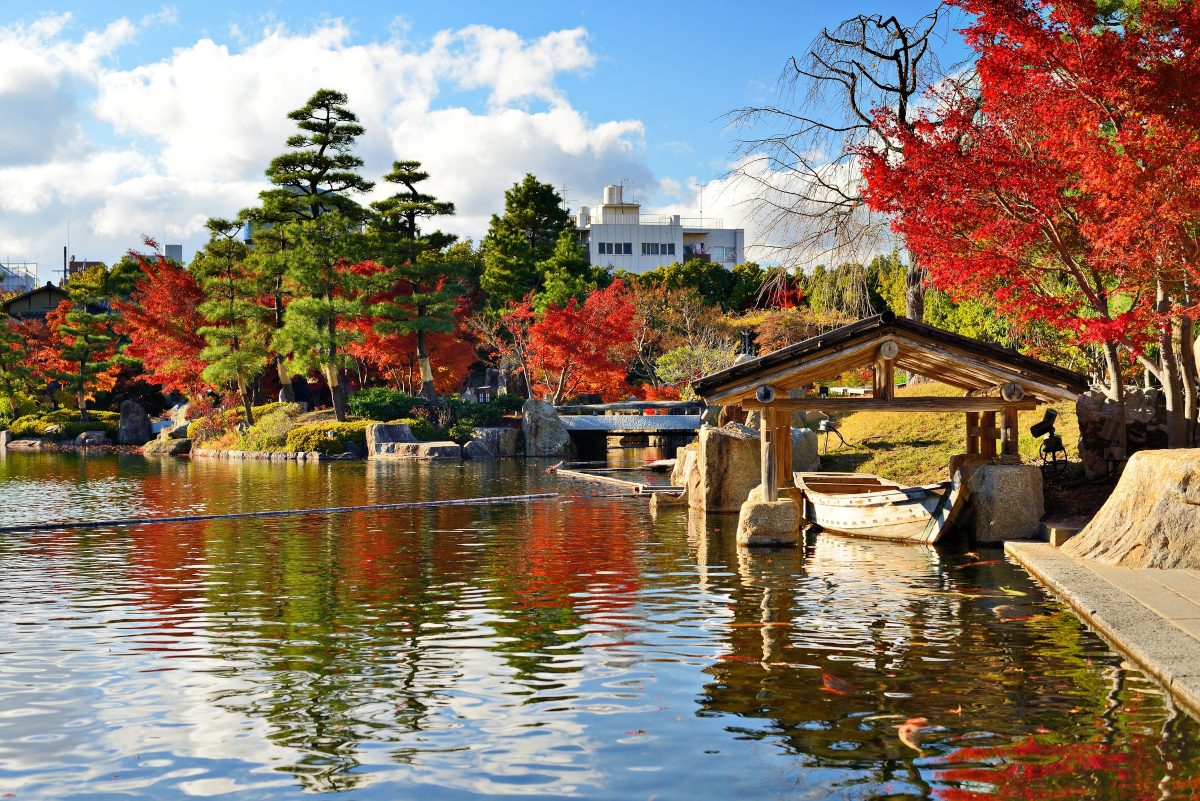
In the fall, around late November, the leaves turn bright red and yellow. A famous valley near Nagoya, Korankei, is the perfect place to see Japan’s beautiful nature.
A quick history of Nagoya
Modern Nagoya developed around the castle town established in the early 17th century, when Tokugawa Ieyasu ordered the construction of Nagoya Castle. But the region has a much longer history.
Atsuta Jingu, located in Nagoya and one of Japan’s most important Shinto shrines, has a history of almost 2000 years. We know this because it is mentioned in Japan’s two oldest history books.
Let’s go back to the 17th century. As Nagoya Castle was built, residents and businesses moved into the newly developed castle town, and the surrounding city grew. Infrastructure developed, followed by arts like Noh theater and the tea ceremony.
The first industries were ceramics and textiles, and when Japan entered the industrial age, Nagoya became a frontrunner in the automotive industry, with Toyota’s roots in textile machinery in the Nagoya area and its later automobile production centered in Aichi Prefecture.
Things to do in Nagoya
Nagoya isn’t as big as Tokyo and doesn’t have as many temples and shrines as Kyoto, but it does have its fair share of interesting history, and modern culture. A great mix if you ask me. Here are my favorite places to visit in Nagoya.
Nagoya Castle

As I mentioned earlier, Nagoya Castle is often called Nagoya’s birthplace. With the castle’s founding, Nagoya began to develop into the city it is today. Nagoya Castle sits in a spacious park in the city center, and it is a must-see on any Nagoya sightseeing trip.
In my opinion, the highlight of Nagoya Castle, and what makes it better than other castles in Japan, is the reconstructed Honmaru Palace. It was reconstructed over many years using only the traditional building methods, and it’s stunning.
The structure features beautiful woodwork, and the interior is stunning. Walls and sliding doors feature colorful traditional motifs, intricate woodcarvings appear everywhere, and the level of detail in the reconstruction is simply amazing.
Planning your visit: The main castle tower keep is currently closed to visitors, but you can explore the castle grounds and visit Honmaru Palace. Admission is ¥1,000 for adults as of October 2026, and the normal opening hours are 9:00 a.m. to 4:30 p.m. (entry until 4:00 p.m.). Check the official castle information before visiting.
Tokugawa Art Museum and Tokugawa Garden
What you cannot see at Nagoya Castle are the old armor, swords, and other items the ruling Owari clan used to own while living at the castle. The Tokugawa Art Museum preserves many of these historical objects, though the objects on display change with each exhibition. Visit it as you continue to explore Nagoya.
With rooms dedicated to armor and swords, tea ceremony utensils, Noh theater masks, and a remarkable collection of historical manuscripts, the museum offers a glimpse into a colorful past.
Next to the museum is the Tokugawa Garden, a beautiful Japanese landscape garden with a central pond and paths crisscrossing the carefully planned park.
You will find small waterfalls and streams, tall trees, and beautiful flowers. The perfect place to sit down after a visit to the museum and to think about everything one has learned about Nagoya’s history.
Planning your visit: The Tokugawa Art Museum usually opens from 10:00 a.m. to 5:00 p.m., with adult admission of ¥2,000; it normally closes on Mondays, with holiday exceptions. Tokugawaen Garden has separate admission. Allow time for both if you want to visit the museum and enjoy the garden.

Toyota Commemorative Museum of Industry and Technology
Toyota didn’t start out making cars. It began with the Toyoda family’s textile machinery business. At the Toyota Commemorative Museum of Industry and Technology, you can learn all about Toyota’s past, from textile maker to car maker.
It is a very interesting museum with audio guides and even guided tours in English and Japanese. It offers activities for children and many interesting exhibits for adults. Perfect for a rainy day. Or a super hot summer day, and there are many of those. Anyway, one of the top tourist attractions in Nagoya.

Atsuta Jingu
The most sacred place in Nagoya is Atsuta Jingu, south of the city. This Shinto shrine is nearly 2,000 years old and one of the top things to do in Nagoya.
According to Japanese tradition, Atsuta Jingu enshrines Kusanagi-no-Tsurugi, one of the Three Sacred Treasures associated with Japan’s imperial regalia. If you are wondering what Nagoya is famous for, this is definitely one of its most famous attractions (along with the others mentioned above).
The sword itself is not on public display. But the shrine itself is a very lovely place. Surrounded by woods and has many sacred sites along a winding path leading to the main shrine.
Make a wish or five along the way and don’t forget to thank the gods for hearing your prayers by donating a single coin.

Sakae District
Sakae, along with Nagoya Station, is Nagoya’s business center. Here, you’ll find not only many companies but also plenty of shopping at one of the many malls and department stores. It is definitely one of Nagoya’s main attractions.
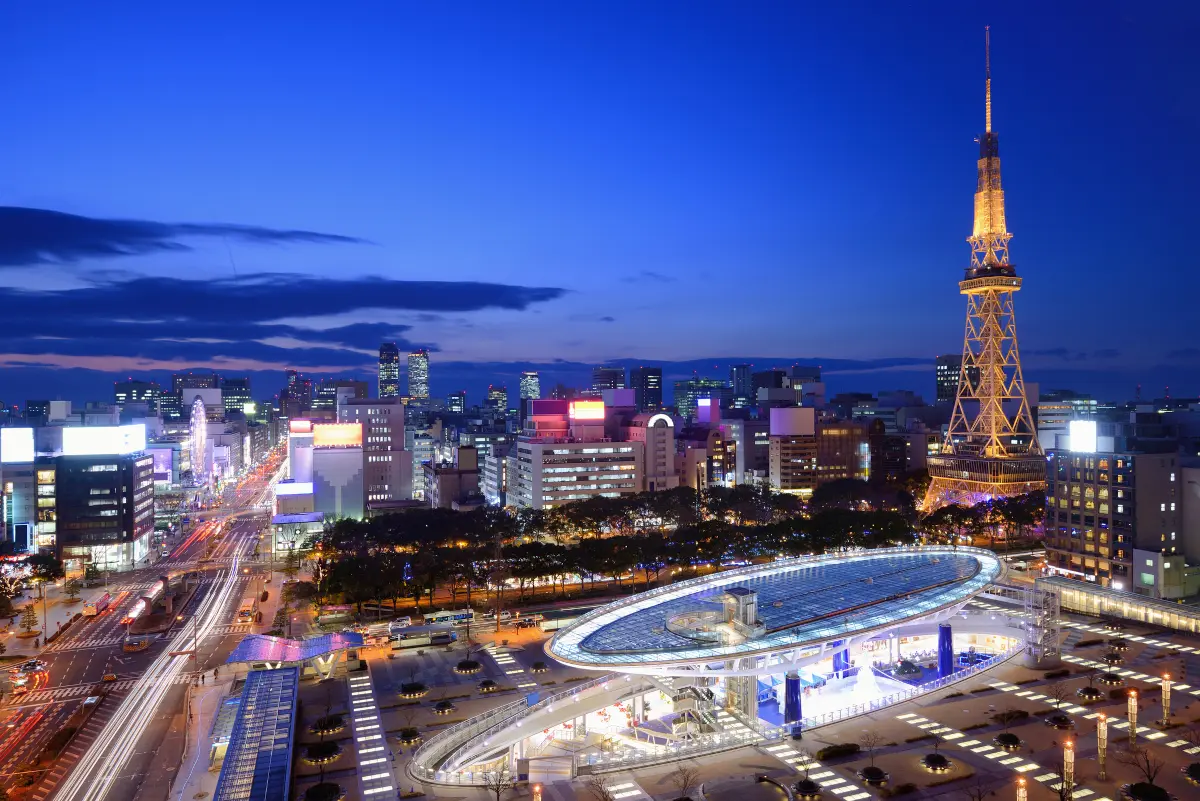
Oasis 21, with its unusual glass-roofed Spaceship-Aqua structure and bus terminal, is located close to Sakae Station. Nearby is the former Nagoya TV Tower, which reopened after renovation in September 2020 and has been known as Chubu Electric Power MIRAI TOWER since 2021. You can visit its observation decks for city views. Hisaya-odori Park is another nice place for a walk in this part of Nagoya.
 photo by Lena
Osu District
Osu feels like the opposite of Sakae, but the two districts are only about 1 kilometer apart. In Osu, you will find roofed-over shopping arcades with over 1000 shops, restaurants, and businesses. Here you can buy second-hand things like brand-name items, kimonos, and even musical instruments.
Osu’s restaurants are a colorful mix of old, traditional Japanese establishments; international cuisine from Vietnam, Thailand, India, Italy, Brazil, and many other countries; and modern, popular cafes and trendy sweets shops. Osu has an underlying history you can discover if you look closely.
The famous Osu Kannon temple is an obvious reminder of history, but there are other little things as well, like the burial mound called a Kofun, a little shrine, and other unexpected places reminding us of the passage of time in Osu.

Nagoya City Science Museum
Still wondering what to do in Nagoya? Then you need to know that the Nagoya City Science Museum, now officially called the FUJI NAGOYA SCIENCE MUSEUM, is a fun place for the whole family. One of the highlights here is the planetarium, one of the largest in the world. The program changes monthly and focuses on current astronomical phenomena.
Regular planetarium presentations are mainly in Japanese, so check the current program for language information. Even so, the 35-meter-wide dome is an impressive sight, and the museum is a great place to explore on a rainy day.
Planning your visit: The museum normally opens from 9:30 a.m. to 5:00 p.m. (last admission 4:30 p.m.) and closes on Mondays and the third Friday of the month, with some exceptions. As of October 2026, adult admission is ¥500 for the museum exhibitions or ¥1,000 including the planetarium. Check the latest visitor information when planning your visit.

Where to eat in Nagoya
As I mentioned in the introduction, Nagoya is worth visiting not only for its interesting things to do but also for its delicious local cuisine. Nagoya’s cuisine is called Nagoya Meshi.
And there are a lot of delicious dishes and snacks to be found. My favorites include Ogura toast, Kishimen, and Hitsumabushi. Let me recommend a great restaurant for each dish, the best places to eat in Nagoya, Japan.
Komeda’s Coffee
Komeda’s Coffee has the perfect formula for success. It has a comfortable atmosphere with plush red seats and a wood interior, great coffee, delicious toast and bread dishes, and the attentive service Japan is so famous for.
At Komeda’s Coffee, you can enjoy breakfast or lunch, but there are also light snacks and cakes you might want to try in the afternoon. Ogura toast is a Nagoya breakfast staple worth looking for on the menu; availability and breakfast combinations can vary by branch.
Ogura toast is a thick slice of golden toasted bread, spread with margarine and Ogura-an, red bean paste. It goes perfectly with a cup of coffee for a great start in the morning.
You can find Komeda’s Coffee on every corner in Nagoya; keep your eyes open or search on Google Maps.
 photo by Lena
Miya Kishimen
If you have been to Japan before, you might have heard about Udon. The thick white noodles are served all over the country. In Nagoya, you can find a variation called Kishimen.
The noodles use the same basic ingredients but are broad and flat. Miya Kishimen is the best restaurant to try some delicious Kishimen. The Miya Kishimen Jingu Branch is located right on the grounds of Atsuta Jingu. A perfect place for a quick lunch.

Hitsumabushi Ino
My all-time favorite dish from Nagoya is Hitsumabushi. Grilled freshwater eel served over rice in a thick, sweet sauce.
Eel is a specialty in Japan and quite pricey, but so delicious it should be on your Nagoya to-do list. One of the restaurants to try for hitsumabushi is Hitsumabushi Ino. It has a branch in the ESCA underground shopping area by Nagoya Station, a convenient option if you arrive or leave by train. Traditionally, you can enjoy hitsumabushi in stages: first as it comes, then with condiments, and finally with broth poured over the rice.

Where to stay in Nagoya
The best area to stay in Nagoya is near Nagoya Station. You’ll likely start and end your trip at the station, and Nagoya Station offers the best public transport options to the city’s main sights. Let’s see the best hotels in Nagoya for every type of traveler.
You do not have to break the bank staying close to Nagoya Station either. For a practical budget-friendly business hotel, have a look at Toyoko Inn Nagoya-eki Shinkansen-guchi, about a three-minute walk from the station’s Taikodori Exit. It offers compact rooms, Wi-Fi and a complimentary breakfast. Rates depend on your dates, of course.
If you are looking for another modern business hotel near Nagoya Station, consider Meitetsu Inn Nagoyaeki Shinkansenguchi. Its location makes it easy to catch trains and explore the city. Check current rates and the room configuration before booking, since hotel rooms in Japan can be smaller than some travelers expect.
For a luxury stay in Nagoya, how about Nagoya Marriott Associa Hotel? It sits directly above Nagoya Station in the JR Central Towers, with convenient transport links, comfortable rooms, and a range of restaurants and facilities. A great option if you want a little more comfort during your stay.
How many days do you need in Nagoya?
One or two days in Nagoya is enough to explore several of the city’s main attractions and try its famous local food. If you only have one day, you can visit some of the most popular sights, experience the atmosphere of the city, and enjoy a traditional Nagoya dish.
For a first visit, two days in Nagoya is a good choice. This gives you time to explore Nagoya Castle, visit one or two museums, discover the shopping districts, and enjoy Nagoya Meshi without rushing between attractions.
Travelers who love museums, Japanese history, or food could easily spend three days here. Nagoya is also a convenient base for discovering other destinations in Aichi Prefecture.
Is Nagoya worth visiting? Absolutely, even if you can only include a one-day stop between Tokyo and Kyoto or Osaka.
How to spend one or two days in Nagoya
Nagoya has enough attractions to fill several days, but even a short visit can include some of its most famous landmarks, interesting museums, shopping districts, and delicious local food.
The following suggested Nagoya itineraries combine the attractions presented above into practical plans for visitors with one or two days in the city.
One-day in Nagoya itinerary
Start the day at Nagoya Castle, exploring the reconstructed Honmaru Palace and the surrounding castle grounds. The main castle keep is currently closed to visitors, but the palace is well worth seeing.
Next, visit the Toyota Commemorative Museum of Industry and Technology to learn about the company’s history, from textile machinery to automobile manufacturing. The museum has many interesting exhibits, even for visitors who aren’t especially interested in cars.
Spend the late afternoon in Sakae, one of Nagoya’s main shopping and entertainment districts. See Oasis 21 and the Chubu Electric Power MIRAI TOWER, explore the shops, or simply enjoy the atmosphere.
For dinner, try a famous local dish, such as hitsumabushi, grilled freshwater eel served over rice.
Two-day Nagoya itinerary
With two days in Nagoya, there is more time to enjoy the city’s attractions and food without trying to fit everything into a single day.
Day 1: Begin with Nagoya Castle and Honmaru Palace, followed by a visit to the Toyota Commemorative Museum of Industry and Technology. Spend the late afternoon and evening exploring Sakae, Oasis 21, and the surrounding shopping area.
Day 2: Visit Atsuta Jingu in the morning, one of Japan’s most important Shinto shrines. For lunch, enjoy kishimen, Nagoya’s famous flat noodles, at Miya Kishimen on the shrine grounds.
In the afternoon, explore Osu Shopping District, including its covered shopping arcades, Osu Kannon temple, and the many small shops and restaurants in the area.
Alternatively, travelers interested in science can visit the Nagoya City Science Museum, while those who enjoy Japanese history and traditional gardens may prefer the Tokugawa Art Museum and Tokugawa Garden.
You can adjust these suggested itineraries to match personal interests and the opening days of individual attractions. Some museums deserve several hours, so decide in advance which places are your top priority.
Nagoya – a conclusion
Nagoya, though so often overlooked by travelers, has a lot to offer. It offers not only interesting history to admire at Nagoya Castle, the Tokugawa Art Museum, and the Toyota Museum, but also delicious food you won’t want to miss.
As this insider’s guide to Nagoya shows, there are plenty of things to do in Nagoya for all types of visitors, whether you have just one day or a longer stay. Use this article to choose what to do in Nagoya based on all the options presented above and have an amazing visit here!
Bio
Lena is in love with Japanese food and she wants to share this love with all travelers coming to Japan. Her home Nagoya has a lot to offer in terms of travel and unique food culture which she shares with the world on her website Nagoya Foodie. Find Nagoya Foodie on Facebook and Twitter and Instagram.


image source for pin 2
More amazing articles for you:
A Delta Passenger Said a Woman's Mid-Flight Behavior "Needs to Be a Lifetime Ban." What Happened Bef...
Technisches Museum Wien Guide: Exhibits, Tickets & Tips. My Guide to the Vienna Technical Museum
A Man Was Caught Doing Something Disgusting on a Cruise Ship. A Passenger Alerted the Crew - Then An...
Why you should take a trip before going back to school
24 Hours in Munich: The Perfect 1-Day Walking Tour Itinerary
Your Bucket List Adventure Awaits
Travelers Trusted AI With Their Trips. Then Rangers Were Called, a Mayor Got Involved - And Things G...
The Perfect 2 Day Budapest Itinerary: 48 Hours in Buda & Pest

Violeta-Loredana Pascal is a communications expert, business mentor, and the founder of Earth’s Attractions and PRwave INTERNATIONAL. A pioneer in the Romanian digital PR landscape since 2005, she holds a degree in Communication and Social Sciences from SNSPA Bucharest. Violeta is a senior trainer at AcademiadeAfaceri.ro, where she leverages over 20 years of experience to teach professional courses in PR strategy and workplace productivity. By blending high-level business consulting with a passion for holistic travel and wellness, she empowers solopreneurs to overcome procrastination, build profitable brands, and design a life of purposeful adventure.