I love the essence of Thanksgiving and the way it brings families and friends together, but I also love what sits at the heart of the holiday: taking the time to appreciate what we have, to be grateful for each day, for every little reason to smile, and for the good things in our lives that can be so easy to overlook during the rest of the year.
And then there are all the stories behind Thanksgiving itself. Some go back centuries, some are much more recent than I expected, and quite a few sent me searching for the original source because they sounded too strange to be true.
Familiar traditions have surprising beginnings, unusual presidential stories, foods with histories that go far beyond Thanksgiving, parade moments that are hard to imagine happening today, and traditions that started for reasons I never would have guessed.
So I put together 50 fun facts about Thanksgiving that were actually worth including, checking historical claims against sources including the Library of Congress, National Archives, Smithsonian Institution, White House Historical Association, NASA, the Pro Football Hall of Fame and other specialist or original sources.
I’ve already put together 200 Thanksgiving trivia questions and answers if you want a big holiday challenge, while my shorter interactive Thanksgiving trivia quiz gives you 22 questions with instant answers and a final score. For the gathering itself, I also have Thanksgiving conversation starters for family and friends and Thanksgiving Would You Rather questions for when everyone is ready for a game.
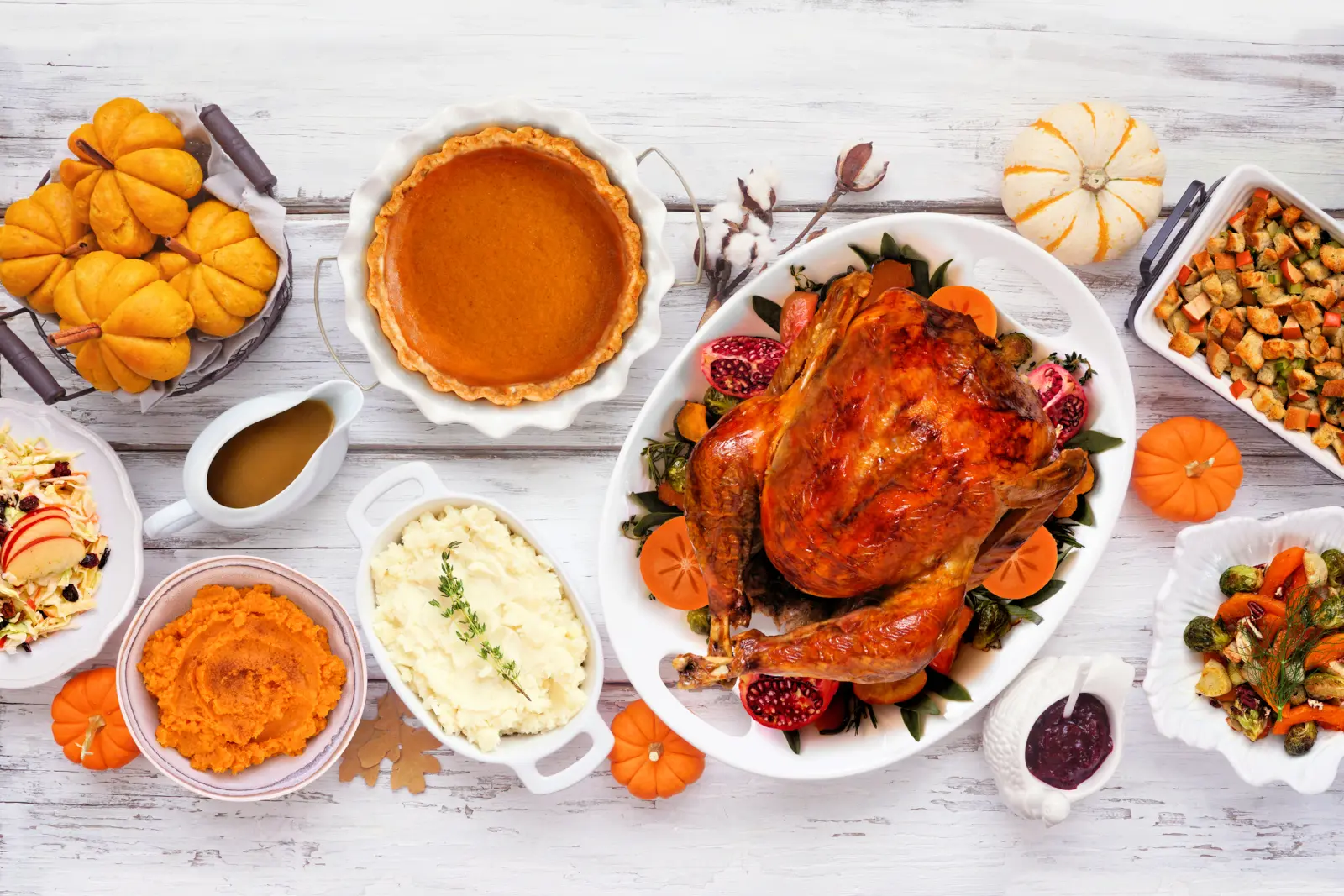
ID 476530873 ©Jenifoto406 | Dreamstime.com
Fun Facts About the First Thanksgiving
1. The 1621 Plymouth harvest celebration lasted three days
The gathering commonly called the First Thanksgiving wasn’t one enormous Thursday dinner. Edward Winslow’s surviving account describes three days of feasting and other activities during the 1621 harvest season. The exact date isn’t known.
2. About 90 Wampanoag men attended
Winslow recorded that Ousamequin, whom the English called Massasoit, arrived with about 90 men. The English population at Plymouth was considerably smaller after the deaths of the colony’s first winter.
3. The Wampanoag brought five deer
Venison is one food we can confidently place at the gathering. Winslow recorded that the Wampanoag went out, killed five deer and brought them to the settlement.
4. Wildfowl was served, but we don’t know exactly which birds
Winslow wrote that four Englishmen went fowling and returned with enough birds to help feed the group for almost a week, but he didn’t identify every species. William Bradford separately recorded that wild turkeys were plentiful during the season, so turkey may have been eaten, but it isn’t specifically named in Winslow’s description of the feast.
5. The familiar Thanksgiving menu wasn’t served in 1621
Modern pumpkin pie, mashed potatoes, green bean casserole and today’s cranberry sauce weren’t part of the documented Plymouth meal. The Thanksgiving menu Americans recognize today developed over generations.
6. The detailed eyewitness description of the feast is surprisingly short
Much of what we can state with confidence about the gathering comes from a brief passage written by Edward Winslow and published in a work commonly known as Mourt’s Relation. It mentions the harvest, fowling, Ousamequin and about 90 men, five deer, recreation and three days of feasting.
Thanksgiving History Facts
7. George Washington proclaimed a Thanksgiving for November 26, 1789
After the first Federal Congress requested a national day of thanksgiving, George Washington issued a proclamation naming Thursday, November 26, 1789, as a day of public thanksgiving. The National Archives identifies it as the first Thanksgiving celebrated under the new U.S. Constitution.
Thanksgiving 2026 also falls on November 26.
8. Thomas Jefferson didn’t issue presidential Thanksgiving proclamations
Jefferson declined to issue presidential proclamations for days of thanksgiving and prayer because of his interpretation of the federal government’s role in religious observances. States and localities could still hold Thanksgiving observances.
9. James Madison proclaimed a Thanksgiving in April
James Madison designated April 13, 1815, as a day of thanksgiving following the War of 1812. Early presidential thanksgiving proclamations weren’t restricted to the November calendar Americans know today.
10. Sarah Josepha Hale spent years campaigning for a shared national Thanksgiving
Hale, the longtime editor of Godey’s Lady’s Book, promoted the idea through editorials and letters. On September 28, 1863, she wrote directly to Abraham Lincoln asking for an annual Thanksgiving held on the same day throughout the country.
Hale is also associated with the famous children’s poem “Mary Had a Little Lamb.”
11. Lincoln established an annual November Thanksgiving in 1863
On October 3, 1863, Abraham Lincoln issued a proclamation calling for the last Thursday of November to be observed as a day of Thanksgiving and Praise. Hale sent him his letter just days earlier.
12. Americans once celebrated Thanksgiving on two different Thursdays
Franklin D. Roosevelt moved Thanksgiving earlier in 1939 because November 30 was the last Thursday of the month and retailers were concerned about the short Christmas shopping season. Thirty-two states followed the new date, while 16 kept Thanksgiving on the last Thursday.
The split continued for two years.
13. Congress fixed Thanksgiving on the fourth Thursday in 1941
Congress established Thanksgiving on the fourth Thursday of November in 1941, ending the dispute over the date. Roosevelt signed the legislation on December 26, 1941, and the rule took effect in 1942.
Thanksgiving Food Facts
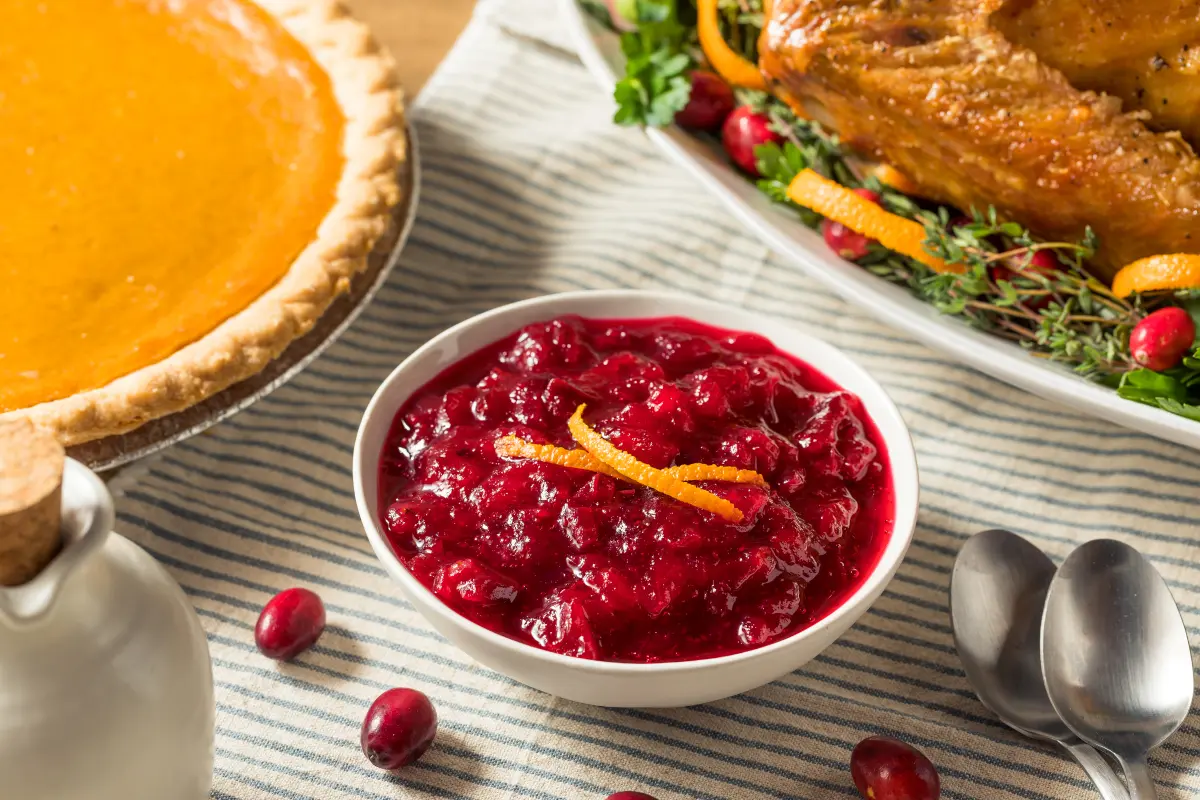
ID 260598521 ©Bhofack2 | Dreamstime.com
14. Cranberries are native to North America
Cranberries were growing in North America long before they became part of a Thanksgiving dinner. They have a strong historical connection to the northeastern United States.
15. “Cranberry” developed from “craneberry”
European settlers called the fruit “craneberry,” apparently because part of the plant reminded them of a crane. The name eventually became cranberry.
16. Cranberries were used for more than food
Long before canned cranberry sauce appeared on Thanksgiving tables, people used cranberries as food and for other purposes, including dye.
17. Cranberries can bounce
Fresh, firm cranberries contain small internal air pockets that allow them to bounce. That property was used in bounce-board separators designed to help sort good berries from damaged ones.
18. Pumpkins were domesticated thousands of years before Thanksgiving existed
The orange-skinned pumpkin lineage of Cucurbita pepo was domesticated in Mexico about 10,000 years ago, according to Smithsonian research.
19. America’s first published cookbook included pumpkin-pie recipes
Amelia Simmons’ American Cookery, published in 1796, is widely recognized as the first cookbook written by an American and published in the United States. It included recipes for “pompkin” preparations baked in pastry.
20. Potatoes made a long journey before reaching the American Thanksgiving table
Potatoes were domesticated in South America thousands of years ago. The Spanish carried them to Europe, and Europeans later introduced them into eastern North America.
21. Corn was domesticated in Mexico thousands of years ago
Maize developed from teosinte and was domesticated in Mexico more than 8,000 years ago. It had spread into other parts of North America long before Europeans arrived.
22. Green bean casserole was created in a Campbell’s test kitchen
Dorcas Reilly developed the dish at Campbell’s in 1955. Originally called Green Bean Bake, the recipe combined green beans with condensed cream of mushroom soup and other ingredients that were easy for American households to find.
23. The original green bean casserole recipe card was preserved
Dorcas Reilly and Campbell’s donated the original recipe card to the National Inventors Hall of Fame in 2002.
24. Butterball’s Turkey Talk-Line began with six experts
The Turkey Talk-Line started in 1981 with six home economists answering questions from people preparing their Thanksgiving turkeys. The service later expanded beyond telephone calls to other ways of answering cooking questions.
25. Swanson’s famous TV Dinner story begins with a huge turkey surplus
The widely accepted account says Swanson was left with about 260 tons of frozen turkey after Thanksgiving 1953. The company subsequently launched a compartmentalized frozen dinner with turkey, cornbread dressing, peas and sweet potatoes.
There are competing claims over who deserves credit for the TV Dinner concept, so the turkey surplus is well documented as part of the story without attributing the entire invention to one person.
Wild Turkey Facts
26. Today’s domestic turkeys descend from birds domesticated in Mexico
Research has identified separate turkey domestication in central Mexico and the American Southwest roughly 2,000 years ago. The Southwestern domesticated lineage eventually disappeared, while modern domestic turkeys descend from the Mexican lineage.
27. Wild turkeys can fly
Wild turkeys can take to the air for short distances, usually to escape danger or reach and leave their roosts.
28. Wild turkeys can fly at around 54 miles per hour
Smithsonian’s National Zoo reports that wild turkeys can reach speeds of about 54 miles per hour during short flights.
29. Wild turkeys can swim
Turkeys can cross water when needed, using their legs for propulsion while keeping their wings close to their bodies.
30. Turkeys have at least 15 different vocalizations
Gobbling is only one part of turkey communication. Smithsonian’s National Zoo notes at least 15 vocalizations used by the birds.
31. Male, female, and young turkeys have different names
An adult male can be called a tom or gobbler, an adult female is a hen, and a young turkey is a poult.
32. The fleshy part over a turkey’s beak is called the snood
The snood extends from the turkey’s forehead over its beak. The fleshy skin beneath the throat is called the wattle.
33. Turkey feathers were an important reason people raised the birds
Archaeological evidence from the American Southwest shows that people used turkey feathers for practical and ceremonial purposes. Raising domestic turkeys extensively for food appears later in the archaeological record.
Strange Thanksgiving Stories From the White House
34. Benjamin Franklin really did praise the turkey over the bald eagle
In a 1784 letter to his daughter Sarah Bache, Benjamin Franklin criticized the bald eagle and described the turkey as a more respectable bird and a “Bird of Courage.”
He didn’t formally propose replacing the eagle with the turkey as America’s national symbol.
35. A raccoon sent to the White House for Thanksgiving dinner became a pet instead
In 1926, a supporter in Mississippi sent Calvin Coolidge a raccoon and suggested it could be served for Thanksgiving dinner. The Coolidge family kept the animal instead and named her Rebecca.
36. Rebecca the raccoon even had an embroidered collar
Rebecca became a well-known White House pet, appeared at public events and was photographed with First Lady Grace Coolidge. She wore a collar embroidered with the words “White House Raccoon.”
37. John F. Kennedy spared a Thanksgiving turkey in 1963
On November 19, 1963, Kennedy received a turkey at the White House and indicated that the bird should be allowed to live rather than become Thanksgiving dinner.
38. The modern annual presidential turkey pardon began with George H.W. Bush
Ronald Reagan had used the word “pardon” jokingly in connection with a turkey in 1987, but George H.W. Bush formally announced a presidential pardon for the presentation turkey in 1989. The annual tradition continued under later presidents.
Macy’s Thanksgiving Day Parade Facts
39. The first Macy’s parade was held in 1924
Macy’s staged its first parade on Thanksgiving Day, November 27, 1924. The event was originally promoted as a Christmas parade and marked the beginning of the Christmas shopping season.
40. The early parade featured live animals
Before giant character balloons became the parade’s signature attraction, animals from the Central Park Zoo appeared in the procession.
41. Giant character balloons arrived in 1927
The balloons weren’t part of the original 1924 parade. Macy’s introduced giant character balloons three years later, with Felix the Cat in the first generation.
42. Macy’s used to release the balloons after the parade
The balloons had valves that let helium escape gradually. Macy’s attached a return address and offered rewards to people who found and returned them.
43. One runaway parade balloon sent an airplane into a tailspin
In 1932, a student pilot attempted to catch one of the released balloons. It wrapped around a wing and sent the airplane into a tailspin before the pilot recovered. Macy’s stopped releasing the balloons after the incident.
44. Snoopy holds a Macy’s balloon record
According to the Library of Congress, Snoopy is the character represented by the most balloons in parade history.
45. There was no Macy’s Thanksgiving Day Parade from 1942 through 1944
The parade was suspended during World War II. Macy’s donated rubber from its deflated balloons to the war effort, and the parade returned in 1945.
Thanksgiving Football Facts
46. Thanksgiving football is older than the Detroit Lions tradition
Football games were already being played on Thanksgiving before Detroit began its annual NFL tradition, with Thanksgiving games established at schools and colleges and appearing during the NFL’s early years.
47. The Detroit Lions began playing on Thanksgiving in 1934
George A. Richards had purchased the Portsmouth Spartans and moved the franchise to Detroit, where it became the Lions. He scheduled a Thanksgiving game against the Chicago Bears in 1934 to attract attention to the team.
The available tickets sold out.
48. That first Lions Thanksgiving game was broadcast nationally
The 1934 Lions-Bears game aired on an NBC radio network, giving the new Detroit tradition a national audience from its first year.
49. The Dallas Cowboys joined the Thanksgiving tradition in 1966
Dallas general manager Tex Schramm saw Thanksgiving as a way to increase national exposure for the young franchise. The Cowboys hosted the Cleveland Browns on November 24, 1966.
Since then, Dallas has missed playing on Thanksgiving only in 1975 and 1977.
A Thanksgiving Fact From Space
50. The first Thanksgiving celebrated in space was in 1973
Skylab 4 astronauts Gerald Carr, Edward Gibson and William Pogue became the first crew to celebrate Thanksgiving in space on November 22, 1973.
Gibson and Pogue spent six hours and 33 minutes outside Skylab on a spacewalk that day, while Carr remained inside without access to food. NASA records that all three missed lunch and ate two dinners.
Twelve years passed before another crew celebrated Thanksgiving in orbit. In 1985, the seven-member STS-61B crew aboard space shuttle Atlantis had a Thanksgiving meal that included turkey and cranberry sauce.
If you enjoy fun facts and curiosities, you may also like these 75 Halloween facts. And once Thanksgiving gives way to December, these 200 Christmas trivia questions cover Christmas food, traditions, history, movies, music and celebrations.
More amazing articles for you:
The World’s Most Delayed Airlines of 2025. Did You Fly With One?
Drive into the Sun: How to Prepare Your Car for a Summer Road Trip
200 American History Trivia Questions and Answers for Adults, from Easy to Hard: How Many Can You Ge...
Louis Vuitton’s Chocolate Has Travelers Flying Across the World - Here’s How to Get Your Hands on It
What to Check When Entering a Hotel Room: The 5-Second Phone Habit That Could Save Your Life
The Louvre Raises Ticket Prices by 45% - And the New Policy Is Sparking Backlash
A Passenger Asked the Man Beside Him to Change One Small Habit. The Video Now Has 15 Million Views -...
200 November Trivia Questions and Answers – Easy to Hard. How Well Do You Know November?

Violeta-Loredana Pascal is a communications expert, business mentor, and the founder of Earth’s Attractions and PRwave INTERNATIONAL. A pioneer in the Romanian digital PR landscape since 2005, she holds a degree in Communication and Social Sciences from SNSPA Bucharest. Violeta is a senior trainer at AcademiadeAfaceri.ro, where she leverages over 20 years of experience to teach professional courses in PR strategy and workplace productivity. By blending high-level business consulting with a passion for holistic travel and wellness, she empowers solopreneurs to overcome procrastination, build profitable brands, and design a life of purposeful adventure.