Thanksgiving gives people plenty to talk about, yet conversation can still fall into a familiar loop: How’s work? How was the drive? What are you thankful for? As I have already published articles with other things to say than popular lines (like just checking in, sorry, I’m fine), and after seeing the traffic those articles got, I thought it was about time to put together a list of ideas for Thanksgiving conversations.
These 100 Thanksgiving conversation starters are meant to get better answers: funny stories, forgotten family memories, harmless food debates, surprising things older relatives remember, and details you may never have heard before. You’ll find Thanksgiving questions for family and friends who know one another extremely well, but also easy questions for new guests, mixed groups, adults and kids, Friendsgiving, and people who would rather not discuss anything personal.
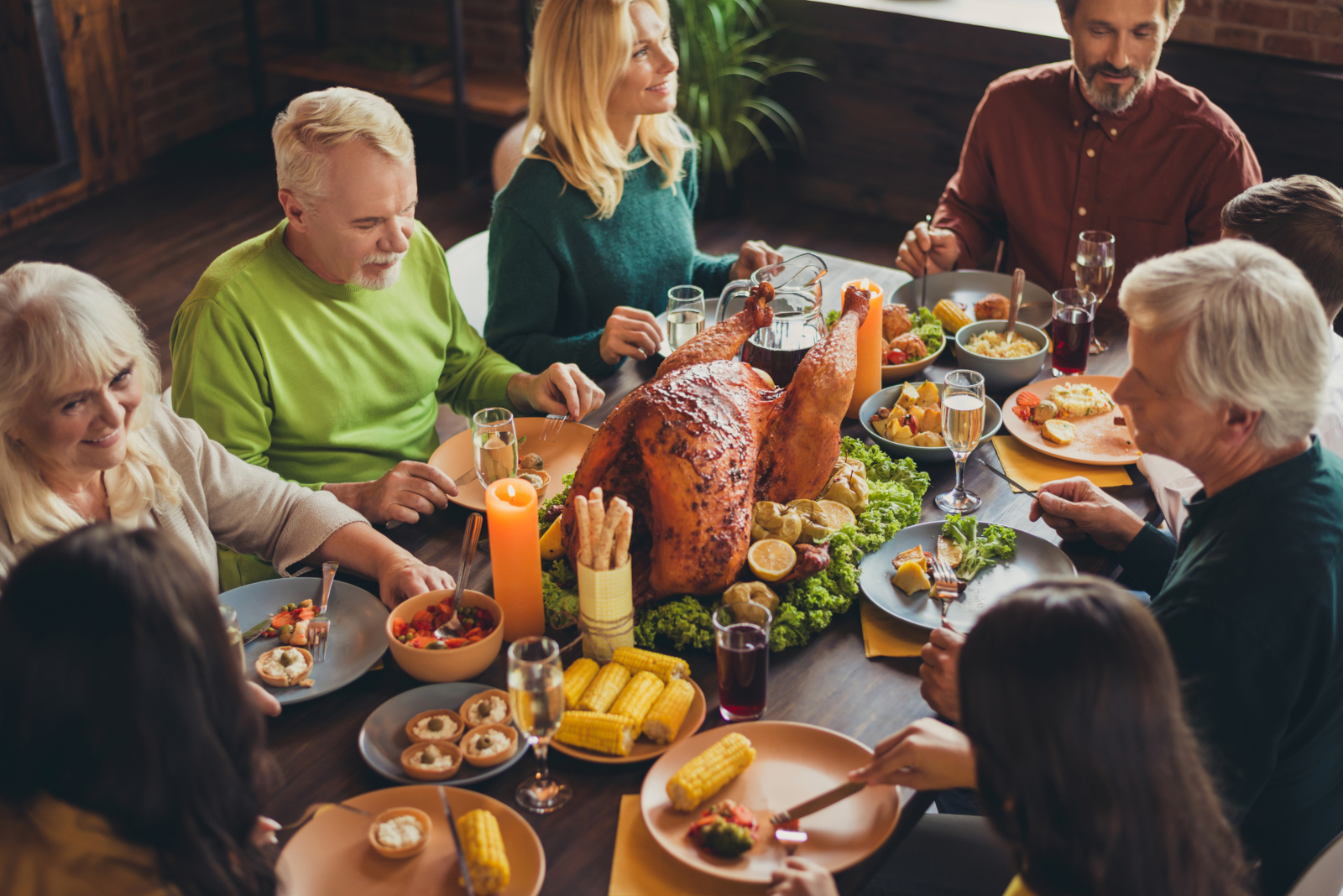
ID 196882127 | Family Thanksgiving Dinner ©Roman Samborskyi | Dreamstime.com
After more than 21 years working in communication, I’ve learned to trust specific questions far more than impressive ones. Give someone something they can picture, remember, compare or have an opinion about, and you often don’t need a brilliant conversation topic. You simply need somewhere good to begin.
How to Use Thanksgiving Conversation Starters Without Making Dinner Feel Like an Interview
You don’t need to ask these Thanksgiving questions in order, and you definitely don’t need to get through all 100. Pick one that fits what’s happening around you. If the answer takes the conversation somewhere interesting, stay there.
Ask the room rather than suddenly putting one guest under a spotlight. “I have a question for everyone” may work. Let people pass without asking why. A question that feels harmless to you may be a sensitive topic for somebody else.
Start lighter than you think you need to. A conversation about cranberry sauce can end with three generations arguing cheerfully about a kitchen that disappeared 30 years ago. You don’t have to force the deeper part.
Once somebody gives an interesting answer, listen to it. Research on question-asking found that people who asked more questions, especially follow-up questions, tended to be better liked by their conversation partners. A 2025 correction adjusted some reported details while confirming that the substantive conclusions remained valid.
Ask because you want to hear the answer, too. If your question is mainly a way to reach the moment when you can tell your own story, the exchange can feel very different to the other person. Researchers even have a name for that pattern: boomerasking.
Five Follow-Up Questions That Can Keep a Good Answer Going
Before getting to the Thanksgiving conversation starters, here are some questions you can use after those questions:
“How did that happen?” works when someone has just given you the short version of what sounds like a much better story.
“Has it always been that way?” can turn an opinion into a memory without abruptly changing the subject.
“Who else remembers it that way?” is useful with family stories because you may discover within seconds that two people remember the same event completely differently.
“Would you still choose the same thing today?” gives someone room to compare past and present without demanding anything deeply personal.
“What made you change your mind?” is often more interesting than introducing a completely unrelated question.
A connected follow-up tends to feel more natural than firing off Question 2, Question 3 and Question 4 and it shows people you really pay attention to what they are saying, you are genuinly interested in their story.
Easy Thanksgiving Conversation Starters While Everyone Is Arriving
The first few minutes aren’t the moment for “What experience changed your life?” People are carrying dishes, looking for somewhere to put their coats, checking whether everyone has arrived and trying to remember the name of someone they met once three years ago.
These easy Thanksgiving icebreaker questions work while people are standing in the kitchen or waiting for dinner. They can be answered quickly, but most give someone room to continue if they want to.
An important note: These questions are useful, but they need to be integrated into conversations. You cannot greet someone and then just ask #3. Weave the questions into the discussion, use them when you don’t know what to say, and use them to spark new topics or fill awkward silences.
1. What’s the best new food or drink you discovered this year?
2. What did you listen to on the way here today?
3. What’s the first thing on the Thanksgiving table you plan to eat?
4. What small purchase did you make recently that turned out to be much more useful than expected?
5. What seasonal food, drink or activity are you happiest to see return at this time of year?
6. What’s something very minor that made you laugh this week?
7. What everyday inconvenience are you convinced somebody should have solved by now?
8. What’s the most unexpected fact you learned recently?
9. If someone visited your town for one afternoon, where would you take them first?
10. If you could add one new tradition to Thanksgiving this year and nobody could object, what would you choose?
When I was younger, I used to worry before some events that I’d end up beside somebody and have absolutely nothing interesting to say. Years of meetings, conferences, launches, training sessions and less formal gatherings changed my view of that. Good conversations rarely depend on arriving with impressive stories prepared in advance.
A 2026 study involving 1,800 participants found that people consistently underestimated how enjoyable conversations about subjects they considered boring would be. The pattern appeared with friends and strangers and in both face-to-face and virtual conversations.
So if a question about food, a TV show or the drive over sounds almost too simple, use it anyway. You can find something to talk about without producing a spectacular subject on demand.
Thanksgiving Conversation Starters for People Who Don’t Know Each Other Well
A Thanksgiving table can contain siblings who grew up together, a cousin nobody has seen for years, someone’s new partner, a neighbor, a college friend and an in-law meeting half the room for the first time.
“Tell us about yourself” puts a surprising amount of work on the person answering. “What do you do?” can be useful, but it can also turn the first five minutes into a résumé exchange. There are better ways to start a conversation when you want to give somebody an easier opening.
11. Which dish on this table would you be most disappointed to see disappear next year?
12. When you go to a restaurant, are you more likely to try something new or order something you already know you love?
13. What’s a place you’ve visited once and would happily visit again?
14. Have you watched anything recently that was much better than you expected?
15. What’s something about your hometown or home region that visitors rarely notice?
16. What skill looks easy until you actually try it?
17. What’s one thing you genuinely look forward to when colder weather arrives?
18. What everyday object has a design flaw that annoys you every time you use it?
19. What’s something you enjoy doing even when there’s no practical reason to do it?
20. If you could borrow one holiday tradition from another family, city or country, what would you choose?
The easiest Thanksgiving conversation starters for new guests give people several possible ways to answer. They can tell a story, give a quick opinion or keep the answer brief without creating an uncomfortable pause.
Funny Thanksgiving Questions That Can Actually Start Stories
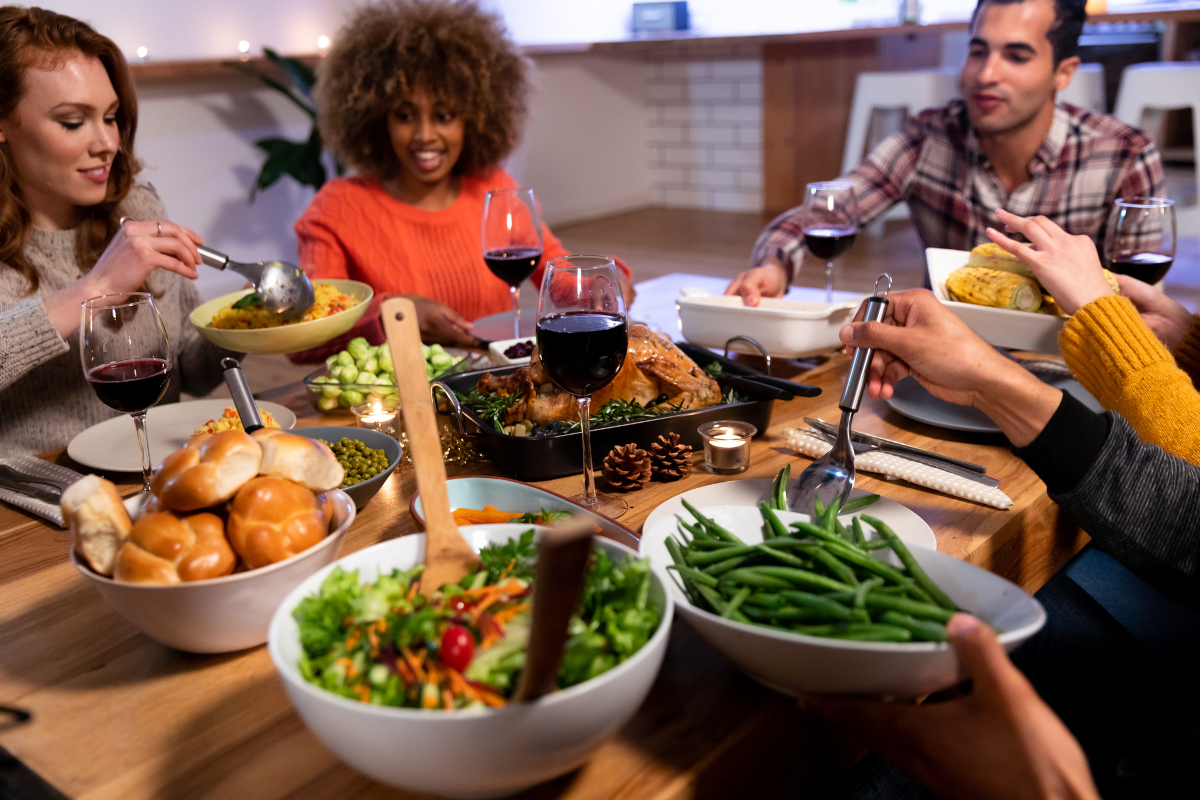
ID 163830676 | Thanksgiving Dinner ©Wavebreakmedia Ltd | Dreamstime.com
A funny Thanksgiving question doesn’t have to rely on bizarre hypothetical situations. Food failures, strange habits, leftovers and harmless holiday disagreements already give you plenty of material.
21. If Thanksgiving dinner were a competitive sport, which part of it would deserve its own event?
22. What’s the funniest kitchen or cooking failure you’ve witnessed?
23. If one classic Thanksgiving side dish had to disappear forever, which one would you sacrifice?
24. What food combination do you like that other people seem determined to judge?
25. What’s a phrase somebody in your family says so often that everyone can predict it before they finish?
26. If your ultimate Thanksgiving leftover combination had its own menu name, what would you call it?
27. Which Thanksgiving food is hardest to make look good in a photo, no matter how good it tastes?
28. If you could invent one new Thanksgiving rule purely to make the day easier, what would it be?
29. What’s the funniest excuse you’ve ever heard for refusing to eat a certain food?
30. If a reality show were filmed around this Thanksgiving table, what would it be called?
31. If your family group chat had a Thanksgiving-only rule, what rule would it need most?
32. If today’s Thanksgiving had a newspaper headline, what would it say?
If your table reaches the point where everyone would rather compete than answer another question, these Thanksgiving trivia questions can turn the conversation into a game without abandoning the holiday theme.
Thanksgiving Questions About Food and Family Traditions
“What’s your favorite Thanksgiving food?” usually ends after the name of the dish. Ask where it came from, why it’s still on the table or who used to make it, and dinner suddenly has a history.
33. What dish do you eat at Thanksgiving that you rarely or never make during the rest of the year?
34. Do you know where your family’s oldest Thanksgiving recipe came from?
35. Which Thanksgiving tradition in your family has been around the longest?
36. Is there a food that used to appear at every holiday meal but has slowly vanished from the table?
37. Which Thanksgiving dish has changed the most in your family over the years?
38. Does your family have a recipe with instructions such as “a little of this” or “enough until it looks right” instead of real measurements?
39. Is there a recipe in your family that exists because somebody made a mistake once and everyone liked the result?
40. Has a completely non-traditional food ever appeared at Thanksgiving and earned a permanent place on the menu?
41. If the youngest generation took over the Thanksgiving menu next year, what do you think would stay and what would disappear?
42. What homemade dish does someone in your family make better than any restaurant version?
43. Do certain Thanksgiving leftovers automatically belong to particular people in your family?
44. What Thanksgiving or family food tradition did you grow up thinking everyone did until somebody from outside the family reacted to it?
Questions About Childhood Thanksgivings and Holidays
Childhood questions get easier when they point toward something concrete. “Tell me about your childhood” is enormous. A question about the kids’ table, a smell from the kitchen or the drive to a relative’s house gives the memory somewhere to start.
45. What’s the earliest Thanksgiving or holiday gathering you can clearly remember?
46. Did your family have a kids’ table, and what usually happened there that the adults never noticed?
47. What holiday food did you refuse to eat as a child but like now?
48. What smell do you associate most strongly with holidays when you were growing up?
49. Was there a parade, football game, movie or TV special that always seemed to be on?
50. Did you usually stay home for Thanksgiving or travel somewhere else?
51. What job were you given when adults were preparing a big family meal?
52. Was dressing up for holiday dinners expected in your house, or could everybody show up in whatever they wanted?
53. What time did your family eat Thanksgiving or another major holiday dinner, and did it feel very early or very late to you as a child?
54. What game did you play with siblings, cousins, neighbors or friends when everyone got together?
55. Is there an old decoration, serving dish, tablecloth or other holiday object you still remember clearly?
56. What did you believe about Thanksgiving or holiday celebrations as a child that you later discovered wasn’t true?
Thanksgiving Questions That Bring Back Family Stories
Some family stories survive for decades because somebody keeps telling them. Others disappear because everyone who remembers them thinks everybody else already knows.
Research on intergenerational family narratives found that stories passed between generations can help build relationships, offer insight into parents and the self, and transmit life lessons. A holiday table can put several generations in the same room, including people who remember the story very differently.
57. What family story gets told so often that half the table could probably finish it?
58. Is there a family story that two people remember completely differently?
59. What holiday meal went wrong at the time but became funny later?
60. Which house or apartment from your family’s past do you most associate with everyone gathering together?
61. Was there a relative who had a saying, expression or habit everyone still remembers?
62. Is there a dish in your family that comes with a story as well as a recipe?
63. What trip, long drive or travel mishap became part of family history?
64. Can you remember a time when somebody unexpectedly saved a holiday meal, trip or gathering from going completely wrong?
65. Does your family have a harmless legend that has been repeated for so long nobody is completely sure how accurate it is anymore?
66. Is there an old family photo that immediately starts a story whenever somebody sees it?
67. Is there a dish, table, chair, decoration or other object used today that has its own family history?
68. What family story should the younger people at the table hear at least once?
Questions to Ask Grandparents and Older Relatives at Thanksgiving

ID 100558786 | Family Thanksgiving Dinner ©Vadimgozhda | Dreamstime.com
I no longer have my grandma, but I loved each holiday I spent with her. And we always had something to talk about!
The best questions to ask grandparents at Thanksgiving are usually smaller than “What was life like when you were young?” A specific meal, age, journey, piece of technology or routine is easier to enter, and the answer can grow from there.
These questions don’t have to be reserved for grandparents. An aunt, uncle, older neighbor or longtime family friend may be the person who remembers something nobody else at the table knows.
69. What’s the oldest Thanksgiving or holiday meal you remember clearly?
70. Which holiday dish from your childhood would you bring back if you could?
71. What took the most work to prepare for a big family meal when you were growing up?
72. Where did your family usually get the food for holiday meals?
73. What piece of technology or household convenience do you remember arriving during your lifetime and changing everyday family life?
74. What did you actually do on Thanksgiving or another big family holiday when you were about 15?
75. Did relatives travel long distances to see one another, and what was that journey like before GPS, smartphones and the way we travel today?
76. What recipe, cooking trick or holiday habit did you learn from your parents or grandparents?
77. How did everyone entertain themselves after a big family meal when you were young?
78. What was your first paying job, and what do you remember buying or saving for with your first earnings?
79. What’s the biggest change you’ve noticed in the way families spend Thanksgiving or other major holidays?
80. What did a holiday dinner look like when you were the age of the youngest person sitting at this table today?
Question 80 can be even better if the youngest person answers too. Suddenly the comparison isn’t “the past versus today” in the abstract. Two people at opposite ends of the age range are describing the same stage of life.
Tone deserves attention here. “You still remember that?” can sound condescending even when you meant it as surprise. A pause isn’t a problem either. Someone searching through a decades-old memory may need a few seconds, and some conversations work better when you say less than fill every silence.
Low-Pressure Thanksgiving Questions That Don’t Require Personal Answers
Not everybody wants to discuss the past year, childhood, relationships, career plans or family history in front of a full table. They shouldn’t need to.
These non-awkward Thanksgiving questions leave plenty of room for opinions and imagination without requiring anyone to explain what’s happening in their private life.
81. Which discontinued snack, drink or restaurant item would you bring back tomorrow?
82. If you could create a museum devoted entirely to one very specific subject, what would be inside?
83. If you could instantly become excellent at one hobby, which hobby would you choose?
84. Which fictional restaurant, café or food from a movie or book would you most like to try?
85. Which everyday invention deserves far more appreciation than it gets?
86. If one household chore could be automated forever, which one would you eliminate?
87. For a completely free winter weekend, would you choose a city, a cabin in the mountains, somewhere by the sea or somewhere else?
88. If Thanksgiving dinner had to add one dish from another country, what would you choose?
89. If you could have a front-row seat at one famous parade, concert, sporting event or celebration from history, which would you pick?
90. What useless skill deserves its own world championship?
I like having questions like these in the mix because nobody has to decide how much personal information is expected before answering. A conversation can still become more personal if people choose to take it there, but the question itself doesn’t demand it.
Better Gratitude Questions Than “What Are You Thankful For?”
“What are you thankful for?” is so broad that people often reach for the safest answer available: family, health, friends, being together.
A narrower gratitude question gives the mind something smaller to search. These are still meaningful Thanksgiving questions, but nobody has to summarize an entire year or deliver a speech.
91. What small everyday object are you surprisingly grateful exists?
92. Who made something easier for you this year without necessarily realizing how much it helped?
93. What routine or habit makes your days noticeably better?
94. What place are you grateful exists, whether you visit it often or only once in a while?
95. What food or drink do you appreciate far more now than you did when you were younger?
96. What piece of technology are you genuinely glad you don’t have to live without?
97. What useful thing did somebody teach you that you still use?
98. What’s something you can do now that would have been difficult or impossible for you a few years ago?
99. What small moment from this year would you happily experience one more time?
100. What are you looking forward to before next Thanksgiving?
If somebody shares a win while answering one of these, let the good part land before turning it into warnings, analysis or your own similar story. The way we respond to good news can either give the person room to continue or close the moment very quickly.
What to Do When a Thanksgiving Conversation Starts Going Wrong
No collection of Thanksgiving dinner conversation starters can control where every discussion goes. Somebody can take an innocent question somewhere unexpected. One person can occupy every opening. A relative can ask what nobody else would dream of asking. A subject everyone enjoyed five minutes ago can become tense.
When One Person Is Doing All the Talking
You don’t have to embarrass them by announcing that they’ve monopolized the table. Wait for a pause and widen the conversation.
“I’m curious what everyone else thinks about that.”
Or:
“Has anyone else had something like that happen?”
If somebody regularly cuts people off or turns every answer back on themselves, quieter guests have little chance to enter. Talking too long, interrupting and failing to respond to what was just said are among the conversation habits that make people lose interest.
When Someone Doesn’t Want to Answer
Move on.
A pass doesn’t need an investigation. “Why not?” simply creates a second question the person now has to refuse.
“Fair enough – here’s another one” is enough.
When a Question Accidentally Gets Too Personal
Give the person an exit before they have to invent one.
“You absolutely don’t have to answer that.”
Or:
“Actually, let’s choose another one.”
People can protect their own privacy without starting an argument. A short answer such as “I keep that part of my life private” can be enough. There are several other ways to handle intrusive questions when somebody continues pushing.
When Someone Turns Your Answer Into Advice You Didn’t Ask For
Family gatherings have a way of turning a simple update into a list of things somebody thinks you should do next. I understand the impulse because I’ve been on both sides of unsolicited advice: receiving it when I wanted somebody to listen, and catching myself wanting to solve something when listening would have been more useful.
If you don’t want advice, you can say:
“I know you’re trying to help, but I’m not looking for advice on this.”
For something lighter:
“Thanks. I’ve got that part covered.”
Then give the conversation somewhere else to go. More responses for family, work, parenting and other situations are in these replies to unsolicited advice.
When Politics or Another Heated Topic Takes Over
You don’t need to settle the existing discussion before changing direction.
Use something that already belongs in the room:
“We’re not solving that one before dessert. Who made this? I need to know what’s in it.”
Or return to something someone mentioned earlier:
“I want to go back to that story about your trip. What happened after that?”
If you simply don’t want to participate:
“I’d rather not get into that today. Tell me about something else.”
Familiar expressions such as “Calm down,” “You’re overreacting” or “Whatever” can make disagreement worse, which is why it helps to know which phrases escalate arguments before reaching for one automatically.
When the situation is uncomfortable rather than openly heated, knowing how to change the subject without making the redirect itself awkward is often enough.
Thanksgiving Questions That May Sound Harmless but Can Put Someone on the Spot
A question can be perfectly normal in one family and uncomfortable in another. “Are you seeing anyone?” may be welcome from one relative and unbearable from another. Asking about children, pregnancy, weight, health, money, jobs, housing or major life plans can require somebody to explain a situation they never intended to discuss over mashed potatoes.
The words aren’t always rude. The answer may simply involve far more than the person wants the table to know.
If answering requires someone to explain or defend a private part of their life, choose another question.
You can get to know people without working through relationship status, job titles and expected life milestones. Curiosity doesn’t give anyone automatic access to somebody else’s private information.
Conclusion
You won’t need 100 Thanksgiving conversation starters at one dinner. You may not need ten.
If one question leads to a story nobody has heard before, somebody remembers a completely different version, and three people start asking questions of their own, leave the list alone for a while. It has already done its job.
If the talking eventually turns into a game, you can stay seasonal with November trivia questions that move beyond Thanksgiving into history, food, entertainment, science and other events connected to the month.
The Thanksgiving questions worth remembering aren’t necessarily the cleverest. They’re the ones that give somebody enough room to say, “Oh, that reminds me of something…” and suddenly everyone wants to hear the rest.
Thanksgiving Conversation Starters: Frequently Asked Questions
What are good Thanksgiving conversation starters?
Good Thanksgiving conversation starters are specific, easy to answer and open enough for someone to add a story or opinion. Try “What Thanksgiving dish would you never remove from the menu?”, “What holiday tradition do you remember most from childhood?”, “What family story does everyone remember differently?” or “What small thing made you laugh this week?”
The best Thanksgiving questions depend on the people at the table. Use lighter prompts with new guests and save family memories or reflective questions for people who are comfortable sharing more.
What can I ask instead of “What are you thankful for?”
Ask something more specific: “Who made your year easier without realizing it?”, “What everyday object are you surprisingly grateful exists?”, “What useful thing did somebody teach you?” or “What small moment from this year would you happily experience again?”
A narrower gratitude question gives people something concrete to remember instead of asking them to sum up an entire year in one answer.
What should I talk about at Thanksgiving dinner?
Good Thanksgiving dinner topics include food, family traditions, funny cooking failures, childhood holidays, travel, movies, local places, old family stories, hobbies and gentle questions about what people have enjoyed recently.
You don’t need a constant supply of new subjects. Listen for details in the answer you just heard and follow one of them. A conversation becomes easier when every pause isn’t treated as a demand for a completely new topic.
What are good Thanksgiving conversation starters for people who don’t know each other well?
Use shared or low-pressure subjects: the food on the table, places people enjoy visiting, something worth watching, seasonal activities, local recommendations or a skill that looks easier than it is.
Avoid starting with questions about relationships, children, income, health, career success or major personal plans. People can decide for themselves whether a light conversation becomes more personal.
What are funny Thanksgiving questions to ask at the table?
Funny Thanksgiving questions work well when the joke is aimed at the holiday rather than at a person. Ask what a reality show filmed at the table would be called, which side dish would survive an elimination round, what Thanksgiving rule the family group chat needs, or what headline would describe this year’s dinner.
Food, leftovers and familiar Thanksgiving chaos offer plenty of humor without turning one guest into the target.
What are good Thanksgiving conversation starters for adults and kids?
Choose questions where age doesn’t determine who can give the best answer. Ask which Thanksgiving food they would keep forever, what holiday tradition they would invent, what useless skill deserves a championship, which household chore they would automate or what funny family story they remember.
Generation-comparison questions can work well too. A child can describe life today while a parent or grandparent answers the same question about the age they once were.
What are good questions to ask grandparents at Thanksgiving?
Ask about one specific moment rather than an entire lifetime: the oldest holiday dinner they remember, what food used to be served, how relatives traveled to see each other, what they did after dinner, or what Thanksgiving looked like when they were 15.
Specific prompts are easier to enter and often lead naturally to longer stories.
How do you keep Thanksgiving dinner conversation going?
Ask one connected follow-up rather than jumping immediately to another prepared question. “How did that happen?”, “Who else remembers that?”, “Has it always been that way?” and “What changed your mind?” can give an answer somewhere useful to go.
Share something yourself as well. Good conversation isn’t an interview. The question opens the door; listening, reacting and adding relevant experiences keep the exchange moving.
How many Thanksgiving conversation starters do you need?
There’s no reason to work through a fixed number. Two or three good questions can be enough for an entire meal if the answers create their own stories and follow-up conversations.
Use more when the table goes quiet or when people actively enjoy answering them. If everybody is already talking, there’s no benefit in interrupting a good conversation just because there are unused questions left.
What topics should you avoid at Thanksgiving dinner?
There isn’t one universal list because families and groups have different boundaries. Be careful with relationships, pregnancy or children, money, weight, health, work problems, religion, politics and major personal decisions when you don’t know whether the person wants to discuss them.
A useful rule is simple: if the answer could force somebody to explain or defend a private part of their life, ask something else.
Can you use these Thanksgiving questions for Friendsgiving?
Yes. The arrival questions, funny Thanksgiving questions, food debates and low-pressure prompts work well for Friendsgiving, especially when not everyone knows one another. The family-history and grandparent sections are more suited to family gatherings, so simply skip those and use the sections that match your group.
More amazing articles for you:
The Best Global Cities to Blend Business and Pleasure
Earth’s Attractions Kicks Off
A local's guide to Tampa: best attractions in Tampa, where to eat and stay, and tips
9 Nordic Habits for a Longer, Happier Life (That Have Nothing to Do with Hustle Culture)
These Places Don’t Feel Like December at All
What Drinking Coffee on an Empty Stomach Actually Does to Your Body (Doctors Explain)
Eight Hours to Nowhere: Transatlantic Flight Turns Around Because of a Tricky Situation
12 Subtle Signs You’re More Charismatic Than You Think

Violeta-Loredana Pascal is a communications expert, business mentor, and the founder of Earth’s Attractions and PRwave INTERNATIONAL. A pioneer in the Romanian digital PR landscape since 2005, she holds a degree in Communication and Social Sciences from SNSPA Bucharest. Violeta is a senior trainer at AcademiadeAfaceri.ro, where she leverages over 20 years of experience to teach professional courses in PR strategy and workplace productivity. By blending high-level business consulting with a passion for holistic travel and wellness, she empowers solopreneurs to overcome procrastination, build profitable brands, and design a life of purposeful adventure.