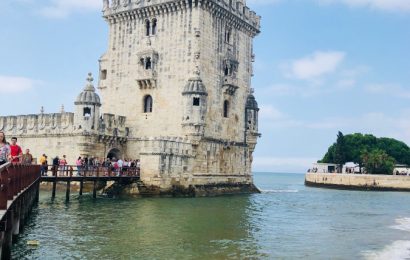
There are places in Europe that look almost imagined.
Ornate façades rising against dramatic skies. Cobblestones stretching across open space. Light shifting in a way that makes the entire square glow.
These aren’t just architectural backdrops – they are the living heart of their cities. Markets once unfolded here. Celebrations filled the air. Conversations still linger long after the crowds thin.
From grand ceremonial plazas to intimate medieval squares, each one carries its own rhythm, scale, and atmosphere.
These magical squares feel straight out of a storybook, and yet they remain very real, waiting to be experienced.
(this article may include affiliate links, which means that I might get a small commission if you purchase something)
17 Most Beautiful Squares in Europe You Shouldn’t Miss
1. Piazza del Campo, Siena (Italy)
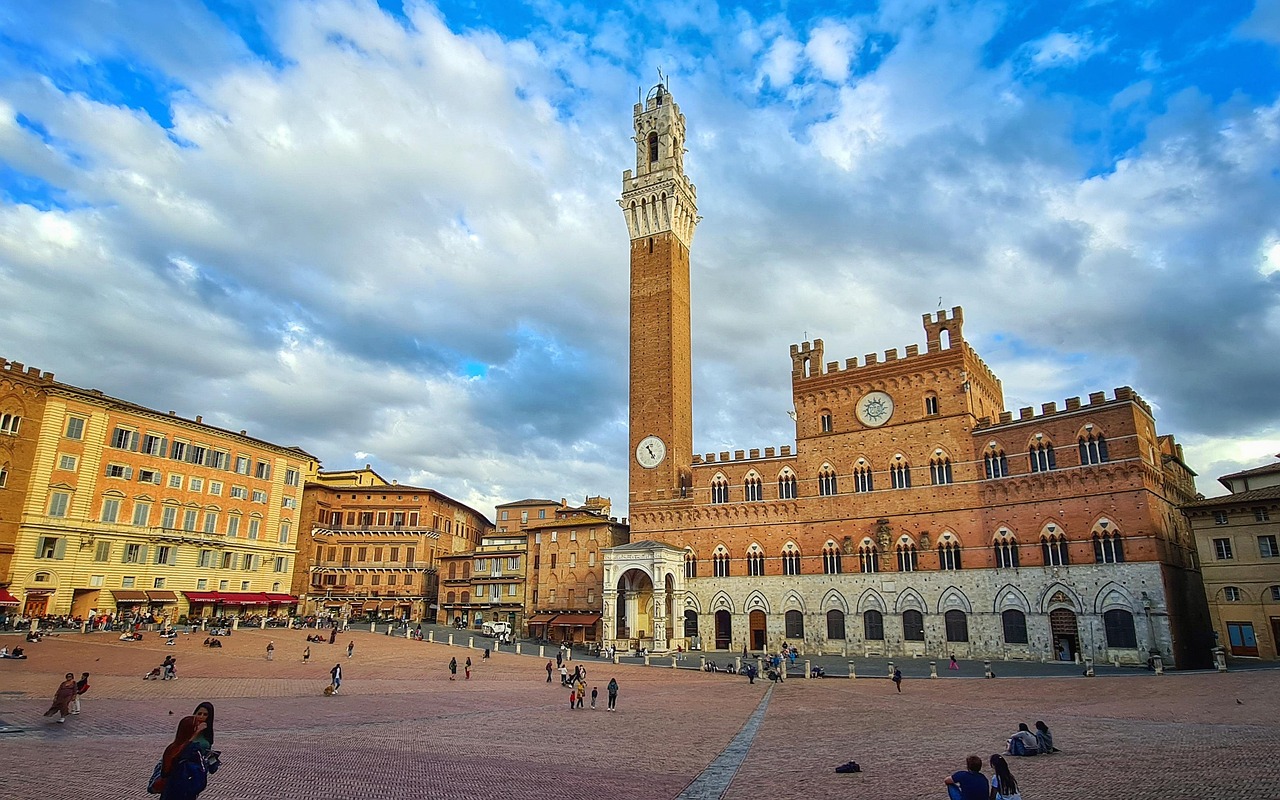
Piazza del Campo sits at the heart of Siena and feels instantly different from most Italian squares. Instead of being flat, it gently slopes inward like a shell, naturally drawing people toward its center. Locals and visitors alike sit directly on the brick pavement, reading, talking, or simply watching the city move around them.
The square has been Siena’s civic heart since medieval times and famously hosts the Palio horse race twice each summer. It is widely considered one of the most beautiful historic squares in Europe and remains one of Italy’s most distinctive civic spaces.
Surrounded by medieval palazzi and anchored by the Torre del Mangia, this square doesn’t demand attention – it earns it over time. Early evening is when the square feels most alive, as locals settle in and the brick surface warms under softer light.
2. Plaza Mayor, Salamanca (Spain)
ID 6040755 ©Hartemink | Dreamstime.com
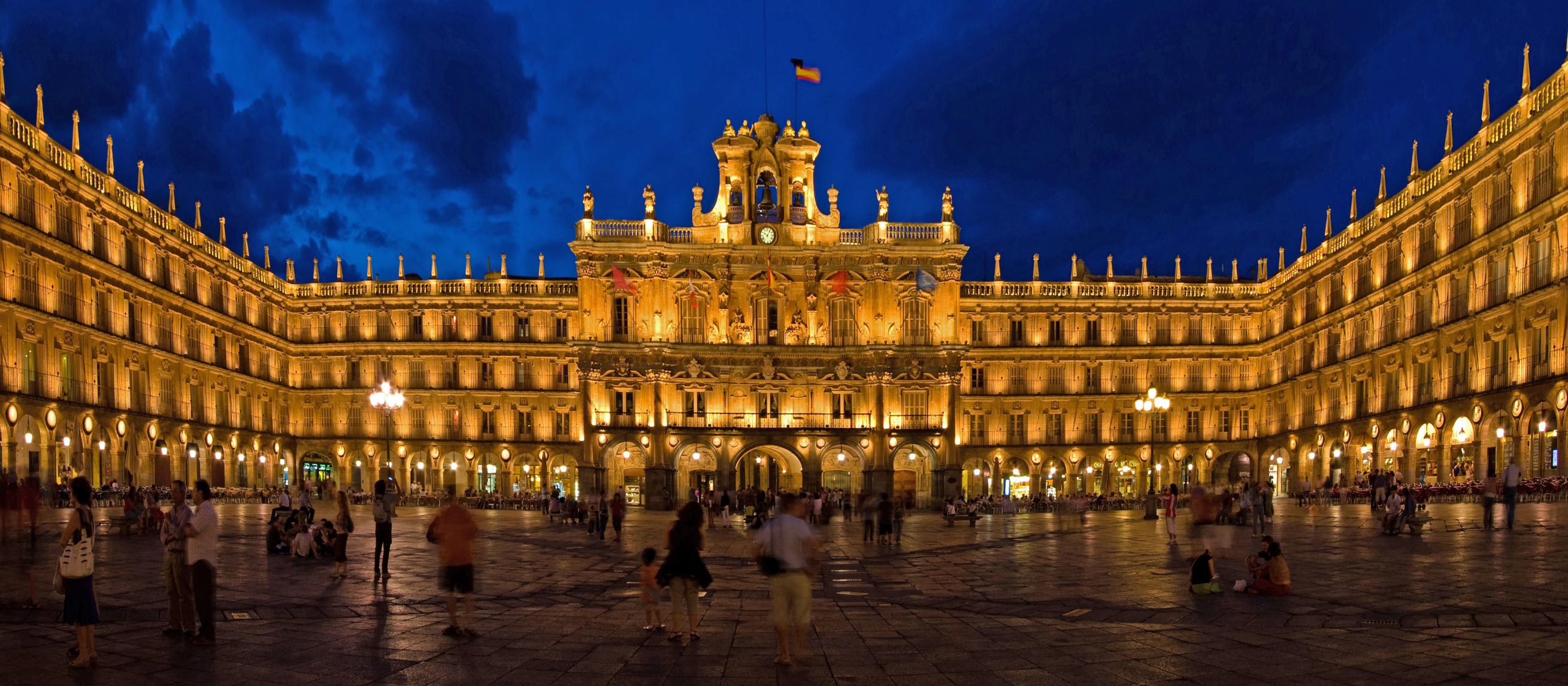
Built from warm golden stone, Plaza Mayor in Salamanca, western Spain, feels almost theatrical, especially in the late afternoon and evening. The arcades fill with conversation, students drift in groups, and the square slowly turns into Salamanca’s shared living room. Among famous squares in Europe, Plaza Mayor stands out for combining architectural symmetry with a genuinely local atmosphere.
Unlike more tourist-heavy plazas in Spain, this one feels deeply local. Sit down with a coffee or a glass of wine and you’ll quickly notice how little pressure there is to move on. You can also take a walking tour and discover the impressive monuments in the area.
Built in the 18th century, the square has long served as Salamanca’s main gathering place for public events, celebrations, and evening paseos, and after sunset it truly comes into its own, filling with conversation and a distinctly local evening rhythm.
3. Town Hall Square, Tallinn (Estonia)

ID 91561694 ©Dimbar76 | Dreamstime.com
Tallinn’s Town Hall Square looks like it belongs in a fairytale, yet it remains surprisingly grounded. Medieval facades surround a compact, walkable space where cafés spill outward and the rhythm stays gentle even in high season. The square has been a marketplace since the Middle Ages, anchored by Tallinn’s Gothic town hall, one of the oldest in Northern Europe.
Because Tallinn itself is still a second-choice destination for many travelers, the square retains a sense of discovery. It’s easy to imagine what daily life here looked like centuries ago – and just as easy to enjoy it now. Late afternoon and early evening are ideal, when the square softens and feels less like a landmark and more like a neighborhood gathering place.
4. Piazza Maggiore, Bologna (Italy)
ID 78021980 ©Yasonya | Dreamstime.com
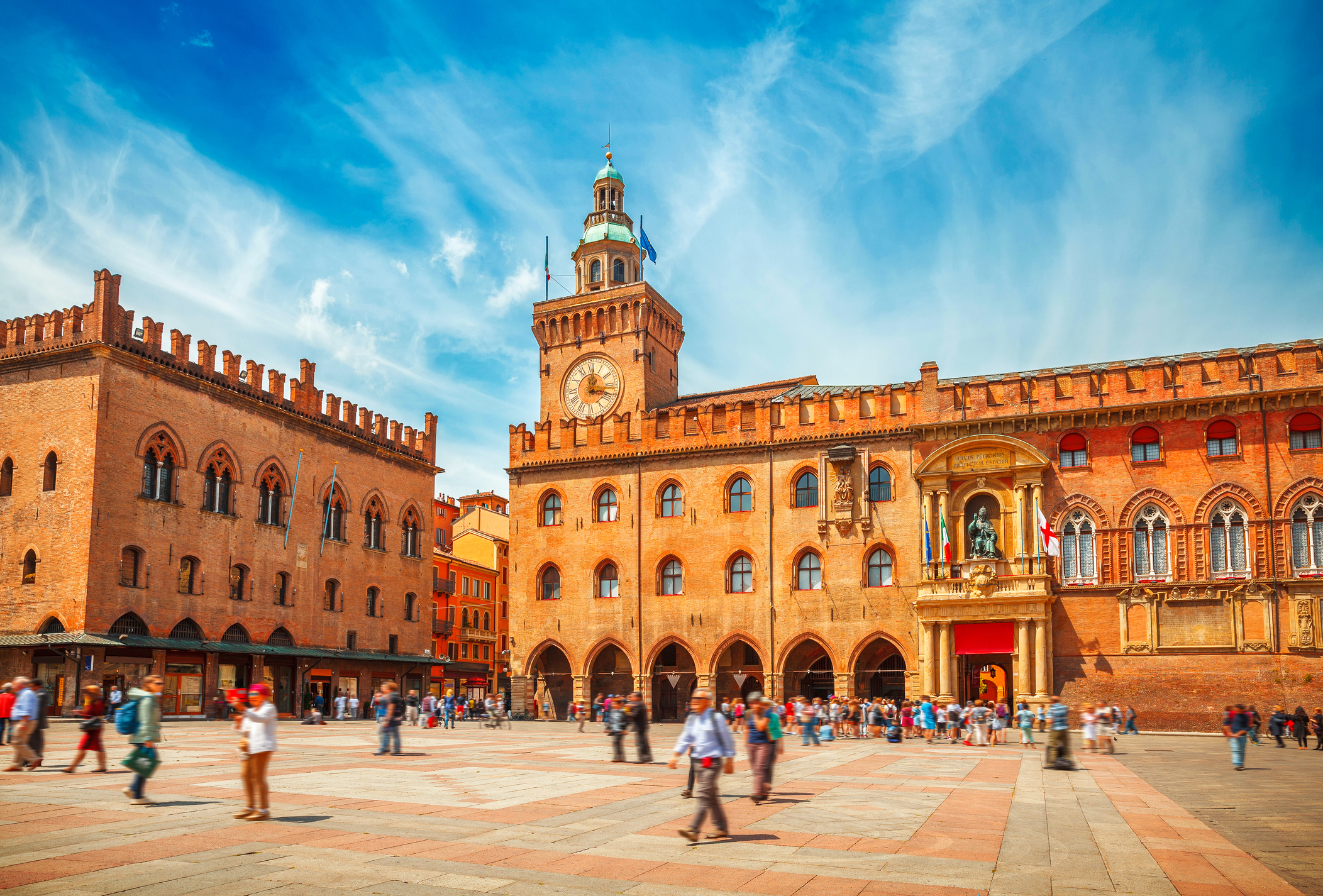
Piazza Maggiore is not flashy, and that’s exactly its strength. Located in the historic center of Bologna, it’s framed by important civic buildings but animated by everyday life – students, families, conversations that linger. For centuries, it has been the setting for civic life in Bologna, from political gatherings to open-air events and film screenings.
This square rewards those who slow down. It’s especially rewarding in the evening, when locals gather casually and the square shifts into a slower, more social pace. You can also choose a walking tour for Bologna – it will help you discover the city easier.
5. Place Stanislas, Nancy (France)
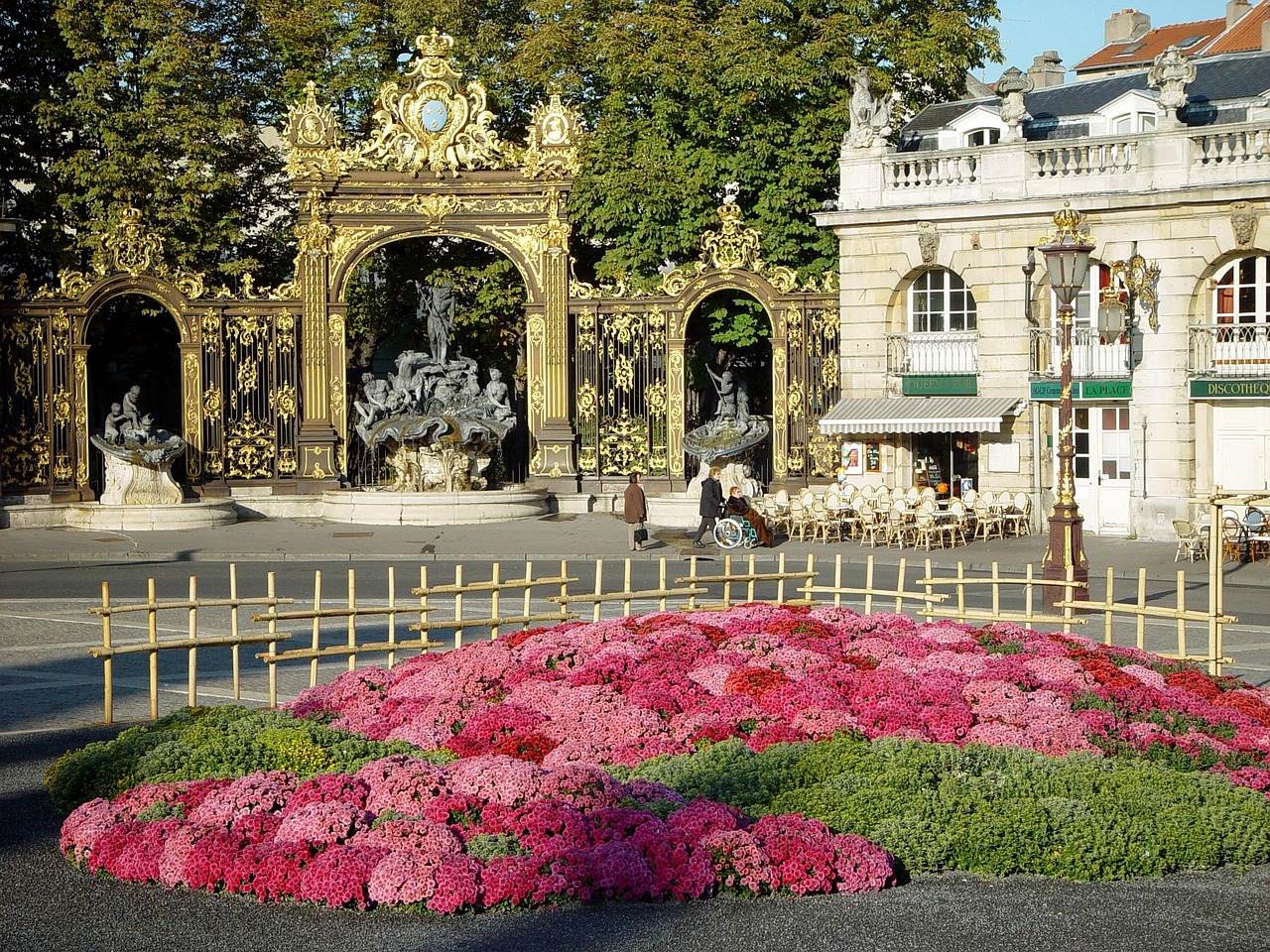
Place Stanislas is one of France’s most elegant squares, yet it remains under the radar for many international travelers. Perfectly symmetrical and grand without being overwhelming, it connects different parts of Nancy in a way that feels intentional and open. It was commissioned in the 18th century by Stanisław Leszczyński, former king of Poland, as a symbol of Enlightenment-era urban planning.
Despite its UNESCO status, the square feels breathable. People cross it, pause, sit, and continue on – no bottlenecks, no sense of spectacle replacing experience. Dusk is a particularly beautiful moment, when the symmetry of the square is highlighted by soft lighting rather than crowds.
6. Stortorget, Stockholm (Sweden)
ID 381321849 ©Emicristea | Dreamstime.com
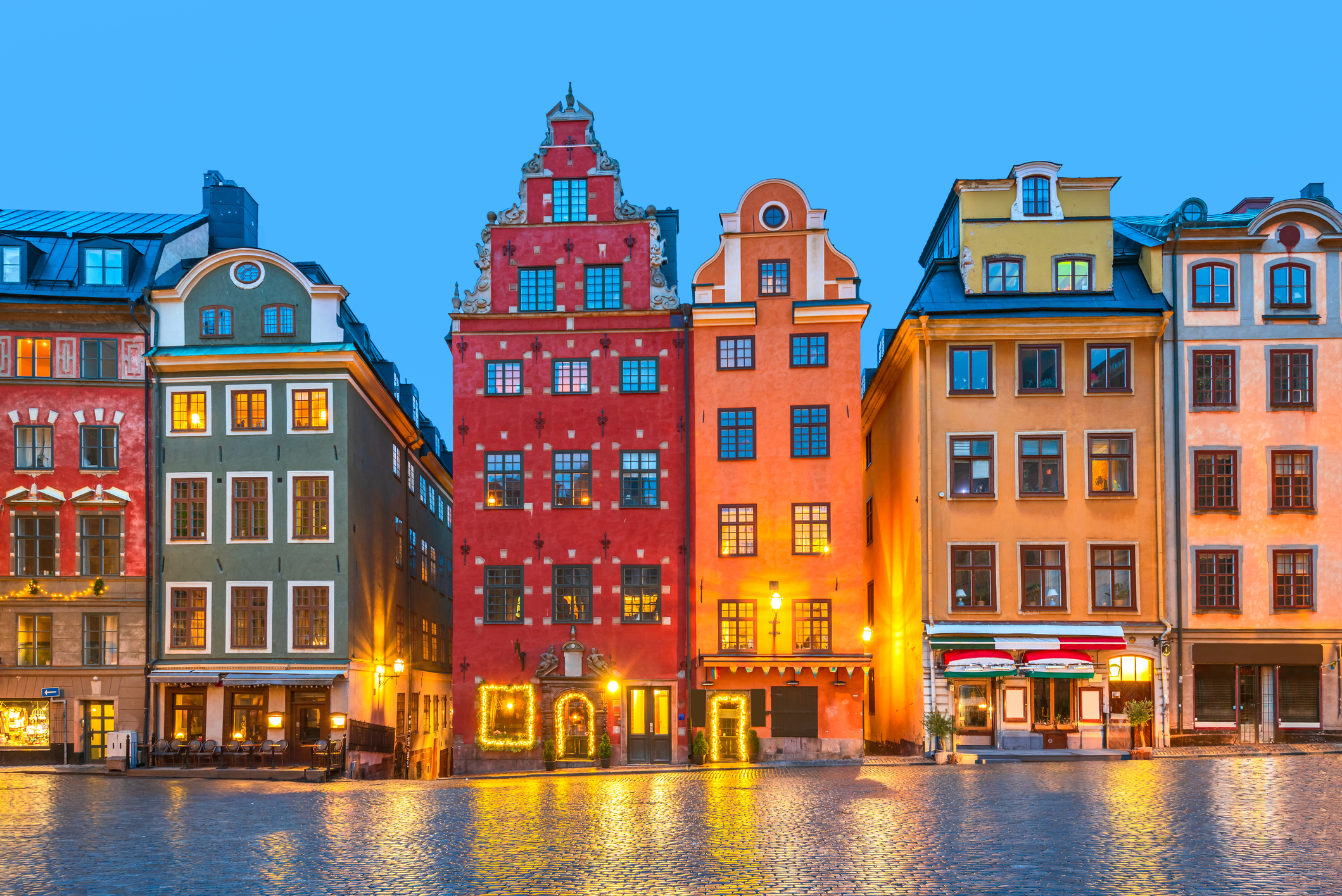
Stortorget, the oldest square in Stockholm, is instantly recognizable thanks to its colorful gabled houses. Set in Gamla Stan, it feels intimate rather than monumental, especially compared to larger European plazas.
The square changes dramatically with the seasons, feeling bright and social in summer and especially atmospheric during winter afternoons. Either way, it invites lingering rather than rushing through.
Historically, it was the center of trade in Stockholm’s old town and still hosts seasonal markets, including the city’s famous Christmas market.
7. Hauptplatz, Graz (Austria)
ID 77274444 ©Xantana | Dreamstime.com
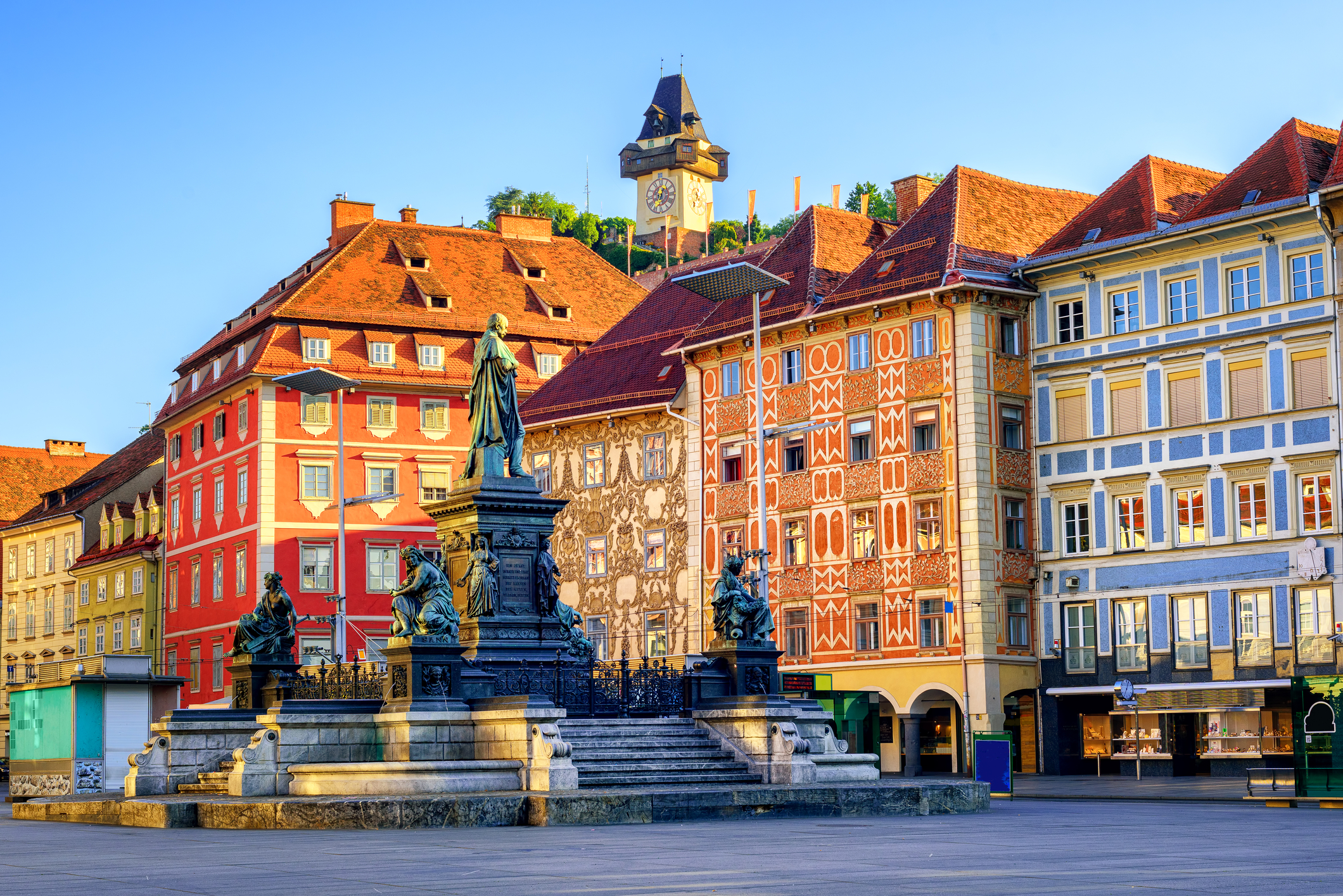
Hauptplatz lies at the center of Graz, a city often overlooked in favor of Vienna or Salzburg. The square blends historic architecture with a calm, contemporary rhythm shaped by trams, markets, and cafés.
It feels lived-in rather than curated, which makes it easy to connect with. Spend a little time here and Graz quickly reveals itself as a city meant to be enjoyed slowly. Visiting in the late morning or early evening offers the best sense of daily life, as markets and cafés overlap with after-work routines.
8. Praça do Comércio, Lisbon (Portugal)
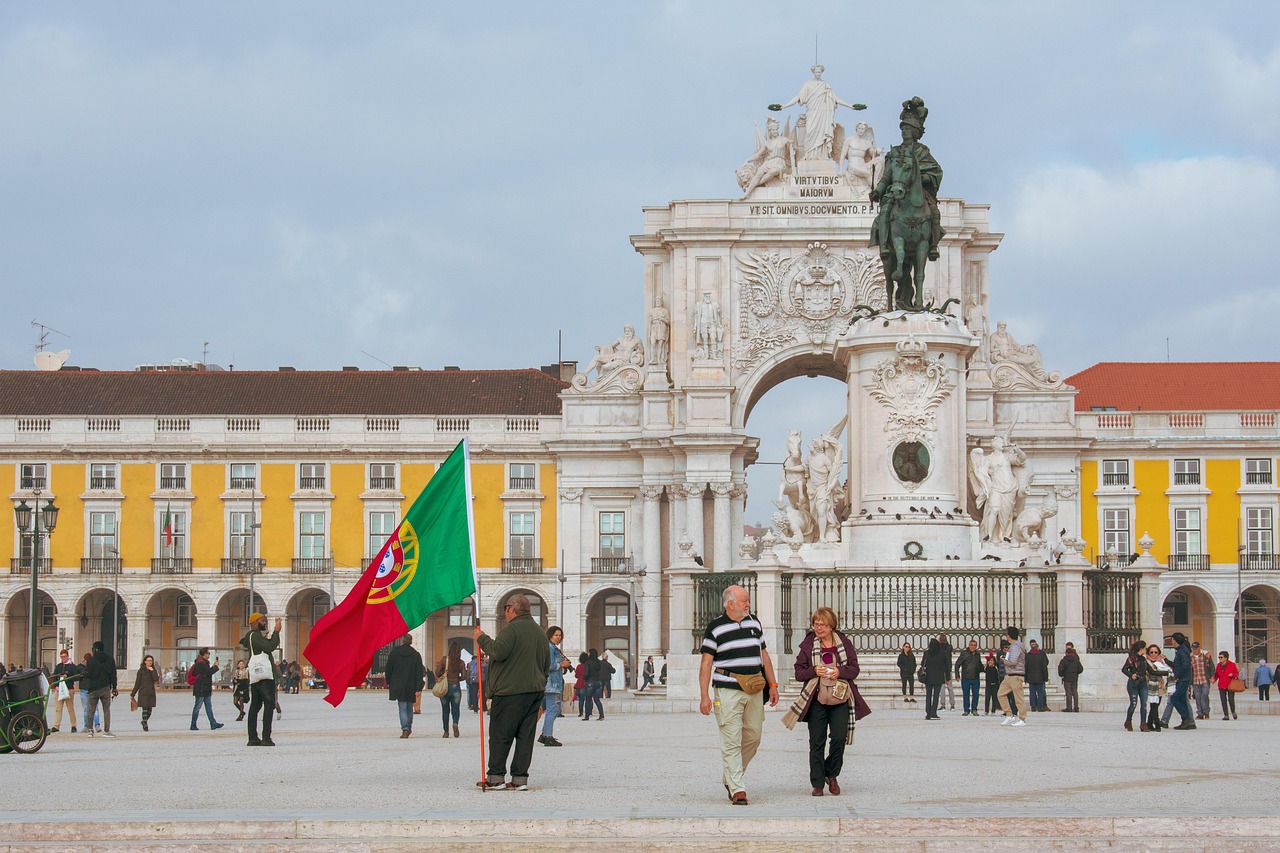
Opening directly onto the Tagus River, Praça do Comércio in Lisbon feels expansive and light-filled. The arcades frame the square elegantly, while the river adds a sense of openness that few city squares can match.
Late afternoon is the most rewarding time to be here, when Lisbon’s soft light reflects off the water and the square feels more like a threshold than a destination.
9. Marktplatz, Heidelberg (Germany)
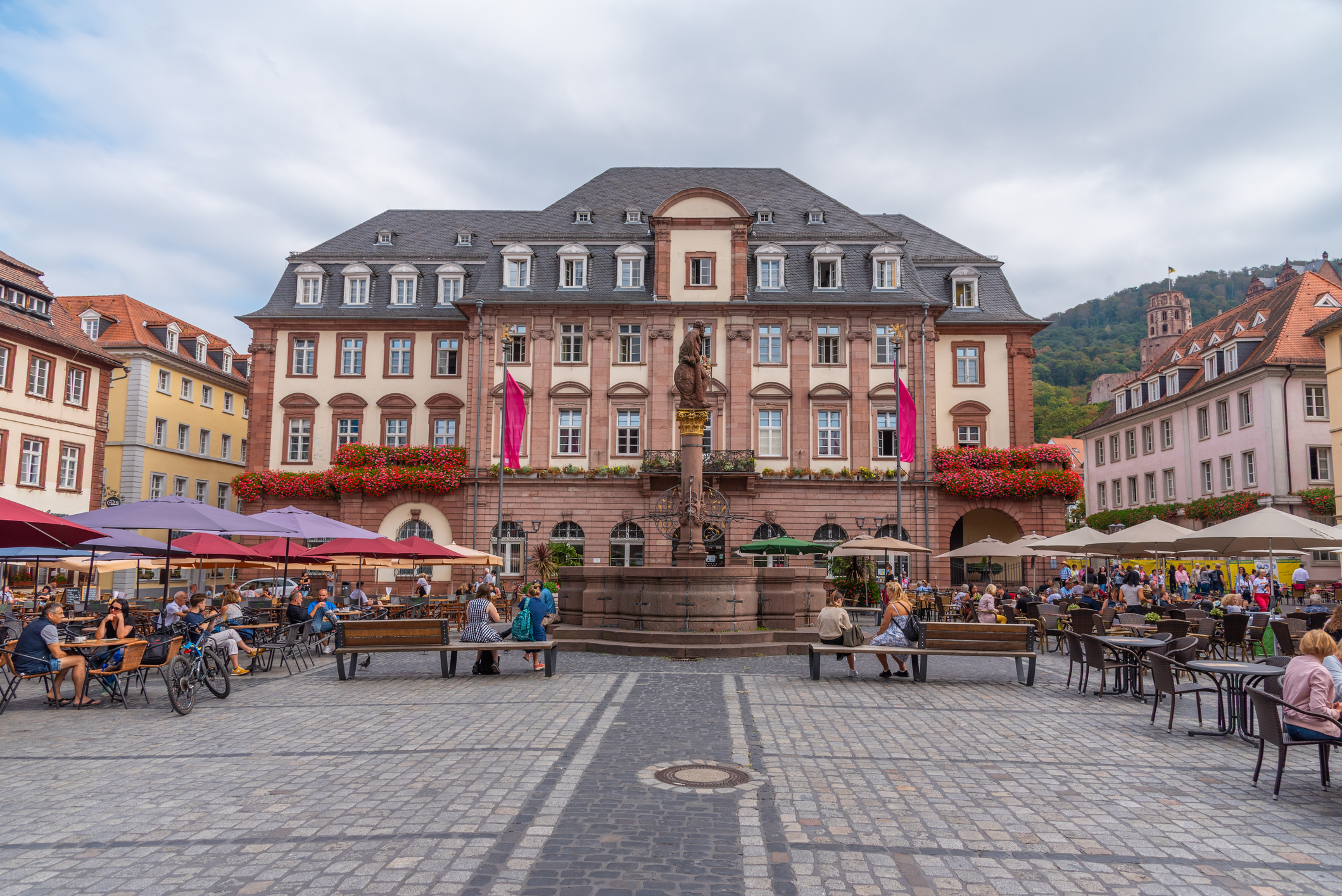
ID 246132735 ©Dudlajzov | Dreamstime.com
Nestled below Heidelberg Castle, Marktplatz has a quiet charm that suits the city perfectly. Cobblestones, pastel buildings, and a relaxed pace make it an ideal place to pause.
This is the kind of square where time stretches gently. A simple coffee stop often turns into a long break without effort.
10. Piața Sfatului, Brașov (Romania)
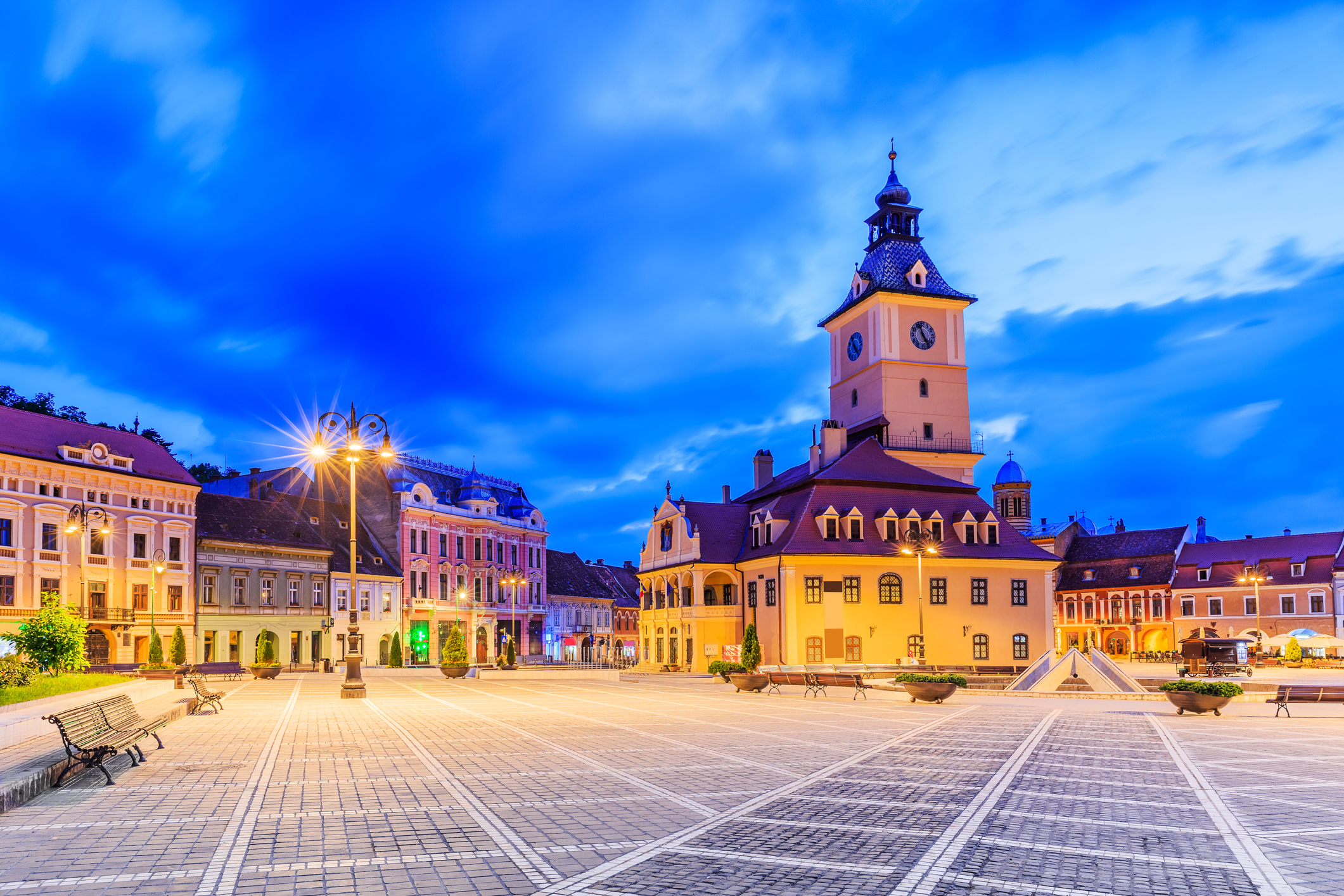
ID 94601091 ©Sorin Colac | Dreamstime.com
Piața Sfatului sits at the heart of Brașov’s old town, framed by colorful merchant houses and overlooked by the Black Church and can easily be explore in one day. The square feels open and welcoming, with plenty of space to pause, sit, or simply watch the city move at a gentler pace.
Historically the center of civic life in Brașov, Piața Sfatului remains lively throughout the day, from morning cafés to relaxed evening strolls. Surrounded by mountains yet firmly urban, it captures the balance that makes second-destination cities so rewarding.
11. Rynek Główny, Kraków (Poland)
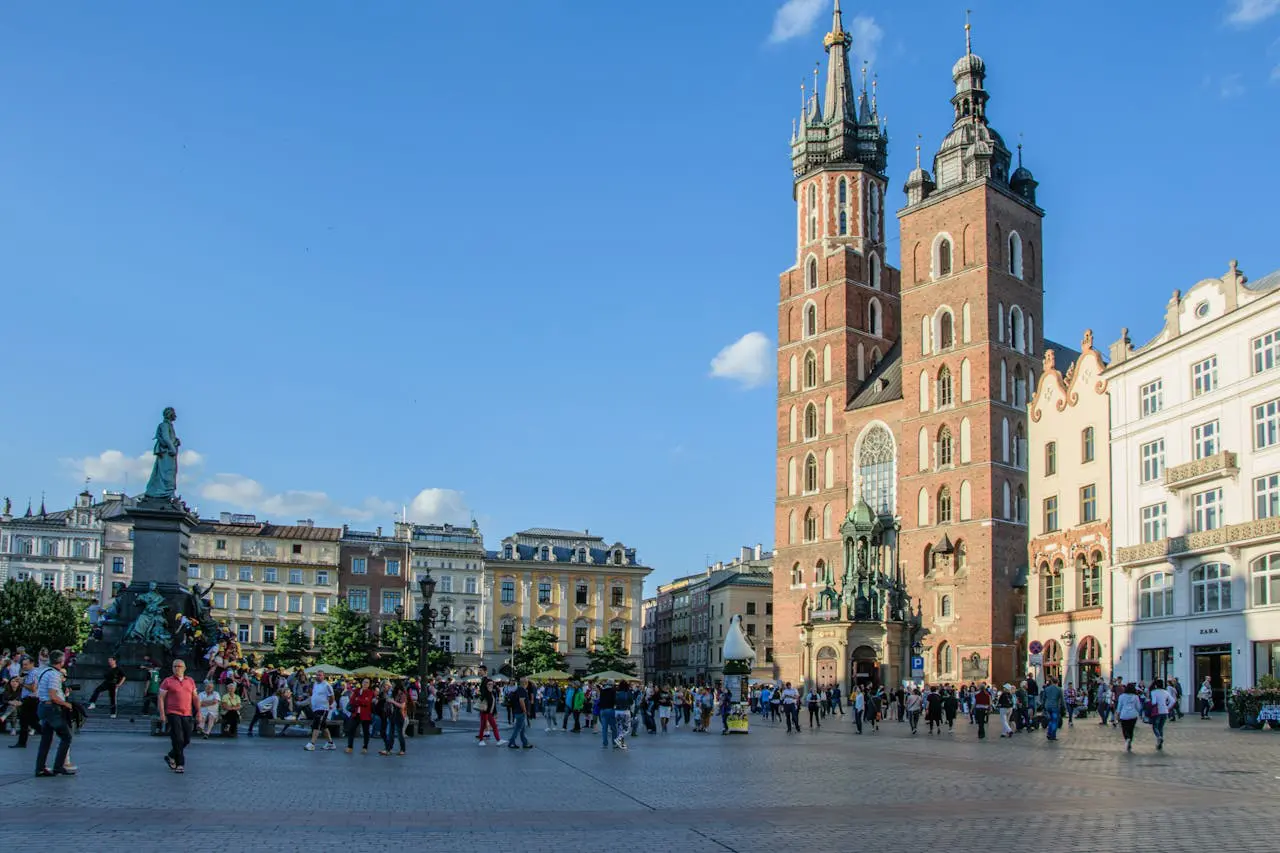
Rynek Główny in Kraków is one of the largest medieval squares in Europe, yet it never feels impersonal. Street musicians, cafés, and gentle movement keep the atmosphere warm and accessible.
At its center stands the Cloth Hall, a reminder of the square’s long role as a major trading hub in medieval Europe.
Even with its scale, the square encourages lingering. It’s easy to spend an entire evening here without feeling overwhelmed. As one of the largest medieval squares in Europe, Rynek Główny represents the scale and ambition that defined historic European city planning.
12. Marienplatz, Munich (Germany)
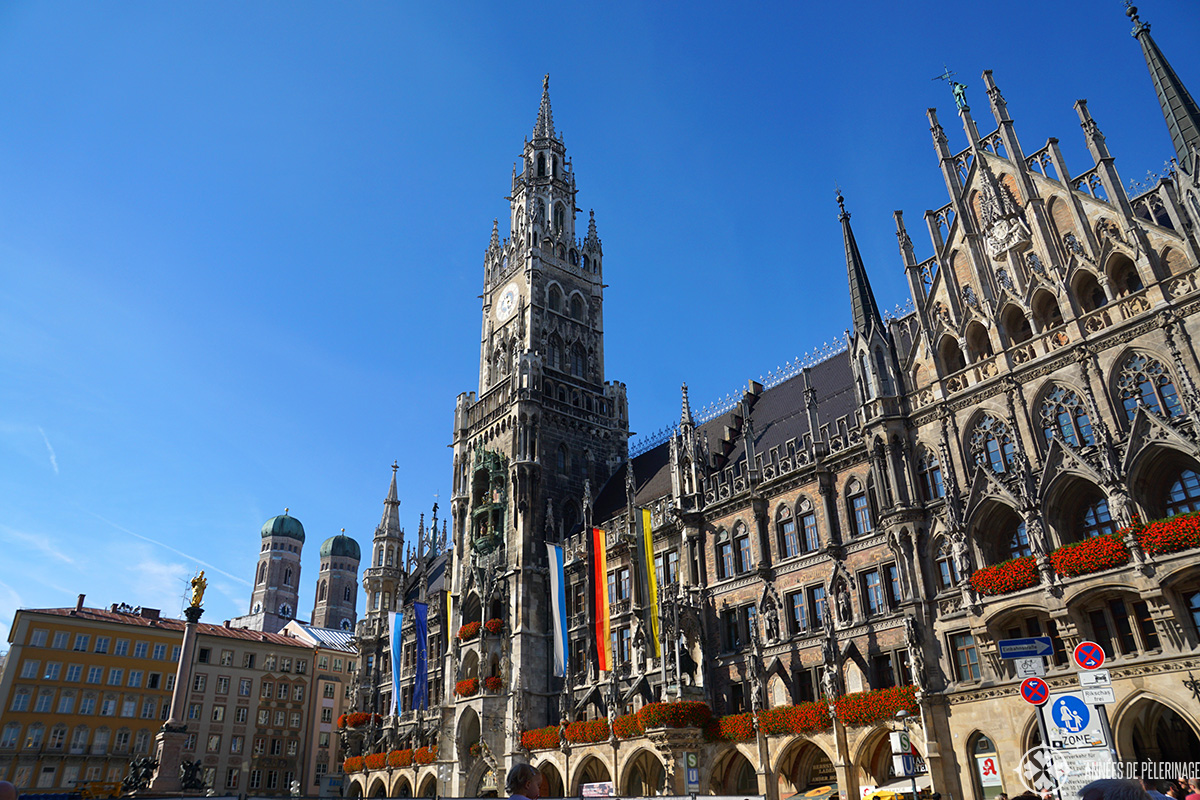
Marienplatz sits at the heart of Munich, Germany, and has been the city’s main gathering place for centuries. Framed by the ornate Neues Rathaus and historic façades, the square feels lively without being overwhelming, animated by street musicians, cafés, and the steady rhythm of daily life.
While many visitors pause briefly to watch the famous Glockenspiel, Marienplatz rewards those who stay longer. Its appeal lies in movement and atmosphere rather than spectacle – a place where the city reveals itself gradually, through people rather than monuments.
13. Piazza Unità d’Italia, Trieste (Italy)
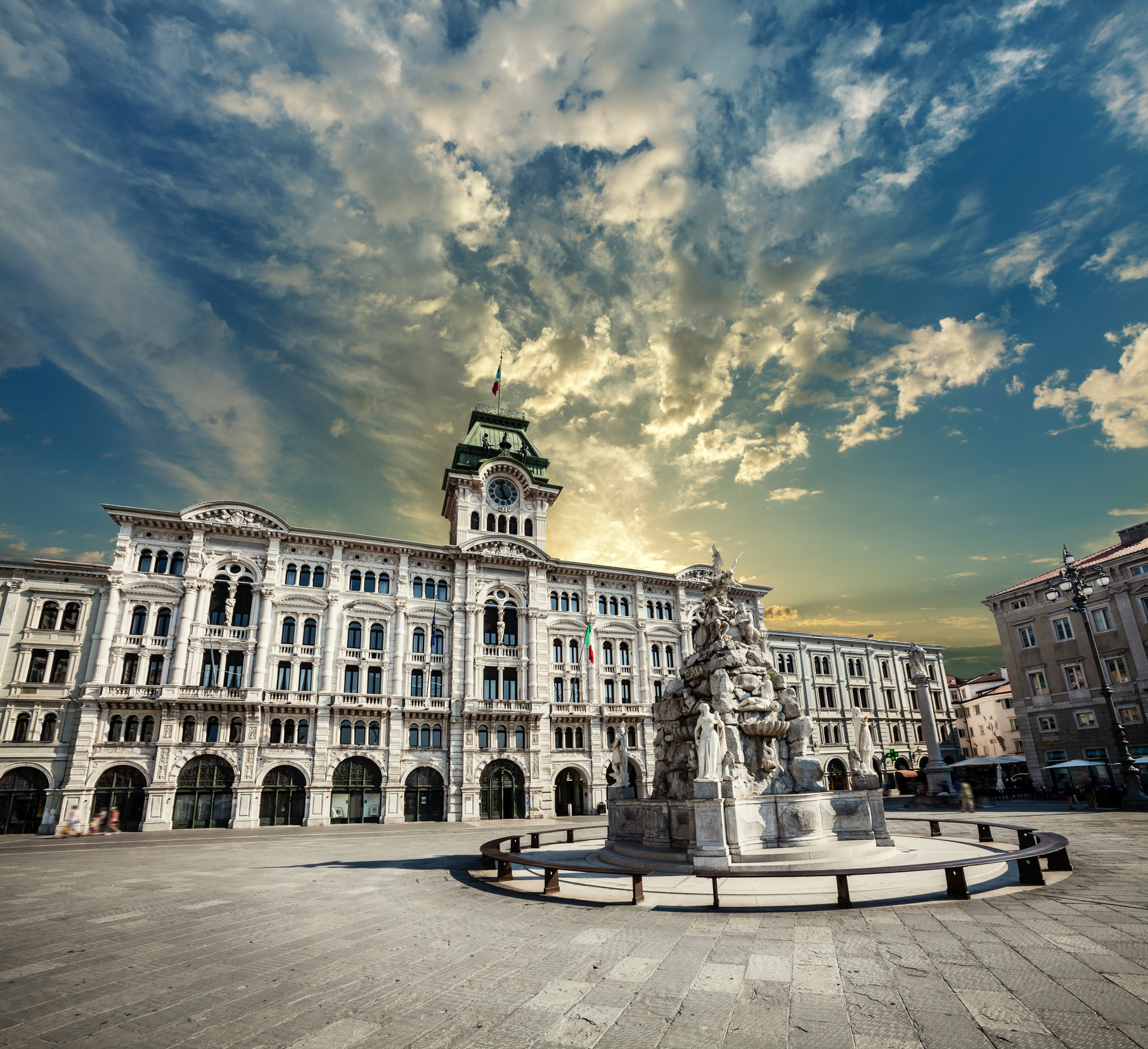
ID 66235742 ©Angelo Cordeschi | Dreamstime.com
Piazza Unità d’Italia opens directly onto the Adriatic, making it one of the largest seafront squares in Europe and it can be on a list of top 100 places to visit in Italy. Framed by grand 19th-century palaces and facing the water, the space feels expansive and quietly dramatic, shaped as much by light and wind as by architecture.
Despite its scale, the square invites lingering rather than spectacle. Locals cross it daily, pause on benches, or stop for an evening stroll as the sea breeze moves through – a reminder that some of the most memorable European squares are defined by atmosphere, not crowds. Few European city squares combine monumental scale and waterfront positioning as seamlessly as this one.
14. Plaza de España, Seville (Spain)
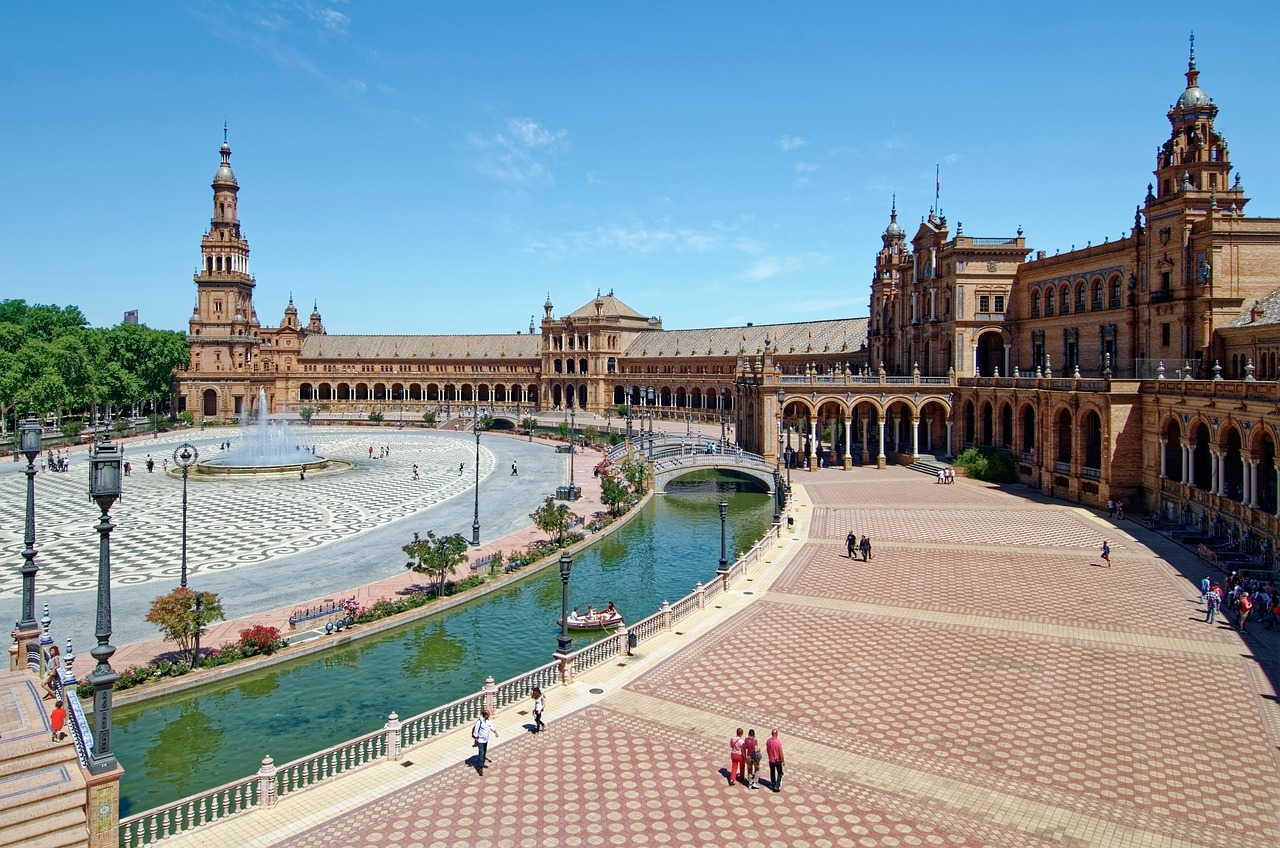
Plaza de España in Seville is unapologetically cinematic, yet its sheer size prevents it from feeling cramped. Bridges, tiled benches, and water features create countless perspectives without forcing movement.
Built for the 1929 Ibero-American Exposition, the square blends Renaissance Revival and Moorish-inspired elements unique to southern Spain.
Despite its fame, there’s room to breathe here – especially if you wander beyond the central axis and take time to explore its details.
15. Grand Place, Brussels (Belgium)
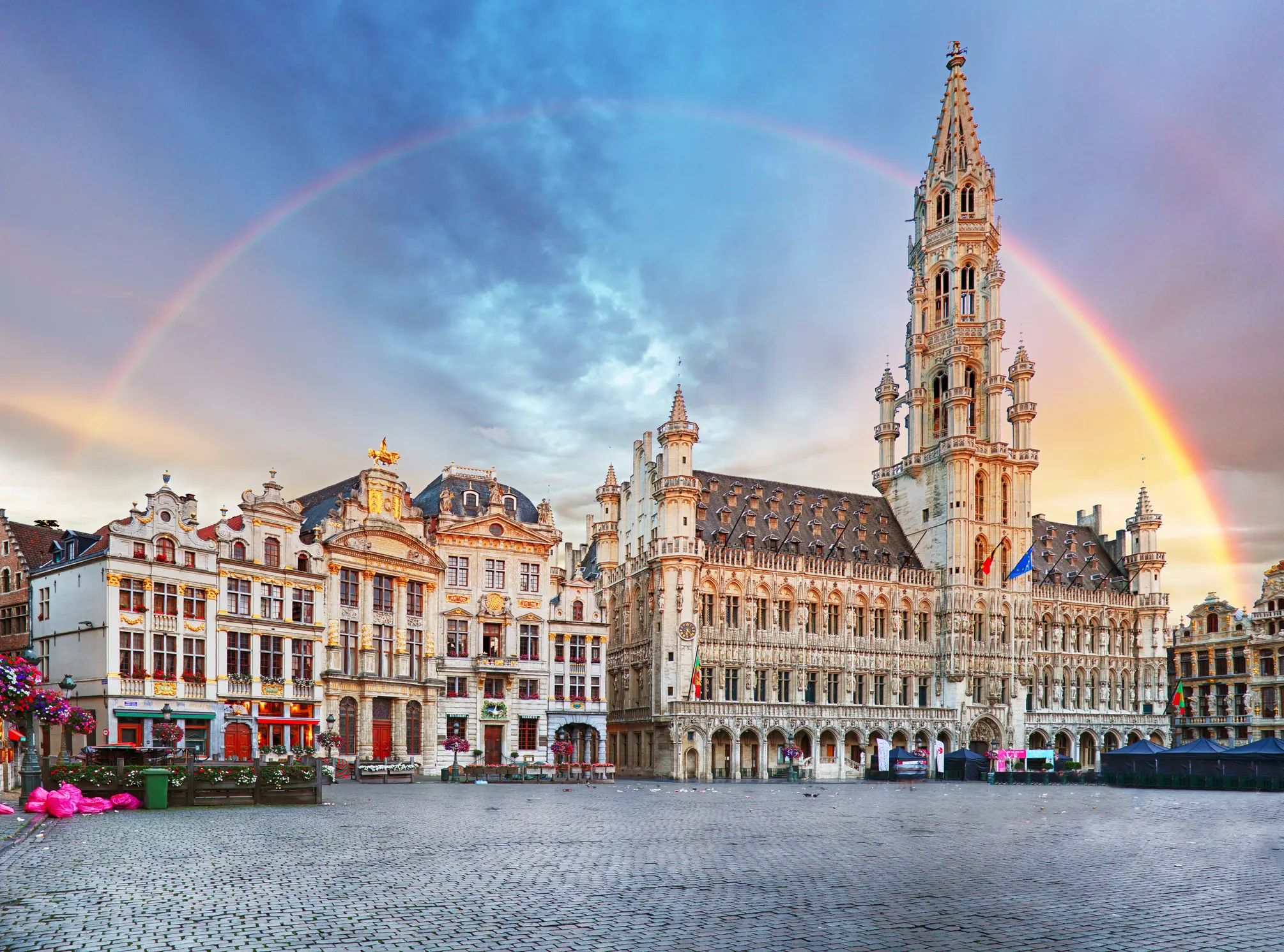
ID 99601613 ©Tomas1111 | Dreamstime.com
Brussels’ Grand Place delivers its strongest visual impact after dark, when the ornate guild houses are illuminated and the atmosphere feels almost ceremonial rather than hectic.
Designated a UNESCO World Heritage Site, the square is celebrated for its remarkably well-preserved guild houses and cohesive architectural ensemble. Frequently ranked among the most beautiful squares in Europe, Grand Place is a benchmark for architectural cohesion and preservation.
Visit in the evening and the experience becomes far more intimate than its reputation suggests. Book a walking tour if you want to discover more of what the city has to offer.
16. Old Town Square, Prague (Czech Republic)
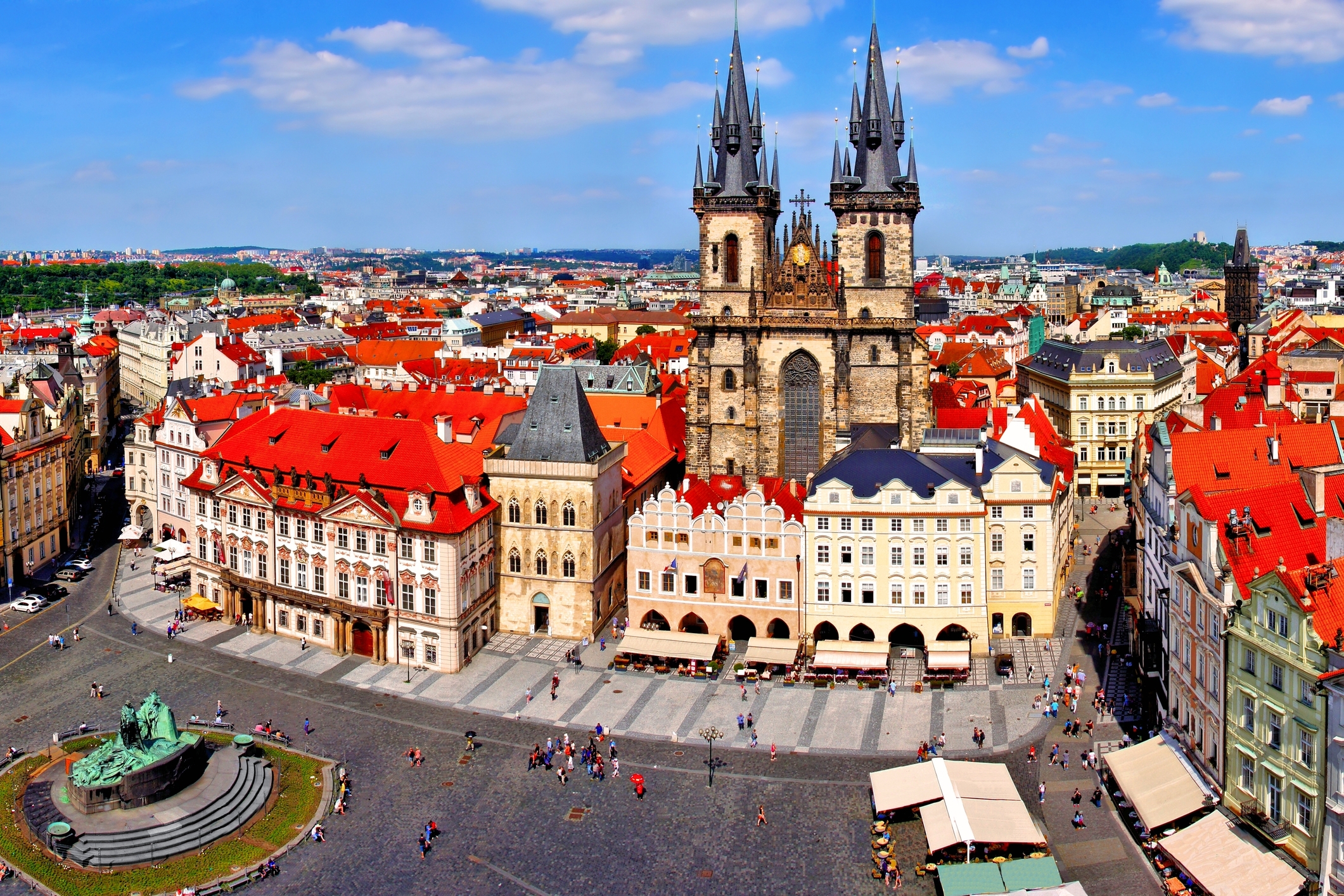
ID 39064061 ©Jenifoto406 | Dreamstime.com
Old Town Square may be one of Prague’s busiest places, but timing changes the experience completely. In the early morning or later in the evening, the square slows down and its layered history becomes easier to feel.
With fewer people passing through, the beauty of Prague’s historic heart feels less like something to tick off — and more like something to quietly take in.
17. Senate Square, Helsinki (Finland)
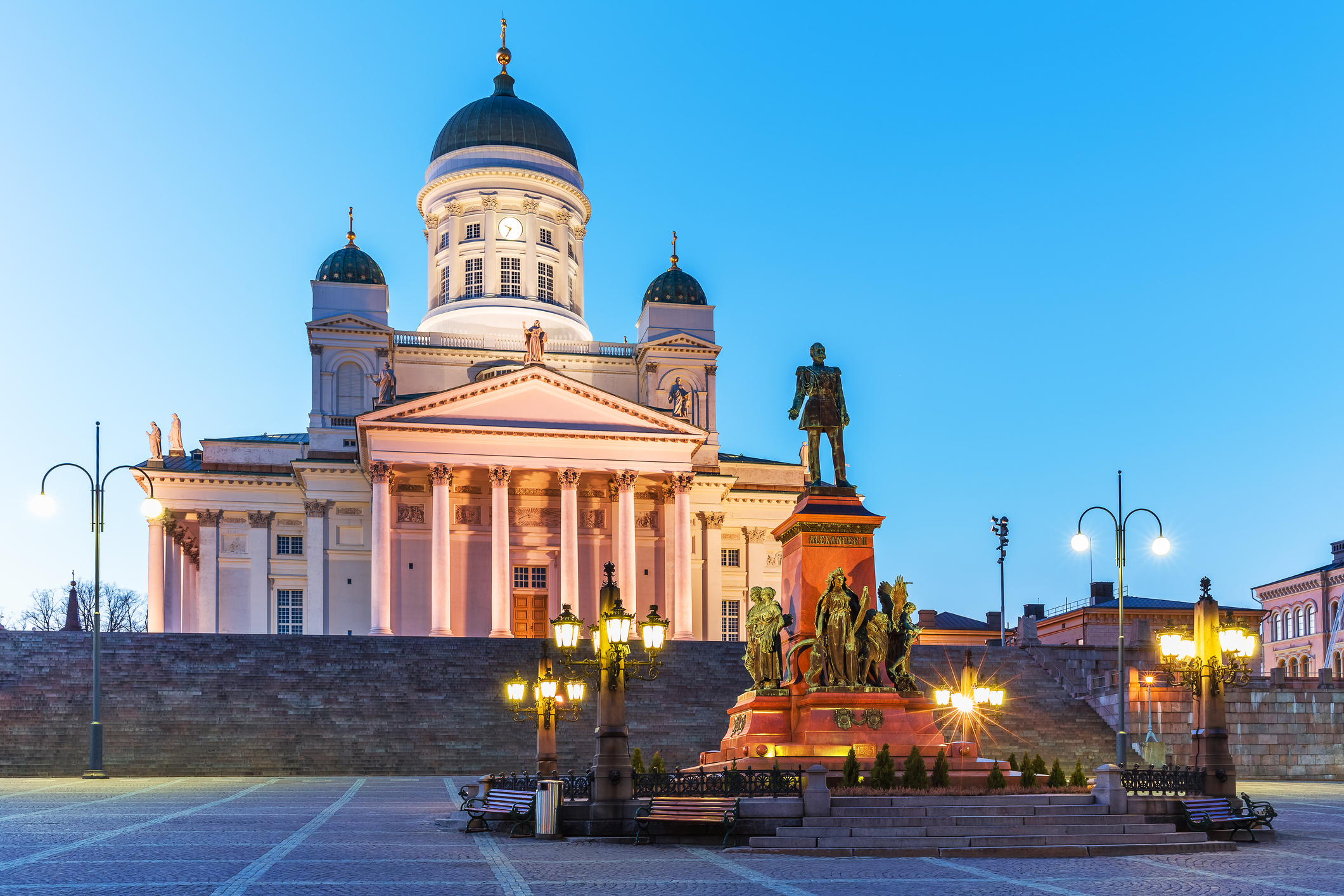
ID 49954881 ©Scanrail | Dreamstime.com
Senate Square in Helsinki brings the list to a quiet, confident close. Clean lines, pale stone, and northern light give the space an openness that feels both grounded and quietly powerful.
It’s a place that doesn’t compete for attention – a reminder that some of Europe’s most memorable moments unfold slowly, through stillness rather than spectacle.
A note on timing and crowds
Even the most beautiful European squares change depending on the time of day. Early mornings and late evenings tend to be calmer, while local life often peaks around aperitivo hours or after dinner, when residents reclaim these spaces.
Visiting outside peak summer months can reveal a completely different side of a square – quieter, more intimate, and far closer to how locals experience it.
Why European Squares Matter in Modern Travel
As discussions around visitor management and overtourism continue across Europe – including in cities like Rome – travelers are increasingly drawn to open public spaces that don’t require timed tickets or structured entry systems.
European squares offer something different: accessibility, historical depth, and architectural presence without rigid scheduling. They are not alternatives to landmarks – they are often the defining heart of a city.
A different way to experience Europe
As entrance fees, crowd controls, and travel fatigue reshape the way we explore cities, squares like these offer a better alternative. They don’t need tickets, they don’t rush you, and they reward time more than attention.
Skipping the Trevi Fountain doesn’t mean missing out. It often means discovering places that feel more real – and far more memorable.
Which of these squares would you choose over a crowded landmark – and which one would you add to the list?
Frequently Asked Questions About European Squares
What are the most beautiful squares in Europe?
Some of the most beautiful squares in Europe include Piazza del Campo in Siena, Grand Place in Brussels, Plaza Mayor in Salamanca, Rynek Główny in Kraków, and Piazza Unità d’Italia in Trieste. These squares are known for architectural cohesion, historical importance, and vibrant public life.
What is the largest medieval square in Europe?
Rynek Główny in Kraków is often cited as one of the largest medieval market squares in Europe, covering approximately 40,000 square meters and remaining a central gathering place since the 13th century.
Are European city squares free to visit?
Yes. Most historic European squares are public spaces and free to enter. While surrounding museums or towers may require tickets, the squares themselves are typically open and accessible at all times.
What makes a square historically significant in Europe?
Historic European squares often served as marketplaces, political centers, or civic gathering spaces. Their significance usually comes from architectural preservation, historical events, and their continued role in everyday city life.
When is the best time to visit European squares?
Early morning and late evening typically offer the most atmospheric experience, especially in cities that attract high visitor numbers. Visiting outside peak summer months can also provide a calmer setting.
Why are European squares important in urban design?
European city squares are central to traditional urban planning. They create open civic space, connect major buildings, and encourage pedestrian movement. Many of the most famous squares in Europe were designed to reflect political power, religious influence, or commercial strength.
Are European squares considered tourist attractions?
Yes, but unlike single monuments, squares function as living public spaces. They are both attractions and daily gathering points, blending tourism with local life.
Photo sources – apart from Dreamstime and Marienplatz: 1, 2, 3, 4, 5
More amazing articles for you:
Don’t Ignore the Signs: How to Prevent Burnout Before It’s Too Late
The Surprising Relationship Between Trust And Longevity (According To A New Massive Study)
These Day Trips from NYC Will Change Your Weekends Forever (And You'll Love Every Moment)
How Many Cups of Coffee Could Help You Live Longer? Scientists Finally Have an Answer
27 Best Places in Europe for Fall Foliage You’ll Want to See Once in Your Life
If You Do These 11 Behaviors Naturally, Research Says Your Intelligence Is Likely Above Average - Mo...
This Mid-Flight Promo Stunt Is Everywhere - and It’s Triggering Outrage, Health Warnings, and a Heat...
Better Than Nashville? 11 Surprising Reasons Travelers Are Falling for This Tennessee Gem

Violeta-Loredana Pascal is a communications expert, business mentor, and the founder of Earth’s Attractions and PRwave INTERNATIONAL. A pioneer in the Romanian digital PR landscape since 2005, she holds a degree in Communication and Social Sciences from SNSPA Bucharest. Violeta is a senior trainer at AcademiadeAfaceri.ro, where she leverages over 20 years of experience to teach professional courses in PR strategy and workplace productivity. By blending high-level business consulting with a passion for holistic travel and wellness, she empowers solopreneurs to overcome procrastination, build profitable brands, and design a life of purposeful adventure.