
You pull into the return lane, park the car, and take a quick look around. No obvious scratches, no dents, nothing that stands out. If a staff member is present, there’s often a brief glance, a nod, maybe even a “you’re all set.” You grab your bags and move on, assuming the transaction is complete.
Then, days later, the message arrives.
An email, a notification, sometimes a charge already processed. Damage has been identified. Photos are attached. The amount isn’t minor.
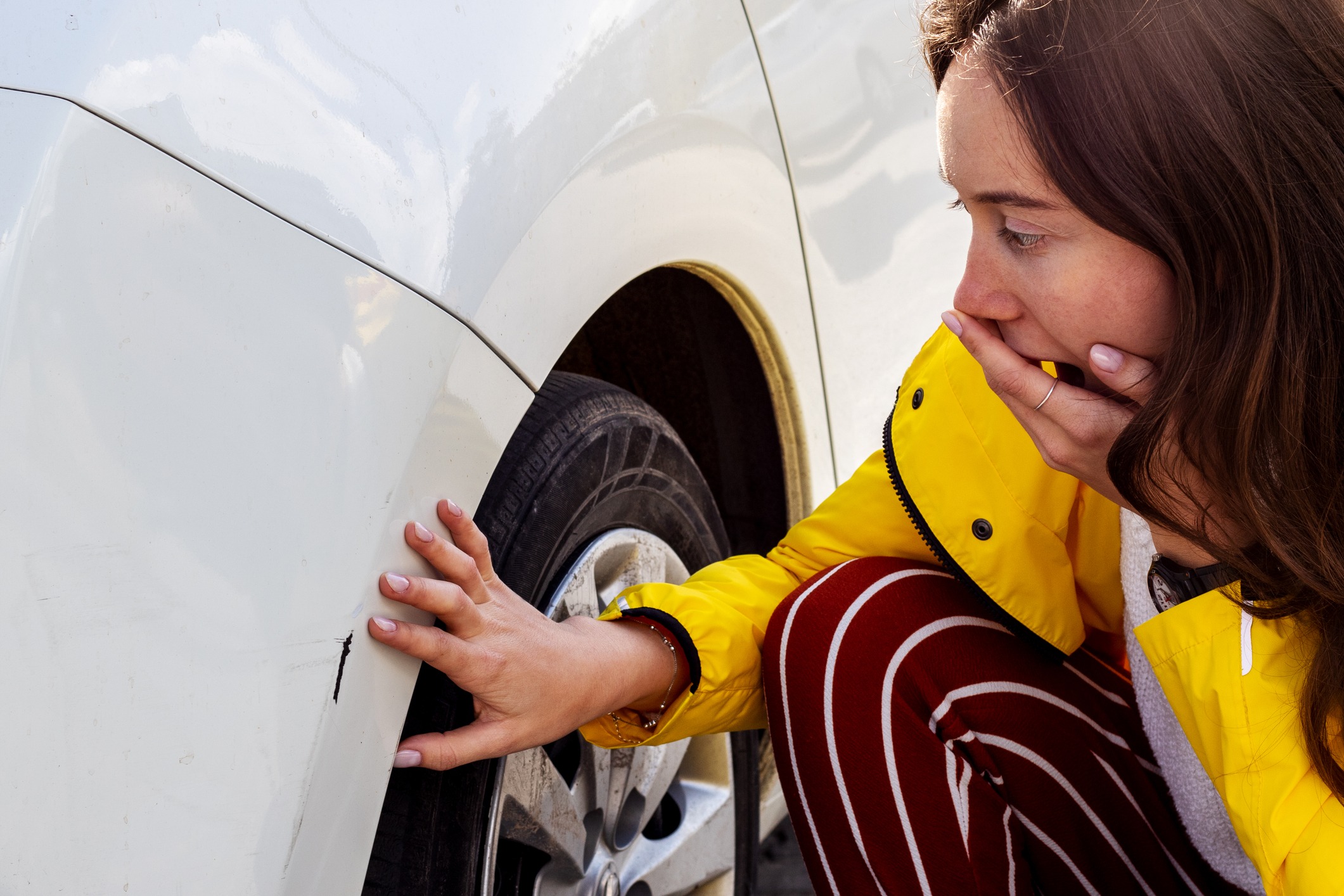
Needless to say, this is surprising. The car looked fine. You know you didn’t do anything to it. Yet the claim arrives anyway, framed as a standard post-rental finding. This type of situation – being hit with rental car damage charges after return – is more common than most travelers expect.
ID 185682149 | Car ©Serhii Ivashchuk | Dreamstime.com
As many people rent cars – and there are many famous providers, from DiscoverCars to Avis and Hertz to smaller companies in all countries – it is useful to know as much as possible about what to do to prevent rental car damage disputes.
Situations like these happen, and in this article I am sharing the number 1 mistake people make when renting a car (because we all want to avoid making travel mistakes that cost us a lot). I will not only share the mistake, but also the tips on how to make sure everything is done properly and helps you later. We have a lot of experience renting cars – mainly my husband. He rented numerous cars while traveling for his job.
What Actually Happens After You Return a Rental Car
The moment you leave the vehicle is not the end of the inspection process.
When you return the vehicle, a staff member (if present) confirms the car is physically there, checks the fuel/EV charge, and glances for “major” trauma – like a missing bumper. This is where you get the “you’re all set” nod.
The real inspection happens during cleaning, relocation to a secondary lot, or prep for the next customer. This is when the car is under bright lights or being scrubbed by hand. That is why you could be receiving an email with a bill and photos saying you need to pay for some repairs.
There are documented cases that illustrate how this plays out. One renter returned a vehicle, completed a walkaround with staff, and was told everything was in order. Several days later, he received a bill of approximately $1,500 for damage to a wheel rim, supported by photos taken after the return.
In another case, a customer received a receipt confirming the return, only to be notified within minutes that “significant damage” had been discovered during a subsequent inspection – an AI-powered inspection. The person was asked to pay $440.
Why “Just Taking Photos” is Only Half the Story
The standard advice is always the same: “Take pictures!/Make a video”.
But the truth is that this is only the beginning – because yes: the no. 1 mistake costing you thousands of dollars is to not document it all thoroughly. How you take these photos/make the video matters and can help you or not in a later dispute. The effectiveness of your evidence depends entirely on the three Cs: Context, Coverage, and Chronology.
If your photos lack these, they aren’t proof – they’re just digital clutter.
1. Timing: The “Handover” Trap
Most people take photos, lock the car, and walk into the terminal. But your photos only prove the car was fine when you parked it. What happens if a shuttle bus clips your mirror ten minutes later while the keys are still in your pocket?
You must document the car at the exact moment of handover. If you are dropping keys in a box, take a photo of the car in the drop-off lane with the key-drop box in the frame. This synchronizes your evidence with the end of your liability.
And it is not only at the handover moment.
My expert advice is to document everything thoroughly when you pick the car too. I know: you may be – as we are – on a rush – just wanting to get to the final point of your destination. You just want to get it all done.
But this rush can end up hurting you.
When you pick the car, inspect it thoroughly. Like you would buy it or pick it up at the service after a repair. Look in all the non-obvious places too (yes, the ones mentioned below, at no. 2 here). IF you notice something, immediately let the representative know. Make a note – an official note – so that you will not be charged later for a scratch that was already there!
And if you do not believe me when I say this step – inspection – has to be done thoroughly, I will share a complementary story. We had an issue with the car and it needed to have the right front door (the passenger door) replaced and to have a scratch on the right side of the car, near the front door, covered. We went to the official service of the brand the car is from. They are usually very professional (yes, we know the prices at the official brand services are higher). Yet, when we went to pick up the car, our son, who was inspecting the car thoroughly (paid a lot more attention than I or my husband did), saw that the scratch was not properly treated. We went back, asked the representative to come outside, showed the car and the scratch, and, yes, you guessed it: we did not sign to pick the car, we left it there.
Yes, this example is about a repair that was not well done. But the lesson is the same. Be very careful – even if you want to get it over with. My husband and I wanted to get in the car and go home. Yet our son was a lot more careful and saved us. Since then, we are relying less on others in such situations – and that includes inspecting each rented car carefully when picking it up and documenting that everything is ok when returning it. As you can see, the lesson applies directly to rental cars: even when a situation seems straightforward, small details can be missed unless you inspect and document everything carefully.
2. Coverage Gaps: The “Invisible” Damage Areas
Rental companies don’t usually look for big dents; they look for high-value “wear and tear” items that you likely missed. If your gallery doesn’t include these four spots, you are vulnerable:
- The Lower Bumper Edge: Scrapes underneath the front “chin” are the #1 source of hidden fees.
- Wheel Rims: One “curb rash” mark can cost hundreds. Photograph every wheel up close.
- The Roof: Especially for SUVs and vans. If you didn’t check the roof at pickup, you might be blamed for a previous renter’s low-clearance mistake.
- The Under-Door Sills: Marks from shoes or luggage hitting the door frames often count as “interior damage.”
3. The Context Problem: Prove It’s That Car
An isolated photo of a clean car door is useless in a dispute. Why? Because a claims adjuster can argue that the photo could have been taken anywhere, at any time.
How to fix it: The “Anchor” Shot: Always start your documentation with a photo that includes the license plate AND the rental company’s signage in the background.
Beware of Compression: If you send photos via WhatsApp or certain cloud apps, the metadata (GPS and Timestamp) can be stripped. Always keep the original files on your phone’s local storage. If you lose the metadata, you lose your timeline.
We always keep the photos/videos on the phone.
4. The “Night Return” Risk
Returning a car at 4:00 AM? Your camera’s flash will likely create “hot spots” that hide scratches or create glare that looks like damage.
If the lighting is poor, use a video walkthrough with the flashlight ON. The moving light source is much better at catching surface irregularities and reflections than a static, grainy photo.
The “Proof Gap”: The Exact Moment Most People Get It Wrong
The core mistake isn’t failing to take photos; it’s failing to document the car at the precise moment of handover. Most renters take photos casually – maybe a few shots after they park, or a quick snap as they walk toward the terminal. But there is a massive difference between perception and legal proof.
Your Perception: “I took photos. I’m protected.”
The Reality: Your photos prove the car was fine at 10:15 AM. But you didn’t hand over the keys until 10:30 AM. In that 15-minute “Liability Gap,” your documentation is technically unofficial.
If your evidence isn’t synchronized with the handover, it lacks the specificity needed to challenge a claim. A claims adjuster can simply argue that the damage occurred in those “missing minutes” between your last photo and the official return scan.
The Expert Fix: Don’t just take photos of the car. Take photos of the car at the drop-off point. Your goal is to eliminate any window of time where the rental company can claim “unaccounted-for damage.” If there is no gap in the timeline, there is no room for a charge.
The “Waiting in Line” Trap
This is where most travelers get burned. You park the car, take your photos, and then head inside to the rental counter. If there’s a line, you might be waiting 15 or 20 minutes before a staff member officially checks you out.
Here is the reality: Until that agent hits “complete” on their tablet, that car is your responsibility. If a suitcase dings the door or another driver scrapes your fender while you’re standing in line, your “15-minute-old” photos are already outdated.
The Expert Workaround:
- The “Final Exit” Snap: Take your detailed photos/video first, but take one last wide-angle shot of the car through the window of the rental office or as you are stepping into the queue.
- The “Employee in Frame” Trick: If an attendant is walking the line, try to get a photo of the car that includes the rental car employee or the return kiosk in the background. It anchors the car to the “Official Return Zone” at a specific time.
The 2-Minute Protection Protocol: How to Document Like a Pro
You don’t need a film crew to protect your deposit, but you do need precision. If you want to shut down a damage claim before it even starts, follow this systematic approach at the handover:
1. The “Continuous” Video Walkthrough
Instead of taking 50 individual photos, take one continuous 4K video. * Why it works: Static images can be dismissed as “selective.” A video provides continuity that’s much harder to challenge.
The Technique: Start at the license plate, walk slowly around the entire car in one unbroken sequence, and finish by panned up to show the rental office or airport terminal.
2. The “Context” Shot (Your Evidence Anchor)
A photo of a scratch is just a photo of a scratch. To make it legal proof, you need context. Ensure your footage captures:
- The License Plate.
- The Rental Lot Signage.
- The Odometer & Fuel Gauge.
- A Time Anchor: If there’s a clock in the rental office or a digital flight board nearby, get it in the frame.
If you take photos too, make sure they capture these elements too. Taking photos takes more time – but it can be useful, if you have the time.
3. Capture the “High-Risk Zones”
Don’t just walk at eye level. Most rental claims are for things you can’t see while standing up straight.
- The “Low-High” Pass: Drop your camera low to record the under-bumper and rims, then lift it high to sweep the roof.
- The Reflection Trick: Move the camera slowly so the light dances off the panels; this highlights “hidden” dents that a flat photo might miss.
4. Protect Your Digital Paper Trail
This is a technicality that saves thousands: Never delete the original files. If you upload your photos to a messaging app like WhatsApp to “save” them, the app strips the metadata (the GPS and timestamp). If a dispute happens, you need the original, raw file from your phone’s gallery to prove exactly when and where that video was recorded.
Note: by never, I mean keep them 1-3 months. Or check to see in the rental contract if they specify the period in which their inspection takes place, and you can be charged for damages.
The High Cost of the “Burden of Proof”
ID 54654054 | Car ©Andrey Popov | Dreamstime.com
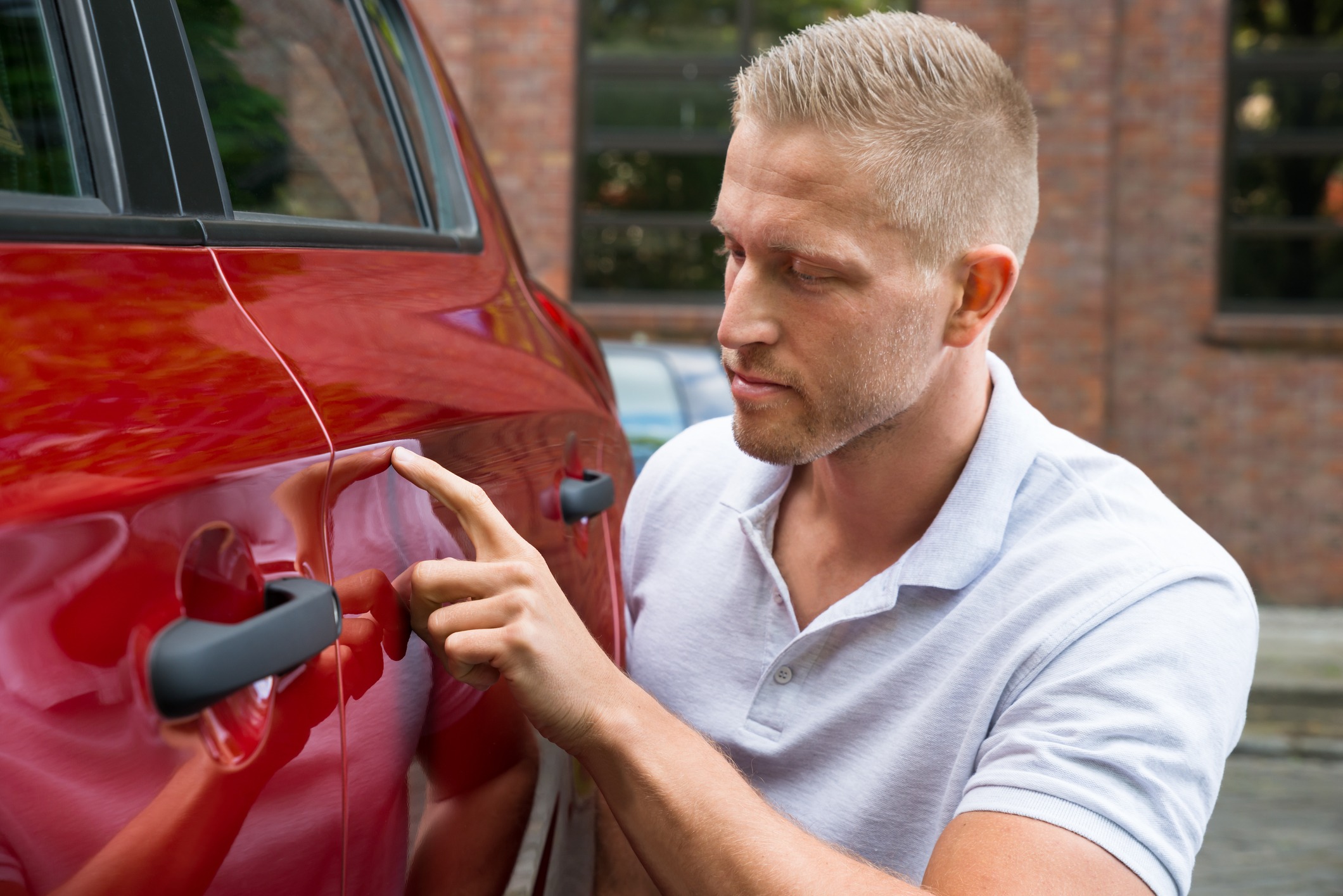
Why go to all this trouble for a tiny scratch? Because in the world of car rentals, you are guilty until proven innocent. The moment you sign that rental agreement, the burden of proof shifts to you. If the company presents “documented findings” from an inspection that happened two hours after you left, the law (and your credit card company) usually sides with them—unless you have the “Transition Proof” we discussed above.
The “Disproportionate Charge” Trap
It’s rarely just the cost of a paint pen. When a rental company flags damage, they don’t just bill you for the repair; they hit you with:
- Loss of Use Fees: Charging you for the daily rental rate while the car is “in the shop.”
- Administrative Fees: Often $50–$150 just for “processing” the claim.
- Diminished Value: A fee because the car is now worth less on their books.
A $50 scratch can easily balloon into a $500+ nightmare once these structural costs are added. This is exactly why documenting the car at the precise moment of handover isn’t just a “good idea”—it’s a financial insurance policy.
What Happens if a Rental Car Company Claims Damage? (The Action Plan)
Receiving a damage notification days after your trip is stressful, but how you react in the first 48 hours determines if you’ll actually pay. Usually, the process starts with an automated email containing a “Damage Incident Report,” photos, and an estimate.
Depending on your coverage, the process follows one of two paths:
- Internal Coverage: If you bought the rental company’s “CDW” (Collision Damage Waiver), they usually handle the claim internally. However, you should still verify that the damage reported isn’t excluded from your specific policy.
- External Insurance (Credit Card or Personal Policy): If you relied on your credit card’s rental insurance, the rental company will likely charge your card directly first. You then have to file a claim for reimbursement. This is where your photos are vital. Your insurance provider will demand proof that the damage didn’t exist when you returned the car.
Why You Must Act Quickly
Timing isn’t just about being polite; it’s a legal necessity. Most rental agreements have a narrow window (often 7–14 days) to dispute a charge. If you don’t respond, you are essentially “admitting” fault by silence.
The Earth’s Attractions Expert Tip: Never “agree” to a charge over the phone. Always request a full Itemized Repair Estimate and the Maintenance Log of the vehicle. If the car was rented out again immediately after you, you can argue that the damage was caused by the next driver during their inspection window.
Can You Actually Win a Rental Car Damage Dispute?
Yes, but it’s an uphill battle. The outcome depends entirely on two things: the quality of your documentation and the persistence of your argument.
A successful dispute usually requires proving one of two things:
- The damage simply did not exist when you surrendered the keys.
- The “damage” is actually within the company’s own “Standard Wear and Tear” guidelines (which are often more generous than a greedy claims agent will admit).
The Escalation Ladder
If the rental agency rejects your initial email, don’t take it as the final word. Most companies count on you giving up.
- Escalate to the Payment Provider: Initiate a “billing dispute” or chargeback with your credit card company.
- Involve Your Insurance: If you have external coverage, let them fight it—they have teams dedicated to spotting fraudulent claims.
- The “Lawyer Friend” Strategy: This is where things get real. If the claim is significant (into the thousands), it’s worth seeking a legal opinion. If you have a friend in the legal field, run the claim by them. You don’t necessarily need a formal consultation that adds $500 to the bill just for an opinion; often, a single letter on a law firm’s letterhead is enough to make a rental company’s “indisputable” claim suddenly vanish.
Do Photos Alone Count as Proof?
It’s a common misconception that “any photo is a good photo.” In a dispute, photos are treated as supporting evidence, not absolute truth. Their evidentiary weight depends on:
- Continuity: Can you prove this is the same car, in the same spot, at the time of return? (This is why we focus on context shots).
- Metadata Integrity: High-resolution images that retain their original GPS and time stamps are much harder to challenge than a grainy, compressed photo sent via text.
- The Video Edge: As we’ve discussed, video is king. It captures surface reflections and unbroken movement that static photos miss, making it much harder for a company to claim a “gap” in your story.
Conclusion: The Difference Between Avoiding a Charge and Paying One
The issue isn’t rare, and it isn’t always driven by malice. It’s a function of a high-volume system where “secondary inspections” happen in your absence.
The difference between a stress-free flight home and a months-long dispute often comes down to one tiny, precise adjustment: documenting the vehicle at the exact moment of handover (and when you pick it up!). Everything else can appear correct, but that one detail determines whether your evidence holds up or falls apart. Have you ever been charged for damage you didn’t cause? Let us know in the comments, and stay tuned for the next part of our series where we tackle the “pre-paid gas” trap!
Quick Summary: The 2-Minute Protection Plan
- The Mistake: Failing to document the car at the exact moment of handover.
- The Fix: Take one continuous 4K video starting from the license plate, panning the whole car, and ending with the rental office in the frame.
- The Result: You eliminate the “Liability Gap” where companies claim damage happened after you left.
More amazing articles for you:
What airline passengers want - interesting airline passenger survey results
Top Places in Asia by Instagram Likes (infographic included)
A Local's Guide to Minneapolis–Saint Paul
15 Most Romantic Wedding Destinations
What not to do on your first trip to Paris
How to Travel in Winter Without Getting Sick (What Actually Helps)
How to pack a suitcase for a week in 30 minutes or less
Melbourne 3-day itinerary: what to do in Melbourne in three days

Violeta-Loredana Pascal is a communications expert, business mentor, and the founder of Earth’s Attractions and PRwave INTERNATIONAL. A pioneer in the Romanian digital PR landscape since 2005, she holds a degree in Communication and Social Sciences from SNSPA Bucharest. Violeta is a senior trainer at AcademiadeAfaceri.ro, where she leverages over 20 years of experience to teach professional courses in PR strategy and workplace productivity. By blending high-level business consulting with a passion for holistic travel and wellness, she empowers solopreneurs to overcome procrastination, build profitable brands, and design a life of purposeful adventure.