
I’ve stayed in many hotels over the years, and I love the experience. But lately, some of the hotel stories I’ve come across have made me think about things I never used to worry about when traveling.
I’ve already shared some rather unusual hotel front desk stories, including situations employees struggled to handle. Then there was the hotel breakfast debate, which started with something two guests did and eventually raised questions I hadn’t considered before.
And there have been other hotel stories that made me question what happens behind the scenes. I was shocked when I discovered a viral hotel coffee maker hack in which someone recommended that travelers wash their underwear in the machine others use to prepare their drinks. Then there were the disgusting hotel room discoveries shared by guests, and the controversy surrounding hotel bathroom designs that leave travelers with far less privacy than they expected.
Today, I have another experience to share. It involves a couple who booked a hotel room for the night and expected to get some rest before continuing their journey.
Things didn’t go according to plan, and the experience prompted hundreds of reactions from people who had very different opinions about what the couple should have done.
And before the couple even checked out, another incident made the situation even more peculiar.
I wanted to share this story because, after reading the discussion, I’ve started reconsidering one of my own travel habits. I’ll explain why at the end.

Image from Depositphotos
A Woman Entered Their Hotel Room at 4 AM Using a Working Keycard
On October 9, 2026, a woman using the username Batmam started a discussion on Mumsnet about something that had happened while she and her partner were sleeping in a large chain hotel.
At approximately 4 AM, another woman entered their room carrying a suitcase.
She hadn’t forced the door or somehow managed to open it without authorization. She had been given a working keycard by hotel reception and told that this was her room.
Batmam described the moment:
“don’t know who was more shocked her or us! We didn’t have any clothes on but were under the sheets thank god. I was sleeping so deeply it took me a second to realise what was going on.”
Her partner noticed the visitor first and called out, waking her.
As far as the couple could tell, the arriving guest had made an innocent mistake. She believed the room was hers because reception had told her so.
But the situation left Batmam with a question: how could a hotel issue a keycard for a room that was already occupied?
She explained that they had checked in personally the previous evening, signed for their room, and paid for their accommodation when booking.
After contacting reception, she was disappointed by the employee’s initial response. According to her account, the receptionist appeared more concerned with obtaining their booking details than apologizing for what had happened.
The couple then secured the additional lock on the door, but Batmam wasn’t confident she could get back to sleep.
She also mentioned a previous hotel security incident that had attracted media attention.
Some Commenters Thought the Couple Should Have Locked Their Door Differently
One of the first responses questioned why the couple hadn’t secured the internal lock before going to sleep. That comment started a disagreement that continued through several pages.
Should Guests Always Use the Additional Lock?
One participant immediately asked:
“Why didn’t you secure the door when you went to bed?”
The commenter compared the situation to leaving a house’s front door unlocked.
But other people objected to that comparison. The hotel room door was already locked from the corridor. No one could simply turn the handle and walk inside. The problem was that another guest had been issued a working electronic key.
Another participant made that distinction and argued that guests shouldn’t have to anticipate this kind of administrative mistake:
“And it shouldn’t be an issue anyway.”
Others felt that using an additional lock was an obvious precaution, regardless of how reliable the hotel’s electronic system was supposed to be.
One traveler explained:
“That’s why I always lock the door from the inside”
Several commenters said they automatically used the secondary bolt, chain, or deadlock whenever one was available.
But the discussion also revealed that not all hotel rooms offer the same locking arrangements. Some travelers reported staying in hotels where a guest with a valid keycard could still enter because there was no effective additional internal lock.
Batmam Explained Why She Hadn’t Used the Bolt
Later in the discussion, Batmam responded to people questioning her decision. She explained that using the rigid internal security device had crossed her mind, but she had also wondered what would happen if one of them experienced a medical emergency and someone needed to enter the room.
She acknowledged that she tended to imagine unlikely scenarios and said she generally felt safe when traveling with her partner.
Other participants pointed out that people shouldn’t need to barricade themselves inside accommodation they had paid for.
One described the criticism as:
“Victim blaming in plain sight”
Some People Were Shocked. Others Couldn’t Understand Why the Couple Was Frightened
The discussion became more heated when a few participants questioned whether the couple’s reaction was reasonable.
Some Argued That the Visitor Was Obviously Harmless
One commenter asked:
“Why is it Scary?”
Their argument was that an older woman arriving with luggage was unlikely to represent a threat.
Another participant, drawing on their experience traveling internationally, suggested that unexpected incidents were part of traveling and shouldn’t be treated as major crises.
“People need to build resiliency.”
This position attracted considerable criticism. Other commenters pointed out that the couple hadn’t known who the visitor was when they first woke up.
Other commenters challenged the assumption that the visitor couldn’t have been dangerous simply because she was an older woman with a suitcase. One pointed out:
“Of course a woman with a suitcase could be a threat.”
For those defending the couple, the important point was that they had no idea who was entering their room when they first woke up. The fact that the visitor turned out to be another hotel guest didn’t mean the initial surprise couldn’t be frightening.
Others Said Waking Up to a Stranger Would Frighten Almost Anyone
Several participants explained that being awakened unexpectedly can be startling even in familiar surroundings.
One person commented:
“Well of course it’s scary”
Another described the experience as something that would trigger an instinctive response before the person was fully awake and able to assess the situation.
“it’s human nature.”
A third commenter, who had experienced someone entering an occupied hotel room, said they had changed their habits afterward and now used the internal bolt whenever they were inside.
They described how unsettling it was to discover an unknown person entering a space where they expected privacy.
Other contributors distinguished between an innocent mistake and a potentially dangerous security failure. The person who entered Batmam’s room apparently had no intention of harming anyone, but the same error could theoretically give someone else access to an occupied bedroom.
Was Batmam Actually Overreacting?
As the arguments continued, some participants began questioning the way Batmam’s reaction was being characterized. She had contacted reception and asked how such a mistake could happen, but a few commenters seemed to think she was making too much of it.
One frequent traveler, who said they had visited more than 50 countries and experienced similar hotel mix-ups, argued:
“You can be scared at the time but obsessing over for days afterwards is silly.”
The commenter considered it an honest mistake and a relatively minor incident for someone accustomed to traveling.
But others challenged that reasoning. Batmam had posted about something that happened only hours earlier, so there was no indication that she had been obsessing over it for days. One participant responded to the frequent traveler’s earlier comments:
“Doesn’t mean other people aren’t allowed to be scared by what happened.”
Another commenter thought the discussion was placing too much responsibility on the guests when the hotel should have prevented the mistake in the first place:
“It’s the hotel’s responsibility to restrict key card access only to the party in the room”
Batmam herself explained that the experience would have felt very different if it had happened at 4 PM, when she was awake, instead of 4 AM. She also acknowledged that having her partner beside her made her feel safer than she would have felt traveling alone or with her children.
What interested me about this part of the discussion was how quickly the conversation turned into an argument about whether the couple was sufficiently resilient. Batmam hadn’t suggested that the visitor intended to hurt them, and she wasn’t demanding that someone be punished. She wanted to understand how an occupied room could be assigned to another guest and what the hotel should do about it.
Former Hotel Employees Explained How This Kind of Mistake Can Happen
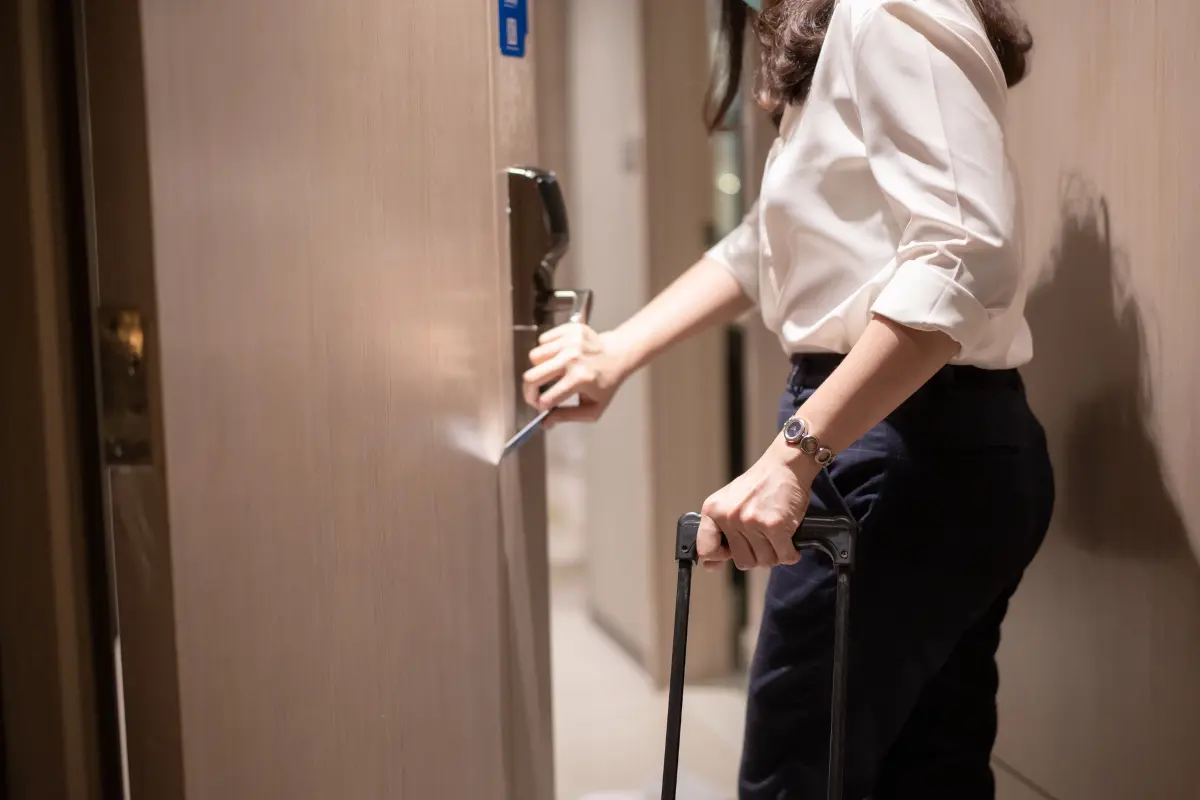
Photo from Depositphotos
Among the many replies were comments from people who said they had worked in hotels. Their explanations offered a different perspective on how a guest could be given access to an occupied room.
Room Changes and Incorrect Occupancy Records
One former hotel worker described how easily mistakes could occur when staff checked people in, created electronic keys, or handed over responsibilities between shifts.
“I’ve worked in hotels, it’s easily done.”
According to the commenter, hotel employees might only have a list of rooms and occupancy information on a screen. If someone fails to update the records correctly, the next employee may not realize that a room is already occupied.
Another former employee explained that problems could occur when guests change rooms, but the new assignment isn’t properly recorded.
For example, a guest could be moved from one room to another because of a maintenance issue or a request for a different location. If the receptionist doesn’t update the correct room in the system, a later employee might believe the occupied room is available.
One participant summarized the issue:
“It simply happens occasionally in error”
The same person argued that these mistakes were more likely when employees were inexperienced.
But other contributors disagreed with the suggestion that something being possible made it acceptable.
Electronic Keycards May Introduce Opportunities for Mistakes
Another person with hotel experience explained that room assignment and keycard programming weren’t necessarily handled by the same system.
A receptionist could accidentally check a guest into one room on the computer while programming a keycard for another.
That could leave the room the guest was actually occupying appearing vacant in the hotel’s records.
Another employee might then assign it to a new arrival without realizing that someone was already sleeping there.
One commenter noted:
“V easy to activate a keycard.”
Another participant described how moving rooms, changing staff, and manually programming keycards could create several opportunities for information to become inconsistent.
Batmam found this explanation plausible and asked what hotels could do to prevent it.
One Former Employee Suggested Several Ways Hotels Could Improve Security
A particularly detailed contribution came from someone who said they had worked in several hotels.
They suggested integrating the check-in and keycard systems more closely, so electronic room keys would be created directly from the recorded room assignment.
They also discussed staffing levels. According to their account, some budget hotels operated overnight with only one employee, leaving that person to handle multiple responsibilities without a conventional break.
The contributor suggested that better staffing, more reliable systems, and visible occupancy indicators could reduce the risk of mistakes.
But they acknowledged that no individual measure would eliminate every possibility of human error.
For me, this was one of the more useful parts of the discussion. It addressed the causes of a potentially serious mistake instead of focusing entirely on whether the guests should have used an additional lock.
Other Travelers Shared Their Own Experiences With Occupied Hotel Rooms
The original post also prompted several people to describe similar experiences. Some had been guests unexpectedly interrupted, while others had been accidentally sent into rooms where people were already staying.
One Guest Opened a Room and Found a Woman Sleeping
A commenter described arriving at a hotel after midnight and being checked in by a security guard who appeared unfamiliar with the procedure.
After a lengthy delay, the employee issued a keycard and room number.
But when the traveler opened the door, a woman was already asleep inside.
They returned to reception, where the guard eventually arranged a replacement room and personally checked it before allowing the guest inside.
The commenter described the situation as:
“a horrible experience for all concerned.”
That detail is worth remembering. The guest who was mistakenly given the room wasn’t responsible for the error either, and they were placed in an uncomfortable situation along with the person already staying there.
A Woman Was Interrupted While Taking a Shower
Another participant recalled an incident at a Radisson hotel.
She said she was taking a shower when a couple checking in was allowed into her occupied room by a hotel employee.
According to her account, the couple’s original keycard hadn’t opened the door, but a staff member subsequently let them inside.
The woman began shouting from the bathroom to explain that the room was occupied, but the visitors didn’t leave immediately. She eventually had to open the bathroom door and make herself visible.
She was particularly annoyed because she had displayed a Do Not Disturb sign, yet reception reportedly showed little concern when she complained.
The commenter considered the experience unsettling and warned that situations like this could potentially be dangerous.
Another Traveler Said an Employee Entered While She Was Sleeping
A woman recalled staying at a Holiday Inn when a night security guard entered her room using an electronic key.
She was younger at the time, sleeping without clothes, and felt extremely vulnerable.
She said she never established whether the entry was accidental or intentional. The experience influenced her behavior, and she now travels with a rubber doorstop.
Another contributor recalled being interrupted by a cleaner while asleep. Although they had stayed in hundreds of hotel rooms, this was the only time they remembered something similar happening.
These accounts are personal experiences shared by Mumsnet contributors and haven’t been independently verified. But reading them together helps explain why the original discussion attracted so much attention.
Travelers Started Sharing Hotel Room Security Precautions
As people compared their experiences, the conversation turned toward practical measures guests could take to prevent someone else from entering their rooms.
Some Travelers Always Carry Doorstops or Portable Locks
One frequent business traveler said they always packed a rubber door wedge because some hotels didn’t have an effective way to prevent entry with a valid keycard.
Another participant reported using both the internal lock and a rubber doorstop whenever they stayed in hotels.
A former flight attendant described carrying a portable lock and a door wedge when traveling.
Several commenters had adopted these habits after frightening encounters of their own or after hearing about security incidents at hotels.
One traveler said:
“I always take with me one of those door wedges”
Another described using an internal lock along with a doorstop, while someone else preferred a door wedge fitted with an alarm.
The discussion also included people who moved chairs or furniture in front of hotel doors when they felt there wasn’t enough security.
But not everyone considered those precautions a good idea.
Others Were Concerned About Emergency Access
Some participants pointed out that additional barriers could prevent hotel employees or emergency responders from entering if the guest became seriously ill or unconscious.
A former hotel worker explained that they personally preferred arrangements that allowed access in an emergency.
Another participant raised a similar concern after hearing about circumstances in which a guest had needed urgent assistance.
There are valid considerations on both sides. A portable device may prevent an unwanted entry, but it can also delay access to someone who needs help, depending on the lock and the door.
The distinction matters because different hotel doors have different security and emergency access arrangements. A device that works on one door may not work on another, and some hotels may prohibit devices that interfere with access.
I need to learn more about these options before buying anything, especially since I’ve never used a portable hotel lock or rubber doorstop on my travels.
The Hotel Offered a Full Refund, but Then Something Else Happened
Later that morning, Batmam returned with an update about how the hotel had handled her complaint.
The Morning Manager Responded Differently From the Overnight Staff
Batmam explained that her partner had gone downstairs to discuss what happened with the hotel manager.
During the night, they had first spoken to a receptionist whom they felt hadn’t been particularly apologetic. They were subsequently referred to a duty manager who suggested coming to reception around 4:30 AM to discuss the matter.
The following morning, however, the manager appeared much more sympathetic.
She listened to the couple’s account and offered complimentary breakfast. Since they didn’t have time to eat, she subsequently agreed to refund their accommodation, which had cost approximately £120.
Batmam later identified the hotel as an airport Radisson Blu.
Although she appreciated the manager’s response, she was still considering contacting the company’s CEO because she believed the hotel’s room assignment procedures needed improvement.
She wrote:
“Systems need to be improved”
Several commenters supported the refund, arguing that guests awakened by someone entering their room hadn’t received the uninterrupted night’s sleep they paid for.
Others felt an apology and appropriate compensation were sufficient, provided the hotel investigated what had happened.
A Cleaner Tried to Enter the Room Before Checkout
But while her partner was downstairs speaking with the manager, Batmam was still in their room.
At approximately 10:30 AM, she was finishing drying her hair when the door opened again.
This time, it was a cleaner.
According to Batmam, the employee hadn’t knocked before attempting to enter. Fortunately, the additional internal security device was engaged, preventing the door from opening fully.
Checkout wasn’t until noon.
Batmam acknowledged that housekeeping staff at a busy airport hotel might be under considerable pressure to prepare rooms for incoming guests.
She also wondered whether the cleaner had seen her partner leave with his suitcase and assumed the room was vacant.
But she still thought the employee should have knocked and announced themselves before entering.
After the first incident at 4 AM, having another employee try to enter the room before checkout made the situation especially frustrating.
Commenters Disagreed About What the Hotel Should Have Done
Several participants believed the cleaner should have knocked, regardless of whether the room appeared vacant in the hotel’s records.
Another person with hospitality experience explained that they had been trained to approach rooms carefully, knock, announce themselves, and assume that even rooms marked vacant might still contain guests.
Others continued to emphasize that mistakes were inevitable in a busy hotel environment and that guests could reduce some of the risks by using their additional locks.
For Batmam, though, the fact that two people had attempted to enter her room within a matter of hours reinforced her concern about the hotel’s procedures.
The refund addressed the cost of the stay, but she still wanted the hotel to understand why these errors mattered.
Three Other Hotel Room Incidents I’ve Covered Recently
This discussion reminded me of three other stories I’ve covered on Earth’s Attractions. The circumstances were different, and the people entering the rooms didn’t all have the same reasons for being there. But each incident raised questions about the privacy and security hotel guests expect.
A Mother and Daughter Were in Bed When Strangers Unlocked Their Hotel Room
In another incident I reported, a mother was staying in a hotel room with her daughter when people unexpectedly began opening their door after midnight.
The strangers had been given a working keycard by the hotel. Fortunately, the mother had secured the additional safety bar on the inside of the door, which prevented them from entering completely. The mother later confronted hotel staff about the incident, but their response left her furious.
In that story, the woman’s concern wasn’t simply that the hotel had made a mistake. She was also worried about what might have happened if she had been in the shower, unable to hear the door opening, while her daughter was alone in the room. You can read the full account of the hotel keycard incident, including how staff reportedly handled the complaint.
A Couple Returned to Their Hotel Room and Found Strangers Looking Around
Another incident involved a couple staying at a five-star hotel. They returned from an outing and found other people inside their room, inspecting the accommodation as potential customers.
One visitor was looking around the bathroom, while another had opened the wardrobe.
The couple complained to reception and were initially told that allowing potential customers to look around occupied rooms was normal practice.
But when they spoke to senior management, the explanation changed. According to the couple’s account, the prospective customers had entered the room without proper permission while being shown around the property.
The hotel’s eventual explanation and compensation reassured the guests, although the discussion raised another question about whether they should still leave a negative review.
A Couple in Mallorca Woke Up to Find an Unexpected Visitor
And then there was the incident involving a couple staying at a hotel in Mallorca. They were asleep when an unexpected visitor entered their room through a terrace door.
Unlike the couple in the current Mumsnet discussion, the visitor hadn’t been issued a hotel keycard by reception. The man’s reported actions after entering the room, and the explanation he later gave, made this a very unusual situation.
These three stories are different, but they have one thing in common: the guests unexpectedly found themselves dealing with people entering a space where they expected privacy.
Why I Wanted to Share This Discussion and What I’ve Learned
I’ve shared Batmam’s experience, the explanations from former hotel employees, and the different opinions in the discussion because I think there’s a useful lesson here.
And reading all these experiences has made me reconsider something about the way I travel.
I’ve stayed in many hotels over the years, but I’ve never followed most of the hotel room security tips I see online. I don’t travel with a portable lock or doorstop. I’ve never used the hanger-and-towel method some travelers recommend, and I don’t move furniture in front of my hotel room door.
It has simply never occurred to me that I might need to do any of those things.
When I check into a hotel, I expect the door to lock properly and the hotel’s system to prevent another guest from accessing my room. I don’t think that’s an unreasonable expectation.
At the same time, I understand that people make mistakes.
Hotel employees work long shifts. They can be exhausted, distracted, dealing with difficult customers, or having a bad day. I’ve worked with people throughout my career, and I know that even experienced professionals occasionally make errors.
I wouldn’t want a receptionist to lose their job or be treated unfairly because of an honest mistake.
But I also wouldn’t want somebody walking into my room while I was sleeping.
In fact, I know I would be terrified.
Many years ago, when I lived in a former apartment, a thief entered while I was there. That’s not something you easily forget. I still remember what it feels like to realize that somebody has entered a place where you believed you were safe.
So when I read comments suggesting that Batmam shouldn’t have been frightened because the visitor was an older woman with a suitcase, I couldn’t agree.
She didn’t know who was entering when she first woke up. The woman’s identity and innocent intentions became apparent afterward.
Of course, I’m glad nobody was harmed, and I think the morning manager handled the complaint much better than the employees the couple initially spoke with.
But the situation has made me think that perhaps I should buy a small doorstop for my travels. I haven’t decided yet. I’d want something appropriate for hotel doors that wouldn’t create additional risks in an emergency. And I certainly don’t intend to start barricading myself into every hotel room.
Still, it’s a precaution I had never seriously considered before reading these stories.
I also think hotels should have procedures that minimize the possibility of issuing keycards for occupied rooms. Employees are human and mistakes will happen, but good systems should help catch errors before they affect guests.
For me, that’s the balance: understanding that the person behind the reception desk can make a mistake while still expecting the hotel to take responsibility for guest safety and privacy.
Now I’m curious about your experience. Have you ever had someone unexpectedly enter your hotel room, or been given a keycard for a room that was already occupied?
And do you use a doorstop, portable lock, or another security precaution when traveling? I’d especially like to hear from frequent travelers, because until recently, I never thought I’d need one.
Source: Mumsnet discussion – Somebody has just walked into our hotel room at 4am. The experiences described by participants are their own accounts and have not been independently verified. .
More amazing articles for you:

A Couple Returned to Their Hotel Room and Found Strangers Inside. Reception's Response Left Them Stu...

Travel to Thailand: things to know and the best places in Thailand

Try This Fun Interactive Italian Travel Phrases Quiz: How Much Would You Understand on Your First Da...

150 French Proverbs and Meanings: Famous French Sayings About Life, Love, Food, Work, and Everyday W...

An American Tourist Was Only Three Days Into His Egypt Trip. What Happened Left Him Questioning the ...

Top 50 largest cities in the world (2016 edition)

17 Most Beautiful Squares in Europe You Shouldn’t Miss

The Best Cruise Destinations in 2022

Violeta-Loredana Pascal is a communications expert, business mentor, and the founder of Earth’s Attractions and PRwave INTERNATIONAL. A pioneer in the Romanian digital PR landscape since 2005, she holds a degree in Communication and Social Sciences from SNSPA Bucharest. Violeta is a senior trainer at AcademiadeAfaceri.ro, where she leverages over 20 years of experience to teach professional courses in PR strategy and workplace productivity. By blending high-level business consulting with a passion for holistic travel and wellness, she empowers solopreneurs to overcome procrastination, build profitable brands, and design a life of purposeful adventure.