Italy is a destination many people dream about visiting. You might already have a long list of places to see in Italy saved for a future trip, or Rome might be at the top of that list, and you want to see the Colosseum up close and wander through the historic center.
Once you’re actually in Italy, though, some of the most useful things to know are a lot simpler (and smaller): how to say hello and goodbye, thank someone, get a person’s attention politely, ask where the bathroom is, order a coffee, understand a shop sign, or ask how much something costs.
I’ve already put together a guide with 75+ Italian words and phrases for travelers, and if you want to test what you know about the country, I’ve also included 160 Italy trivia questions. I’ve covered Italian dining etiquette too – including coffee, restaurant habits, meal times, and the easy mistake of ordering a latte when what you really wanted was coffee. And on a completely different note, Italian proverbs are full of humor, advice, and generations of wisdom.
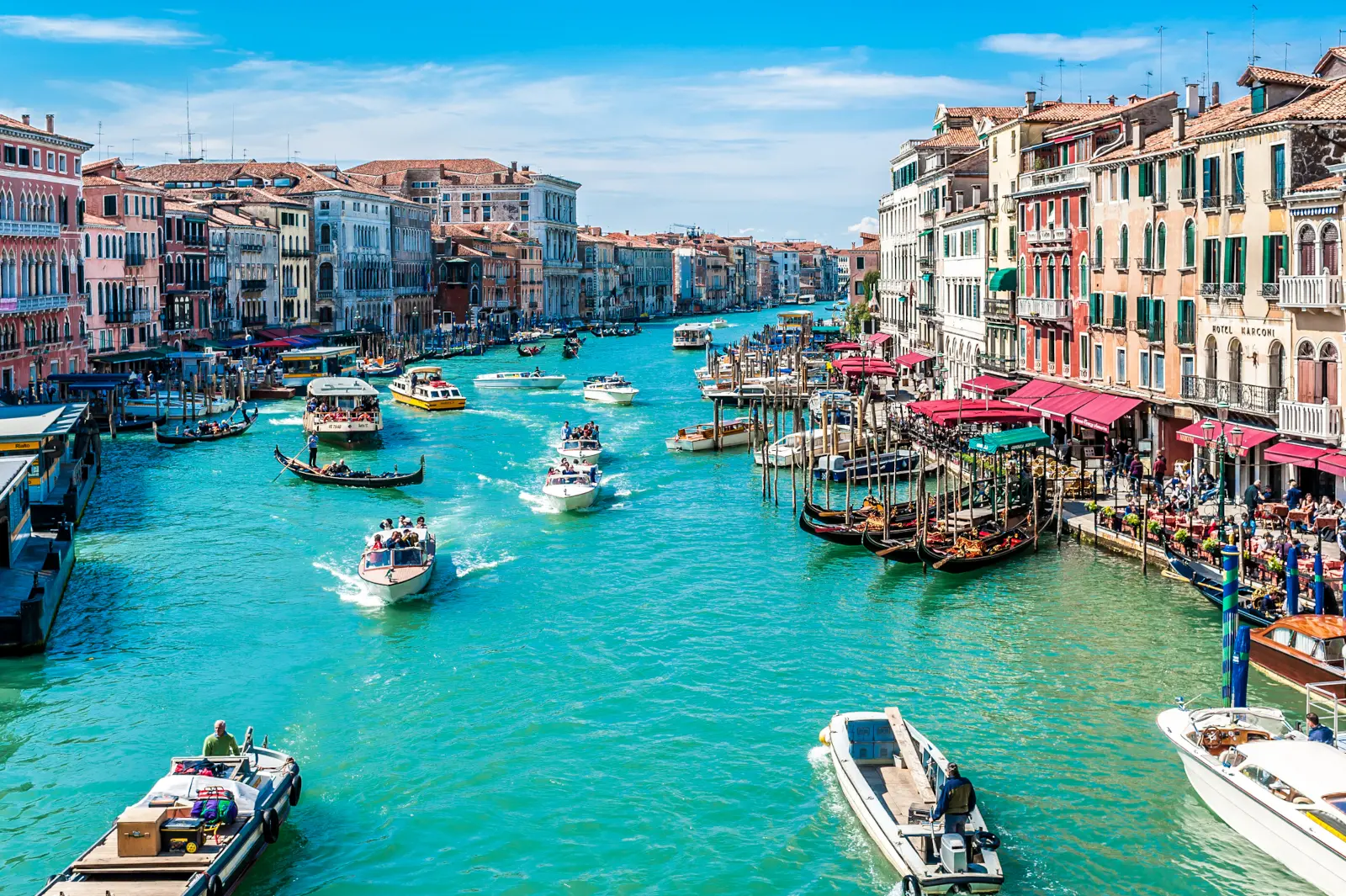
ID 24625738 ©Ron Lima | Dreamstime.com
But reading a list is one thing. How much Italian would you actually understand on your first day in Italy? These 20 easy questions cover basic words and common situations encountered in Italy. Choose carefully – your first answer counts (you cannot change it). You’ll find out immediately whether each answer is right, but your final score won’t appear until you’ve answered all 20.
Question 1 of 20
You walk into a café in the morning. Which greeting is the best fit?
Buongiorno means good morning or good day and is a polite daytime greeting.
Question 2 of 20
Someone hands you your coffee. Which word means “thank you”?
Grazie means “thank you.”
Question 3 of 20
Which Italian phrase means “please”?
Per favore means “please.”
Question 4 of 20
You need to get a stranger’s attention politely. What can you say?
Mi scusi is a polite way to say “excuse me” when getting someone’s attention.
Question 5 of 20
Which word is a standard way to say goodbye?
Arrivederci means “goodbye.”
Question 6 of 20
Someone says something you don’t understand. What does “Non capisco” mean?
Non capisco means “I don’t understand.”
Question 7 of 20
Which phrase asks “Do you speak English?”
Parla inglese? means “Do you speak English?”
Question 8 of 20
What are you asking when you say “Dov’è il bagno?”
Dov’è il bagno? means “Where is the bathroom?”
Question 9 of 20
You see something you want to buy. What does “Quanto costa?” ask?
Quanto costa? means “How much does it cost?”
Question 10 of 20
At a café, what does “Vorrei un caffè” mean?
Vorrei means “I would like,” so Vorrei un caffè means “I would like a coffee.”
Question 11 of 20
If you order “un latte” in Italy, what have you asked for?
Latte means milk in Italian. If you want a coffee drink, you need to order something more specific, such as a caffè latte.
Question 12 of 20
A waiter asks “Naturale o frizzante?” What are you choosing between?
Naturale is still water; frizzante is sparkling water.
Question 13 of 20
You have finished eating. What are you asking for with “Il conto, per favore”?
Il conto, per favore means “The bill, please.”
Question 14 of 20
You are trying to leave a museum. Which sign means “exit”?
Uscita means exit; ingresso means entrance.
Question 15 of 20
A shop door says “Chiuso.” What does it mean?
Chiuso means closed.
Question 16 of 20
You notice “coperto” on a restaurant bill. What is it?
Coperto is a per-person restaurant cover charge.
Question 17 of 20
At a train station, which word refers to the platform or track?
Binario refers to the train platform or track.
Question 18 of 20
Your train has “ritardo” beside it on the departure board. What should you expect?
Ritardo means delay.
Question 19 of 20
You see “sciopero” in a notice about public transport. What does it mean?
Sciopero means strike.
Question 20 of 20
You are driving in an Italian city and see a ZTL sign. What does it warn you about?
ZTL stands for Zona a Traffico Limitato, a limited traffic zone with vehicle restrictions.
Your result
You got 0 out of 20
How Did You Do?
Some of these probably felt easy at first, while a few of the later questions may have been much less familiar. That’s why learning even a small amount of Italian before a trip can be useful – you don’t need to hold a long conversation to recognize the words that keep appearing around you.
If you enjoyed the quiz, use Share My Score and see whether your friends would do better. And if Italy is on your travel list, remember the words you missed – those may be the ones you’ll be very glad you learned before you go.
More amazing articles for you:
Marrakech travel: discover the amazing Marrakech attractions you can't afford to miss
200 2010s Trivia Questions and Answers - Easy to Hard. How Many Can You Get Right?
Trip planning tips: how to create the best travel itinerary for all your trips
Passenger Seen Inside Airplane Overhead Bin in Viral Video - Viewers Call It Disrespectful and Risky
The Best Places to Visit in Asia in January
Local’s guide to Sydney - where to eat and stay, Sydney sightseeing, and tips
The World’s Most Delayed Airlines of 2025. Did You Fly With One?
19 Best Cities to Visit in Europe in October: Weather, Festivals and Fall Experiences

Violeta-Loredana Pascal is a communications expert, business mentor, and the founder of Earth’s Attractions and PRwave INTERNATIONAL. A pioneer in the Romanian digital PR landscape since 2005, she holds a degree in Communication and Social Sciences from SNSPA Bucharest. Violeta is a senior trainer at AcademiadeAfaceri.ro, where she leverages over 20 years of experience to teach professional courses in PR strategy and workplace productivity. By blending high-level business consulting with a passion for holistic travel and wellness, she empowers solopreneurs to overcome procrastination, build profitable brands, and design a life of purposeful adventure.