My interest in Korea became more personal when a travel blogger I had known for many years visited Romania with her boyfriend, who is now her husband. My husband and I spent a few days with them, showing them my city. We talked about everyday life, food, customs, and details that don’t always appear in a standard introduction to a country.
As I’m fascinated by discovering new cultures, I eventually started looking at Korean proverbs too. In Korean, traditional proverbs are generally called 속담 – sokdam. Below, you’ll find 170 Korean proverbs and sayings in Hangul, followed by romanization, a literal English translation, and the real meaning. When a close English equivalent exists, I’ve included it. When it doesn’t, I’ve explained the difference instead of forcing a comparison.

ID 253622799 ©F11photo | Dreamstime.com
The Japanese proverbs and sayings I shared earlier this year have become very popular with my readers, so I hope you’ll enjoy this new article in the series just as much. Some of the Korean sayings below will feel familiar. Others use rice cakes, tigers, porridge, market days, frogs, crabs, and old Seoul place names to make a point in a way English doesn’t.
A note about accuracy: This collection focuses on established Korean sokdam. The Korean wording and accepted meanings were checked against Korean-language dictionaries and proverb references. I didn’t add ordinary slang, modern motivational quotations, and four-character Sino-Korean expressions (maybe I will add these in a later article). Where a proverb has accepted variants, you may see a slightly different form in another source.
Famous and Common Korean Proverbs
I am starting this list with some of the most famous Korean proverbs that talk about common situations: starting something difficult, speaking carelessly, making a mistake despite experience, and trying to repair a problem too late. Several may also be familiar if you enjoy testing your knowledge with Asia trivia questions, but their literal Korean images often add another layer to the lesson.
1. 시작이 반이다
Romanization: Sijagi banida
Translation: Starting is half the task.
Meaning: Beginning is often the hardest part, and taking the first real step brings the goal much closer. The closest English equivalent is “Well begun is half done.”
2. 원숭이도 나무에서 떨어진다
Romanization: Wonsungido namueseo tteoreojinda
Translation: Even monkeys fall from trees.
Meaning: Even someone highly skilled can make a mistake. A monkey is expected to be an expert climber, which makes the fall surprising. “Even Homer nods” is a close English equivalent, while “Everyone makes mistakes” is more familiar today.
3. 고생 끝에 낙이 온다
Romanization: Gosaeng kkeute nagi onda
Translation: At the end of hardship, happiness comes.
Meaning: A difficult period can be followed by relief, success, or happier days. “After the storm comes the calm” expresses a related idea, although the Korean proverb emphasizes the reward that follows hardship.
4. 가는 말이 고와야 오는 말이 곱다
Romanization: Ganeun mari gowaya oneun mari gopda
Translation: The words that go out must be beautiful for the words that return to be beautiful.
Meaning: The way you speak to someone influences the way that person responds. “Treat others as you would like to be treated” expresses a similar principle, although this Korean proverb refers specifically to words.
5. 낮말은 새가 듣고 밤말은 쥐가 듣는다
Romanization: Nanmareun saega deutgo bammareun jwiga deunneunda
Translation: Birds hear words spoken by day, and mice hear words spoken by night.
Meaning: Speak carefully even when you think no one can hear you, because private words can spread. The closest English equivalent is “The walls have ears.”
6. 티끌 모아 태산
Romanization: Tikkeul moa taesan
Translation: Dust gathered together becomes a great mountain.
Meaning: Small amounts can become substantial when they accumulate. “Every little bit helps” and “Many a little makes a mickle” express similar ideas.
7. 돌다리도 두들겨 보고 건너라
Romanization: Doldarido dudeulgyeo bogo geonneora
Translation: Even a stone bridge should be tapped before you cross it.
Meaning: Check carefully before acting, even when something appears secure. The closest English equivalent is “Look before you leap.”
8. 소 잃고 외양간 고친다
Romanization: So ilko oeyanggan gochinda
Translation: Fixing the cowshed after losing the cow.
Meaning: Taking precautions after the damage has already occurred is too late. The closest English equivalent is “Shutting the stable door after the horse has bolted.”
9. 호랑이도 제 말 하면 온다
Romanization: Horangido je mal hamyeon onda
Translation: Even a tiger appears when it is spoken about.
Meaning: This is said when the person being discussed suddenly appears. The closest English equivalent is “Speak of the devil.” The proverb can also warn against criticizing someone who isn’t present.
10. 비 온 뒤에 땅이 굳어진다
Romanization: Bi on dwie ttangi gudeojinda
Translation: The ground hardens after rain.
Meaning: A person, relationship, or group can become stronger after experiencing difficulty. English has no perfect equivalent, although “What doesn’t kill you makes you stronger” conveys part of the idea.
11. 백지장도 맞들면 낫다
Romanization: Baekjijangdo matdeulmyeon natda
Translation: Even a sheet of paper is better lifted together.
Meaning: Cooperation makes even a simple task easier and can strengthen the people doing it. The closest English equivalent is “Many hands make light work.”
12. 세 살 버릇 여든까지 간다
Romanization: Se sal beoreut yeodeunkkaji ganda
Translation: A habit formed at three lasts until eighty.
Meaning: Habits learned early can remain throughout life. “Old habits die hard” is close, while “As the twig is bent, so grows the tree” also reflects the importance of early formation.
13. 콩 심은 데 콩 나고 팥 심은 데 팥 난다
Romanization: Kong simeun de kong nago pat simeun de pat nanda
Translation: Where beans are planted, beans grow; where red beans are planted, red beans grow.
Meaning: Results follow their causes, and behavior tends to produce consequences of the same kind. The closest English equivalent is “You reap what you sow.”
14. 아니 땐 굴뚝에 연기 나랴
Romanization: Ani ttaen gulttuge yeongi narya
Translation: Would smoke rise from a chimney with no fire?
Meaning: A rumor or visible result usually has some cause behind it. The closest English equivalent is “There’s no smoke without fire,” though neither proverb proves that every rumor is true.
15. 하늘이 무너져도 솟아날 구멍이 있다
Romanization: Haneuri muneojyeodo sosanal gumeongi itda
Translation: Even if the sky collapses, there is an opening through which to escape.
Meaning: There can still be a way out of an apparently hopeless situation. “Where there’s life, there’s hope” is a close English idea, but not an exact equivalent.
Korean Proverbs About Life and Wisdom

ID 115852522 ©Isarint Sangmanee | Dreamstime.com
I find this next group of Korean proverbs about life and wisdom especially interesting. In recent years, I’ve watched a few Korean movies and TV series, and thanks to a new publishing house in Romania, I’ve read many Korean books translated into Romanian. Those stories gave me more situations in which to notice ideas about experience, limited perspective, changing fortunes, and the difficulty of understanding another person.
Some lessons resemble ideas found in Romanian proverbs or Greek proverbs and sayings, but the Korean versions don’t always reach the conclusion through the same image.
16. 천 리 길도 한 걸음부터
Romanization: Cheon ri gildo han georeumbuteo
Translation: Even a thousand-ri journey begins with one step.
Meaning: Every large undertaking starts with a small action. The closest English equivalent is “A journey of a thousand miles begins with a single step.” A ri is a traditional unit of distance.
17. 아는 길도 물어 가라
Romanization: Aneun gildo mureo gara
Translation: Ask the way even when you know it.
Meaning: Confidence shouldn’t replace verification. It’s wise to check information, even in a familiar situation. “Better safe than sorry” expresses a related idea.
18. 열 길 물속은 알아도 한 길 사람 속은 모른다
Romanization: Yeol gil mulsogeun arado han gil saram sogeun moreunda
Translation: You may know water ten fathoms deep, but not a person’s heart one fathom deep.
Meaning: A person’s true thoughts and intentions can be harder to understand than something physically deep. There is no exact English equivalent, though “You never really know someone” is close.
19. 십 년이면 강산도 변한다
Romanization: Sip nyeonimyeon gangsando byeonhanda
Translation: In ten years, even rivers and mountains change.
Meaning: Time changes places, circumstances, and people. The closest English idea is “Time changes all things.”
20. 갈수록 태산
Romanization: Galsurok taesan
Translation: The farther you go, the greater the mountain.
Meaning: A situation becomes increasingly difficult instead of improving. “Out of the frying pan and into the fire” may fit some situations, but the Korean proverb emphasizes mounting difficulty.
21. 급할수록 돌아가라
Romanization: Geupalsurok doragara
Translation: The more urgent it is, the more you should take the longer way.
Meaning: Hurrying can create mistakes that take even longer to repair, so a rushed situation calls for greater care. “Haste makes waste” expresses a similar warning.
22. 물은 건너 보아야 알고 사람은 지내 보아야 안다
Romanization: Mureun geonneo boaya algo sarameun jinae boaya anda
Translation: You know water after crossing it, and a person after spending time with them.
Meaning: Experience reveals what appearances cannot. You need time and direct contact before you can judge a situation or understand someone properly.
23. 우물 안 개구리
Romanization: Umul an gaeguri
Translation: A frog inside a well.
Meaning: This describes someone whose experience is so limited that they don’t realize how large the world is. The closest English equivalent is “A big fish in a small pond,” although the emphasis is slightly different.
24. 등잔 밑이 어둡다
Romanization: Deungjan miti eodupda
Translation: It is dark beneath the lamp.
Meaning: People often overlook what is closest to them while searching farther away. The closest natural English expression is “It was right under my nose.”
25. 꿈보다 해몽이 좋다
Romanization: Kkumboda haemongi jota
Translation: The interpretation is better than the dream.
Meaning: A favorable explanation can make an ordinary, unclear, or disappointing event sound much better than it was. There is no exact English proverb, although “Putting a positive spin on it” describes a common modern use.
26. 될성부른 나무는 떡잎부터 알아본다
Romanization: Doelseongbureun namuneun tteogipbuteo arabonda
Translation: A promising tree can be recognized from its first leaves.
Meaning: Early signs can reveal future ability or character. The English saying “The child is father of the man” expresses a related idea, though it isn’t an exact match.
27. 뛰는 놈 위에 나는 놈 있다
Romanization: Ttwineun nom wie naneun nom itda
Translation: Above the person who runs is one who flies.
Meaning: No matter how capable someone is, another person may be even more skilled. “There’s always someone better” is the closest natural English expression.
28. 쥐구멍에도 볕 들 날이 있다
Romanization: Jwigumeongedo byeot deul nari itda
Translation: Even a mouse hole has a day when sunlight enters.
Meaning: Better days can reach even someone in a very difficult position. “Every dog has its day” is a close English equivalent, although the Korean image is gentler and more hopeful.
29. 겨울이 다 되어야 솔이 푸른 줄 안다
Romanization: Gyeouri da doeeoya sori pureun jul anda
Translation: Only when winter comes do you know that the pine is green.
Meaning: A person’s loyalty, strength, or character becomes clearest during difficult times. The closest English idea is “A friend in need is a friend indeed,” although the proverb can apply more broadly.
30. 양지가 음지 되고 음지가 양지 된다
Romanization: Yangjiga eumji doego eumjiga yangji doenda
Translation: The sunny place becomes shaded, and the shaded place becomes sunny.
Meaning: Fortunes and positions can reverse over time. Someone thriving today may struggle later, while another person’s circumstances may improve. English has no exact equivalent.
31. 옥에도 티가 있다
Romanization: Ogedo tiga itda
Translation: Even jade has a flaw.
Meaning: No person or thing is completely perfect. The closest English equivalent is “Nobody’s perfect.”
32. 가랑비에 옷 젖는 줄 모른다
Romanization: Garangbie ot jeonneun jul moreunda
Translation: In light rain, you don’t notice your clothes becoming wet.
Meaning: Small changes, expenses, mistakes, or habits can accumulate before you recognize their effect. “Many a little makes a mickle” is related, but the Korean proverb often carries a warning.
33. 하룻강아지 범 무서운 줄 모른다
Romanization: Harutgangaji beom museoun jul moreunda
Translation: A one-day-old puppy doesn’t know to fear a tiger.
Meaning: An inexperienced person may rush into danger because they don’t understand the risk. The closest English equivalent is “Fools rush in where angels fear to tread.”
34. 산 입에 거미줄 치랴
Romanization: San ibe geomijul chirya
Translation: Would a spider web form across a living person’s mouth?
Meaning: As long as someone is alive and able to act, they can usually find a way to obtain food and survive. “Where there’s life, there’s hope” conveys part of the meaning.
35. 사흘 굶어 도둑질 아니 할 사람 없다
Romanization: Saheul gulmeo dodukjil ani hal saram eoptda
Translation: There is no one who wouldn’t steal after starving for three days.
Meaning: Extreme need can push ordinary people toward actions they would normally reject. The proverb comments on human limits under desperation rather than excusing theft.
36. 사람 위에 사람 없고 사람 밑에 사람 없다
Romanization: Saram wie saram eoptgo saram mite saram eoptda
Translation: There is no person above another and no person below another.
Meaning: All people have equal human worth, regardless of rank or wealth. “All people are created equal” is a close English statement rather than a traditional equivalent.
37. 누울 자리 보고 발을 뻗어라
Romanization: Nuul jari bogo bareul ppeodeora
Translation: Look where you can lie down before stretching out your legs.
Meaning: Consider your circumstances and limits before acting. The closest English ideas are “Cut your coat according to your cloth” and “Live within your means,” depending on the situation.
Korean Proverbs About Work, Perseverance, Success, and Learning

ID 30581152 ©Hanhanpeggy | Dreamstime.com
Advice about work can become repetitive very quickly, but these Korean proverbs about success, perseverance, patience, and learning are often concrete. They mention wells, towers, looms, salt, spiders, needles, and even a dog listening outside a village school. I noticed a similar preference for practical images while working on German proverbs with English translations, although the objects and humor are quite different (no surprise there).
38. 공든 탑이 무너지랴
Romanization: Gongdeun tabi muneojirya
Translation: Would a tower built with great care collapse?
Meaning: Work completed with patience and dedication isn’t easily wasted. “Hard work pays off” is the closest natural English expression.
39. 낙숫물이 댓돌을 뚫는다
Romanization: Naksunmuri daetdoreul ttunneunda
Translation: Dripping water pierces a stone doorstep.
Meaning: Steady effort can accomplish something that initially appears impossible. The closest English equivalent is “Constant dripping wears away the stone.”
40. 구슬이 서 말이라도 꿰어야 보배
Romanization: Guseuri seo marirado kkweeoya bobae
Translation: Even three mal of beads become treasure only when they are threaded.
Meaning: Raw materials, ideas, or abilities have little value until they are organized and used. There is no exact English equivalent, but the lesson is clear: unused resources and unorganized ideas haven’t yet become valuable. A mal is a traditional unit of volume.
41. 우물을 파도 한 우물을 파라
Romanization: Umureul pado han umureul para
Translation: If you dig a well, dig one well.
Meaning: Concentrate your effort instead of abandoning one task to begin another. “Stick to one thing” is the clearest English rendering.
42. 사공이 많으면 배가 산으로 간다
Romanization: Sagongi maneumyeon baega saneuro ganda
Translation: When there are too many boatmen, the boat goes up the mountain.
Meaning: A project can lose its direction when too many people try to control it. The closest English equivalent is “Too many cooks spoil the broth.”
43. 열 번 찍어 안 넘어가는 나무 없다
Romanization: Yeol beon jjigeo an neomeoganeun namu eoptda
Translation: No tree remains standing after being struck ten times.
Meaning: Persistent effort can eventually overcome resistance. The proverb is still used broadly, but it shouldn’t be applied to romantic rejection or any situation where another person has said no.
44. 쇠뿔도 단김에 빼라
Romanization: Soeppuldo dangime ppaera
Translation: Pull out the ox’s horn while it is still hot.
Meaning: Once you’ve decided to do something, act while the momentum and opportunity remain. The closest English equivalent is “Strike while the iron is hot.”
45. 서당 개 삼 년이면 풍월을 읊는다
Romanization: Seodang gae sam nyeonimyeon pungworeul eulmneunda
Translation: After three years at a village school, even the dog recites poetry.
Meaning: Continual exposure can teach someone a surprising amount, even without formal study. “Practice makes perfect” is related, although the Korean proverb emphasizes learning through proximity and repetition.
46. 감나무 밑에 누워도 삿갓 미사리를 대어라
Romanization: Gamnamu mite nuwodo satgat misarireul daeeora
Translation: Even when lying beneath a persimmon tree, position the brim of your hat to catch the fruit.
Meaning: Good fortune may be nearby, but you still have to make some effort to receive it. English has no exact equivalent.
47. 부뚜막의 소금도 집어넣어야 짜다
Romanization: Buttumagui sogeumdo jibeoneoheoya jjada
Translation: Even salt on the stove makes food salty only when you put it in.
Meaning: Resources and good intentions produce nothing until they are used. “Nothing ventured, nothing gained” is related, though the Korean saying focuses on taking the necessary action.
48. 거미는 줄을 쳐야 벌레를 잡는다
Romanization: Geomineun jureul chyeoya beollereul jamneunda
Translation: A spider must spin a web to catch insects.
Meaning: Preparation and effort have to come before results. There is no exact English equivalent.
49. 첫술에 배부르랴
Romanization: Cheotsure baebureurya
Translation: Can you become full from the first spoonful?
Meaning: A substantial result can’t be expected immediately. Progress requires more than one attempt. The closest English equivalent is “Rome wasn’t built in a day.”
50. 구더기 무서워 장 못 담글까
Romanization: Gudeogi museowo jang mot damgeulkka
Translation: Would you refuse to make fermented sauce because you fear maggots?
Meaning: Don’t abandon something valuable merely because it involves a possible problem. The closest English idea is “Don’t throw the baby out with the bathwater,” although the emphasis differs.
51. 가는 말에 채찍질한다
Romanization: Ganeun mare chaejjikjilhanda
Translation: Whip a horse that is already moving.
Meaning: Encouragement can help a willing or capable person move even faster. The closest English expression is “Spur someone on.”
52. 아무리 바빠도 바늘허리에 실 매어 쓰지 못한다
Romanization: Amuri bappado baneulheorie sil maeeo sseuji mothanda
Translation: No matter how hurried you are, you can’t tie thread around a needle’s waist and sew.
Meaning: Some processes can’t be rushed or skipped. You still have to follow the necessary steps. “More haste, less speed” conveys a related warning.
53. 번갯불에 콩 볶아 먹겠다
Romanization: Beongaetbure kong bokka meokgetda
Translation: Someone would roast beans over a flash of lightning.
Meaning: This describes a person who tries to do everything at extraordinary speed, often without enough preparation. English has no fixed proverb with the same image.
54. 석 자 베를 짜도 베틀 벌이기는 일반
Romanization: Seok ja bereul jjado beteul beorigineun ilban
Translation: Even to weave three feet of cloth, you must set up the loom.
Meaning: A small job may require the same initial preparation as a large one. English has no exact equivalent, but “Anything worth doing requires preparation” captures the lesson.
55. 서투른 도둑이 첫날밤에 들킨다
Romanization: Seotureun dodugi cheonnalbame deulkinda
Translation: An inexperienced thief is caught on the first night.
Meaning: Lack of skill quickly reveals itself, especially in difficult or dishonest work. The closest English idea is “A bad workman is soon found out.”
56. 선무당이 사람 잡는다
Romanization: Seonmudangi saram jamneunda
Translation: An inexperienced shaman kills a person.
Meaning: A little knowledge combined with excessive confidence can cause serious harm. The closest English equivalent is “A little knowledge is a dangerous thing.”
57. 낫 놓고 기역 자도 모른다
Romanization: Nat noko giyeok jado moreunda
Translation: Someone doesn’t recognize the letter giyeok even when shown a sickle.
Meaning: The Korean letter ㄱ resembles a sickle, so the proverb describes someone unable to recognize even the most basic thing. The English equivalent is “They don’t know their ABCs.”
58. 하나를 보면 열을 안다
Romanization: Hanareul bomyeon yeoreul anda
Translation: Seeing one, you know ten.
Meaning: One revealing detail can show a perceptive person much more about the whole. The closest English idea is “A word to the wise is sufficient.”
59. 열에 한 술 밥이 한 그릇 푼푼하다
Romanization: Yeore han sul babi han geureut punpunhada
Translation: One spoonful from each of ten people makes a full bowl of rice.
Meaning: Small contributions from many people can meet a substantial need. “Many hands make light work” is related, but this proverb focuses on shared giving.
60. 백 번 듣는 것이 한 번 보는 것만 못하다
Romanization: Baek beon deunneun geosi han beon boneun geonman mothada
Translation: Hearing something a hundred times is not as good as seeing it once.
Meaning: Direct observation can be more convincing than repeated descriptions. The closest English equivalent is “Seeing is believing.”
Korean Proverbs About Words, Honesty, Gossip, and Behavior
ID 49925948 ©Sean Pavone | Dreamstime.com
Some of the sharpest Korean proverbs are about words, honesty, gossip, and reputation. I kept returning to this section because several sayings distinguish between what a person intends to say and the effect created by the exact wording. That same problem appears in everyday English, including words people often use incorrectly and British sayings that confuse travelers.
61. 말 한마디에 천 냥 빚도 갚는다
Romanization: Mal hanmadie cheon nyang bitdo gamneunda
Translation: A single word can repay a debt of a thousand nyang.
Meaning: The right words, spoken sincerely and tactfully, can resolve even a serious conflict. “A soft answer turns away wrath” is a close English equivalent. A nyang was a historical unit of money.
62. 발 없는 말이 천 리 간다
Romanization: Bal eopnneun mari cheon ri ganda
Translation: Words without feet travel a thousand ri.
Meaning: News, rumors, and private comments can travel remarkably far. The closest English equivalent is “Bad news travels fast,” although the Korean proverb isn’t limited to bad news.
63. 쌀은 쏟고 주워도 말은 하고 못 줍는다
Romanization: Ssareun ssotgo juwodo mareun hago mot jumneunda
Translation: You can gather spilled rice, but you can’t gather words after speaking them.
Meaning: Once words have been said, they can’t be completely taken back. The closest English equivalent is “Think before you speak.”
64. 고기는 씹어야 맛이요 말은 해야 맛이라
Romanization: Gogineun ssibeoya masiyo mareun haeya masira
Translation: Meat must be chewed to have flavor, and words must be spoken to have meaning.
Meaning: People can’t understand what you never express. It encourages clear communication rather than expecting others to guess your thoughts. There is no exact English proverb.
65. 아 해 다르고 어 해 다르다
Romanization: A hae dareugo eo hae dareuda
Translation: Saying “a” is different from saying “eo.”
Meaning: A slight change in wording or tone can create a very different effect. The closest English expression is “It’s not what you say, but how you say it.”
66. 가는 떡이 커야 오는 떡도 크다
Romanization: Ganeun tteogi keoya oneun tteokdo keuda
Translation: The rice cake you send must be large for the rice cake you receive to be large.
Meaning: Generosity often encourages generosity in return. The closest English equivalent is “One good turn deserves another.”
67. 오는 정이 있어야 가는 정이 있다
Romanization: Oneun jeongi isseoya ganeun jeongi itda
Translation: Affection must come before affection goes.
Meaning: Warmth and consideration are often reciprocal. People are more willing to care for someone who also shows care. “Love begets love” is a close English equivalent.
68. 누워서 침 뱉기
Romanization: Nuwoseo chim baetgi
Translation: Spitting while lying down.
Meaning: An attempt to disgrace or harm someone else can rebound on the speaker. The closest English equivalents are “It will come back to bite you” and “Don’t cut off your nose to spite your face,” depending on the situation.
69. 병 주고 약 준다
Romanization: Byeong jugo yak junda
Translation: Giving the illness and then giving the medicine.
Meaning: This describes someone who causes a problem and then pretends to help solve it. English has no exact proverb, though “Playing both sides” may fit some situations.
70. 쇠귀에 경 읽기
Romanization: Soegwie gyeong ilkgi
Translation: Reading scripture into a cow’s ear.
Meaning: Advice or explanation is wasted on someone who refuses or is unable to understand it. “Talking to a brick wall” is the closest natural English expression.
71. 핑계 없는 무덤 없다
Romanization: Pinggye eopnneun mudeom eoptda
Translation: There is no grave without an excuse.
Meaning: Everyone can produce an explanation for failure or wrongdoing, but an excuse doesn’t necessarily remove responsibility. The closest English idea is “There’s always an excuse.”
72. 방귀 뀐 놈이 성낸다
Romanization: Banggwi kkwin nomi seongnaenda
Translation: The person who passed gas becomes angry.
Meaning: Someone at fault may become defensive or attack others first to divert suspicion. The closest English equivalent is “The lady doth protest too much,” though the Korean proverb is much blunter.
73. 똥 묻은 개가 겨 묻은 개 나무란다
Romanization: Ttong mudeun gaega gyeo mudeun gae namuranda
Translation: The dog covered in dung scolds the dog covered in chaff.
Meaning: Someone with a serious fault criticizes another person for a smaller one. The closest English equivalent is “The pot calling the kettle black.”
74. 도둑이 제 발 저리다
Romanization: Dodugi je bal jeorida
Translation: The thief feels pain in his own feet.
Meaning: A guilty person becomes nervous even when no one has directly accused them. “A guilty conscience needs no accuser” is the closest English equivalent.
75. 콩으로 메주를 쑨다 해도 안 믿는다
Romanization: Kongeuro mejureul ssunda haedo an minneunda
Translation: They wouldn’t believe you even if you said meju is made from soybeans.
Meaning: This describes complete distrust of a person, including refusing to believe an obvious truth. Meju is the fermented soybean block used to make traditional Korean seasonings.
76. 입은 비뚤어져도 말은 바로 해라
Romanization: Ibeun bittureojyeodo mareun baro haera
Translation: Even if your mouth is crooked, speak straight.
Meaning: Tell the truth and be fair regardless of your personal feelings or disadvantages. “Call a spade a spade” is related, although the Korean proverb places more emphasis on honesty.
77. 말이 씨가 된다
Romanization: Mari ssiga doenda
Translation: Words become seeds.
Meaning: Repeated or careless words can influence later events, expectations, and behavior. English has no exact equivalent, although “Be careful what you wish for” overlaps in some situations.
78. 말이 많으면 쓸 말이 적다
Romanization: Mari manheumyeon sseul mari jeokda
Translation: When there are many words, few are useful.
Meaning: Talking at length doesn’t guarantee that anything valuable is being said. The closest English equivalent is “Empty vessels make the most noise,” though the focus isn’t identical.
79. 관 속에 들어가도 막말은 말라
Romanization: Gwan soge deureogado mangmareun malla
Translation: Even when entering the coffin, don’t speak recklessly.
Meaning: There is never a good time to use cruel, irresponsible, or insulting words. English has no exact equivalent.
80. 혀 아래 도끼 들었다
Romanization: Hyeo arae dokki deureotda
Translation: An axe is held beneath the tongue.
Meaning: Words can wound others or create serious trouble for the speaker. The closest English idea is “The tongue is sharper than a sword.”
81. 웃는 낯에 침 못 뱉는다
Romanization: Unneun nache chim mot baenneunda
Translation: You can’t spit in a smiling face.
Meaning: Sincere friendliness makes hostility harder to maintain. “You catch more flies with honey than with vinegar” conveys a similar idea.
82. 말이 고우면 비지 사러 갔다가 두부 사 온다
Romanization: Mari goumyeon biji sareo gatdaga dubu sa onda
Translation: If your words are kind, you may go to buy bean pulp and return with tofu.
Meaning: Kind, respectful speech can bring a better response than expected. The contrast between inexpensive bean pulp and tofu makes the reward visible. There is no exact English equivalent.
Korean Proverbs About Love, Family, Friendship, and Relationships

ID 64599835 ©Tawatchai Prakobkit | Dreamstime.com
These Korean proverbs about love, family, friendship, marriage, and relationships aren’t all romantic. Many are practical observations about parents, children, neighbors, loyalty, arguments, old friends, and the people we instinctively defend. You can find similar concerns in Spanish proverbs with English translations and in traditional Irish sayings and blessings, but the tone ranges from warm to surprisingly blunt.
83. 가지 많은 나무에 바람 잘 날 없다
Romanization: Gaji manheun namue baram jal nal eoptda
Translation: A tree with many branches never has a windless day.
Meaning: Parents with many children, or people carrying many responsibilities, rarely have a day without concern. English has no exact equivalent.
84. 열 손가락 깨물어 안 아픈 손가락 없다
Romanization: Yeol songarak kkaemureo an apeun songarak eoptda
Translation: Bite any of ten fingers and every one hurts.
Meaning: Parents care about all their children, even when personalities and circumstances differ. The closest English expression is “They are all my children.”
85. 자식 이기는 부모 없다
Romanization: Jasik igineun bumo eopda
Translation: No parent can defeat their child.
Meaning: Parents often give in because their love for their children is stronger than their determination to win an argument. There is no exact English equivalent.
86. 고슴도치도 제 새끼는 함함하다고 한다
Romanization: Goseumdochido je saekkineun hamhamhadago handa
Translation: Even a hedgehog says its baby is soft and beautiful.
Meaning: Parents naturally see their own children as especially lovely or talented. “Every crow thinks its own chick the whitest” is an older English equivalent.
87. 부모 말을 들으면 자다가도 떡이 생긴다
Romanization: Bumo mareul deureumyeon jadagado tteogi saengginda
Translation: If you listen to your parents, rice cakes appear even while you sleep.
Meaning: Following experienced parental advice can bring unexpected benefits. The proverb reflects a traditional respect for parents, though advice should still be judged according to the situation.
88. 자식 둔 부모는 알 둔 새 같다
Romanization: Jasik dun bumoneun al dun sae gatda
Translation: Parents with children are like birds with eggs.
Meaning: Parents remain watchful and worried because the people they love feel vulnerable. There is no exact English equivalent.
89. 내리사랑은 있어도 치사랑은 없다
Romanization: Naerisarangeun isseodo chisarangeun eoptda
Translation: Love flows downward, but not upward.
Meaning: Parents often give their children a depth of care that children may not return in the same measure. It’s an observation about generational love, not a claim that children don’t love their parents.
90. 며느리 사랑은 시아버지, 사위 사랑은 장모
Romanization: Myeoneuri sarangeun siabeoji, sawi sarangeun jangmo
Translation: A daughter-in-law is cherished by her father-in-law, and a son-in-law by his mother-in-law.
Meaning: This traditional saying describes affection across marital family relationships. It reflects an older family model and shouldn’t be read as a rule for every household.
91. 형만한 아우 없다
Romanization: Hyeongmanhan au eopda
Translation: No younger brother quite matches the older brother.
Meaning: This traditional saying praises the experience or care of an older brother. It reflects an older hierarchical view of sibling relationships and may sound dated when applied literally today.
92. 팔은 안으로 굽는다
Romanization: Pareun aneuro gumneunda
Translation: An arm bends inward.
Meaning: People naturally favor their family, friends, or own group. The closest English equivalent is “Blood is thicker than water,” although the Korean proverb also applies beyond relatives.
93. 가재는 게 편이다
Romanization: Gajaeneun ge pyeonida
Translation: The crayfish takes the crab’s side.
Meaning: People often support others whose position, background, or interests resemble their own. “Birds of a feather flock together” is related, but the Korean proverb emphasizes taking sides.
94. 옷은 새 옷이 좋고 사람은 옛 사람이 좋다
Romanization: Oseun sae osi joko sarameun yet sarami jota
Translation: New clothes are best, but old relationships are best.
Meaning: Long-standing friendships can offer trust and understanding that new relationships haven’t yet developed. The closest English equivalent is “Make new friends, but keep the old.”
95. 먼 친척보다 가까운 이웃이 낫다
Romanization: Meon chincheokboda gakkaun iusi natda
Translation: A nearby neighbor is better than a distant relative.
Meaning: Someone close enough to help in daily life may be more valuable than a relative who is far away. “A good neighbor is better than a distant friend” is a close equivalent.
96. 바늘 가는 데 실 간다
Romanization: Baneul ganeun de sil ganda
Translation: Where the needle goes, the thread follows.
Meaning: Two people or things are constantly together, or one naturally follows the other. The closest English expression is “They’re joined at the hip.”
97. 부부 싸움은 칼로 물 베기
Romanization: Bubu ssaumeun kallo mul begi
Translation: A married couple’s quarrel is like cutting water with a knife.
Meaning: Many ordinary disagreements between spouses pass without permanently dividing them, just as water closes again. The proverb shouldn’t be used to minimize abuse or a genuinely unsafe relationship.
98. 아내가 귀여우면 처갓집 말뚝 보고도 절한다
Romanization: Anaega gwiyeoumyeon cheogatjip malttuk bogodo jeolhanda
Translation: If you love your wife, you bow even to the post at her parents’ home.
Meaning: Affection for one person can extend to the people and things connected with them. The closest English idea is “Love me, love my dog.”
99. 고와도 내 님 미워도 내 님
Romanization: Gowado nae nim miwodo nae nim
Translation: Beautiful or hateful, my beloved is still mine.
Meaning: Affection and loyalty can remain even when the person you love has faults or frustrates you. English has no exact equivalent.
100. 짚신도 제 짝이 있다
Romanization: Jipsindo je jjagi itda
Translation: Even a straw sandal has its matching partner.
Meaning: Everyone can find someone who suits them. The closest traditional English equivalent is “Every Jack has his Jill,” although that wording is now old-fashioned.
101. 친구 따라 강남 간다
Romanization: Chingu ttara gangnam ganda
Translation: Following a friend, you go to Gangnam.
Meaning: People sometimes join an activity or make a choice mainly because a friend is doing it. “Go along for the ride” is a close English expression.
102. 옷깃만 스쳐도 인연이다
Romanization: Otginman seuchyeodo inyeonida
Translation: Even brushing sleeves is a connection shaped by fate.
Meaning: A brief meeting can be viewed as a meaningful human connection rather than a completely random encounter. There is no exact English equivalent.
103. 드는 정은 몰라도 나는 정은 안다
Romanization: Deuneun jeongeun mollado naneun jeongeun anda
Translation: You may not notice affection growing, but you notice it leaving.
Meaning: Attachment can develop gradually without being recognized, yet separation makes its depth clear. English has no exact equivalent.
104. 손바닥도 마주쳐야 소리가 난다
Romanization: Sonbadakdo majuchyeoya soriga nanda
Translation: Even palms must meet to make a sound.
Meaning: Many relationships, arguments, and agreements require participation from both sides. “It takes two to tango” is the closest English equivalent.
105. 미운 아이 떡 하나 더 준다
Romanization: Miun ai tteok hana deo junda
Translation: Give one more rice cake to the child you dislike.
Meaning: Responding generously can reduce resentment, improve a difficult relationship, or prevent conflict. “Kill them with kindness” is a close modern English expression.
Korean Proverbs About Human Nature, Habits, Envy, and Money
I find Korean proverbs about human nature fascinating because they don’t avoid envy, greed, pride, betrayal, social ambition, or the way people change sides when it benefits them. Readers who liked the direct observations in these French proverbs and meanings will recognize several universal weaknesses here, even when the Korean comparison involves a flea’s liver or a crow-tit following a stork.
106. 개구리 올챙이 적 생각 못 한다
Romanization: Gaeguri olchaengi jeok saenggak mot handa
Translation: The frog can’t remember when it was a tadpole.
Meaning: Someone who has become successful or powerful may forget their own difficult beginnings and judge people still struggling. English has no exact equivalent, although “Don’t forget where you came from” gives the same warning.
107. 옷이 날개다
Romanization: Osi nalgaeda
Translation: Clothes are wings.
Meaning: Clothing and presentation can greatly change how a person looks and how others perceive them. The closest English equivalent is “Clothes make the man,” although the Korean saying applies more broadly.
108. 남의 떡이 더 커 보인다
Romanization: Namui tteogi deo keo boinda
Translation: Another person’s rice cake looks bigger.
Meaning: What belongs to someone else often appears more desirable than what we have. The closest English equivalent is “The grass is always greener on the other side.”
109. 사촌이 땅을 사면 배가 아프다
Romanization: Sachoni ttangeul samyeon baega apeuda
Translation: When a cousin buys land, your stomach hurts.
Meaning: Another person’s success can provoke envy even when it causes you no harm. English has no proverb with the same family-and-land image.
110. 간에 붙었다 쓸개에 붙었다 한다
Romanization: Gane buteotda sseulgaee buteotda handa
Translation: One moment they cling to the liver, the next to the gallbladder.
Meaning: This describes someone who changes allegiance whenever it benefits them. The closest English expressions are “A fair-weather friend” and “Blow with the wind,” depending on the context.
111. 달면 삼키고 쓰면 뱉는다
Romanization: Dalmyeon samkigo sseumyeon baenneunda
Translation: Swallow it when it is sweet and spit it out when it is bitter.
Meaning: This describes someone who accepts people or situations only while they are pleasant or useful. There is no exact English equivalent, though “A fair-weather friend” may fit some situations.
112. 제 버릇 개 못 준다
Romanization: Je beoreut gae mot junda
Translation: You can’t give your habit away to a dog.
Meaning: Deeply rooted habits are difficult to abandon. The closest English equivalents are “Old habits die hard” and “A leopard can’t change its spots.”
113. 빈 수레가 더 요란하다
Romanization: Bin surega deo yoranhada
Translation: An empty cart makes more noise.
Meaning: People with little knowledge or substance may boast the most. The closest English equivalent is “Empty vessels make the most noise.”
114. 남의 떡으로 제사 지낸다
Romanization: Namui tteogeuro jesa jinaenda
Translation: Holding an ancestral rite with someone else’s rice cakes.
Meaning: Someone uses another person’s property, money, or effort to appear generous or fulfill an obligation. English has no exact equivalent.
115. 빛 좋은 개살구
Romanization: Bit joheun gaesalgu
Translation: A wild apricot that looks good.
Meaning: Something can appear attractive while being disappointing or worthless in reality. The closest English expressions are “All that glitters isn’t gold” and “Looks can be deceiving.”
116. 믿는 도끼에 발등 찍힌다
Romanization: Minneun dokkie baldeung jjikhinda
Translation: Your foot is struck by the axe you trusted.
Meaning: The deepest betrayal can come from someone or something you relied on. There is no exact English equivalent. “Betrayed by someone you trusted” is more accurate than “Biting the hand that feeds you.”
117. 지렁이도 밟으면 꿈틀한다
Romanization: Jireongido balbeumyeon kkumteulhanda
Translation: Even an earthworm wriggles when stepped on.
Meaning: Even a patient, meek, or seemingly powerless person will resist when pushed too far. The closest English equivalent is “Even a worm will turn.”
118. 못된 송아지 엉덩이에 뿔 난다
Romanization: Motdoen songaji eongdeongie ppul nanda
Translation: A badly behaved calf grows horns on its backside.
Meaning: A troublesome person may become even more difficult when given power, confidence, or another means to cause problems. English has no exact equivalent.
119. 얌전한 고양이가 부뚜막에 먼저 올라간다
Romanization: Yamjeonhan goyangiga buttumage meonjeo ollaganda
Translation: The quiet cat climbs onto the kitchen hearth first.
Meaning: The person who appears most innocent or reserved may act more boldly than expected. “Still waters run deep” overlaps slightly, but it doesn’t carry the same mischievous suggestion.
120. 벼는 익을수록 고개를 숙인다
Romanization: Byeoneun igeulsurok gogaereul suginda
Translation: The more rice ripens, the lower it bows its head.
Meaning: People with real knowledge and achievement often become more humble. “The boughs that bear most hang lowest” is a close English equivalent.
121. 뱁새가 황새를 따라가면 다리가 찢어진다
Romanization: Baepsaega hwangsaereul ttaragamyeon dariga jjijeojinda
Translation: If a crow-tit follows a stork, its legs will split.
Meaning: Trying to imitate someone with very different resources or abilities can cause harm. “Cut your coat according to your cloth” expresses a similar warning.
122. 송충이는 솔잎을 먹어야 한다
Romanization: Songchungineun soripeul meogeoya handa
Translation: A pine caterpillar should eat pine needles.
Meaning: People may do best when they choose work and circumstances suited to their abilities. Because the proverb has also been used to enforce social limits, it can sound restrictive or class-conscious today.
123. 같은 값이면 다홍치마
Romanization: Gateun gapsimyeon dahongchima
Translation: At the same price, choose the crimson skirt.
Meaning: When cost and practical conditions are equal, people naturally choose the more attractive option. “All else being equal, choose the better one” is the closest English rendering.
124. 배보다 배꼽이 더 크다
Romanization: Baeboda baekkobi deo keuda
Translation: The belly button is bigger than the belly.
Meaning: A secondary expense, detail, or effort becomes larger than the main thing. “The tail is wagging the dog” is related, but it isn’t an exact match.
125. 값싼 것이 비지떡
Romanization: Gapssan geosi bijitteok
Translation: A cheap thing is a bean-pulp rice cake.
Meaning: An unusually low price may come with poor quality. The closest English equivalent is “You get what you pay for.”
126. 바다는 메워도 사람의 욕심은 못 채운다
Romanization: Badaneun mewodo saramui yoksimeun mot chaeunda
Translation: You can fill the sea, but you can’t fill human greed.
Meaning: Human desire can remain unsatisfied no matter how much someone acquires. The closest English idea is “Enough is never enough.”
127. 남의 돈 천 냥이 내 돈 한 푼만 못하다
Romanization: Namui don cheon nyangi nae don han punman mothada
Translation: A thousand nyang of someone else’s money is worth less than one penny of my own.
Meaning: Money you control is more useful than a much larger amount that belongs to someone else. “A bird in the hand is worth two in the bush” overlaps, but isn’t exact.
128. 벼룩의 간을 빼먹는다
Romanization: Byeorugui ganeul ppaemeongneunda
Translation: Taking and eating a flea’s liver.
Meaning: This describes exploiting someone who has almost nothing or trying to extract an absurdly small benefit. English has no exact equivalent.
129. 개같이 벌어서 정승같이 쓴다
Romanization: Gaegati beoreoseo jeongseunggati sseunda
Translation: Earn like a dog and spend like a high official.
Meaning: Work hard without being ashamed of honest labor, then use the money with dignity or generosity. The old wording is blunt, and the proverb reflects historical attitudes toward status.
130. 굴러온 돌이 박힌 돌 뺀다
Romanization: Gulleoon dori bakhin dol ppaenda
Translation: A rolling stone pushes out the stone fixed in place.
Meaning: A newcomer can displace someone who has been established for a long time. English has no exact equivalent, and the proverb is usually said from the perspective of the person being displaced.
131. 원님 덕에 나팔 분다
Romanization: Wonnim deoge napal bunda
Translation: Thanks to the magistrate, someone gets to blow the trumpet.
Meaning: A person receives special treatment or an unexpected benefit because of someone else’s position or influence. The traditional form 나발 분다 also appears.
Korean Proverbs About Luck, Mistakes, Timing, and Consequences
Bad timing can be inconvenient, funny, or expensive, and Korean proverbs about luck, mistakes, caution, and consequences cover all three. Some describe a plan failing almost immediately. Others show how an attempted solution can create a much larger problem. The images are short and memorable, much like the Latin phrases still used today, but their origins belong to ordinary life rather than formal rhetoric.
132. 가는 날이 장날이다
Romanization: Ganeun nari jangnarida
Translation: The day you go happens to be market day.
Meaning: An unexpected circumstance coincides with the day you set out to do something. It often describes inconvenient timing, although the coincidence isn’t always negative. “Just my luck” is a natural English response when the result is frustrating.
133. 까마귀 날자 배 떨어진다
Romanization: Kkamagwi nalja bae tteoreojinda
Translation: As the crow flies away, a pear falls.
Meaning: Two unrelated events happen together and create suspicion of cause or guilt. The closest English idea is “A coincidence can look incriminating,” but there is no established equivalent.
134. 마른하늘에 날벼락
Romanization: Mareunhaneure nalbyeorak
Translation: A thunderbolt from a clear sky.
Meaning: A shocking problem arrives without warning when everything seemed normal. The closest English equivalent is “A bolt from the blue.”
135. 아닌 밤중에 홍두깨
Romanization: Anin bamjunge hongdukkae
Translation: A laundry club in the middle of the night.
Meaning: Something completely unexpected and out of place interrupts a situation. “Out of the blue” is close, but the Korean image adds an element of absurdity.
136. 원수는 외나무다리에서 만난다
Romanization: Wonsuneun oenamudarieseo mannanda
Translation: You meet your enemy on a single-log bridge.
Meaning: The person you most wish to avoid may appear where escape or avoidance is impossible. English has no exact equivalent.
137. 자라 보고 놀란 가슴 솥뚜껑 보고 놀란다
Romanization: Jara bogo nollan gaseum sotttukkeong bogo nollanda
Translation: A heart frightened by a turtle is startled by a pot lid.
Meaning: After a frightening experience, a similar shape or situation can trigger fear even when it is harmless. The closest English equivalent is “Once bitten, twice shy.”
138. 바늘 도둑이 소 도둑 된다
Romanization: Baneul dodugi so doduk doenda
Translation: A needle thief becomes a cattle thief.
Meaning: Small dishonest acts can grow into much larger wrongdoing when they go unchecked. The closest English idea is “Give an inch and they’ll take a mile,” though the Korean proverb specifically concerns escalating theft.
139. 벼룩 잡으려다 초가삼간 태운다
Romanization: Byeoruk jabeuryeoda chogasamgan taeunda
Translation: Burning down a three-room thatched house while trying to catch a flea.
Meaning: An excessive response to a small problem can cause far greater damage than the original issue. The closest English equivalent is “Burning the house down to roast the pig.”
140. 혹 떼러 갔다가 혹 붙여 온다
Romanization: Hok ttereo gatdaga hok butyeo onda
Translation: Going to remove a lump and returning with another one.
Meaning: An attempt to solve a problem creates an additional problem instead. “Out of the frying pan and into the fire” is related, though the Korean proverb emphasizes a failed remedy.
141. 다 된 밥에 재 뿌리기
Romanization: Da doen babe jae ppurigi
Translation: Sprinkling ashes over rice that is already cooked.
Meaning: Someone ruins work just as it is nearly complete or about to succeed. English has no exact equivalent, although “Spoiling it at the last minute” gives the basic idea.
142. 우물에 가서 숭늉 찾는다
Romanization: Umure gaseo sungnyung channeunda
Translation: Going to a well and asking for scorched-rice tea.
Meaning: Someone expects the finished result before the necessary process has even begun. “Don’t put the cart before the horse” conveys a similar idea.
143. 언 발에 오줌 누기
Romanization: Eon bare ojum nugi
Translation: Urinating on frozen feet.
Meaning: A temporary measure may provide brief relief while making the underlying problem worse. “A short-term fix” captures the idea, but there is no equally vivid English proverb.
144. 십 리도 못 가서 발병 난다
Romanization: Sip rido mot gaseo balbyeong nanda
Translation: Your feet become sore before you have gone ten ri.
Meaning: A plan fails almost immediately, often because it began with more confidence than preparation. The closest English expression is “It fell at the first hurdle.”
145. 안 되는 놈은 뒤로 넘어져도 코가 깨진다
Romanization: An doeneun nomeun dwiro neomeojyeodo koga kkaejinda
Translation: An unlucky person breaks his nose even when falling backward.
Meaning: When someone’s luck is especially bad, even an unlikely accident seems to hurt them. “If it weren’t for bad luck, I’d have no luck at all” is a close modern English line.
146. 가뭄에 콩 나듯 한다
Romanization: Gamume kong nadeut handa
Translation: Like beans sprouting during a drought.
Meaning: Something happens extremely infrequently. The closest English equivalent is “Once in a blue moon.”
147. 꿩 대신 닭
Romanization: Kkwong daesin dal
Translation: A chicken instead of a pheasant.
Meaning: When the preferred choice isn’t available, a less desirable substitute may have to do. The closest English equivalent is “Any port in a storm,” although the Korean proverb is often used more casually.
148. 소 뒷걸음질 치다 쥐 잡는다
Romanization: So dwitgeoreumjil chida jwi jamneunda
Translation: A cow catches a mouse while stepping backward.
Meaning: Someone succeeds accidentally rather than through skill or planning. The closest English expressions are “Beginner’s luck” and “A lucky accident.”
Korean Proverbs About Food, Animals, Nature, and Everyday Culture
ID 125021124 ©Rimma Bondarenko | Dreamstime.com
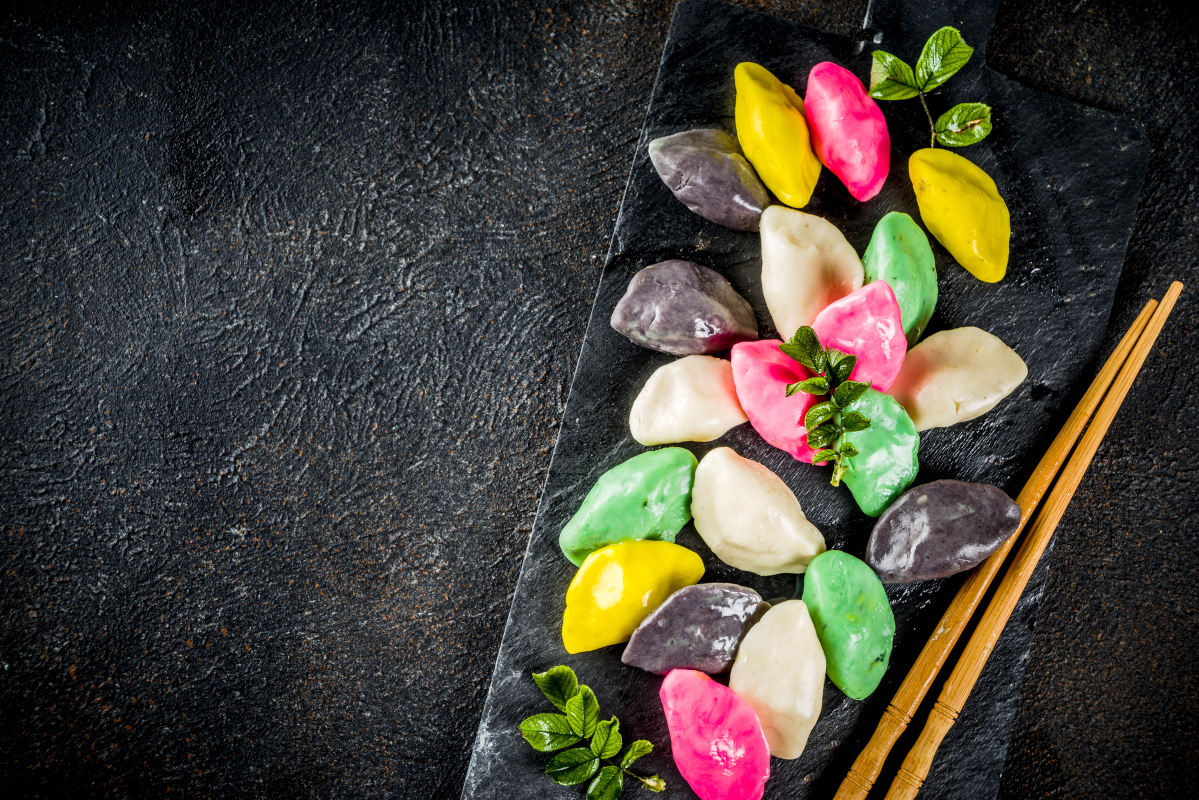
Korean food proverbs and animal sayings are among the easiest to remember because the images are so specific. Rice cakes can represent generosity, envy, impossible desires, good presentation, or expectations formed too early. Porridge signals an easy task, while tigers, whales, shrimp, loaches, and dragons create very different warnings.
I enjoyed this category for the same reason I enjoyed researching Italian proverbs and meanings: food isn’t only food once it enters everyday language. It also connects with the curiosity behind grocery store tourism, where packaging, ingredients, habits, and ordinary purchases can tell you more about a place than a souvenir shop does.
149. 금강산도 식후경
Romanization: Geumgangsando sikhugyeong
Translation: Even Mount Geumgang comes after a meal.
Meaning: Food comes before sightseeing or other pleasures when you are hungry. The closest English equivalent is “An army marches on its stomach,” although the Korean saying is often used playfully before a meal.
150. 식은 죽 먹기
Romanization: Sigeun juk meokki
Translation: Eating cold porridge.
Meaning: This describes a task considered extremely easy. The closest English equivalents are “A piece of cake” and “As easy as pie.”
151. 누워서 떡 먹기
Romanization: Nuwoseo tteok meokki
Translation: Eating rice cake while lying down.
Meaning: The expression is commonly used for something very easy. The literal image can sound risky because sticky rice cake isn’t something anyone should actually eat while lying down.
152. 그림의 떡
Romanization: Geurimui tteok
Translation: A rice cake in a picture.
Meaning: Something looks desirable but can’t actually be possessed, used, or enjoyed. “Pie in the sky” is related, but “So near and yet so far” may fit some contexts better.
153. 떡 줄 사람은 생각도 않는데 김칫국부터 마신다
Romanization: Tteok jul sarameun saenggakdo annneunde gimchitgukbuteo masinda
Translation: The person who might give rice cake hasn’t even considered it, but you drink the kimchi soup first.
Meaning: Someone expects a favorable result before the other party has agreed. The closest English equivalent is “Don’t count your chickens before they hatch.”
154. 보기 좋은 떡이 먹기도 좋다
Romanization: Bogi joheun tteogi meokkido jota
Translation: A good-looking rice cake is also good to eat.
Meaning: Presentation influences expectation and enjoyment. “You eat with your eyes first” is close, although the Korean proverb can also suggest that care in appearance often accompanies care in substance.
155. 꿩 먹고 알 먹는다
Romanization: Kkwong meokko al meongneunda
Translation: Eating the pheasant and its eggs.
Meaning: One action produces two benefits. The closest English equivalent is “Killing two birds with one stone.”
156. 떡 본 김에 제사 지낸다
Romanization: Tteok bon gime jesa jinaenda
Translation: Since the rice cakes are here, hold the ancestral rite too.
Meaning: Someone uses a convenient opportunity to complete another task at the same time. “While you’re at it” captures the practical idea, but there is no exact English proverb.
157. 고래 싸움에 새우 등 터진다
Romanization: Gorae ssaume saeu deung teojinda
Translation: When whales fight, the shrimp’s back is broken.
Meaning: When powerful people or groups clash, those with less power may suffer the consequences. English has no proverb with the same image, though “When elephants fight, the grass suffers” is very close.
158. 미꾸라지 한 마리가 온 웅덩이를 흐린다
Romanization: Mikkuraji han mariga on ungdeongireul heurinda
Translation: One loach muddies the entire pond.
Meaning: One person’s bad behavior can damage a whole group’s reputation or atmosphere. The closest English equivalent is “One bad apple spoils the barrel.”
159. 소문난 잔치에 먹을 것 없다
Romanization: Somunnan janchie meogeul geot eoptda
Translation: At a famous feast, there is nothing to eat.
Meaning: Something surrounded by great publicity may prove disappointing. The closest English idea is “Much ado about nothing.”
160. 호랑이 굴에 들어가야 호랑이 새끼를 잡는다
Romanization: Horangi gure deureogaya horangi saekkireul jamneunda
Translation: You must enter the tiger’s den to catch a tiger cub.
Meaning: A valuable result may require courage and calculated risk. The closest English equivalent is “Nothing ventured, nothing gained.”
161. 달걀로 바위 치기
Romanization: Dalgyallo bawi chigi
Translation: Striking a rock with an egg.
Meaning: A weak person or method has almost no chance against a much stronger force. The closest English expression is “Fighting a losing battle.” The variant 계란으로 바위 치기 is also common.
162. 개천에서 용 난다
Romanization: Gaecheoneseo yong nanda
Translation: A dragon rises from a small stream.
Meaning: A remarkably successful person can come from a poor or unpromising background. The closest English expression is “From rags to riches,” although the Korean proverb focuses on the person’s origin rather than only wealth.
Korean Proverbs With No Exact English Equivalent
The final Korean proverbs have no exact English equivalent, which is precisely what makes them valuable. A short English substitute may capture the general lesson, but it loses the fish market, Jongno, the Han River, Buddhist ritual food, a three-foot nose, or a pumpkin arriving with its vine. These are also useful reminders that a translation can be understandable without carrying every association found in the original.
163. 어물전 망신은 꼴뚜기가 시킨다
Romanization: Eomuljeon mangsineun kkolttugiga sikinda
Translation: The small squid disgraces the fish market.
Meaning: One unimpressive or badly behaved member can damage the reputation of an entire group. English has similar “bad apple” expressions, but none preserves the idea of a lesser fish embarrassing the whole market.
164. 종로에서 뺨 맞고 한강에서 눈 흘긴다
Romanization: Jongnoeseo ppyam matgo hangangeseo nun heulginda
Translation: Slapped in Jongno, you glare angrily at the Han River.
Meaning: Someone who can’t confront the person who hurt them takes their anger out on an unrelated and safer target. “Kicking the dog” describes redirected anger, but the Korean proverb’s Seoul geography makes it distinctive.
165. 염불에는 마음이 없고 잿밥에만 마음이 있다
Romanization: Yeombureneun maeumi eoptgo jaetbabeman maeumi itda
Translation: The mind isn’t on the Buddhist chant, but only on the food offered after the rite.
Meaning: Someone pretends to care about the stated purpose while being interested only in the personal benefit. English has no exact proverb, although “Ulterior motives” describes the behavior.
166. 서울 가서 김 서방 찾기
Romanization: Seoul gaseo gim seobang chatgi
Translation: Going to Seoul and looking for Mr. Kim.
Meaning: Trying to find someone or something with information far too vague to be useful. Because Kim is an extremely common surname, the task is almost impossible. English has no direct equivalent.
167. 내 코가 석 자
Romanization: Nae koga seok ja
Translation: My own nose is three feet long.
Meaning: My own situation is so urgent or difficult that I can’t deal with someone else’s problem. “I have enough on my plate” is close, but it loses the strange and memorable Korean image.
168. 개밥에 도토리
Romanization: Gaebabe dotori
Translation: An acorn in a dog’s bowl.
Meaning: A person who doesn’t belong to the group sits apart and is ignored or excluded. “A fish out of water” is related, though the Korean expression places more emphasis on social isolation.
169. 호박이 넝쿨째 굴러들어 온다
Romanization: Hobagi neongkuljjae gulleodeureo onda
Translation: A pumpkin rolls in with the whole vine attached.
Meaning: A large, unexpected piece of good fortune arrives with extra benefits already included. “A windfall” is close, but it doesn’t preserve the image of receiving the pumpkin and its productive vine together.
170. 남의 잔치에 감 놓아라 배 놓아라 한다
Romanization: Namui janchie gam nohara bae nohara handa
Translation: At someone else’s feast, telling them where to place the persimmons and pears.
Meaning: Someone interferes in another person’s affair and gives unsolicited instructions despite having no authority over it. English has no exact proverb, though “Putting in your two cents” captures part of the behavior.
Conclusion
Looking through 170 Korean proverbs shows how often people in distant cultures worry about the same things: work that takes longer than expected, words that can’t be taken back, envy, family loyalty, unreliable appearances, poor timing, and the hope that difficult days won’t last forever. The lesson may be familiar, yet the rice cake, tiger, market, loach, or kitchen hearth changes the way it is remembered.
Proverbs are only one way to explore South Korea. If the country is on your travel list, check what you’ll need for a South Korea visa application. Seoul’s museums and creative scene appear among the world’s notable cities for art and culture, while winter visitors may also find Seoul among the best places to visit in Asia in January. Language, books, food, history, and everyday expressions all reveal different parts of the same culture.
FAQ About Korean Proverbs and Sayings
What is a Korean proverb called?
A Korean proverb is usually called 속담 – sokdam. Sokdam are established sayings that communicate practical wisdom, warnings, social observations, or lessons drawn from repeated experience.
What is the difference between a Korean proverb and a Korean idiom?
A proverb generally expresses a complete observation or lesson, while an idiom is a fixed figurative expression used as part of a sentence. The boundary isn’t perfect in every case, and some short expressions may be classified differently by different dictionaries.
Are Korean proverbs and 사자성어 the same?
No. 사자성어 – sajaseongeo – are four-character Sino-Korean expressions, often based on Hanja and classical stories. Some express proverb-like wisdom, but they are a separate category and haven’t been mixed into this collection of Korean sokdam.
What is the most famous Korean proverb?
There isn’t one official answer. 시작이 반이다 – “Starting is half the task” – and 원숭이도 나무에서 떨어진다 – “Even monkeys fall from trees” – are among the best-known Korean proverbs for English-speaking learners. 가는 말이 고와야 오는 말이 곱다, about receiving the kind of words you give, is also widely recognized.
Do Korean proverbs have English equivalents?
Some have very close English equivalents. 낮말은 새가 듣고 밤말은 쥐가 듣는다, for example, corresponds closely to “The walls have ears.” Other sayings share only part of an English proverb’s meaning, and some don’t have a direct counterpart at all.
Are Korean proverbs still used today?
Many common Korean proverbs are still recognized and used in conversation, writing, education, media, and family discussions. Frequency varies, and a few older sayings can sound formal, traditional, harsh, or socially dated when applied without context.
Are Korean proverbs included in the TOPIK exam?
Learners preparing for TOPIK II often study common proverbs because advanced reading and vocabulary questions can depend on figurative language and context. There isn’t one fixed public proverb list guaranteed to appear on every exam, so understanding the meaning is more useful than memorizing English translations alone.
Sources and Verification
The Korean forms and meanings in this collection were checked against established Korean-language references, including the Korean-English Learners’ Dictionary and the Standard Korean Language Dictionary, both connected with the National Institute of Korean Language. The broader definition and history of Korean proverbs were also checked through the Encyclopedia of Korean Culture.
Romanization follows the main principles of the Revised Romanization of Korean. Romanization is a reading aid, not a substitute for hearing native pronunciation, and natural sound changes can make spoken Korean differ slightly from a letter-by-letter reading.
More amazing articles for you:
200 Crime TV Trivia Questions and Answers (Easy to Hard) - See What You Still Remember From Your Fav...
Bumped Up To Business Class: Blag Holiday Upgrades
The Perfect 7-Day Canadian Rockies Itinerary
Things to do in Salzburg: travel guide
Haarlem Netherlands Travel Guide: Best One-Day Trip from Amsterdam - Things to Do, Restaurants, Hote...
Italian Dining Etiquette for Tourists: Coffee, Wine, Dinner Times, and Restaurant Rules
Places to go on Valentine's Day with warm weather
3 Commonwealth Countries That Were Loved By Queen Elizabeth II

Violeta-Loredana Pascal is a communications expert, business mentor, and the founder of Earth’s Attractions and PRwave INTERNATIONAL. A pioneer in the Romanian digital PR landscape since 2005, she holds a degree in Communication and Social Sciences from SNSPA Bucharest. Violeta is a senior trainer at AcademiadeAfaceri.ro, where she leverages over 20 years of experience to teach professional courses in PR strategy and workplace productivity. By blending high-level business consulting with a passion for holistic travel and wellness, she empowers solopreneurs to overcome procrastination, build profitable brands, and design a life of purposeful adventure.