On my first trip to Vienna, we visited the Kunsthistorisches Museum first, also called (in English) the Art History Museum or the Museum of Fine Arts Vienna. We had only a short time in the city and a long list of places to see, but I knew I couldn’t miss this attraction.
After breakfast, we left our hotel and walked toward Maria-Theresien-Platz, only to discover we had arrived before the museum opened. We waited outside for about 20 minutes, and once the doors finally opened, we went in without knowing just how much there was waiting inside.
I still remember the main staircase, the succession of rooms filled with paintings I knew from books and reproductions, and the feeling that every new gallery gave us another reason to slow down. We saw the entire museum during that visit, but I would have happily spent much longer in many rooms and with many works.
Another object on display caught my attention for a completely different reason. At the time, it was simply one item seen in a museum; only years later did its story take a turn nobody standing in front of it that day could have expected.
In this Kunsthistorisches Museum Vienna Guide, I cover what you can see, visiting tips, how to get there, ticket information, and recommendations to help you make the most of your visit. I am also including comparisons with other museums to help you decide what to include on your Vienna itinerary.
ID 14590487 ©Aleksandar Todorovic | Dreamstime.com
What Is the Kunsthistorisches Museum?
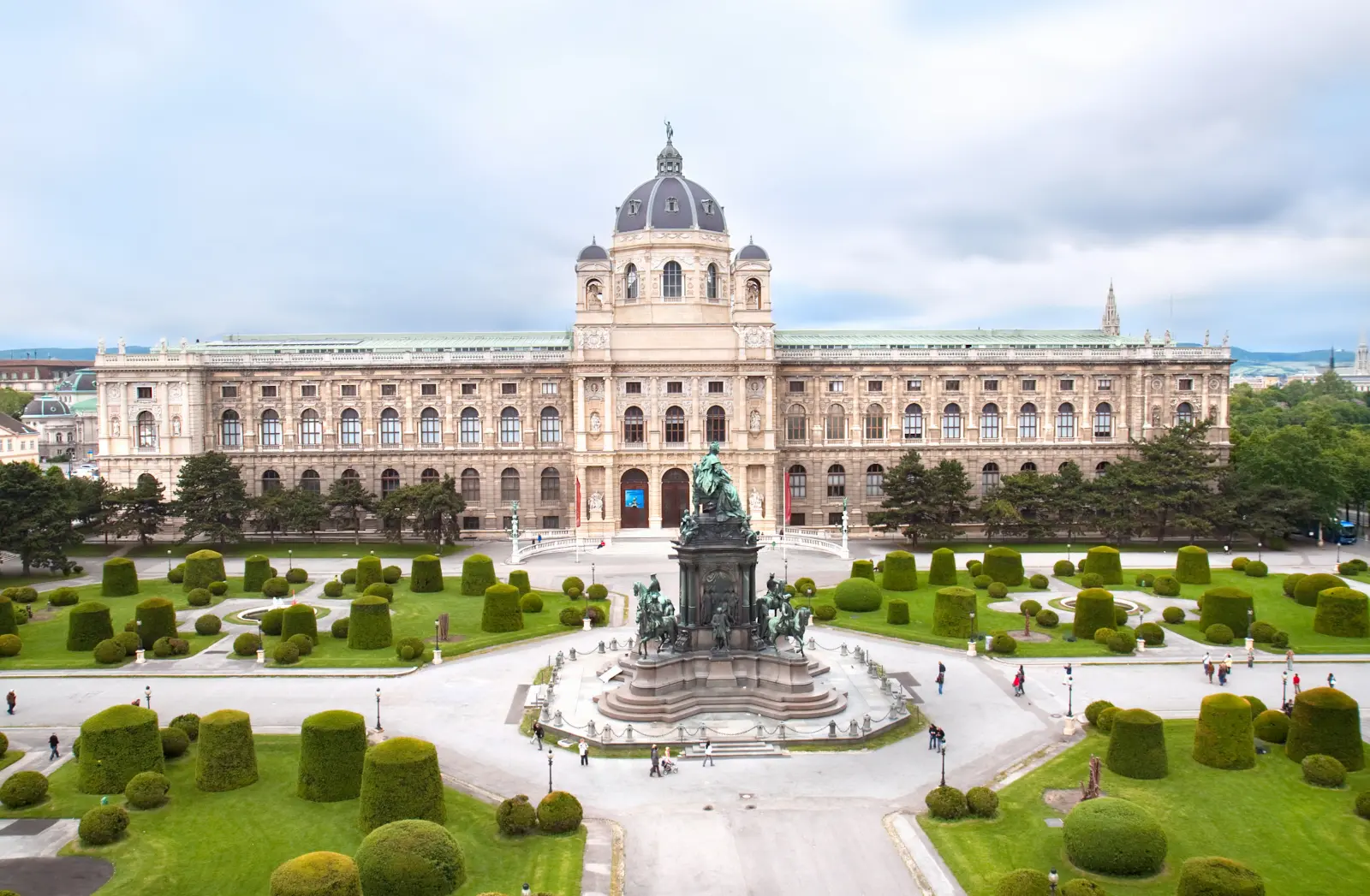
The Kunsthistorisches Museum Wien, usually abbreviated to KHM, is Vienna’s principal museum of art history and one of the country’s most important cultural institutions. English-language travelers may also encounter it as the Art History Museum Vienna, Museum of Art History Vienna, Vienna Museum of Art History, or Museum of Fine Arts Vienna, although the museum normally keeps its German name even in English.
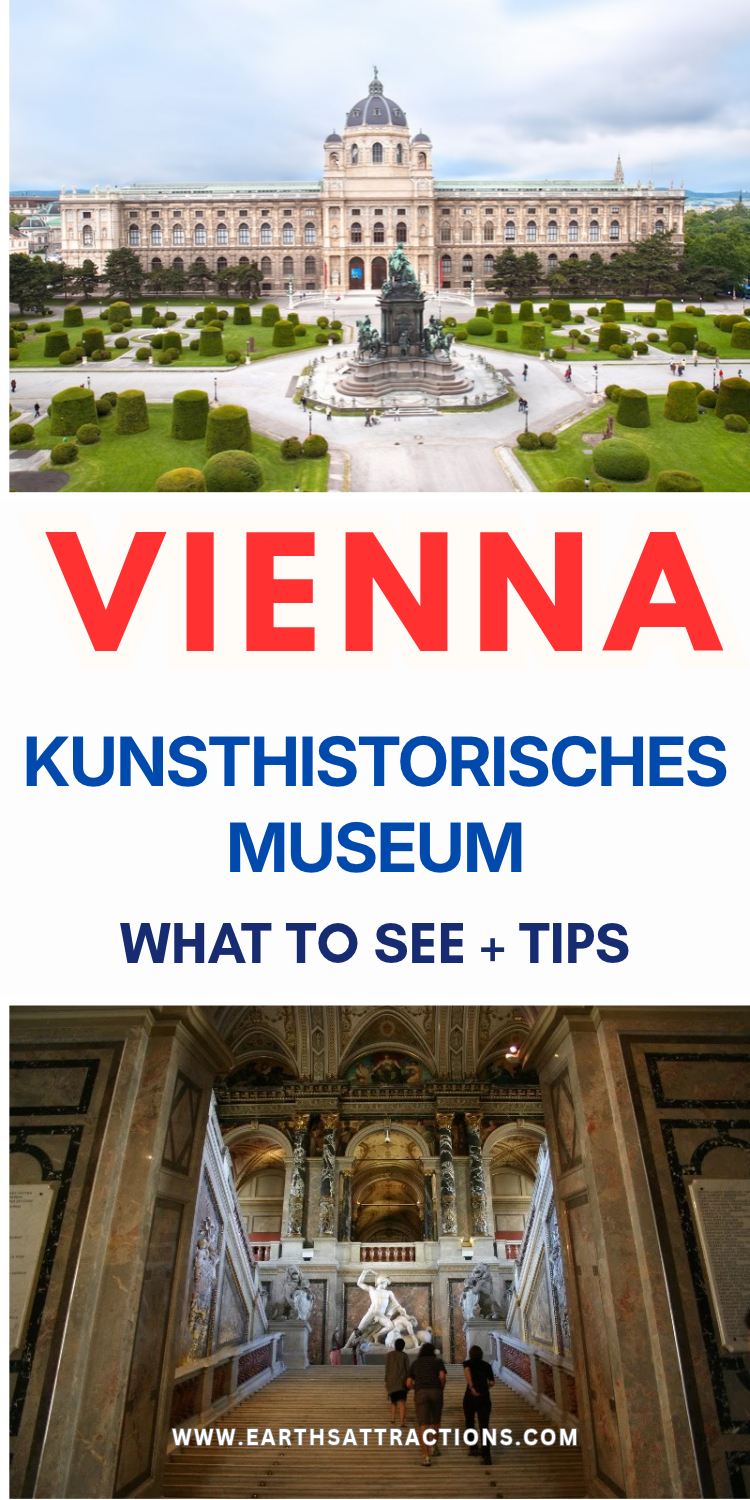
The building opened in 1891 and was commissioned during the reign of Emperor Franz Joseph I to bring together major parts of the Habsburg dynasty’s collections accumulated over centuries. It stands on Maria-Theresien-Platz opposite the nearly matching Naturhistorisches Museum, with the two buildings forming one of Vienna’s best-known architectural ensembles on the Ringstrasse.
The collections extend far beyond paintings. Along with one of Europe’s great Picture Galleries, KHM houses the Kunstkammer, Egyptian and Near Eastern antiquities, Greek and Roman antiquities, coins, and numerous objects tied to centuries of Habsburg collecting.
If you’re deciding which museums deserve space on your itinerary, my guide to the best museums in Vienna includes KHM, along with options for art, history, technology, and other interests.
What to See at the Kunsthistorisches Museum Vienna + My Experience Visiting the Kunsthistorisches Museum
The paintings may be the main attraction for many travelers, but as you will see when you visit Kunsthistorisches Museum Wien, the Kunstkammer and ancient collections are substantial too. Plus… there are some extra surprises there!
On a first visit, I’d focus on the following areas and works, while still leaving room for discoveries along the way. One of the pleasures of a museum like this is finding a painting or object you had never planned to see and spending more time with it than with the famous work you came looking for.
The Grand Staircase and Klimt Paintings
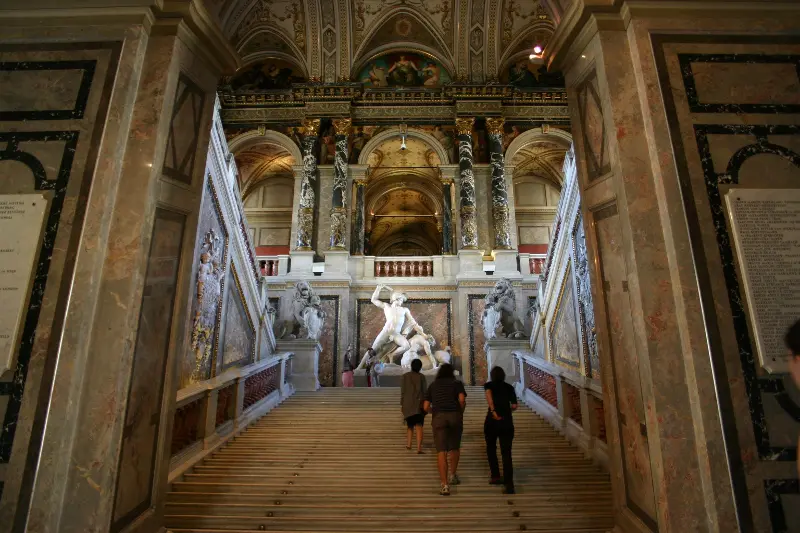
The monumental staircase is part of the museum experience, not simply the route to the galleries. I remember looking around the staircase during my own visit – it is imposing and beautiful -, though I didn’t know the full story behind its decoration at the time.
Several narrow spaces between the arches contain early paintings by Gustav Klimt, Ernst Klimt, and Franz Matsch. Gustav Klimt’s work here looks very different from paintings such as The Kiss, which belongs to a later stage of his career and is at the Belvedere.
Slow down before you reach the first gallery, and look above the arches rather than focusing only on the ceiling and marble architecture. Many visitors arrive focused on Bruegel or Vermeer and walk past some of the building’s most interesting details on the way to those works.
The Picture Gallery
The Picture Gallery, or Gemäldegalerie, is on the first floor and contains major works from several centuries of European art. Italian Renaissance and Baroque paintings sit alongside Spanish, Flemish, Dutch, and German collections, featuring artists such as Titian, Raphael, Caravaggio, Velázquez, Rubens, Rembrandt, Vermeer, and Dürer.
KHM estimates that visitors spend about 1.5 hours in the Picture Gallery alone, and that figure makes sense once you start moving from room to room. Even if you have seen many of these paintings reproduced before, scale, color, surface, and detail are very different when you stand in front of the original.
I think I spent the most time here, soaking in the paintings I had seen before only in art albums or learned about them in school. I looked at the brushstrokes, colors, and details…
Pieter Bruegel the Elder
The Kunsthistorisches Museum has the world’s largest collection of paintings by Pieter Bruegel the Elder, with 12 works held together in Vienna. For anyone interested in Bruegel, this is one of the strongest reasons to choose KHM over another Vienna art museum.
The Tower of Babel, painted in 1563, is the work many visitors recognize immediately, but it deserves much more than a quick look. The enormous tower dominates the composition, while workers, scaffolding, stone cutting, buildings, and ships fill the surrounding landscape with small details that reproductions often miss.
Hunters in the Snow, from 1565, is another of the collection’s masterpieces. The hunters and dogs appear in the foreground, while below them people skate and move across a frozen landscape filled with villages, trees, and distant mountains.
Peasant Wedding, painted in 1568, belongs on the same route. The main feast is only part of what is happening in the room, and much of the interest lies in the individual guests, servers, food, and small interactions around the central scene.
Raphael, Caravaggio and the Italian Galleries
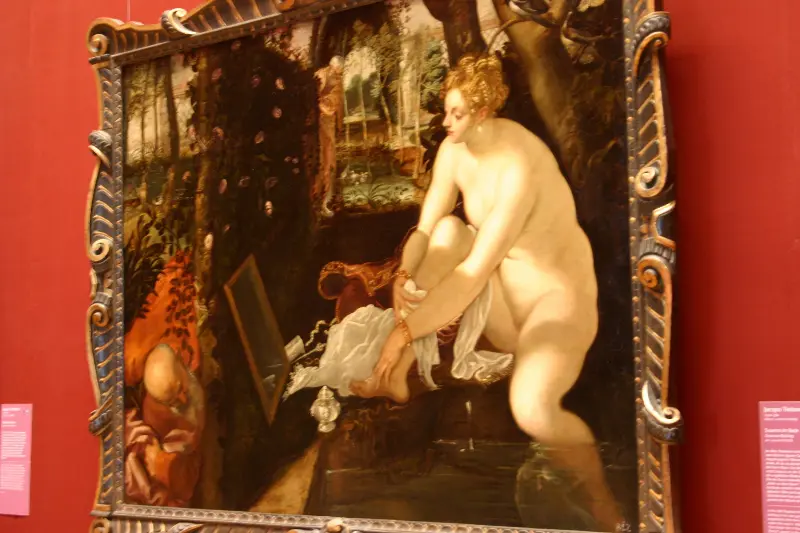
Another gorgeous part of the museum! The Italian collection includes works by Titian, Raphael, Caravaggio, Veronese and Tintoretto, among others. If you want to focus on individual paintings, I recommend Raphael’s Madonna in the Meadow and Caravaggio’s Madonna of the Rosary as two useful points around which to build the visit.
Raphael’s painting dates from his Florentine period and shows the Virgin, the infant Christ, and John the Baptist in a carefully balanced landscape. Caravaggio’s work is much darker and more physical, with the strong contrasts of light and shadow that make his paintings immediately recognizable.
Vermeer’s The Art of Painting
Johannes Vermeer’s The Art of Painting, created around 1666-1668, is another major work in the Picture Gallery. It shows an artist seen from behind as he paints a model usually identified as Clio, the Muse of History.
The painting contains many of the elements associated with Vermeer – controlled light, a carefully constructed interior and objects whose meaning becomes more interesting the longer you look at them. It is one of the works I would actively seek out rather than leaving it to chance while walking through the galleries.
The Velázquez Infanta Portraits
The Spanish galleries include portraits by Diego Velázquez of children from the Spanish branch of the Habsburg family, including Infanta Margarita Teresa. These paintings were not created simply as family portraits; images of royal children circulated between European courts and were closely connected to dynastic marriage negotiations.
That Habsburg context runs through much of the museum. The collections make more sense when you remember that many works arrived in Vienna through family connections, political relationships, commissions, and the collecting habits of individual rulers rather than through the modern idea of building a museum collection from scratch.
Rubens, Dürer, Rembrandt and the Northern Galleries
ID 118512493 | People ©Rostislav Ageev | Dreamstime.com
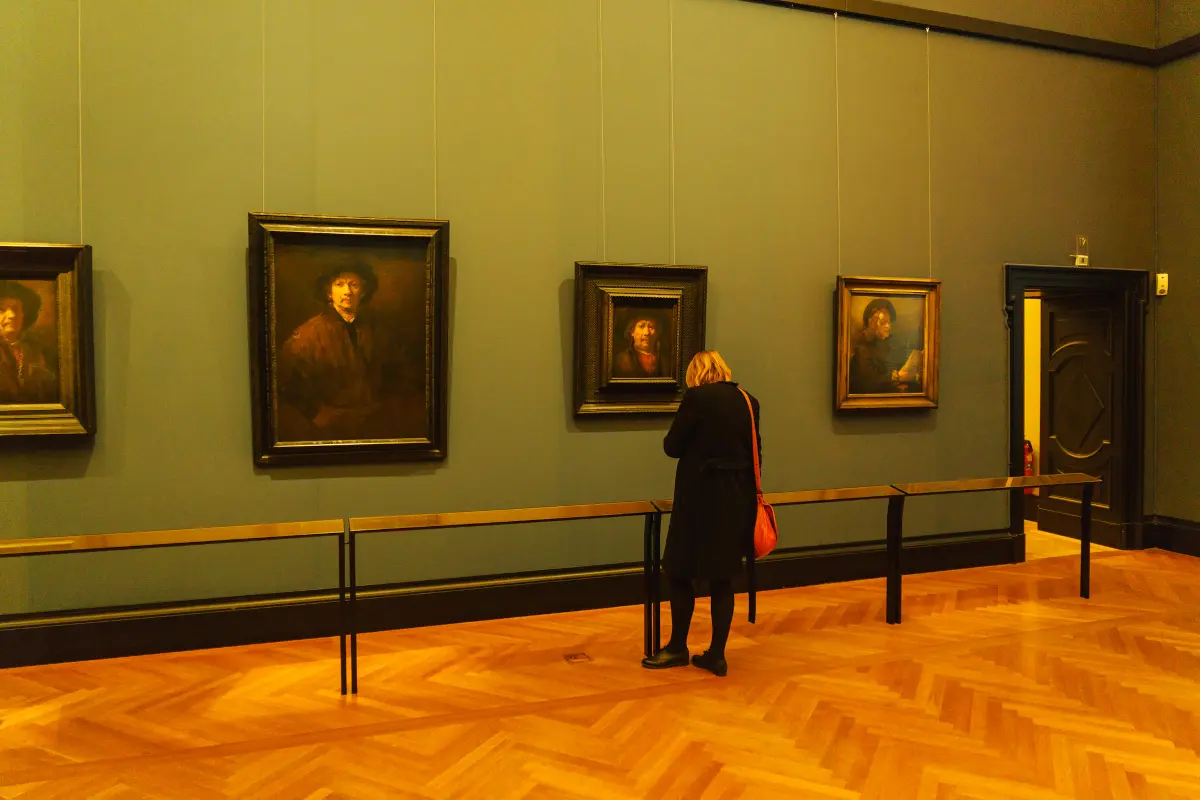
The Dutch, Flemish, and German sections include works by Peter Paul Rubens, Albrecht Dürer, Rembrandt, Jan van Eyck, and other major Northern European painters. These galleries were part of what I remembered from my own visit, especially because we had already moved through Italian art before reaching them, and the change in style was immediately noticeable.
The paintings are impressive, and I loved every moment here, though I didn’t have enough time to look at each one in detail. We were on a tight schedule; it was a very short visit to Vienna, and we had other places I wanted to see that day. Now, as I travel at a much slower pace, slow travel, I would limit my day to this museum alone, soaking in each room, each painting, each exhibited item.
There is enough here to occupy far more time than most first-time visitors can give it. I wouldn’t try to spend equal time at every famous name; choosing a few artists in advance makes it easier to spend real time with the paintings that interest you most.
The Kunstkammer
The Kunstkammer Wien is completely different from the Picture Gallery and deserves its own time. It displays around 2,200 objects across 20 themed rooms, covering the late Middle Ages through the Renaissance and Baroque periods.
The Habsburgs collected objects made from gold, silver, ivory, and precious stones, as well as coral, ostrich eggs, scientific instruments, clocks, automata, and other objects valued for rarity, craftsmanship, or technical ingenuity. Some pieces are beautiful, some are strange, and many make more sense as part of the Renaissance idea of building a collection that represents the wider world in miniature.
The automata and mechanical pieces are easy to overlook if you enter expecting mostly decorative objects. They show how closely art, engineering, science, and entertainment could overlap in court collections, and the museum’s famous ship-shaped automaton is a good example of that combination.
Cellini’s Saliera
The best-known work in the Kunstkammer is the Saliera, which Benvenuto Cellini created between 1540 and 1543 for King Francis I of France. Made of gold and enamel, it represents the earth and sea through the figures of Tellus and Neptune.
KHM describes the Saliera as Cellini’s only surviving gold work. Its function as a salt cellar almost becomes secondary when you see the elaborate figures, base, and symbolism surrounding such an everyday object.
The museum estimates that visitors spend around 1.5 hours in the Kunstkammer. Combined with the 1.5-hour average for the Picture Gallery, that already gives you about three hours before entering any of the ancient collections.
The Egyptian and Near Eastern Collection
ID 21699881 | People ©Tupungato | Dreamstime.com
I am fascinated by Ancient Egypt, so I never miss a museum or exhibition dedicated to it; for me, this section was a very nice surprise.
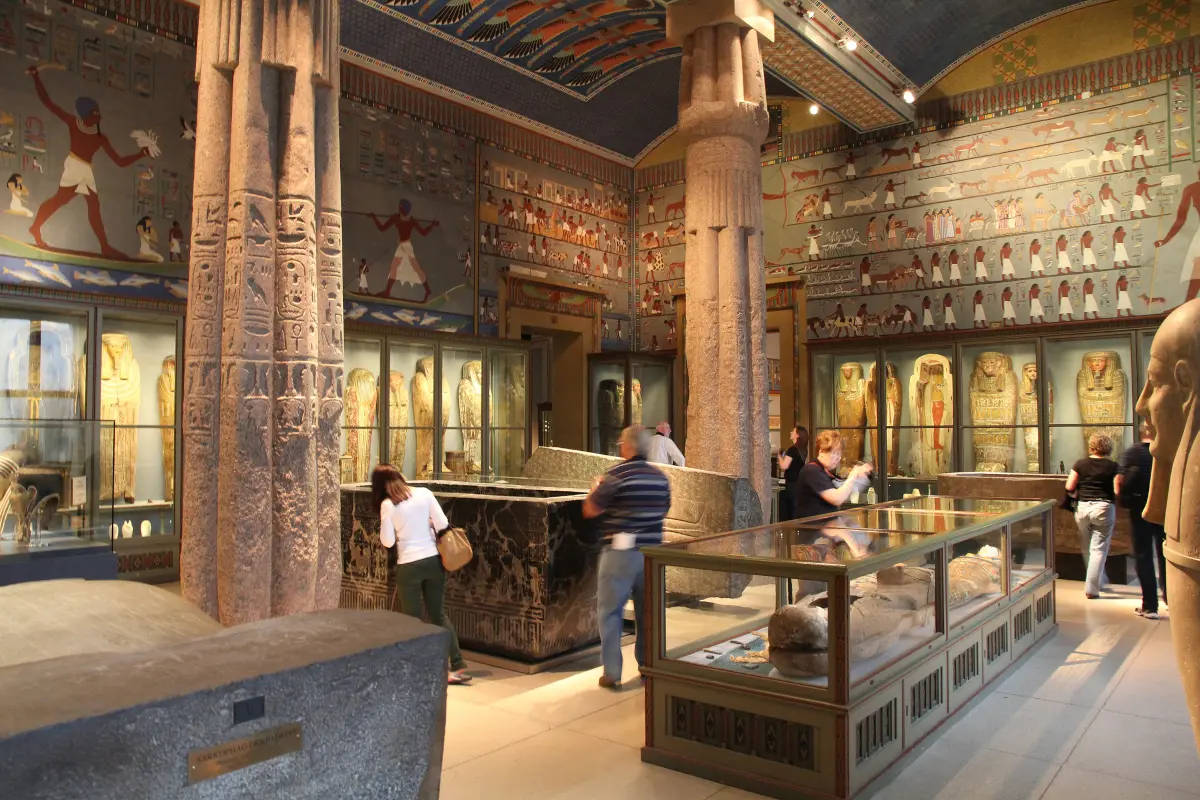
The Egyptian and Near Eastern Collection contains thousands of objects from Egypt, Nubia, Mesopotamia and other parts of the ancient Near East. Sarcophagi, painted coffins, mummies, statues, reliefs, papyri, tools and funerary objects cover several thousand years of history.
One of the most important displays is the original cult chamber from the tomb of Ka-ni-nisut, dating from the Old Kingdom and discovered at Giza by an Austrian excavation team. The museum acquired the chamber, and visitors can now enter it as part of the collection.
KHM also gives an average visit time of around 1.5 hours for these galleries. If Egyptian history is a main interest, plan more time for this section; you have a lot to see!
The Greek and Roman Antiquities Collection
The Collection of Greek and Roman Antiquities spans roughly 3,000 years and includes about 2,500 displayed objects. Sculptures, mosaics, ceramics, cameos, bronzes, and precious objects represent Greek, Roman, and neighboring cultures over a long period.
Among the most important pieces are the Gemma Augustea, the Treasure of Nagyszentmiklós, and the Brygos Skyphos. The collection offers enough depth for archaeology lovers to spend a significant part of the visit here, while travelers primarily interested in painting may prefer to give more time to the Picture Gallery and Kunstkammer.
The Coin Collection
This was a surprising section for us – but truly interesting.
KHM also has one of the world’s major numismatic collections, with hundreds of thousands of coins, medals and related objects. The permanent display represents only part of those holdings, so the current floor plan and exhibition information are useful if numismatics is a priority for your visit.
The 100 Kg Gold Coin I Saw in Vienna
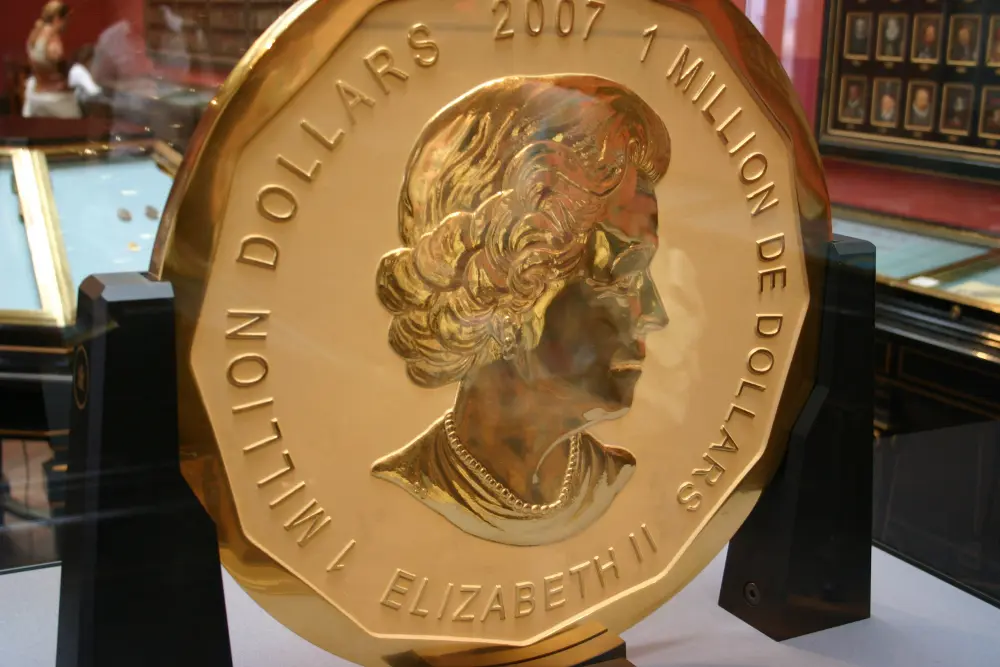
One of the most unusual objects I saw during that visit was not a painting, sculpture, or ancient artifact. It was a huge Canadian gold coin weighing 100 kilograms, displayed behind glass inside the museum.
The coin was the Big Maple Leaf, produced by the Royal Canadian Mint in 2007 from 99.999% pure gold. Its face value was 1 million Canadian dollars, though the gold alone was worth much more, and a solid gold coin that size was unusual and interesting to see.
It was displayed in Vienna only temporarily. Later in 2010, the coin was sold and eventually exhibited at Berlin’s Bode Museum, where its story changed completely on March 27, 2017, when thieves broke in and stole it.
The Big Maple Leaf has never been recovered. The Staatliche Museen zu Berlin still lists it as missing in its account of the Bode Museum theft, although investigators have long suspected that the enormous coin may have been broken up or melted down.
Obviously, I knew none of this while standing in front of it in Vienna. It was a memorable temporary exhibit, and today it is also one reason I always check what special displays are running when I visit a major museum.

How Long Do You Need at the Kunsthistorisches Museum?
Honestly, it depends on your preferences, travel style, and how packed your itinerary is. You can rush through the museum in 2 hours or spend half a day or more, depending on how closely you want to look at the paintings and exhibits.
Three hours is a reasonable minimum for a first visit, while half a day gives you much more freedom to explore the main collections without constantly watching the clock. According to KHM, the Picture Gallery and Kunstkammer each take about 1.5 hours, and the Egyptian and Greek-Roman collections can take another hour or more, depending on your interests.
During my visit, we spent several hours inside and saw the whole museum, but I would have liked more time in many rooms. Seeing everything and having enough time to really look at everything are two different things, especially in a museum with this many major works.
If You Have About Two Hours
With only two hours, I would treat the visit as a carefully chosen highlights route. Start with the Grand Staircase, then spend most of your time in the Picture Gallery with Bruegel, Vermeer, Velázquez, and the Italian masters, then use the remaining time for the Kunstkammer and the Saliera.
Two hours will give you a meaningful introduction, but I wouldn’t add the Egyptian and classical collections unless one of those is more important to you than the paintings. Trying to cover every section equally in that timeframe would leave very little time for the objects themselves.
If You Have Three to Four Hours
Three to four hours gives you enough time for the staircase, the Picture Gallery and the Kunstkammer at a much more comfortable pace. Depending on how long you spend with individual works, you may also have time to see part of the Egyptian or Greek-Roman collection.
This is the amount of time I would consider realistic for many first-time visitors who want to see the major KHM highlights without turning the museum into an all-day activity. A short café break is also easier to fit in without feeling like it takes time away from the galleries.
If You Have Half a Day
Half a day lets you include the Picture Gallery, Kunstkammer, and at least one ancient collection with much more flexibility. It also lets you return to a room, spend more time with Bruegel, or sit down for a while when you need a break. You can also visit the entire museum in half a day, but you will move a bit faster through some of the exhibitions.
This is the schedule I would choose for my next visit. Vienna has so many major museums and palaces that it is tempting to cram several into the same day, but my experience taught me that a large collection becomes much more enjoyable when the rest of the itinerary leaves enough space around it. I make the same point in my Vienna travel tips, because the city’s largest attractions can take considerably longer than they appear to on a map.
Is the Kunsthistorisches Museum Worth Visiting?
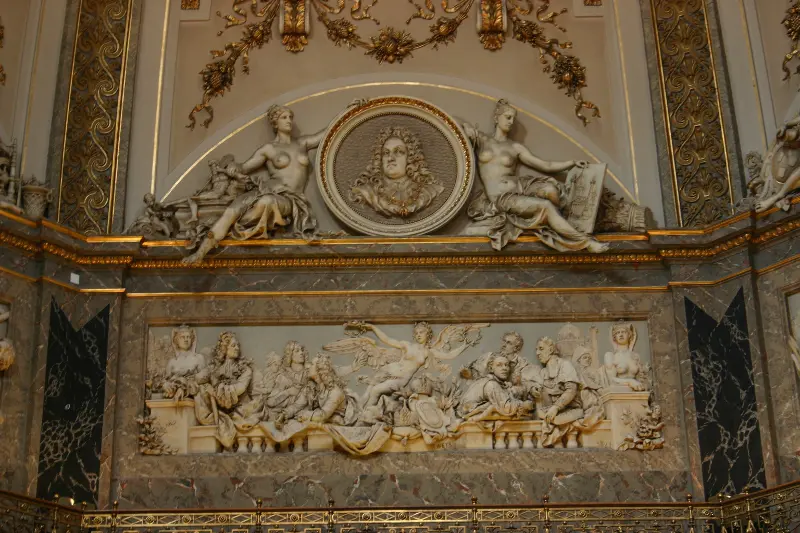
The Kunsthistorisches Museum is one of the Vienna attractions I recommend most strongly to travelers who enjoy Old Masters, Habsburg history, decorative arts or ancient civilizations. The combination of the Bruegel collection, Picture Gallery, Kunstkammer and ancient collections makes it broader than a museum devoted to one period or one type of art.
It will not be the first choice for everyone. Travelers whose main interest is Gustav Klimt’s The Kiss and Austrian art around 1900 should prioritize the Upper Belvedere, while anyone more interested in machines, transport and science may prefer the Technisches Museum Wien, where we spent almost an entire day on another Vienna trip.
Kunsthistorisches Museum or Belvedere?
The Kunsthistorisches Museum and Upper Belvedere answer very different interests, even though both regularly appear on lists of Vienna’s essential art museums. KHM is the stronger choice for Bruegel, Vermeer, Velázquez, Titian, Caravaggio, Rubens, the Kunstkammer and the Habsburg collections, while the Upper Belvedere is the obvious choice for Klimt’s The Kiss, Austrian art and the Baroque palace setting.
KHM does contain early paintings by Gustav Klimt in its staircase, but they come from a very different stage of his career than the works that made him famous. If art is an important reason for your Vienna trip, the two museums complement each other much better than they compete. But if you have to choose one, the Museum of Fine Arts Vienna is more complete, and I would recommend it over Belvedere (having visited both).
Kunsthistorisches Museum or Natural History Museum?
The Kunsthistorisches Museum and Naturhistorisches Museum face each other across Maria-Theresien-Platz and look so similar from the outside that first-time visitors sometimes assume they are part of the same institution. They are completely separate museums with different collections and separate admission.
KHM – the Art History Museum in Vienna – is the choice for paintings, sculpture, decorative art, Egyptian objects, and classical antiquities. The Naturhistorisches Museum focuses on natural sciences, zoology, geology, minerals, meteorites, fossils and prehistoric objects, including the famous Venus of Willendorf.
You can visit both in one day because there is almost no travel time between them. Whether it is a good idea depends on how much time you normally spend in museums, since either one can easily occupy several hours on its own. Plus, it also depends on what you want to do after you visit the Kunsthistorisches Museum (we went to Schönbrunn).
Kunsthistorisches Museum Tickets and Time Slots for 2027
The admission system has changed since my visit; we simply arrived, waited for the museum to open, and bought tickets at the entrance. For current visits, Vienna Tourism says you can enter the KHM only with a reserved time slot, which you can book in advance or arrange at the ticket office.
When I checked the visitor information in October 2026 for 2027 travel planning, adult admission was listed at €22 online and €24 on site, while reduced admission was €19 online and €20 on site. Visitors under 19 entered free, although ticket prices and conditions can change before your trip.
I recommend using the official KHM website when you are ready to book. The museum has warned visitors about unofficial and fraudulent ticket sites, and booking directly also makes it easier to see the latest time-slot rules, special exhibitions, and temporary changes.
Kunsthistorisches Museum Opening Hours in 2027
Regular opening hours are Tuesday to Sunday, 10 AM to 6 PM, with extended hours until 9 PM on Thursday. KHM also opens on selected Mondays and during specific holiday or seasonal periods, so when planning months in advance, don’t assume Monday is always closed.
Vienna Tourism already lists daily opening hours during June, July, and August 2027, as well as from October 12, 2027 through January 6, 2028. Check the Kunsthistorisches Museum’s current visitor information for your exact travel date, especially around holidays.
Best Time to Visit the Kunsthistorisches Museum
The opening time worked well for our visit, even though we arrived about 20 minutes early. Starting when the museum opens gives you the longest possible window to see the collections and lets you visit your highest-priority galleries before museum fatigue sets in.
Thursday is another useful option because the museum remains open until 9 PM under the regular schedule. I wouldn’t promise any particular hour will be quiet, since crowd levels depend on the season, exhibitions, school holidays, and group visits, but the extra evening hours give you more flexibility than a standard 6 PM closing day.
Check the Floor Plan Before You Go
Rooms can close temporarily, and individual paintings may be moved, lent or taken off display. If one particular masterpiece is the reason for your visit, check the official KHM floor plan and online collection shortly before your trip rather than relying on an old room number from a travel article.
This is especially useful for a short visit because it lets you plan your route around what’s open that day. It can also save time in the larger galleries, where doubling back between rooms may take longer than expected.
Can You Take Photos Inside?
Photography and filming are currently allowed for private, non-commercial use, as long as you don’t use flash or a tripod.
The Cupola Café
The Café-Restaurant is in the museum’s Cupola Hall, beneath the central dome, and you can visit it with a valid museum ticket. KHM describes it as a place to take a break during the museum visit, and online reservations are available if you know you want to stop there at a popular time.
I didn’t eat or have coffee there during my original visit, so I don’t have feedback about the menu. For a three-hour or half-day museum visit, however, its location inside the building makes it convenient because you can take a proper break without leaving KHM and starting the admission process again.
Audio Guides and the KHM App
KHM offers audio guides in English and several other languages, with information covering the main collections and individual highlights. The standard audio guide was €6 when I checked the current visitor information, but it’s worth confirming that amount before your trip.
The museum also has digital visitor tools and an interactive floor plan. For a short visit, I would use them selectively around the works or rooms that interest you rather than trying to follow every available audio stop.
Bags, Cloakroom and Luggage
The museum provides a free cloakroom and lockers for outerwear, umbrellas, bags and similar items. Travel luggage is different, and KHM is not a general suitcase-storage facility, so arrange luggage storage elsewhere if you are visiting between hotel check-out and a train or flight.
Where you stay can make a substantial difference on a short Vienna trip, especially if you want to focus on the historic center. My guide to where to stay in Vienna compares areas that work well for first-time visitors and different types of itineraries.
Accessibility at the Kunsthistorisches Museum
The main entrance on Maria-Theresien-Platz has steps, while the accessible entrance is at Burgring 5. Visitor-service staff can assist from there, and elevators reach all museum floors.
KHM also has accessible toilets and wheelchairs available for loan; advance reservation is recommended. If step-free access or another accessibility requirement is essential to your visit, check the museum’s current information before arriving because temporary exhibitions and room arrangements can affect the most convenient route.
How to Get to the Kunsthistorisches Museum
The museum is at Maria-Theresien-Platz, 1010 Vienna, on the Ringstrasse between the Hofburg area and MuseumsQuartier.
Useful public transport connections include the U2 and U3 at Volkstheater, tram D at Burgring/Kunsthistorisches Museum, trams 1 and 2, and buses 2A and 57A.
From Westbahnhof, the U3 to Volkstheater is one of the easiest options. From Vienna Hauptbahnhof, tram D provides a direct connection toward Burgring and the museum area.
What to Visit Near the Kunsthistorisches Museum
The Naturhistorisches Museum sits directly opposite the KHM, while the MuseumsQuartier and the Hofburg are nearby. Its location makes it easy to move around central Vienna without spending much of the day in transit.
You can also easily combine St. Stephen’s Cathedral with the KHM because both are in the city center, and the cathedral visit is much easier to fit around your available time than Schönbrunn. My St. Stephen’s Cathedral guide covers the interior, towers, catacombs, tickets, and how long each part takes.
If you’re building a broader itinerary around the historic center, my guide to the main Vienna landmarks can help you decide which nearby attractions fit comfortably into the same day.
Should You Visit KHM and Schönbrunn on the Same Day?
Yes, you can, because that is exactly what we did on our first Vienna trip. We spent several hours at the Kunsthistorisches Museum, then continued to Schönbrunn for a guided tour of the palace and time in the gardens.
I would still separate them if the itinerary allows it. We saw the entire museum, but I would have liked more time to stay with individual works, and Schönbrunn itself easily expands into a long visit once the palace, gardens and other attractions are included.
Frequently Asked Questions About the Kunsthistorisches Museum Vienna
What is the Kunsthistorisches Museum called in English?
Kunsthistorisches Museum literally means Art History Museum. English-language sources and travelers also use Art History Museum Vienna, Museum of Art History Vienna, Vienna Museum of Art History, and Museum of Fine Arts Vienna, while the institution itself normally retains the German name Kunsthistorisches Museum.
What does KHM Vienna mean?
KHM is the commonly used abbreviation for Kunsthistorisches Museum. You will see it on museum materials, ticket information, and Vienna travel resources, so itis helpful to recognize it before your visit.
How long do you need at the Kunsthistorisches Museum?
Allow at least three hours for a first visit, and half a day for the main collections. KHM estimates around 1.5 hours for the Picture Gallery and another 1.5 hours for the Kunstkammer alone.
Can you see the Kunsthistorisches Museum in two hours?
Yes, if you concentrate on selected highlights rather than trying to spend equal time in every collection. The Grand Staircase, Bruegel paintings, Vermeer, Velázquez and the Kunstkammer would make a strong two-hour route.
What are the must-see works at the Kunsthistorisches Museum?
For a first visit, major highlights include Bruegel’s The Tower of Babel, Hunters in the Snow and Peasant Wedding, Vermeer’s The Art of Painting, Raphael’s Madonna in the Meadow, the Velázquez Infanta portraits and Cellini’s Saliera. The Klimt paintings in the Grand Staircase are worth looking for before entering the Picture Gallery.
Does the Kunsthistorisches Museum have the world’s largest Bruegel collection?
Yes. KHM describes its group of 12 paintings by Pieter Bruegel the Elder as the world’s largest collection of his works. It includes several of his best-known paintings, including The Tower of Babel, Hunters in the Snow, and Peasant Wedding.
Is the Kunsthistorisches Museum worth visiting?
Yes, especially if you enjoy Old Masters, Bruegel, Habsburg history, decorative arts or ancient civilizations. The combination of major paintings, the Kunstkammer and extensive Egyptian and classical collections gives KHM more variety than an art museum centered on a single movement or period.
Do you need to book the Kunsthistorisches Museum in advance?
Current visitor information states that entry requires a time slot, so I recommend reserving one in advance. Admission rules have changed since older guides were written, so the official KHM ticket system is the best place to confirm the procedure for your 2027 visit.
Is the Kunsthistorisches Museum free for children?
Visitors under 19 currently enter free. Check the official ticket page before traveling because admission rules and prices can change.
Can you take photos inside the Kunsthistorisches Museum?
Yes, for private, non-commercial purposes, without flash or a tripod. Some individual artworks can have separate photography restrictions, so check the signs in each gallery.
Does the Kunsthistorisches Museum have a café?
Yes. The Café-Restaurant is in the museum’s Cupola Hall. A valid museum ticket is required, and reservations are available if you want to plan a coffee or meal break during your visit.
Is the Kunsthistorisches Museum wheelchair accessible?
Yes. Step-free access is through the side entrance at Burgring 5. Elevators provide access to all museum floors, and you can borrow a wheelchair with advance reservation recommended.
Is the Kunsthistorisches Museum the same as the Natural History Museum?
No. They are separate museums in similar buildings facing each other across Maria-Theresien-Platz. KHM focuses on art, Habsburg collections and antiquities, while the Naturhistorisches Museum covers natural history, geology, zoology, prehistoric objects and related sciences.
Should I visit the Kunsthistorisches Museum or the Belvedere?
Choose KHM for Bruegel, Vermeer, Velázquez, Old Masters, the Kunstkammer, and Habsburg collections; choose the Upper Belvedere for Klimt’s The Kiss and Austrian art. The two collections differ enough that art lovers should visit both if the itinerary allows.
Can you visit the Kunsthistorisches Museum and Schönbrunn in one day?
Yes, and I did exactly that on my first trip to Vienna. It is a very full day, though, and I would give the Kunsthistorisches Museum more time on a future visit rather than placing two of Vienna’s largest attractions so close together.
More amazing articles for you:
Your complete travel guide to Fargo, North Dakota
The complete guide to Fujikawaguchiko, Japan
200 90s Trivia Questions and Answers for a Nostalgia Quiz Night - How Much of the Decade Do You Reme...
The Luxor Obelisque (Obelisk) in Paris with the Eiffel Tower
7 Days in Jordan Itinerary
Dacia/Renault’s test race track in Titu, Romania as seen from the plane
Ultimate guide to Canyonlands National Park - Island in the Sky
A local's travel guide to Zagreb, Croatia

Violeta-Loredana Pascal is a communications expert, business mentor, and the founder of Earth’s Attractions and PRwave INTERNATIONAL. A pioneer in the Romanian digital PR landscape since 2005, she holds a degree in Communication and Social Sciences from SNSPA Bucharest. Violeta is a senior trainer at AcademiadeAfaceri.ro, where she leverages over 20 years of experience to teach professional courses in PR strategy and workplace productivity. By blending high-level business consulting with a passion for holistic travel and wellness, she empowers solopreneurs to overcome procrastination, build profitable brands, and design a life of purposeful adventure.