
Flying for Thanksgiving? Whether you’re going home for a family dinner, visiting friends, or taking advantage of the holiday to enjoy a few days away, there are some things you should check before leaving for the airport. A forgotten document, an unexpected baggage fee, a full parking lot, or even a homemade Thanksgiving dish packed in the wrong bag can create problems you don’t want to deal with on one of the busiest travel weekends of the year.
I’ve always believed that holidays are wonderful opportunities to travel, and not necessarily for the reasons everyone expects. I’ve sometimes traveled during holidays simply because I needed a break, wanted to relax, and had found a destination that felt just right for me. Spending Thanksgiving with family or friends is a wonderful reason to fly, but enjoying a short vacation can be equally appealing.
I love sharing my best travel tips, so I’ve put together this Thanksgiving flight checklist with 15 things to do before you leave for the airport. Some take less than a minute, while others are easier to handle the night before. They can help you avoid unnecessary expenses, prepare for delays, and arrive at the airport with fewer things to worry about.
Let’s go through the details, including a few Thanksgiving-specific travel rules you may overlook.

ID 103644016 ©Khunaspix | Dreamstime.com
15 Things to Do Before Leaving for the Airport This Thanksgiving
1. Check Your Flight Status in the Airline App
Before you start loading your luggage into the car, open your airline’s official app or website and check the flight status. Even if everything looked fine the previous evening, departure times, terminals, and gate assignments can change.
During Thanksgiving week, weather and operational disruptions can affect airports far from where the problem started. Your departure airport might have clear skies while the aircraft scheduled for your flight is delayed somewhere else.
Turn on airline notifications to receive updates on delays, cancellations, gate changes, or rebooking options. If your flight is delayed, don’t automatically leave home later. Estimated departure times can change again, and some airlines still require passengers to follow their original check-in or baggage deadlines. Check the airline’s instructions before adjusting your plans.
2. Confirm Your Airport, Terminal, and Departure Time
Flying from a metropolitan area with several airports? Check the airport code on your ticket, especially if someone else booked it or you’re traveling from an unfamiliar city.
New York, Chicago, Washington, and other large metropolitan areas have multiple airports. Entering the wrong destination into your navigation app could cost you far more time than you can recover.
Look at the operating airline as well. Codeshare arrangements can mean you’ve booked through one airline but are flying on an aircraft operated by another, sometimes from a different terminal than expected.
Before you leave, compare your current itinerary with the flight information you saved in your calendar. If the airline changed your schedule after booking, an old confirmation email or screenshot may no longer show the correct departure time.
3. Check In Online and Save Your Boarding Pass
Many U.S. airlines open online check-in about 24 hours before departure, though the timing varies by carrier and route. Complete it when you’re eligible, check your assigned seat, and confirm any baggage information.
Save your boarding pass to Apple Wallet, Google Wallet, or another offline location your airline supports. A screenshot can be a useful backup when it contains a valid, scannable code, but make sure you’re using the current boarding pass if your flight details change.
Keep in mind that some passengers, especially on international journeys, may still need to present documents at an airline counter before receiving their boarding pass.
If you have an early departure, I strongly recommend doing as much as possible the previous evening. My night-before-flight checklist covers 28 things you can prepare, including travel documents, luggage, electronics, alarms, and home arrangements. It’s especially useful when you don’t want to make decisions at five in the morning.
4. Check Your ID – There’s an Important 2026 Rule to Know
For domestic flights within the United States, passengers aged 18 and older need identification accepted by the Transportation Security Administration.
Since May 7, 2025, a standard state-issued driver’s license or identification card that isn’t REAL ID-compliant is no longer sufficient on its own for normal TSA identification requirements. You can use a REAL ID-compliant license, a valid passport, or another document on the TSA-acceptable identification list.
An additional rule applies to Thanksgiving 2026 travelers. Since February 1, 2026, travelers aged 18 and older without an acceptable form of identification can use TSA ConfirmID, an alternative identity-verification process that costs $45 for a ten-day travel period.
You can find the details and official payment instructions on the TSA ConfirmID page. Paying the fee doesn’t guarantee TSA will verify your identity or let you through security, and the process may take extra time.
If you’re flying internationally, check your passport’s validity, visa or entry authorization requirements, and any rules that apply to countries where you’ll connect. Before walking out the door, physically check that you have the document you intend to travel with.
5. Calculate When You Need to Leave Home, Not Just When Your Flight Departs
How early should you arrive at the airport for Thanksgiving? A common planning baseline is about two hours before a domestic flight and three hours before an international departure, but your airline or airport may recommend more time. Frankly, I recommend you allow more time, queues, traffic… everything can affect your arrival time at the airport.
Start with your required or recommended arrival time at the terminal, then work backward.
For example, if your domestic flight leaves at 10 a.m. and you plan to be inside the terminal by 7:30 a.m., the journey takes 45 minutes, while parking and reaching the terminal by shuttle take another 20 minutes. You’d need to leave home at 6:25 a.m., even before adding an extra buffer for unexpected traffic.
Thanksgiving travel can involve busy highways, airport drop-off areas, parking facilities, and security checkpoints. Check your airport’s travel advisories and any available security wait-time information. Allow time to get from the parking lot to the terminal.
It’s worth checking your airline’s specific bag-drop and check-in cutoffs, because arriving before departure doesn’t necessarily mean you’ll still be able to board.
I always prefer having enough time to walk to my gate without rushing. The viral airport theory may make last-minute arrivals look tempting, but I wouldn’t gamble with a Thanksgiving flight. Airports can be stressful even when everything goes according to plan, so I see no reason to add unnecessary pressure by cutting the timing too close.
6. Confirm Your Airport Parking or Transportation
If you’re driving, check whether your chosen airport parking facility has available spaces or requires a reservation. Holiday travel periods can put considerable pressure on airport parking, especially lower-cost lots.
Save your parking confirmation, confirm the correct entrance, and check whether you’ll need a shuttle to the terminal. If you reserved off-site parking, verify its operating hours and shuttle arrangements for your departure date.
Using a rideshare, taxi, or airport transfer? Confirm the pickup time and location. If you booked a ride in advance, check what the reservation actually guarantees, since scheduling a ride doesn’t always mean a driver has already been assigned.
For public transportation, verify the timetable for the day you’re flying. Holiday schedules may differ from regular weekday services, and missing an early train or bus can affect the rest of your journey.
7. Check the Weather at Every Airport on Your Route
Even if your departure city has beautiful weather, a storm elsewhere can affect your flight.
Check conditions at your departure airport, final destination, and any connection city. For example, a snowstorm in Denver or Chicago can disrupt flights arriving from or connecting through other cities.
Check the roads near home, too, especially if you’re traveling in an area where snow, ice, heavy rain, or fog could delay your journey to the airport.
When significant disruption is expected, airlines sometimes issue travel waivers that let eligible passengers change their bookings under special conditions. Check the airline’s website for these alerts before paying to change a flight.
If you have a short connection and severe weather is expected at the connecting airport, review your itinerary while alternatives may still be available.
8. Check Your Airline’s Baggage Allowance Before Closing Your Suitcase
A bag that meets one airline’s carry-on requirements may be too large for another. Allowances can also vary by ticket type, route, and fare, so check what your reservation includes instead of relying on past flights.
Measure your carry-on if it’s close to the maximum permitted dimensions, including wheels and handles where the airline requires them to be included. Weigh checked luggage at home if you’re approaching the weight limit.
Thanksgiving travelers may be packing winter clothing, presents, or items for a longer family visit. If you’re bringing extra luggage, compare the cost of paying for bags in advance with the airport’s applicable charges.
Even if your carry-on meets the rules, the airline may gate-check it because of limited cabin storage or aircraft restrictions. Pack a smaller personal bag with everything you’ll need for the journey. Avoid ending up like this guy whose suitcase didn’t fit (his solution is…well… surprising.)
9. Check TSA Rules for Thanksgiving Food and Wrapped Gifts

ID 77437360 ©Jenifoto406 | Dreamstime.com
Are you taking a pumpkin pie to Thanksgiving dinner? Bringing your favorite homemade dish to relatives? You may be surprised by which foods you can carry through airport security and which belong in checked luggage.
The TSA generally permits solid foods such as pies, cakes, cooked turkey, and bread in carry-on luggage, although security officers may need to inspect them.
Gravy, cranberry sauce, jams, spreads, and other liquid or gel foods are subject to the standard carry-on liquids restrictions. Containers over 3.4 ounces (100 milliliters) generally must go in checked luggage unless a specific exemption applies.
For example, you can usually take a whole pumpkin pie through security, but a large jar of cranberry sauce or container of gravy should go in your checked bag.
The TSA What Can I Bring tool lets you look up individual foods and other items. I also have a more detailed article about bringing food through TSA, including advice from an airline employee and travelers’ experiences.
If you’re transporting perishable food, make sure it can stay at a safe temperature throughout the journey. Check TSA requirements for cooling packs, especially if they may be partially melted when screened.
Wrapped presents are another consideration. TSA officers may need to open a package during screening, so gift bags or wrapping your presents after arrival can save you from rewrapping.
And speaking of Thanksgiving food, some familiar holiday dishes have surprisingly interesting histories. I’ve collected 50 surprising Thanksgiving facts about food, traditions, history, and more, including details I didn’t know before researching them.
10. Keep Medication, Valuables, and Essential Items in Your Personal Bag
Imagine arriving at your destination only to learn that your checked suitcase is still at the connecting airport. It’s inconvenient if the bag contains extra clothes, but much harder if you’ve packed medication or something you need right away.
Keep essential medication, identification, glasses, contact lens supplies, money, keys, valuables, and important documents in a bag you can access during the journey.
If you’re traveling with children, pack the things they’ll need if the flight is delayed: suitable snacks, wipes, a change of clothes, medication, and anything that keeps them comfortable.
A few extra items can make a long flight or unexpected overnight stay easier. My carry-on packing essentials cover practical items that can be useful during flights, connections, and arrival.
Medically necessary liquids may qualify for exemptions from the usual carry-on limit, subject to TSA screening. Check the rules before you leave, especially if you’re carrying medical equipment or supplies that require special handling.
If your larger carry-on is unexpectedly gate-checked, remove valuables, necessary medication, and anything else that must remain with you before handing it over.
11. Charge Your Devices and Pack Your Power Bank Correctly
Between checking flight updates, opening boarding passes, contacting family, and arranging transportation after landing, you may use your phone considerably more than expected.
Charge your phone, headphones, tablet, and other essential devices before leaving. Keep charging cables accessible, and check that your portable charger has enough battery for the journey.
Power banks and spare lithium batteries must travel in carry-on baggage, not checked luggage. The FAA’s battery guidance explains the applicable capacity limits. Lithium-ion batteries up to 100 watt-hours are generally permitted, while certain batteries above 100 and up to 160 watt-hours require airline approval; larger batteries are prohibited in passenger baggage.
Airlines may also restrict the number, storage, or use of portable chargers during flights. Check your operating airline’s current battery rules, especially if you have a high-capacity power bank.
If you need to check your cabin bag at the gate, remove power banks and spare lithium batteries first. Keep them with you in the cabin and protect them from damage and short circuits.

12. Save Your Travel Information and Entertainment Offline
I prefer organizing a trip’s important details on my phone before leaving home. I like to avoid looking through emails for a reservation while you’re standing at a counter or trying to explain your destination to a driver.
Save your boarding pass, flight details, hotel confirmation, parking reservation, destination address, and important contact numbers where you can open them without mobile data or Wi-Fi.
My guide to what to have on your phone when traveling explains which documents and information are useful to keep available offline, along with ways to organize them.
Download any movies, music, podcasts, audiobooks, or reading material you want for the journey while you still have a reliable internet connection at home. This preparation helps if your flight doesn’t offer internet access or the wait is longer than expected.
If you’re traveling with someone else, make sure you both can access essential reservations and contacts. Protect sensitive information, and don’t rely on a digital copy when an original physical document is required.
13. Know Your Options if Your Thanksgiving Flight Is Delayed or Canceled
During a busy travel period, finding an alternative flight can be difficult when a disruption affects many passengers at once.
If your flight is canceled, check the airline app for rebooking options. You can often review alternatives without standing in a customer service line. If you’re already at the airport, you can contact airline support while waiting to speak with a representative.
Look at the entire itinerary, especially if your journey includes a connection. Rebooking only the first segment won’t help if the replacement flight arrives after your next flight departs.
For covered flights, U.S. Department of Transportation rules generally entitle passengers to a refund if the airline cancels the flight and the passenger chooses not to travel or accept the offered alternative. Certain significant delays and schedule changes can also trigger refund rights when the passenger rejects the changed itinerary and qualifying alternatives.
You can check the details in the Department of Transportation’s refund guidance. If you’re offered a travel credit, rebooking, or refund, check the conditions before accepting.
Meal vouchers, hotel accommodation, and other assistance depend on the reason for the disruption and the airline’s policies or commitments. Keep receipts for expenses you may need to document later.
Save the airline’s contact information and your booking reference before traveling. You may never need them, but they’re useful to have immediately accessible if plans change.
14. Eat Before Leaving and Pack Food for Unexpected Delays
Even if you plan to eat at the airport, bring something with you when possible. Airport restaurants can be busy, and a long security line or sudden gate change may leave you with less time to buy food than you expected.
Pack a few suitable snacks in your personal bag. Granola bars, crackers, dried fruit, or nuts can be convenient, as long as you consider allergies and any rules that apply at your destination.
I often take sesame bars with raisins or granola bars when I fly. They’re easy to carry and take up little space, which is useful when I want something small to eat without relying entirely on airport food options.
An empty reusable water bottle can generally pass through TSA security and be filled afterward where drinking-water facilities are available. Standard liquid limits apply to beverages brought through the checkpoint unless an exemption applies.
Consider a possible delay, especially if you’re traveling with children or have a short connection. Having food and drink on hand can make a longer-than-planned travel day more comfortable.
15. Make One Final Check Before Locking Your Front Door
Before you leave, check that exterior doors and windows are secure, taps aren’t running, and appliances that shouldn’t remain on are switched off. If you’ll be away for several days, take care of any perishable food, rubbish, deliveries, or arrangements for pets and plants.
If you live somewhere that gets cold, set your heating appropriately for the expected weather and your home’s requirements. You don’t want to return from Thanksgiving to a preventable household problem.
Then check that you have what you actually need to travel: ID or passport, phone, wallet, keys, boarding information, and essential medication.
I would make one last bathroom trip, too. Toothbrushes, medication, glasses, and small toiletries are easy to forget because we may still be using them on the morning of departure. My list of things people forget to pack includes several items worth checking before you finally close your suitcase.
Take your personal bag, check that every suitcase has made it out of the house, and you’re ready to leave.
How Early Should You Get to the Airport for Thanksgiving 2026?
Thanksgiving falls on Thursday, November 26, 2026. Based on historical travel patterns, Tuesday, November 24, and Wednesday, November 25, are likely to be busy outbound travel days, while Sunday, November 29, is a likely peak return day.
These planning expectations are based on previous years, not a guarantee that every airport will have its longest lines on those dates.
For domestic Thanksgiving flights, a common baseline is about two hours before departure. For international flights, approximately three hours is common. Check your airline’s recommendations, airport advisories, and any special holiday guidance, because some journeys require more time.
If you’re checking luggage, using an off-site parking shuttle, traveling with children, or departing from a large, unfamiliar airport, plan extra time for those steps.
Don’t forget the return flight. Many travelers focus on the outbound trip and pay less attention to the return journey, even though the Sunday after Thanksgiving can be extremely busy.
What If You’re Already Running Late for Your Thanksgiving Flight?
Open your airline’s app and check the current flight status, check-in deadline, baggage cutoff, and boarding information. If you haven’t checked in or know you’ll miss the bag-drop deadline, contact the airline as soon as possible to discuss your options.
A scheduled flight departure time isn’t the same as the boarding deadline. Airlines generally close boarding before departure, and some strictly enforce check-in and baggage deadlines.
If you’re certain you’ll miss your flight, try to notify the airline before departure. Depending on the fare and airline rules, failing to show up without notice may affect the remaining flights on your reservation, including your return.
Don’t try to recover lost time by driving dangerously. Check whether rebooking is available and find out what fees or fare differences may apply. Some airlines have policies for late arrivals, but you shouldn’t count on being moved to another flight without extra cost.
A Little Thanksgiving Fun for Your Journey and Family Gathering
Once you’ve handled the airport preparations, you can look forward to the enjoyable part of the holiday.
Speaking of Thanksgiving, I’d also like to invite you to test your knowledge with my Thanksgiving trivia quiz. It has 22 interactive questions about food, traditions, history, and some unexpected facts. You can even play while waiting for your flight.
And if you’ve always been curious about the familiar stories surrounding the holiday, the Thanksgiving myths quiz has 19 questions that challenge some widespread beliefs.
For families getting together after a long journey, these Thanksgiving games for kids and adults include easy activities for different ages. You can also try a few Thanksgiving conversation starters to encourage funny stories and interesting discussions around the table.
Of course, you can spend the day relaxing, exploring a new destination, or doing absolutely nothing beyond enjoying some time away. I’ve enjoyed holiday trips for exactly that reason, and I believe the best holiday plans suit the people taking them.
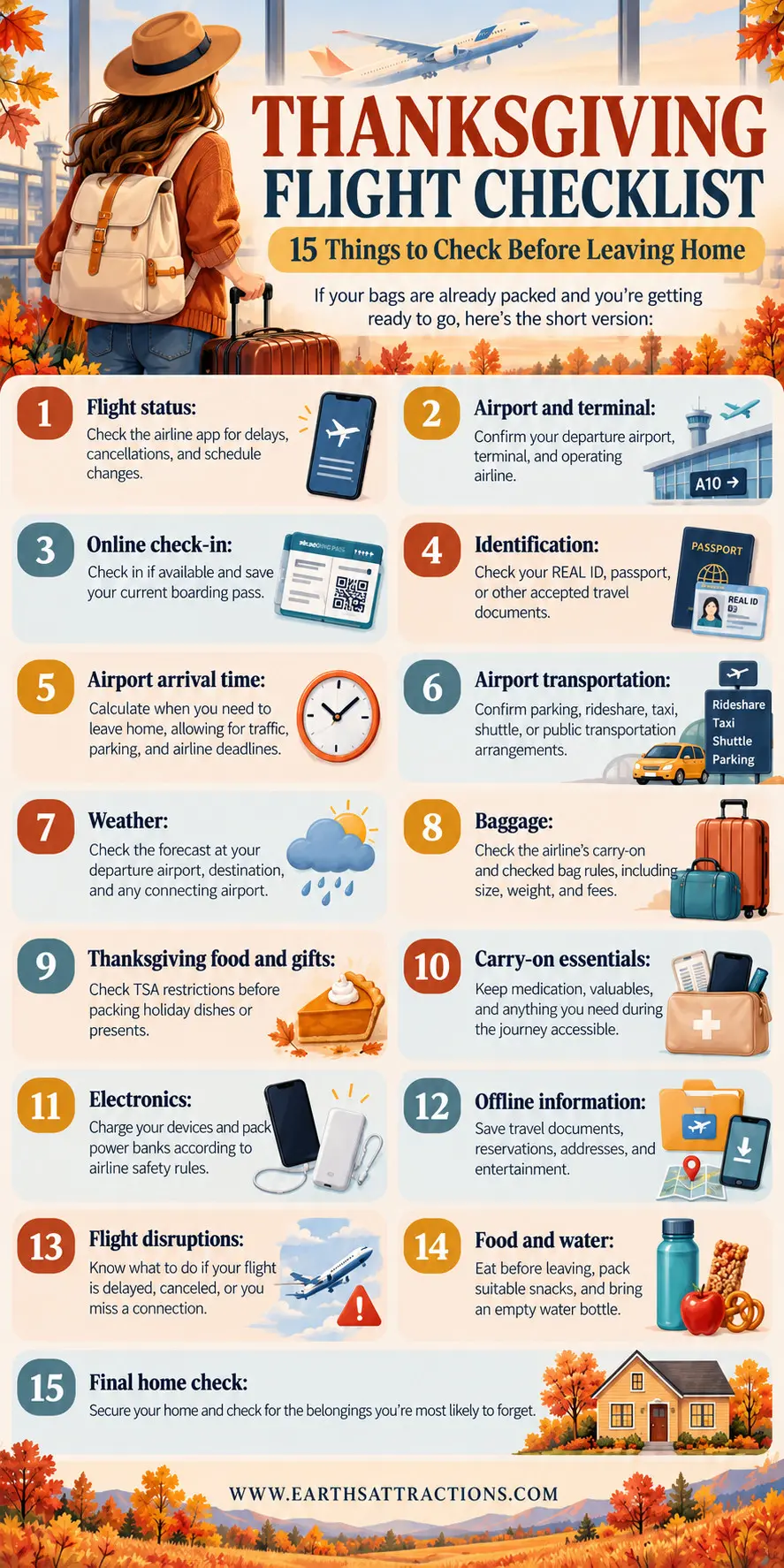
Thanksgiving Flight Checklist: 15 Things to Check Before Leaving Home
If your bags are already packed and you’re getting ready to go, here’s the short version:
1. Flight status: Check the airline app for delays, cancellations, and schedule changes.
2. Airport and terminal: Confirm your departure airport, terminal, and operating airline.
3. Online check-in: Check in if available and save your current boarding pass.
4. Identification: Check your REAL ID, passport, or other accepted travel documents.
5. Airport arrival time: Calculate when you need to leave home, allowing for traffic, parking, and airline deadlines.
6. Airport transportation: Confirm parking, rideshare, taxi, shuttle, or public transportation arrangements.
7. Weather: Check the forecast at your departure airport, destination, and any connecting airport.
8. Baggage: Check the airline’s carry-on and checked-bag rules, including size, weight, and fees.
9. Thanksgiving food and gifts: Check TSA restrictions before packing holiday dishes or presents.
10. Carry-on essentials: Keep medication, valuables, and anything you need during the journey accessible.
11. Electronics: Charge your devices and pack power banks according to airline safety rules.
12. Offline information: Save travel documents, reservations, addresses, and entertainment.
13. Flight disruptions: Know what to do if your flight is delayed, canceled, or you miss a connection.
14. Food and water: Eat before leaving, pack suitable snacks, and bring an empty water bottle.
15. Final home check: Secure your home and check for the belongings you’re most likely to forget.
Conclusion
Before leaving for the airport this Thanksgiving, take a few minutes to check your flight, documents, luggage, transportation, and anything that could cause issues at security. Keep your essentials accessible, save important information offline, and allow enough time to get to the terminal.
If you can, complete most of your preparations the night before. You’ll have fewer things to remember in the morning, especially if you’re departing early or traveling with family.
Whether you’re flying home for Thanksgiving dinner, visiting friends, or taking a short holiday somewhere you’ve been wanting to go, I hope you have a wonderful journey and a relaxing Thanksgiving!
Thanksgiving Flight Checklist FAQs
What Should I Do 24 Hours Before a Flight?
Check your flight details, complete online check-in if available, prepare your travel documents, confirm airport transportation, and review baggage restrictions. Charge your devices, save important information offline, and check the weather at your departure airport and destination. For an early flight, finish packing and set your alarms the previous evening.
Can You Bring Pumpkin Pie and Thanksgiving Leftovers Through TSA?
Yes, TSA generally allows many solid foods, including pumpkin pie, cakes, bread, and cooked turkey, in carry-on luggage. Gravy, cranberry sauce, jams, and similar liquid or gel foods must comply with the carry-on liquids limit unless an exemption applies. Larger containers generally belong in checked luggage. Transport perishable food with appropriate food-safety precautions.
Do You Still Have to Take Your Shoes Off at TSA in 2026?
Generally, no. In July 2025, the Department of Homeland Security ended the routine shoes-off policy at TSA checkpoints, allowing most passengers to keep their shoes on during standard security screening. However, officers may still ask you to remove your shoes for additional screening. Follow the instructions given at your checkpoint.
Can I Bring a Power Bank on a Plane in 2026?
Yes, power banks are generally permitted within applicable capacity limits, but they must travel in carry-on baggage and cannot be packed in checked luggage. The FAA generally allows lithium-ion batteries up to 100 watt-hours, while batteries above 100 and up to 160 watt-hours require airline approval. Some airlines impose additional restrictions, so check your carrier’s rules before departure.
Can You Bring Wrapped Christmas or Thanksgiving Gifts Through TSA?
TSA may allow wrapped gifts, but officers may require you to open packages for inspection. Using gift bags or wrapping presents after you arrive can avoid the inconvenience of unwrapping and rewrapping them during security screening. The items inside the gifts must also comply with TSA rules.
What Should I Do if My Thanksgiving Flight Is Canceled?
Check your airline’s app for rebooking options and contact the carrier if the alternatives don’t suit your plans. If you’re eligible for a refund and choose not to travel or accept the offered alternative, review your rights under U.S. Department of Transportation rules before agreeing to a travel credit or different arrangement. Keep your booking details, notifications, and relevant receipts.
What Is the Busiest Day to Fly Around Thanksgiving 2026?
Based on recent historical patterns, Sunday, November 29, 2026, is a likely peak day for Thanksgiving return travel. Tuesday, November 24, and Wednesday, November 25, are expected to be busy days for outbound journeys. Actual passenger volumes and airport conditions can vary, so check official updates closer to departure.
More amazing articles for you:
Local’s Guide to Queens, New York: What to See, Eat & Do Beyond Manhattan
What If Losing Muscle Is Quietly Aging Your Brain? The Science Every Adult Over 40 Needs to Read
Motorworld München Guide: Free Entry, Legendary Cars, and Visitor Tips
Things to Know Before Visiting Budapest: 20 Essential Tips for a Smooth and Memorable Trip
5 Growth Mistakes That Cost Small Business Owners Time, Money, and Momentum (After 21 Years in Busin...
Four Stunning Places That Have To Be Seen From The Water
5 Items You Need for a Romantic Getaway in Paris
200 Halloween Trivia Questions and Answers: History, Traditions, Candy, Superstitions, and Halloween...

Violeta-Loredana Pascal is a communications expert, business mentor, and the founder of Earth’s Attractions and PRwave INTERNATIONAL. A pioneer in the Romanian digital PR landscape since 2005, she holds a degree in Communication and Social Sciences from SNSPA Bucharest. Violeta is a senior trainer at AcademiadeAfaceri.ro, where she leverages over 20 years of experience to teach professional courses in PR strategy and workplace productivity. By blending high-level business consulting with a passion for holistic travel and wellness, she empowers solopreneurs to overcome procrastination, build profitable brands, and design a life of purposeful adventure.