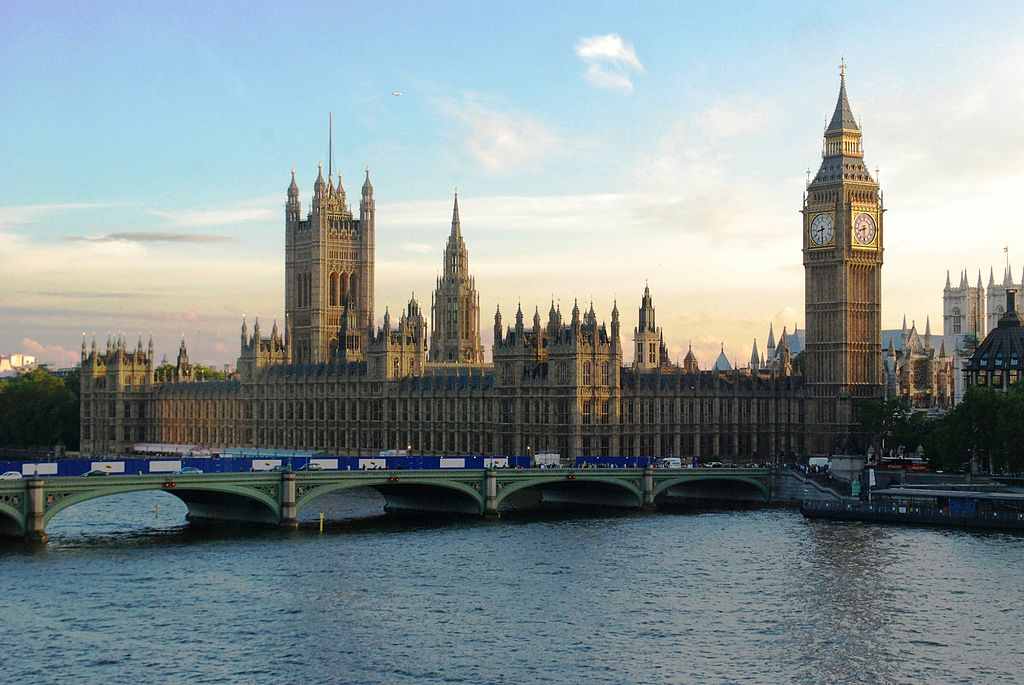
This morning, my husband left early for a business trip. Before he headed to the airport, we did the usual last check to make sure he had everything – the small things are often the easiest to leave behind when you’re thinking about catching a flight.
We went through some of the things people forget to pack, including toiletries, toothpaste, and the other items that need a little more attention when you’re flying.
Then I asked if he wanted something to eat on the way. We have sesame bars with raisins at home, and I usually take either those or granola bars when I fly. He didn’t want one, so that was the end of our very modest airport-food discussion.
And that’s usually how I think about food when flying: a small snack for the airport or the plane. I certainly wouldn’t have thought about packing anything much more ambitious in my carry-on.
When we think about going through airport security, we tend to think small. Check the toiletries. Keep liquids within the rules. Try not to pack anything that’s going to send your bag off for a closer inspection.
But apparently, plenty of travelers have been much more ambitious with food.
I came across a Southwest Airlines employee explaining what passengers can actually bring through TSA, and the comments under her video went in a direction I wasn’t expecting.
People weren’t comparing granola bars and bags of chips. They were revealing what they’d carried through checkpoints, what TSA officers had inspected, what had been confiscated – and what somehow made it all the way onto the plane.
Every few comments, someone seemed determined to outdo the person before them. I also found – and I am sharing with you – the incredible things you can go through TSA.

ID 59654396 ©Milaapid | Dreamstime.com
A Southwest Employee Gave Travelers a Very Simple Answer
The video begins with a scenario that already sounds more ambitious than the average airport snack.
“If you want to bring a whole charcuterie board through TSA, you can do so,” the Southwest employee says as she introduces her tips about bringing food through airport security.
She says she gets a lot of questions about whether passengers can take food through TSA, and her answer is emphatic: “The answer is yes. Will always be yes.”
She repeats the message several times: “You could bring food through TSA.”
At one point, she recalls someone offering her a pizza. Her reaction was essentially: why aren’t you taking it with you?
She also talks about taking ice through security, as well as exceptions for passengers who need liquids for medical reasons and parents traveling with infants who need milk. Her message is simple: bringing food from home can also save money when airport meals and snacks are expensive.
“Bring food from home, bring it right through TSA,” she says.
She does warn that security officers may pull food out of a bag and test or swab it during screening. Judging by the comments, many travelers know exactly what she means.
Then People Started Comparing What They Had Actually Brought
Some of the first examples sound like perfectly practical travel food. People mentioned turkey sandwiches, fruit, breakfast burritos, and snacks packed for children.
Then the portions started getting larger.
“I definitely took a whole large pizza through TSA before 😂,” one traveler wrote.
Another said, “I brought a two-whole 5 lb brisket home with me from Texas🤣”
A different commenter had gone through security with even more barbecue: “Lmaooooo I went through w a side of rice and two pounds of bbq pork from china town in Seattle.”
One traveler flew with five pounds of frozen steaks and two ice packs in an insulated bag. TSA pulled the bag for inspection, but according to the traveler, the officer joked about how good the steaks must be before sending them on their way.
Someone else’s mother apparently took a different approach to inflight catering altogether: “My mom brought a whole rotisserie chicken and sticky rice from California to Mississippi 🤣 she don’t eat airplane foods..”
Then came the comment that made almost everything else sound restrained.
“I brought 12 dozen tamales in my carry on once 🤣🤣🤣”
Twelve dozen. That’s 144 tamales.
At that point, carrying a sandwich through airport security starts to feel like a lack of ambition.
Pizza, Cheesecake, Seafood Boils – The List Kept Going
The tamales didn’t end the competition.
Another traveler said a friend had brought a seafood boil. Someone else transported two pound cakes and three sweet potato pies made by their mother from Georgia to Texas.
One passenger wrote, “I brought a whole ass cheesecake with me 😂😂😂 my mind was blown finding out I can bring food no problem.”
And then we have the traveler who didn’t bother specifying exactly what was involved and simply announced: “I brought a whole ass Olive Garden buffet on a flight back home once.”
I have questions.
How much Olive Garden constitutes a buffet? How was it packed? How many containers were involved? Did the bag deserve its own boarding group?
Sadly, the comment didn’t provide those details.
The stories did make one thing clear: travelers have tested the limits of “bringing food through TSA” far beyond a sandwich wrapped in foil.
Then Came the People Whose Food Didn’t Make It Through
Not everyone in the comments had such an easy experience.
“My container of guacamole got confiscated. They said it was ‘spreadable’ and not allowed. 🙄”
Another traveler wrote, “They threw away my hummus. Claimed it was a liquid 😩”
Someone else asked, “then why did they make me throwaway my jam”
Bean dip joined the list too: “They took my bean dip and called it liquid. 😤”
A pregnant traveler said her sealed pudding was confiscated, while another person reported losing a yogurt parfait because the fruit was too juicy.
Suddenly the whole situation sounds absurd. A large pizza can make it through, while a container of hummus can run into trouble?
According to TSA’s current food rules, that’s essentially how the distinction works.
Solid food can generally travel in carry-on baggage. Foods TSA classifies as liquids or gels have to follow the 3-1-1 rule unless an exemption applies. Hummus is specifically limited to containers of 3.4 ounces or less in a carry-on. Creamy cheese is treated differently from solid cheese. Liquid chocolate is treated differently from solid chocolate.
So yes: you can potentially walk through security carrying an entire pizza while a large tub of hummus has a much tougher day.
Freezing Your Food Adds Another Twist
The comments revealed another strategy.
“I just flew home to see my parents and brought back 3 containers of frozen chili and 2 containers of frozen pasta. It’s not a liquid if it’s frozen 😏,” one traveler wrote.
The rule is a bit more specific, but freezing can make a difference.
TSA says frozen food and ice packs can go through the checkpoint, but frozen liquids and gel packs must be completely frozen when you present them for screening. If they’re partially melted, slushy or have liquid collecting at the bottom, the usual liquids restrictions can apply.
That explains why the traveler with five pounds of frozen steaks and ice packs could have the bag inspected and then continue through security.
For Some Travelers, Bringing Food Isn’t About Seeing What They Can Get Away With
Among all the briskets, cheesecakes and enormous quantities of tamales, several comments showed a more practical side to bringing your own food.
“I have to bring my own food. There’s almost never anything in the airport for a celiac.”
A parent wrote, “I always have a bag full of food when I travel with my littles bc we not buying those snacks for $10 a bag.”
Another traveler said they had cooked and frozen enough food for an entire week-long trip, packed it with an ice pack, and carried it separately through TSA. For them, the payoff was simple: it saved a lot of money.
Medical needs can also change the liquid rules. TSA’s guidance for medically necessary liquids allows reasonable quantities above the standard 3.4-ounce limit, but travelers need to tell officers about them and may need additional screening. Formula, breast milk, and toddler drinks also have specific exemptions.
One commenter who identified themselves as a TSO made a similar point, advising passengers with qualifying liquids to tell officers before their belongings go through the X-ray rather than waiting until something is flagged.
Getting the Food Through Security Is Only Half the Story
Even when TSA has no problem with your food, the people sitting a few inches away from you may have opinions.
One commenter under the Southwest video made a very specific request: “Just not fish or tuna on the flight PLEASE 😭😭🤮”
That debate has already played out very publicly.
Earlier this year, a passenger brought garlic chicken onto a flight and ate it onboard. A man seated in front of her complained about the smell, she continued eating, and the TikTok she posted about the confrontation eventually drew millions of views and a huge argument.
Some people defended her right to eat food she’d brought from home. Others argued that strong-smelling meals are a different issue when hundreds of people are sharing an enclosed cabin.
So the question changes once you’re past security. TSA might allow the meal, but your seatmates might not enjoy spending the flight smelling it.
The video was shared by @brandithecsa on TikTok:
@brandithecsa They won’t take your meal, I promise lol #fyp #tsa #traveltok #travel #airportsecurity ♬ original sound – brandithecsa
And TSA’s Own List Gets Stranger Than the Comments
After 144 tamales, five pounds of brisket, a seafood boil, and what was described as an Olive Garden buffet, finding something stranger sounds difficult.
TSA has one.
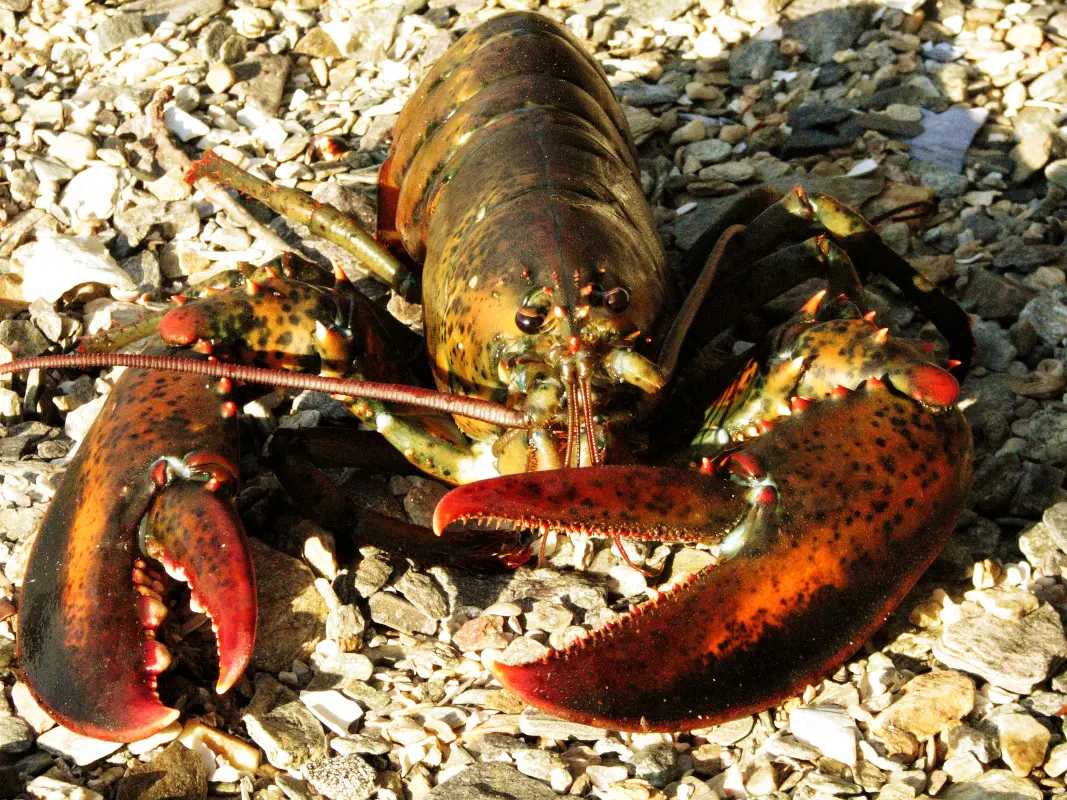
You can travel with a live lobster.
For carry-on travel, TSA says the lobster has to be transported in a clear, plastic, spill-proof container so an officer can visually inspect it at the checkpoint. Travelers are also advised to check with their airline because airline policies can differ.
And yes, people really do this.
One Traveler Had a Lobster Weighing More Than 20 Pounds
In 2017, TSA officers screening baggage at Boston Logan International Airport encountered a passenger whose checked luggage contained a live lobster weighing more than 20 pounds.
The lobster was traveling inside a cooler and was reportedly alive and well when officers found it. It wasn’t contraband. Live lobsters are permitted, provided the applicable requirements are met.
Even the official description of the screening became part of the story: the lobster reportedly “cooperated with the screening process.”
I’d like to know what non-cooperation from a 20-pound lobster at airport security would look like, but perhaps some questions are better left unanswered.
ID 81720060 ©Dejavu Designs | Dreamstime.com
At One U.S. Airport, You Can Even Buy One for the Flight
On a funny note, I will add that people don’t necessarily have to arrive at the airport carrying their lobster either.
At Portland International Jetport in Maine, passengers can buy a live Maine lobster at the airport and have it packed for air travel.
It may sound like a travel story invented to test how much readers are willing to believe, but flying home with Maine lobster is a real enough practice that the airport has catered to it.
Suddenly the commenter carrying a cheesecake seems almost conservative.
International Travel Comes With a Completely Different Catch
One distinction is important before anyone starts packing barbecue, fruit, meat or other food for an international trip.
Getting something through a TSA checkpoint and being allowed to take it into another country are separate issues.
For travelers entering the United States, food and agricultural products can be subject to customs and agricultural restrictions, and travelers must declare agricultural or wildlife products. Meat, produce and other foods can face restrictions depending on what the item is and where it came from.
A five-pound brisket traveling between two U.S. cities is one situation. Taking meat across an international border can be a very different one.
Conclusion: Airport Food Can Apparently Get Much More Ambitious
The Southwest employee’s original message was straightforward: travelers don’t have to limit themselves to whatever they can buy after security. Bringing food from home can be allowed, it can save money, and TSA may simply need to inspect it.
The comments demonstrated just how creatively travelers have interpreted that freedom.
Whole pizzas, multiple pounds of barbecue, frozen steaks, rotisserie chicken and 144 tamales have all reportedly joined passengers on their journeys. Other travelers discovered the stranger side of TSA’s rules when hummus, guacamole, pudding or other spreadable foods ran into the liquids limit.
Then the live lobster arrived and ended the competition for me.
At least until someone explains exactly what was included in that “whole ass Olive Garden buffet.”
What’s the strangest food you’ve ever taken through airport security or onto a flight?
More amazing articles for you:
Superstitions from around the world
Experience The Most Thrilling Events and Festivals in Europe in September
2 awesome Dominican Republic itineraries - with and without Punta Cana
Splish Splash - The Top Water Parks in Europe for Summer Fun
A local's complete travel guide to Dallas
Ready, Set, Spring Break: Travel Tips for Your Next Spring Trip
Everything You Need to Know Before Visiting Milan: Attractions, Travel Tips, Mistakes, Food, and Mor...
7 Days in Jordan Itinerary

Violeta-Loredana Pascal is a communications expert, business mentor, and the founder of Earth’s Attractions and PRwave INTERNATIONAL. A pioneer in the Romanian digital PR landscape since 2005, she holds a degree in Communication and Social Sciences from SNSPA Bucharest. Violeta is a senior trainer at AcademiadeAfaceri.ro, where she leverages over 20 years of experience to teach professional courses in PR strategy and workplace productivity. By blending high-level business consulting with a passion for holistic travel and wellness, she empowers solopreneurs to overcome procrastination, build profitable brands, and design a life of purposeful adventure.