I go to watch the Perseid meteor shower almost every year, so the tips in this guide come from real nights spent outside waiting for falling stars – including nights with clouds, insects, uncomfortable chairs, cold children, and skies that made all the preparation worthwhile.
The Perseids are one of the easiest meteor showers to enjoy because they arrive during the warm summer months and can produce many bright meteors. You do not need a telescope, specialist knowledge, or expensive equipment. You do need a dark sky, patience, and a little preparation.
I am sharing below when to watch the Perseid meteor shower in 2026, the best viewing time, how to choose a good location, where to look, what to wear, and what to bring so that you can enjoy the experience instead of discovering at 1:00 a.m. that you forgot something important.
When is the Perseid meteor shower in 2026?
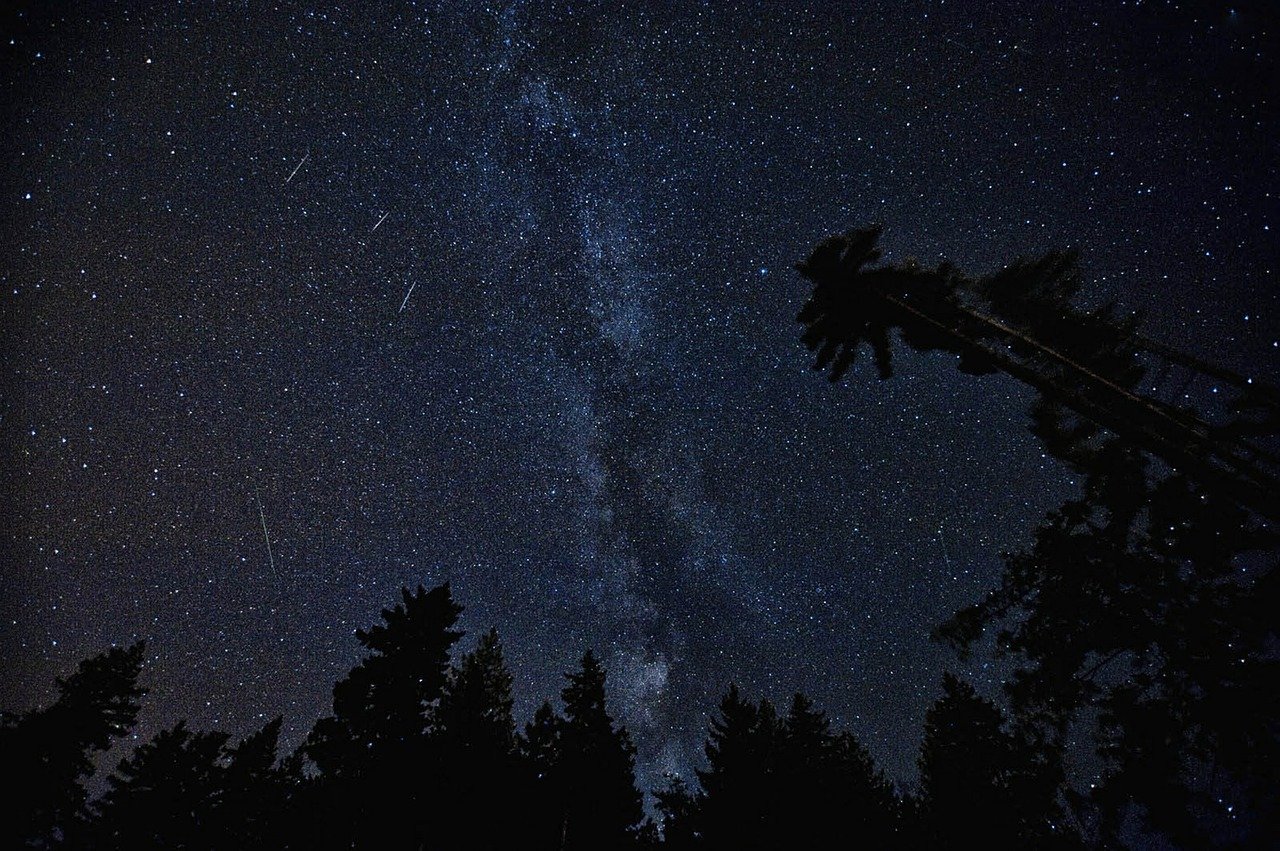
The Perseid meteor shower is active from July 17 to August 24, 2026. You may see Perseid meteors throughout this period, although activity gradually increases as the peak approaches and then decreases afterward.
The main Perseid meteor shower peak in 2026 is expected during the night of August 12 to August 13.
The International Meteor Organization predicts the central maximum between 02:00 and 04:00 UTC on August 13, within a broader maximum extending across the night. The exact clock time will be different depending on your location and time zone.
For most people, the most practical plan is to watch from around midnight until 4:00 a.m. local time on the night of August 12 to 13. Continue closer to dawn when possible, because the Perseid radiant rises higher during the second half of the night and viewing generally improves.
You may see meteors earlier in the evening, especially bright fireballs, but the number usually increases after midnight.
Why the 2026 Perseids could be especially good
Moonlight can hide many of the fainter meteors during some years. In 2026, however, the Perseid peak coincides with a new moon. The sky will not be washed out by a bright moon, giving us one of the best possible lunar conditions for watching the shower.
Under an exceptionally dark, clear sky, the official zenithal hourly rate is listed at around 100. That does not mean every person will count 100 meteors in one hour. This figure assumes ideal conditions, a completely unobstructed sky, and the radiant in the best possible position. Light pollution, haze, clouds, the height of the radiant, and how much of the sky you can see will all affect your real count.
Even if you see fewer, watching several bright meteors and perhaps a fireball can make the trip memorable.
A special detail for 2026: A solar eclipse also takes place on August 12, when the moon passes between Earth and the Sun. The eclipse will only be visible from certain regions, while the dark new-moon sky will help Perseid observers across a much wider area. Never look directly at a solar eclipse without proper certified eclipse eye protection.
Do you have to watch on the exact peak night?
No. The peak night offers the highest expected activity, but it is not your only opportunity.
I recommend choosing two possible nights whenever your schedule allows. The night of August 11 to 12 should already offer increased activity, while meteors will continue during the night of August 13 to 14.
This has helped us more than once. A perfect date on an astronomy calendar is useless when the sky is completely covered by clouds.
Check the weather forecast several times, including cloud cover rather than only the chance of rain. Thin clouds, haze, smoke, or high humidity can reduce visibility even when no rain is forecast.
If the peak night looks cloudy and the previous night is clear, go one night early. Do not sacrifice a clear sky for the promise of a technically stronger but cloudy peak.
Where can you see the Perseid meteor shower?
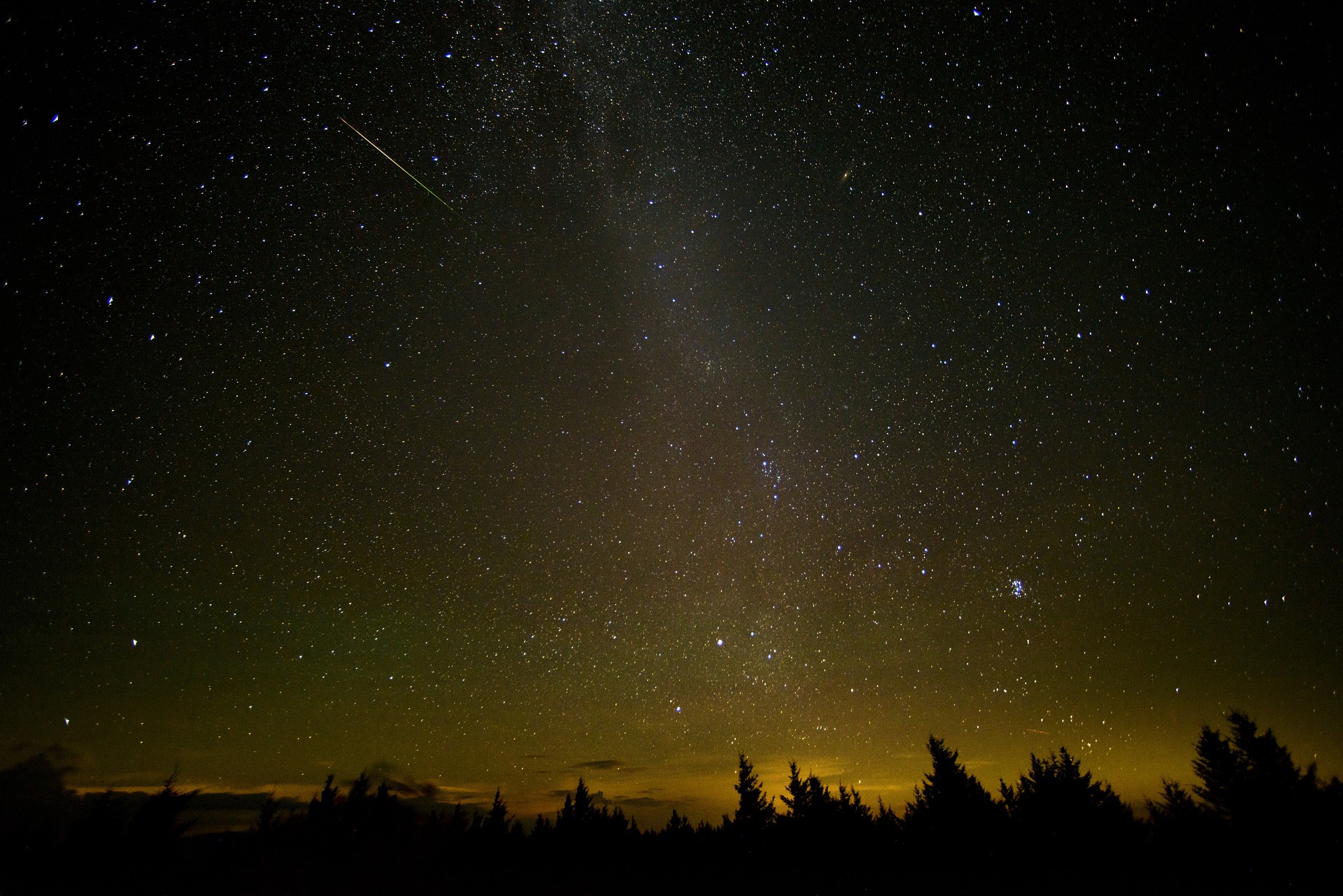
The Perseids are best seen from the Northern Hemisphere. They can also be observed from some locations in the Southern Hemisphere, but the radiant remains lower and the number of visible meteors is usually smaller.
The best place is not necessarily a famous viewpoint. It is a legal, safe location with a dark sky, a wide view, and as little artificial light as possible.
Distance from the city is only a rough guide. In some areas, driving 15 or 20 kilometres may be enough to escape the strongest glow. Around a large metropolitan area, you may need to travel 50 kilometres or more. Look at the actual sky conditions rather than relying only on distance.
You can use Google Maps together with a light-pollution map to identify possible locations. Look for open areas with a clear view of the sky. Avoid places surrounded by tall trees, buildings, bright roads, illuminated parking lots, or powerful security lights.
I also try to avoid locations very close to water because mosquitoes can turn a peaceful night into a very uncomfortable one.
Once you find a good Perseid viewing location, save the coordinates. It will make planning much easier next year, and you will already know where to park, what the horizon looks like, and whether there are unexpected lights nearby.
Visit the location during daylight first
This is one of the most useful additions to our own planning. A place that looks perfect on a map can have a locked access road, private property signs, uneven ground, hidden ditches, aggressive dogs nearby, or no safe place to park.
Scout the area during the day whenever possible. Make sure access is legal, do not block roads or farm entrances, and park where you can leave safely in the dark.
Tell someone where you are going, especially when the location is isolated. Bring a charged phone, but keep its screen dim while watching the sky.
How to see the Perseids if you do not have a car
ID 64315429 © Wentong Wang | Dreamstime.com
You still have several options if you do not drive.
Ask friends who have a car. Some people would love to see a meteor shower but have never thought about planning the trip. Send them the date, suggest a suitable location, and make the outing easy to organise.
Check local astronomy clubs and observatories. Many organise public Perseid viewing events, and some take place in parks or other locations accessible by public transportation.
Look for organised stargazing trips. Nature groups, photography clubs, parks, and tour companies sometimes arrange transport to darker areas for the peak night.
Use the darkest place available in your city. A large park, an open field, a hill, an observatory, or a terrace opened for a special event may not offer a truly dark sky, but you can still see the brighter meteors. Turn your back to nearby lights and position yourself where buildings block direct glare.
Stay overnight outside the city. A rural guesthouse or campsite can turn the Perseids into a short trip and removes the problem of finding transportation home at 4:00 a.m.
Where should you look to see the Perseids?
The Perseids are named after the constellation Perseus because their radiant – the point from which the meteors appear to spread – is located in that part of the sky.
You do not have to find Perseus, and you should not stare only at the radiant. Perseid meteors can appear anywhere across the sky. Meteors seen farther from the radiant may produce longer trails.
Choose the widest, darkest part of the sky available. From many Northern Hemisphere locations, reclining with a broad view toward the northeast and overhead works well later in the night, but buildings, trees, and local light pollution may make another direction better.
The most important rule is simple: keep as much sky in view as possible.
Do you need a telescope or binoculars to watch the Perseids?
No. The Perseids are visible with the naked eye.
A telescope or binoculars show only a very small portion of the sky, so they make it easier to miss meteors appearing elsewhere. Use them to look at the moon, planets, or stars before or after the shower, but put them aside when you are actively watching for Perseids.
The NASA Perseids guide describes the shower as one of the most plentiful of the year and notes that Perseids are known for fast, bright meteors, persistent trails, and fireballs.
Give your eyes time to adjust to the dark
Your eyes need time to adapt after exposure to bright light. Allow at least 20 minutes, and preferably around 30 minutes, before deciding that you cannot see anything.
A quick look at a bright phone screen can reduce your night vision again. Lower the screen brightness before leaving home, activate a red-light mode if your phone or flashlight offers one, and avoid scrolling while you wait.
If you are using a stargazing app, check it briefly and then put the phone away.
What to bring when watching the Perseid meteor shower
A meteor shower does not require specialist equipment, but a few ordinary items can completely change the experience.
Reclining chairs or a thick blanket: You will be looking upward for a long time. A normal upright chair can leave you with neck pain the next day – I learned that from experience. A reclining camping chair is much more comfortable. A blanket or sleeping mat also works if the ground is dry and safe.
Insect repellent and after-bite treatment: Apply insect repellent when you arrive, following the instructions on the product. Bring the treatment you normally use for bites, especially when someone in the family reacts strongly to insects.
Water: Bring more than you think you will need. You may be far from shops, and several hours outside is a long time without a drink.
Simple snacks: Crackers, protein bars, fruit, or sandwiches are easy to carry. Friends of ours have brought popcorn, which made the waiting part feel like an outdoor cinema.
Warm layers: A hot August afternoon does not guarantee a warm night. Temperatures can fall considerably in open rural areas, especially close to dawn.
A dim flashlight or headlamp: A red-light setting is ideal. You need enough light to walk safely without shining a bright white beam into everyone’s eyes.
A charged phone and power bank: Keep the phone available for navigation or emergencies, then lower the brightness and leave it alone while observing.
A small rubbish bag: Take everything home with you, including food packaging and tissues.
Any medication you may need: Do not leave essential medication behind because you are only planning to stay for a few hours.
What should you wear to watch the Perseids?
Wear long trousers and closed shoes rather than sandals. They offer more protection from insects, long grass, uneven ground, and the cooler air later in the night.
Bring a sweatshirt, jacket, or another warm layer for every person. A hat can also be useful when the temperature drops.
The first time we took our son to watch the Perseids, I had brought warm clothes, but he still became chilly. Since then, he has packed extra layers for himself – sometimes a hat and warm overalls or a jacket as well.
Fatigue can make children feel cold faster, so do not judge the entire night by the temperature at the time you leave home. Check the forecast for 2:00 a.m. or 4:00 a.m., not only the evening temperature.
How long should you watch the Perseid meteor shower?
Give it at least one hour after your eyes have adapted. Meteor activity is uneven. You may see several within a few minutes and then wait through a quieter period.
Do not arrive, look up for ten minutes, and conclude that nothing is happening. Stay comfortable, talk quietly, scan different parts of the sky, and let the night unfold.
The longer you remain under a clear, dark sky, the better your chance of seeing a bright meteor or fireball.
Extra equipment you may enjoy bringing
A stargazing app can identify constellations, stars, and planets visible from your exact location. It is a good activity during a quiet period, especially when children or friends are joining you for the first time.
You may also bring binoculars or a telescope for other objects in the night sky. Remember to return to naked-eye viewing when watching for meteors.
A thermos with a warm drink, a low table for snacks, and an extra blanket can make a long night more comfortable. Avoid loud music and bright lights, especially when other people are observing nearby.
How to photograph the Perseid meteor shower
Photographing meteors requires more patience than watching them. You cannot predict exactly where or when the next meteor will appear, so the camera needs to take repeated exposures over a wide section of sky.
Use a sturdy tripod, a wide-angle lens, manual focus, and the widest useful aperture on your lens. As a starting point, try an exposure between 10 and 20 seconds with ISO between 1600 and 3200, then adjust according to the darkness of the location, your camera, and the amount of star movement you accept.
Focus carefully on a bright star or a very distant light, then switch autofocus off so the camera does not hunt in the dark. Use an interval timer, remote shutter, or the camera’s delay function to avoid touching it for every image.
Turn off the flash. It cannot illuminate a meteor and will disturb your night vision and everyone around you.
Phone cameras vary greatly. A tripod and a manual or astrophotography mode will give you a better chance than simply holding the phone and pressing the shutter when you see a meteor. By that time, the meteor will already be gone.
Common Perseid viewing mistakes to avoid
Choosing a beautiful location that is still too bright
A famous viewpoint, illuminated monument, or popular city overlook may look wonderful in photos, yet the surrounding lights can hide most faint meteors. Prioritise darkness and open sky.
Watching a bright phone screen
Every bright notification affects your night vision. Silence unnecessary alerts and keep the screen dim.
Looking only toward Perseus
The radiant helps astronomers identify the shower, but meteors cross the entire sky. A wide field of view is more useful than staring at one constellation.
Leaving too soon
Meteors do not arrive at regular intervals. A quiet 15 minutes may be followed by several memorable streaks.
Forgetting that comfort affects patience
An uncomfortable chair, cold feet, thirst, or insects will end the evening before the sky does. Pack for several hours even when you are unsure how long you will stay.
Driving away while exhausted
Watching until dawn can leave the driver very tired. Plan a rest, share the driving, or stay nearby when necessary. The trip home is part of the preparation.
What are the Perseids?
“Falling stars” are not stars. They are meteors – flashes of light produced when small particles enter Earth’s atmosphere at high speed and heat the surrounding air.
Every year, Earth passes through debris left by comet 109P/Swift-Tuttle. Those particles create the Perseid meteor shower when they encounter our atmosphere.
Many particles are tiny, but the light produced can be bright enough to cross a large part of the sky. Larger fragments can create fireballs that remain visible longer and may leave glowing trails behind them.
The yearly return of the Perseids is good news for all of us. When clouds ruin the experience one year, the shower will return the next summer.
Why are they called the Perseids?
The meteors appear to radiate from an area near the constellation Perseus, which is why the shower is called the Perseids.
You can use an astronomy app to locate Perseus, but finding it is optional. Looking at a wide, dark area of sky remains the best way to see more meteors.
Questions about the Perseid meteor shower 2026
What is the best night to see the Perseids in 2026?
The main peak is expected during the night of August 12 to 13, 2026. The nights immediately before and after the peak can also offer good viewing.
What time should I watch the Perseids?
Plan to watch after midnight, with the hours between midnight and 4:00 a.m. local time offering a practical viewing window for many locations. Conditions often continue to improve toward dawn as the radiant rises, although local sunrise times and the official UTC maximum should also be considered.
Will the moon interfere with the Perseids in 2026?
No significant moonlight interference is expected during the peak because the new moon occurs on August 12. This gives the 2026 Perseids excellent viewing conditions, provided the sky is clear and you are away from strong artificial lights.
Can I see the Perseids from a city?
You may see the brightest meteors and fireballs from a city, but light pollution will hide many fainter ones. Find the darkest open space available and shield your eyes from direct streetlights.
Do I need to look northeast?
The radiant is in the Perseus area of the sky, which appears toward the northeast from many Northern Hemisphere locations later in the night. Meteors can appear anywhere, so keep a broad view of the darkest part of the sky rather than staring at one direction.
Do I need special equipment?
No. Your eyes are the best equipment for watching a meteor shower. A reclining chair, warm clothes, water, insect repellent, and patience are much more useful than a telescope.
Can children watch the Perseids?
Yes, and it can become a wonderful family memory. Bring extra warm layers, food, water, insect protection, and a comfortable place where children can lie back. You may also choose an earlier hour and accept seeing fewer meteors when staying past midnight is not realistic.
What should I do if the peak night is cloudy?
Try the night before or the night after. The Perseids remain active for weeks, and a clear night near the peak is better than sitting under thick clouds during the official maximum.
Enjoy the Perseids
The Perseid meteor shower is one of those experiences that sounds simple – drive somewhere dark, sit down, and look at the sky. In reality, the right location, a clear forecast, warm clothes, insect protection, and a comfortable chair make a huge difference.
I go almost every year because no two nights feel exactly the same. Some years we count many meteors. Other years we wait longer for each one. There is always a moment when someone suddenly points to the sky, everyone looks up, and the trip feels worthwhile.
Choose your location, keep a second possible night in reserve, pack more warm clothes than you think you need, and give your eyes and the sky enough time.
Enjoy the Perseids!
More amazing articles for you:
York sightseeing guide: 20 amazing York activities that will make you want to visit York England now
3 Commonwealth Countries That Were Loved By Queen Elizabeth II
15 Once-in-a-Lifetime U.S. Cities You Need on Your Bucket List
These 200 Travel Would You Rather Questions Make Long Drives, Airport Waits, Train Rides, and Hotel ...
Why Are Airports So Stressful? The Real Psychological Reasons (And How to Stay Calm)
Travel to Thailand: things to know and the best places in Thailand
Hitting the Slopes: Top Mountain Getaways
Ill on Vacation/Holiday - What to Do Next

Violeta-Loredana Pascal is a communications expert, business mentor, and the founder of Earth’s Attractions and PRwave INTERNATIONAL. A pioneer in the Romanian digital PR landscape since 2005, she holds a degree in Communication and Social Sciences from SNSPA Bucharest. Violeta is a senior trainer at AcademiadeAfaceri.ro, where she leverages over 20 years of experience to teach professional courses in PR strategy and workplace productivity. By blending high-level business consulting with a passion for holistic travel and wellness, she empowers solopreneurs to overcome procrastination, build profitable brands, and design a life of purposeful adventure.