
Last updated: September 2026
Boarding has started. You already have your passport and boarding pass ready, and you just want to clear the final checks and get on the plane.
A passenger a few people ahead of you is asked to put his carry-on in the metal baggage sizer. There is nothing unusual about that – until the bag doesn’t quite fit.
The suitcase itself is almost within the limit, but the wheels, the handle, or another sticking-out part is enough to push it beyond the allowed dimensions. Suddenly, a cheap flight isn’t cheap anymore, because there is another fee to deal with before boarding.
That’s what happened to one passenger. Instead of paying, he did something drastic right there at the gate.
The video spread quickly, people argued over whether his solution made sense, and then another detail emerged: he wasn’t the first traveler to react this way. Another passenger had done something similar before – and gone even further.
ID 209980333 ©Insidestudio | Dreamstime.com
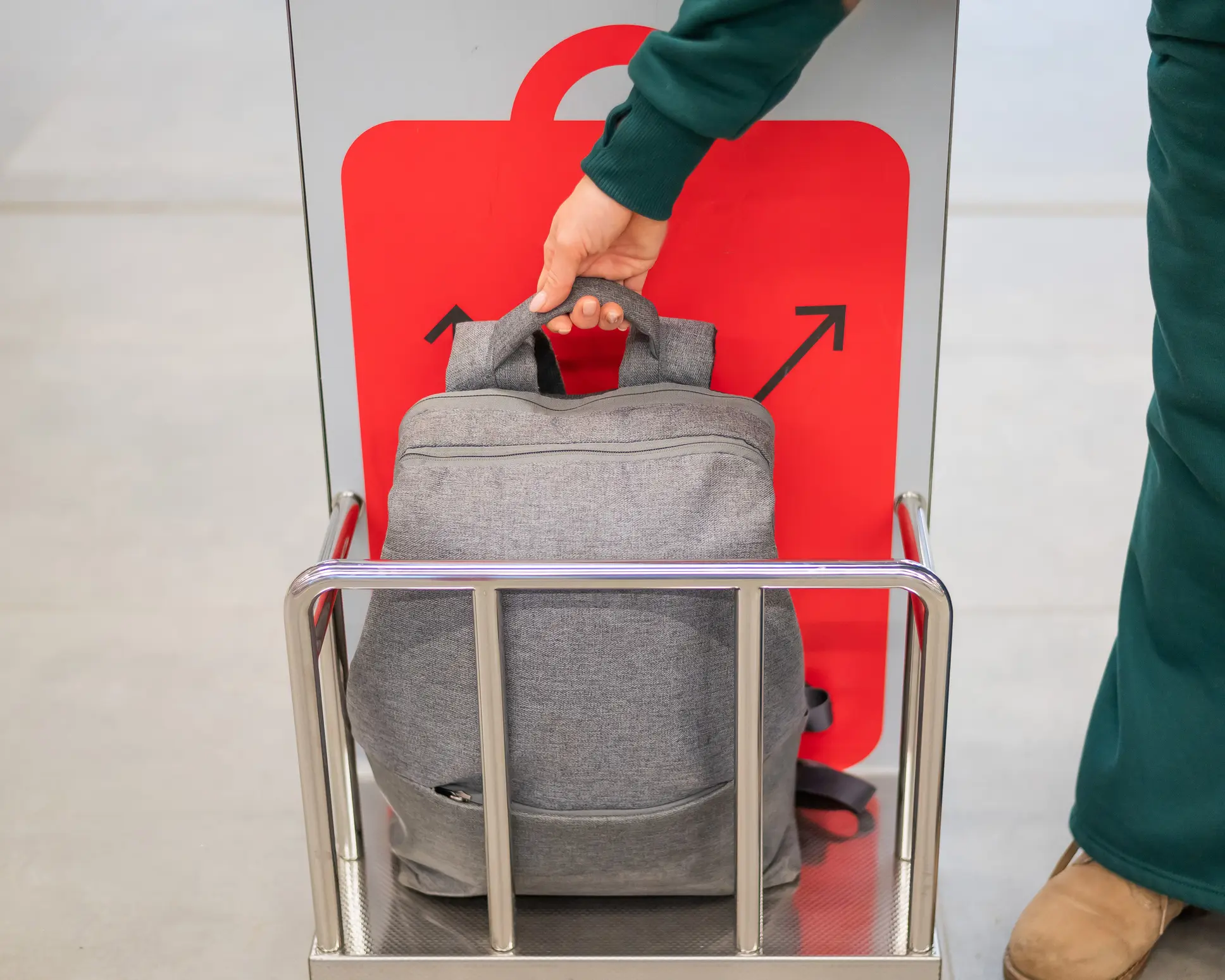
What Happens If Your Carry-On Is Too Big at the Gate?
If your carry-on bag doesn’t fit inside the airline’s baggage sizer, including wheels and handles, you may have to pay an additional baggage fee or have the bag placed in the aircraft hold.
Airport and gate baggage charges can be higher than baggage purchased during booking. Depending on the airline, route, and fare, an unexpected charge can significantly increase the cost of what may have started as a very inexpensive flight.
Airlines measure the external dimensions of luggage rather than the usable storage space inside. Wheels, handles, rigid frames and corner protectors can therefore count toward the maximum permitted dimensions.
A suitcase can look perfectly reasonable and still fail the baggage sizer because one component extends beyond the limit.
In this case, the difference was small – the passenger’s response wasn’t.
What He Actually Did at the Gate
The passenger’s carry-on was considered too large because the wheels pushed the suitcase beyond the permitted dimensions.
Rather than pay the additional fee, he removed the wheels so the suitcase would fit inside the airline’s baggage sizer.
These weren’t wheels designed to pop off before boarding and click neatly back into place afterward. He physically removed them at the airport.
There was no lengthy confrontation. He altered the suitcase rather than paying the charge, and the comments soon became about far more than one passenger and one piece of luggage.
How People Reacted to His Viral Gate Workaround
The reactions went in several directions. Some people applauded his refusal to pay, others thought he had destroyed a suitcase to save a smaller amount of money, and many used the video to talk about their own frustrations with airline baggage rules.
Some people thought he was right to refuse the fee
A number of commenters said they would have done the same thing, especially after considering how much an additional baggage charge can cost at the airport.
One commenter wrote that, considering how much it costs to check a bag, “he did the right thing.” Another said, “I would have done the same,” while someone else argued that if checking the suitcase cost more than the suitcase itself, the decision made financial sense.
For those travelers, the argument wasn’t really about the wheels. It was about reaching the gate and discovering that a small difference in bag size could suddenly create another expense.
Others thought it was a bad idea
Not everyone saw the solution as clever.
Some commenters pointed out that he might have avoided the baggage charge but could now need a new suitcase. One person joked that replacing the bag could cost more than the fee, while another imagined how the owner might react if the suitcase had actually been borrowed from someone else.
That is the practical problem the short video doesn’t resolve. Avoiding one expense at the gate can create another one later, especially when the traveler still has to move the damaged case through airports, streets, stations and hotels.
Some focused on the design of the suitcase
Other people took a more practical approach. They mentioned suitcases with removable wheels or luggage designs where certain wheels can be unscrewed and replaced.
Some argued that manufacturers should make removable wheels more common, allowing travelers to reduce a case’s dimensions without permanently damaging it.
It is an interesting response to increasingly precise baggage measurements: instead of debating whether the passenger or airline was right, travelers started asking whether luggage itself should be designed differently.
Some travelers were surprised that the wheels counted at all
One of the more revealing comments came from someone who said they had never flown before and asked whether a passenger could really face a charge of around €70 because a bag didn’t fit inside the sizer.
Frequent flyers may already know that wheels and handles count toward luggage dimensions, but occasional travelers may not know how literally those measurements apply.
A suitcase advertised using dimensions that sound acceptable can still cause trouble if a traveler hasn’t checked whether those measurements include every external component.
Much of the discussion came back to the cost
Across the comments, frustration over baggage fees appeared repeatedly. Some people felt the fee was excessive, while others said they had seen luggage charges that cost as much as, or more than, the flight itself.
That helps explain why videos like this spread. The event may involve one passenger and one suitcase, but many travelers recognize the broader situation: a small problem discovered at the gate can become expensive quickly.
This Wasn’t the First Time – and Another Passenger Went Even Further
The wheel-removal video may sound like an unusually extreme response to a baggage fee, but similar incidents have happened before.
In 2023, a passenger flying with easyJet at Palma de Mallorca airport was filmed after being told his carry-on did not meet the airline’s cabin baggage requirements.
He went further than removing the wheels. The traveler tore off both the wheels and the handle of the suitcase to make it comply with the permitted dimensions.
That video generated much the same argument: had he found an inventive way around an expensive baggage charge, or had he simply exchanged one expense for another by damaging the suitcase?
Another passenger was filmed removing suitcase wheels in 2024, and additional videos show travelers taking similar approaches.
Different airports, airlines, and years have produced remarkably similar scenes. A traveler reaches the gate, finds out that part of the suitcase exceeds the permitted dimensions, and has only a short time to decide how to resolve it.
Most passengers will simply pay the required charge. Every so often, somebody chooses an option memorable enough to end up all over social media.
Removing the Wheels Solves One Problem – and Creates Several Others
Getting a suitcase into the baggage sizer doesn’t necessarily mean the problem ends there.
Suitcase wheels form part of the structure passengers rely on throughout a trip. Removing them can damage or weaken the bottom of the case, expose broken plastic, or leave edges that were never intended to scrape across floors, pavements and baggage systems.
A damaged hard-shell suitcase may crack further when it is dragged through terminals, railway stations or city streets. Even if the case survives the flight, the traveler may be left carrying or dragging luggage designed to roll.
Modifying the suitcase doesn’t guarantee that airport staff will accept it either. A visibly damaged bag could create a different problem, especially if broken components or sharp edges make it unsafe to handle.
There is another possibility as well: the bag could ultimately end up in the hold anyway. Cabin space can fill up, and passengers are sometimes asked to surrender cabin luggage at the gate even when it meets the permitted dimensions.
By then, the parts originally designed to help the suitcase withstand movement and impact may already be gone.
The financial calculation isn’t always straightforward either. A gate baggage fee can feel excessive when you’re standing in the boarding line, but replacing a damaged suitcase during the trip can cost more, especially when there are few convenient places to shop.
The viral clip ends after the unusual solution. The passenger still has the rest of the journey ahead of him.
Why Travelers Do This
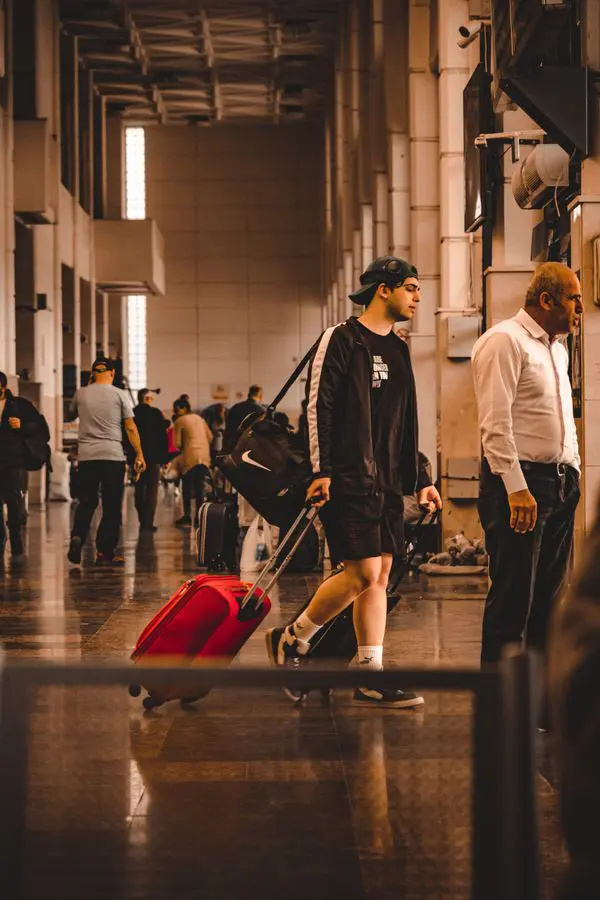
From the outside, removing suitcase wheels to avoid a baggage fee can look absurd. The calculation can feel very different when you’re standing at the gate with boarding underway, other passengers waiting behind you and a baggage problem that has to be resolved before you continue.
Low-cost airlines have changed the way many people buy flights. An inexpensive base fare can come with strict limits on luggage, seat selection, and other extras, and a traveler who hasn’t checked exactly which bag is included in the fare may discover the problem very late in the journey, through the airport.
By the time you reach the boarding gate, you’ve already invested money and time in the trip. An additional baggage charge can produce an emotional reaction, especially if the amount feels high compared with the original ticket price.
Travelers improvise in smaller ways all the time. They move items between bags, put on another layer of clothing, redistribute belongings or fill their pockets to bring luggage within the permitted limit.
Every so often, somebody takes that improvisation much further.
Do Wheels and Handles Count in Carry-On Size Measurements?
Yes. One reason these incidents continue to surprise people is that airline baggage dimensions generally refer to the outside of the bag, not simply the storage area inside it.
Wheels, handles, corner protectors and rigid frame elements can therefore count toward the maximum dimensions.
EasyJet explicitly states that its free under-seat cabin bag allowance, 45 x 36 x 20 cm, includes handles and wheels. Ryanair allows a free personal item of up to 40 x 30 x 20 cm, while Wizz Air lists its free carry-on bag as 40 x 30 x 20 cm.
Always check the official website of the airline before flying because baggage allowances, fare conditions and fees can change.
Airport or gate baggage charges can also be considerably higher than purchasing the appropriate baggage allowance in advance.
Over the years, I’ve seen this happen repeatedly with friends and fellow travelers on low-cost airlines, including situations where dealing with a bag at the airport cost more than the original flight.
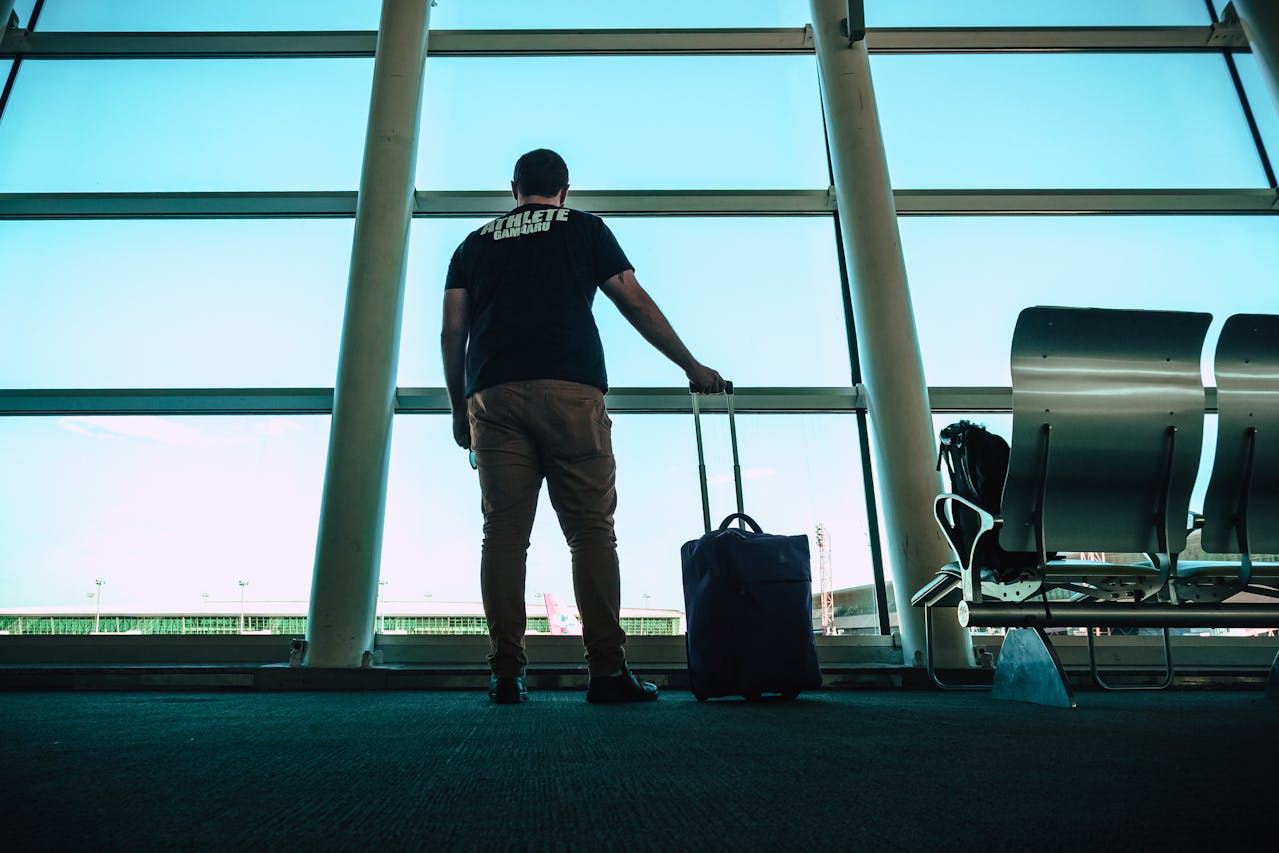
How Airlines Measure Carry-On Bags
Airlines commonly use rigid baggage sizers at check-in counters or boarding gates. If staff ask you to test your bag, the entire bag generally needs to fit within the permitted dimensions.
When measuring your luggage at home, remember to include:
- Wheels
- Handles
- Rigid frames
- Corner protectors
- External pockets that remain expanded when packed
- Any other fixed component extending beyond the main shell of the bag
A suitcase whose main body matches an airline’s dimensions may therefore still cause a problem if the manufacturer’s measurements don’t include everything attached to it.
Staff can also check luggage at the boarding gate even if nobody asked you to place it in a sizer at check-in or elsewhere in the airport.
If the bag doesn’t comply with the allowance attached to your ticket, you may have to pay an additional fee and the suitcase may be placed in the aircraft hold.
Why Do These Moments Go Viral Every Time?
Very few people watching these videos are seriously planning to tear pieces off their own suitcases. They watch because the situation is easy to recognize.
You’re already at the gate, boarding is underway, and a relatively small luggage problem has suddenly become expensive. You have to decide immediately, in public, while everyone else is trying to board.
Travelers who’ve been surprised by baggage charges before remember the frustration. People who haven’t experienced it can still imagine what they might do if they were faced with the same choice.
Then someone in the video chooses an option most passengers would never seriously consider, and the argument begins. People debate whether paying the fee would have been cheaper, whether destroying the suitcase made sense, whether the airline was merely applying a clearly stated rule, and whether baggage charges have become too difficult for travelers to navigate.
The suitcase itself soon becomes secondary. The discussion is really about cost, fairness, preparation and how much inconvenience someone is willing to accept to avoid another airline charge.
Why Airlines Enforce Carry-On Rules So Strictly
Baggage charges, seat selection, priority boarding and other ancillary services are an important source of revenue for many airlines, especially within the low-cost model.
Luggage limits also have operational purposes. Cabin storage is finite, boarding delays cost airlines money, and inconsistent enforcement can create further disputes when passengers see one oversized bag accepted while another is rejected.
Reports from The Guardian have examined how strict cabin baggage enforcement can play out at the gate.
Passengers may see a few centimeters as insignificant, especially when a suitcase isn’t visibly overpacked. Gate staff, however, apply the dimensions and fare conditions set by the airline, which can leave far less room for negotiation than a passenger expects.
The clash between a rigid measurement and a traveler who sees the difference as minimal is one reason an otherwise routine boarding process can suddenly become a viral airport video.
The Lesson Experienced Travelers Have Already Learned
Travelers who regularly use airlines with strict cabin baggage allowances often stop packing right up to the maximum dimensions.
They choose bags that sit safely below the limit rather than relying on a suitcase that matches it exactly. Some prefer soft-sided bags or backpacks for more flexibility, while others check exactly which type of luggage the fare includes before booking.
The distinction between a personal item and a larger cabin bag is important too. A fare that includes one small under-seat bag doesn’t necessarily include the wheeled cabin suitcase many travelers traditionally think of as a carry-on.
Knowing the difference before you arrive at the airport is much easier than discovering it in the boarding line.
How to Avoid Carry-On Size Problems at the Airport
To reduce the chance of an unexpected baggage problem at the gate:
- Measure your bag including wheels and handles.
- Choose luggage slightly below the airline’s maximum dimensions rather than right at the threshold.
- Check what your ticket actually includes, because some fares include only a small personal item.
- Don’t rely solely on advertised suitcase dimensions without checking whether they include the wheels and handles.
- Consider a soft-sided bag if you regularly fly with airlines that use restrictive cabin baggage sizers.
- Check the airline’s official baggage information before departure, especially if it’s been a while since you booked the flight.
A few minutes spent measuring luggage at home can save you from making a much more expensive decision while boarding.
Pay Attention to the Sizes and Rules
The most useful lesson from these viral airport incidents isn’t that travelers should start looking for creative ways to dismantle their luggage.
It is that a suitcase that almost fits can still create a problem.
Measure the bag the same way the airline will, including anything that sticks out. Check which cabin baggage allowance comes with your fare instead of relying on what was included with another airline or on a previous trip, and leave yourself some margin rather than packing to the exact limit.
The passenger in the viral video found his own solution when the wheels pushed his suitcase beyond the permitted dimensions. Other travelers before him made similar choices, including one who removed both the wheels and the handle.
Those decisions make entertaining airport footage and generate endless arguments online. They’re probably not the way anyone wants to begin a trip.
Planning around baggage dimensions beforehand is far easier than trying to solve the problem at the gate, whether that means choosing a slightly smaller suitcase, buying the right baggage allowance in advance or adjusting your travel budget before departure.
Note: I wanted this article to explain what can lead to this type of reaction, why travelers may understand the frustration behind it, and the practical risks. I did not want to make the article about one airline or one social-media video. If you are curious, these are the videos and articles mentioned:
- https://www.instagram.com/reel/DSPnKoxD-_s/
- https://www.canarianweekly.com/posts/VIDEO-Passenger-rips-wheels-off-suitcase-to-avoid-70-Ryanair-baggage-charge
- https://www.instagram.com/reel/C7PPYFeqUbN/
- https://www.businessinsider.com/passenger-ripped-handle-wheels-off-carryon-avoid-paying-fee-easyjet-2023-8
- https://www.youtube.com/shorts/mkeU8C_xygU
- More people removing wheels: video 1 and video 2.
Frequently Asked Questions About Carry-On Size Rules
Do airline carry-on measurements include wheels and handles?
Yes. Airlines generally measure the total external dimensions of a carry-on bag, which can include wheels, handles, corner protectors and rigid frame elements. The measurement refers to the outside size of the suitcase, not just its internal storage space. If the wheels extend beyond the permitted dimensions, the bag may be considered oversized.
What happens if my carry-on is too big at the gate?
If your carry-on doesn’t fit inside the airline’s baggage sizer or exceeds the allowance included with your fare, you may be required to pay an additional baggage charge and have the bag placed in the aircraft hold. Airport or gate fees can be higher than purchasing baggage in advance.
Can I remove the wheels from my suitcase to make it fit?
Some passengers have removed suitcase wheels at the airport to reduce a bag’s external dimensions. Doing so can damage or weaken the suitcase, may leave components exposed or broken, and doesn’t guarantee airline staff will accept the modified bag. Suitcases designed with removable wheels are different, but you should still check their dimensions against the airline’s rules.
Are gate baggage fees more expensive than booking fees?
They often can be. Many airlines charge more for baggage added at the airport or gate than for baggage purchased earlier. Check the airline’s current fee schedule before departure rather than relying on prices from a previous trip.
How can I avoid carry-on size problems at the airport?
Measure your bag, including wheels and handles, before traveling; choose luggage that leaves some margin below the airline’s maximum dimensions; and confirm which baggage allowance is included with your ticket. Check the airline’s official website shortly before departure because rules and fees can change.
Do different airlines have different carry-on size limits?
Yes. Carry-on dimensions and baggage allowances vary by airline and can also differ according to fare type. A bag accepted by one airline may be too large for another, so always check the rules for the specific airline and ticket you are using.
More amazing articles for you:
What to See in Birmingham, Alabama, on Your First Visit
Missed the March 18 Deadline? Here’s Exactly How to Still Get LA 2028 Tickets
Mountain Climbing: Tips For Beginners
This Viral Plane Sleep Hack Is Everywhere - and It’s Triggering Outrage, Safety Warnings, and a Full...
A Basic Itinerary for the “Banana Pancake Trail”
I Was Stopped at Security at the UN in Vienna - What Can Trigger a Bag Search?
This Is the No. 1 Rental Car Mistake That Costs Travelers Thousands - And How to Avoid It Forever
Cheapest European City Breaks 2025: 10 Budget-Friendly Cities with Hidden Gems You’ll Love

Violeta-Loredana Pascal is a communications expert, business mentor, and the founder of Earth’s Attractions and PRwave INTERNATIONAL. A pioneer in the Romanian digital PR landscape since 2005, she holds a degree in Communication and Social Sciences from SNSPA Bucharest. Violeta is a senior trainer at AcademiadeAfaceri.ro, where she leverages over 20 years of experience to teach professional courses in PR strategy and workplace productivity. By blending high-level business consulting with a passion for holistic travel and wellness, she empowers solopreneurs to overcome procrastination, build profitable brands, and design a life of purposeful adventure.


I now only fly with two new 13 gallon trash bags in my carry on. If the airlines give me a headache about the size I dump all my clothes into the double sacked trash bags and stomp it into their under sized baggage checker and leave the carry-on at the gate for them to dispose of. I can always by another one for 5 bucks at a garage sale. Now it is their headache. They make no money and have a mess to clean up to boot. If everyone did this, the BS highman behavior of the airlines would stop really quickly.