You’re finally on vacation.
You’ve made it through airport security, survived the flight, checked into your hotel, and stepped outside – ready to enjoy the place you’ve been dreaming about for months.
And then that tourist shows up.
They’re talking loudly on speakerphone. Music blares from their bag. Trash is left behind where everyone else is trying to relax. The moment breaks – and suddenly, the destination feels smaller, louder, more stressful.
It turns out this reaction isn’t personal. And it isn’t rare.
Recent international travel research shows that across countries and cultures, tourists tend to get irritated by the same small set of behaviors – often instantly, and often intensely. While stereotypes about “bad tourists” get thrown around freely, the data tells a more nuanced story: frustration isn’t really about nationality. It’s about how people behave in shared spaces.
Research Reveals the Most Annoying Tourist Behaviors: Are You Guilty of These (or Have You Seen Them on Your Trips)?
So what exactly annoys travelers the most?
And how do expectations differ between Americans, Europeans, and Australians?
Let’s break it down – honestly, accurately, and without pretending any of us are perfect travelers.
The Big Picture: What Annoys People Most on Vacation
Across all regions studied, one theme dominates: basic courtesy in public spaces.
According to recent survey data published by Saily, the most irritating tourist habits aren’t extreme or exotic. They’re everyday behaviors that signal one thing above all else:
“I’m not thinking about the people around me.”
These behaviors tend to fall into three broad categories:
- Hygiene and personal responsibility
- Noise and volume control
- Respect for shared environments – especially beaches and planes
What’s striking is not just what annoys people, but how consistently the same habits show up across different countries. Littering, loud arguments, speakerphone calls, and coughing without covering one’s mouth appear again and again – sometimes with remarkably similar percentages.
That consistency tells us something important: modern travel frustration is less about culture clash and more about situational awareness.
Top 10 most common annoying travel behaviors worldwide
- Talking to strangers while traveling (on a plane, for example): 46%
- Taking off shoes in a plane or other transport setting: 29%
- Only speaking one’s own language: 28%
- Browsing a phone instead of enjoying the view: 27%
- Overeating at an all-you-can-eat buffet: 26%
- Urinating in the sea, lake, or ocean: 22%
- Standing up immediately after landing and preparing to move: 20%
- Clapping when the plane lands: 18%
- Using both armrests when taking an aisle or window seat: 18%
- Reclining one’s seat a little too far on a plane: 17%
I admit that for me the order would be a bit different, but many of the items above bother me too.
And there is a second top – also interesting:
What annoys people most on vacation?
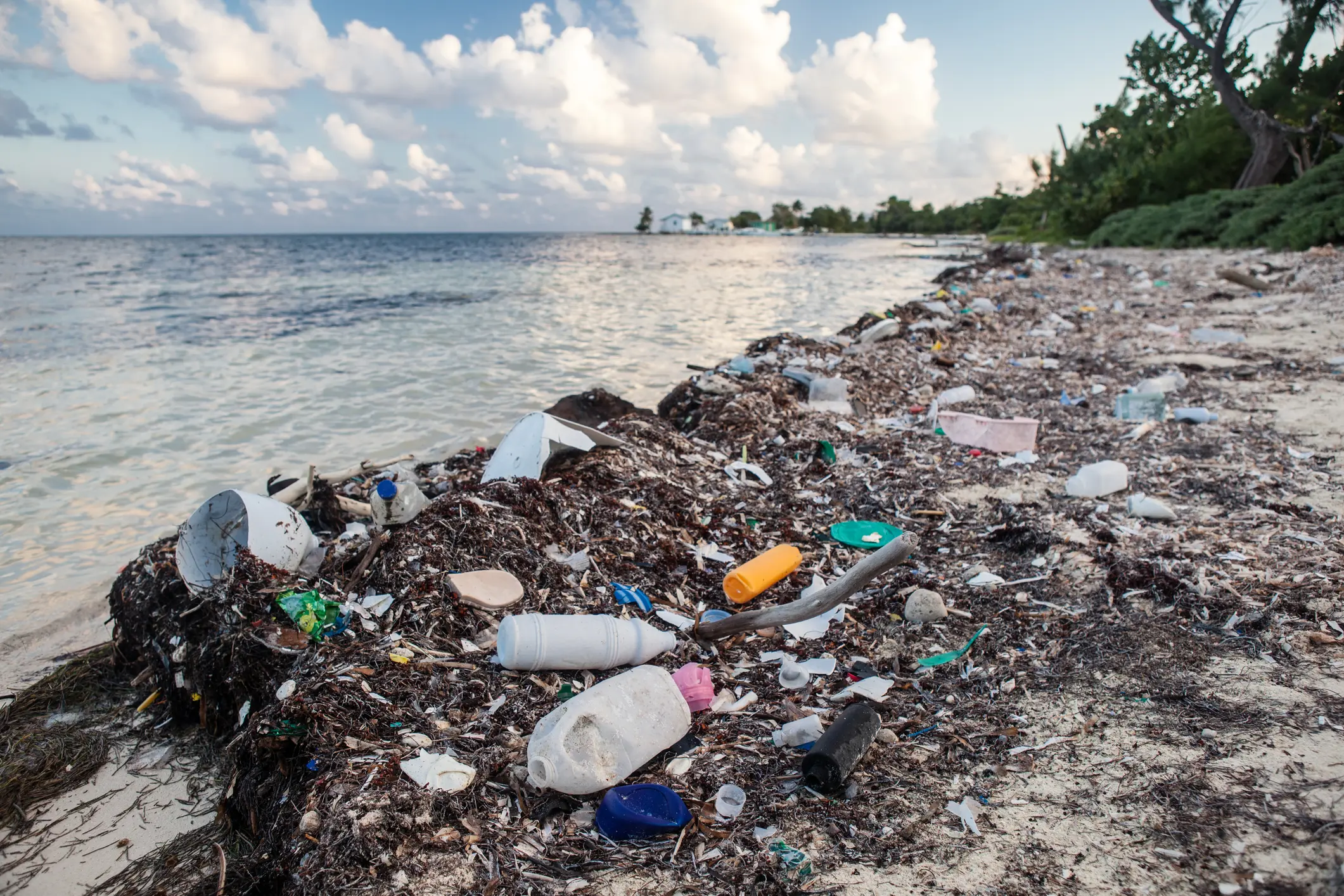
- Leaving trash on the beach: 54%
- Arguing loudly: 47%
- Having phone or video calls on speakerphone: 46%
- Coughing or sneezing without covering your mouth: 46%
- Talking at full volume: 45%
- Playing music or videos without headphones: 45%
- Reclining your seat too far: 45%
- Talking loudly in quiet places: 43%
- Taking up extra seats with bags or belongings: 40%
- Bringing and eating smelly food: 40%
Americans: Politeness Still Matters (A Lot)
Americans often like to think of themselves as informal, friendly, and easygoing travelers. But when asked what actually irritates them on vacation, the answers are surprisingly traditional.
According to Saily’s survey, what annoys Americans most on vacation clusters around basic hygiene, environmental responsibility, and noise control.
Behaviors like coughing or sneezing without covering one’s mouth, leaving trash behind, engaging in loud arguments, and playing media without headphones are all cited by roughly half of respondents.
At first glance, this reads like a straightforward etiquette checklist – and that’s exactly the point. For many Americans, these aren’t cultural gray areas; they’re fundamental expectations of shared public behavior.
Why These Behaviors Hit a Nerve in the U.S.
For Americans, irritation seems to center on shared norms of politeness. These aren’t obscure cultural rules; they’re behaviors many people learn early in life.
- Cover your mouth when you cough
- Don’t leave trash behind
- Keep your personal noise personal
When tourists ignore these basics, it feels less like a cultural difference and more like a lack of consideration.
Interestingly, this aligns closely with British responses (more on that later), suggesting that Anglo cultures share similar expectations around public behavior, even when their humor, accents, and customs differ.
The takeaway here isn’t that Americans are uniquely judgmental – it’s that they tend to interpret bad tourist behavior as rudeness, not ignorance.
Europe: Different Countries, Same Core Frustrations
ID 204903667 | Airplane Passenger Tired ©Anyaberkut | Dreamstime.com
Europe is often discussed as if it were a single cultural entity – but anyone who has traveled across the continent knows how misleading that is.
Still, when you look at the data from France, Germany, Spain, and the UK together, a clear pattern emerges. Despite national differences, the same behaviors repeatedly rise to the top.
In France, the idea that tourists are unwelcome is largely a myth, but the data makes one expectation very clear: respect for shared atmosphere matters.
The most frequently cited annoyances revolve around littering – especially on beaches – along with intrusive noise such as speakerphone calls, loud conversations in quiet settings, and music played aloud.
Together, these behaviors signal a lack of regard for communal ambiance, which carries significant cultural weight in French daily life.
Germany’s reactions reflect a culture that values predictability and mutual consideration. The responses emphasize consideration as a social norm, rather than isolated breaches of etiquette.
The most irritating behaviors consistently involve littering, loud or confrontational speech, speakerphone use, and lapses in basic hygiene. These actions don’t just inconvenience others; they disrupt the invisible systems that allow public life to function smoothly and predictably – something Germans place high value on in shared spaces.
Spain’s responses are among the strongest, and context explains why. In a country defined by beaches, sunshine, and high tourism density, careless behavior carries extra weight.
In Spain, irritation peaks around environmental respect and physical comfort in crowded settings. Littering – particularly near the sea – is seen as especially offensive, often viewed as a direct threat to spaces that define daily life and tourism alike. When this is combined with loud conversations, music without headphones, heated arguments, or excessive seat reclining on planes, tolerance drops sharply. In high-density, high-energy environments, small acts of inconsideration feel magnified.
In the UK, good manners still function as social glue, especially in public settings. The most common frustrations reflect a strong emphasis on courtesy and personal responsibility.
Behaviors such as uncovered coughing, leaving trash behind, playing media aloud, taking calls on speakerphone, and speaking at full volume are widely seen as breaches of basic manners.
Rather than being interpreted as cultural misunderstandings, these actions are more often viewed as simple failures to observe the social rules that keep public spaces comfortable for everyone.
A European Synthesis: What Really Bothers People
When you synthesize the European data, five behaviors clearly dominate:
- Leaving trash in public spaces (especially beaches)
- Loud conversations and arguments
- Speakerphone and media without headphones
- Poor hygiene in shared environments
- Disregard for personal space (on planes, transport, cafés)
Honestly, these represent me too. I completely dislike people talking loud – in airplanes, public transport (I actually presented 15 undesirable behaviours in this article), beach, etc. or who play loud music. I also do not like trash left behind or people who have no common sense when it comes to health-related etiquette.
This isn’t about being unfriendly or elitist.
It’s about protecting shared experiences in places that are already under pressure from mass tourism.
ID 65837821 ©Ethan Daniels | Dreamstime.com
Australia: Friendly, Yes, But Don’t Push It
Australians are often described as relaxed and welcoming. The data supports that, but also shows clear boundaries.
The top tourist habits that annoy Australians are:
- Coughing or sneezing without covering your mouth: 52%
- Leaving trash on the beach: 52%
- Reclining your seat too far: 50%
- Arguing loudly: 47%
- Talking at full volume: 46%
Once again, beaches feature prominently – and for good reason. In a country where coastal life is central to national identity, littering feels personal.
Australians also show little patience for loud confrontations or excessive noise, particularly in relaxed social environments.
The message is clear:
You’re welcome – but read the room.
Why the Same Behaviors Keep Showing Up Everywhere
At this point, the pattern is undeniable.
Across continents, languages, and cultures, tourists are annoyed by the same handful of behaviors. Why?
1. Crowded Travel Amplifies Small Irritations
The more people share the same space, the lower the tolerance for disruption becomes.
In crowded destinations, trains, beaches, or airplanes, even minor lapses in awareness feel amplified. This is precisely why respect for others should be the default: making a conscious effort not to inconvenience people around you isn’t just polite – it’s essential for shared comfort.
2. Social Media Has Changed Tourist Behavior
When travel turns into a performance for an online audience, courtesy often slips into the background.
Filming videos in busy walkways, playing music aloud for content, stopping abruptly for photos, or prioritizing “the shot” over the flow of people are now common sources of frustration. In these moments, the destination becomes a backdrop – and everyone else becomes an obstacle.
3. The “I Paid for This” Mentality
Viewing travel purely as a transaction rather than a shared experience can easily fuel entitlement. When the focus shifts to personal value and convenience, consideration for fellow travelers and locals often diminishes. The result is behavior that prioritizes individual comfort at the expense of collective ease.
4. Basic Etiquette Is Universal
Covering your mouth when you cough, cleaning up after yourself, and keeping noise under control are nearly universal expectations across cultures.
These are not complex customs or local quirks – yet they are increasingly ignored, even though they form the foundation of respectful public behavior anywhere in the world.
Are We All Someone Else’s Annoying Tourist?
Probably.
The uncomfortable truth is that everyone may break these rules sometimes, especially when tired, stressed, or overwhelmed.
The difference between a good tourist and an annoying one isn’t perfection.
It’s awareness. And immediate correction (lowering the tone immediately, etc.)
How to Avoid Being “That” Tourist
You don’t need to overcorrect or feel anxious while traveling.
Just keep a few principles in mind:
- Treat public spaces as shared, not personal
- Keep noise intentional and contained
- Clean up after yourself – always
- Assume local norms differ from yours
- When unsure, observe first
Good travel etiquette doesn’t erase personality.
It simply makes room for everyone else.
What Ruins a Trip for You?
The research is clear, but opinions still vary.
So here’s the real conversation starter:
Which tourist behavior instantly ruins a trip for you?
And have you ever caught yourself doing it?
Travel doesn’t need stricter rules.
It just needs a little more awareness.
Featured photo source: Pixabay