
A new airline seat strategy is quietly spreading across TikTok, Reddit, and frequent-flyer forums. Some travelers swear it gets them better seats without paying extra. Others say it’s a fast track to losing your seat entirely.
The tactic is called check-in chicken. Instead of checking in as soon as online check-in opens, passengers deliberately wait – sometimes until the last possible moment – hoping to inherit better seats left unclaimed by others.
It sounds simple. But does checking in late really improve airline seat assignments? Or is this one travel trend that works only under very specific conditions?
This is part of my ongoing series analyzing emerging travel trends and viral travel hacks. I previously wrote about the Airport theory, the viral sleep hack on long flights that sparks outrage, about supermarket tourism, about trips booked just so that you can clear snow, and about an unusual solution when your bag does not fit the airline requirements.
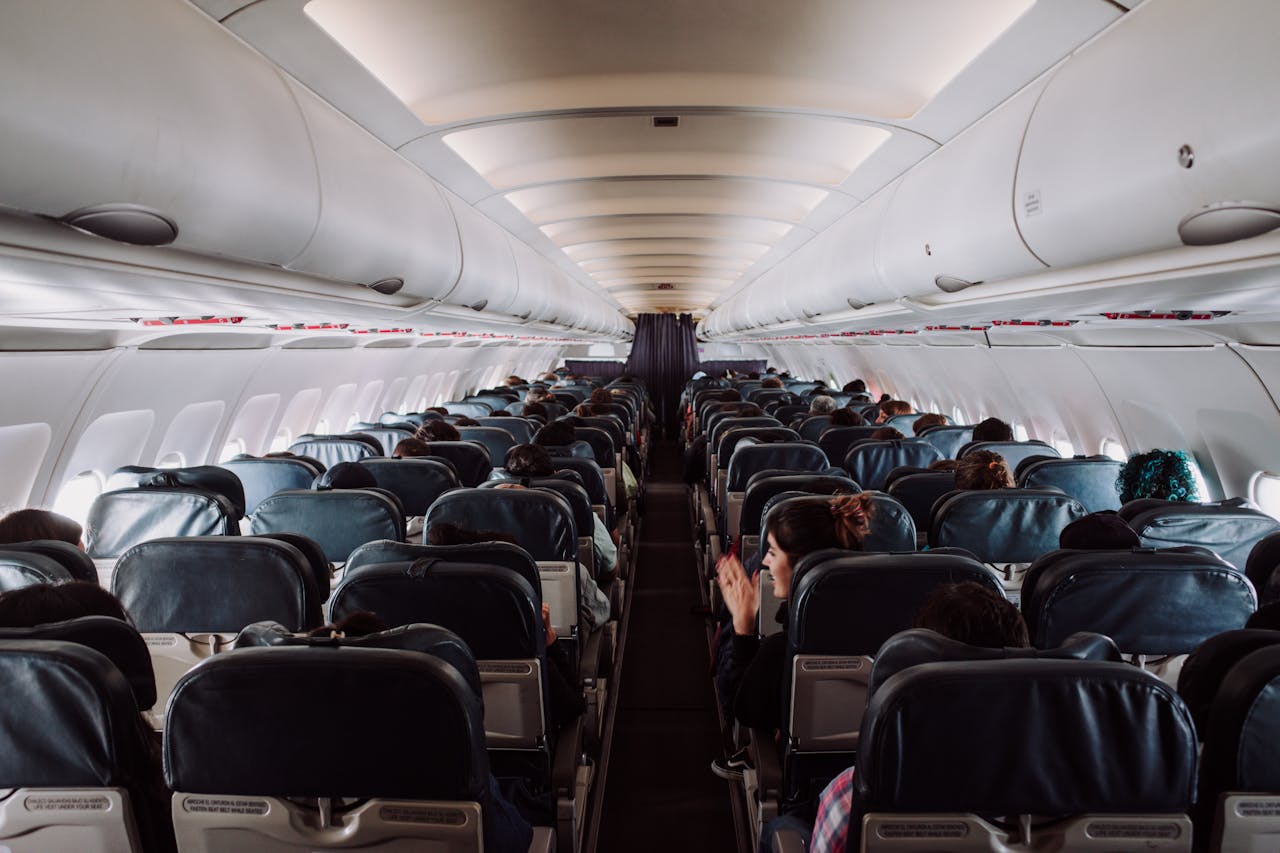
What Is Check-In Chicken?
Check-in chicken is a delayed flight check-in strategy. Instead of checking in as soon as the airline opens online check-in (typically 24 hours before departure), passengers wait – sometimes until just hours or even minutes before the cut-off – before confirming their boarding pass.
During that waiting period, they repeatedly monitor the airline’s seat map. The theory is that as other travelers check in early, free seat assignments get distributed, often starting with less desirable seats. By holding off, late check-ins hope to inherit whatever seats remain, which could include extra-legroom rows, exit rows, or forward-cabin seats that no one paid to reserve.
Condé Nast Traveller explains that check-in chicken has emerged largely because many airlines now charge for seat selection, pushing travelers to look for loopholes in airline seat assignment systems.
The name comes from the classic game of chicken: everyone waits, no one wants to act first, and whoever times it well ends up with the better outcome.
How Airline Seat Allocation Actually Works
To understand why check-in chicken sometimes works, you need to know how airline seat assignment algorithms function.
On many low-cost and hybrid carriers, seat selection is a paid add-on. Airlines want to monetize preferred seating – aisle, window, exit rows, or extra legroom – so their systems frequently auto-assign free seats in less popular areas first. This nudges travelers toward paying for upgrades.
Euronews Travel notes that viral travel trends like check-in chicken exploit these revenue-driven seat allocation models, but that algorithms vary significantly by airline, aircraft type, and even route.
In the right scenario – a flight that isn’t completely full, with many passengers declining paid seat selection – late check-ins can occasionally find that only better free seats remain. That’s the narrow opportunity that late check-in users try to reach.
But that window is narrower than social media makes it appear.
When Check-In Chicken Can Work
There are conditions where this airline seat assignment hack has a reasonable chance of success.
It tends to perform best on low-cost carriers where seat selection is heavily monetized, and many travelers skip paying for it. It can also work on mid-load flights, where the plane is not sold out, and the seat map still shows multiple open zones close to departure time. Solo travelers benefit most, since they can accept any single seat that appears.
Travel Noire, which analyzed multiple passenger reports, describes check-in chicken as a “situational tactic” – occasionally rewarding, but never guaranteed.
We all want to know (and use) the best travel hacks that could save money, time, and get us more enjoyable experiences. However, we need to be very careful and to analyze each trend. This – the check-in chicken trend – is not a guaranteed solution: it’s a narrow optimization tactic that relies on specific booking patterns, route demand, and airline rules aligning in your favor.
How to Tell If Your Flight Is Suitable for Late Check-In
Not every flight presents the same seat allocation conditions, and understanding the signals in advance can help travelers decide whether delaying check-in is reasonable or unnecessarily risky.
A useful first step is monitoring the seat map as soon as online check-in opens. If, after several hours, many free seats remain spread across the cabin, especially in forward rows or exit rows, the flight likely has moderate load levels. That situation can support late check-in strategies. By contrast, if most seats disappear quickly or the only remaining options are middle seats in the rear, the flight is likely filling fast, and delaying check-in may offer no advantage.
Flight timing also matters. Early morning departures, peak holiday routes, and popular business corridors tend to reach high occupancy quickly. Off-peak flights, secondary airports, and midweek departures more often show slower seat map saturation.
Finally, travelers should pay attention to airline prompts. Some booking systems display warnings such as “limited seats remaining” or “flight almost full.” These signals indicate that operational seat control may already be in effect, making delayed check-in higher risk.
Understanding these factors helps position check-in timing as an informed decision rather than a guess.
When It Doesn’t Work
Many airlines – especially full-service carriers – assign seats based on fare class, loyalty status, booking order, or operational requirements, not simply on check-in timing. In those systems, delaying check-in won’t improve your seat – and may worsen it.
On full or nearly full flights, most seats are pre-allocated internally long before check-in opens. Late arrivals are often assigned whatever remains, which frequently means middle seats, rear rows, or separated seating if you’re traveling with others.
Aircraft swaps also happen. A last-minute equipment change can reshuffle seat maps entirely, erasing any perceived advantage gained by waiting.
In these cases, check-in chicken stops being an airline travel hack and becomes a straightforward downgrade risk.
The Hidden Danger: Overbooked Flights
The most serious risk – and the one now appearing in mainstream news – is flight overbooking.
Airlines routinely sell more tickets than there are seats, predicting that some passengers won’t show up. When everyone does, someone gets bumped.
Wikipedia’s overview of airline overselling explains how boarding priority systems decide who keeps their seat when capacity runs out – and late check-ins are often low on that priority list.
A recent Metro UK report described passengers who delayed check-in only to discover their flight was oversold, leaving them without confirmed seats at the gate. That man (who did the check-in chicken game unknowingly) actually discovered how common overselling is and why the game is so risky.
This is where check-in chicken can truly backfire: not just giving you a worse seat, but risking denied boarding entirely on busy routes or peak travel days.
If you’re asking what happens if a flight is overbooked, the answer is simple: airlines follow the boarding hierarchy. Late check-ins rarely sit at the top.
More Reliable Ways to Get Better Seats
If your goal is better airline seating without paying unnecessary fees, there are safer strategies:
- Checking seat maps regularly after booking, not just at check-in
- Joining airline loyalty programs, which often unlock free seat selection
- Asking gate agents politely about last-minute seat changes
- Booking earlier on routes known to fill quickly
These methods achieve the same objective – improved comfort – without exposing you to the operational risks of delayed check-in.
Clever Trend, Not a Guaranteed Travel Hack
Check-in chicken sits at the intersection of psychology, airline revenue strategy, and social-media storytelling. It feels like a clever airline seat selection strategy – and in limited circumstances, it can work.
But for most travelers, especially on full or overbooked flights, it introduces unnecessary risk for a marginal reward. The viral appeal is real. The reliability is not.
So if you’re wondering whether check-in chicken is worth it, the honest answer is: only if you understand the airline, the route, and the load – and are comfortable with the uncertainty and the possibility of being denied boarding.
For everyone else, traditional seat selection strategies remain the smarter, calmer, and ultimately more predictable choice.

![Airline Passengers are Tech Savvy, But Cautious in Using Their Devices [Infographic]](https://www.earthsattractions.com/wp-content/uploads/2013/10/globe_photoxpress2.jpg "Airline Passengers are Tech Savvy, But Cautious in Using Their Devices [Infographic]")