
I have always thought social media depends a lot on what we do with it.
I use it every day – I need it for work, but I also use it for news; sometimes I find a study, a place, an event or something interesting that I would probably never have looked for on my own. I keep in touch with people there. And sometimes I just want to see something funny for a few minutes.
Of course, I can also open an app intending to spend 10 minutes there and realize half an hour has passed (but not more).
There are studies behind some of the warnings – that social media is bad for us -, especially when it comes to young people, attention, body image, and very heavy use. But the way we use social media can vary enormously – and so can what we get from it.
A new study published in August 2026 followed U.S. adults for about a year and looked at what happened as their own use of different social technologies changed.
I was curious to see what the researchers found, especially after years of headlines linking social media with lower happiness (reports for various social media platforms are included below).
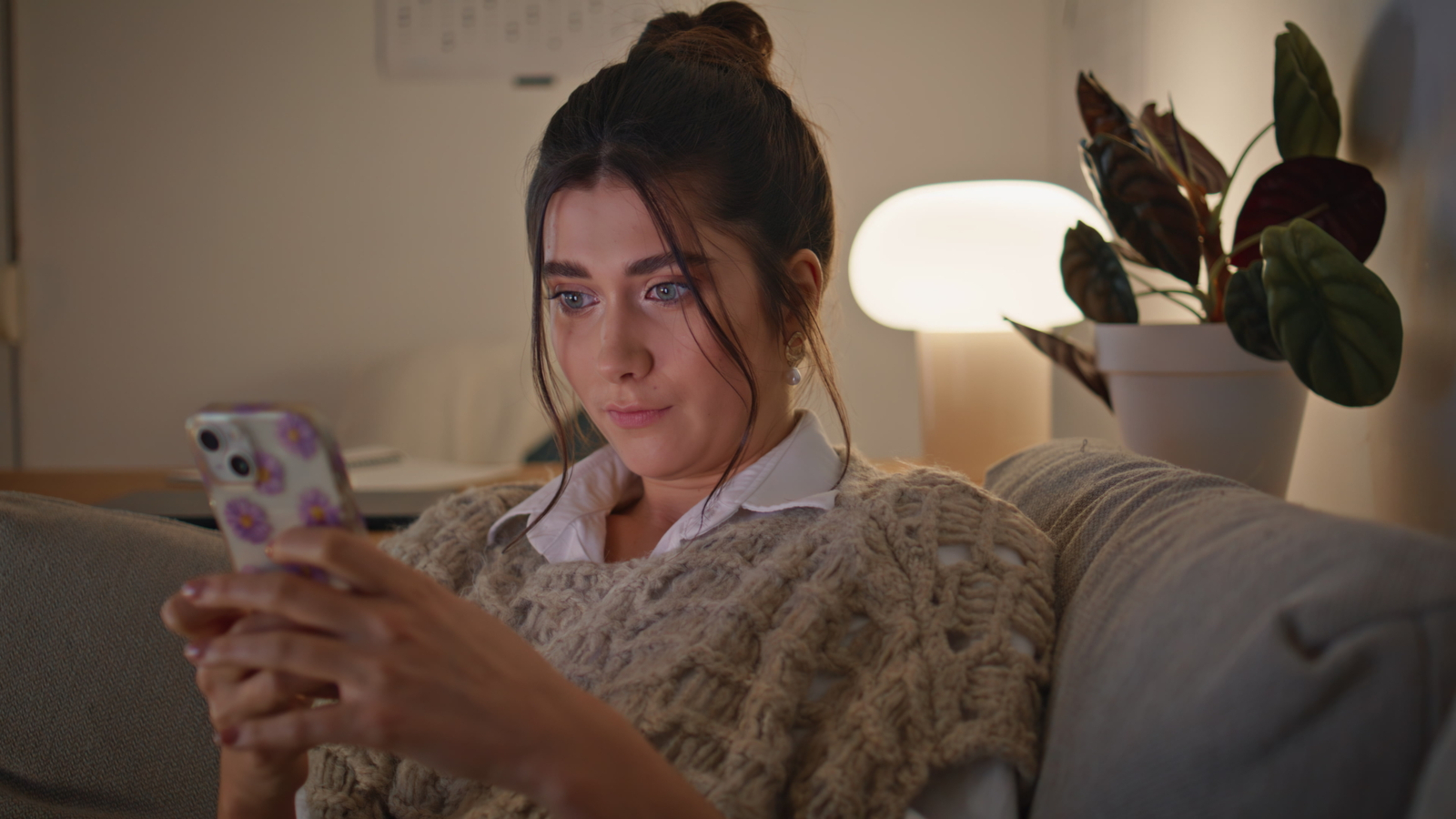
ID 327733324 ©Veranika Semchanka | Dreamstime.com
Why Social Media Has Been Linked to Lower Well-Being
In 2023, the U.S. Surgeon General issued an advisory focused on social media and the mental health of children and adolescents.
It included some numbers that are difficult to ignore. Children and adolescents who spent more than three hours a day on social media faced double the risk of mental health problems, including symptoms of depression and anxiety, according to research cited in the advisory. In a survey of adolescents ages 13 to 17, 46% said social media made them feel worse about their body image.
There are concerns beyond social media in general. A large review involving data from 98,299 participants found that heavier short-form video use was associated with poorer attention and inhibitory control. The review found associations with poorer mental-health measures as well.
Comparison can be a problem too. If someone’s feed is filled with highly edited photographs, people showing their latest success, expensive purchases, perfect vacations, and carefully selected moments from their relationships, it is easy to start comparing all of that with everyday life. I have discussed comparison in my article about self-esteem, because constantly measuring ourselves against other people can change how we see what we already have.
The World Happiness Report 2026 Found a More Complicated Pattern
Social media received a lot of attention in the World Happiness Report 2026. Some of the report focuses on adolescents, using PISA data covering 15-year-olds in 47 countries.
Among internet users, limited use – less than an hour a day – was associated with higher life satisfaction than no use for each of the seven internet activities the researchers examined. At higher levels of use, social media, gaming and browsing for fun were associated with lower life evaluations. The declines were generally steeper among girls.
Communication, news, learning and content creation had better associations with life satisfaction. At very high rates of use, however, life satisfaction was lower across all of the activities.
The report also included data from Latin America. Platforms designed more around social connection showed a positive association with happiness, while platforms relying heavily on algorithmically selected content tended to have a negative association at high levels of use.
This part comes much closer to the way I think about social media. If I spend half an hour talking to family members, reading news and finding information I need, that half hour is included in my time online. So is half an hour spent looking at content I don’t particularly enjoy and did not intend to keep watching.
One of the New Study’s Authors Previously Tested What Happens When People Block Mobile Internet
In February 2025, researchers published a randomized controlled trial in PNAS Nexus that took a very different approach.
The study included 467 participants who agreed to install an app that blocked internet access on their smartphones for two weeks. They could still make calls and send text messages, and they could access the internet from computers or other devices. What disappeared was the ability to have the internet constantly available on the phone.
The researchers reported improvements in subjective well-being, mental health, and objectively measured sustained attention. Overall, 91% of participants improved on at least one of those three outcomes.
They also looked at how people spent their time while mobile internet was blocked. Participants spent more time socializing in person, exercising and being in nature.
One of the researchers was Kostadin Kushlev of Georgetown University. He is also one of the researchers behind the new study published in August.
The New Study Followed 1,966 U.S. Adults

ID 105416438 ©Iuliia Lisitsyna | Dreamstime.com
Kushlev, Kibum Moon, Matt Motyl, Nathanael J. Fast and Juliana Schroeder analyzed data from 1,966 U.S. adults. Their study, Social technology use and life satisfaction in a five-wave panel study of US adults, was published in Nature Human Behaviour on August 28, 2026.
There were five rounds of measurements, each three months apart. Participants reported how frequently they used ten common social technologies, with answers ranging from not using a technology at all to using it multiple times daily. Their life satisfaction was measured during the same waves.
Following the same people several times allowed the researchers to look at something that is much harder to see in a survey taken on one day.
Suppose frequent TikTok users report lower life satisfaction than people who rarely use TikTok. That tells us the two appear together, but it doesn’t tell us what happened first or what else separates the two groups. Age, work, relationships, income, health, personality and many other factors could be involved. Someone who is already unhappy may also use a particular platform more often.
With repeated measurements, researchers could look at each participant over time. When that person’s use of a social technology increased or decreased, what happened to their life satisfaction at the next measurement?
Using Social Technologies More Didn’t Reliably Predict Lower Life Satisfaction Later
The researchers found little credible evidence that the use of any individual social technology predicted subsequent life satisfaction at the three-month timescale they studied.
When a person’s reported use changed, it generally did not predict that the same person’s life satisfaction would be lower three months later.
They analyzed the relationships using both Bayesian and frequentist statistical methods. The paper describes the evidence for a meaningful relationship between social technology use and later life satisfaction as scant. This result is rather surprising.
There have been so many articles, discussions and warnings about social media making people less happy that I expected at least some of the technologies to show a clearer pattern when people were followed over time, but apparently they didn’t.
But TikTok and YouTube Users Did Report Lower Life Satisfaction
When the researchers compared different participants with one another, people who used TikTok and YouTube more frequently tended to report lower life satisfaction. People who texted more frequently tended to report higher life satisfaction.
If the study had stopped with those comparisons, it would have been very easy to produce a headline saying TikTok and YouTube were linked to unhappiness.
The repeated measurements added another piece of information. When an individual’s TikTok or YouTube use changed, that change did not reliably predict a later decline in the same person’s life satisfaction.
The study therefore did not establish that using TikTok or YouTube caused the lower life satisfaction seen when different users were compared. People who use those platforms frequently may already differ from lighter users in ways the association alone cannot answer.
Did Happier People Start Using Social Technologies More?
The researchers checked the direction in reverse too: perhaps changes in life satisfaction would predict how people used technology later.
For most of the technologies, they found little evidence of that. Higher life satisfaction predicted modest increases in calling or video calling in some demographic groups, but the pattern was limited rather than something that appeared consistently across the full sample.
The Researchers Were Measuring Life Satisfaction Every Three Months
The study was not tracking how someone felt five minutes after closing Instagram or whether a late-night scrolling session affected sleep that night. It did not measure whether a feed full of appearance-focused content changed someone’s body image or whether several hours of short videos made concentrating on a long task harder afterwards.
Participants reported how frequently they used the technologies. The researchers did not record every minute or see what was happening on each person’s screen.
That leaves a lot hidden inside a category such as “multiple times daily.”
One person could open YouTube several times to listen to music, follow an exercise program and find a tutorial. Another could spend hours moving through recommended videos. They could select the same frequency category.
The researchers also noted that people’s technology habits were quite stable from one measurement to the next. There were relatively few large changes in use, which limited how much within-person change was available for them to analyze.
And the participants were adults. The results should not be used as an answer to research about children and teenagers, especially research involving heavy use or specific harms experienced by young users.
I Am More Interested in What I Do Online Than in One Screen-Time Number
If I tell you that I spent 30 minutes on social media today, you still don’t know whether those 30 minutes were useful to me.
I could have talked to someone I care about, found a study, seen local news, read about something happening somewhere else in the world, found a destination or an event, or watched a video that genuinely made me laugh.
I could also have planned to check something for 10 minutes and stayed for half an hour without finding anything I particularly cared about.
I know which version I prefer.
I already try to control part of that experience. If I don’t like what an account continually posts, I can unfollow it. If I keep clicking and watching one type of content, I know I am telling the platform that I want more of it. If I spend several days interacting mostly with one subject, it usually does not take long before my recommendations start changing.
Algorithms still decide a lot. I don’t choose every suggested post or video that appears. But I don’t have to keep interacting with everything the algorithm puts there either.
And I also choose what platforms I use. I left Instagram a long time ago (too polished posts), I am not using TikTok (I created an account, but… nope)…
News Is One of the Reasons I Use Social Media
I want to know what is happening in my country and around the world. I also know what happens if I spend too much time following every negative story, every argument and every update to a bad situation.
I have already changed how much negative news I consume. I still follow the news, but I don’t want it to become the only thing I see or the subject occupying most of my free time.
Social media is useful for discovery here too. I may first see that something happened through a post and then go to the original source, an official announcement or a reliable publication to find out what actually happened.
I do the same with studies. Sometimes the first mention reaches me through social media. If I am interested, I look for the paper. Without that first post, I might never have known that there was something to look for.
Keeping in Touch Is Still One of Its Best Uses
People don’t always live close to their families and friends. They move, change jobs, travel, have children, get busy and sometimes see each other far less often than they would like.
A message isn’t the same as spending an afternoon together, but it can be the reason people remain part of each other’s everyday lives. A photograph, a family group chat, a video call or a quick message sent because something reminded you of someone keeps the conversation going.
Relationships are strongly connected with well-being. I have looked at some of that research in my article about happiness.
In the new study, texting was associated with higher life satisfaction when different participants were compared. That does not tell us that sending more messages will make someone happier, but texting was one of the social technologies in the study – along with the platforms that receive far more negative attention.
I Discover Too Much Through Social Media to Call It Simply Bad
A large part of why I still like social media is discovery.
I find places I did not know existed. I see exhibitions and events. I discover studies. I see news from other countries that may never reach the publications I normally read. I find people who know much more than I do about a subject. I see an idea, search for it, and end up reading about something completely new.
Sometimes the information is wrong. That is why I verify things that matter instead of using a social post as my final source. Sometimes it isn’t educational at all. I see a funny video, send it to someone and move on.
I don’t have a problem with that either. I don’t think every minute of entertainment needs to teach me something or make me more productive.
Conclusion: I Still See Social Media as a Tool
The new study does not make me want to spend more time on social media. It does make me question broad statements that treat using social technology as if the amount of use alone tells us what it is doing to someone’s life.
Among the 1,966 U.S. adults followed in this study, changes in the use of ten social technologies did not reliably predict lower life satisfaction three months later.
I will still pay attention to how long I spend there. I will still avoid accounts and content I don’t want. I will still try not to let 10 minutes turn into 30 too often, and I don’t want my feed filled almost entirely with bad news, arguments or things that make me feel worse.
But I also want the part that helps me keep in touch with people, find news, discover places, learn something I did not know yesterday, follow things I am interested in and have fun.
For me, the answer isn’t to give all of that up. It is to keep choosing what I want social media to be useful for.
More amazing articles for you:
92% of Your Worries Are False Alarms, According to Science - Here’s What You Can Do Today
Louis Vuitton’s Chocolate Has Travelers Flying Across the World - Here’s How to Get Your Hands on It
Offer travel experiences as a gift
People Think This Makes a Better Impression in Conversation - Research Found the Opposite. Most of U...
Women Over 40: You're Eating Protein Wrong (And Your Muscles Are Paying the Price)
Why You Keep Setting Goals But Never Achieving Them (And How to Change That Right Now)
How to get best E-juices when traveling?
One Slip-Up on a Plane Could Cost You €20,000 - People Are Stunned. What You Must Know Now

Violeta-Loredana Pascal is a communications expert, business mentor, and the founder of Earth’s Attractions and PRwave INTERNATIONAL. A pioneer in the Romanian digital PR landscape since 2005, she holds a degree in Communication and Social Sciences from SNSPA Bucharest. Violeta is a senior trainer at AcademiadeAfaceri.ro, where she leverages over 20 years of experience to teach professional courses in PR strategy and workplace productivity. By blending high-level business consulting with a passion for holistic travel and wellness, she empowers solopreneurs to overcome procrastination, build profitable brands, and design a life of purposeful adventure.