
Have you ever had a delayed flight – or had your reservation cancelled because of overbooking? Did you know you could get up to €600 in compensation for that?
What if I told you the process is actually very simple and only takes a few minutes to check?
And it’s not just for recent trips. In many cases, flights from the past few years can still qualify.
This guide explains how to check if you are eligible for flight delay compensation in Europe, how EU261 works in practice, and how to claim efficiently.
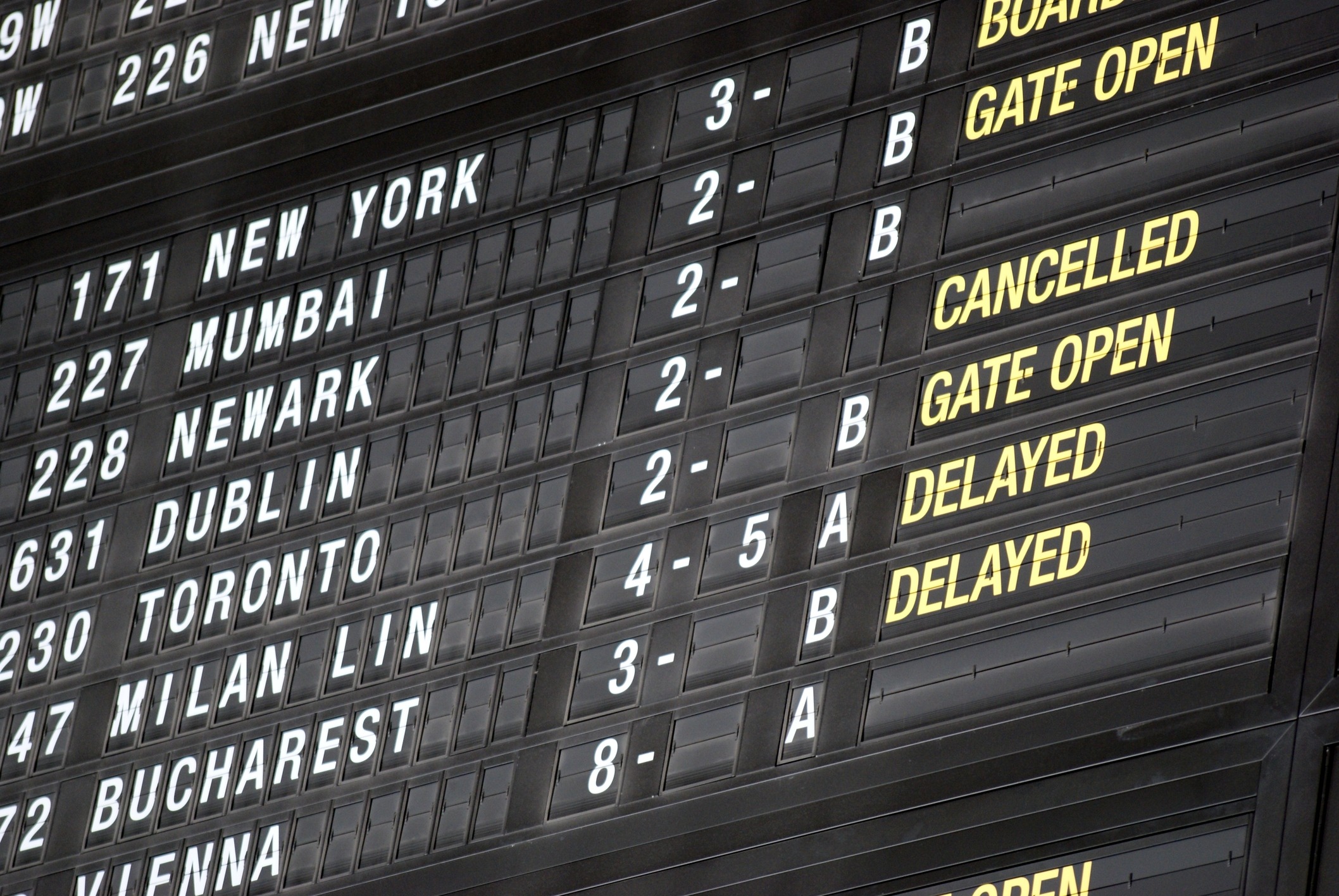
ID 14419566 | Cancelled Flight ©Caamalf | Dreamstime.com
Are You Eligible for Flight Delay Compensation in Europe?
Most eligibility questions can be answered in under a minute once the criteria are clear. The regulation is structured, and the thresholds are consistent across EU countries.
You are generally eligible if:
- your flight arrived 3 hours late or more
- your flight departed from the EU, or arrived in the EU with an EU airline
- the delay was caused by the airline (technical or operational issue)
These conditions apply more frequently than most travelers expect, particularly on busy routes where delays cascade throughout the day. As a result, delayed flight compensation Europe claims are far more common than most passengers assume.
Check if your flight qualifies for up to €600 compensation (free 2-minute check)
EU261 Explained: The Rule Behind Flight Delay Compensation
Passenger rights are defined by EU Regulation 261/2004, which forms the basis of EU261 compensation rules and is one of the most enforced travel regulations in Europe.
A critical detail is that compensation is based on arrival delay, not departure delay. This distinction matters because airlines may recover time during the flight, which affects eligibility.
EU261 applies to:
- all flights departing from EU airports
- flights arriving in the EU operated by EU-based airlines
Its role is not theoretical – it creates enforceable financial obligations and defines how flight delay compensation EU rules are applied in practice.
Many travelers lose money on trips without realizing it – this is one of the most overlooked examples.
EU261 Also Covers Cancellations and Denied Boarding
While this guide focuses on delays, EU Regulation 261/2004 also applies to flight cancellations and denied boarding due to overbooking.
Passengers may be entitled to compensation if a flight is cancelled less than 14 days before departure, unless the airline offers an acceptable alternative or the disruption is caused by extraordinary circumstances.
Similarly, if you are denied boarding against your will due to overbooking, compensation applies even if the flight departs on time.
This broader scope is important because many passengers incorrectly assume EU261 only applies to delays, missing additional opportunities to claim compensation.
What Counts as “Arrival Time” for Compensation?
Under EU Regulation 261/2004, arrival time is defined as the moment at least one aircraft door opens, allowing passengers to leave the plane – not when the aircraft lands.
This distinction is critical, as taxiing time can affect whether a delay crosses the 3-hour threshold required for compensation.
How Much Compensation Can You Claim for a Delayed Flight?
The flight delay compensation amount is standardized and depends only on flight distance and delay duration. It does not depend on how much you paid for the ticket.
- up to 1,500 km → €250
- 1,500–3,500 km → €400
- over 3,500 km → up to €600
For long-haul flights over 3,500 km, compensation can be reduced to €300 if the delay is between 3 and 4 hours, and reaches €600 when the delay exceeds 4 hours. This distinction is often overlooked but is part of how compensation is calculated in practice.
For example:
- A delayed Barcelona to Paris flight arriving 3.5 hours late could qualify for €250 per passenger – even if the ticket cost €40.
- A Berlin to Dubai long-haul flight delayed by more than 4 hours may qualify for €600 per passenger.
- An Amsterdam to New York flight delayed by 3 hours may qualify for €300 due to the reduced compensation rule for certain long-haul delays.
At this point, many passengers already meet the criteria. The only step left is verifying whether your specific flight qualifies.
These scenarios are more common than many travelers expect, particularly on busy international routes.
This structure becomes particularly relevant on long-haul routes, where delays are more disruptive, and compensation reaches the highest tier. For multiple passengers on the same booking, the total compensation increases proportionally.
When You Are Not Eligible for Compensation
Not all delays qualify, and understanding exclusions is essential for realistic expectations. EU261 defines extraordinary circumstances where airlines are not required to compensate passengers.
These include:
- severe weather conditions
- air traffic control restrictions
- political instability or security risks
- strikes outside the airline’s control (such as air traffic control or airport staff)
Note: Strikes are treated differently depending on who is responsible. Airline staff strikes may still qualify for compensation, while strikes by air traffic control or airport staff are typically considered extraordinary circumstances.
However, operational issues – such as technical faults or crew shortages – remain among the most common valid reasons for compensation, even when initially disputed.
Your Right to Care During Flight Delays
Even when financial compensation does not apply, passengers still have rights under EU261. Airlines are required to provide what is known as the “right to care” when delays exceed certain thresholds.
This includes:
- meals and refreshments appropriate to the waiting time
- hotel accommodation if an overnight stay is required
- transport between the airport and accommodation
These obligations apply regardless of the cause of the delay, including extraordinary circumstances such as weather or air traffic control restrictions.
In practice, many passengers either do not receive this assistance or are unaware they can request reimbursement later if the airline does not provide it directly.
Why Most Passengers Never Claim Flight Compensation
From a behavioral perspective, the low claim rate follows a predictable pattern. The disruption is immediate, but the compensation process is delayed. Once the trip resumes, attention shifts away from the issue.
Three consistent factors explain this:
- the process appears more complex than it actually is
- there is no clear trigger moment prompting action
- airlines do not actively guide passengers toward compensation
As a result, a large percentage of valid claims are never submitted, despite clear eligibility under EU rules.
How to Claim Flight Delay Compensation (Step-by-Step)
There are two practical ways to claim compensation, and understanding the EU261 claim process helps you choose the most efficient option.
The first approach is to submit a claim directly to the airline. This involves completing forms, referencing EU261, and managing follow-up communication. While this can be effective, it often requires persistence and familiarity with the process.
The second approach is to use specialized services such as AirHelp or Skycop. These platforms automate the process by verifying eligibility, submitting the claim, and handling communication with the airline.
Start your compensation check here
Whether you choose to handle it yourself or use a service, knowing how to claim flight compensation significantly increases the chances of a successful outcome.
What Documents Do You Need to Claim Compensation
To claim flight delay compensation, you typically need only a few basic documents. The process is simpler than most passengers expect.
The key documents include:
- boarding pass or e-ticket
- booking confirmation
- basic flight details (date, route, airline)
A formal delay confirmation from the airline is not always required, as most claims services can verify this independently using flight data.
Keeping these documents accessible makes it significantly easier to submit a claim quickly and avoid delays in processing.
How Long It Takes to Receive Compensation
The time required to receive flight delay compensation depends on how the claim is submitted.
When claiming directly through the airline, the process can take several weeks or even months, especially if follow-up is required.
Using specialized services such as AirHelp or Skycop can often speed up the process, as they handle communication and escalation. However, they typically charge a commission on successful claims.
For many travelers, the trade-off between speed and effort makes these services a practical option.
Can You Claim Compensation for Past Flights?
One of the most underused aspects of EU flight delay compensation is the ability to claim for past flights. Depending on the country, passengers can often submit claims for flights taken within the last 2 to 5 years.
This significantly expands the opportunity. Delays experienced months or even years ago may still qualify, particularly if they meet EU261 criteria. Planning a trip well can reduce issues, but when delays happen, knowing your rights matters.

ID 213710130 | Cancelled Flight ©Anyaberkut | Dreamstime.com
Who Qualifies for EU Flight Delay Compensation? (Quick Answer)
Passengers qualify for flight delay compensation in Europe if their flight arrives 3+ hours late, the journey falls under EU jurisdiction, and the delay is caused by the airline rather than extraordinary circumstances such as severe weather or air traffic control restrictions.
These EU flight delay rights apply consistently across all EU member states and are enforceable regardless of ticket price.
Flight Delay Compensation in Europe — Quick Summary
- You are eligible if your flight arrives 3+ hours late
- Compensation ranges from €250 to €600 per passenger
- Applies to flights departing from the EU or operated by EU airlines
- The delay must be caused by the airline (not extraordinary circumstances)
- Claims can usually be made up to 2–5 years after the flight
Conclusion
Flight delay compensation in Europe – often referred to as flight delay compensation EU rules – is one of the few areas in travel where passenger rights are clearly defined, financially measurable, and enforceable. The process is simpler than it appears, and eligibility is more common than most travelers assume.
The key step is immediate verification. A quick check can determine whether a delay qualifies – and whether compensation is still available.
Common Scenarios Where Compensation Applies
In practice, many qualifying delays fall into a few recurring categories tied to airline operations. These include aircraft technical issues, delayed incoming flights, crew availability problems, and internal scheduling disruptions.
Because these factors are within the airline’s control, they are among the most frequent sources of valid compensation claims.
Routes Where Flight Delays Happen Most Often
While delays can happen anywhere, they are significantly more frequent on routes connected to major European hubs such as London, Amsterdam, Paris, and Frankfurt.
These airports handle a high volume of connecting flights, tight aircraft rotations, and complex scheduling, which increases the likelihood of cascading delays throughout the day.
Short-haul routes between major cities are particularly affected, as even minor disruptions can quickly impact multiple flights.
For travelers, this means that delays are not rare exceptions—they are a predictable part of how busy air travel networks operate.
FAQ: Flight Delay Compensation Europe
What delay qualifies for compensation in Europe?
A delay of 3 hours or more at arrival is the standard threshold for financial compensation under EU261.
Can I claim compensation for a 2-hour delay?
No financial compensation applies below 3 hours, although airlines may still be required to provide assistance.
What if the airline already rejected my claim?
Claims are often rejected initially. Many are later approved after escalation or when handled by specialized services.
Do low-cost airlines have to pay compensation?
Yes. EU261 applies regardless of airline type or ticket price.
Can I claim compensation if my flight was delayed overnight?
Yes, if the delay results in an arrival delay of 3 hours or more and meets EU261 criteria, compensation still applies. In addition, airlines must provide accommodation and transport under the right to care.
How can I check if my flight qualifies for compensation?
You can check eligibility instantly using tools like AirHelp or Skycop without submitting a full claim. These tools analyze your flight details and confirm whether compensation applies before you proceed.
Extra source: the official page for EU Regulation 261/2004
More amazing articles for you:
The lowdown on traveling in style
A local's guide to Hyderabad, India: top 11 places to visit in Hyderabad
Interesting travel trends for the 2020s and the top wish list travel destinations for the 2020s
What to do in a rainy day while travelling
The Top 7 Family Trips And Outdoor Adventures
The 2026 Travel Trends Everyone Is Talking About - But Are You Ready for Them?
A local's guide to Fethiye, Turkey
Local's guide to Yakutsk with the best things to do in Yakutsk

Violeta-Loredana Pascal is a communications expert, business mentor, and the founder of Earth’s Attractions and PRwave INTERNATIONAL. A pioneer in the Romanian digital PR landscape since 2005, she holds a degree in Communication and Social Sciences from SNSPA Bucharest. Violeta is a senior trainer at AcademiadeAfaceri.ro, where she leverages over 20 years of experience to teach professional courses in PR strategy and workplace productivity. By blending high-level business consulting with a passion for holistic travel and wellness, she empowers solopreneurs to overcome procrastination, build profitable brands, and design a life of purposeful adventure.