Last updated July 2026: transport routes, ticket arrangements, and visitor information checked.
After spending our first day exploring Pest on foot, we moved across the Danube to see what one full day on the Buda side would feel like.
I’ll be honest from the beginning: I liked Pest better. It felt livelier, flatter, and easier to explore, while Buda demanded more climbing, more pauses, and more decisions about transport. Even so, Buda gave us some of the most impressive views of Budapest, several unexpected discoveries, and a Castle District that felt completely different from the streets we had walked the day before.
This one day in Buda itinerary follows our real route exactly. We started in Tabán Park, climbed toward the Garden of Philosophers, continued to Várkert Bazár and Clark Ádám Square, then used a hop-on hop-off bus to reach the Castle District. From there, we visited Matthias Church, Fisherman’s Bastion, Mary Magdalene Tower, and the upper Buda Castle terraces before the rain sent us back downhill.
It wasn’t a perfectly optimised route. We backtracked across part of Castle Hill, our feet were sore, the weather changed, and we skipped the museums. Those details are part of the guide because they affect how much you can realistically fit into a day.
The Castle Hill Layout: What We Learned From Our Route
Our route made sense until we reached the top of Castle Hill. We began below the castle, moved through Tabán and Várkert Bazár, and reached Clark Ádám Square at the Buda end of the Chain Bridge. From there, the sightseeing bus took us uphill.
Once inside the Castle District, we visited Matthias Church and Fisherman’s Bastion, continued north to Mary Magdalene Tower, and then walked south again toward the Royal Palace and the Buda Castle terraces. That meant covering part of the long ridge twice.
I haven’t rearranged the stops below because this article records our real day. It does explain why our feet were already protesting before the rain became serious. Travellers who want to reduce walking can choose one end of the Castle District and move through it in a single direction, while anyone following our exact route should allow time for breaks.
Stop 1: Tabán Park and the Prince of Buda and Princess of Pest
We started our day on the Buda side with a peaceful stroll through Tabán Park, a green area below the Castle District and on the lower slopes near Gellért Hill. We hadn’t planned anything specific for this first stop, but it became one of those unexpected travel moments that gave the morning its own character. It was early, and the park was calm, with only a few joggers and locals passing through.
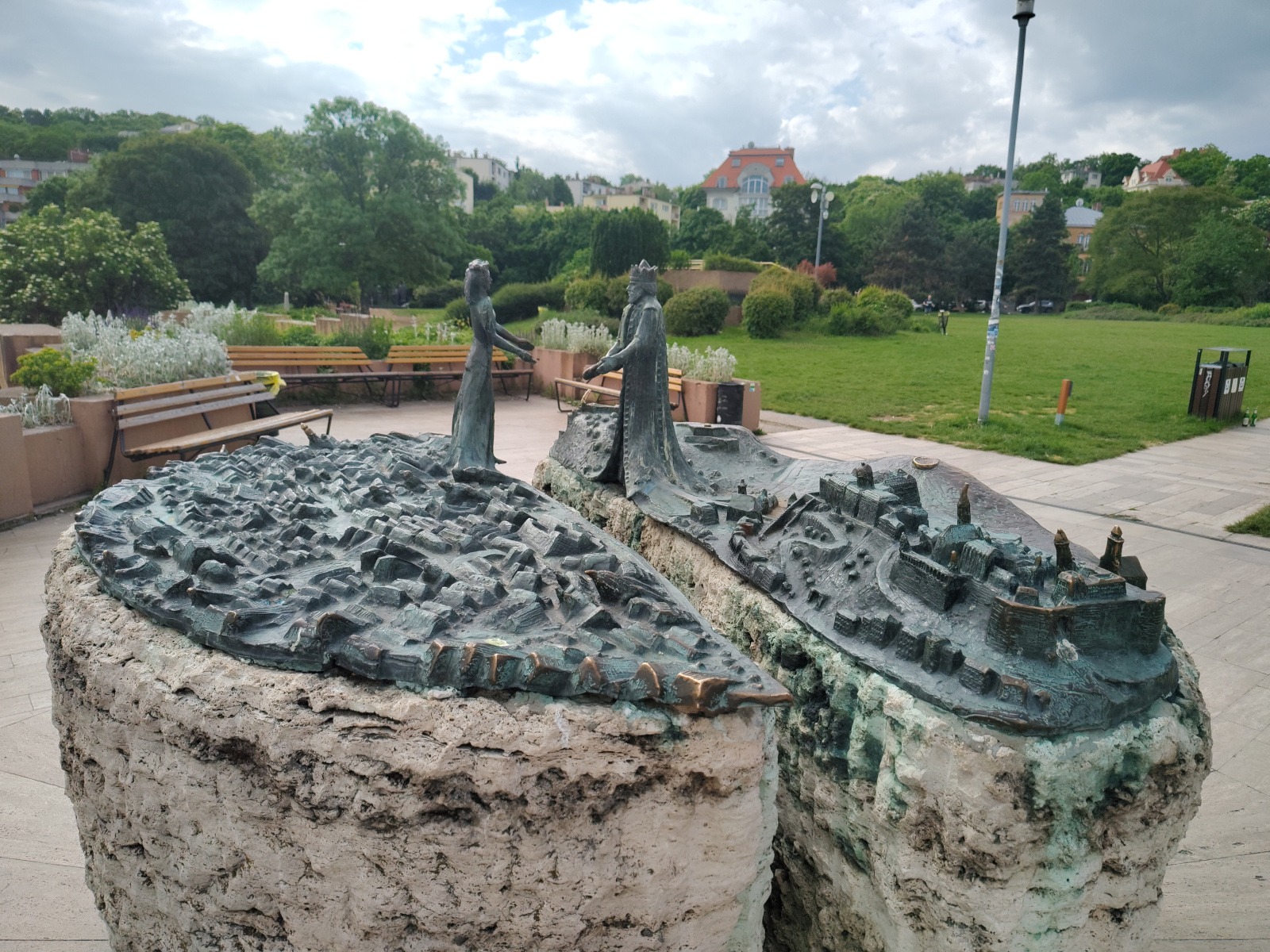
One of the first things we noticed was a bronze sculpture mounted on stone. At first glance, it looked like a decorative map, but as we moved closer, we realised it was a miniature relief of the city, with two bronze figures reaching toward each other: the Prince of Buda and the Princess of Pest.
The figures symbolise the union of Buda and Pest. Together with Óbuda, the two cities were officially unified as Budapest in 1873. I love discovering public art that tells part of a city’s story without requiring a museum ticket or a scheduled visit.
From there, we walked farther through the park and began getting our first broad views. The Buda hills and rooftops appeared on one side, while Pest stretched across the river on the other. The Elizabeth Bridge and the Inner City Parish Church stood out immediately, and we paused before beginning the uphill section toward the Garden of Philosophers.
What to know before following this stop: Tabán gives the route a gentler beginning, but the climb starts soon afterwards. If your main goal is only the Castle District, you can begin closer to Clark Ádám Square or take public transport uphill. Our route includes Tabán because this is where our own day started.
Stop 2: The Garden of Philosophers on Gellért Hill
The Garden of Philosophers requires a separate uphill climb before you reach Várkert Bazár and the base of Castle Hill. It is closer to the Gellért Hill side of this itinerary, so it shouldn’t be treated as though it sits inside the Castle District itself.
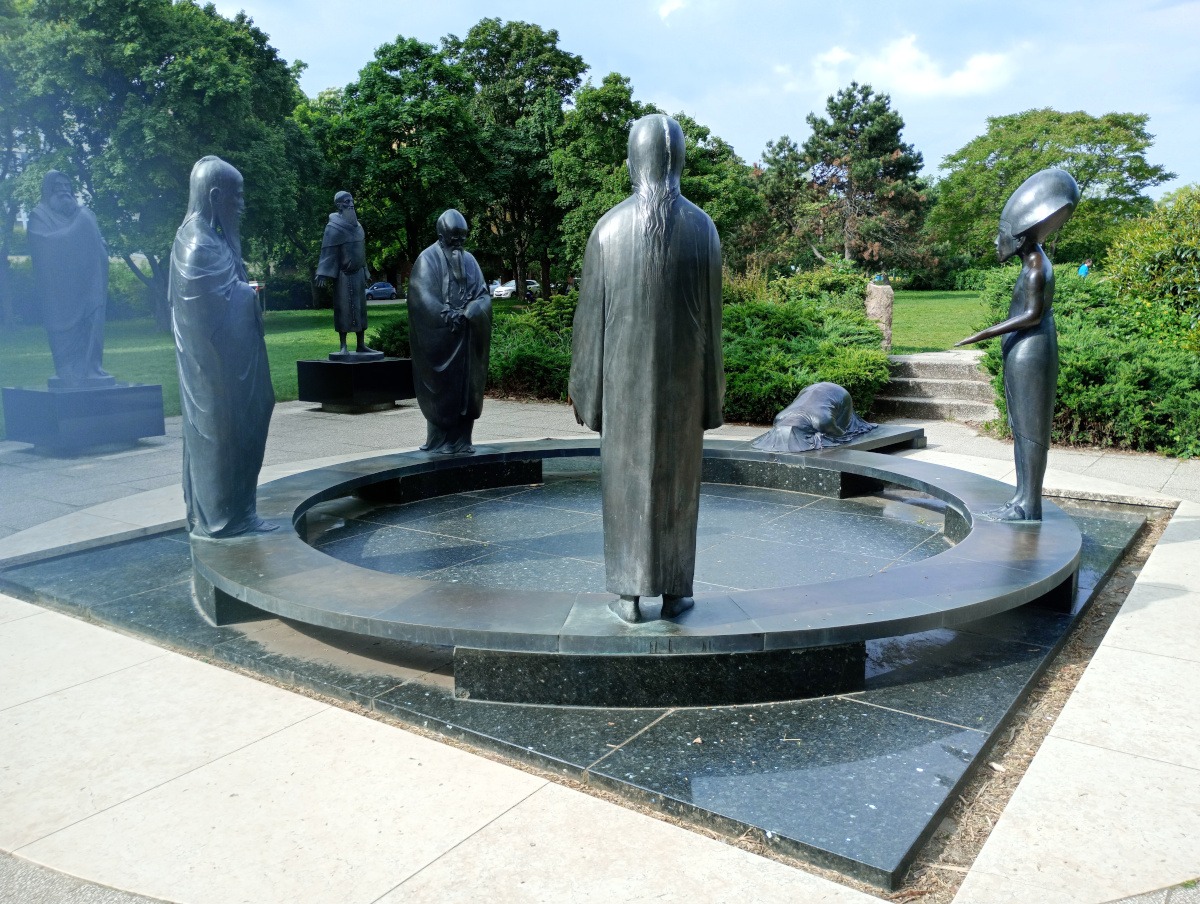
We stumbled upon the Garden of Philosophers (Filozófusok kertje) rather than adding it to a pre-planned checklist, and I’m glad we found it. The bronze and granite sculpture group was created by Hungarian sculptor Nándor Wagner, who spent the final decades of his life in Japan, and it was unveiled in Budapest in 2001.
The central circle brings together Akhenaten, Jesus, Buddha, Laozi, and Abraham around a sphere representing a shared divine centre. Behind them stand Mahatma Gandhi, Bodhidharma, and Saint Francis of Assisi.
We spent a few minutes walking among the figures, reading the plaques, and taking in the setting. The arrangement brings together people from different cultures, religions, and centuries around an idea of mutual understanding.
Neither this sculpture group nor the Prince of Buda and Princess of Pest had been part of our original plan. Finding both while walking made the beginning of the day more interesting and personal than a route built only around Budapest’s best-known landmarks.
You can also catch glimpses of the city through the trees. The area was uncrowded during our visit, especially compared with Fisherman’s Bastion and the main Buda Castle terraces later in the day.
Is the detour worth it? I think it is for travellers who enjoy public art and quieter places, but it adds climbing before the main Castle District portion of the day. Anyone conserving energy may prefer to skip it and start nearer Várkert Bazár or Clark Ádám Square.
Stop 3: Várkert Bazár and Two Very Different Fountains
Arriving at Várkert Bazár from the park meant that we encountered a part of the castle gardens before reaching the more familiar Castle Hill starting point at Clark Ádám Square. It was a crisp, windy spring day, and the area felt calm. The contrast with the crowds higher on the hill became much clearer later.
The Mosaic Fountain in the Niche Pavilion
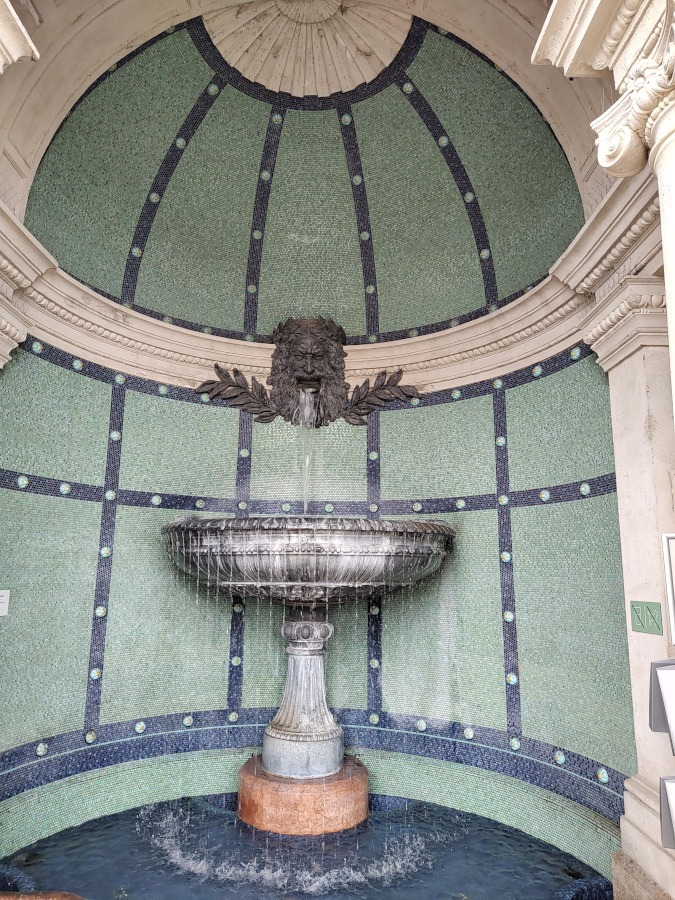
Our first fountain was tucked inside an elegant semicircular niche. A bronze bearded mask releases water into an ornamental basin, with pale green and dark blue mosaic tiles covering the curved wall behind it.
The setting caught my attention more than the size of the fountain. The mosaic, carved stone, mask, and falling water create a refined little scene that is easy to miss if you move directly between the riverfront and the castle.
The Triton Fountain
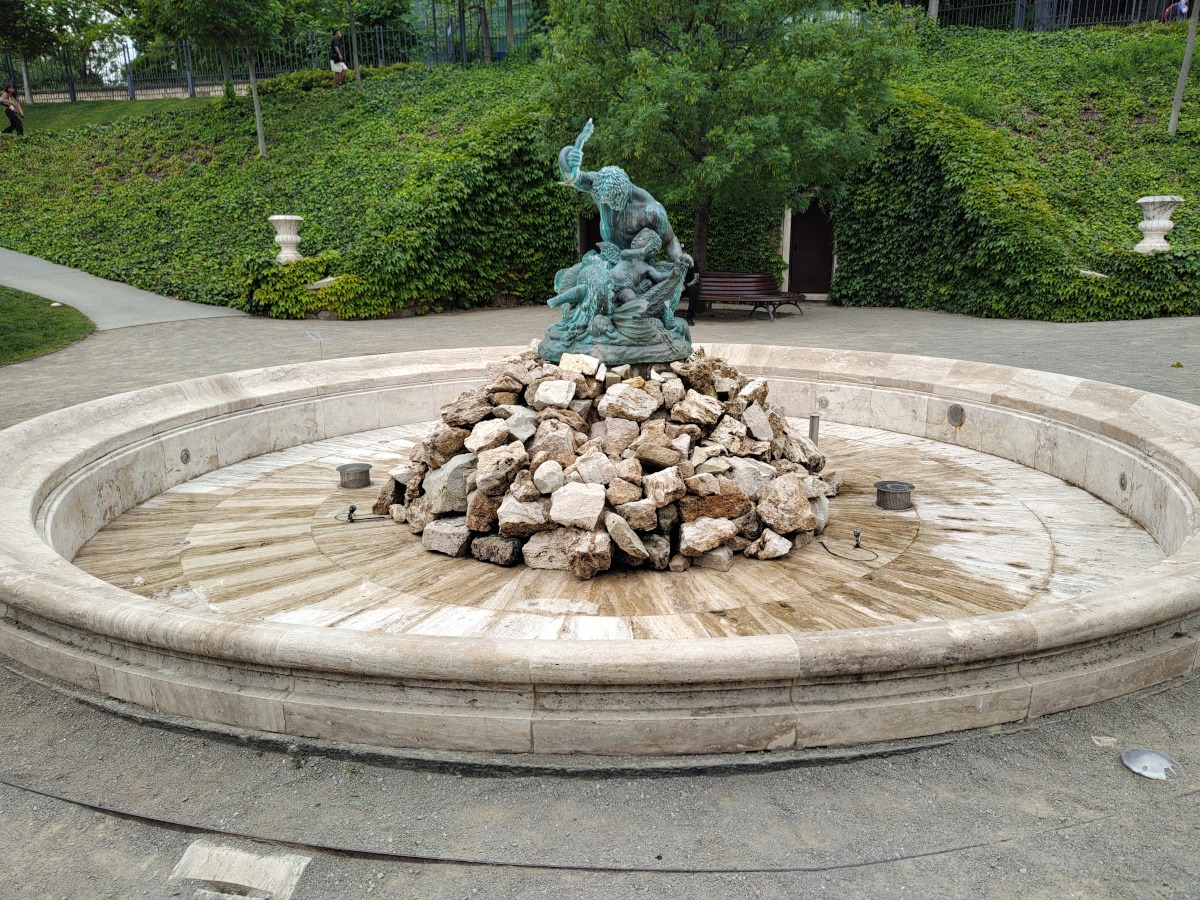
A little farther along, we found the larger Triton Fountain, a bronze composition raised above a rugged mound of stone in a circular basin.
The main figure is Triton, the son of Poseidon in Greek mythology. According to Várkert Bazár’s description of the reconstructed fountain, the composition is probably connected to Hans Christian Andersen’s story of The Little Mermaid: Triton confronts Cupid after his youngest mermaid daughter falls in love with a human.
The fountain was reconstructed during the restoration of Várkert Bazár using old photographs and archival material. During our spring visit, the basin wasn’t operating as a full water feature, which made the bronze figures and rock base easier to examine.
Stop 4: Clark Ádám Square, the Chain Bridge, and Kilometer Zero
Eventually, our walk brought us down to Clark Ádám Square, directly beside the Buda end of the Széchenyi Chain Bridge. This was both a sightseeing stop and the point where we had to decide how to reach the Castle District.
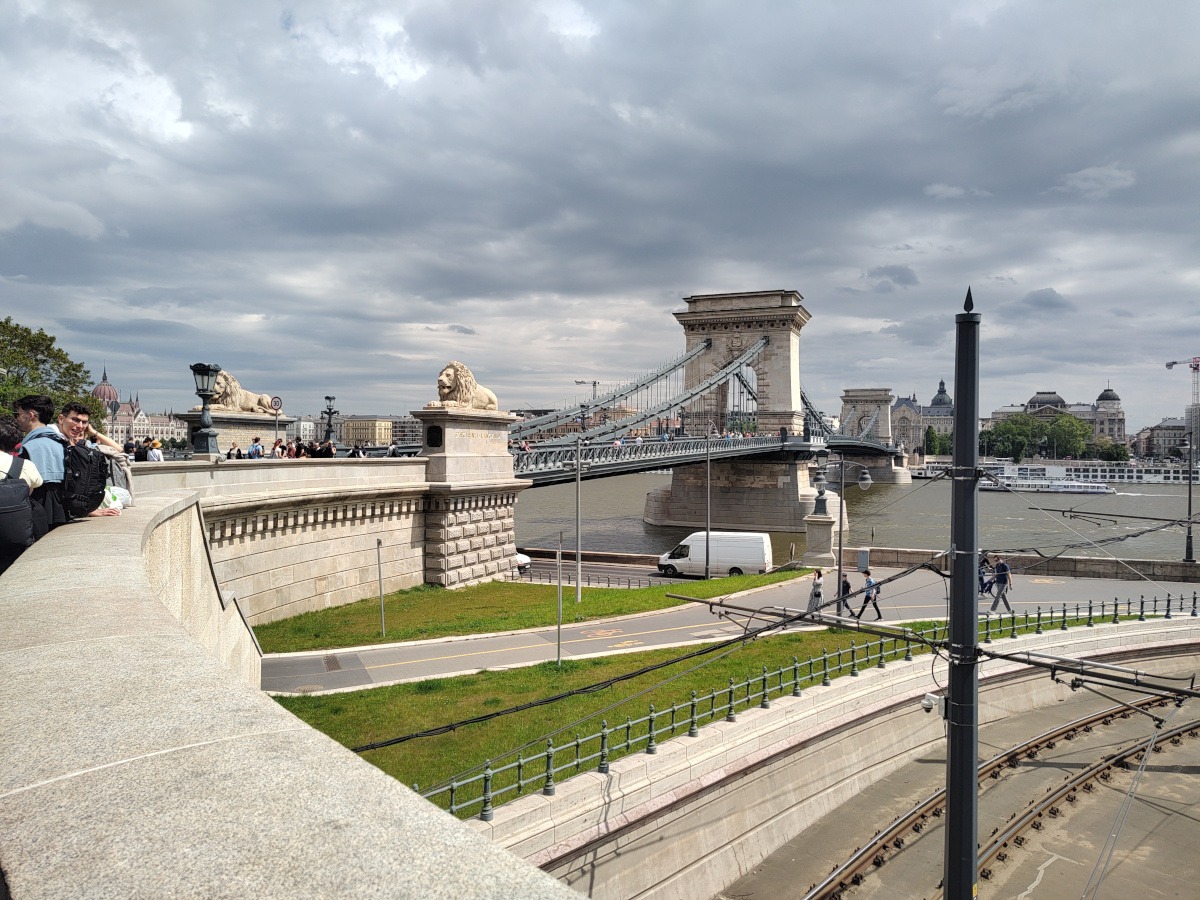
The two massive stone lions at the bridge entrance are impossible to miss. They are also connected to one of Budapest’s best-known urban legends.
The legend of the lions’ tongues: The story claims that sculptor János Marschalkó forgot to give the lions tongues and was so ashamed when someone noticed that he jumped into the Danube. The legend isn’t true. The lions do have tongues, but they sit low inside the mouths and aren’t visible from street level. Marschalkó lived for many years after the statues were installed.
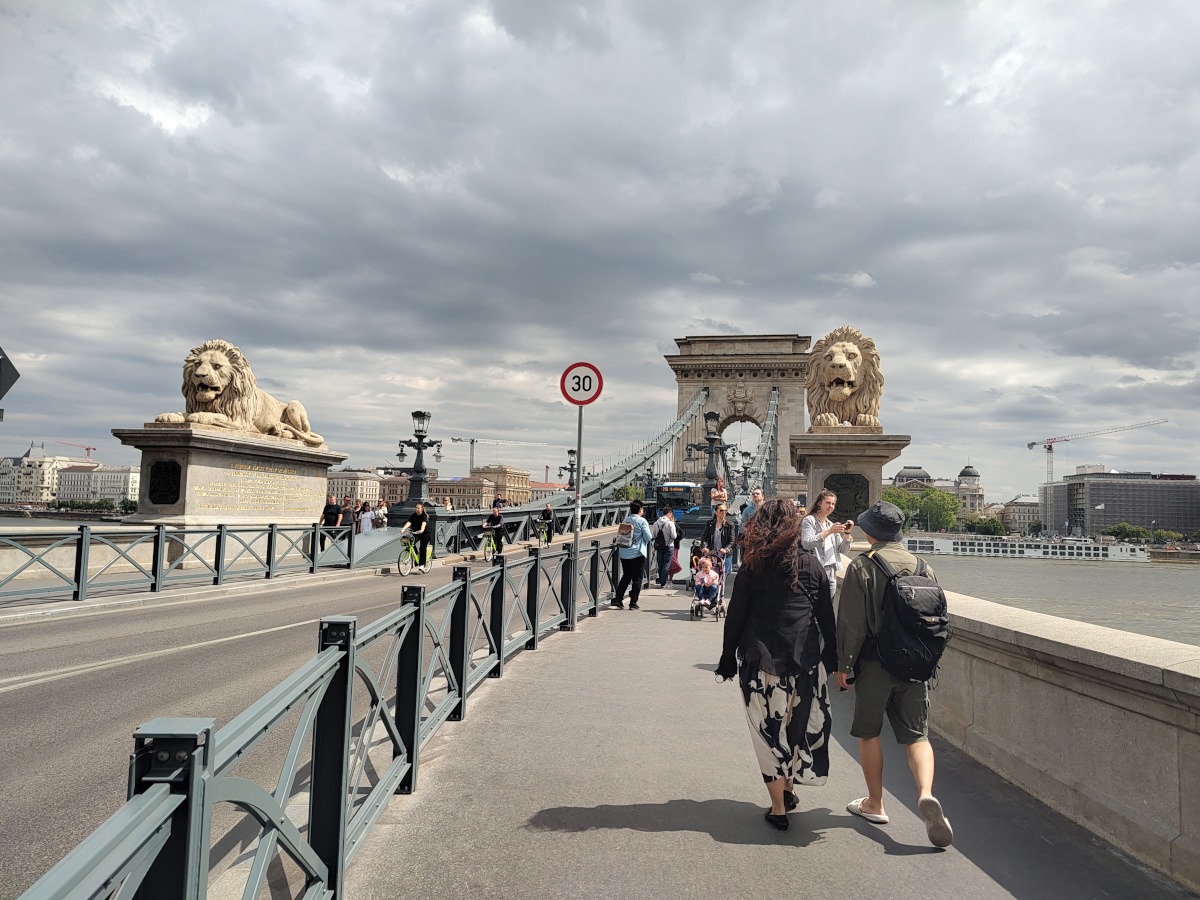
Standing in the square, you can look across the Danube toward Pest and see the bridge stretching toward the city centre. We took a short break here before deciding how to continue.
Near the square stands the Zero Kilometre Stone, which marks the reference point from which road distances from Budapest are traditionally measured. Behind it is the lower station of the Buda Castle Funicular, running between Clark Ádám Square and Szent György Square beside the Royal Palace.
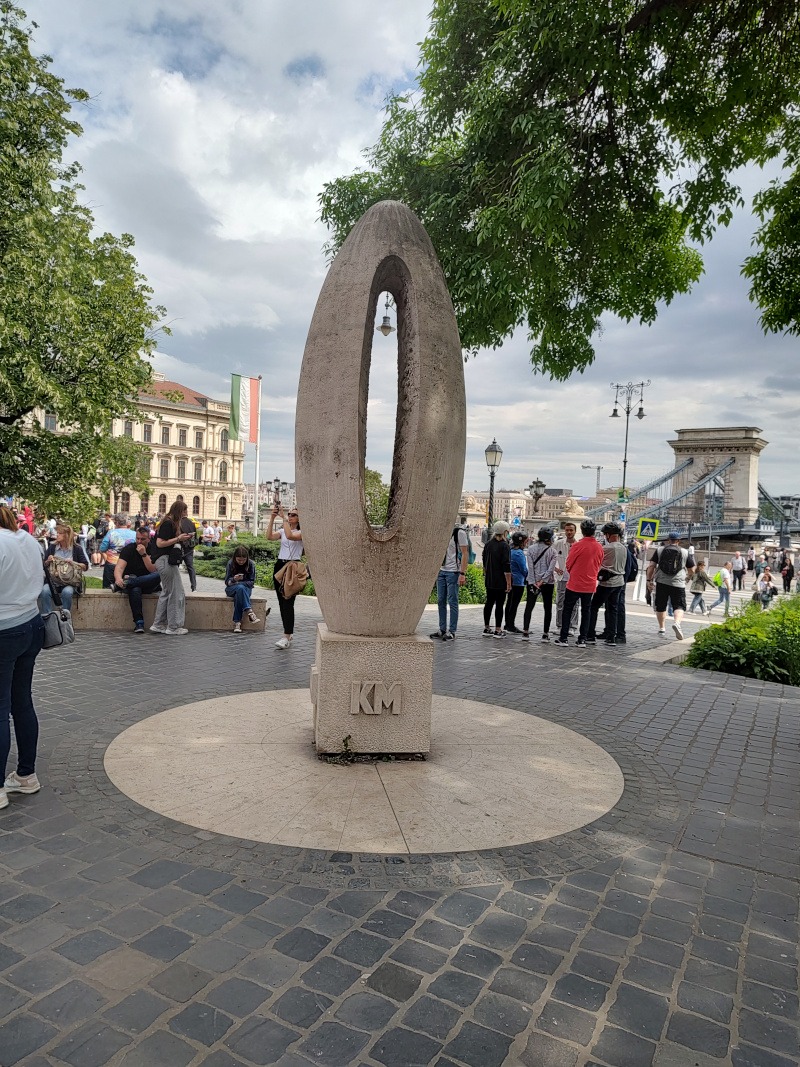
When we arrived, the funicular queue extended far beyond the entrance. We didn’t want to spend a large part of the morning waiting, so we chose the hop-on hop-off sightseeing bus, which stopped in the square. At that moment, it felt like the best way to save our legs and keep moving.
How Can You Reach Castle Hill From Clark Ádám Square?
The funicular: This is the classic scenic option and takes you to the Royal Palace end of Castle Hill. It uses a separate ticket rather than a standard BKK public-transport ticket, and queues can be long. Check the current Buda Castle Funicular information before your visit because operating arrangements and maintenance days can change.
Walking: You can climb from the square using the uphill paths and stairs. This costs nothing and gives you control over the pace, but it adds another ascent to an already hilly day.
Regular public transport: BKK buses serve the Castle District. Bus 16 runs between Deák Ferenc tér and Széll Kálmán tér through the castle area, while Bus 16A links Széll Kálmán tér with Dísz tér. Check BudapestGO before travelling because temporary diversions can alter stops and routes.
A sightseeing bus: This was our choice. It cost more than an ordinary public-transport ticket, but it fitted the ticket and plans we already had for the day and allowed us to rest between stops.
Stop 5: Matthias Church and Fisherman’s Bastion
Our first major stop after getting off the sightseeing bus was the area around Matthias Church and Fisherman’s Bastion. This is one of the best-known parts of Budapest, and it was also one of the busiest sections of our route.
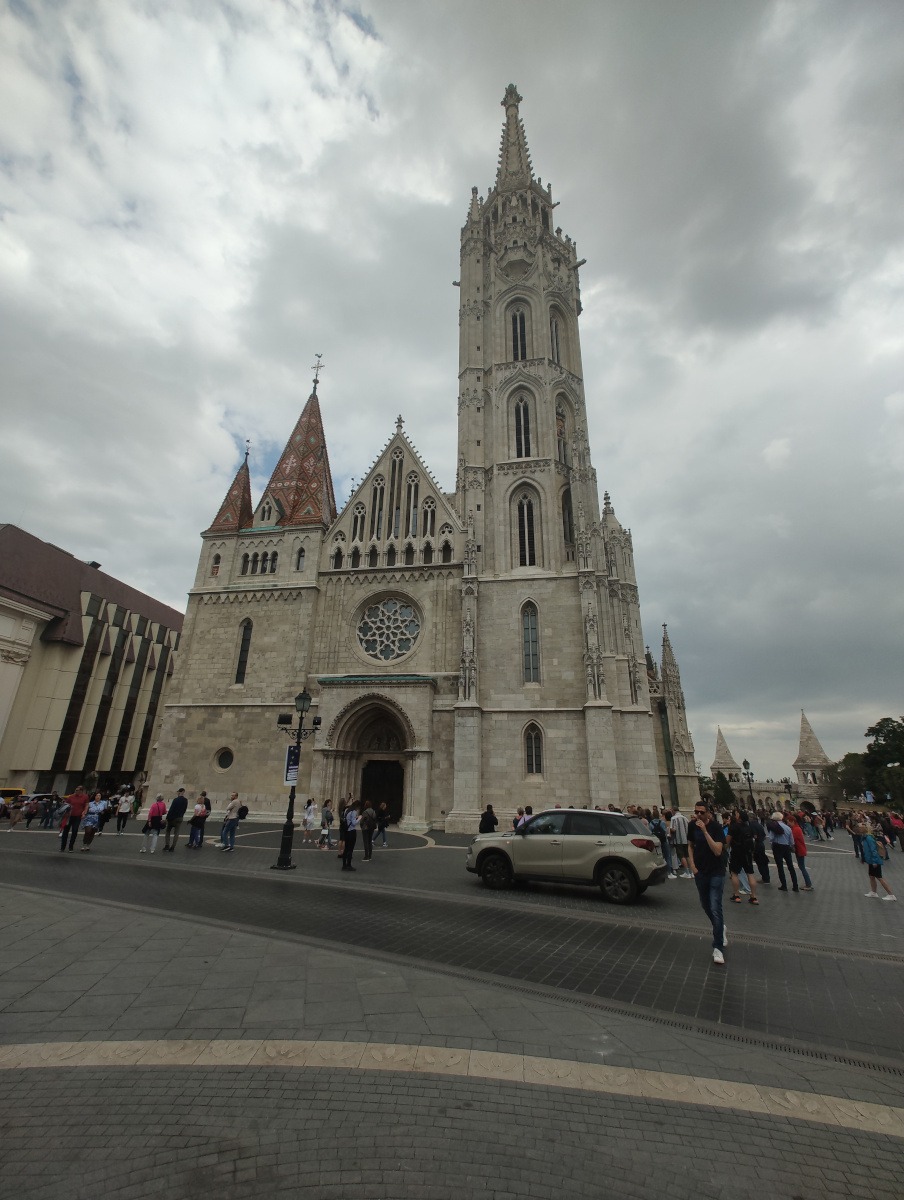
Even after seeing photographs, I wasn’t prepared for how intricate Matthias Church (Mátyás-templom) looked up close. Its patterned ceramic roof creates one of the most recognisable architectural details in the Castle District, while the exterior reflects centuries of construction, rebuilding, and restoration.
We debated entering but chose to remain outside and spend our time in the square and at the surrounding viewpoints. Because we didn’t visit the interior, I won’t tell you that the admission price is automatically worth it. The church contains richly decorated interiors, religious art, and visitor areas, but opening times can change around liturgical events. Check the official Matthias Church visitor information before relying on a particular time.
Photo tip from our visit: Step far enough back into Holy Trinity Square to include both the tall church tower and part of the coloured roof. Close photographs reveal the roof pattern, but a wider angle gives a better sense of the building’s scale.
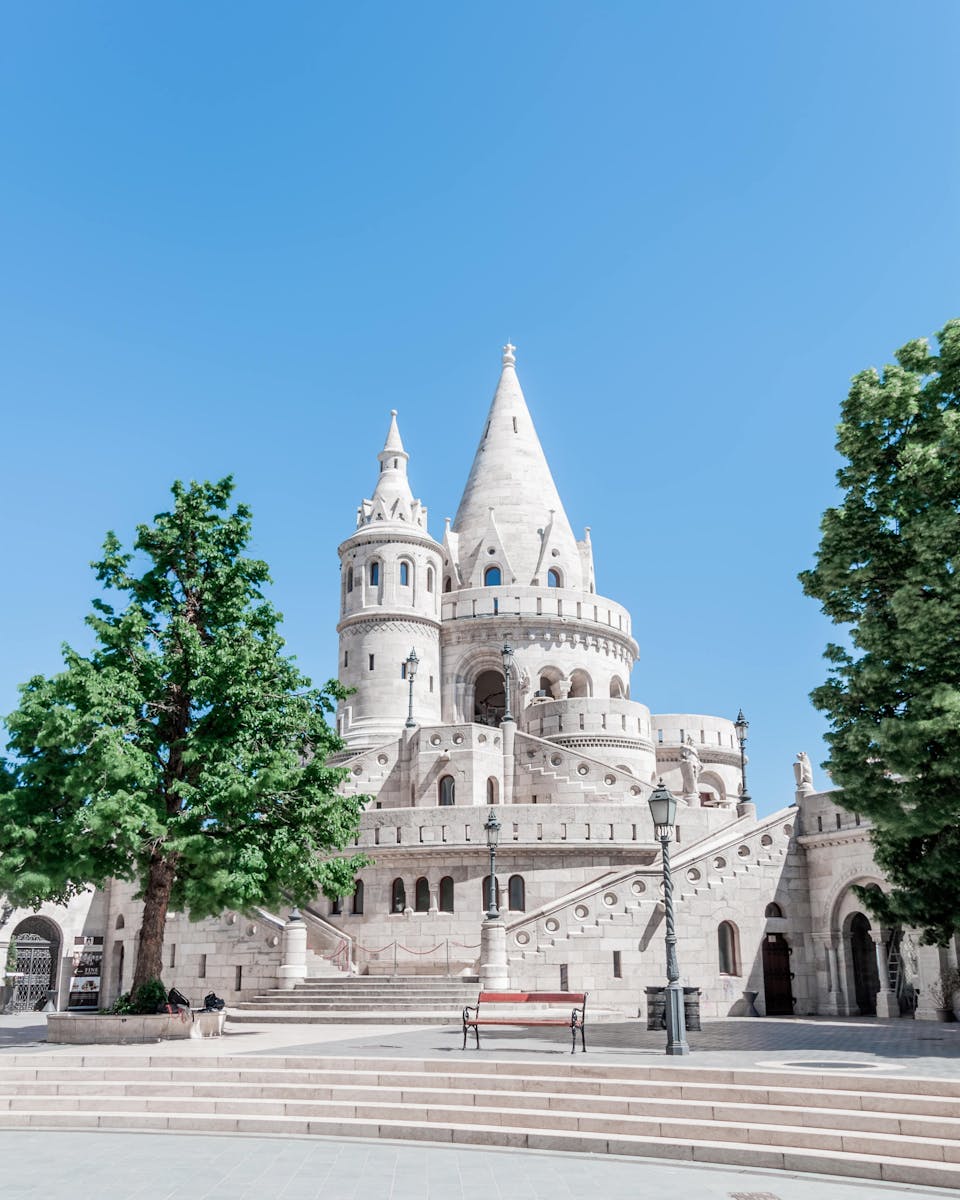
Right beside the church, Fisherman’s Bastion (Halászbástya) looks like a romantic castle terrace even though it was designed as a lookout monument rather than a medieval defensive stronghold in its present form.
The photograph above is a stock image showing the architecture in clearer conditions. During our visit, the sky was grey, rain was beginning, and the terraces were packed with people. I kept our own photograph below because it shows the view we actually had.
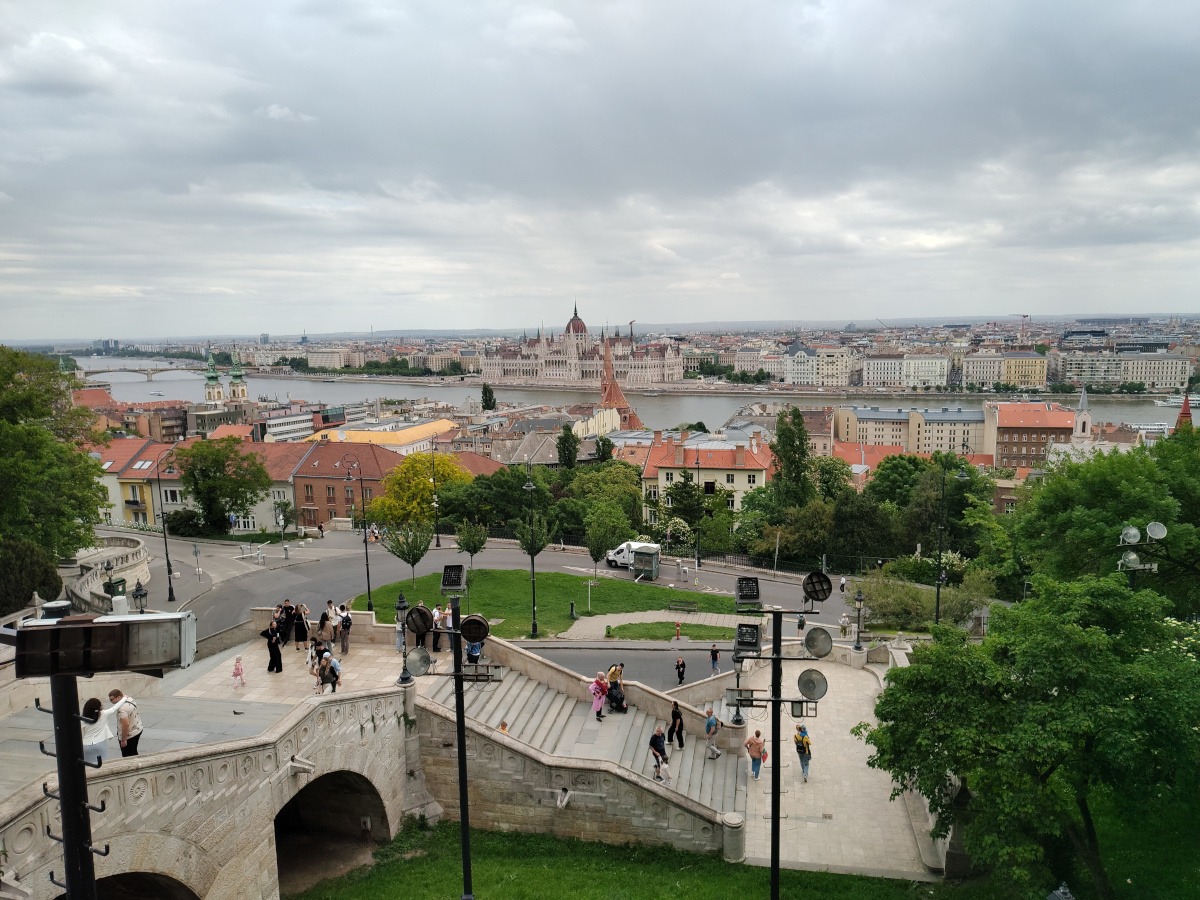
The terraces frame some of Budapest’s most famous views, especially the Hungarian Parliament across the Danube. We used the lower accessible areas for our view. Parts of Fisherman’s Bastion can be visited without a ticket, while the upper lookout terrace has ticketed periods. Check the current municipal ticket arrangements because times and prices can change.
Photo tip from our visit: The openings and arches can frame Parliament, but patience is essential. People move constantly through the same spaces, and getting a photograph without someone crossing in front of the camera was difficult.
We also passed the equestrian statue of Saint Stephen, Hungary’s first king, positioned between Matthias Church and the bastion terraces.
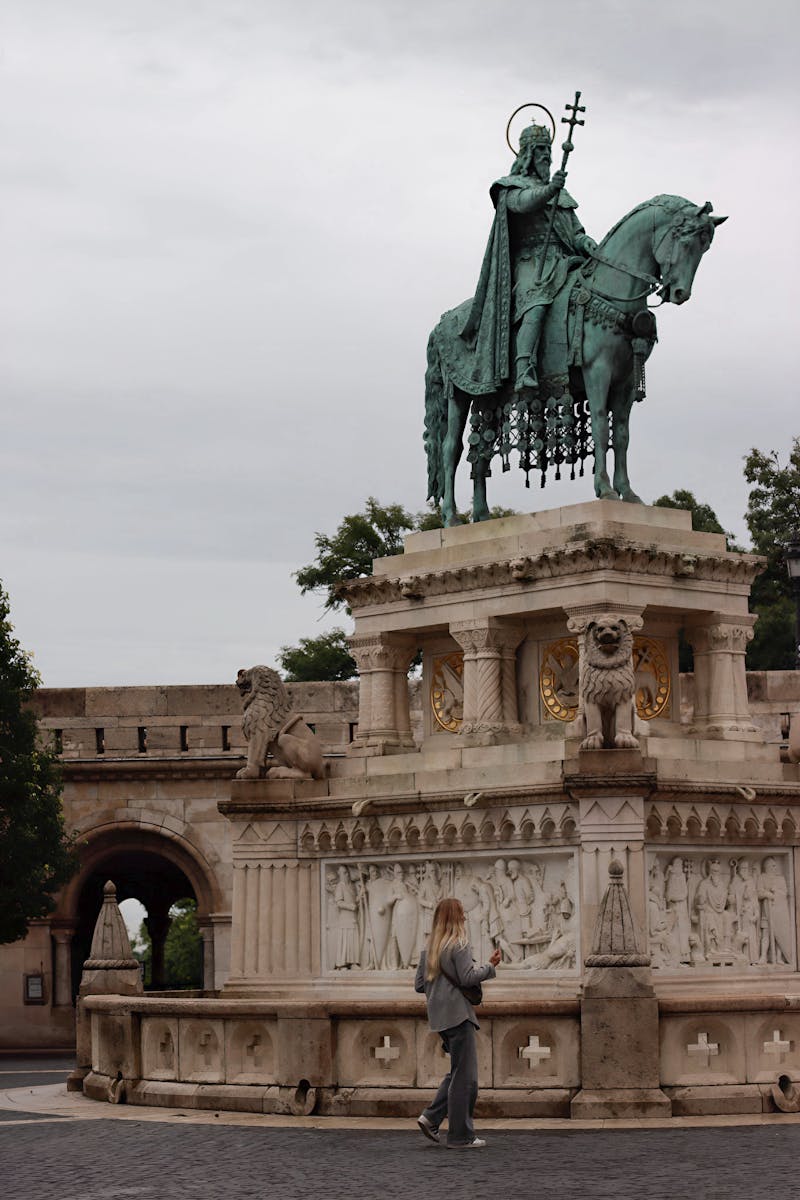
Despite the crowds and the weather, this area lived up to its reputation. The architecture and the views are genuinely impressive. It also confirmed that the busiest landmarks require more time than their physical size suggests because you spend so much of that time moving around groups, waiting for viewpoints, and deciding whether to enter ticketed areas.
Stop 6: Mary Magdalene Tower and a Quieter Part of the Castle District
After the dense crowds around Fisherman’s Bastion, the atmosphere shifted as we continued through the narrow streets toward Mary Magdalene Tower (Mária Magdolna-torony) at Kapisztrán Square.
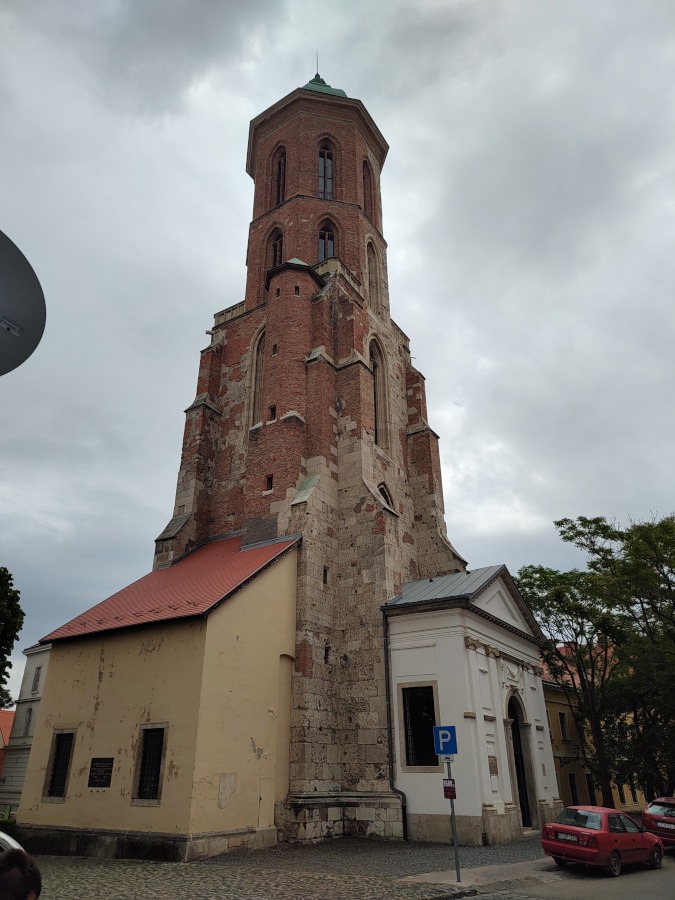
The tower is the surviving part of the former Church of Mary Magdalene, whose medieval history is closely connected with the Hungarian-speaking population of Buda. Matthias Church, by comparison, was associated for long periods with the town’s German-speaking community.
The church endured major changes across the centuries and suffered severe damage during the Siege of Budapest in 1944–1945. Much of the remaining structure was later demolished, while the tower survived as the principal visible remnant.
Not everyone from the sightseeing bus stopped here. It was the least crowded stop on our tour, and that alone made the experience feel very different from the famous terraces.
And you can see another side of Budapest from here:
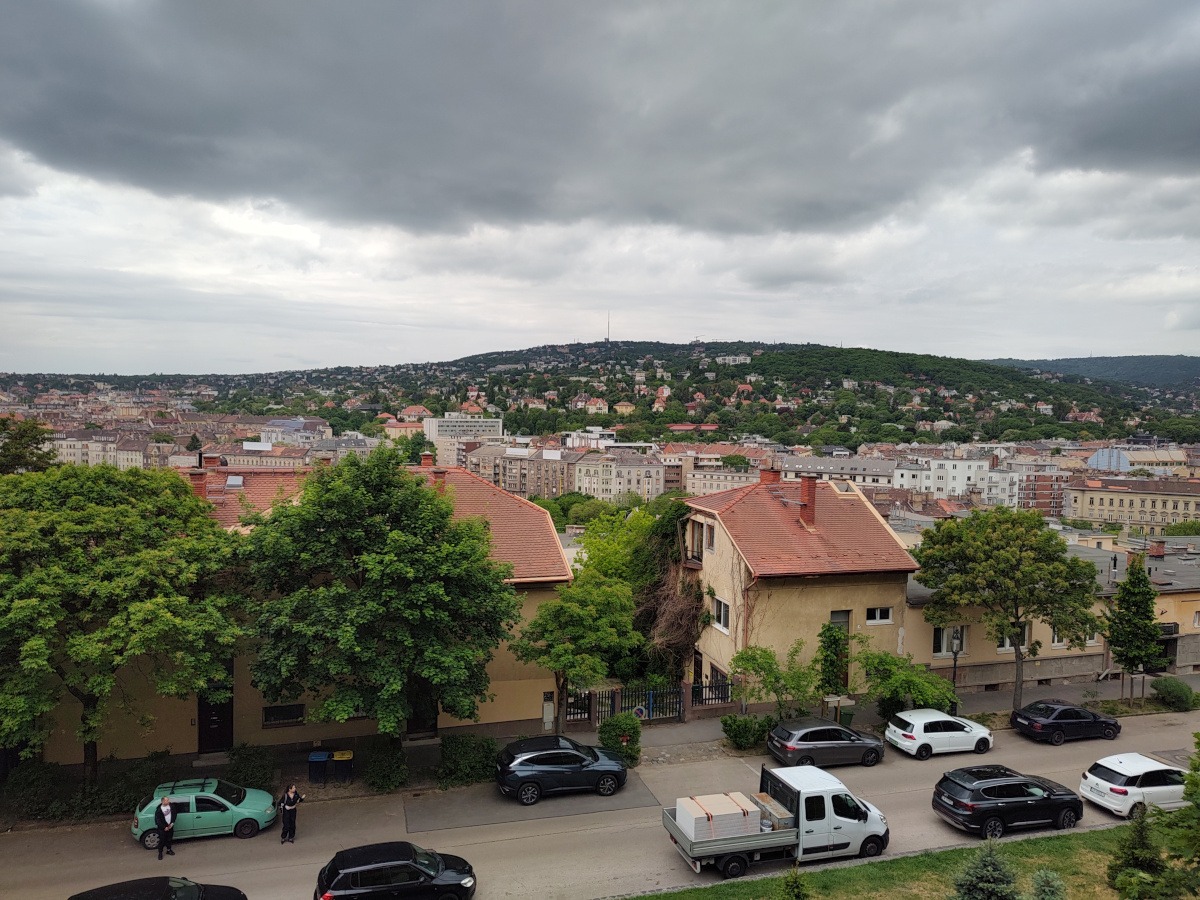
We decided not to go inside. The tower has had visitor access and an exhibition, with the possibility of climbing for a higher view, but access can vary and should be checked before planning around it. We were enjoying the lack of queues and the chance to look around without constantly moving out of someone else’s photograph.
This stop added a more serious historical layer to the day. It also showed why walking beyond the best-known square can be worthwhile: the crowds dropped quickly, while the streets and views remained interesting.
Stop 7: Buda Castle Terraces, the Turul, and the Palace Fountains
After Mary Magdalene Tower, we continued south through the Castle District toward the upper terraces of Buda Castle. This was the part of the route that created the backtracking mentioned earlier, since we had already travelled north from Matthias Church.
The palace area was noticeably busier, with school groups, guided tours, families, and travellers competing for the same viewpoints.
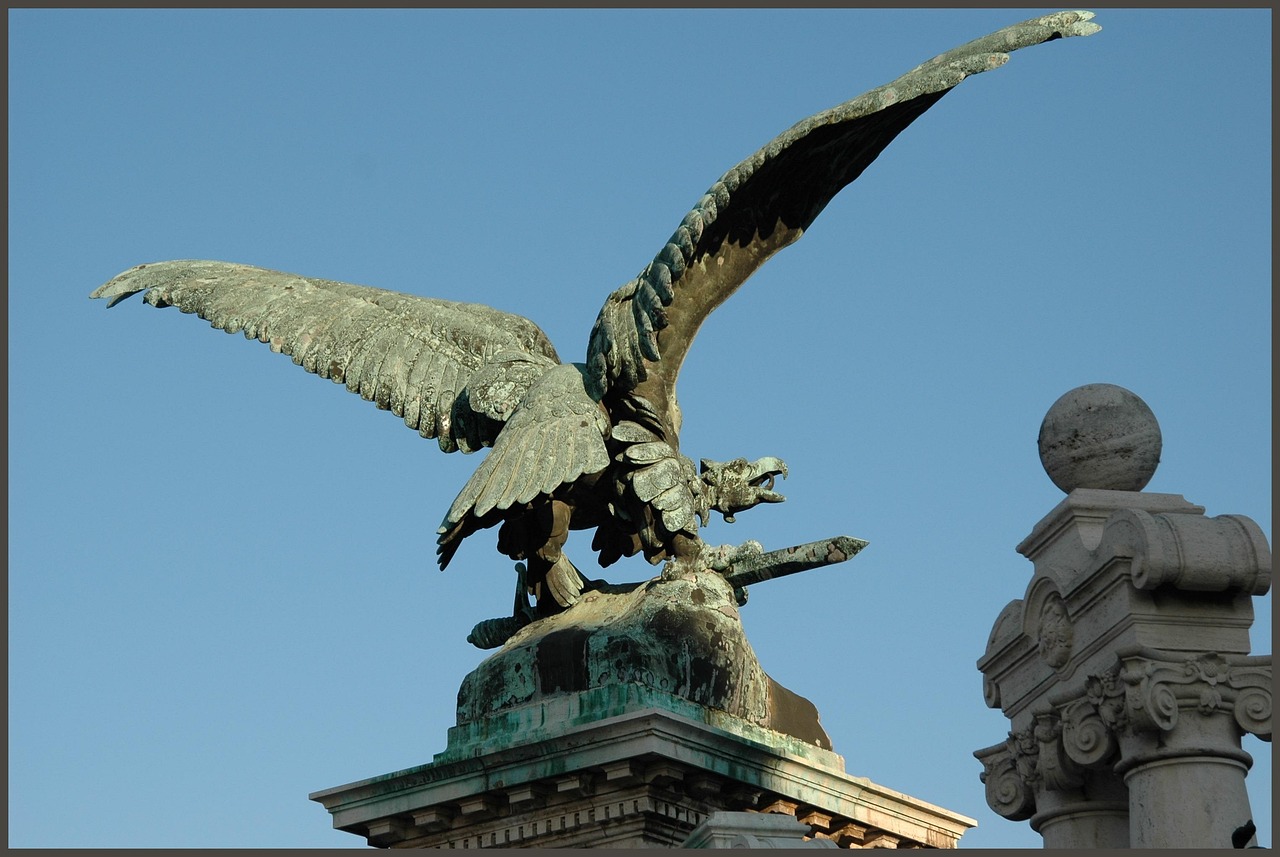
One of the first things that caught our attention was the Turul statue. The large bronze bird is a figure from Hungarian origin legends and appears here with its wings extended and a sword in its talons.
Perched above the river side of the palace, it looks as though it is guarding the Danube. There was a wooden staircase nearby during our visit that allowed us to gain a slightly higher perspective over the grounds.
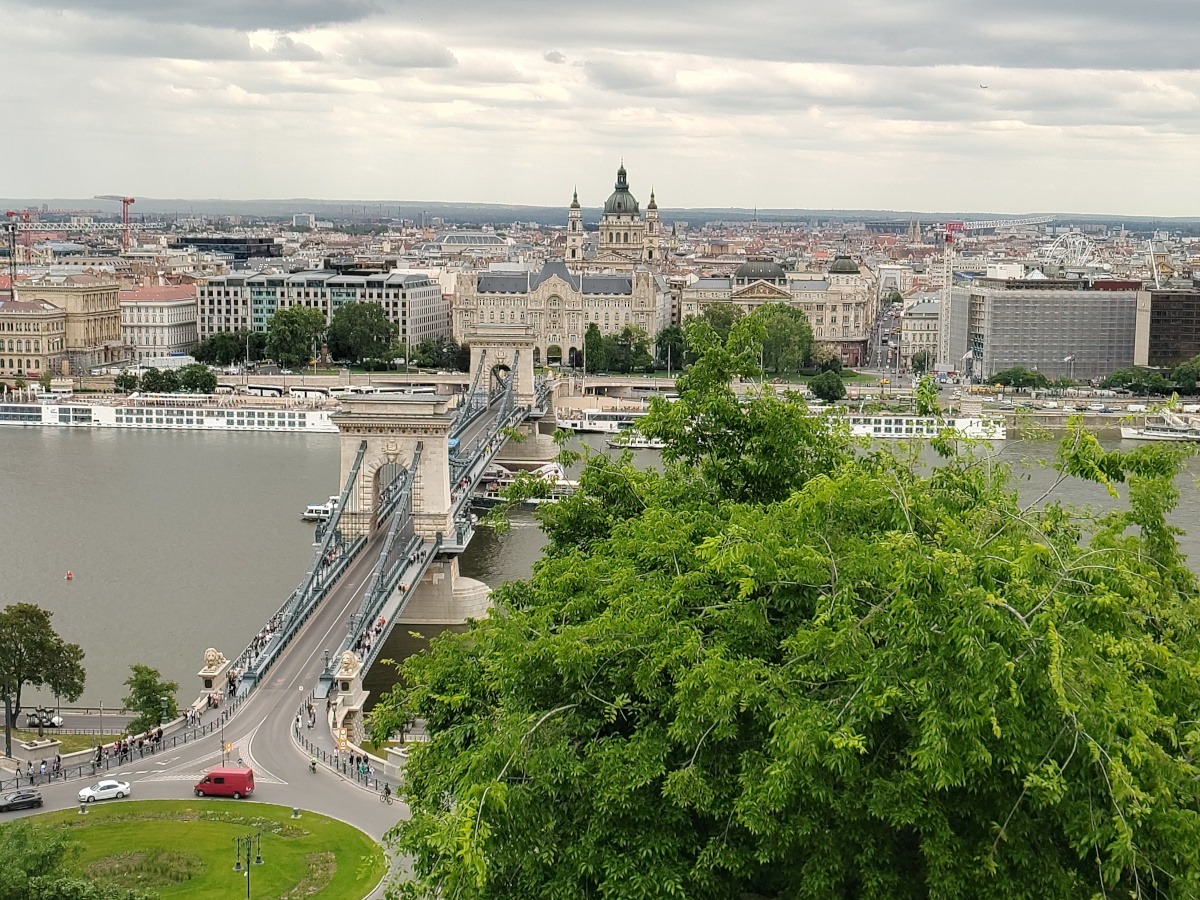
From the terraces, we could see the Chain Bridge crossing toward Pest and St. Stephen’s Basilica rising above the city rooftops. This is one of the classic Budapest panoramas, and the view remained impressive even under a cloudy sky.
The terrace was extremely crowded. Everyone wanted photographs of the skyline or themselves against it, and it was genuinely difficult to stand in one place without someone moving between the camera and the person being photographed.
Photo tip from our visit: Take the wider city view first, then wait for a brief opening if you want a portrait. Expecting an empty terrace in the middle of the day is unrealistic.
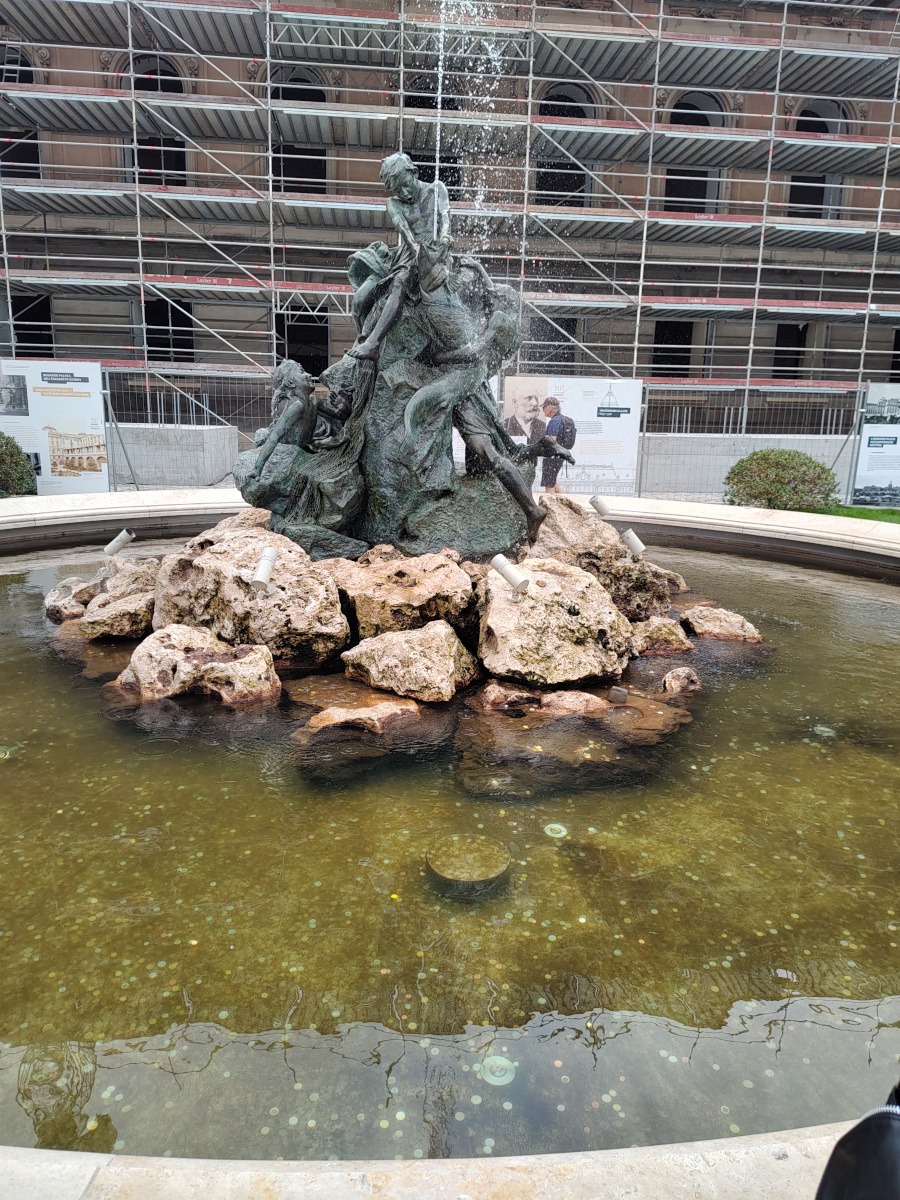
Before moving toward the museums, we stopped at the Fishing Children Fountain (Halászó gyerekek kútja). The bronze group shows children struggling with a fishing net and their catch.
It feels lighter and more playful than the large monuments around the palace. And yes, as you can see in the photograph, visitors had thrown coins into the fountain.
Matthias Fountain
During this part of our castle walk, we also saw Matthias Fountain in Hunyadi Courtyard. The large sculptural group centres on King Matthias Corvinus during a hunt, surrounded by figures and hunting dogs. The fountain also includes Szép Ilonka, a character connected with a well-known Hungarian literary story about the king.
Stop 8: Buda Castle Museums and Why We Skipped Them
ID 30694902 ©Mdorottya | Dreamstime.com
By the time we reached the central palace area, the clouds had thickened and our fatigue had caught up with us. We had already covered a considerable distance, stood at crowded viewpoints, and walked north and south across part of the Castle District.
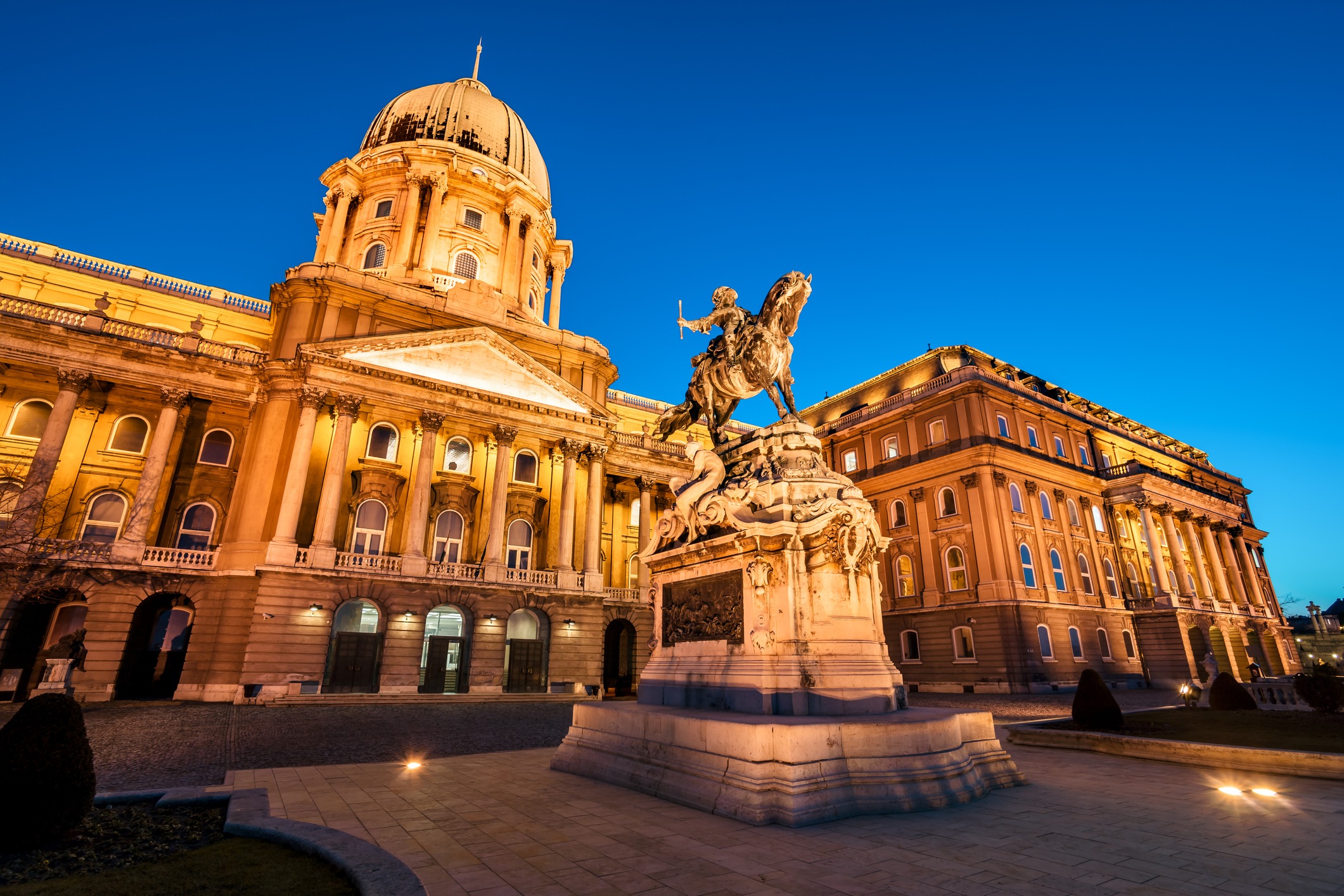
We paused in front of the equestrian statue of Prince Eugene of Savoy, a prominent Habsburg military commander known for his campaigns against the Ottoman Empire. The statue stands before the palace façade and creates one of the grandest compositions in the area.
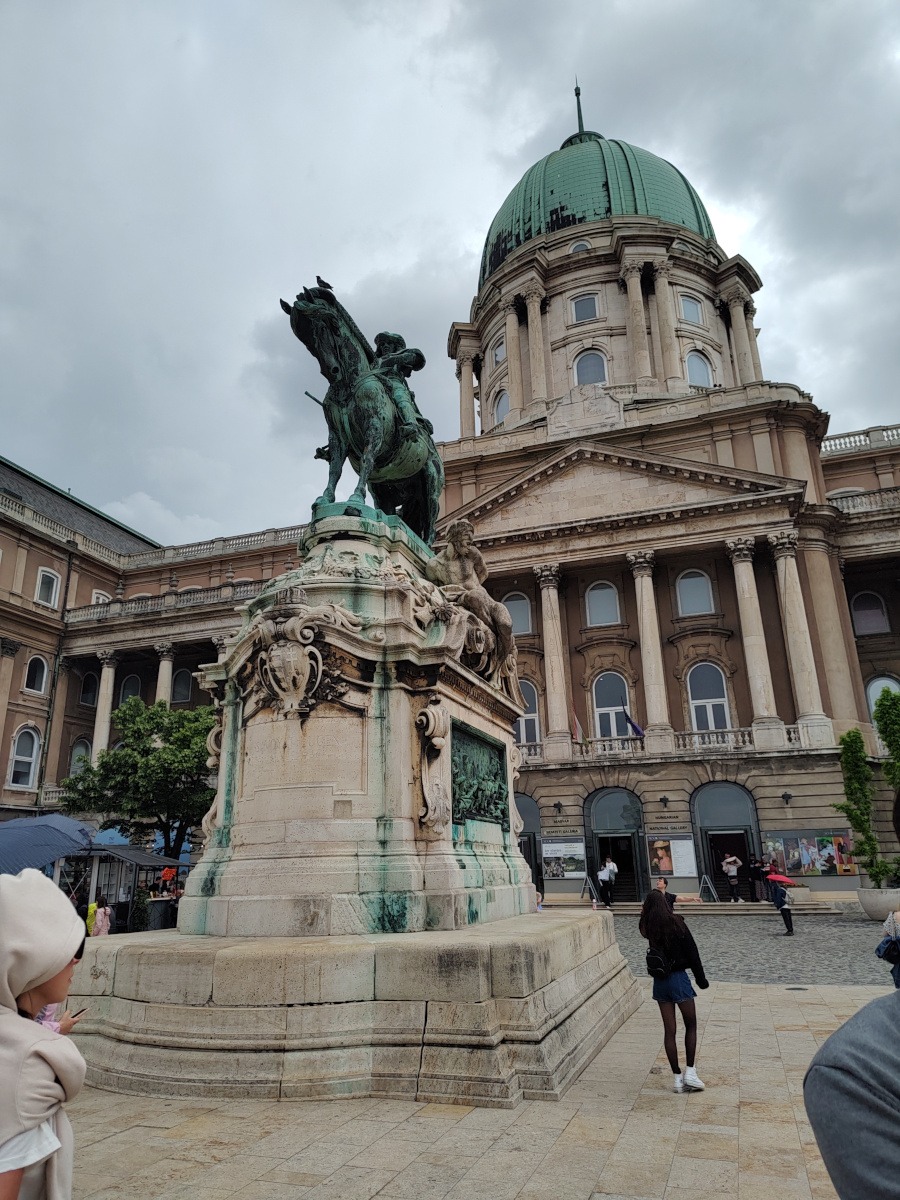
The Royal Palace complex now houses several major cultural institutions. If you want to enter one during a one-day Buda itinerary, choose according to your interests rather than trying to fit them all into the same afternoon.
Hungarian National Gallery: Best suited to visitors who want to explore Hungarian visual art across several historical periods. A proper visit requires more than a quick walk through one room.
Budapest History Museum – Castle Museum: The stronger choice for travellers interested in the history of the palace and Budapest itself. Its exhibitions include surviving medieval palace spaces, archaeological material, and the city’s development across the centuries.
St. Stephen’s Hall: This restored ceremonial room has its own ticket arrangements and timed access may apply. Check the current museum information before planning the day around it.
National Széchényi Library: This is Hungary’s national library rather than a conventional general-interest museum. It hosts exhibitions and events, but ordinary library access and public programmes have their own conditions. Check what is open to visitors on the date of your trip.
The castle courtyards and outdoor terraces can be explored without buying admission to all the institutions inside. Construction and restoration work in the palace area can alter pedestrian routes, so allow extra time and follow current signs.
We wanted to see more, but by then we were wet, tired, and ready for a break. We skipped the museums and headed toward the sightseeing-bus stop. We had already seen the Várkert Bazár fountains earlier in the day and had also passed Matthias Fountain during the palace section, so we didn’t return to them before leaving.
A Rainy Goodbye and a Souvenir Stop at Clark Ádám Square
After leaving the castle grounds and boarding the hop-on hop-off bus again, we returned to Clark Ádám Square, where we had earlier debated whether to wait for the funicular. By then, the sky had opened completely and the rain was pouring.
We rushed into one of the souvenir shops near the Zero Kilometre Stone and waited for the worst of it to pass. While we were there, we picked up a few small gifts: magnets and a paprika sauce, the kind of souvenirs that fit easily into luggage and bring the trip back months later.
My husband came to collect us from there, and it was time to say goodbye to Budapest for that trip. We were driving back to Romania, with a stop in Timișoara to break up the roughly 11-hour journey. It was already afternoon, we were tired and damp, but the day had included far more than the main castle viewpoints.
Was the Hop-On Hop-Off Bus Worth It for Our Buda Day?
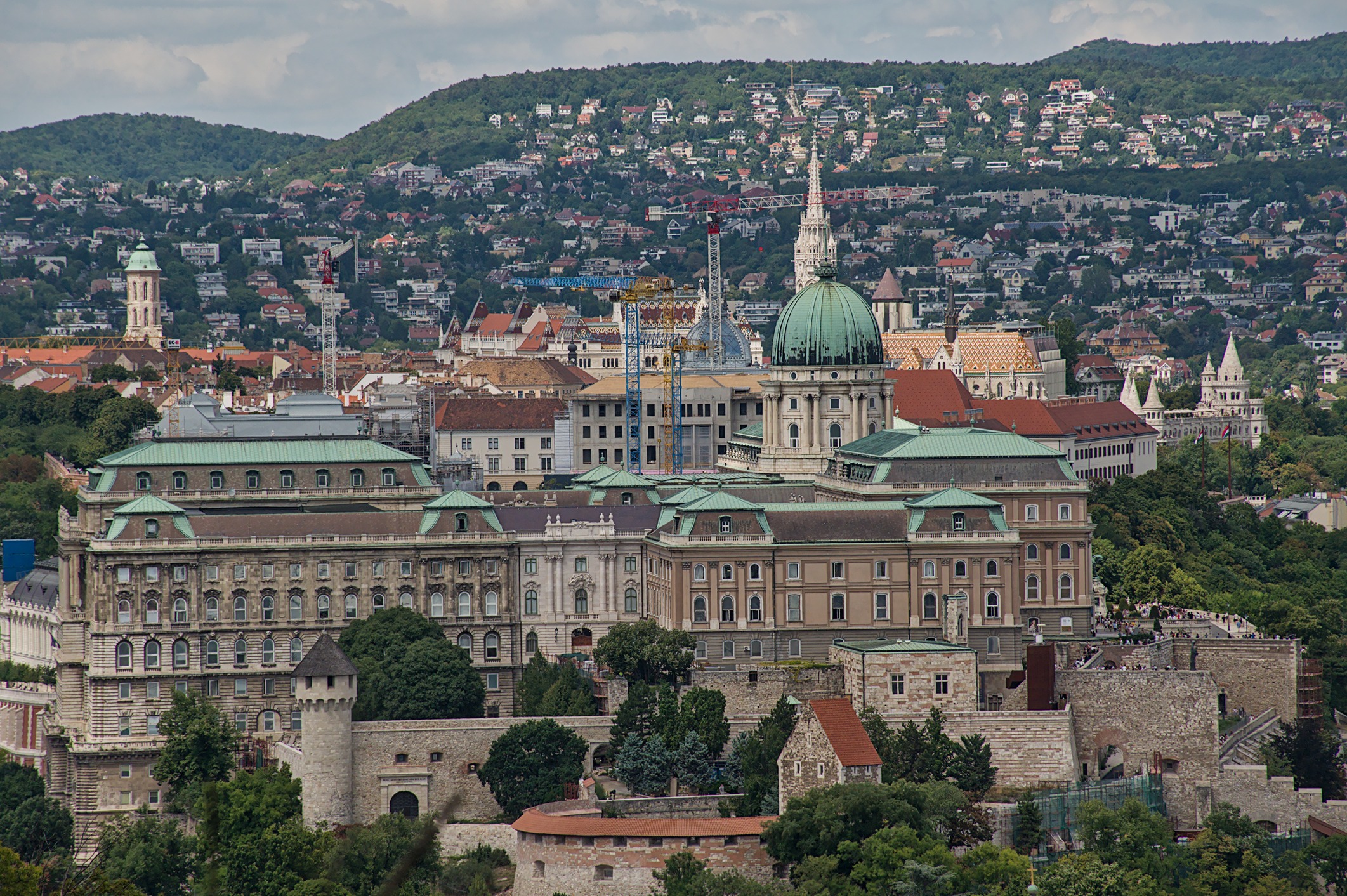
ID 399619606 ©Kristof Lauwers | Dreamstime.com
For us, choosing the sightseeing bus instead of waiting in the funicular queue was worthwhile that day. It saved time at the moment we needed to make a decision, let us sit between sections, and gave us flexibility when the weather deteriorated.
I wouldn’t say a hop-on hop-off ticket is necessary for every Buda itinerary. Travellers using ordinary Budapest public transport can reach the Castle District for much less, and strong walkers may prefer to climb from the river. The funicular offers the classic short ride and delivers passengers near the Royal Palace, but a long queue can remove much of its time-saving advantage.
We still want to take the funicular on another visit. I would simply treat it as an experience rather than the only practical way to reach the castle.
For broader transport, payment, and planning information, these Budapest travel tips cover details worth checking before your trip.
How Difficult Is This One Day in Buda Itinerary?
The route is manageable for travellers comfortable with hills and a long sightseeing day, but calling it simply “walkable” hides the parts that make it tiring.
Tabán and the Garden of Philosophers add climbing before you reach the base of Castle Hill. Várkert Bazár and Clark Ádám Square sit lower, so you then need another way up to the Castle District. Once there, cobblestones, standing time, stairs around some viewpoints, and the north-to-south backtracking increase the effort.
Our sightseeing-bus rides reduced the uphill walking, yet our feet were still sore by the palace section. Comfortable shoes help, but they don’t remove the need for rest, water, and realistic expectations.
Travellers with limited mobility should research the exact entrances they plan to use. Buses and lifts can reduce climbing in parts of the palace area, while towers, upper terraces, and older streets may involve stairs or uneven surfaces. Construction can also change the easiest route.
What I Would Do Differently on Another Buda Day
I would keep Tabán Park and the Garden of Philosophers because those unplanned discoveries made the morning special. I would also keep Mary Magdalene Tower because it gave us a quieter view of the district.
I would change the pacing once we reached Castle Hill. We moved from Matthias Church and Fisherman’s Bastion north to Mary Magdalene Tower, then returned south toward the Royal Palace. On another visit, I would study the castle bus stops and decide in advance which end of the ridge to visit first.
I would also schedule a proper break before the palace terraces. We kept moving because there was always another landmark nearby, and that made the final part of the day harder than it needed to be. A pastry, lunch, or even a longer seated pause would have helped.
Finally, I would choose one interior attraction before arriving. When rain begins, deciding between Matthias Church, the Hungarian National Gallery, and the Budapest History Museum while already tired is much harder than selecting a priority in advance.
How to Adapt This Buda Itinerary in the Rain
Buda’s best viewpoints remain impressive under grey skies, but much of this route is exposed. Fisherman’s Bastion, the palace terraces, Clark Ádám Square, and the parks offer limited shelter once steady rain begins.
Wet cobblestones and steps require more care, especially after a day of climbing. A light shower may only affect photographs, while sustained rain changes how long you want to remain at outdoor stops.
Based on our experience, I would shorten the exposed terraces and use the weather as the deciding point for one interior visit. Matthias Church is close to Fisherman’s Bastion, while the Hungarian National Gallery and Budapest History Museum are in the Royal Palace complex.
The souvenir shop near Kilometer Zero became our shelter at the end, but I wouldn’t make a shop the planned rain strategy. Carrying a compact umbrella or waterproof layer and knowing which interior attraction interests you most would make the day easier.
Where to Take a Break During This Route
Clark Ádám Square was our most natural early pause because it came after the park, the uphill detour to the Garden of Philosophers, and Várkert Bazár. It is also the point where you choose how to reach Castle Hill.
Inside the Castle District, Holy Trinity Square around Matthias Church has cafés and places to buy food, although the busiest options may involve queues. Building in a break here is more sensible than waiting until the Royal Palace when your legs are already tired.
We bought paprika sauce at the end of the day, and Hungarian food remained one of the reasons we wanted to return. Looking through the Hungarian dishes worth trying before the trip makes it easier to recognise what you want when you finally stop to eat.
Buda or Pest: Which Side Did We Prefer?
We preferred Pest. It was flatter, more energetic, and easier for us to explore on foot. Our Pest day also combined major landmarks with experiences such as Cat Café Budapest, which became one of our favourite stops.
Buda offered a different kind of day. Its strengths were the elevated views, the Castle District, the public sculptures, and the historical atmosphere. It also required more effort and more attention to the order of the stops.
I wouldn’t describe one side as universally better. Travellers who prioritise panoramic views and castle history may prefer Buda, while those who want a denser, livelier city route may enjoy Pest more. Our personal preference doesn’t make the Buda day less worthwhile; it makes the comparison more honest.
Our One Day in Buda Itinerary at a Glance
Our exact route: Tabán Park → Garden of Philosophers → Várkert Bazár → Clark Ádám Square → hop-on hop-off bus → Matthias Church and Fisherman’s Bastion → Mary Magdalene Tower → Buda Castle terraces and courtyards → hop-on hop-off bus back to Clark Ádám Square.
How we travelled: We combined walking with a sightseeing bus. The landmarks can be connected using regular public transport or on foot, but our own day wasn’t completed entirely on foot.
How long to allow: Plan most of a day if you want to follow this route at a relaxed pace without entering a major museum. Add more time if you want to visit Matthias Church, the Hungarian National Gallery, or the Budapest History Museum.
What makes the route demanding: Hills, cobblestones, long periods of standing, crowded viewpoints, and some backtracking along Castle Hill.
Best for: Travellers who want famous Buda landmarks, panoramic views, public art, quieter corners, and an honest idea of how the day may unfold outside a perfectly planned schedule.
Conclusion: Is One Day in Buda Worth It?
Yes, especially if you have enough time in Budapest to give the Buda side more than a rushed visit to Fisherman’s Bastion.
Our route included two unplanned sculpture discoveries, the gardens at Várkert Bazár, the Chain Bridge, famous Castle District landmarks, a quiet historic tower, palace terraces, fountains, legends, rain, tired feet, and a transport decision we made on the spot. It wasn’t a polished day in which every plan unfolded perfectly. It was a real one, and that is why I remember so much of it.
We didn’t enter the Buda Castle museums, and I don’t regret forcing ourselves to continue when we were already tired and wet. They give us a clear reason to return, along with the funicular ride we skipped.
Travellers with two days can combine this Buda route with a two-day Budapest itinerary covering both sides of the Danube. With only one day in Buda, prioritise the outdoor landmarks, choose no more than one major interior, and leave space for the hills and crowds to slow you down.
Frequently Asked Questions About Spending One Day in Buda
Is one day enough to explore Buda?
One day is enough to see the principal outdoor sights of the Castle District, several viewpoints, and a few quieter stops. Entering multiple museums or adding more of Gellért Hill would require a longer day or a return visit.
Is this one day in Buda itinerary entirely walkable?
The stops can be connected on foot, but our actual route combined walking with a hop-on hop-off bus. Hills, cobblestones, standing time, and backtracking make the day more demanding than the distance alone suggests.
What are the essential stops on a one day in Buda itinerary?
For a first visit, the main priorities are Fisherman’s Bastion, Matthias Church, the Buda Castle terraces, and the views over the Danube. Our route also included Tabán Park, the Garden of Philosophers, Várkert Bazár, and Mary Magdalene Tower.
Can you visit Buda Castle without a ticket?
You can walk through many outdoor courtyards and terraces without buying a general castle ticket. The museums, exhibitions, Matthias Church interior, and ticketed sections of attractions such as Fisherman’s Bastion have separate admission arrangements.
How do you reach Buda Castle from the Chain Bridge?
From Clark Ádám Square, you can use the Buda Castle Funicular, walk uphill, take regular public transport, or use a sightseeing bus. We chose the sightseeing bus because the funicular queue was very long during our visit.
Is the Buda Castle Funicular worth it?
It is worth considering for the historic ride and the direct arrival near the Royal Palace. Whether it saves time depends on the queue, and standard BKK tickets aren’t valid on the funicular.
Is Fisherman’s Bastion free?
Parts of Fisherman’s Bastion, including lower accessible areas, can be visited without a ticket. The upper lookout terrace has ticketed periods, so check the current municipal information before your visit.
Should you visit Buda or Pest if you have only one day in Budapest?
A first-time visitor with only one day in the entire city will usually want selected highlights from both sides. We personally preferred Pest, while Buda provided the best elevated views and the strongest castle atmosphere.
Photo sources other than mine or Dreamstime: 1, 2
More amazing articles for you:
Stay, Fly, Pay: The Unexpected Factors Influencing Airfare and Accommodation Prices
A local’s guide to Madison, Wisconsin
Top things to do in Coron
These Places Don’t Feel Like December at All
2 days in Warsaw, Poland: things to do in Warsaw in 48 hours - itinerary
A local's guide to Dubai
The Travel Advice Everyone Gives - And Why It Backfires. Are You Falling for It?
The ultimate guide to Amsterdam museums: discover the best museums in Amsterdam for all preferences

Violeta-Loredana Pascal is a communications expert, business mentor, and the founder of Earth’s Attractions and PRwave INTERNATIONAL. A pioneer in the Romanian digital PR landscape since 2005, she holds a degree in Communication and Social Sciences from SNSPA Bucharest. Violeta is a senior trainer at AcademiadeAfaceri.ro, where she leverages over 20 years of experience to teach professional courses in PR strategy and workplace productivity. By blending high-level business consulting with a passion for holistic travel and wellness, she empowers solopreneurs to overcome procrastination, build profitable brands, and design a life of purposeful adventure.