The Photo Looked Calm. That’s What Made It Dangerous.
It went viral now for all the wrong reasons.
A mother grizzly bear. Two cubs. A line of cars stopped on a Yellowstone road. And tourists who didn’t stay inside their vehicles – instead stepping out, phones raised, standing just feet away from a bear with cubs.
The image didn’t show chaos. It showed something more unsettling: normalcy.
People weren’t running. They weren’t shouting. They were calmly surrounding the animals, waiting for the shot.
The photo was shared by the Instagram account @touronsofyellowstone_2, which documents unsafe tourist behavior in U.S. national parks. Online reactions were swift. Many commenters said the same thing: they couldn’t understand how anyone could see this as acceptable. (I saw this in this article)
The bear didn’t look aggressive. The tourists didn’t look afraid. And that calm is exactly what made the situation dangerous.

ID 70678595 | Bear Road Yellowstone ©Chase Dekker | Dreamstime.com
Because while everyone focused on capturing the moment, they ignored one of Yellowstone’s most basic safety rules: visitors must stay at least 100 meters (300 feet) away from bears unless they are safely inside their vehicle.
No one was injured in this incident. The bear did not charge.
But similar photos – taken in other places, under the same illusion of calm – have ended very differently.
When Tourist Photos Turn Fatal: The Pattern Repeats
July 2025 – Transfăgărășan Highway, Romania
A 48-year-old Italian tourist stopped along one of Europe’s most scenic roads – Transfăgărășan Highway, in my country, Romania – to photograph a brown bear near Vidraru Dam. He didn’t just take pictures. He fed the animal.
Minutes later, he was dead.
His phone, recovered at the scene, revealed images and videos taken moments before the attack. The bear was later shot after becoming aggressive toward rescuers attempting to recover the body.
This wasn’t an isolated incident. Romania is home to the largest brown bear population in Europe outside Russia, and as tourism increases along scenic routes, so do deadly encounters.
May 2025 – Same Location
Just weeks earlier, a 75-year-old Spanish tourist was injured by a bear in the exact same area while attempting to take photos. Within the same 24-hour period, additional foreign tourists – including Polish visitors – were attacked after approaching bears along the roadside.
Authorities issued emergency Ro-Alert warnings and reiterated a message they’d been repeating for years: never approach, feed, or photograph wild bears at close range.
The warnings did not prevent further incidents from occurring.
These incidents reveal a dangerous misconception that’s spreading faster than any public safety campaign can contain: seeing bears often does not make them safe. Apparent tolerance is not calmness. And habituation does not equal domestication.
I still struggle to understand how people can stop to photograph a bear. I’ve seen one myself – from inside a car. We slowed down, then kept moving. Even seeing a bear cub was not a reason to stop.
The Social Media Effect: Why Platforms Are Making Parks More Dangerous
Park officials and conservation experts have warned for years that social media is quietly reshaping how people behave around wildlife. Increasingly, encounters are treated as content opportunities rather than survival situations.
Some experts now describe social platforms as one of the greatest emerging threats to both animals and humans in national parks (risk for reward). The logic is devastatingly simple: likes and views reward proximity, novelty, and risk – incentivizing people to move closer, ignore rules, and downplay danger.
What viewers don’t see are the warnings, the tension, or the near-misses. Over time, repeated exposure to “safe-looking” images rewires expectations. The absence of visible harm becomes evidence of safety.
This isn’t theory. It’s a pattern playing out across continents.
This Keeps Happening: 3 More Deadly Encounters
Yellowstone National Park, USA
A hiker focused on photographing a grizzly was seriously injured after surprising the animal on a trail. The encounter happened so fast the hiker couldn’t retreat. The bear was later euthanized – a death that could have been prevented if distance had been maintained. (CNN)
Jasper National Park, Canada – Black Bear
In Jasper National Park, a woman was bluff-charged by a black bear near Highway 93 after stopping along the roadside to take photos of the animal. Video footage shows the bear reacting suddenly as the visitor stood nearby, underscoring how quickly a seemingly calm encounter can escalate when people approach wildlife outside their vehicles. (Global News)
Jasper National Park, Canada – Grizzly Bear (Enforcement Action)
In a separate incident in Jasper National Park, a visitor was fined $1,500 after deliberately approaching and disturbing a sow grizzly bear and her cubs by throwing objects at them. Parks officials cited the case as an example of how human interference – even without physical contact – can increase stress on wildlife and create dangerous situations for both animals and people.(Jasper Local)
Abruzzo National Park, Italy – Brown Bear
In central Italy, human contact with rare Marsican brown bears has sparked controversy and danger; a well-known bear named Amarena was killed by a local resident after repeated close interactions with people raised safety concerns, drawing condemnation from park authorities and conservationists. (Business Insider)
Different countries. Different parks. Same mistake.
And I could add many more examples, I just do not want to turn this article into a list of such places where this behaviour is encountered. I hope that the point is clear: it happens in many countries.
The Psychology Behind Deadly Wildlife Photos: 3 Reasons We Ignore Danger
1. Distance Disappears Behind the Lens
When a bear is viewed through a phone screen, something shifts. Attention moves from awareness to composition. The animal becomes an image inside a frame rather than a powerful, reactive presence in physical space.
The screen acts as a psychological buffer, dulling instinctive danger signals. Each step closer feels minor – even as actual risk increases exponentially.
Physical distance stays the same, but perceived distance collapses. The frame creates the illusion of separation when none exists.
2. Social Media Rewards Risk
Close-up wildlife photos perform well online. They signal access and authenticity: I didn’t just see this – I was right there. The tighter the frame, the stronger the story.
Views translate to validation. Proximity translates to engagement. And every viral wildlife photo reinforces the same dangerous message: getting closer is worth it.
What the algorithm doesn’t show is the aftermath. The injuries. The euthanized animals. The rescues. The warnings ignored.
3. Familiarity Breeds Complacency
In places like Romania, bears are commonly seen along scenic roads. This does not mean bears are everywhere – but frequent sightings along certain roads create a false sense of safety.
But from bears seen along some roads, people extrapolate that the animals are “used to people” – a phrase that sounds reassuring but is dangerously misleading.
Habituated bears may lose fear without losing instinct. This makes reactions faster and less predictable. They tolerate human presence until they don’t. The threshold is invisible, and crossing it happens in seconds.
The most dangerous moments feel ordinary – until they aren’t.
The Cost That Rarely Makes the Frame
When wildlife encounters go wrong, the consequences ripple outward far beyond the individual who took the risk:
Human injury or death. Families are shattered. Rescuers are traumatized. Park systems face lawsuits and public scrutiny.
Euthanization of animals following conflict. Bears that attack humans are almost always destroyed, even when the encounter was provoked by human behavior. The animal pays the ultimate price for someone else’s photo.
Ecosystem disruption from the loss of apex predators. Every bear killed creates a gap in the ecological balance that took generations to establish.
These outcomes are almost never visible in the images that inspired the encounter. The viral photo shows the moment. It never shows what came after.
The Rules That Save Lives – Human and Wild
The guidelines exist because of what happens when they’re ignored. Repeatedly.
CRITICAL SAFETY RULES:
- Stay at least 100 meters (300 feet) from bears and wolves – that’s the length of a football field
- Stay at least 25 yards (75 feet) from bison, elk, and other large animals
- Never feed wildlife – it habituates them to humans and often leads to their death
- Stay in your vehicle – it’s your only safe zone when wildlife is present
- If an animal changes its behavior because of you, you’re too close
These aren’t suggestions. They’re the difference between a memorable trip and a tragedy.
What Happens When You Get Too Close: A Moment That Changed Everything
When a wild animal feels threatened, the response is rarely dramatic at first. There is no roar, no warning sound. Often, there is only movement – sudden, decisive, and far faster than a human can react.
Bears do not need aggression to be dangerous. A startled animal may charge defensively to create distance, especially when cubs are present or escape routes feel blocked. What looks calm to a human observer can already feel intolerable to the animal.
This is where perception fails. People believe they have time – to step back, to retreat, to get into the car. In reality, a bear can cover tens of meters in seconds. By the time danger registers consciously, the situation has already shifted beyond control.
Most serious injuries – and many fatal encounters – occur not because the animal was hunting, but because it reacted to stress, surprise, or perceived threat. The trigger is often proximity itself.
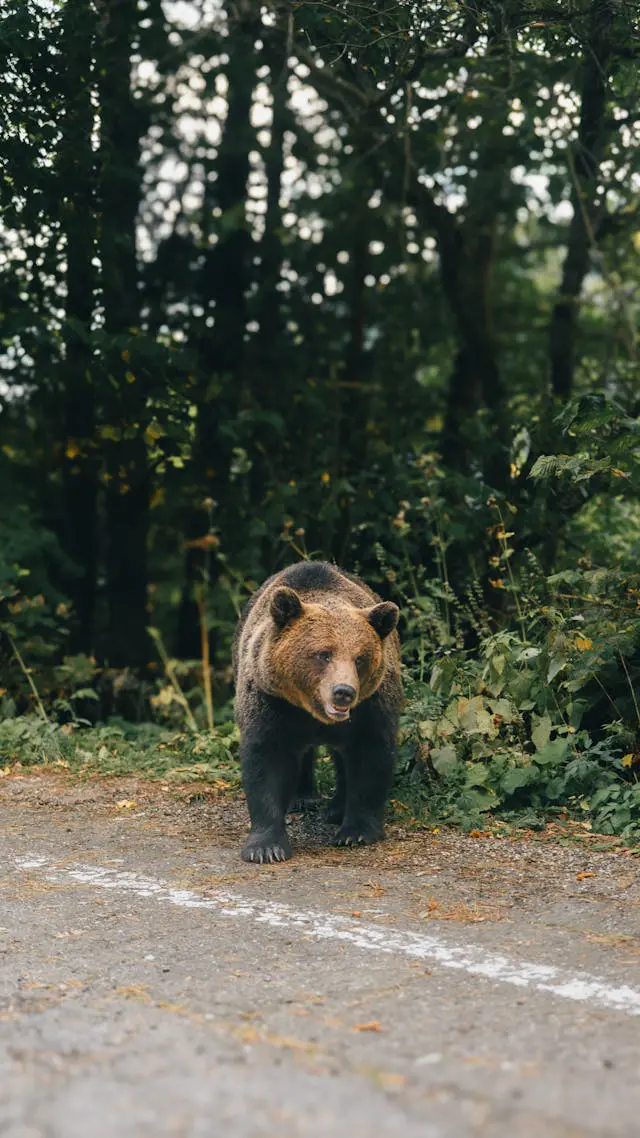
Photo source: Pexels
Respect Isn’t Optional – It’s Survival
Wild animals do not perform for cameras. They do not adjust to human expectations. They do not distinguish between a respectful observer and a threat.
Stepping closer for a photo is not a harmless moment. It is a calculated risk with real consequences – for you, for the animal, and for everyone who comes after.
The next viral wildlife photo could be your last. Is the shot worth your life?
If you’ve ever taken a wildlife photo closer than recommended distance – or know someone who has – share this article. It could save a life.
If we value the beauty of nature, we must value the lives within it first. That means keeping our distance, following the rules, and understanding that some moments are better experienced than photographed.
The most powerful wildlife encounter is the one where everyone walks away safely – including the animal.