Air travel has never been known for comfort – delays, cramped seats, and overpriced snacks are just part of the deal. But what’s really testing people’s patience lately? Other passengers.
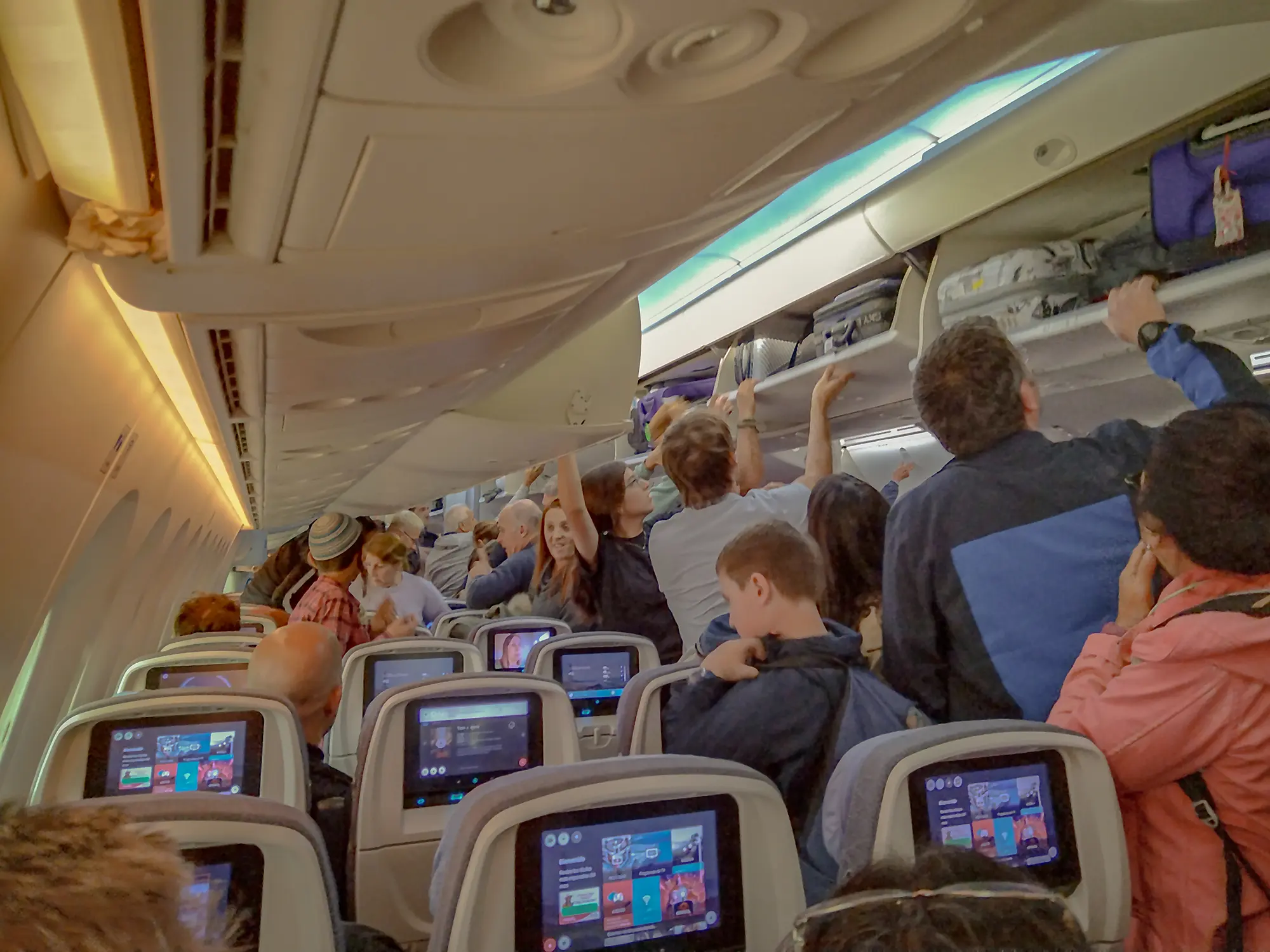
Specifically, the one who springs into the aisle the second the plane’s wheels hit the runway, grabs their bag, and blocks everyone else from moving. The behaviour now has a widely shared nickname: “aisle lice.”
And yes, the behaviour is generating outrage among people.
ID 389038899 ©Danflcreativo | Dreamstime.com
The Term That Took Off
The phrase “aisle lice” surfaced in the news, which explored the growing online backlash against inconsiderate in-flight behaviours. According to the articles, travelers and cabin crew alike have started using “aisle lice” to describe passengers who leap up prematurely after landing, crowd the aisle, and slow down disembarkation for everyone else.
The Guardian notes that the label has joined an expanding family of travel-etiquette insults now circulating online, including “gate lice” (people swarming the boarding gate long before their group is called) and “baggage claim lice” (those who stand directly at the carousel edge, blocking visibility and access for everyone else).
In other words: the travel experience is now being live-reviewed not just by influencers, but by irritated fellow passengers with Wi-Fi and time to spare.
Why This Behaviour Triggers So Much Rage
On the surface, jumping up quickly after landing seems harmless. People are tired. They want to stretch. They want off the plane.
But here’s the problem: It actively makes disembarkation slower for everyone, experts say, because it blocks other passengers.
When early jumpers clog the aisle, passengers who genuinely should be exiting first (those seated ahead, or those with tight connections) get trapped behind a wall of backpacks and elbows. Cabin crew repeatedly ask passengers to stay seated until their row can exit, but etiquette has quietly collapsed in the race for overhead-bin dominance.
This is exactly why “aisle lice” has become such a powerful viral label. It captures a shared irritation. Nearly every frequent flyer has experienced it. And nearly every frequent flyer has fantasized about calling it out.
Social media simply gave that frustration a microphone. I would add here that this behaviour is not observed just now. A few people were doing this in the past, too.
As a note: this is NOT about the people who get up, get their luggage, and descend in an orderly manner, as per the basic procedure. It is about people who block others – and sometimes, as I am including examples below, cause trouble.
What People Actually Think About Aisle Lice
News coverage and online discussion around the aisle lice trend show that reactions are not all the same.
The Guardian article describes widespread irritation among frequent flyers and cabin crew who report that early aisle-jumping disrupts the intended exit flow and increases congestion.
The Independent’s coverage and reader discussions show many frequent travellers arguing that aisle lice behaviour is worse than gate crowding, because it directly slows disembarkation rather than just boarding order.
The Times of India highlights another perspective appearing in comment threads: some passengers admit they stand early simply to stretch stiff legs or because they are in a rush.
I also saw posts on Reddit, where the reactions vary from outrage to understanding – I saw this: “I see no issue with aisle sitters standing up and getting their bag after the chime, if they are able to do so and then waiting in their spot for those in front of them to disembark. They are giving room to middle and window seat passengers and are able to exit faster by being prepared to exit.” in this thread.
The backlash against aisle-jumping behaviour has now moved beyond social media and into official regulation. In May 2025, Turkish aviation authorities introduced fines for passengers who stand up early, crowd the aisles of aircraft, or open overhead bins before it is their row’s turn to deplane.
According to a report by The Washington Post, the Turkish Directorate General of Civil Aviation has approved a directive allowing penalties for passengers who fail to fasten their seatbelts, stand up, block aisles, or access overhead compartments while the plane is still taxiing or before orderly disembarkation begins.
Officials stated that reports of this behaviour had increased significantly and warned that it compromises passenger safety, baggage security, and the exit priority of other travellers. Turkish broadcaster Halk TV reported that fines could reach approximately 2,603 Turkish lira, or about $67.
How Disembarkation Is Actually Designed to Work
Let’s pause for a short reality check – because this is where the outrage becomes even more justified.
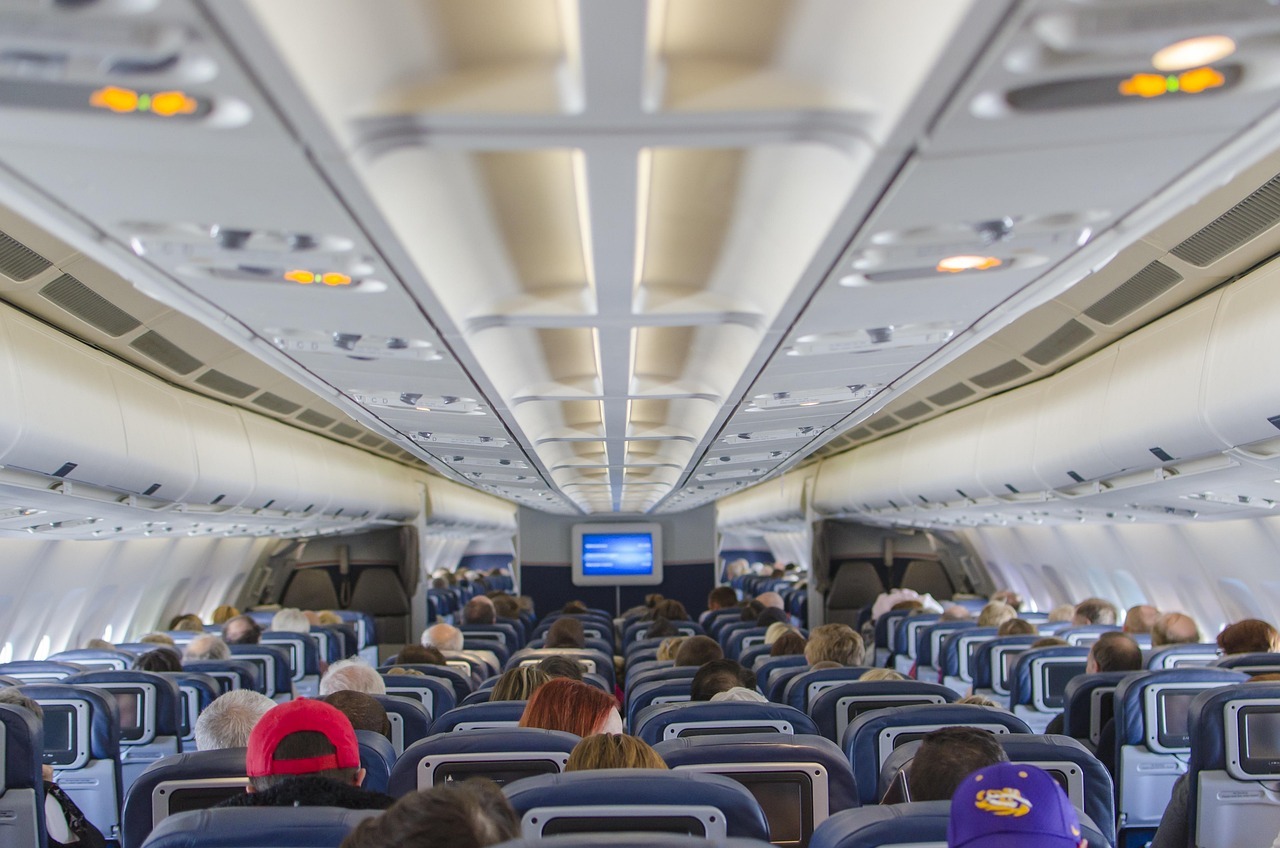
Aircraft are designed to disembark row-by-row from front to back. The aisle width, overhead bin layout, and door positioning are all engineered around a simple queue flow principle: front rows exit first, followed by the next rows, in sequence.
When people seated far back rush forward early:
- They block aisle flow
- They force overhead-bin congestion
- They prevent orderly luggage retrieval
- They slow the average exit time for the entire cabin
Airlines measure turnaround time in minutes. Disorganized passenger flow directly impacts schedule reliability – which is why flight attendants repeatedly announce to “please remain seated until it is your row’s turn.”
In other words: Aisle lice aren’t just annoying. They’re statistically slowing everyone down.
The Golden Age of Bad Travel Behaviour
What makes this moment interesting is that “aisle lice” isn’t happening in isolation. It’s part of a wider trend: the breakdown of shared travel etiquette in the smartphone era. If you’ve been following modern travel behaviour trends, you’ve probably seen similar debates around the worst tourist behaviours that people now openly call out online.
Consider the recent viral debates around:
- “Gate lice” crowding boarding lanes before their group is called
- “Check-in chicken” (the growing trend of delaying online check-in to game seat assignments)”
- The “airport theory” trend of arriving dangerously late to test whether anxiety improves travel efficiency
- The ongoing war over overhead bin space
- The moral panic around reclining seats
Each of these behaviours has spawned reaction videos, stitch-rants, and comment-wars. Travelers are no longer just experiencing inconvenience – they’re broadcasting it in real time.
And that creates a feedback loop:
Bad behaviour → viral complaint → new label → more awareness → more backlash.
“Aisle lice” just happens to be the most perfectly named example yet.
Why Airlines Haven’t Solved It
You might wonder: why don’t airlines simply enforce better aisle discipline?
The reality is complicated:
- Cabin crew are trained to de-escalate, not police
- Confronting seated passengers post-landing increases conflict risk
- Airlines prioritize fast turnover, not etiquette enforcement
- Passenger entitlement has risen sharply post-pandemic
So the result is a strange standoff:
- Flight attendants request cooperation.
- Passengers test boundaries.
- Social media judges the outcome.
Which means the policing has shifted – from staff – to peer pressure online.
Will People Actually Change?
Possibly.
Naming a behaviour is powerful. (The Guardian article talks about how public shaming could stop it, but here, as a note, I would add that you do not know how someone will react if you call them out. I could lead to fights – verbal or even physical confrontations.) Once something has a viral label, social pressure kicks in. No one wants to be called “aisle lice” in a comment section.
But realistically, some travellers will always jump up early. They will always believe their connection is tighter than yours. Their bag is more urgent. Their time is more valuable.
Which means this trend isn’t going away. But it can diminish.
Speaking of in-flight behavior that annoys people, you have to read this story (shares examples of the worst behaviors during a flight + a video).
Oh, and if you want to see something hilarious (until it happens to you!) – read this article. You won’t believe what happened.
In The End…
What happens in the aisle after landing might seem like a small thing – until you’re stuck behind someone blocking the way with a backpack and no sense of order. Whether it’s impatience, entitlement, or just habit, this kind of behaviour is testing the limits of travel etiquette.
The fact that it now has a viral name says a lot: we’re not just noticing it, we’re tired of it. And while not every early stander is trying to be rude, enough people are frustrated that it’s become a symbol of something bigger: how hard it’s become to share space, even for five more minutes.
photo source: Pixabay