
We have a saying where I come from that health is more important than anything else.
And it really can feel that way. When you’re sick, whatever else was worrying you five minutes earlier suddenly moves down the list. You just want to feel better – and, sometimes, you want someone nearby who knows what to do.
I can only imagine how helpless it must feel to become seriously unwell at 30,000 feet, when you can’t simply call your doctor or head to the nearest hospital.
Sometimes, though, you may be lucky enough to have a nurse, doctor or another medical professional among the passengers who is willing to step in. I am forever grateful to anyone who does that for a stranger, especially when there aren’t many other options.
That’s what one nurse says happened on a recent American Airlines flight from San Francisco to Miami. An elderly passenger became unresponsive, and the nurse spent much of the remaining flight caring for her.
She was glad she could help. The woman improved, EMS met the plane in Miami, and the nurse had kind words for the flight attendants who worked alongside her.
But after the flight was over, something was still bothering her.
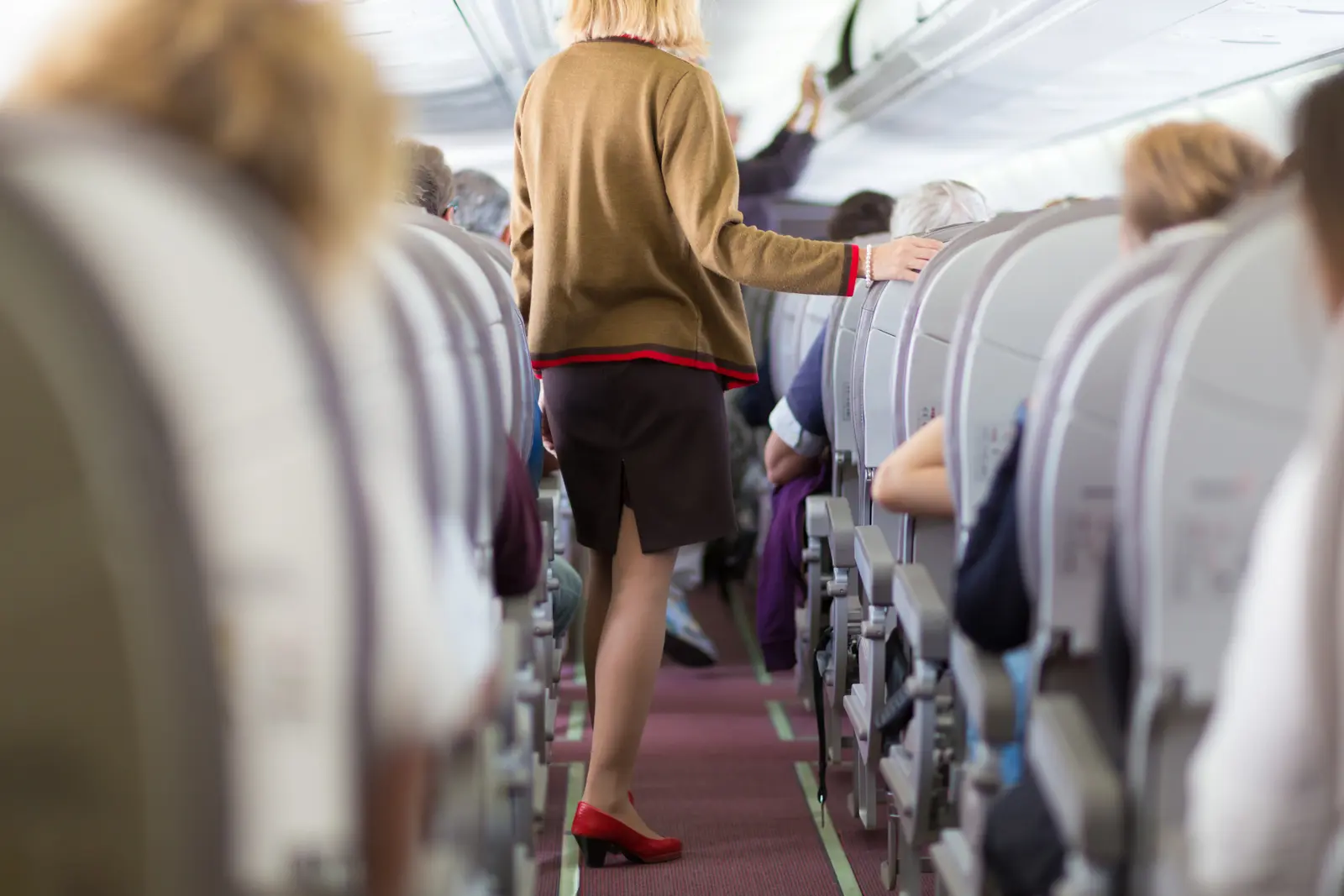
ID 45319360 | Airline Cabin ©Kasto80 | Dreamstime.com
Her post sparked a much larger discussion, with doctors, nurses, and other medical professionals describing what happened after they had stepped forward during in-flight emergencies. Their experiences were very different, including one previous American Airlines case with an interesting detail.
Then the nurse returned with an update of her own.
And someone identifying themselves as an American Airlines flight attendant joined that new discussion and offered a glimpse into what apparently happens to the information about medical volunteers after the aircraft lands.
There is one thing I want to make clear from the beginning: we don’t know what happened internally at American Airlines or what led to the later outcome. The nurse had already contacted the airline before posting on Reddit (as per her post), and other commenters described reactions appearing weeks or even months after similar incidents.
So this isn’t a story about a Reddit post that generated an outcome. It’s about what one nurse says happened on her flight, why she initially felt unappreciated, what other medical professionals revealed about their own experiences – and what happened later.
She Spent The Rest Of The Flight Caring For A Stranger
In her original Reddit post, the nurse said the incident began about an hour and a half before landing.
An elderly woman became unresponsive after fainting and then continued having what the nurse described as several near-fainting episodes.
The nurse said she spent the rest of the flight beside her, sitting, kneeling or standing as necessary while monitoring her vital signs and blood sugar, using cold compresses, helping with oxygen and encouraging food and fluids when appropriate.
“I ended up spending the rest of the flight sitting on the floor next to her, monitoring her vitals and blood sugar.”
She described the three flight attendants as “great” and said they cooperated with her, relayed her findings to a doctor by phone and helped manage the situation while still dealing with everything else happening in the cabin.
The aircraft ultimately continued to Miami rather than diverting.
EMS met the flight at the gate, and according to the nurse, the woman had improved significantly by then. The passenger had an international connection several hours later, but the nurse strongly encouraged her to visit a hospital before getting on another plane.
She said the woman listened.
She Was Happy To Help. So Why Was She Still Upset?
This is where the story became less straightforward. The nurse repeatedly said she hadn’t helped because she expected compensation.
“I genuinely love taking care of people. I wasn’t expecting anything.”
Still, when the incident was over and she got off the plane, she felt surprisingly bothered by the way things had ended.
She said the crew essentially thanked her and that was it.
She’d been interrupted in the middle of her meal when the emergency began. While she was caring for the passenger, the crew cleared away her unfinished meal as the cabin prepared for landing, and by the time she realized how thirsty she was, the flight attendants were busy with arrival duties.
What she wanted, she explained, wasn’t a parade or some huge reward.
“Would it have killed AA to give me a snack? 😂 A bottle of water? Maybe a little ‘Hey, thank you for spending the last hour and a half taking care of another passenger’ recognition?”
She even mentioned bonus miles as an example of a small gesture that might have made her feel that the airline had noticed what she’d done.
But the bottle of water quickly became a major topic in the comments – to the point that the nurse later added an extensive clarification.
The Bottle Of Water Wasn’t Really The Point
Some commenters asked why she hadn’t simply requested a drink. Others questioned why she’d spent so much time sitting or kneeling on the floor.
The nurse responded that during an emergency, her attention had been on the passenger rather than her own hunger or thirst.
“The water was never the point.”
She explained that by the time she noticed how thirsty she was, preparations for landing were already underway and another passenger was having a panic attack. She didn’t want to give the crew another task.
She also explained why she couldn’t simply sit comfortably in the empty seat beside the patient. She and the flight attendants needed access to the woman and to the medical equipment, and she alternated between positions while caring for her.
For her, the lingering feeling was about acknowledgment.
“Wanting your efforts to be seen is human nature. I’m not asking for a medal, just a little acknowledgment.”
She had already contacted American Airlines after the flight. In fact, she said her email specifically praised the flight attendants for how they handled the medical situation.
When she made the Reddit post approximately four weeks later, she said she hadn’t received a response.
Then Doctors And Nurses Started Telling Their Own Stories
This is where the discussion became much more interesting than a single disagreement over whether someone should have been offered a bottle of water.
Other healthcare professionals described what happened when they responded to medical emergencies during air travel.
One healthcare provider said they’d spent hours helping passengers on several overnight flights and usually received little more than a brief thank-you.
A physician said they’d assisted a passenger on an American Airlines flight and later contacted the carrier about the incident and problems they’d encountered with the medical equipment.
“Never heard a word from AA, honestly not that I expected to.”
That physician contrasted the experience with another medical emergency they’d handled on Delta. They said a manager met the aircraft after landing and that several weeks later they received a thank-you letter and SkyMiles.
Another retired nurse remembered receiving a cold soda and a thank-you after helping a passenger on JetBlue – and said she hadn’t expected anything more.
But one comment was especially relevant to the nurse’s question about whether American ever formally recognizes medical volunteers.
Another Medical Volunteer Shared A Previous Letter From American Airlines
A commenter identifying himself as a veteran combat medic said he had intervened during several flights over the years and that letters of appreciation or thanks had usually arrived approximately three months after the event.
He then shared what appeared to be an American Airlines letter from a previous incident.
The letter thanked him for providing medical assistance aboard an American Airlines flight in November 2023.
It included another detail:
“We have added 25,000 bonus miles to your AAdvantage® account.”
The letter also specifically acknowledged that he’d volunteered because someone needed help, not because he expected a reward.
The commenter later said flight attendants had apparently reported his seat number to someone within the company.
That earlier example is important for another reason: it shows why we can’t know how long American Airlines’ internal recognition process normally takes based on the nurse’s case alone.
Then The Nurse Posted An Update
On September 25, she returned to Reddit with a new post: “UPDATE: American Airlines Came Through.”
This time, she had very different news.
“American Airlines reached out and awarded me 25,000 AAdvantage miles in recognition of what happened on my flight.”
She said she genuinely appreciated the gesture and thanked American for acknowledging what she’d done. She also addressed the healthcare workers who had joined her earlier discussion and told their own stories.
“We don’t step up for rewards, but recognizing the time, effort, and personal sacrifice people make to help others still matters.”
I think that’s an important distinction: doing something because you want a reward and appreciating acknowledgment after you’ve helped someone are not the same thing.
And the comments underneath her update added one more interesting piece to the story.
Someone Identifying As An American Airlines Flight Attendant Explained What Happens Next
A commenter who identified themselves as an American Airlines flight attendant said they’d dealt with two serious medical incidents in the previous three weeks and had been fortunate to have doctors onboard both flights.
According to the commenter, flight attendants do document the people who volunteer.
“We file a report, list the passengers that responded as volunteers, and it goes off into the ether and we never hear anything about it ever again.”
The commenter said flight attendants don’t have a mechanism to tell the company that a particular passenger should receive miles or another reward.
This is an anonymous Reddit comment, not an official explanation of American Airlines policy, but it does offer useful context. The cabin crew may record who helped without having any involvement in – or knowledge of – whatever happens after that report is submitted.
And given what flight attendants already have to manage onboard, that distinction between what happens in the cabin and what happens later within the airline is worth making.
We Don’t Know What Prompted The Timing
One commenter directly asked whether American had seen the Reddit post or was responding to the nurse’s earlier email.
As I write this, I haven’t seen an answer from the nurse explaining that.
American Airlines may have already been processing the incident. Her email may have reached the appropriate department. Someone may have seen the Reddit discussion. There may be an entirely different internal process.
We don’t know.
And given that another commenter said he received recognition about three months after helping during a flight, I don’t think there’s a responsible way to claim the Reddit post caused the award.
The facts we do have are enough. The nurse says she helped an elderly passenger during a medical emergency. She contacted American afterward and initially felt disappointed by the lack of acknowledgment. Other medical professionals then shared very different experiences of what airlines had done after they volunteered. American Airlines later contacted her and awarded her 25,000 AAdvantage miles.
For Me, The Most Important Part Of The Story Isn’t The 25,000 Miles
I am glad the nurse ultimately felt her effort was recognized. But what I loved to discover after reading both discussions was how many healthcare professionals described simply getting up and helping when a stranger needed them. They weren’t at work – they were passengers too. Some were eating. Some were trying to sleep. Some had already had long days of their own.
Yet when someone needed medical help, they stepped forward.
I hope I never experience a serious health problem on a plane. I don’t think anyone wants to find out what that feels like.
But if it ever happens to me or to someone I love, I hope there is a nurse, doctor, paramedic or another qualified passenger nearby who is willing to help.
And to every medical professional who has already done exactly that for a stranger thousands of feet above the ground: thank you.
More amazing articles for you:
A local's guide to Cusco, Peru: discover the best things to do in Cusco
Famous City or Destination Dupe? Read This Before You Book the Trip Everyone Says Is Smarter
Complete travel guide to Kailua, HI
Travel tips: How to choose the best time to travel anywhere using Rove.me
Maui travel guide: 15 amazing Maui attractions you simply have to see, accommodation, tips, and more
The best Seville travel guide: what to do in Seville, Spain
Offer travel experiences as a gift
A guide to Poznan, Poland

Violeta-Loredana Pascal is a communications expert, business mentor, and the founder of Earth’s Attractions and PRwave INTERNATIONAL. A pioneer in the Romanian digital PR landscape since 2005, she holds a degree in Communication and Social Sciences from SNSPA Bucharest. Violeta is a senior trainer at AcademiadeAfaceri.ro, where she leverages over 20 years of experience to teach professional courses in PR strategy and workplace productivity. By blending high-level business consulting with a passion for holistic travel and wellness, she empowers solopreneurs to overcome procrastination, build profitable brands, and design a life of purposeful adventure.