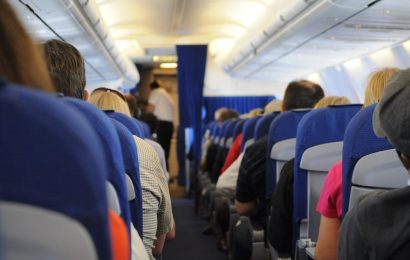
Many of us love flying. You settle into your seat, thinking about the trip ahead. Maybe you’re imagining wandering through a new city, relaxing on a sunny beach, or finally closing that important business deal.
For a moment, everything feels exciting.
And then it happens.
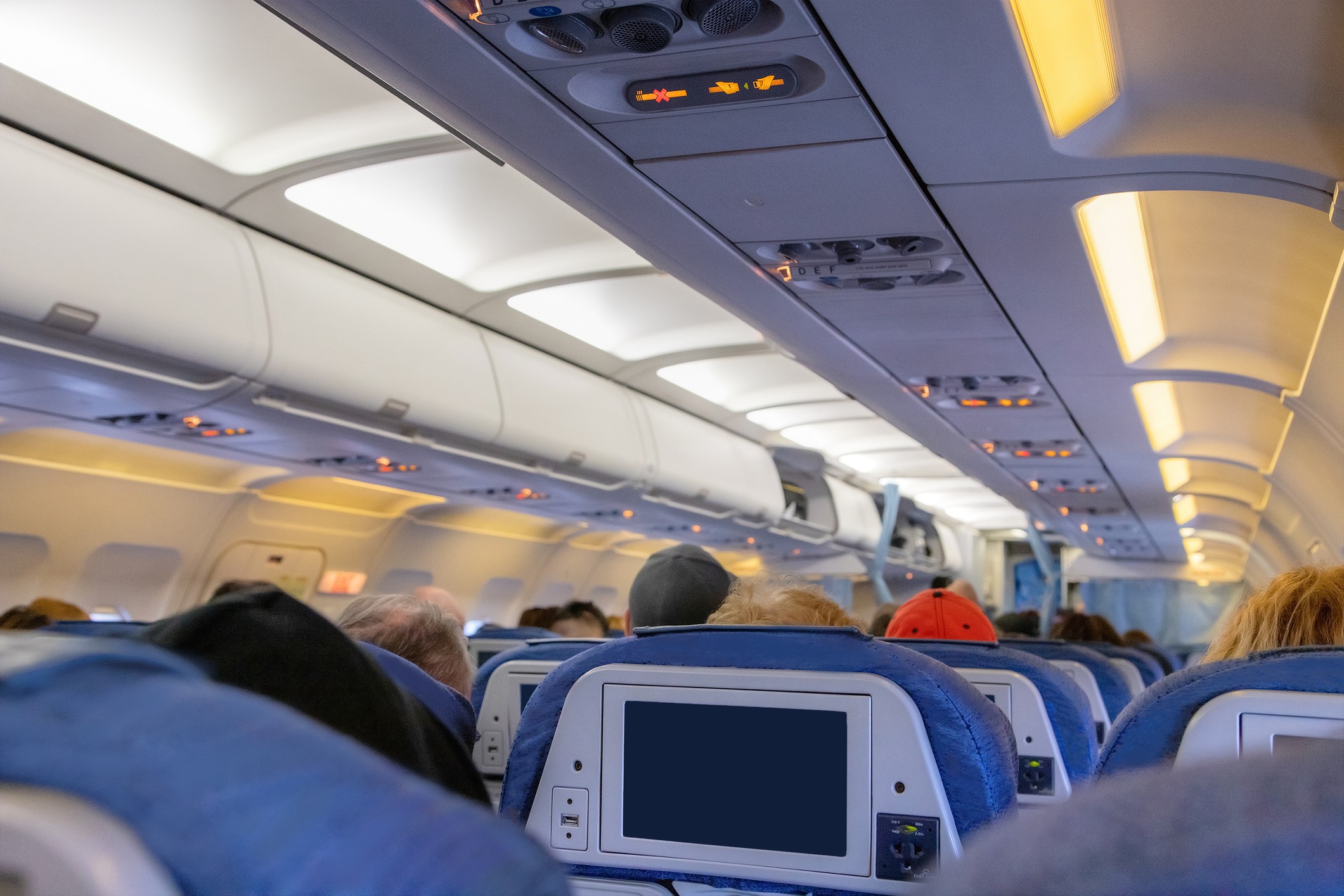
ID 168770842 | Airplane ©Ronniechua | Dreamstime.com
A passenger nearby does something that instantly changes the atmosphere in the cabin. Suddenly, the peaceful flight becomes… less peaceful.
If you’ve flown in the past few years, chances are you’ve experienced something similar. One particular habit has become so common that many travelers say it’s one of the most irritating things that can happen during a flight.
Now, at least one airline has decided it’s time to do something about it. And yes, passengers who do this could now face serious consequences.
United Airlines has updated its passenger rules, and one very specific behavior is now officially addressed: watching or listening to content without headphones.
According to the airline’s contract, the document that outlines the rules passengers agree to when purchasing a ticket, travelers who refuse to use headphones may face consequences.
The updated policy includes the following clause (Rule 21, item 22):
“Rule 21. UA shall have the right to refuse transport on a permanent or temporary basis or shall have the right to remove from the aircraft at any point, any Passenger for the following reasons: (…)
22. Passengers who fail to use headphones while listening to audio or video content.”
This update moves headphone usage out of the realm of “polite suggestion” and into the realm of contractual obligation. By including this in the Contract of Carriage, United has empowered flight attendants to take formal action – ranging from a verbal request to turn off the sound to, in extreme cases of refusal, the denial of transport or a permanent ban from the airline.
For many travelers, myself included, this change addresses a growing frustration during flights: passengers playing music, videos, or social media clips out loud in the cabin.
Many Travelers Say the Problem Has Been Growing
If you spend time on travel forums or social media, it quickly becomes clear that the issue has been bothering many frequent flyers.
A discussion on Reddit captured the frustration that some passengers say they have been experiencing more often in recent years.
One traveler wrote:
“What the crap is with the epidemic of people listening to stuff out loud on planes? I travel about a dozen times a year and I had never noticed this before the last couple of years.
Sometimes it’s kids sitting next to parents who let them listen to their iPads out loud. But even worse it’s usually a 40+ adult. I’m 37. I do not believe that in 3 years I’m going to somehow think it’s socially acceptable.”
The post resonated with many readers and generated a large number of responses.
The original poster later added:
“EDIT: I made this post as we were taking off and just got off my flight to resounding commiseration from literally a 1000+ people. Nice to know it’s not all in my head.”
Many reported that they frequently alert flight attendants to the issue, noting that in most cases, the offending passenger does comply once asked, but the fact that the request needs to be made at all remains a point of intense irritation.
I feel the same way: you can listen to whatever you want, but be mindful of others. Play at a reasonable volume (even on headphones, as they are not completely insulated, noise-wise, for others).
Other people might have a headache, or other preferences, or have flying anxiety. Or they might have real problems and not be in the mood for music, films, or social media posts. Whatever the case, an airplane cabin is a small, shared space – trying to not bother others, to keep everything as calm as possible, will help everyone.
When Things Escalate Mid-Air
Of course, not every situation resolves so easily.
In the same discussion thread, one commenter described an experience that illustrates how uncomfortable these moments can become.
“Last year I had to ask a grown adult woman to put in headphones because she was scrolling TikTok for an hour at full volume. People are careless and selfish.”
In some cases, these situations can escalate beyond awkward conversations.
There have been incidents where passengers playing loud audio on speakers refused to turn the volume down when asked. What begins as a simple request for quiet can quickly turn into a tense exchange between travelers, sometimes drawing the attention of crew members and disrupting the cabin atmosphere.
In one widely circulated video, a passenger playing music loudly during a flight refused to lower the volume when another traveler asked politely, leading to a heated confrontation mid-air.
Other Airlines Also Encourage Headphones
While United’s contract language drew attention, it’s worth noting that other airlines already encourage passengers to use headphones – even if the rule is not always strictly enforced.
Delta Air Lines, for example, emphasizes the importance of using headphones in its onboard entertainment guidelines.
As the airline notes on its website:
“For the comfort of everyone around you, please use earbuds or headphones with any personal electronic device during your flight.”
Southwest Airlines goes even further in its own presentation. The airline states:
“We do not have seatback screens or devices for rent and do not sell headphones onboard. Headphones are required whenever a Passenger is listening to any audio.”
In other words, the expectation has existed for some time, but enforcement has varied across airlines.
Maybe the new change of United Airlines will determine other airlines – not only in the US, but worldwide! – to make the same changes, so that flying becomes a bit more comfortable, less stressful/annoying.
The Growing Debate Around Flying Etiquette
Rules about headphones are just one example of a broader conversation about behavior on airplanes.
Flying etiquette has increasingly become a topic of viral debates online, as travelers share stories about unusual or inconsiderate behavior during flights.
In fact, just yesterday I wrote about a truly bizarre situation where a man decided to run a 5K inside an airplane bathroom. Yes – he climbed – FOR A HOUR – on the toileat seat and ran inside the lavatory. It serves as a stark reminder that some passengers seem to forget they are sharing a confined metal tube with hundreds of others.
In another example, Tampa International Airport recently found itself at the center of a social media storm after posting about airport pajama etiquette. What started as a lighthearted post quickly turned into a heated discussion about whether travelers should prioritize comfort or appearance when flying.
Another long-running argument involves reclining seats. Some passengers view reclining as a basic right built into the seat design, while others see it as an inconsiderate move that intrudes into the already limited space of the passenger behind them.
Then there are the stranger viral moments.
One passenger made headlines by attempting to cook pasta at their seat, a stunt performed almost entirely for internet clout that left fellow travelers baffled and airline staff concerned about safety.
We’ve even seen questionable TikTok “sleep hacks” involving passengers tying themselves to their seats with makeshift harnesses, proving that the quest for viral content is making the modern flying experience increasingly strange.
These moments may seem harmless or humorous online, but they also reflect a larger tension in modern air travel: balancing personal comfort, viral content, and consideration for the hundreds of other people sharing the cabin.
And with airlines now starting to update their policies, the message seems increasingly clear: When you’re flying in a metal tube with hundreds of other passengers, basic courtesy still matters.
Sources: The video I mentioned in the article.
More amazing articles for you:
Things to Know Before Visiting Vietnam
Fantastic Free Things to Do in Houston
15 Iconic Buildings and Landmarks in the USA (And Why They Matter)
Where to Travel in Asia This September: 10 Stunning, Safe And Unique Places to Visit
The best National Parks in the UK
Spain’s Outdoor Smoking Ban 2025: What Tourists Need to Know
Safe flights: Preflight inspection checklist
Townsizing Travel: The Viral Trend That Could Actually Be Good for You (And How to Do It)

Violeta-Loredana Pascal is a communications expert, business mentor, and the founder of Earth’s Attractions and PRwave INTERNATIONAL. A pioneer in the Romanian digital PR landscape since 2005, she holds a degree in Communication and Social Sciences from SNSPA Bucharest. Violeta is a senior trainer at AcademiadeAfaceri.ro, where she leverages over 20 years of experience to teach professional courses in PR strategy and workplace productivity. By blending high-level business consulting with a passion for holistic travel and wellness, she empowers solopreneurs to overcome procrastination, build profitable brands, and design a life of purposeful adventure.