
When you see someone behaving badly during a trip, do you say something, ask an employee to intervene or simply hope the problem will go away?
I think we have all been in that situation. For instance, I once saw people on a beach listening to extremely loud music. It wasn’t music I liked, and judging by the looks around us, many other people weren’t happy either. Yet no one complained.
Reacting can be difficult, especially when you don’t know the people involved or how they might respond. A complaint about noise, a queue, a hotel room or an overhead bin can turn into a much larger confrontation. When it happens on an airplane, a cruise ship, at a hotel or on an unfamiliar beach, there is also the risk that the situation could escalate or even become physical.
Recent cases involving air rage show how one person’s actions can disrupt a trip for everyone. It isn’t surprising that many people decide saying nothing is safer than discovering how the other person might react.
But not everyone walks away.
I found several cases in which people had finally become fed up with inconsiderate tourists, and some of their responses went much further than a complaint to reception. A few were applauded by thousands online, while others created a completely new problem. In at least one case, a person who had nothing to do with the original behavior ended up dealing with the consequences.
There were also situations in which employees, airlines, cruise companies and local residents decided they had had enough. The incidents happened in different parts of the world, but many began with familiar tourist behaviors that people regularly complain about.
What happened next is why these nine stories received so much attention.
1. Sunbed Hogging Revenge: One Tourist Decided He’d Had Enough
ID 412543794 ©Alexander Shapovalov | Dreamstime.com
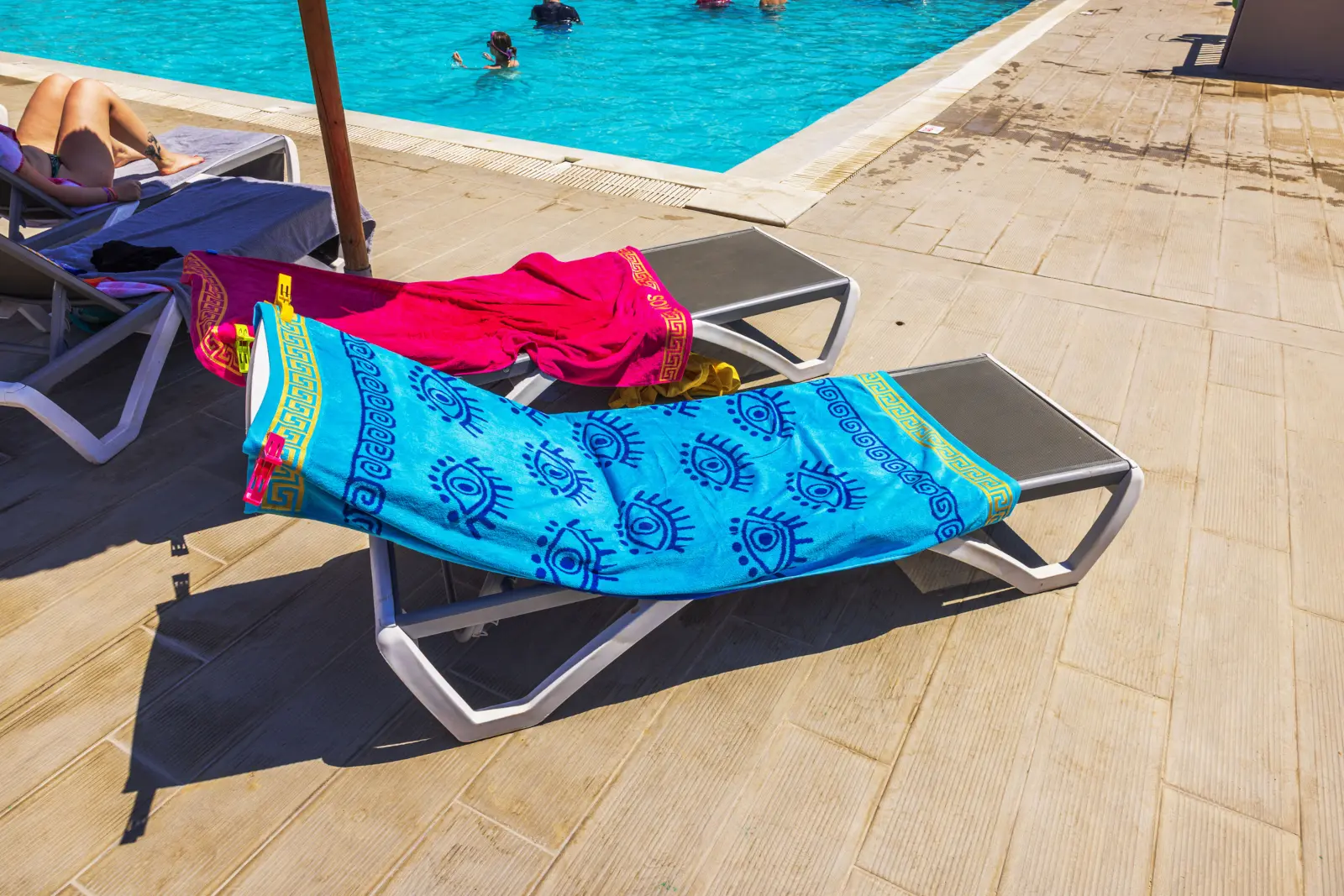
Sunbed hogging has annoyed hotel guests for years. People wake up early, place towels and personal belongings on the best pool loungers, and then disappear for breakfast, return to their rooms or spend several hours somewhere else.
Other guests arrive at the pool and find rows of empty chairs that appear to be unavailable, even though no one is using them. Some people ask hotel employees to remove the towels, while others simply give up and look for another place to sit.
A British holidaymaker staying at a hotel in Majorca chose a very different response.
According to a report published by The Sun, the 31-year-old claimed that he had watched the same guests reserve loungers early in the morning and then leave the pool area for hours.
He said he spent several days identifying the people he considered repeat offenders. Once he believed he knew who they were, he filmed himself putting itching powder on the towels they had left behind.
In one of the reported incidents, a couple allegedly reserved the same pool chairs they had used the previous day. The man did not return until approximately 1:30 p.m.
According to the tourist who filmed the revenge, the man began scratching after sitting on the lounger and later jumped into the pool. The videos reportedly received a combined 864,000 views and more than 13,000 likes.
Many viewers enjoyed seeing someone retaliate against guests who had reserved sunbeds they weren’t using. Other people said that moving the towels would have been understandable, but putting a substance on someone else’s belongings was completely different.
I understand why sunbed hogging makes people angry. A hotel has a limited number of loungers, and one towel shouldn’t stop another guest from using an empty chair for half the day.
Still, itching powder isn’t a harmless solution. The person using the towel could have sensitive skin, an allergy or another condition. There is also no guarantee that the person who eventually touches it is the person who originally reserved the lounger. A child or another family member could use the towel instead.
Calpe, on Spain’s Costa Blanca, has introduced a far less risky way of dealing with the same behavior. Under the local beach towel rule, chairs, loungers, parasols and other beach equipment may be removed if they are placed too early or abandoned for several hours.
Municipal workers or the Local Police handle the equipment, so another irritated visitor doesn’t have to decide what should happen to someone else’s possessions. It may not attract hundreds of thousands of video views, but it also doesn’t expose anyone to an unknown substance.
Would you move an abandoned towel, report it to an employee or leave it exactly where it was?
2. The Noise Continued Past Midnight – Then One Father Woke Up at 5 A.M.
ID 259333782 ©Info634860 | Dreamstime.com
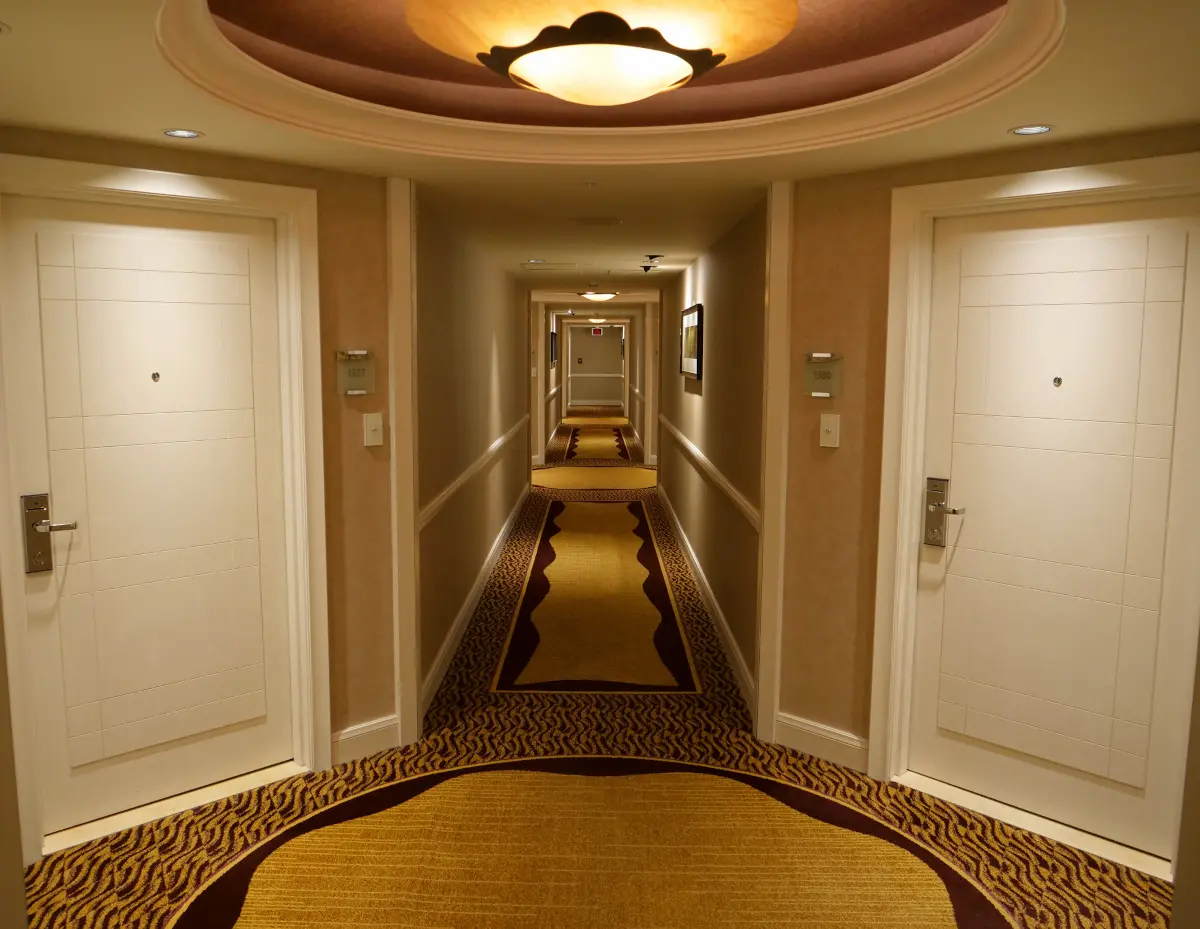
Noise from another hotel room can be difficult to escape. You can’t move farther away as you might on a beach, and knocking on the wall can easily make the situation worse. Calling reception may help, but it doesn’t always bring the noise to an immediate end.
In a Reddit post, a father said his family was staying beneath a hotel room occupied by six people. According to his account, the guests above spent hours banging, moving around and slamming objects, with the noise continuing until well after midnight.
The father woke at approximately 5 a.m. By that point, he had decided that the people upstairs shouldn’t be allowed to continue sleeping peacefully after keeping his family awake.
He went to a hotel telephone near the elevators, called the room above and pretended to be an employee making a wake-up call. He told the sleepy person who answered that the family had received complimentary breakfast and admission to the hotel water park.
There was only one condition. They supposedly had to claim the offer at reception within 30 minutes.
The man then waited in the lobby to see whether they would believe him. Approximately 20 minutes later, he claimed the groggy family arrived at the front desk expecting the promised breakfast and water-park access.
The employee working there had no idea what they were talking about. The conversation reportedly became heated before the family realized that the call had been a prank.
It is easy to understand why a sleep-deprived hotel guest might enjoy this story. The noisy neighbors were dragged out of bed early and briefly experienced the disruption they had caused the night before.
The problem was that the person facing their anger at reception hadn’t created the noise and hadn’t made the telephone call. An employee who had nothing to do with the dispute was suddenly expected to explain why an offer that didn’t exist was no longer available.
Several readers criticized the prank for involving an innocent member of staff. One commenter who identified themselves as a hotel worker said the guest should have continued reporting the noise instead of creating another confrontation for the person working overnight.
Even the man who posted the story later admitted that the effect on the employee had been greater than he anticipated. His plan reached the intended guests, but someone else had to deal with their reaction.
Hotel employees already encounter many other forms of inconsiderate behavior. In a separate incident, staff discovered how much breakfast food guests had allegedly prepared to take to their room before checking out. That situation eventually appeared on the evening news.
3. The Party Next Door Didn’t Stop – So One Guest Left Something Behind
The fake breakfast wasn’t the only revenge arranged by someone who had lost sleep in a hotel. In another Reddit post, a man said his hotel room had a connecting door to the room next door.
A group arrived in the adjoining room and began having a party. At approximately 10 p.m., the man knocked on their door and asked them to keep the noise down because he needed to work the following morning.
According to his account, the guests denied being particularly loud. They continued making noise, so he contacted the front desk and waited to see whether the complaint would help.
He then claimed he heard the telephone ring in the adjoining room, followed by one of the occupants saying that if he thought they were loud already, he should wait until later. The man believed the group became even noisier after the warning.
He eventually fell asleep at approximately 1 a.m. and woke at 5:30 to prepare for work. Before leaving, however, he arranged something beside the connecting door.
He plugged in the hotel alarm clock, placed its speaker against the door and tuned the radio between stations. He then turned the volume to its highest level and set the alarm to activate five minutes after he left.
Unlike the father behind the fake-breakfast call, he didn’t remain in the hotel to watch the reaction. He could only imagine the people next door waking to loud static and being unable to enter his room to turn it off.
Many Reddit commenters shared stories of similar hotel situations and even similar revenge methods. However, the radio wouldn’t necessarily have disturbed only the intended room. Other hotel guests, including people who had been completely silent all night, could have heard it too.
There is also the question of what a guest is expected to do when reception has already been contacted and the noise continues. Should the hotel move the person who needs to sleep, or should it take stronger action against the room causing the disturbance?
The prank didn’t involve an unknown substance or a face-to-face argument. It did, however, answer excessive noise with even more noise.
4. Passengers Kept Pushing Forward After Landing – One Man Refused to Move
Few travel-etiquette debates produce as many arguments as what passengers should do immediately after a plane lands. People disagree about when they should stand, when they should retrieve their bags and whether every row should wait for the rows ahead to leave first.
I don’t think standing up is automatically rude. Someone may need to stretch after sitting for several hours. Other passengers have painful knees or backs, want to remove their belongings from the overhead bins or are worried about a short connection.
The more irritating behaviors are blocking the aisle, pushing forward and cutting in front of people in the rows ahead. Passengers who crowd the aisle and attempt to move toward the front have even acquired the viral nickname aisle lice.
Of course, airplane etiquette disagreements can begin long before anyone starts deboarding. Even one passenger’s garlic chicken started an argument about strong food smells, personal comfort and what people should be allowed to eat in a shared cabin.
In an account posted on Reddit, one traveler said several passengers kept moving forward whenever they saw a gap during deplaning.
As the line approached his row, the traveler stood in the aisle and used his body to prevent the people behind him from passing. He didn’t argue with them, but he also didn’t make it easy for them to continue.
Instead, he asked the other passengers in his row whether they needed help retrieving their luggage. He removed their bags from the overhead bins one by one, waited for each person to leave, and then turned to the row across the aisle and helped those passengers too.
The entire process reportedly took approximately 45 seconds. During that time, both rows were able to leave before the people waiting behind them could move forward.
Many readers found the response satisfying because no one was harmed and the passenger helped other people. Rather than starting a direct confrontation, he simply made sure that the rows ahead were given time to exit.
Critics pointed out that someone rushing forward could have a tight connection, a medical issue or another reason that isn’t obvious to the people around them. There is, however, a difference between walking quickly through an empty aisle and physically pushing past passengers who are already trying to leave their seats.
The traveler believed he had restored normal deboarding etiquette. Other people disliked the idea of one passenger appointing himself responsible for enforcing it.
5. A Man Tried to Get Ahead of a Family – Then the People Behind Him Spoke Up
Queue disputes can happen at almost any stage of a flight. In January 2026, a United Airlines passenger sparked another argument, this time while people were still boarding.
The man, who was believed to hold the airline’s invitation-only Global Services status, was filmed standing behind a family of four while their boarding passes and passports were being checked. He appeared visibly irritated and repeatedly asked the gate agent to let him go ahead.
The gate agent continued assisting the family, while the father turned around and tried to explain that general boarding had already been called. The man continued arguing about who should have been allowed to board first.
Then people farther back in the queue became involved.
The Independent reported that one passenger asked the man what was wrong with him. The woman recording the encounter told him to calm down, but he continued insisting that there was an established boarding order.
The airport was not identified in the report. The incident reportedly took place on January 2, and the video was posted online two days later.
An etiquette expert interviewed by the publication said airline status didn’t give a passenger permission to behave rudely or act as though normal courtesy no longer applied.
The people in the queue didn’t touch the man, interfere with his belongings or invent a punishment. They challenged him publicly, which may have stopped him from continuing to pressure the family or the gate agent.
At the same time, several passengers joining an already tense exchange could have made it even more heated. Would you have said something from the queue, or would you have stayed out of it?
6. Barcelona Residents Took Their Tourism Protest Straight to Visitors
The previous responses came from hotel guests or airline passengers who were reacting to specific people. In Barcelona, residents were protesting against something much broader: the effect of mass tourism on their city.
On July 6, 2024, thousands of people joined an anti-tourism demonstration through central Barcelona. Some carried brightly colored water pistols and directed them at people they identified as foreign tourists, including visitors sitting at outdoor restaurant tables.
Other demonstrators placed red tape around hotel and restaurant entrances while carrying signs calling for a reduction in tourism. The pictures and videos quickly spread online, and the water pistols became the most widely discussed part of the entire protest.
Reuters reported that fewer than a dozen demonstrators were seen spraying tourists in its video footage. Spain’s tourism minister later condemned the behavior and said it did not represent the country’s culture of hospitality.
CBS News reported that diners changed tables to escape the water while some restaurants were symbolically taped off.
The protest was connected to concerns about housing costs, vacation rentals, overcrowding and the effect of large visitor numbers on residential neighborhoods. Those issues directly affect people who live in popular areas throughout the year rather than spending only a few days there.
However, the people who got wet were individual visitors eating, walking or sightseeing. They weren’t the landlords, policymakers or tourism companies whose decisions the protesters wanted to change.
That is why the water-pistol tactic divided people. Supporters considered it a relatively harmless action that attracted international attention to local concerns. Critics saw individual tourists being blamed for decisions they hadn’t made.
Barcelona isn’t the only place where local life and visitor expectations have collided. In Serina, Italy, complaints about cowbells led to a special ordinance and a very public defense of a long-standing local tradition.
In Greece, a viral video of a Paros waiter carrying wine through the sea started another argument about working conditions, tourist expectations and how far a business should go to satisfy paying customers.
Was spraying visitors a minor inconvenience that delivered an effective message, or did the demonstrators direct their anger at the wrong people?
7. A Passenger Climbed Where No Passenger Should – Then a Second Video Appeared
Some inconsiderate travel behavior begins with a complaint or an attempt to get ahead of other people. This case – and I wrote a detailed article here – appears to have started as a joke intended for social media.
In April 2026, a passenger on a Ryanair aircraft traveling from Malta to Naples filmed himself climbing into an overhead luggage compartment. The video showed him standing on a seat, pulling himself into the bin and shouting while other people reacted around him.
The TikTok caption presented the stunt as a way to avoid paying for the return trip to Naples, although it was unclear whether the passenger had seriously expected to remain hidden. Considering the size of the compartment and the number of people watching, that would have been difficult.
The first recording wasn’t the end of the story. A second video showed the same passenger inside the airport terminal, visibly upset after missing the flight. He screamed and pushed over part of a queue barrier while someone continued filming.
NDTV reported, citing aviation reporting, that cabin crew instructed the passenger to leave the overhead compartment and removed him from the aircraft before departure.
Ryanair had not publicly confirmed every individual detail of the incident when the reports appeared. The company had, however, recently reiterated its zero-tolerance policy toward disruptive passenger behavior and warned that consequences can include removal, travel bans and financial claims.
Overhead bins are designed for approved cabin baggage, not people. Climbing inside could damage the compartment, delay boarding or create a safety concern for passengers sitting below it. It also belongs on any list of things you should not do on a plane, regardless of how amusing the video may appear.
The airline’s intervention appears to have ended the stunt. The passenger remained inside the airport while the aircraft continued to Naples without him.
8. Giant Beach Setups Kept Appearing – Then One City Drew the Line
Visitors aren’t the only people becoming frustrated with behavior in shared travel spaces. Cities and beach destinations are also introducing restrictions when certain vacation habits begin affecting safety, space and everyone else using the area.
Large tents, canopies and cabanas have become increasingly common on public beaches. They provide valuable shade for children, older visitors and people who can’t spend hours in direct sunlight, so it is easy to understand why families bring them.
The disagreement begins when very large structures occupy a substantial section of sand, block the view of the water or are placed directly in front of other beachgoers. At crowded beaches and narrow coves, they can also interfere with a lifeguard’s view of swimmers.
The debate isn’t limited to California. Other destinations have introduced stricter beach controls, including expanded sunbed restrictions on environmentally sensitive beaches in Greece.
Laguna Beach in California introduced new restrictions in May 2026. The city’s official beach-rules page states that only umbrellas are permitted across most city beaches.
Larger canopies and easy-up structures are allowed only in designated zones at Main Beach and Aliso Beach.
The restriction wasn’t introduced only because some people dislike having their view blocked. Officials said large structures can interfere with lifeguards’ line of sight, which becomes a safety issue when they need to watch the ocean.
ABC7 reported before the rule took effect that violations could result in fines of up to $500.
This is part of a wider movement in which destinations use regulations and tourist fines to control behavior that blocks public spaces, affects residents or creates safety concerns.
Still, not every family will welcome the limits. People who depend on substantial shade may find the designated areas inconvenient, particularly if they are far from the part of the beach they wanted to use.
At the same time, one family’s shelter shouldn’t block the view, available space or safety of everyone around it.
9. Carnival’s Warning Shows How Far Cruise Consequences Can Go
On a cruise ship, passengers share restaurants, pools, corridors, entertainment areas and queues with thousands of other people. Unlike someone on a beach who can simply walk farther down the sand, a cruise guest may spend several days encountering the same passengers and the same behavior.
Carnival Cruise Line has published what can happen when that behavior begins affecting other guests or crew members. Its official code of conduct asks passengers to supervise children, keep hallway noise to a minimum, respect queues and show consideration toward other people using the ship’s shared spaces.
The company states that disruptive behavior affecting the comfort, enjoyment, safety or well-being of passengers or crew will not be tolerated. Possible consequences include a $500 charge, confinement to a stateroom and removal from the ship.
A disruptive passenger may also be disembarked at their own expense and banned from sailing with the cruise line again. They could also be held responsible for additional expenses connected with being detained or removed.
The accompanying cruise ticket contract says guests agree to follow the code throughout their trip and describes the $500 charge connected with violations of the company’s zero-tolerance policy or conduct rules.
The rules cover disruptive conduct broadly, so this doesn’t mean that every passenger who steps ahead in a buffet queue will immediately receive a $500 charge. The response depends on what happened, whether the person followed crew instructions and how seriously the behavior affected other people.
Recent incidents also show why cruise companies continue to repeat these rules. In one case, a passenger used a dining fork to scratch her bare foot inside a cruise-ship restaurant, and another guest who saw what she was doing decided to intervene.
The fork incident later prompted a public response from Carnival, but only after the video spread and viewers demanded to know what the cruise line would do.
Cruise companies aren’t alone in imposing serious consequences. Airlines have also issued passenger bans when someone refuses instructions or crosses important safety rules.
Of course, a published code helps only when it is enforced. It doesn’t help a guest who can’t sleep because of hallway noise if nobody responds when they complain.
Why People Cannot Stop Reading Stories About Tourists Behaving Badly
Stories about rude tourist behavior receive so much attention because many people can imagine themselves in the same situation. Almost everyone has been near a loudspeaker on a beach, an empty lounger reserved for hours, a hotel room that never seems to become silent or a passenger who believes the normal queue does not apply to them.
When someone finally reacts, people want to know exactly what they did and whether it worked. Some readers support the response immediately, while others begin listing everything that could have gone wrong.
Other viral travel stories begin with fear or disbelief rather than bad etiquette. Millions watched after a woman taped her valuables to her body in Paris because she was concerned about pickpockets.
In Italy, visitors paid to enter what they had been told was a Roman amphitheater before the extraordinary story behind the supposed attraction became public.
The situations are very different, but they create a similar reaction. People imagine being there and immediately begin deciding what they would have done.
Conclusion: When Fighting Back Creates a Second Problem
Several of the responses above are easy to understand, especially when the people involved had already complained or asked politely. Understanding someone’s frustration, however, doesn’t automatically justify everything they did next.
The two hotel pranks were complicated. The fake-breakfast call involved an innocent employee, while the radio blasting static may have disturbed guests in more than one room. The people responsible for the original noise weren’t necessarily the only ones affected.
The itching-powder revenge carried the greatest personal risk. A substance placed on someone’s towel could reach the wrong person or cause a more serious reaction than expected.
The Barcelona protest raised another question. The water pistols drew worldwide attention to residents’ concerns, but the people being sprayed were individual visitors rather than the companies, property owners or authorities shaping the city’s tourism model.
In the Ryanair overhead-bin case, employees appear to have handled the situation directly by removing the passenger before departure. No other passenger had to invent a punishment, and the flight continued without him.
Watching someone finally react can feel satisfying when you are reading the story later. Being present when the disagreement turns into a larger confrontation would probably feel very different.
What would you do: speak up, ask an employee to intervene, ignore the behavior or find your own way to fight back?
More amazing articles for you:
Tired of Being Talked Over? These Subtle Cues Make People Interrupt You - Here’s How to Stop It With...
From the Street, It Looks Like a Boring Facade — Inside, It Turns Into One of the Most Stunning Plac...
This Budapest Cat Café Will Steal Your Heart - Read This Before You Go
The Exact Moment People Stop Taking You Seriously - And Why Most People Have No Idea They’re Doing I...
Extreme Heat Safety Isn’t Just “Drink More Water” - Catch These Warning Signs Before the Heat Makes ...
This Munich Palace Is More Breathtaking Inside Than Outside - But You’d Never Guess From the Street
Dinosaurs, Vikings, Submarines & More: 30 NON-Art European Museums You Can Visit Online for FREE
Is It Too Late? 8 Fragile Wonders You Need to Visit Now

Violeta-Loredana Pascal is a communications expert, business mentor, and the founder of Earth’s Attractions and PRwave INTERNATIONAL. A pioneer in the Romanian digital PR landscape since 2005, she holds a degree in Communication and Social Sciences from SNSPA Bucharest. Violeta is a senior trainer at AcademiadeAfaceri.ro, where she leverages over 20 years of experience to teach professional courses in PR strategy and workplace productivity. By blending high-level business consulting with a passion for holistic travel and wellness, she empowers solopreneurs to overcome procrastination, build profitable brands, and design a life of purposeful adventure.