Most people have a natural, healthy respect for the sheer complexity of aviation. We follow the lines, present our passports, and wait for that final nod from the gate agent that allows us to step into the sky. We understand that an airplane is a pressurized tube moving at hundreds of miles per hour, and because of that, there are rules.
But lately, something has started to shift. Airports around the world are seeing behavior that goes beyond simple travel stress or poor judgment – something more deliberate, more difficult to explain.
Incidents that would have once been unthinkable are now happening often enough to form a pattern, raising an uncomfortable question: what happens when a traveler doesn’t just make a mistake, but repeatedly chooses to ignore the system entirely?
More importantly, where is the respect for the crew responsible for safety, and for the hundreds of passengers whose journeys – and sometimes security – are disrupted by a single person’s decision to push past every boundary?
What happened next shows just how far this kind of behavior can go – and why airlines are no longer willing to tolerate it.
A 30-Year Exile from the Clouds
The consequences of pushing the system too far have reached a new, historic peak. One man recently learned that his actions at Amsterdam’s Schiphol Airport have earned him a ban that will last 30 years.
This isn’t just a slap on the wrist; it is a three-decade-long exile from the skies. While most people are content to wait for their boarding group, this individual chose to bypass the system entirely, even though he did not have a valid ticket for that flight.
In a move that stunned security and ground staff, he attempted to illegally force his way onto a KLM flight. He didn’t just linger near the gate; he jumped over a glass barrier at the gate, bypassed ticket control, and walked onto the aircraft via the jet bridge. He was eventually spotted and removed from the aircraft by authorities before the flight could depart.
The fallout of this single moment of defiance was massive. Because he managed to compromise the security perimeter of the plane, the airline could take no risks. The aircraft had to be evacuated for a full security check, forcing all passengers – hundreds of people who had already boarded – to leave the plane.
The entire aircraft had to be emptied, and all passengers then had to go through security screening again. This didn’t just cause a minor “oops” in the schedule; it triggered a massive delay that rippled through the airport’s operations. For the airline, these delays translate into tens of thousands of euros in costs and potential missed connections for other travelers.
Beyond the 30-year ban, the court has ordered the man to pay a significant fine and handed down a suspended community service sentence to ensure he understands that the tarmac is not a playground.
This Wasn’t His First Rodeo
Perhaps the most disturbing part of this story is that this was not a first-time mistake. This was not his first encounter with the airline or authorities.
Back in 2020, he had been given a five-year ban for an incident in which he assaulted a counter employee. One would think a five-year ban would be a wake-up call, a time to reflect on why he was no longer welcome in the world of civil aviation.
Instead, after that ban expired, he returned – and repeated the same type of behavior, attempting once again to board a flight without authorization.
Chasing the Engines: The Tarmac Sprinters
This trend of trying to “reach the plane at any cost” has started to appear in increasingly risky ways, as seen in the case of two passengers who arrived too late for their Wizz Air flight.
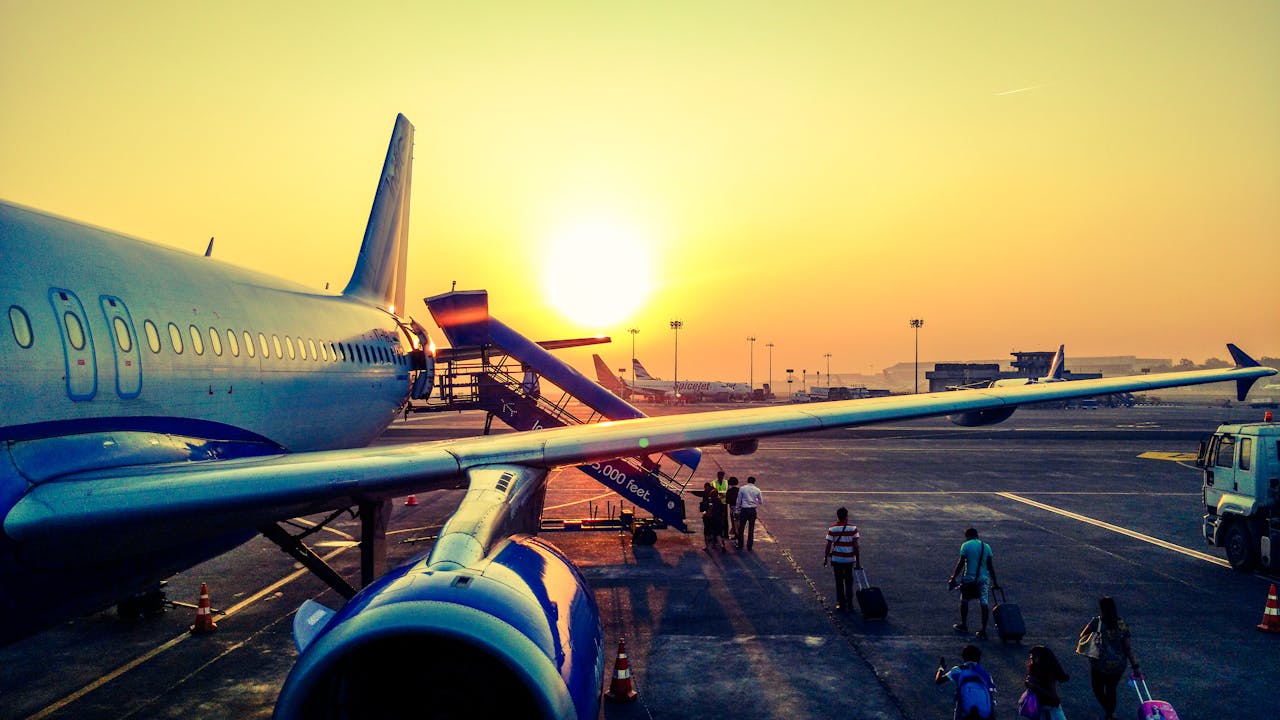
Instead of accepting that boarding had already closed and turning to the airline staff for assistance, they made the decision to bypass the normal passenger flow entirely and entered a restricted airport area. From there, they made their way onto the tarmac, attempting to reach the aircraft directly even though it was already preparing for departure.
What may have felt, in that moment, like a last attempt to salvage a missed flight was immediately treated as a serious breach of airport security. Restricted areas exist precisely to prevent unauthorized access to aircraft, and once that boundary is crossed, the situation is no longer about inconvenience but about safety and control.
Airport authorities intervened quickly, and the passengers were stopped before they could get anywhere near boarding the aircraft. I wrote in detail about this incident here.
The End of “Barebeating”: When Cabin Rules Become Non-Negotiable
Not all disruptions happen at the gate or on the runway. Some start quietly, inside the cabin, in ways that seem minor but quickly affect everyone nearby. One of the most common examples is what has come to be known as “barebeating”—passengers playing music, videos, or games out loud on their phones without headphones, turning a shared space into something far more intrusive than it was designed to be.
Airlines are no longer treating this as a minor annoyance. In a recent update to its onboard policies, one carrier made it clear that using personal devices without headphones is not acceptable, and passengers are expected to comply when instructed by the crew.
What was once handled informally is now being enforced more directly, with refusal potentially leading to intervention by the crew and, in more serious cases, removal from the flight. It is a small rule on the surface, but it reflects a much larger shift: inside an aircraft, even minor disruptions are no longer tolerated when they affect the experience and comfort of others.
The Financial Cost of Being a “Bad Guest”
The price of bad behavior in the air is rising sharply as aviation authorities move away from warnings and toward enforcement. Across multiple jurisdictions, disruptive conduct on board is no longer treated as a minor inconvenience but as a violation with real financial consequences. In some cases, fines can reach tens of thousands of euros, particularly when a passenger refuses to follow crew instructions or interferes with the normal operation of a flight.
The stakes increase significantly when behavior escalates to the point where a flight must be diverted. A diversion is not a simple detour; it is a costly operational decision that affects fuel planning, airport scheduling, crew hours, and every passenger on board.
Airlines have begun pursuing compensation from passengers whose actions trigger such disruptions, seeking to recover costs that can easily climb into the tens of thousands of euros once landing fees, logistical adjustments, and passenger compensation are taken into account.
From long-term bans to substantial financial penalties, the message is becoming increasingly clear: air travel is not just a convenience, but a system that depends on cooperation – and the cost of ignoring that system is no longer symbolic.
When “Content” Takes Over Common Sense
Another recent situation caught my attention, not because it involved fines or security breaches, but because it highlights a different kind of problem. During a long-haul flight, a passenger decided to turn the aircraft lavatory into a makeshift running track, spending close to an hour inside while attempting to complete a full 5K workout.
The video, which quickly went viral, showed him looping in tight circles inside the cramped space, even stepping onto the toilet to keep the movement going, all while tracking the distance on a fitness app.
While the act itself did not trigger fines or legal consequences, it raised an entirely different question about what is considered acceptable behavior in a shared environment.
Airplane bathrooms are not private spaces; they are limited, essential facilities used by dozens of passengers during a flight. Occupying one for an extended period – regardless of intent – inevitably affects others, even if no one immediately complains.
In my opinion, this is exactly the kind of situation that should not happen onboard a flight. It may seem harmless or even entertaining online, but it reflects the same underlying issue seen in more serious incidents: a growing tendency to treat a highly structured, shared environment as if it were a personal space.
When the Rules Stop Being Optional
Taken together, these incidents reveal something that goes beyond isolated moments of poor judgment. Whether it is someone forcing their way onto a plane, running onto a restricted area, ignoring basic cabin etiquette, or turning a shared space into a personal stage, the pattern is becoming harder to ignore.
Air travel is built on structure, timing, and cooperation, and when even one person decides those rules do not apply to them, the impact rarely stays contained. It affects crews, delays flights, disrupts other passengers, and forces airlines to respond in ways that are increasingly firm and visible.
What is changing is not just passenger behavior, but how the system reacts to it. Tolerance is shrinking, enforcement is becoming more consistent, and the consequences – whether financial, legal, or long-term bans – are no longer symbolic. In my opinion, this shift was inevitable.
You cannot maintain a system as complex as aviation while treating rules as suggestions. The expectation is no longer just to follow instructions, but to understand that every action onboard or around an aircraft exists within a shared environment where respect is not optional.
I read about the situation I presented at the beginning of this article here, and I saw other publications reported it too.
Photo source: Pexels