
For years, one of the few remaining advantages of flying for many people was that nobody could casually call you.
You could still receive messages if the aircraft had Wi-Fi. You could work, read, sleep, watch a film, stare out the window, or pretend you never saw the email until landing. But the cabin still had one important limit: no endless phone calls around you, no loud video meetings, and no passenger explaining their entire family drama at 38,000 feet.
That version of flying is officially changing – and the reality of it might be hitting your next flight much sooner than you think.
ID 69710363 ©Oleksandr Brylov | Dreamstime.com
British Airways recently made a landmark announcement: they are becoming the first UK airline to launch free, high-speed Starlink Wi-Fi across their fleet. Now, if you live in the US, you might think this is a localized problem across the Atlantic. It isn’t. British Airways operates a massive network of over fifty daily flights directly into US hubs – from New York and Los Angeles to Chicago and Miami. In fact, the absolute first aircraft they equipped with this unlimited Starlink Wi-Fi didn’t fly to a European city; it took off straight for Houston, Texas.
Powered by thousands of low-Earth orbit satellites, this isn’t the slow, frustrating airplane internet of the past. We are talking about download speeds topping 500 Mbps, available from take-off to touchdown, entirely free of charge for every single passenger in every cabin.
The airline has already begun outfitting its Boeing 787-8 fleet, with plans to upgrade more than 300 long-haul and short-haul aircraft within the next two years, excluding only their BA Cityflyer routes.
In a statement, Sean Doyle, British Airways’ Chairman and Chief Executive, called the launch a “landmark moment,” adding:
“We’re excited to be the first UK airline to bring this level of connectivity to our customers. We know that staying connected matters to people, whether they’re travelling for work or heading off on holiday, and Starlink will give our customers fast, reliable Wi-Fi that transforms the onboard experience.”
But “transforming the onboard experience” means something completely different depending on who you ask. Because this high-speed, unlimited connection opens the door to something long considered a taboo in the sky: real-time voice and video calls.
The Clear Benefits vs. The Inflight Nightmare
On paper, the utility of this technology is undeniable. If you are flying across an ocean while a family emergency unfolds on the ground – perhaps a spouse going into labor early, or a family crisis – being able to stay connected in real time is a profound comfort.
For freelancers, solopreneurs, and business travelers, it means a 10-hour transatlantic flight no longer requires canceling a crucial meeting or losing a full day of operations.
But then there is the flip side.
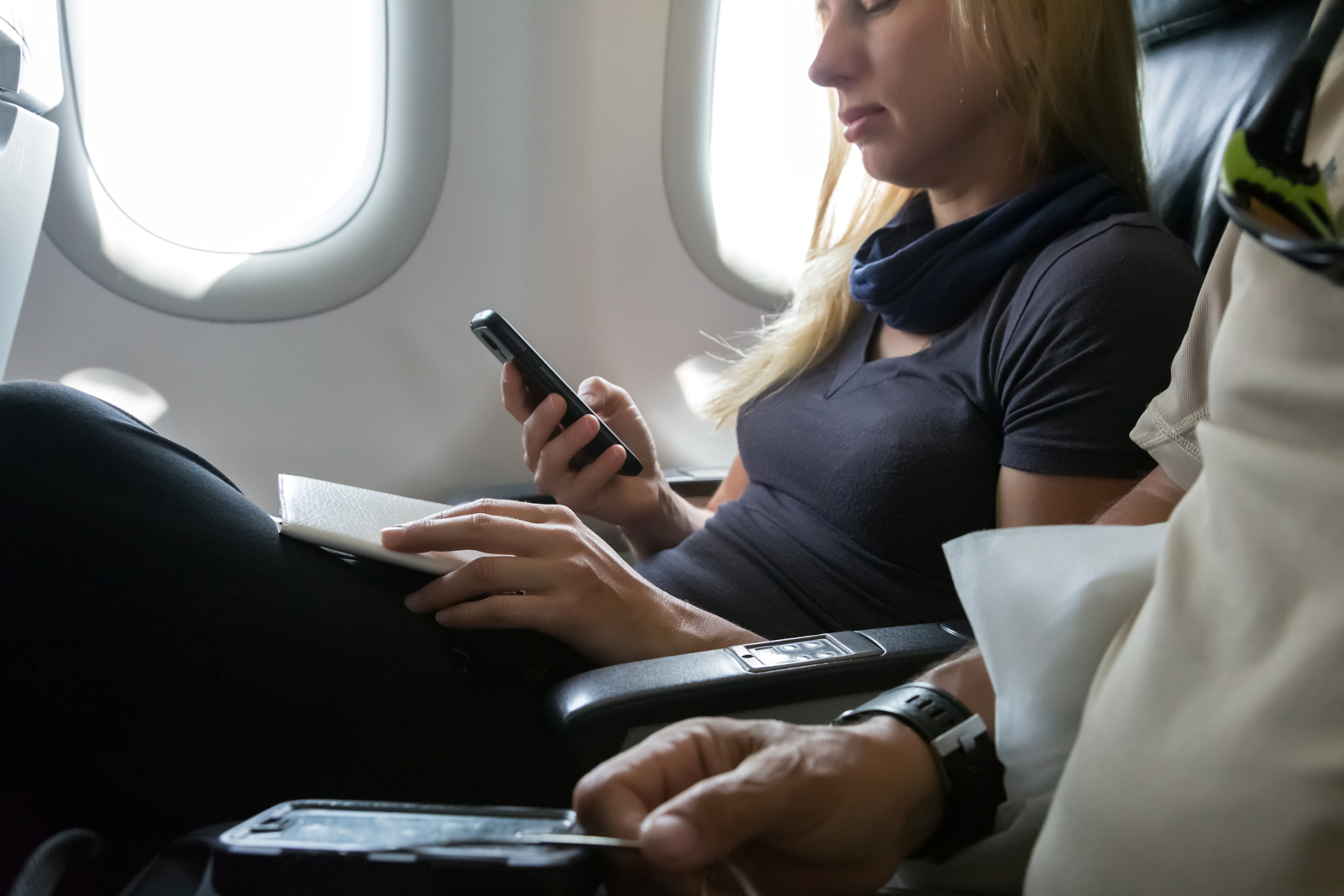
Imagine settling into a 12-hour flight, hoping to catch up on sleep, only to be trapped between a passenger participating in a non-stop corporate Zoom presentation on your left, and someone loudly catching up on family drama via FaceTime on your right.
British Airways has anticipated this friction. Its official guidance asks passengers watching videos or taking calls to use headphones, keep their voices low, and be considerate of others.
But as anyone who has traveled recently knows, “asking politely” doesn’t always translate to actual cabin harmony. Even with headphones on, a person speaking on a voice call is still talking out loud to a screen. Multiply that by dozens of passengers across an entire cabin, and the ambient noise level of a flight could skyrocket.
A Tale of Two Transit Cultures
The success of a policy like this depends entirely on the collective social etiquette of the people on board, and social norms vary wildly depending on where you are in the world.
Growing up and using public transport daily in Bucharest, Romania, you quickly get used to a vibrant, loud environment. Before mobile plans became cheap and accessible, it was groups of people chatting enthusiastically. Today, it’s a constant barrage of people watching videos without headphones, making loud video calls, and conducting conversations on speakerphone. To be clear: I am not saying everyone talks loudly, but many do, and more often than you would like to see this happening (hint: it is not an exception, unfortunately).
Everyone on the bus inadvertently becomes a witness to everyone else’s personal dramas, victories, and failures. It is exactly the kind of sensory overload that makes many people opt for the quiet bubble of their own car or a private ride-share (I have to admit I do too).
Yet, during a recent trip to Munich, the contrast was striking. Using the public transport in Munich – buses, trams, and metro – daily for almost a week, it was a completely different societal standard. In five days, barely two people answered a phone call. And when they did, they spoke so quietly, so deferentially, that you could barely hear a murmur even sitting directly next to them.
When an airline opens up unlimited voice calls to an international, culturally diverse group of hundreds of strangers trapped together in a metal tube at 38,000 feet, which version of society will show up?
Will Constant Connectivity Fuel More Air Rage?
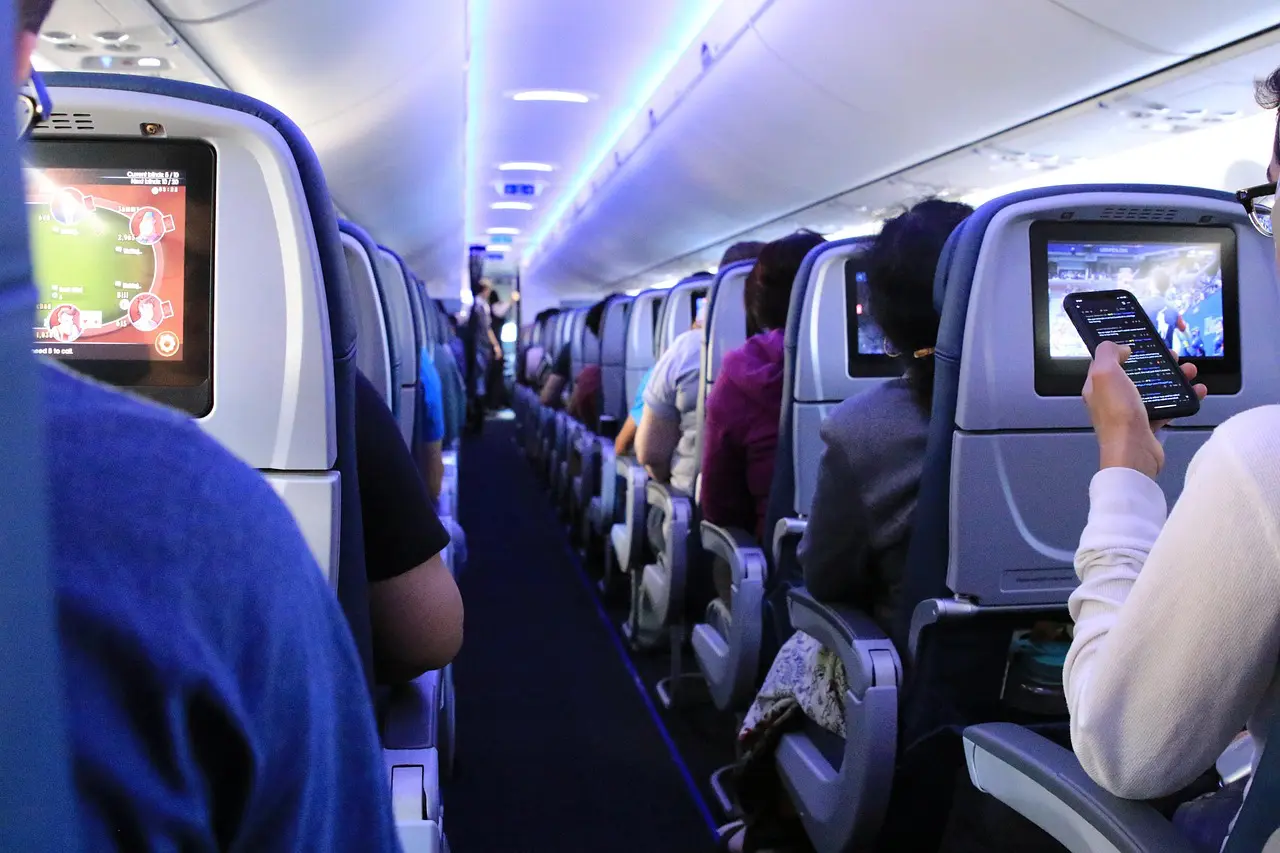
Airplanes are already high-stress environments. Delays, cramped seating, and general travel anxiety mean tempers run short. We have already seen extreme examples of how phone usage can disrupt an entire flight; recently, a passenger on a Delta flight had to be entirely deplaned and removed by security simply because they refused to hang up their call before take-off.
If a 15-minute phone delay can cause a full flight disruption, what happens when a call drops mid-flight over a remote region, or when a nearby passenger politely asks someone to stop shouting into their microphone?
Airplanes have unique physical and psychological boundaries, and adding the constant noise of personal phone calls risks escalating unruly airplane passenger behavior even further.
The Etiquette Question Airlines May Have to Face Next
The technology is arriving faster than the etiquette around it.
British Airways already asks passengers using Starlink Wi-Fi to be considerate, use headphones, and keep their voice low when making calls. That is a reasonable starting point. But if in-flight calls become common, airlines and passengers may need a clearer shared understanding of what “considerate” actually means in a cabin where hundreds of people are sitting close together for hours.
A short emergency call is one thing. A long video meeting, a loud family argument, or a casual “just checking in” call during a night flight is something else entirely.
This is where a few basic expectations may become necessary:
- Use headphones for every call, video, or streamed sound.
- Keep your voice low, because headphones do not make your own voice disappear.
- Avoid long calls during overnight flights or when the cabin is clearly trying to sleep.
- Think carefully before discussing private, medical, financial, family, or business details in a shared cabin.
- Switch to messaging when the call is not urgent.
- Pay attention to crew announcements and pause immediately when needed.
The confidentiality point is important too. A plane cabin is not a private office. If you are discussing client information, contracts, family problems, health updates, or anything sensitive, the people around you may hear far more than you realize.
This is not about banning every useful call. I am not against technology! There will be situations where being able to speak to someone from the air is genuinely valuable. But there is a difference between using a new feature because you need it and using it as if the rest of the cabin does not exist.
The Global Landscape: Why the US is Different
While British Airways joins carriers like Emirates and Qatar Airways in expanding or allowing in-flight calling options via advanced satellite setups, the skies over North America look very different.
Major US carriers like United, Delta, and Hawaiian are also rapidly adopting high-speed Starlink Wi-Fi, but they explicitly continue to ban voice and video calls onboard.
This isn’t just an airline policy choice; it’s rooted in strict regulatory history. In the United States, the Federal Communications Commission has maintained a strict ban on airborne cellular calls since 1991 under 47 CFR § 22.925 to prevent fast-moving planes from disrupting cellular towers on the ground.
While internet-based Wi-Fi calling, like FaceTime, Zoom, or WhatsApp, technically falls outside the cellular network rules, the FCC and individual airlines have firmly held the line against voice communication to protect cabin peace and safety. Congress has even attempted to codify a total ban on voice calls over Wi-Fi mid-flight, recognizing that an entire plane of people talking simultaneously is a safety hazard during flight crew announcements.
The Future of the Skies
Technology is moving faster than our social etiquette can keep up. Within two years, seamless, lightning-fast internet will be standard on almost every flight you take.
The tools to stay connected, work, and stream are an incredible engineering feat. But as we step into this new era of aviation, we have to ask ourselves what we are willing to leave behind.
Will you welcome the ability to answer a ringing phone at 30,000 feet, or are we on the verge of losing the very last quiet boundary left in modern life?
FAQ: British Airways Starlink Wi-Fi and In-Flight Calls
Can British Airways passengers make phone calls during flights?
On aircraft equipped with Starlink Wi-Fi, British Airways says passengers can use the connection for calls, including video calls, but asks them to use headphones, keep their voice low, and be considerate of others. This is different from using a cellular network in the air.
Is British Airways Starlink Wi-Fi free?
Yes. British Airways says Starlink Wi-Fi will be free for passengers across all cabins on equipped aircraft, from take-off to touchdown.
Which British Airways planes will get Starlink Wi-Fi?
British Airways says it has started fitting Starlink on its Boeing 787-8 fleet. The airline plans to roll it out across more than 300 long-haul and short-haul aircraft within two years, excluding BA Cityflyer.
Can passengers use FaceTime, WhatsApp, Zoom, or Teams on British Airways flights?
British Airways’ Starlink Wi-Fi guidance says the service is suitable for video calls. That means internet-based calling services may work on equipped aircraft, although passengers are still asked to use headphones and keep their voice low.
Are in-flight phone calls allowed on U.S. airlines?
Traditional cellular calls are banned while aircraft are airborne in the United States. Wi-Fi-based calls are technically different, but major U.S. airlines have generally continued to restrict voice and video calls onboard for passenger comfort and cabin safety reasons.
More amazing articles for you:
Day trips from NYC - the best weekend getaways from New York City
Top travelling spots from famous classical books [#Infographic]
5 Tips for Securing Your Passport in Time
Motorworld München Guide: Free Entry, Legendary Cars, and Visitor Tips
Zurich Travel Guide by a Local: Things to Do, Food & Tips
Returning to Italy for Vacation: Ways to Do It Differently the 2nd (or 3rd) Time Around
Visiting Japan: 10 Things to know before going to Tokyo so that you won't be shocked
How to Plan the Perfect Trip from Start to Finish: Your Ultimate Travel Planning Guide

Violeta-Loredana Pascal is a communications expert, business mentor, and the founder of Earth’s Attractions and PRwave INTERNATIONAL. A pioneer in the Romanian digital PR landscape since 2005, she holds a degree in Communication and Social Sciences from SNSPA Bucharest. Violeta is a senior trainer at AcademiadeAfaceri.ro, where she leverages over 20 years of experience to teach professional courses in PR strategy and workplace productivity. By blending high-level business consulting with a passion for holistic travel and wellness, she empowers solopreneurs to overcome procrastination, build profitable brands, and design a life of purposeful adventure.