
Fun is often one of the first things we sacrifice as adults. Bills, deadlines, family needs, health problems, housework, work messages, and money worries all stack up until they feel more important (and urgent) than having fun.
I know this from experience. I write and run blogs, work with PR and coaching clients, and I am also a wife and mother. There are always visible tasks and invisible tasks, paid work and unpaid work, family things, house things, business things, and problems that do not wait until you have enough energy for them.
So fun keeps moving to “later.” Later in the evening. Later in the week. Later, when the money is better. Later, when the house is cleaner. Later, when the work is done. Later, when life calms down.
A new survey suggests this is not an exception (unfortunately, I might add). A Talker Research survey of 5,000 American adults, commissioned by Dave & Buster’s, found that 48% of Americans feel their lives are currently lacking fun. Among those who feel fun-deprived, respondents said they wanted an average of 17 more hours a week for enjoyment. Cost, busy schedules, work, responsibilities, limited entertainment options, and smaller social circles were among the barriers people named.
That does not mean the answer is to spend more money. For many people, that is exactly the problem. The better question is how to make fun easier to reach inside the life, budget, health, schedule, and emotional load you already have.

Nearly half of Americans say their life is missing fun
The survey’s numbers are striking because they describe something many adults feel but rarely name directly. A Talker Research state-by-state poll of 5,000 U.S. adults, commissioned by Dave & Buster’s, found that 48% of Americans feel their overall life is currently lacking in fun. The survey was conducted online between April 21 and May 1, 2026, with 100 respondents from each state.
The same survey found that 12% of Americans cannot remember the last time they had a full free day to have fun, and those who said they do not get enough fun want 17 extra hours per week to change that.
There is one important note here: the survey was commissioned by Dave & Buster’s, a company in the entertainment business. That does not make the findings useless, but it does mean they should be treated as a useful consumer snapshot, not as the only authority on adult well-being.
Still, the findings are easy to recognize. Many adults are not missing fun because they have no idea what they enjoy. They are missing fun because the simple version of fun has become harder to access. And I am sure you can see this – it is either your situation or you know people who are missing fun in their lives.
Friends are busy. Family schedules are complicated. Going out costs more. A small evening out can become expensive fast once you include food, transport, tickets, parking, childcare, or the emotional cost of organizing everything. At home, free time often arrives only after you are already tired.
That is where fun starts to disappear – in hundreds of small postponements.
“I will do something nice when I finish this project.”
“We will go out when money is better.”
“I will call someone when I have more time.”
“I will relax properly this weekend.”
Then the weekend comes, and it is already full.
Why does fun disappear from adult life
I guess we could say that fun often disappears because adulthood trains people to prioritize what is measurable. Bills are measurable. Deadlines are measurable. Work output is measurable. School schedules, appointments, cleaning, repairs, family needs, and client calls all have a visible place on the calendar.
Fun is different. It is easy to dismiss because no one sends a reminder saying, “You have not laughed properly this week.”
There is also guilt attached to it. Many adults feel they need to earn rest and enjoyment. If the house is not clean, if the inbox is not empty, if the bank account is not where they want it to be, fun can feel irresponsible.
But a life built only around responsibility becomes expensive in another way. The cost may show up as irritability, exhaustion, resentment, emotional flatness, or the feeling that everything has become a task.
I know it may be hard to feel joy when life is heavy. My family has dealt with grief, health problems, money pressure, and the kind of uncertainty that comes with being a solopreneur rather than an employee with a fixed paycheck. When income from sites or clients drops, the stress does not stay politely in one corner. It follows you into ordinary moments. You can be eating dinner, watching something, talking to your child, and still feel the weight of what is not solved.
Health can do the same. For more than a year, I have been recovering slowly from a knee injury, with very limited mobility (I am glued to my couch). That changed the way I think about fun. I cannot have spontaneous plans, go outside, or to an event/movie.
And yet, I don’t think joy should be reserved for the period after everything becomes easy. That period may not arrive soon. It may not arrive in the clean, perfect way we imagine.
So the question becomes much more practical: what can still bring some enjoyment into a difficult, busy, imperfect life?
Money matters, but spending more is not the only answer
When people say fun is harder now because of money, I know that they are not being dramatic. If groceries, bills, rent, medical costs, family expenses, fuel, or debt are pressing, entertainment is one of the first categories people cut. In fact, nowadays we all look at what we can cut so we can save money – I recently wrote an article on how to do a subscription audit to save money.
So no, the answer is not to tell people to “just go out more.” That advice ignores reality.
But the opposite answer is also unhelpful: waiting until money is no longer a concern before allowing yourself any pleasure at all.
The survey found that popular leisure activities include watching TV, spending time with family and friends, dining out, outdoor activities, hobbies, and playing games. Some of those cost money, but many can be adapted. Watching a comedy series at home, playing a board game, cooking something simple but different, listening to music intentionally, calling a friend, playing with pets, or having a small family ritual can still change the emotional texture of a day.
As you can see, fun does not always have to be impressive to work. It does not have to become a weekend trip, a dinner reservation, a new subscription, a shopping cart, or a carefully photographed experience. Sometimes it only has to interrupt the pattern.
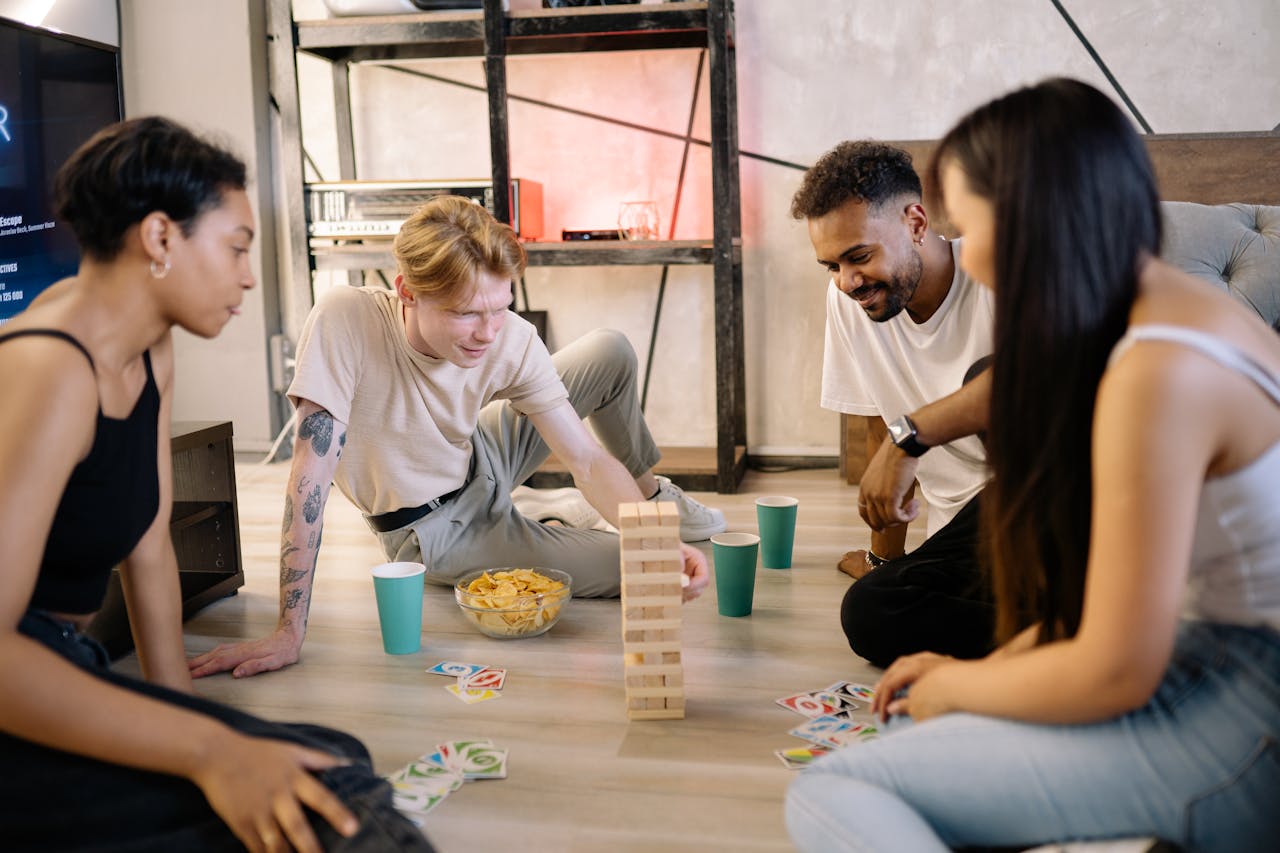
Fun becomes harder when you wait for perfect conditions
One reason adults lose fun is that they make it too big.
They wait for the full free day, the perfect weekend, the better budget, the recovered energy, the right mood, the available friends, the clean house, the finished work, the improved body, and the solved family issue.
The problem is that adult life rarely offers perfect conditions. There is usually something unfinished. There is usually something to worry about. There is usually one more responsible thing that could be done.
If fun depends on an empty calendar and a calm mind, it will be rare.
A more realistic approach is to make fun smaller, easier, and closer. This is especially important during stressful periods. When you are overwhelmed, you may not have the energy to plan something complicated. You may need enjoyment that can start in five minutes.
That is not a lowered standard. It is a useful strategy.
How to bring fun back without spending more
The goal is not to add another self-improvement project to your life. You do not need a perfect routine, a colorful planner, a list of 100 hobbies, or an expensive activity every weekend.
You need moments that feel chosen instead of only required. And this is what I did – even through my hard times. It is what I do now too, while I go through my knee recovery.
1. Stop treating fun like a reward you must earn
This is the first mindset shift. If fun only comes after everything is done, it may never come.
There will always be laundry. There will always be emails. There will always be financial pressure, repairs, appointments, paperwork, meals, cleaning, or something that someone forgot to mention until the last minute.
Fun does not have to mean ignoring responsibilities. It can mean refusing to let responsibilities take every available emotional space.
A funny episode after a hard day is not irresponsible. A game with your child is not wasted time. Laughing at your cat doing something ridiculous is not a distraction from life. It is part of life.
2. Create a low-energy joy list
When you are exhausted, it is hard to think creatively. That is why many people default to scrolling. It is easy, immediate, and it doesn’t require anything from you. The problem is that scrolling often fills time without making the day feel better.
Make a short list before you need it. Keep it realistic. Not fantasy-life realistic. Actual-life realistic.
Your list might include:
- watch one episode of a comedy series;
- listen to three songs you love;
- play a simple game;
- make tea or coffee and drink it without doing another task;
- send a voice message to a frend;
- sit outside for 10 minutes;
- play with your pet;
- read a few pages from a book;
- cook something easy that feels different from the usual;
- look through old photos;
- do a puzzle, crossword, or small creative activity.
The list should include things you can do when your energy is low, your budget is tight, and your house is not perfectly clean.
3. Use what you already have
A lot of people assume fun requires adding something: buying something, booking something, downloading something, subscribing to something, driving somewhere. Sometimes it does. Often, it does not.
You may already have games at home, unread books, saved movies, recipes you never tried, music you forgot you liked, photos you wanted to organize, a hobby you abandoned, a pet that wants attention, a child who wants to laugh with you, or someone you keep meaning to call.
This is not about romanticizing a lack of money. It is about noticing what is already available before deciding that enjoyment is impossible.
4. Make one repeatable weekly ritual
Spontaneity is harder in adult life. That does not mean fun has to disappear. It may simply need a place.
A weekly ritual can be very small:
Friday comedy night.
Sunday pancakes.
A Saturday walk.
A weekly call with a friend.
Board games after dinner.
A music hour while cooking.
A movie night at home.
A family “no serious topics for 30 minutes” break.
The advantage of a ritual is that it removes decision fatigue. You do not have to reinvent fun every week. You only have to protect one small space.
For a few years now, I end the day with an hour (at least) for myself. It often includes watching a movie – the goal is to have fun and do something relaxing at the end of the day.
5. Make social plans smaller
One reason adults socialize less is that plans become too complicated. Everyone is tired. Everyone has work. Someone has children. Someone has health issues. Someone is saving money. Someone does not want to drive. Someone cancels because the week was too much.
So make the plan smaller because relationships are important for longevity. A 20-minute call can still count. Coffee at home can count. A walk can count. A voice message can count. Watching the same show and discussing it later can count. Sending each other funny things can count if it becomes real connection, not just another message buried in a busy day. Yes, fun doesn’t always need a group dinner, a trip, or a perfect gathering. Sometimes it needs one person and a lower barrier.
6. Replace some passive time with active enjoyment
There is nothing wrong with resting online. Sometimes we are tired and want an easy distraction. The problem starts when passive scrolling becomes the only available form of relief.
Active enjoyment usually leaves a clearer emotional trace. Playing a game, watching something that genuinely makes you laugh, making something, moving a little if your body allows it, singing, calling someone, cooking, reading, or doing a hobby often feels different from consuming whatever appears next on a screen.
You do not have to eliminate scrolling. Just notice whether it is actually helping. Ask: after 20 minutes, do I feel more rested, amused, connected, or interested? Or do I feel more irritated and drained?
7. Return to something you enjoyed before life became so full

Maybe this shoul dhave been higher on this list – because many of us (if not all) don’t need to discover a new passion. We need to remember an old one.
What did you like before everything became so practical?
Music? Drawing? Dancing? Reading? Games? Comedy? Photography? Writing? Baking? Sports? Crafts? Long conversations? Trivia? Puzzles? Makeup? Fashion? Gardening? Movies? Learning random things? Organizing family photos? Visiting local places? Making playlists?
I will add an important note here: You don’t have to be at a professional level or even monetize it. It should only be something that brings you joy.
8. Let fun be short
A lot of adults dismiss short moments because they do not seem enough.
Ten minutes of music will not solve financial stress. A comedy episode will not fix grief. Playing with a pet will not heal an injury. A conversation with your child will not remove every responsibility waiting for you.
But joy does not always work by solving the whole problem. Sometimes it gives your nervous system a break from carrying it continuously.
And that helps – or at least that has been my experience.
Research on enjoyable leisure activities supports the idea that leisure is not just empty time. A study found that enjoyable leisure activities were associated with better psychological and physical well-being measures, including higher positive psychosocial states and lower negative affect, depression, blood pressure, and cortisol. The authors described enjoyable leisure activities, taken together, as relevant to health and well-being.
This does not mean watching a comedy replaces medical care, therapy, rest, exercise, financial planning, or support. It means enjoyable activities deserve a place in real life, not only in vacations or perfect seasons.
9. Make fun fit your actual body and season of life
This part is very important to me. Because of my knee injury, I cannot build my current joy around the things I would do if mobility were easy. I have had to accept a smaller radius. That does not mean I stopped needing joy. It means I had to stop waiting for the old version of fun to be available every day.
So I watch comedy series online. I laugh when playing with my cats. I enjoy moments with my son. I look for small things that make the day lighter, even when the bigger situation is still hard.
This is not toxic positivity – although science says people who are optimists live longer. I am not saying family problems, health issues, grief, or money stress disappear because you watched something funny. They do not.
But I am saying that difficult periods are exactly when people need small forms of relief. Not as denial. As survival, connection, and emotional oxygen.
What counts as fun when you are an adult?
Fun can be – but doesn’t have to be limited or associated only with – nightlife, travel, expensive hobbies, parties, or going out all the time.
For adults, fun can be:
- laughing at a comedy series;
- playing cards or board games;
- cooking something new without turning it into a major project;
- listening to music from a specific period in your life;
- doing a puzzle;
- playing with pets;
- having a relaxed conversation with your child;
- calling a friend who does not drain you;
- watching a movie without multitasking;
- visiting a free local event;
- reading something that has nothing to do with work;
- dancing at home;
- doing a small creative project;
- taking photos on a walk;
- planning a themed evening at home;
- trying a hobby again without judging the result.
Adult playfulness is not childish. Research published in the European Journal of Humour Research found that adult playfulness had positive relationships with life satisfaction, enjoyable activities, and an active way of life.
That makes sense. A playful person is not necessarily someone with an easy life. Sometimes it is someone who can still find interest, humor, curiosity, or lightness inside an ordinary day.
Why “without spending more” is relevant
A lot of lifestyle advice involves an available budget. Go to the class. Book the weekend. Buy the kit. Take the trip. Try the restaurant. Redecorate the space. Upgrade the experience.
There is nothing wrong with spending money on enjoyment when you can afford it. But many people cannot build their emotional life around paid experiences right now. Even people who are not in crisis may be more careful than before.
That is why bringing fun back has to include free and low-cost options. Otherwise, the advice excludes the people who may need it most.
The question is not, “How do I create an exciting life from scratch?”
The better question is, “Where can I add moments of enjoyment without creating more pressure?”
That might mean using your home differently. It might mean making family time less logistical and more playful. It might mean bringing back a hobby. It might mean allowing yourself to laugh before all the problems are solved.
The goal is not a more expensive life
The goal is not to become someone who is always cheerful. That is unrealistic, and frankly, exhausting.
The goal is also not to ignore serious problems. Money stress is real. Health issues are real. Grief is real. Family pressure is real. Work demands are real. When life is heavy, you do not need someone telling you to smile more.
But you may need permission to stop treating joy as something that belongs only to people with more time, more money, better health, easier families, cleaner homes, or calmer minds. Having fun can happen at any time – if we are open to see (have you ever watched a cat playing? Did you throw pillows? – you get the idea 🙂 ).
Sometimes it is one honest laugh in a difficult day. Sometimes it is a comedy episode after a draining week. Sometimes it is a game with your child, a pet doing something ridiculous, a song you forgot you loved, or 20 minutes when life feels less like a list of obligations.
If nearly half of Americans feel their lives are missing fun, maybe the answer is not to wait anymore. Maybe the first step is to bring small pieces of joy back into the one we already have. Because the issues/problems will always make their way. There are always ups and downs.
More amazing articles for you:
Everyone Is “Touching Grass” Now - And It’s Completely Changing How We Travel
How to Plan the Perfect Visit to an Amusement Park: Everything You Need to Know Before You Go
Win a 30-day cruise to Antarctica, cruising the spectacular Ross Sea
19 Surprising Facts About Fall That Sound Made Up - But Are Actually True
92% of Your Worries Are False Alarms, According to Science - Here’s What You Can Do Today
The Louvre Jewels I May Never See Again - And Why Visiting Museums Matters More Than Ever
Stressed Out? Scientists Say These Daily Habits Can Reset Your Body & Mind
How Much Sleep Should You Get Per Night to Be Healthy?

Violeta-Loredana Pascal is a communications expert, business mentor, and the founder of Earth’s Attractions and PRwave INTERNATIONAL. A pioneer in the Romanian digital PR landscape since 2005, she holds a degree in Communication and Social Sciences from SNSPA Bucharest. Violeta is a senior trainer at AcademiadeAfaceri.ro, where she leverages over 20 years of experience to teach professional courses in PR strategy and workplace productivity. By blending high-level business consulting with a passion for holistic travel and wellness, she empowers solopreneurs to overcome procrastination, build profitable brands, and design a life of purposeful adventure.