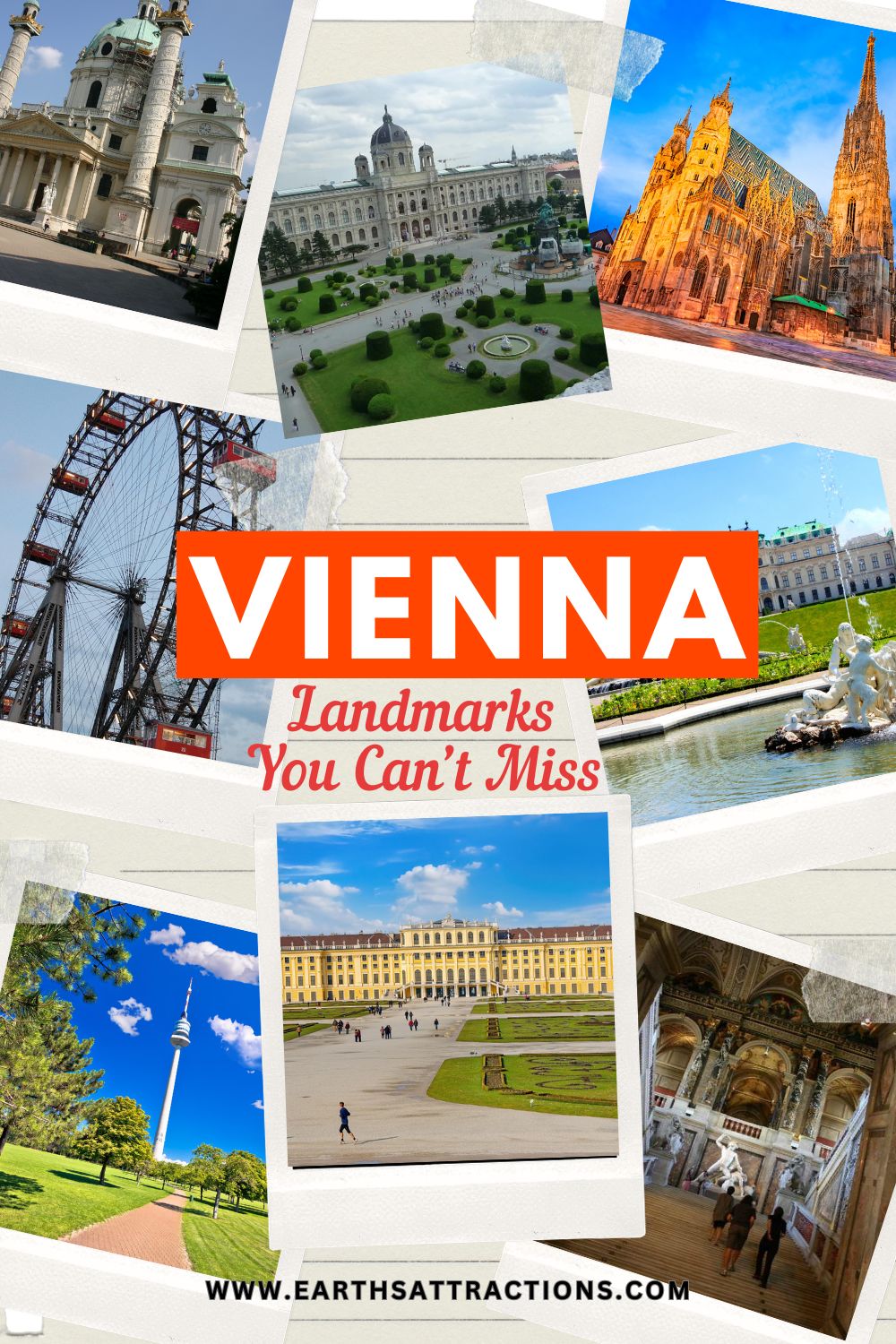
Vienna is rarely a city you visit just once. After exploring its cobblestone streets on two separate trips, I’ve realized that Vienna isn’t just a capital city-it’s a living, breathing museum where the imperial ambition of the Habsburgs meets a surprisingly rebellious modern soul.
Planning a trip to the Austrian capital can be overwhelming; with centuries of Baroque palaces, Gothic cathedrals, and monumental Ringstrasse architecture around every corner, it’s hard to know where to start.
Whether you’re looking to stand where Mozart performed, hunt for Klimt’s masterpiece, or simply find the best views of the skyline, this guide cuts through the noise.
Below, I’ve curated the 15 essential landmarks that define Vienna today, along with local tips to help you navigate them like a pro. From imperial favorites to modern must-sees, here is your essential guide to the landmarks that truly shape the face of Vienna (2026).
15 Must-Visit Landmarks in Vienna
Schönbrunn Palace: The Iconic Habsburg Summer Residence

Schönbrunn Palace served as the summer residence of the Habsburg rulers and remains Vienna’s most iconic imperial complex. Largely redesigned in the 18th century under Empress Maria Theresa, the palace became a statement of dynastic stability and European relevance.
Inside, the Grand Gallery dazzles with gilded Rococo decoration and ceiling frescoes once framing state banquets, while the Hall of Mirrors is famously linked to the young Wolfgang Amadeus Mozart, who performed there as a child. The imperial apartments of Franz Joseph and Empress Elisabeth reveal a surprisingly restrained private life behind the ceremonial façade.
I loved this palace – we had the audio guide and learned so much!
The gardens are vast – far larger than most visitors realize. While the Gloriette offers the best views, the true magic is in the Tiergarten (we loved it too) and the hidden pathways beyond the main symmetry.
Pro Tip: Schönbrunn is massive, and tickets sell out fast; for a stress-free day, read my essential guide to visiting Schönbrunn Palace to learn the best entry times, how to skip the main queues, and which palace tours are actually worth your budget.
St. Stephen’s Cathedral: Vienna’s Gothic Historical Anchor

ID 142728016 ©Blunker | Dreamstime.com
It’s impressive. It’s famous! It’s beautiful – I really like it! St. Stephen’s Cathedral stands at the geographic and symbolic center of Vienna. Although parts of the structure date to the 12th century, much of the current Gothic form emerged in the 14th and 15th centuries.
Its steep tiled roof, composed of more than 200,000 glazed tiles forming geometric patterns and the imperial double-headed eagle, dominates the skyline. Inside, the soaring nave, carved stone pulpit, and side chapels create a vertical, shadowed drama that reflects medieval Vienna’s religious authority.
Beneath the cathedral lie the catacombs, where guided tours pass through chambers containing remains from plague outbreaks and urns holding the internal organs of Habsburg rulers. I did not know what the catacombs hold – so we decided on the spot to take the tour (it is a guided tour, paid), and this proved to be a very good idea as we got many details and interesting facts (historical and otherwise).
Visitors can climb the 343 steps of the South Tower to reach a viewing platform more than 130 meters above the city or take the lift in the North Tower to see the massive Pummerin bell. Stephansdom is more than a landmark photograph; it is Vienna’s historical anchor.
From my own visits, the sheer scale of the cathedral doesn’t fully hit you until you’re standing in the nave looking up at the vaulted ceiling. Many tourists just snap a photo of the roof and leave, but the real experience is climbing the South Tower for the panoramic view. If you are planning your time in the city, check out my Vienna travel tips for first-timers to see how to fit the Cathedral into an efficient walking route through the historic center.
Hofburg Palace: The Six-Century Seat of Imperial Power
For over six centuries, the Hofburg Palace functioned as the political heart of the Habsburg Empire. Unlike the unified design of Schönbrunn, the Hofburg evolved over time, incorporating Gothic courtyards, Baroque façades, and 19th-century monumental expansions. The Imperial Apartments preserve the ceremonial halls and private quarters of Emperor Franz Joseph and Empress Elisabeth, offering insight into court life and imperial protocol.
Within the same complex are several defining institutions, including the Sisi Museum and the Spanish Riding School, where Lipizzaner stallions perform classical dressage in a Baroque winter riding hall dating from the 18th century. Parts of the Hofburg remain in official use today, housing the offices of the Austrian president. The palace embodies continuity – from medieval power center to modern republic.
Belvedere Palace: Baroque Grandeur and Klimt’s Masterpieces
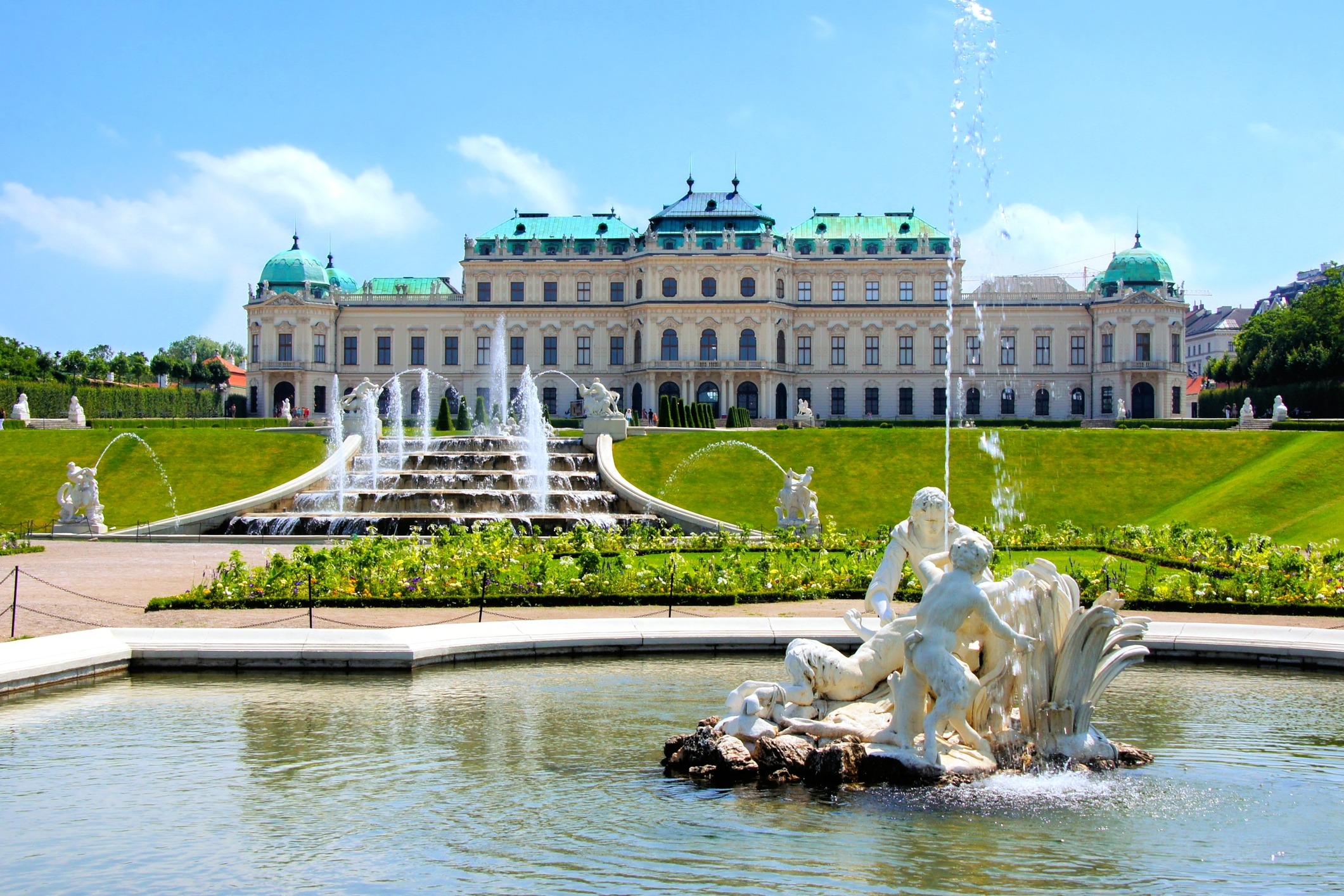
ID 39813857 ©Jenifoto406 | Dreamstime.com
The Belvedere Palace was built in the early 18th century as the summer residence of Prince Eugene of Savoy. The complex consists of two Baroque palaces connected by terraced gardens designed with precise symmetry and reflecting pools. The Upper Belvedere now houses one of Austria’s most significant art collections.
Among its highlights is The Kiss by Gustav Klimt, a defining work of the Viennese Secession movement – I am so happy to say that I saw it up close! It is impressive!
The museum also displays major works by Egon Schiele and Oskar Kokoschka, linking imperial Vienna to its artistic transformation at the turn of the 20th century. Architecturally and culturally, the Belvedere bridges Baroque grandeur and modern creativity.
While the Upper Belvedere is the undisputed highlight for art lovers, the complex is larger than many realize. Insider Tip: To see The Kiss without battling the mid-morning crowds, book a time slot for the earliest possible opening hour. Most visitors make the mistake of rushing straight through – don’t.
Take the time to explore the landscaped gardens connecting the palaces; they offer the best panoramic views of the city. If you’re planning your art itinerary, make sure you check out my guide to the best museums in Vienna, where I break down how to pair a morning at the Belvedere with other nearby cultural gems to avoid backtracking across the city.
Vienna State Opera: The Prestigious Heart of Classical Music
Opened in 1869 with a performance of Mozart’s Don Giovanni, the Vienna State Opera stands as one of the world’s most prestigious opera houses. Its Neo-Renaissance façade anchors the Ringstrasse, the grand boulevard that reshaped Vienna in the 19th century. The building suffered severe damage during World War II and was meticulously restored, reopening in 1955 as a symbol of cultural resilience.
Inside, the auditorium’s horseshoe layout and grand staircase reflect the ceremonial importance of opera in Viennese society. With hundreds of performances each season, the institution remains central to Vienna’s identity as a music capital. Even without attending a performance, the building itself represents the city’s deep connection to classical music.
Karlskirche: A Masterpiece of Baroque Votive Architecture
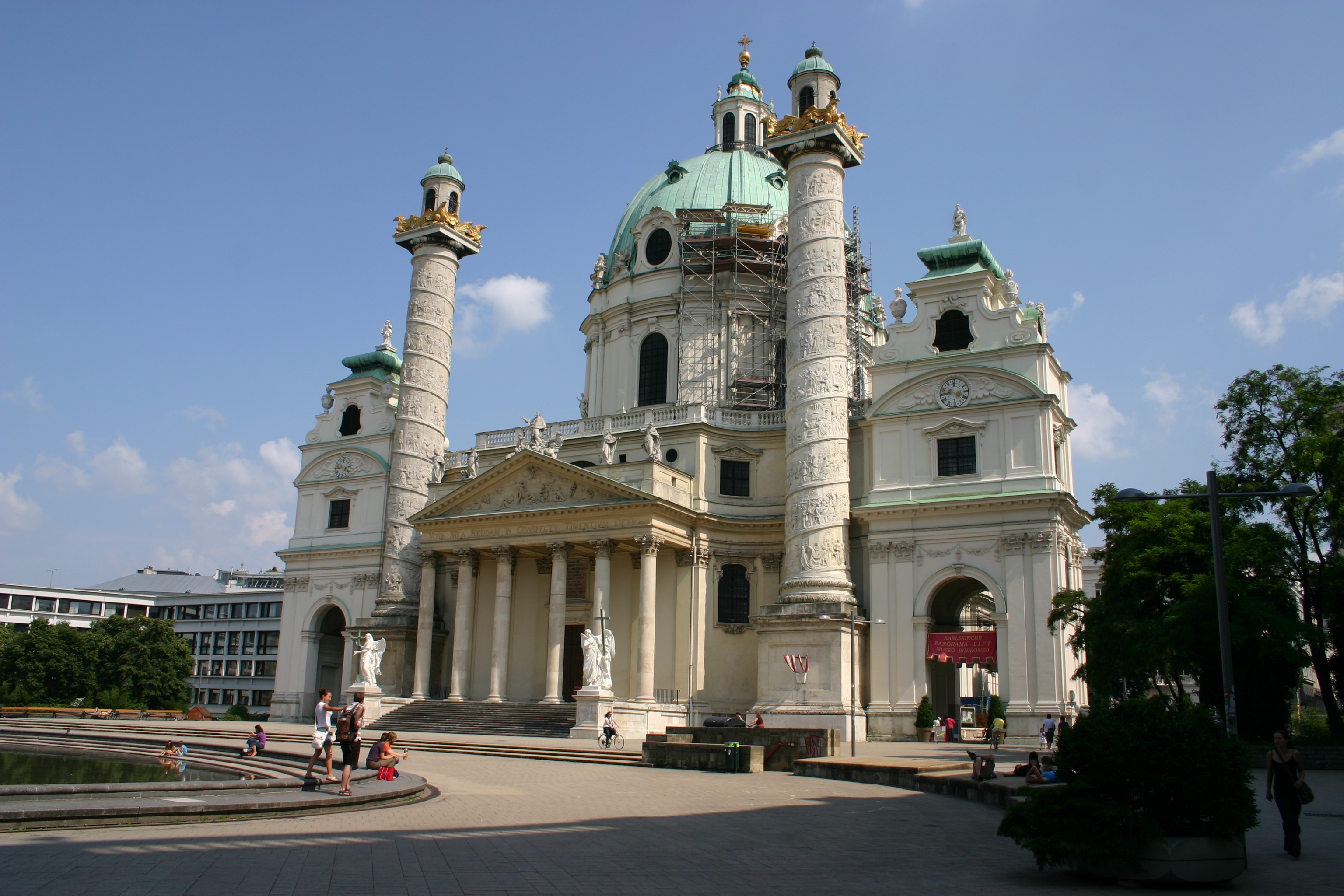
I LOVE this church – it is my favourite one in Vienna!
Karlskirche was commissioned by Emperor Charles VI in the early 18th century as a votive church after a devastating plague epidemic. Designed by Johann Bernhard Fischer von Erlach, it blends Baroque drama with classical references, most visibly in the two monumental columns inspired by Trajan’s Column in Rome.
The interior is crowned by a vast dome fresco, accessible via a panoramic lift that brings you eye-to-eye with Rottmayr’s magnificent ceiling frescoes – a rare, intimate perspective you won’t find in other Viennese churches.
While most tourists stop at the reflecting pool for an exterior photo, the real experience is found inside. For the full story on its history and expert tips on how to time your visit for the best light, check out my detailed guide to exploring Karlskirche from the inside. And yes, you can get to the top – there is an elevator (for me, this was excellent!). The view of the city from above is impressive, but, most of all, I loved that I was able to see up close the paintings on the ceiling! Splendid!
Insider tip: if you appreciate classical music, try to time your visit with an evening concert; the acoustics under the vast dome are world-class. If you are building a full walking itinerary, this landmark sits right near the Naschmarkt, making it the perfect starting point for an afternoon of culture and local food.
Kunsthistorisches Museum: Exploring the Habsburg Art Collections
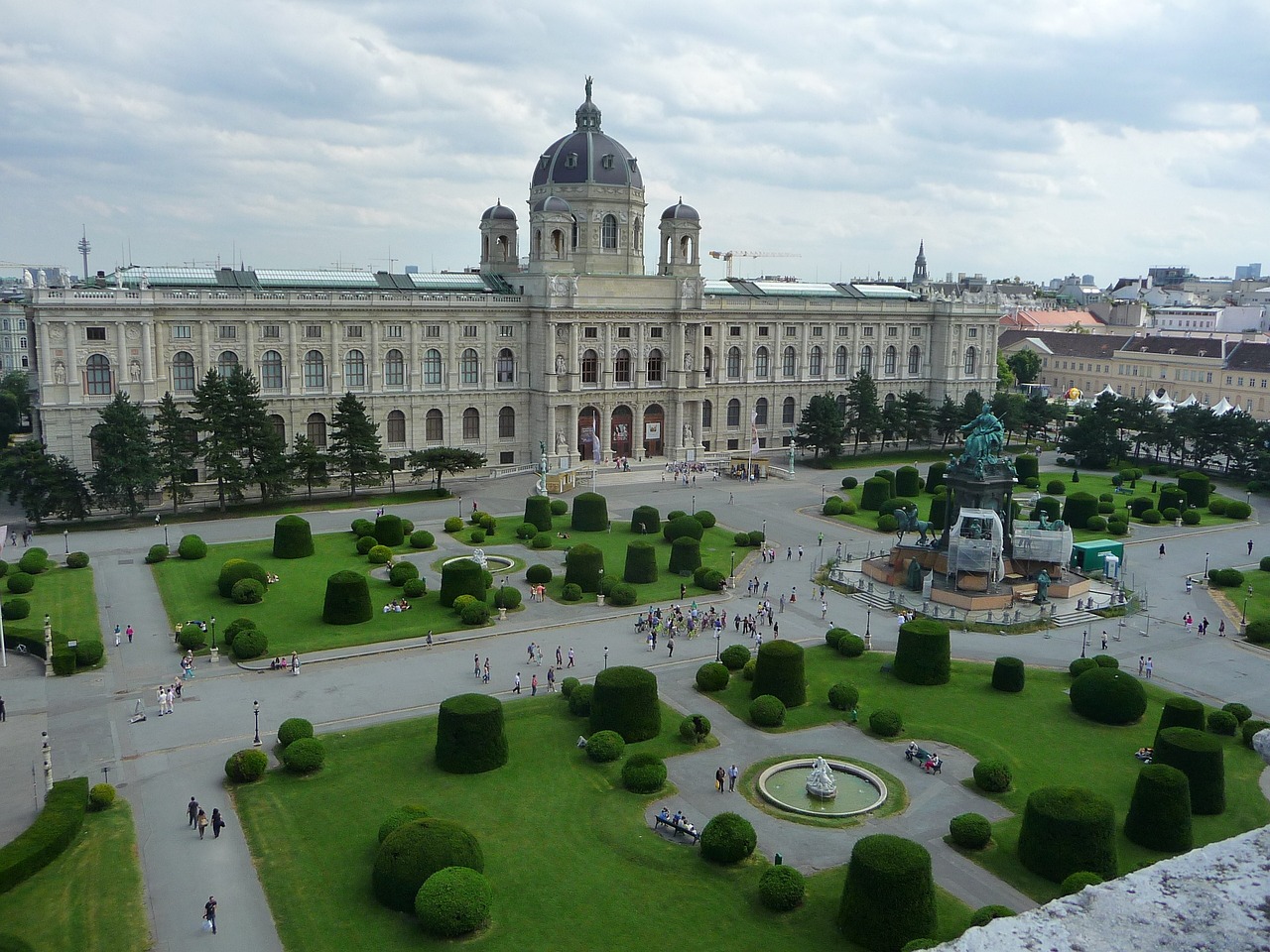
This – The Art History Museum – was the first museum we visited in Vienna, so it holds a special place in my heart.
Opened in 1891 to house the sprawling Habsburg art collections, the Kunsthistorisches Museum is one of the world’s most prestigious art institutions. Its grand staircase and domed interior are as much a masterpiece as the works they house, built specifically to project the cultural dominance of the Austro-Hungarian Empire. The building itself, facing the Natural History Museum across Maria-Theresien-Platz, forms the crown jewel of Vienna’s monumental Ringstrasse vision.
Inside, the collection is immense, and it’s easy to feel overwhelmed. My best advice? Do not try to see everything in one go. Prioritize the world’s largest collection of Pieter Bruegel the Elder’s paintings – look closely at the minuscule details in The Tower of Babel and Hunters in the Snow. Also, keep your eyes on the ceiling as you walk the main staircase; those aren’t just decorative spandrels, they are early, hidden works by Gustav Klimt.
Pro Tip: If your feet get tired, the Cupola Café in the center of the museum is arguably the most beautiful spot in Vienna for a coffee break. It is the perfect place to pause, reflect on the Caravaggio and Raphael masterpieces you’ve just seen, and plan the next leg of your walking route through the city.
Austrian National Library State Hall: A Baroque Architectural Marvel
The State Hall of the Austrian National Library is one of the most extraordinary Baroque interiors in Europe. Completed in the 18th century, the hall stretches nearly 80 meters beneath a frescoed dome depicting Emperor Charles VI as a patron of the arts and sciences.
Marble statues and towering wooden bookcases frame more than 200,000 historic volumes. The space feels ceremonial rather than academic – a visual proclamation of knowledge as imperial power. It is one of Vienna’s most breathtaking interior landmarks.
Prater Park: Vienna’s Historic Amusement Park and Ferris Wheel
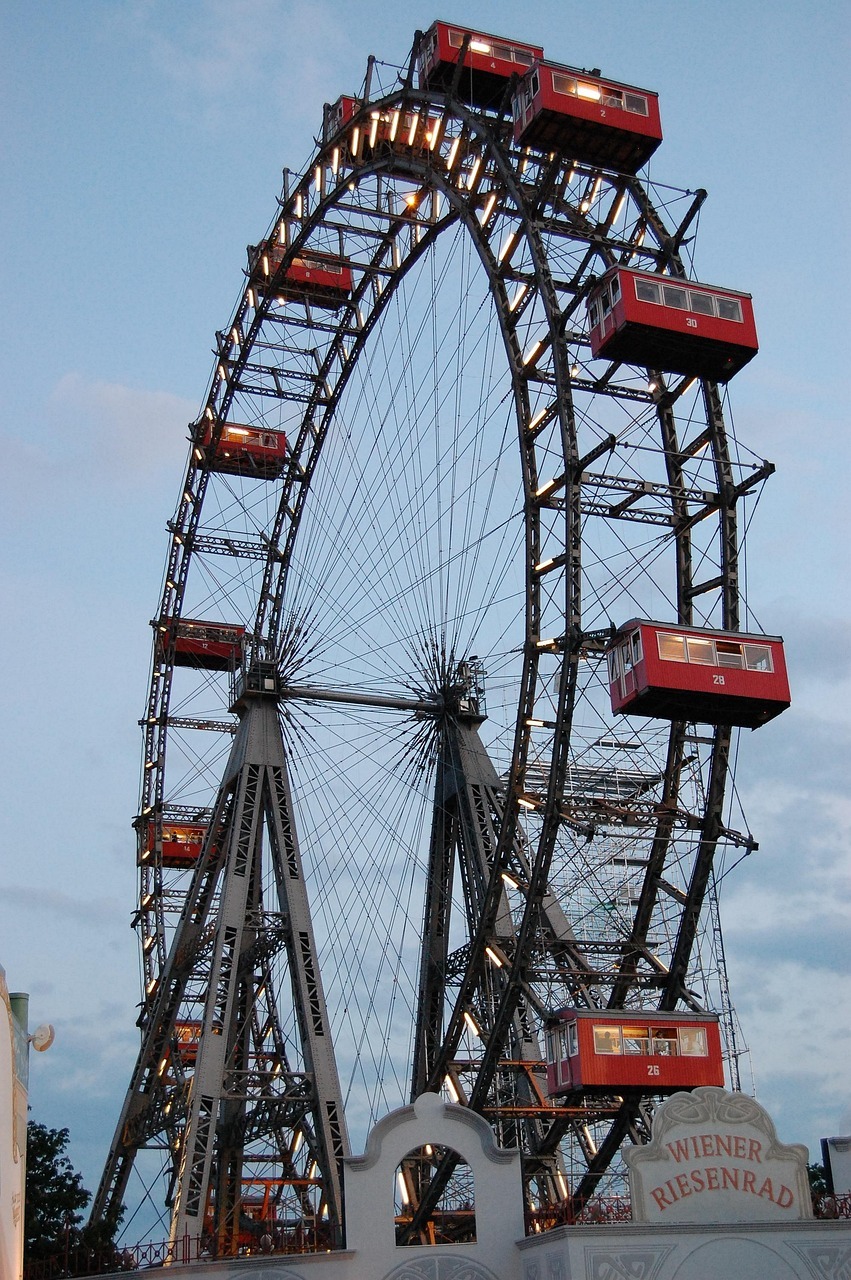
If you are looking for a fun day in Vienna, then you have to go to Prater. I loved every second of our visit here! Be warned! There are so many things to do that you will not know when the day has passed (or at least that was the case for us).
The Prater combines vast, sprawling public parkland with one of Europe’s oldest amusement areas. Its most recognizable feature is the Wiener Riesenrad, a Giant Ferris wheel first opened in 1897 and still operating today – which I love! From its historic cabins, visitors gain a unique, slow-moving perspective of the city – a perfect counterpoint to the busy streets of the Innere Stadt.
Beyond the flashing lights of the amusement zone, the surrounding green spaces provide a completely different side of Vienna – open, informal, and refreshingly untethered from the city’s ceremonial imperial core. It is the perfect place to spend an afternoon if you need a break from the intense focus of palace-hopping.
Pro Tip: While the Ferris wheel is the main attraction, the park itself is massive. If you are traveling with children or looking to make a full day of the experience, check out my guide to planning the perfect amusement park visit. It covers the essential logistics – from timing your arrival to beat the crowds, to budgeting and packing – so you can focus on the fun rather than the stress of navigation.
Secession Building: The Home of Art Nouveau and the Beethoven Frieze
Completed in 1898, the Secession Building became the manifesto of Vienna’s break from traditional academic art. Its white façade is crowned by a distinctive golden laurel dome, often referred to as the “golden cabbage,” symbolizing artistic renewal.
Inside, the building houses exhibitions and the famous Beethoven Frieze by Gustav Klimt. The Secession marks a turning point in Vienna’s cultural history, signaling a move away from imperial classicism toward modern artistic experimentation.
Rathaus (City Hall): The Neo-Gothic Landmark of Municipal Authority
Built in the late 19th century, Vienna’s City Hall – or Rathaus – is one of the most imposing monuments along the Ringstrasse. Designed by Friedrich von Schmidt, the building is a masterpiece of the Neo-Gothic style, deliberately modeled after the grand Flemish town halls of the Middle Ages.
Its central tower rises nearly 100 meters and is crowned by the Rathausmann, a wrought-iron statue of a knight that has become one of Vienna’s most enduring symbols of civic pride and municipal authority.
Beyond its role as the seat of local government, the Rathaus serves as Vienna’s “living room.” The massive square in front, Rathausplatz, is the heart of the city’s social calendar, transforming throughout the year into a world-famous Christmas market, a winter ice-skating wonderland, and a summer open-air film festival.
Pro Tip: While the exterior is spectacular – especially when illuminated at night – you can actually see the interior for free. The city offers guided tours on select days, which grant you access to the breathtaking ceremonial staircases and the vast Festival Hall.
If you’re planning a visit, check the official municipal website for the current tour schedule, as these tickets are limited and often claimed early in the day. It is an architectural treasure that is well worth stepping inside to appreciate the full scale of Ringstrasse-era ambition.
Austrian Parliament Building: A Classical Symbol of Democracy
Inspired by ancient Greek architecture, the Parliament building was completed in 1883 and symbolizes democracy and legislative power. The Pallas Athena fountain in front reinforces the classical reference to wisdom and governance. After extensive renovation, it remains one of the most architecturally distinct Ringstrasse buildings.
Burgtheater: Exploring Vienna’s Historic National Theatre
Facing the Rathaus, the Burgtheater stands as Austria’s national theatre and one of the most prestigious German-language stages in the world. Completed in 1888, its grand façade and opulent, gilded interior – featuring ceilings painted by a young Gustav Klimt – are a masterclass in imperial theatrical prestige.
While most tourists admire the exterior while walking the Ringstrasse, the true magic of the Burgtheater is found behind the curtain.
Even if your German isn’t fluent, the building’s interior architecture and historical weight make it worth a tour. Insider Tip: If you want to see the famous grand staircase and the Klimt ceiling paintings, you must join one of the guided tours; they run throughout the week, but they fill up fast during the main season.
Pro Tip: Pair your theatre visit with a coffee at the Café Landtmann nearby – it’s been the unofficial meeting place for actors and politicians for over a century, offering an authentic slice of Vienna’s intellectual life.
Votivkirche: The Neo-Gothic Landmark of 19th-Century Vienna
The Votivkirche is a soaring testament to 19th-century Neo-Gothic architecture. Commissioned as a “votive” offering after a failed assassination attempt on Emperor Franz Joseph in 1853, its twin spires rise sharply above the Ringstrasse, creating one of the most recognizable silhouettes in the city. It serves as a visual bridge between the old medieval style and the modern urban redesign of its era.
The Votivkirche is often overlooked by tourists who stick to the city center, which is exactly why you should visit – it is one of the quietest, most peaceful spots in Vienna.
Unlike the bustling St. Stephen’s, you can actually sit here in silence and appreciate the intricate stained glass that survived the turmoil of the 20th century. Pro Tip: For the best photos, visit in the late afternoon when the sun hits the western façade, casting the stained glass patterns onto the interior stonework.
Because it’s located just a short walk from the University of Vienna, it’s a perfect, low-stress stop to add to your Ringstrasse itinerary if you want to avoid the massive crowds found at the major palace complexes.
Donauturm (Danube Tower): Panoramic Views from Austria’s Tallest Structure
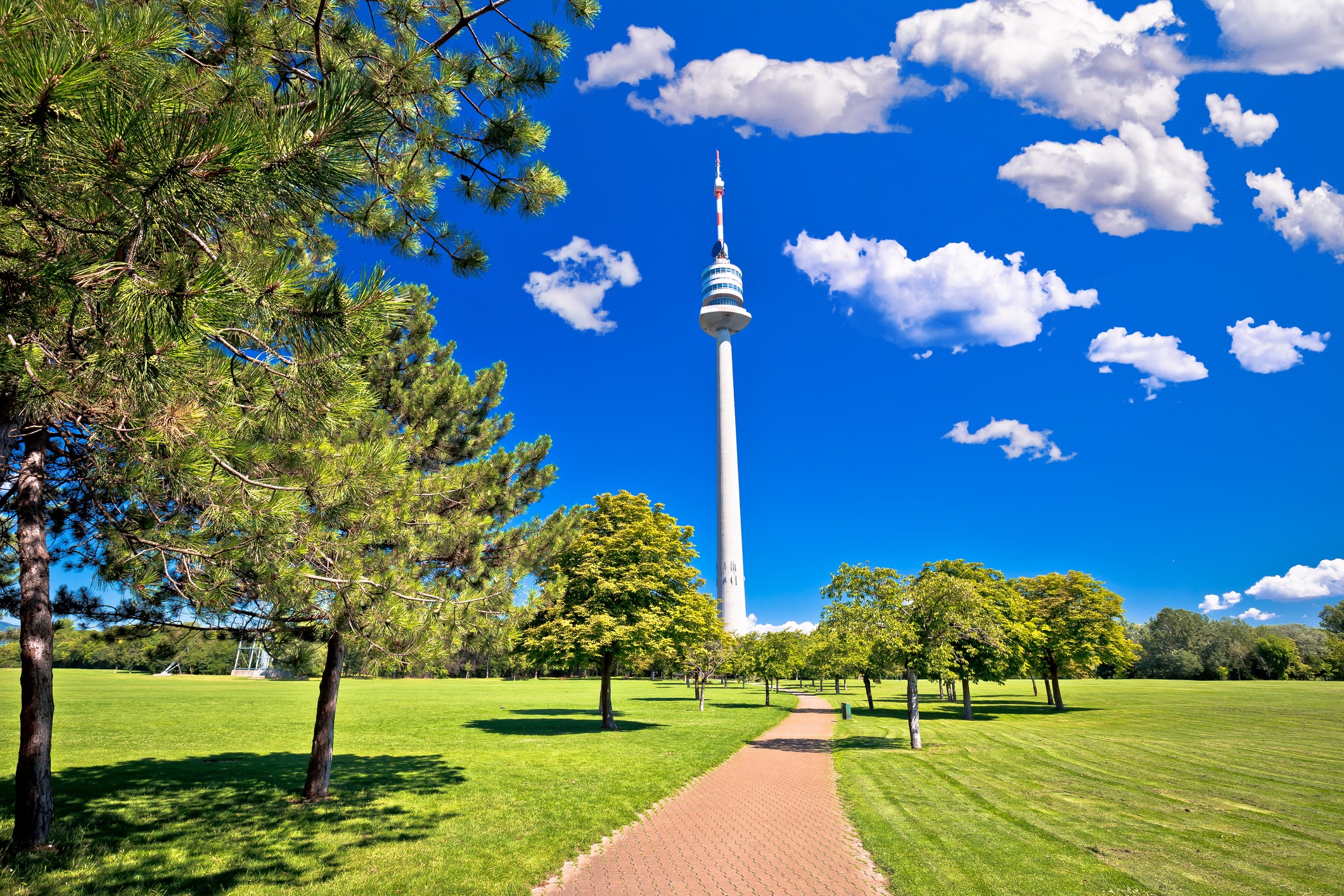
ID 169092166 ©Xbrchx | Dreamstime.com
Standing at 252 meters, the Danube Tower (Donauturm) is officially Austria’s tallest structure. Built in 1964, it offers a stark, necessary contrast to the city’s imperial identity, representing the rise of modern, mid-century Vienna.
From the observation deck, you gain a panoramic view that stretches far beyond the historic center, placing the city’s dense palace-filled streets into a much broader geographic context.
Vienna’s landmarks are not isolated attractions; they form a coherent narrative – from medieval cathedrals to Baroque palaces and Ringstrasse monumentality. To truly grasp the scale of this history, you need to see it from the sky.
Personal Note: We visited the tower by night, and I highly recommend it – watching the city lights ripple out toward the Danube River is a different experience entirely. The trip up is half the fun; the elevator has an incredible speed that gets you to the top in just a few seconds.
Pro Tip: Don’t just head to the observation deck and leave. The tower features a rotating café that makes a full revolution, allowing you to see the entire city skyline while you enjoy a slice of Sachertorte or a coffee, completely relaxed.
Quick Guide: Which Landmark is Right for You?
If you are trying to narrow down your itinerary, use this guide to match Vienna’s landmarks to your interests:
- Best for Imperial History: Schönbrunn Palace and Hofburg Palace (Essential for understanding the rise and fall of the Habsburg dynasty).
- Best for Art Lovers: Belvedere Palace (Home to Klimt’s The Kiss) and the Kunsthistorisches Museum (World-class classical collections).
- Best for Iconic City Views: Donauturm (The highest panoramic vantage point) and the towers of St. Stephen’s Cathedral.
- Best for Music & Culture: Vienna State Opera and the Burgtheater (The beating heart of Austria’s performing arts).
- Best for Architecture Enthusiasts: Karlskirche (Baroque drama) and the Secession Building (The radical birthplace of modernism).
- Best for Casual Exploration: Prater Park (Perfect for a relaxed day and iconic Ferris wheel views).
Why Vienna Is More Than Its Landmarks
Vienna is rarely a city you experience just once. Whether it’s the towering Gothic ambition of St. Stephen’s, the golden-hued artistic rebellion at the Belvedere, or the panoramic night views from the Danube Tower, these 15 landmarks offer more than just a history lesson – they provide a roadmap of European evolution.
From the imperial theater of the Habsburgs to the modern rhythm of the Ringstrasse, Vienna’s identity is built on a delicate balance between preserved heritage and forward-looking culture. While these iconic sites are essential for any first-time visitor, I encourage you to leave space in your itinerary to simply walk the streets between them; that is where you’ll find the real soul of the city.
Ready to start planning your Austrian adventure?
Planning a longer trip? Check out my day trip recommendations from Vienna to explore beyond the city limits.